Animals I Met When Traveling

Animals I Met When Traveling

“Animals are reliable, many full of love, true in their affections, predictable in their actions, grateful and loyal. Difficult standards for people to live up to.” Alfred Montaper

Kangaroos Australia

IMG_3249

Tasmanian Devil Australia

IMG_3210

Baby Wombat  Australia

IMG_3195

Koalas Australia

IMG_3215

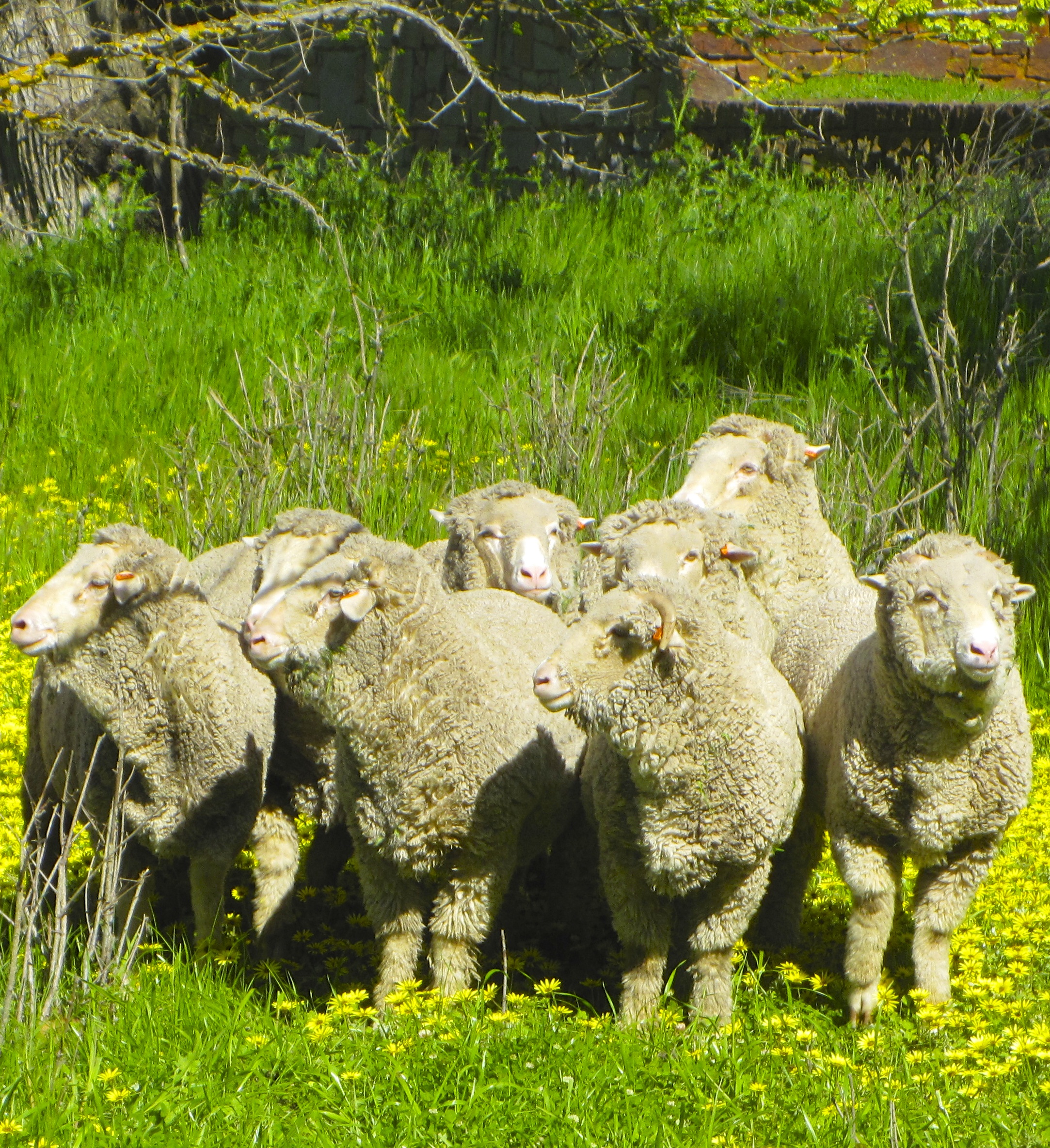
Sheep Australia

IMG_2042

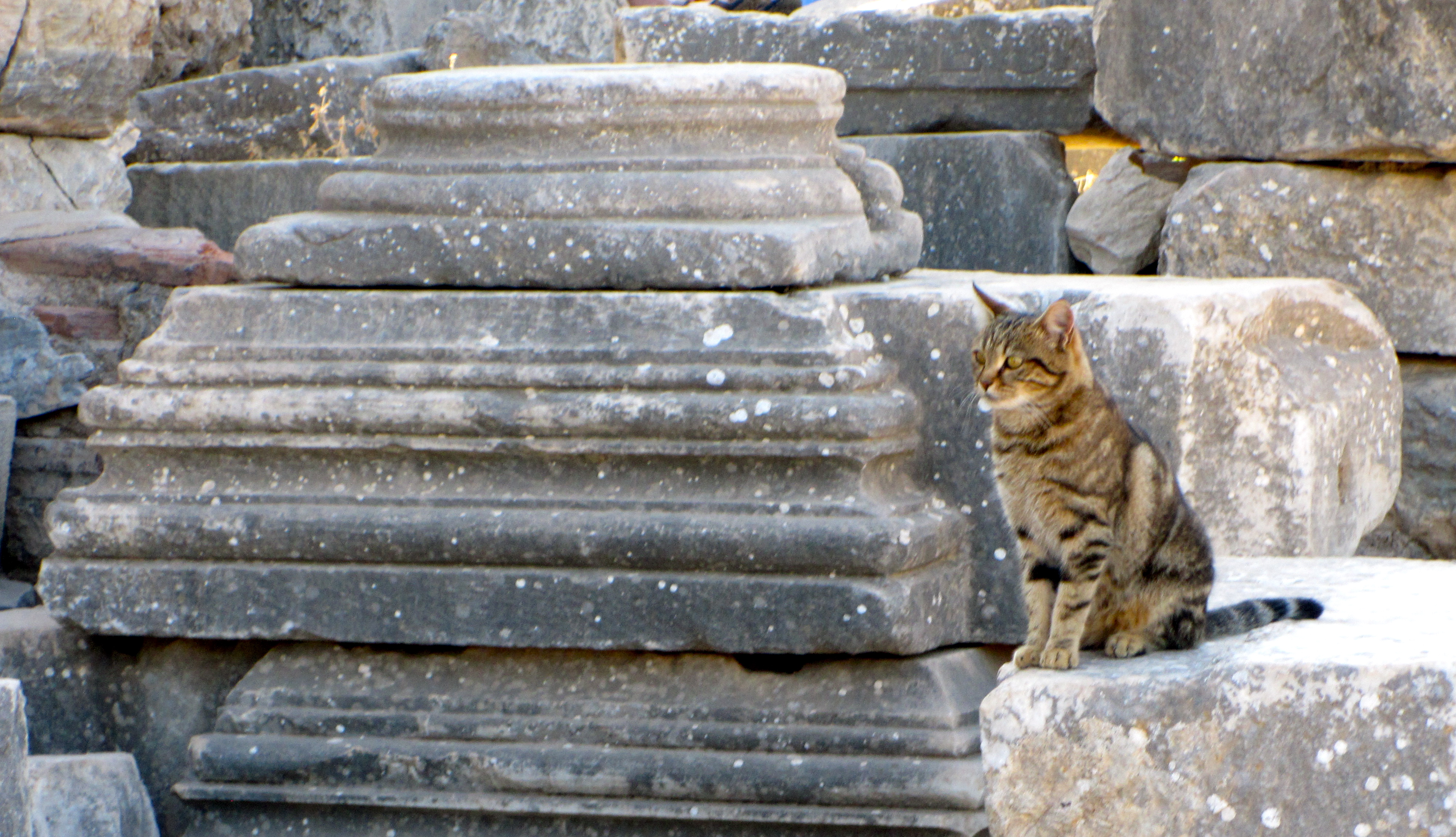
Cat Turkey IMG_4504

Deer Japan

IMG_1160

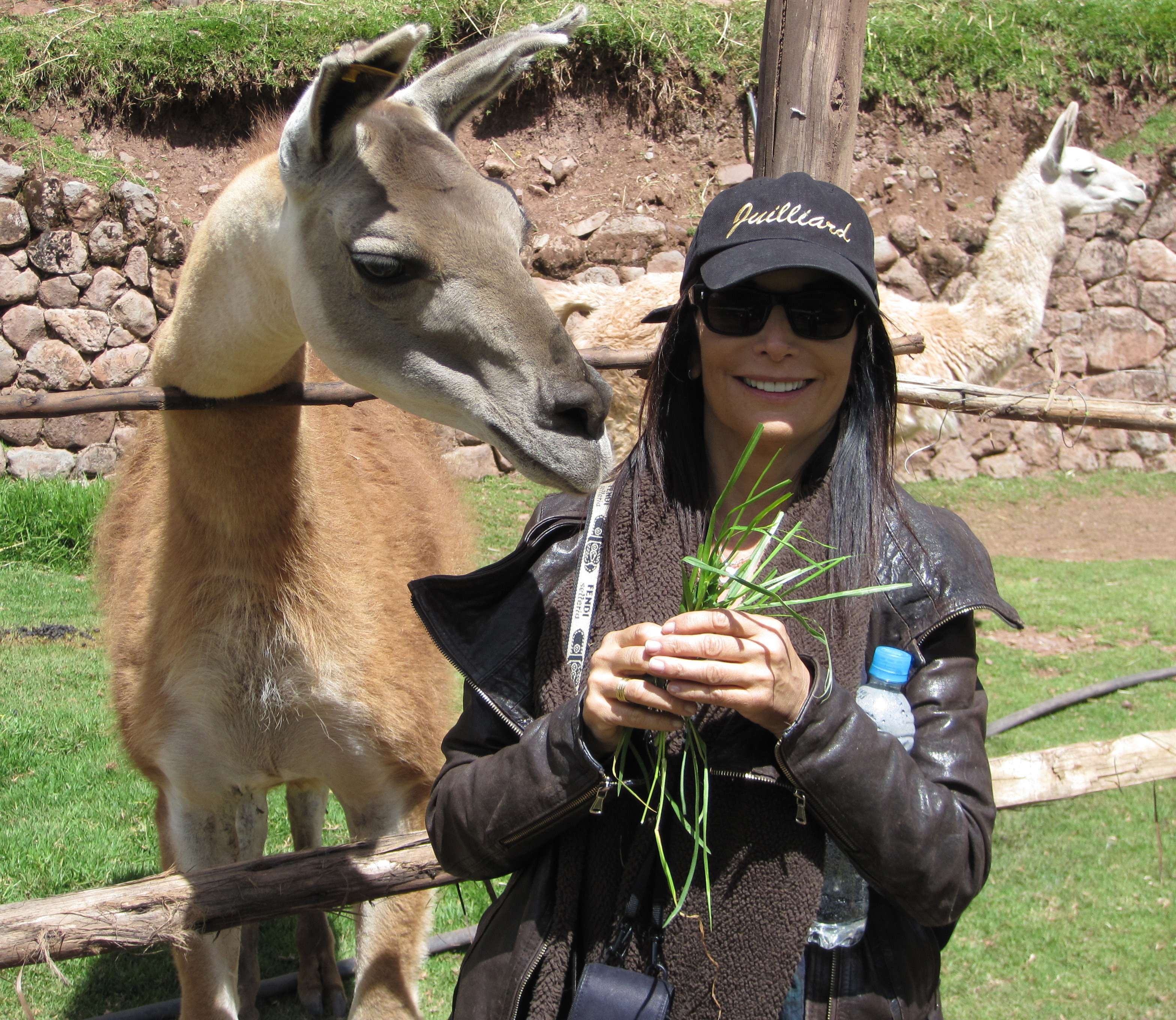
Llama Peru

IMG_2550

Iguana Panama

IMG_3409

Elephant Thailand

IMG_3244

Parakeets (Emilio White) Argentina

mail-37

Coati Argentina

IMG_1388

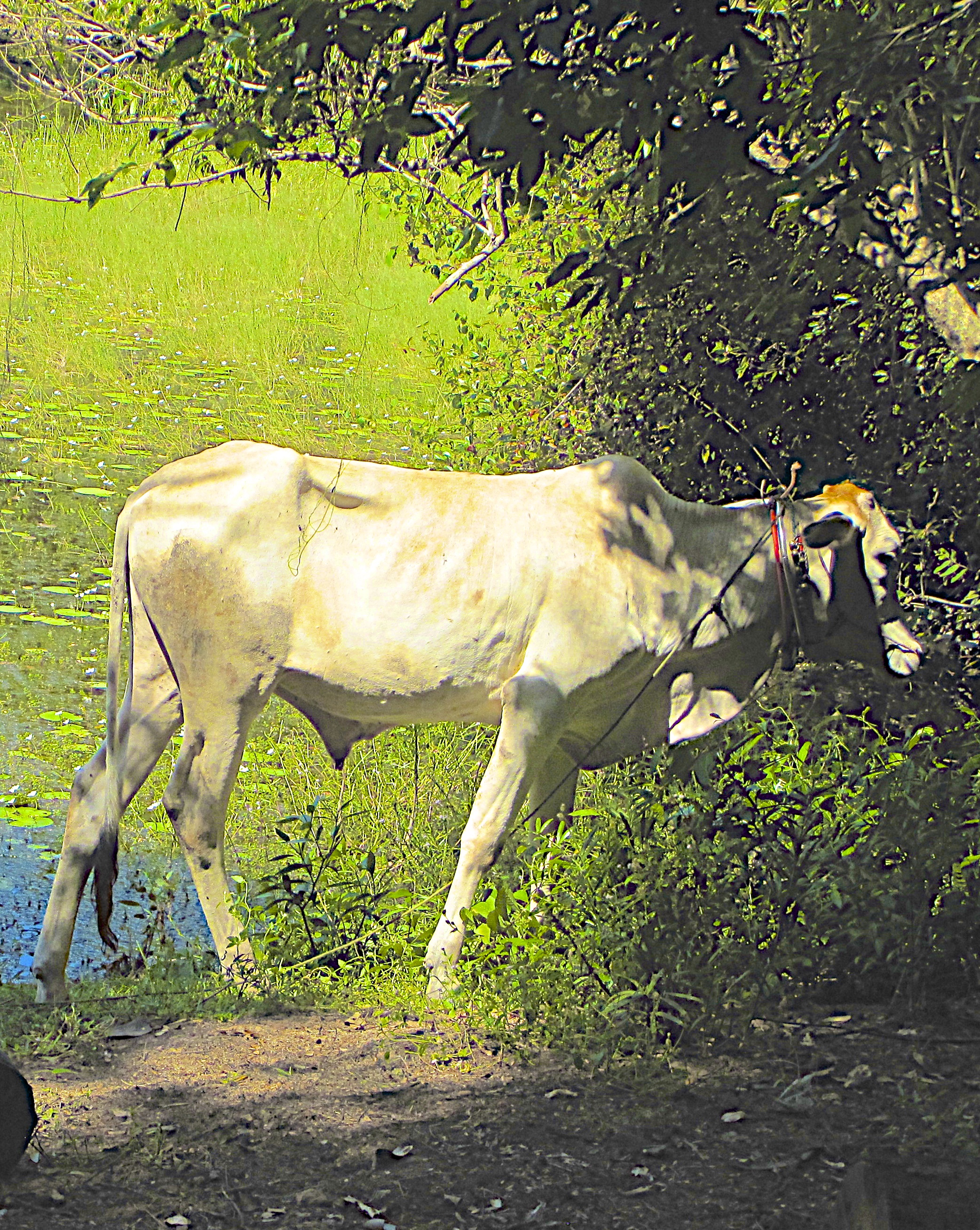
Cow Cambodia

IMG_6380

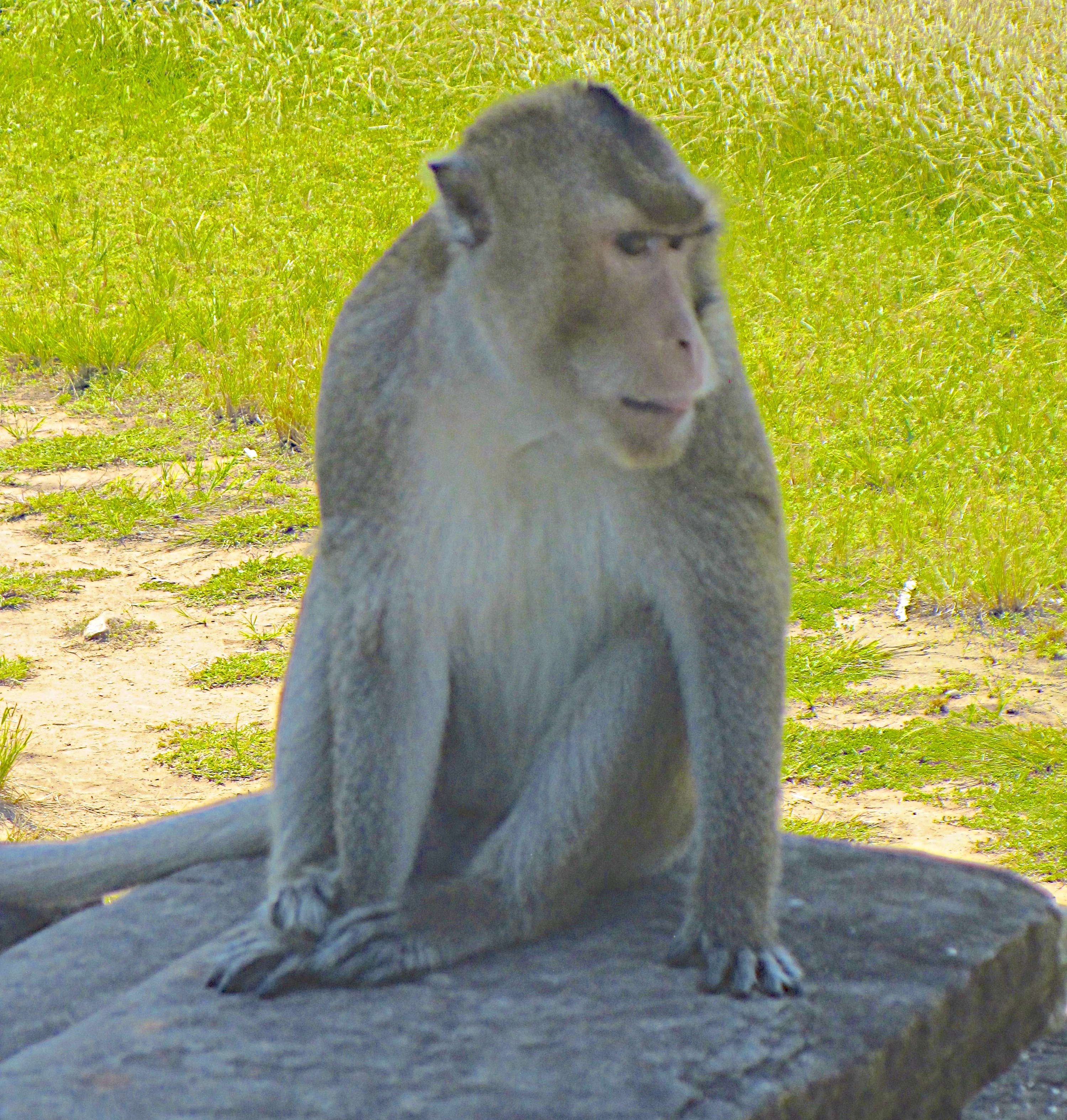
Monkey Cambodia

IMG_6172

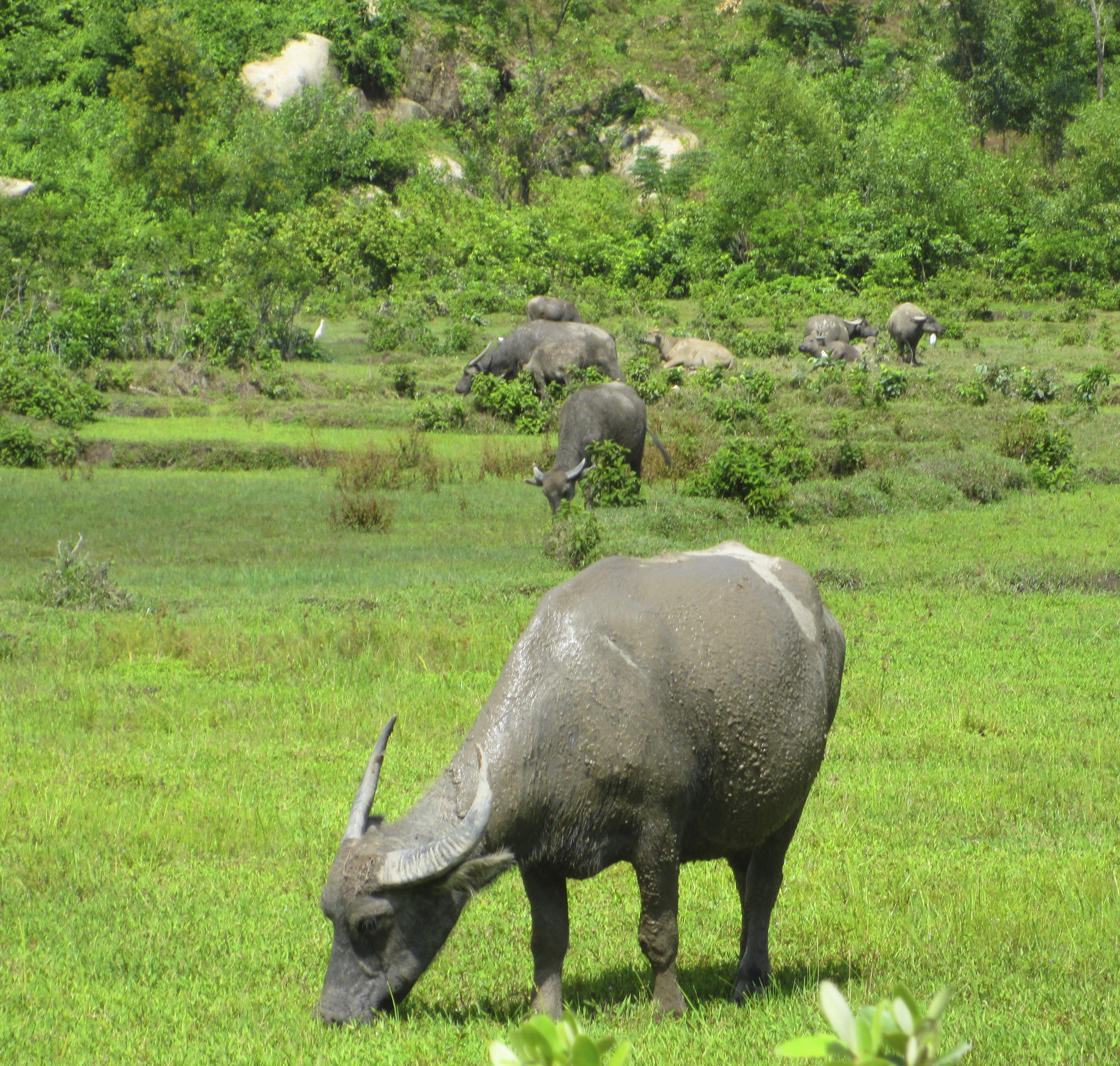
Water Buffalo Viet Nam

IMG_5444

Louie Miami

IMG_3289

Fly safe,

JAZ

DSCF0129


Where Is The Biggest ……….. In The World?

Where is the biggest……. in the world?

“You’ll miss the best things if you keep your eyes shut.” Dr Seuss

The tallest building in the world is now in Dubai.

The largest department store in the world is in South Korea.

The largest sports stadium in the world is in North Korea.

The biggest factory in the world is in China.

The largest restaurant in the world is in Syria.

The longest highway is in Canada.

The largest museum in the world is in Russia.

The largest cemetery is in Iraq.

The largest oil refinery is in India.

The largest investment fund in the world is in Abu Dhabi.

The biggest Ferris Wheel in the world is in Singapore.

The heaviest building is in Romania.

The largest hospital in the world is in South Africa.

The fastest train in the world is in Japan.

The largest theatre in the world is in Poland.

The largest dairy farm in the world is in Saudi Arabia.

But the country that sells the largest hamburger in the world is the epicenter of hamburgers, the USA . We are still big at some things.

Fly safe,

JAZ

Thirty Things That I Wanted To Do In 2014. Did I Do Them?

Thirty Things That I Wanted To Do 2014. Did I Do Them?

“Every hundred feet, the world changes.”  Robert Boitano

  1. Go to Colombia. Yes
  2. Go To Southeast Asia. Yes
  3. Go to Seattle. Yes
  4. Read more books on the 1000 Books You Have To Read Before You Die. Yes
  5. Go to the theatre with my son. Yes
  6. Meditate every day. I think this may be like a dieting resolution. I will make it every year. Still not every day.
  7. Do an Urban Art tour in LA. No definitely in 2015
  8. Do a spa day with my daughter. Yes
  9. Watch even less Real Housewives. Yes they are getting boring now that so many of them are going to jail.
  10. Go to Guatemala. No
  11. Go To Miami. Yes
  12. Have more spiritual friends. Now I want to have less spiritual friends.
  13. Eat less sugar. Hmmmmm not sure but probably not.
  14. Go to the Bridge On The River Kwai. No
  15. Try ten new restaurants in LA. Yes Orsa and Winston, Bucato, Sushi Tsujita, Bachi Burger, Cleo, Republique, Wallys, Everleigh, Carousel and Escuela De Taqueria
  16. Try ten restaurants in other places. Yes Andres Carne De Res – Bogota Colombia, Matiz – Bogota, Colombia,  Salou – Cartegena, Colombia, Morning Glory –  Hoi An, Viet Nam, Golden Rice – Hue, Viet Nam, Pepper Tree – Phu Quoc, Viet Nam, Washoku Bar – Tokyo, Japan, The Dining Room – Siem Reap, Cambodia, Salumi –  Seattle, Washington, Anchovy and Olive – Seattle Washington.
  17. Have ten meals with Kitchensurfing. Yes
  18. Go back to Japan. Yes
  19. Spend more time at 826 LA.Yes
  20. Practice tai chi. Yes sort of.
  21.  Go to a ryokan.Yes
  22. Go To Angor Wat, YES ( a bucket list item)
  23. Drink less coffee maybe No
  24. React less. Maybe
  25. Go To Agua Dulce. Not yet
  26. Get more people to read my blog. Still trying
  27. Do more yoga. Yes
  28. Go to Bainbridge Island. Yes
  29. Go to the Grand Canyon. Not yet.
  30. Go to a Grouplove  concert. Yes

Not too bad.  Two thirds yes. I don’t beat myself up over stuff like this. On to the 2015 list. I’ll make it smaller and harder.

25 Things I  Want To Do In 2015

1. Do something big that I am afraid of.

2. Drink less coffee.

3. Go to Rio.

4. Go To Another Grouplove concert.

5. Finish my hamburger blog.

6. Get more people to read my blog.

7. Try eleven more new restaurants in LA.

8. Try eleven restaurants in other places.

9. Go to another place on my bucket list.

10. Read more books – the kind you hold in your hand that smell like books.

11. Go to Sao Paulo..

12. Meditate every day.

13. Look up less random questions on the internet.

14. Go To Brazil.

15. Have more real friends.

16. Go to The Stanley Film Festival.

17. Get more involved at 826 LA.

18. See ten documentary films.

19. See ten foreign films

20. Eat less gluten.

21. Read more of other people’s blogs.

22. Do more beach walks.

23. Be more grateful every day.

24. Finally do that urban art tour in LA.

25. Be a tourist in LA.

Happy New Year and Fly Safe,

JAZ

Wet Towels In Asia

Wet Towels In Asia

“I am not the same having seen the moon shine on the other side of the world.” Mary Anne Radmache

Japan is a country of specific etiquette. Correct manners are very important to the Japanese. It’s very easy to embarrass yourself in Japan as an American. I started my Asia trip in Japan and as is their custom I began each meal with the wet towel. Japan is a society of cleanliness. It is a culture of bath houses and onsens. You have never seen so many people brushing their teeth and gargling (Japanese are obsessed with gargling as a cure for everything) in public restrooms. They carry handkerchiefs in case there is nothing to dry their hands with in a public restroom.

The towel is called an o-shibori. A typical o-shibori, made of cloth, is dampened with water and wrung. It is then placed on the dining table for customers to wipe their hands before or during the meal. The o-shibori is often rolled or folded and given to the customer on a tray. Even if a tray is not used, it is usually rolled up into a long, thin shape. Cold ones are used in summer and hot ones are used in winter.

Screen Shot 2014-11-19 at 12.03.56 AM

Airlines, also give out disposable towels containing a sterilizing agent such as alcohol or chlorine dioxide. Traveling on different Asian Airlines, the smell wafts through the plane as everyone rips open their towels as soon as they are given them.

The custom continued in restaurants and airlines in Thailand, Viet Nam and Cambodia. It is interesting because these are countries with unclean water and questionable sanitation. There is something civilized about the understanding between the patron and the restaurant that your hands must be clean before you eat.

I wondered why we did not have that concept in America. Do they just assume our hands are clean? Do they not care?

I like the towel. For me it means to stop and focus on what we are doing now. We are about to do something important. We are about to have a meal.

Fly safe,

JAZ


Top Ten Reasons To Visit Tokyo

Top Ten Reasons To Visit Tokyo

“The overriding sense of Tokyo…is that it is a city devoted to the new, sped up in a subtle but profound way: a postmodern science-fiction story set ten minutes in the future.” David Rakoff

If you haven’t been to Japan you are missing out. I can’t wait to return.

1. It is so exciting. Whatever cool electronic experience or sleek new building we have in NY, they have ten of them.

2. Their subway system is crazy good, clean, efficient, on time, safe restrooms, vending machine heaven, huge shopping malls and delicious food.

IMG_0737

3. The food in Japan is outstanding and served beautifully. Everything is amazing but the sushi and sashimi will change your life.

IMG_0948

4. It is one of the safest cities. The Japanese aren’t big on scamming tourists. It doesn’t go with their mindset of politeness and duty.

IMG_0653

5. You can take a quick train and end up in an hour at a ryokan ( typical Japanese Inn and bath house) in Nikko and see the temples which is what we are doing. . Or go to Kamakura and see the giant outdoor Buddha if you haven’t already. (I have)

IMG_2068

6. Their museums have weird exteriors but interesting exhibits. There are a few exhibits I want to see this time.

IMG_0685

7. Tokyo street fashion is amazing and so entertaining to see. Even in this global society, it hits LA a few years later. Fashion changes so quickly in Japan that it is easy to find trendy inexpensive pieces. Fashion chain stores offer high-quality Japanese-made clothing in the latest styles — at reasonable prices. Halloween in Shibuya!!!!!

Screen Shot 2014-10-19 at 1.26.42 AM

8. Tokyo has the world’s best customer service and multi stage gift wrapping for anything you buy. It sometimes feels a little stalky as they follow you to the door carrying your beautifully wrapped purchase.

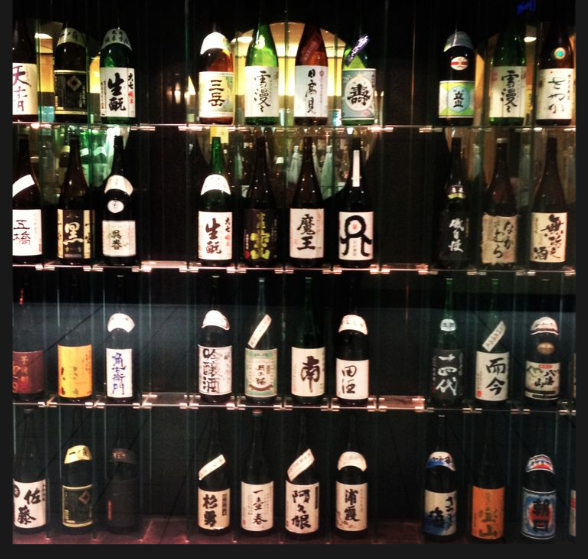
9.Tokyo has the most expansive sake list. Remember if you are drinking, Tokyo has very strict drunk driving rules for drivers and passengers so take one of the hundreds of cabs around at night.

Screen Shot 2014-10-20 at 7.10.48 PM

10. The most interesting thing about Tokyo is the juxtaposition of the old and the new. The unparalleled mass transit system and skyscrapers are next to shrines and paper lanterns. The fancy shopping malls are near small noodle shops and Japanese pastry stores. It is unbelievably crowded during the day, Nobody seems to sleep except on the train,  but it can also get very quiet late at night.

IMG_0651

For more Tokyo blogs

https://travelwellflysafe.com/2012/08/06/things-i-have-learned-in-tokyo/

https://travelwellflysafe.com/2013/06/11/onsen-and-ryokan-in-japan/

https://travelwellflysafe.com/2012/08/25/japanese-food/

https://havefunflysafe.wordpress.com/2012/08/11/things-i-have-learned-in-japan/

yo I sorano tabi o,

JAZ

Places That I Have Loved

Places That I Have Loved

“The town was paper, but the memories were not.” John Green

A fortune-teller told my mother that she would die at 87.  At 85 she began to get her life in order. By the time she died at 91, everything was in boxes and labeled with notes.  There was one box that had a note pasted on it which said,“These are places that I have loved. Perhaps you will like looking at them”. There were postcards, pictures, menus and a few photos from various travels around the world. I wanted to ask why she had saved them. What were the memories in this box that she wanted us to know?

There were photos from Japan. My mother loved her trip to Japan. They had gone with a group that matched senior citizens with Japanese families who wanted to practice their English. My friend Reiko and her father took my mom out for sushi when she was there.  She talked for a long time about how expensive that dinner was. There was a picture of her in a kimono smiling with her Japanese family.

There were some postcards from Brazil. The tour group was going down to the beach and casinos in Rio. My mother had been invited to a friend’s cousin for the afternoon and dinner.  Everyone told her not to take public transportation because she could get robbed. She and her friend went on the public bus. Everyone on the bus helped them, shared their food and wanted to talk. They had to change buses and the bus driver got out and took them to the next bus. They had a wonderful dinner with their new friends and drank caipirinhas (cachaca or rum sugar and lime juice). When they returned, they heard that most of their group had been robbed at the tourist locations.

She enjoyed Australia and Israel. I don’t remember her talking about Paris or Italy. I don’t know if she ever got there. She had wanted to see the Great Wall of China.

Travel wasn’t my mother’s passion. Theatre, Opera, Ballet and Classical Music were. I wasn’t surprised to see fifty years of playbills and programs and favorite opera tickets, but I was surprised to see this box. Travel is about pictures and stories and I didn’t know all the stories.

My mother was legally blind from the time that she was seventeen years old.  The doctors said it was from looking at an eclipse. I’m not sure exactly what she saw but it wasn’t what we did. When she was young, she made the decision to have the best life she could and not let it affect her. She studied at the Lighthouse For The Blind and knew everything that was available to her to make her life easier. The only difference I noticed growing up was that my mother did not read.  She told us the stories of every opera, operetta, ballet,  Broadway show and Shakespeare play. She is most famous with her children and grandchildren for her original Bunny and Squirrel stories. (who were suspiciously a lot like us.)

She developed her other senses to compensate for her lack of vision.  My mother knew the location of every seat in every theatre in NY. She knew by memory the address and phone number of everyone in her life. She took the subways and had certain markers on the stations so she could tell where to get off. She went with the crowd at traffic lights. She would walk down the street smiling so people would think she saw them when she couldn’t. She never wanted anyone to know that she couldn’t see.

As my mother got older, she was probably almost totally blind but she never complained and asked for help when she needed it.  She had many, many friends who were always willing to go somewhere fun with her. The alternative of staying home was unthinkable. One day when she was in her seventies she asked a bus driver if it was the 21 bus and he said ” What are you? blind?” and for the first time she said yes. She was proud of that story.

I also found color-coded envelopes with separated bills in them. I think we are the only country where all our paper money is the same size. I never thought about that. Whenever I asked her for money or small bills, she gave it to me. I always assumed that she could see it.

One day she said that she wasn’t going to travel anymore because of her worsening eyesight. She was in her sixties. I felt really sad. She said “Don’t ever feel sorry for me because I have the capacity for happiness and most people don’t. I understand that happiness comes in moments and I have had many happy moments in my life. I love NY and have a lot to explore here.”

She went swimming and took dance classes. (She had been a dance teacher) She went to the theatre, ballet, symphony or opera seven days a week. She went to all the museums in NY and loved discovering new ones and sharing them with us when we came to visit. She joined a hiking group on the weekends and started going to Atlantic City for a little gambling. She was always coming to visit her children and take care of her grandchildren. My mother slowed down to three to five times a week for the theatre after age eighty-seven because her arthritis was affecting her legs. But even at that age, her phone rang more than mine did and she had friends of all ages. For her ninetieth birthday, she went to the opera with everyone in her family who could make it to NY and then her favorite Chinese restaurant. Her friends gave her a huge friend party as well a week later (Her friends ranged from ages 40-100).

She never talked about traveling again after she stopped. I looked at the memories of a life that wasn’t mine and wished that I had paid more attention.   I wondered about those fragmented, arbitrary glimpses into her life. My mother left a very important legacy to me and anyone who knew her. You always have the choice to live the best life you can, or sit in the dark.

Fly Safe,

JAZ


Things I Have Learned In Kyoto, Japan

Things I Have  Learned in  Kyoto, Japan

“The way is not in the sky. The way is in the heart.”

~ Buddha

Kyoto is the headquarters of Nintendo.

Kyoto has almost 2000 Buddhist and Shinto shrines and temples. I haven’t seen them all – yet. ( female monks )

IMG_0935

Sanjusangendo is a 12th century temple (partly rebuilt in the 13th century after a fire) and it has 1000 identical life-sized Buddha statues arranged in 10 rows by 100 columns. In front and around some of these columns there are also 28 unique statues of guardian deities. Directly in the centre of these 1000 statues there sits an impressive giant Buddha statue covered in gold. Don’t go if you happen to  be allergic to smoke.  It also has a thousand candles.

IMG_0825

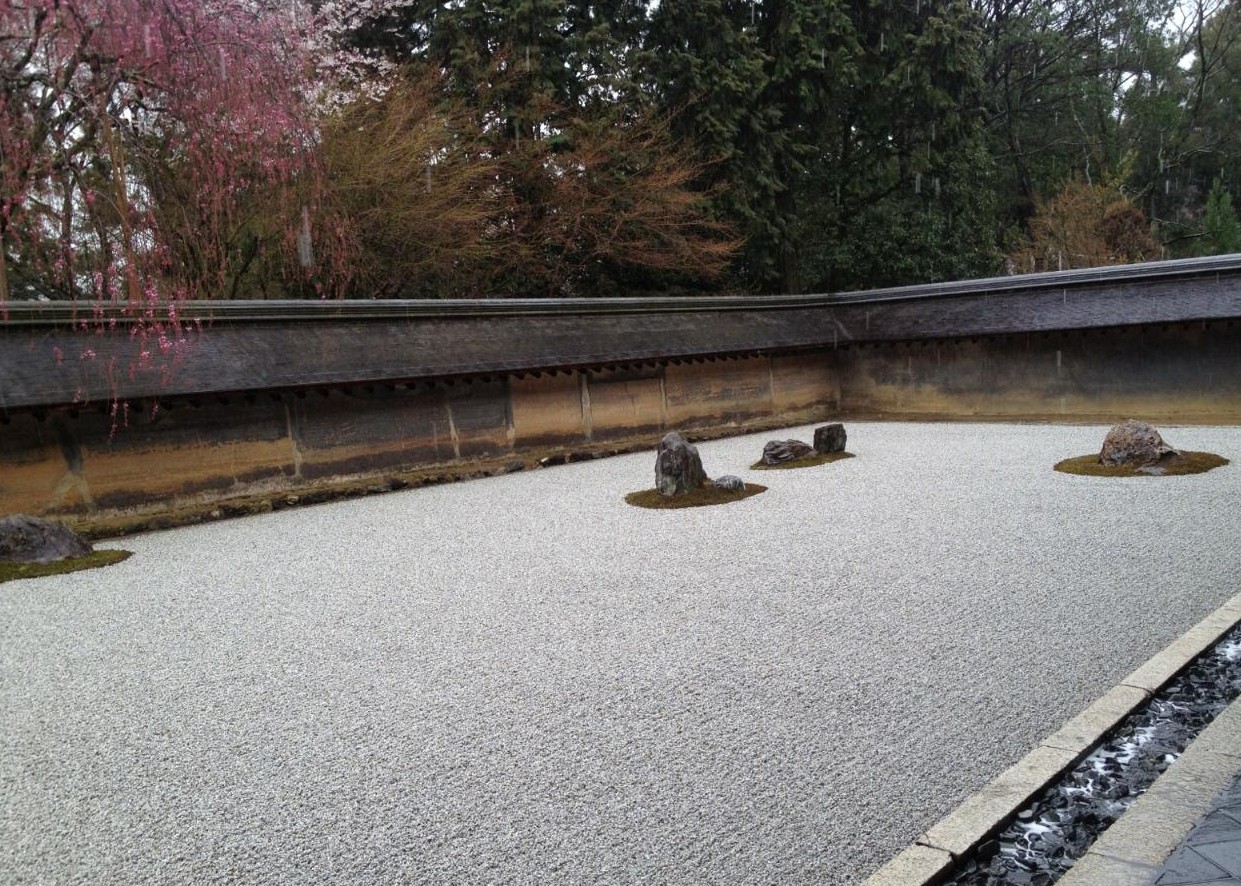
Ryoan-ji Temple’s dry rock garden is a puzzle. Nobody knows who designed it or what the meaning is of the 15 rocks scattered across its expanse of raked white gravel. Some academics say they represent a tiger carrying a cub across a stream; others believe they depict an ocean accented with small islands or the sky dotted with clouds. There’s even a theory that the rocks form a map of Chinese Zen monasteries. The only thing scholars do agree on is that Ryoan-ji is one of the finest examples of Zen landscaping in the country. You could stay there for years quietly contemplating the garden’s riddles and still get no nearer to an answer, and maybe that’s the point.

IMG950457

Downtown Kyoto is quite ugly.

IMG_0874

Uji is known for the production of high quality green tea.  It has many tea houses and is a great place to sample green tea, green tea desserts, green tea mochi, green tea cakes, green tea soba and green tea ice cream. Byodo-in Temple is there and is also on the back of the ten yen coin.

IMG_0896

Many stores and restaurants  in Uji  are closed on Monday which makes it the time to go ( not crowded) and not to go. (looking for a restaurant)

IMG_0890

Kyoto was never bombed during World War Two. You can still find 100-year-old streets and lots of old wooden buildings. Some of the structures have withstood earthquakes and have no nails.

Kyoto is Japan’s craft capital, where skills are still passed down through generations. Tiny specialty shops in Shijo Dori, Kawaramachi Dori and the Kyoto Handicraft Center  have Yuzen-dyed fabrics,wooden combs, fans and everything you need to host a tea ceremony.  Shinmonzen Dori and Furumonzen Dori and are filled with antique shops and galleries selling woodblock prints. The department stores around Shijo Kawaramachi intersection and Kyoto train station are good places for lacquerware and kimonos.

IMG_1002

The 7-5-3- festival occurs  around Nov fifteenth.   Five-year-old boys and seven or three-year-old girls are taken to the local shrine to pray for their safe and healthy future. This festival started because of the belief that children of certain ages were especially prone to bad luck and hence in need of divine protection. Children are usually dressed in traditional clothing for the occasion and after visiting the shrine many people buy chitose-ame (“thousand-year candy”) sold at the shrine.

IMG_0934

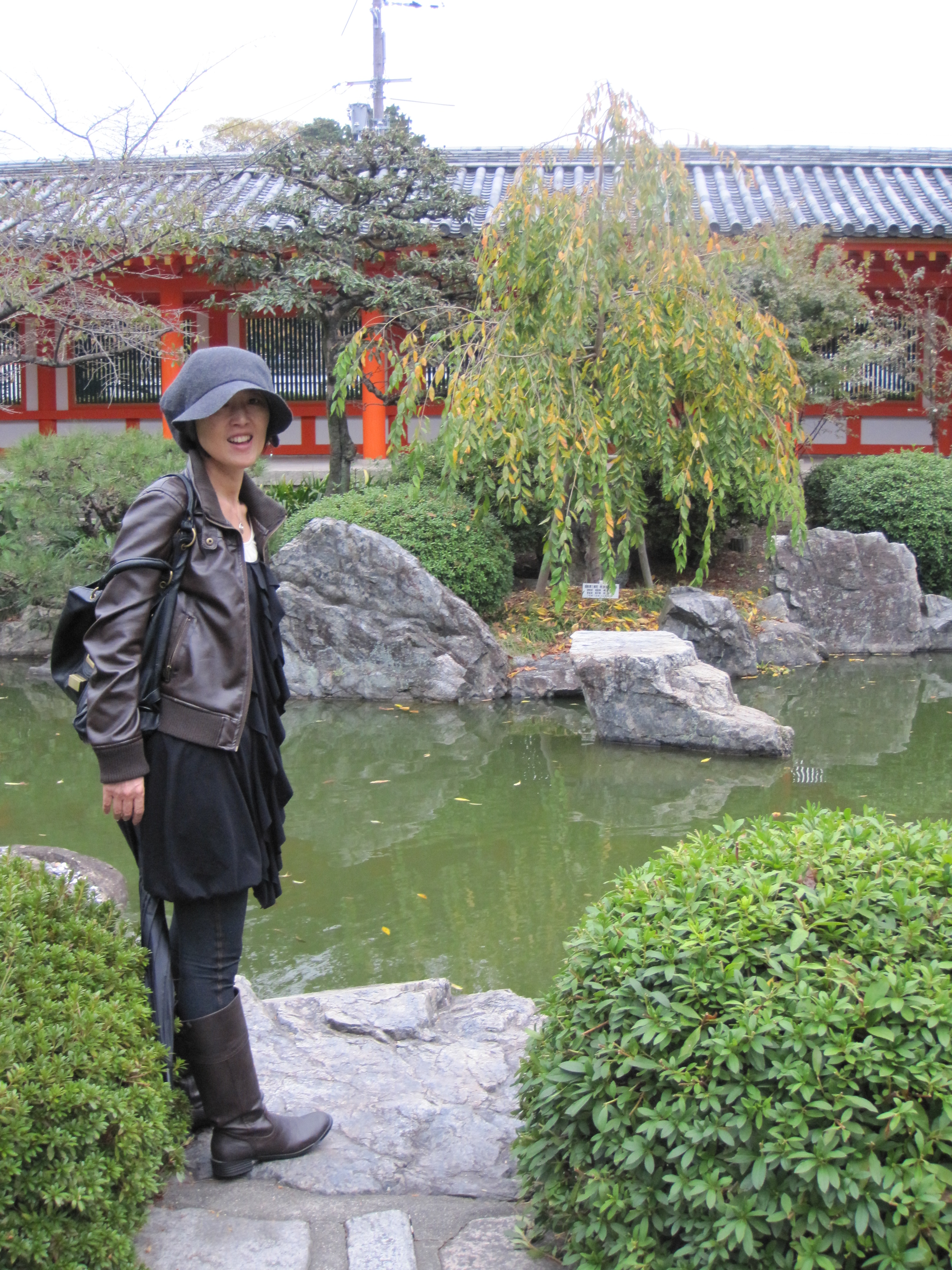
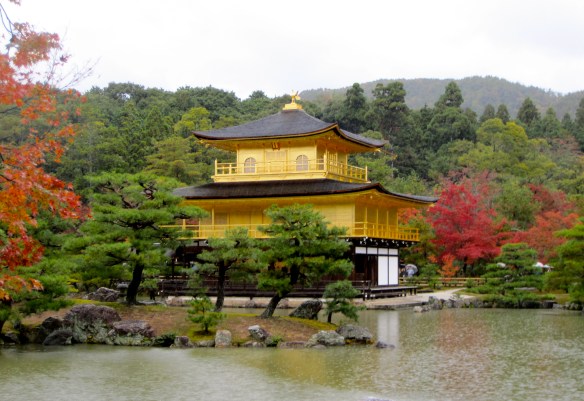
The most famous  Buddhist temples in Kyoto  are Ginkaku -ji and Kinkaku -ji (the gold and silver pavilion).  I bet they are a lot more beautiful when it isn’t raining.

IMG_0871

Kinkaku-ji is a Zen Buddhist temple .  it is  the Gold Pavilion. The garden complex is an excellent example of a Muromachi period garden. The Muromachi period is considered to be a classical age of Japanese garden design. The correlation between buildings and its settings were greatly emphasized during this period. It was a way to integrate the structure within the landscape in an artistic way. The garden designs were characterized by a reduction in scale, a more central purpose, and a distinct setting. A minimalistic approach was brought to the garden design, by recreating larger landscapes in a smaller scale around a structure.
IMG_0864

The Golden Pavilion was built to house some of Buddha’s ashes..There you’ll witness the flow of Japanese people of all ages praying, paying homage, writing their wishes on colorful ema boards, and buying special charms called omamori in hopes that their aspirations of finding a spouse or succeeding in an exam will someday be fulfilled. (i see my ema board it is one of the few non japanese ones!!!!)

IMG_0984

IMG_0933

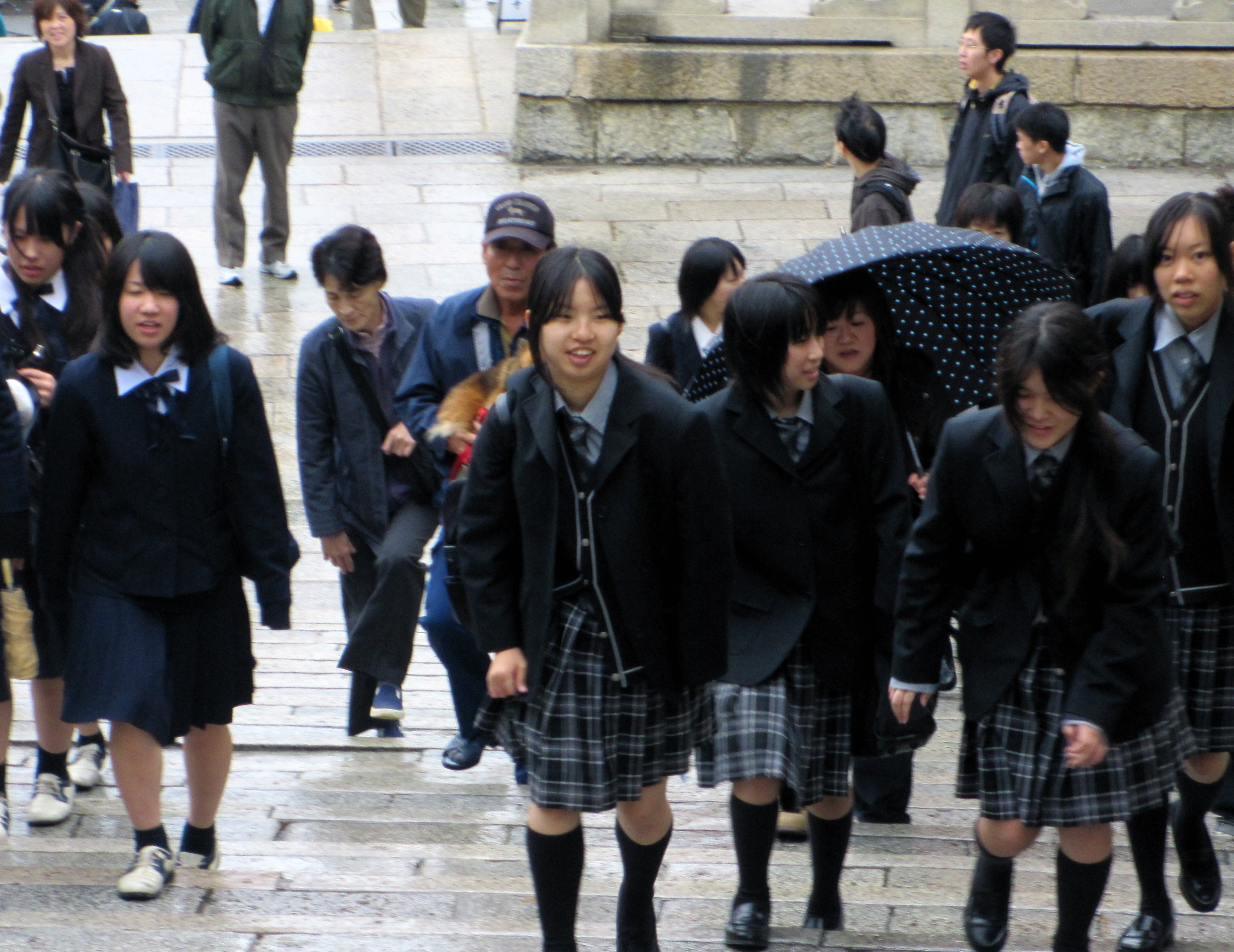
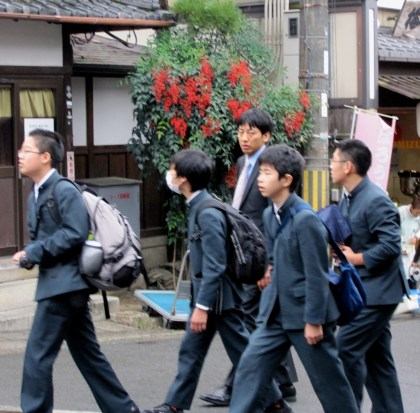
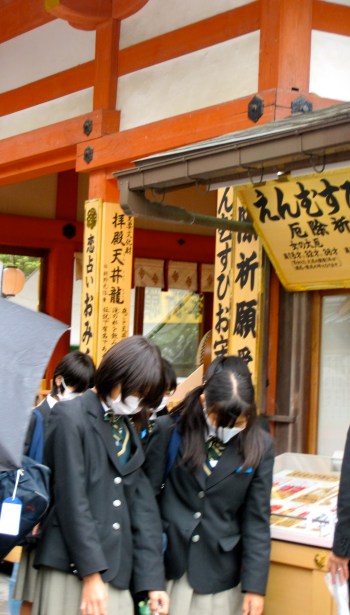
You will see a lot of school children with their classes at all the temples in Kyoto in November. It is the time for luck and they are all praying for good grades.

IMG_0992

IMG_0995

Ginkaku-ji is the Silver Pavilion..  The tea ceremony is said to have originated here. The exterior of the pavilion was originally going to be covered in silver foil, in emulation of the Golden Pavilion (14th century) at Kinkaku – ji. Without ever having enjoyed a coating of silver, the Silver Pavilion is one of the most graceful structures ever built.

IMG_0847

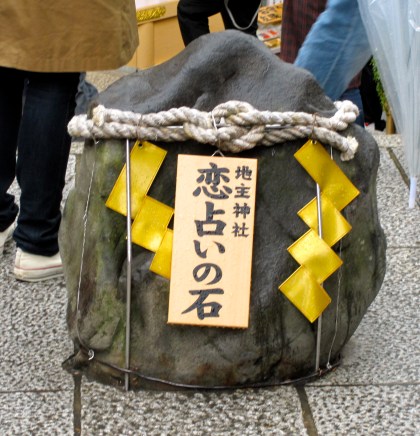
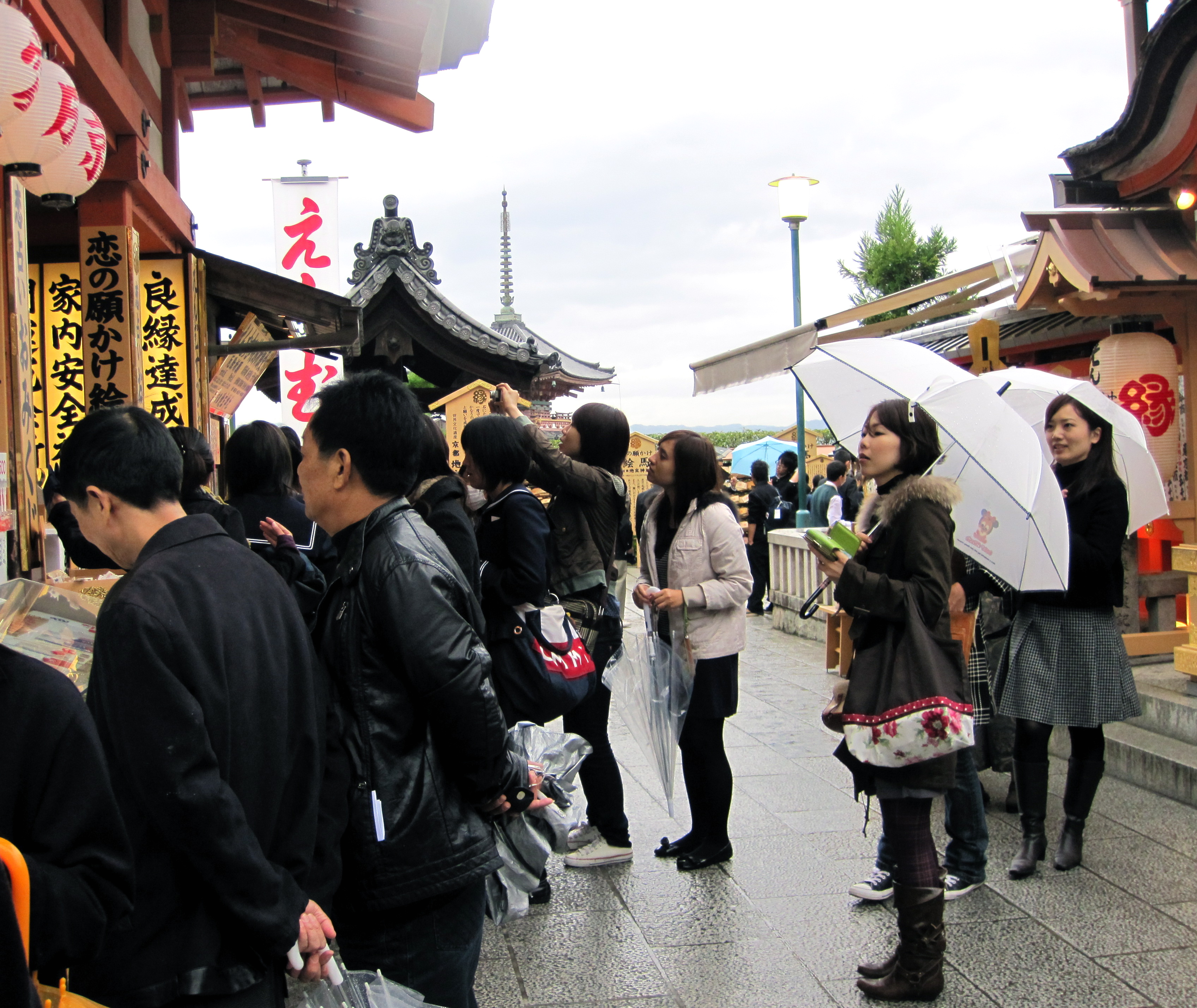
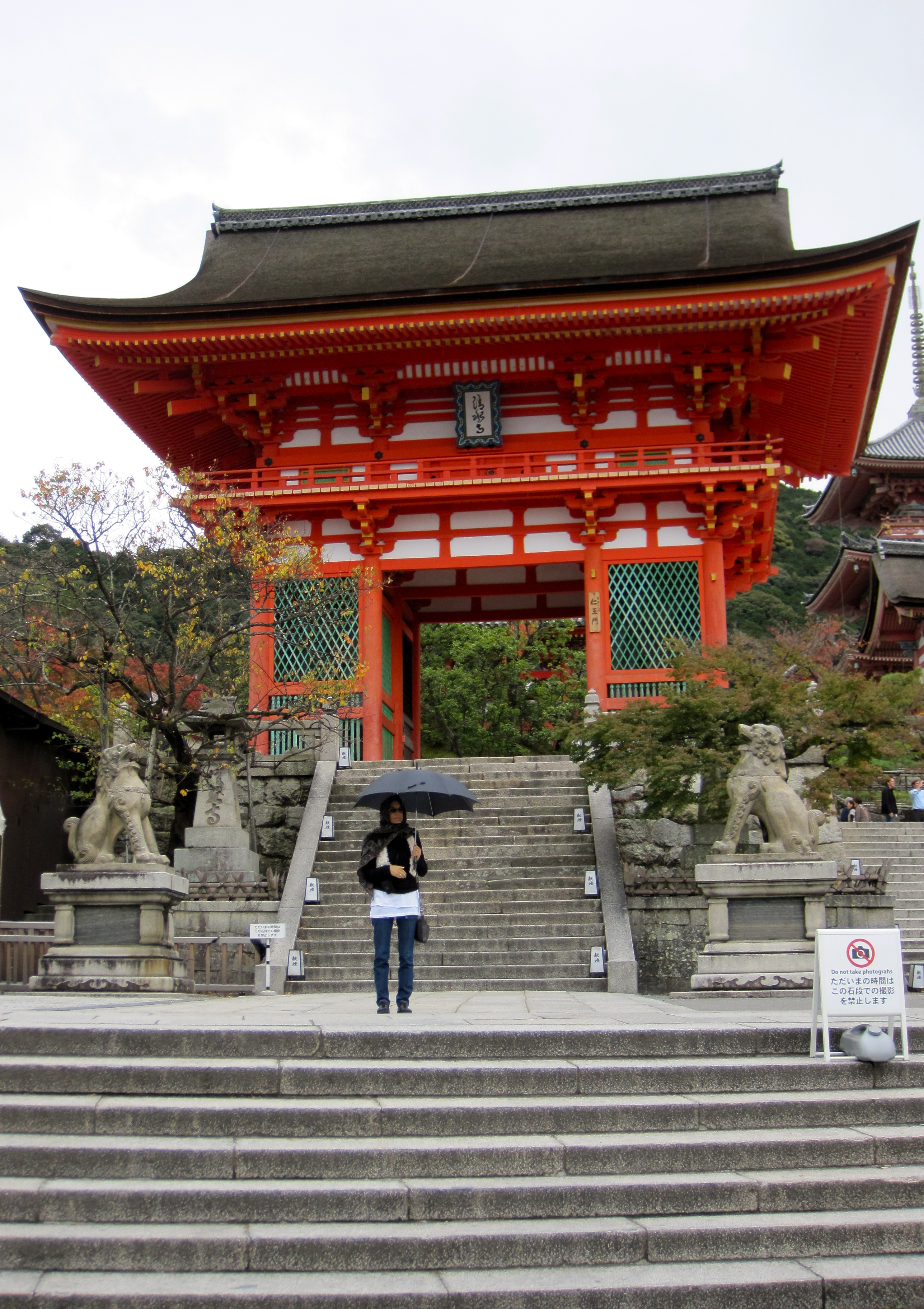
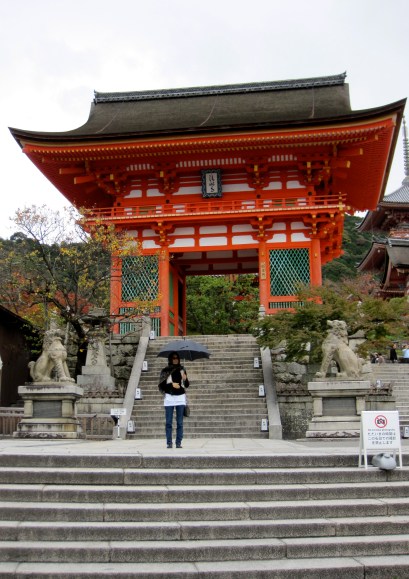
Kiyomizudera Temple  contains several other shrines, notably Jishu-Jinja, dedicated to Okuninushino-Mikoto, a god of love and “good matches”. Jishu-jinja possesses a pair of “love stones” placed 18 meter apart, which lonely visitors attempt to walk between with their eyes closed. Success in reaching the other stone, eyes closed, is taken as a prediction that the pilgrim will find love. One can be assisted in the crossing, but this is taken to mean that an intermediary will be needed. The person’s romantic interest can assist them as well.
It is the highlight of the yearly school trips to the temples for luck in exams.
IMG_0956

IMG_0979

Here is the famous love stone.

IMG_0974

IMG_0983

It’s not the only geisha district left in Japan, but Gion, a collection of streets defined by its old wooden buildings, tea houses and exclusive Japanese restaurants, is by far the most famous. Spend an hour wandering the area and chances are you’ll glimpse a geisha or two shuffling between tea houses in their cumbersome zori sandals and exquisite kimono. Much to their annoyance, you’ll probably see camera-happy Japanese tourists stalking them too.

IMG_1004

You get free tofu refills with an eight course tofu dinner – so delicious. ( Tousuiro 075-561-0035 )

IMG_0879

Few museums are as hands-on as this old elementary school turned shrine to manga, or comic books, and its collection of some 300,000 comics and manga-related exhibits. Visitors can read any piece of manga they want at the  Kyoto International Manga Museum  from the towering wooden bookcases that line every wall and hallway. Some read propped up against the walls or sitting crossed legged on the floor; others hunker down with a coffee at the museum’s wood-decked outdoor café. The eclectic and universally transfixed crowd is a testament to how much a part of mainstream Japanese culture manga has become. http://www.kyotomm.com/english/

French Japanese food served by beautiful girls with strong knees is tres bien. ( Takumi Okamura, Gion  075-541-2205 )

IMG_0948


It’s touristy, and  tacky, but dressing up as a samurai and watching TV actors hamming it up on set does hold a certain charm. Eigamura or Kyoto Toei Studio Park to give it its English name, is a working TV and movie set that doubles as a theme park, where besides dressing up in period costume you can wander around a mock-up Edo-era samurai town and take in exhibitions of the well-known TV series and films shot here.It’s the live studio performances, however, that steal the show. The sword fights are extravagant, the facial expressions and body language overly dramatic, and the dialog at times delivered about as convincingly as an elementary school end-of-year play. It’s Japanese kitsch at its finest. Quentin Tarantino would love it. http://www.toei-eigamura.com/en/

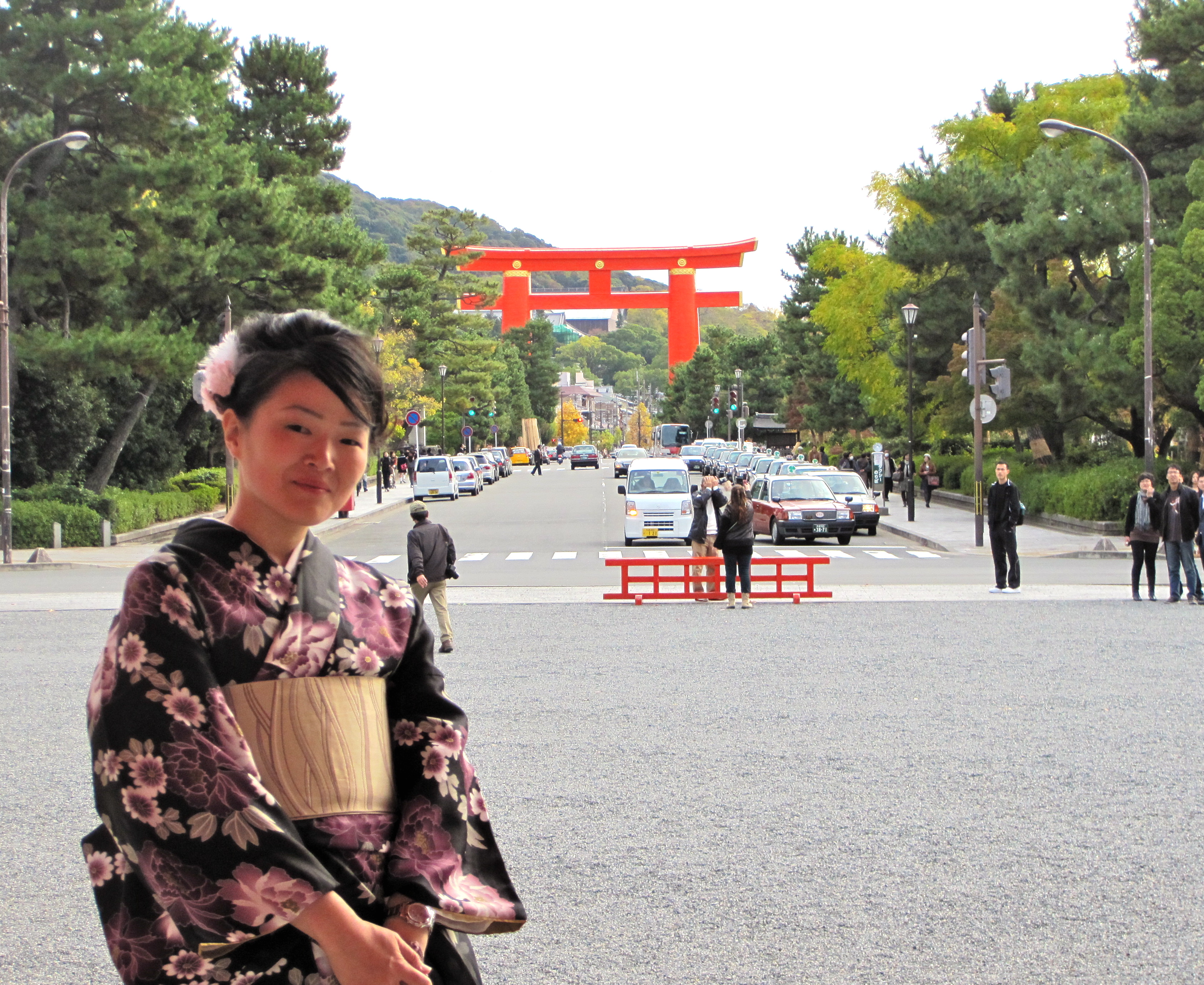
(Heian Jingū) Heian Shrine  was  1895  and is dedicated to the spirits of the first and last emperors who reigned from the city,  A giant torii gate marks the approach to the shrine, The real shrine grounds themselves are very spacious, with a wide open court at the center. The shrine’s main buildings are a partial replica of the original Imperial Palace from the Heian Period built on a somewhat smaller scale than the original.

IMG_0915

IMG_0917

Behind the main buildings there is an attractive, paid garden with a variety of plants, ponds and traditional buildings. The garden’s most striking feature are its many weeping cherry trees which bloom a few days later than most other cherry trees, making the garden one of the best   around the tail end of the season, which is usually around mid April.

IMG950563

Omikuji are paper fortunes that can be bought at both shrines and temples. The fortunes range from great good luck to great bad luck. There are trees to tie the fortunes to avert the bad luck if you are unlucky enough to draw that fortune.

IMG_0925

One of my fortunes is framed in my house. The others might be on a tree. The  thing about luck is that it always changes.

for more info go to

https://havefunflysafe.wordpress.com/2012/08/25/japanese-food/

https://havefunflysafe.wordpress.com/2012/09/14/things-i-have-learned-in-okinawa-and-hiroshima/

https://havefunflysafe.wordpress.com/2012/08/11/things-i-have-learned-in-japan/

https://havefunflysafe.wordpress.com/2012/08/06/things-i-have-learned-in-tokyo/

ki o twu kete

JAZ

Top Ten Coffee Travel Moments

“This coffee falls into your stomach, and straightway there is a general commotion.  Ideas begin to move like the battalions of the Grand Army of the battlefield. Things remembered arrive at full gallop, ensuing to the wind.  The light cavalry of comparisons deliver a magnificent deploying charge, the artillery of logic hurry up with their train and ammunition.  Similes arise, the paper is covered with ink; for the struggle commences and is concluded with torrents of black water, just as a battle with gun powder. “

Honore de Balzac

Top Ten Coffee Travel Moments

I realized by writing this blog that I am addicted to caffeine. There are way too many references to coffee.  It is the only vice I have left.  I thought I would embrace it by writing my top ten coffee travel moments.

!. I am seventeen and in Europe for the first time.  We  are  in CERVINA in the Italian Alps. There is a cappuccino bar that we go to every morning and have fresh cappuccino before a day of skiing. It is pre cell phones and Starbucks.  The only cappuccino  you got in NY  was in the Italian restaurants  after dinner.  There was no decaf cap. Cappuccino every morning was as big a deal as skiing in the Alps for the first time.

2.   The island of SANTORINI in Greece is where i am spending my twenty third summer.   I am staying at my friend’s house on a mountain overlooking the sea.  It is one of those  Santorini white houses with blue tile.  We have to walk halfway down the mountain every morning to have coffee and fresh bread with butter and honey, at a café run by a family that doesn’t speak English. Santorini was  not the five-star  tourist destination it is now but it always had five-star views of the sea, volcano and black sand beaches. .  “kafe me gala  sketos parakalo” The grandmother always dressed in black would smile at my bad Greek pronunciation and bring me my coffee. They used condensed milk all the time with coffee and I love the taste.  I think they wear black  because someone in their family close to them has died – usually they are widows.

545319_436959296360980_1027944743_n

3.  My daughter who is twelve and her tap company have performed at the Cuban Ballet Festival throughout Cuba.  We are driving back to HAVANA from Santa Clara.  Since Petrol is scarce, members of the Columbian Ballet Company are sharing the bus with us. We get back around five and I have a serious lack of  caffeine headache.  I invite the Columbian dancers who I have spoken to in bad Spanish  for a coffee at the hotel.  I order a double espresso and drink it down  like I am doing a shot of tequila.   First they stare at me and then they laugh and do the same.  We start by drinking espresso shots –we move on to Mojitos. No one slept that night. (Cuba,Jim Kane)

734564_622571224426673_1184425465_n

4. We have arrived at the SACRED VALLEY in Urubumba, Peru.  We are spending the night at the beautiful Sol Y Luna  hotel and the altitude is 9000 feet. (2400 m)  It is our first night in the Andes.  I start to have this headache and feel dizzy. As we are going to our rooms someone says to me, “Be careful, the headache is the first sign of altitude sickness”.  I go right to the worst case scenario.  I remember my mindfulness training as I am going into high anxiety mode. I investigate the feeling in my body and think it isn’t that severe. It feels like a lack of caffeine headache.   I remember I didn’t have coffee that afternoon. I relax and go right to sleep. I wake up early and have a wonderful Peruvian breakfast  of yogurt , fruit, kikucha cereal ( grain like quinoa) and coffee. No more headache.

601689003311

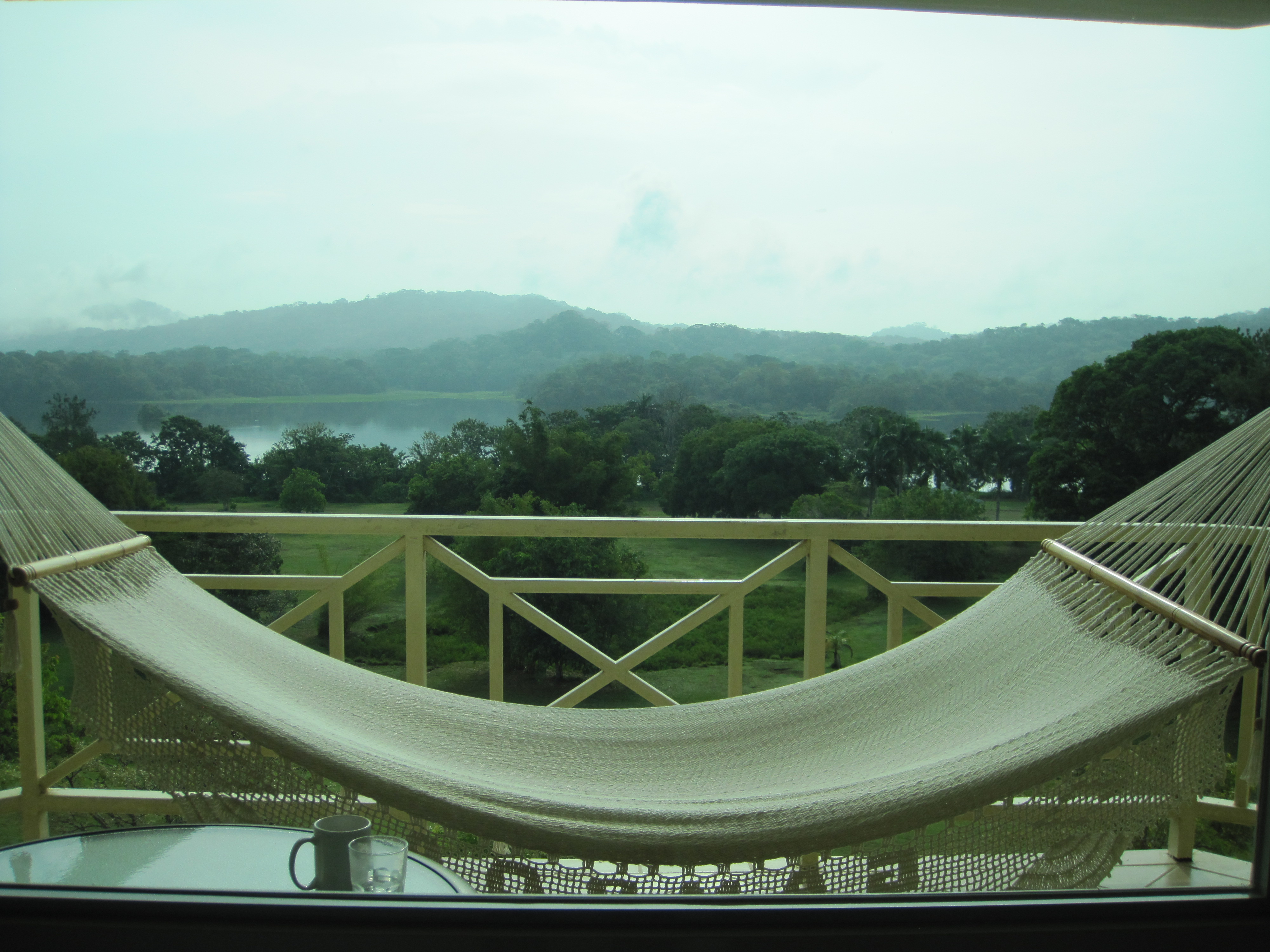
5. I usually hate instant room coffee.  But in PANAMA it was really good. It is called Puro and I brought some home.   I have a confession. I kind of like non dairy creamer   Sometimes your diet needs a few chemicals.  I got up every morning in  Gamboa  to watch the sunrise over the rainforest and had a coffee while lying in a hammock on the terrace.

IMG_3727

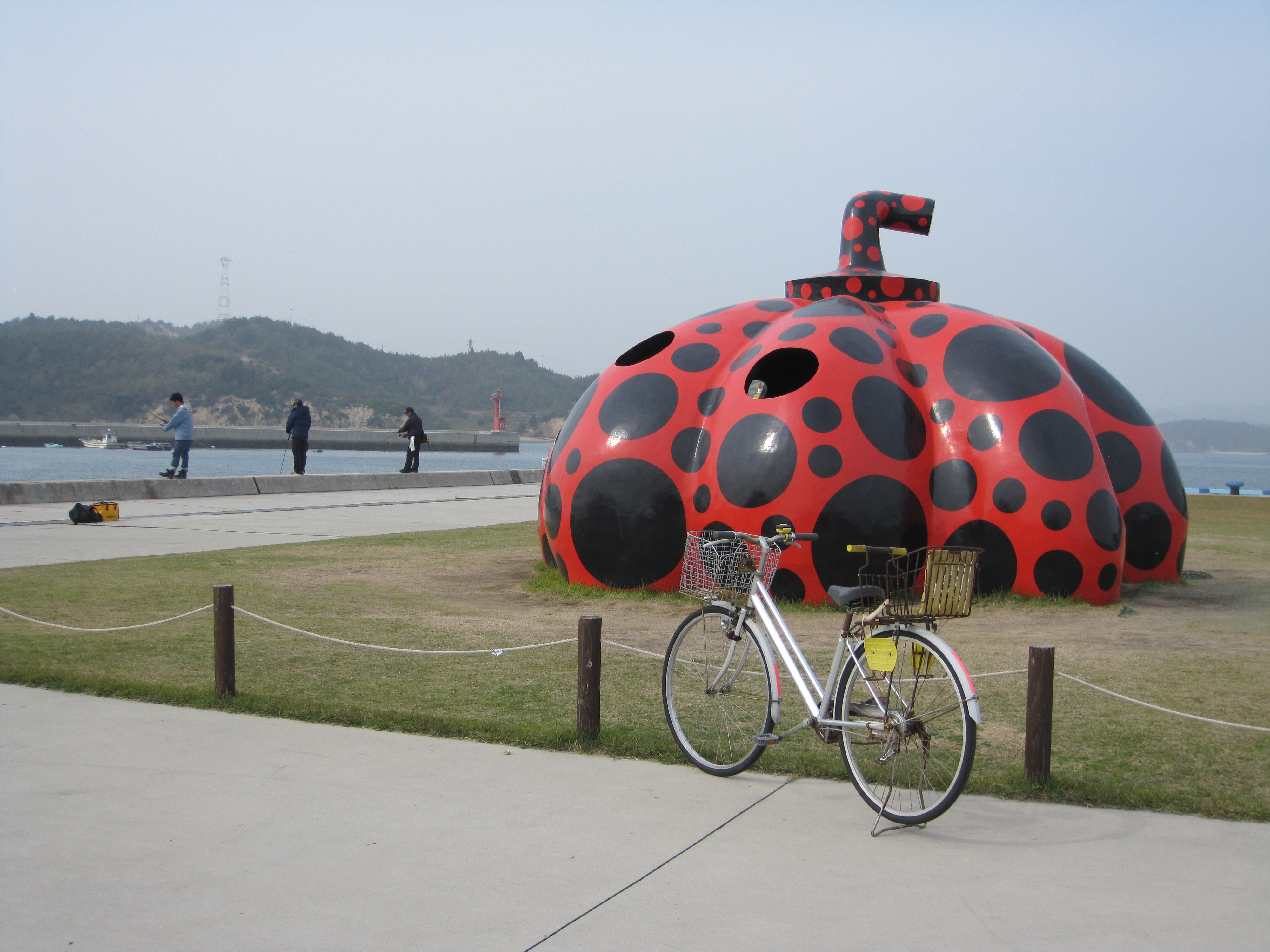
6. Anna and I have spent the day on  the island of NAOSHIMA in Japan.  It is the island that Tadao Ando has designed and dedicated to art and nature.  There are museums, outdoor sculptures, galleries and installations in houses throughout the island.  It is a bit like a scavenger  hunt trying to see everything.  But we did it. We are at a small  ferry at the other end of the island that locals use to head back to the mainland . I am looking for coffee. We see something that looks like it might be open. We walk in. There is cool music and magazines and interesting furniture and art . It is  like a Japanese Greenwich village coffee-house  on this little island street.  We can’t believe our luck.  We have coffee and wait in this beautiful restaurant for the ferry and talk about our amazing day.

IMG_2345

7. I had been  in the  incredible  city of VENICE for a few days with my daughter and a friend. My son arrived after traveling around Europe alone.  He had a lot to say and wanted to have  a coffee in Venice and talk about his travels. We sat in a café on the canal and he told me his stories. I was happy sitting there listening to him  and I could hear  that he loved to travel as much as I did.  Family travel moments are few and far between now. It was a beautiful trip.

IMG_0258

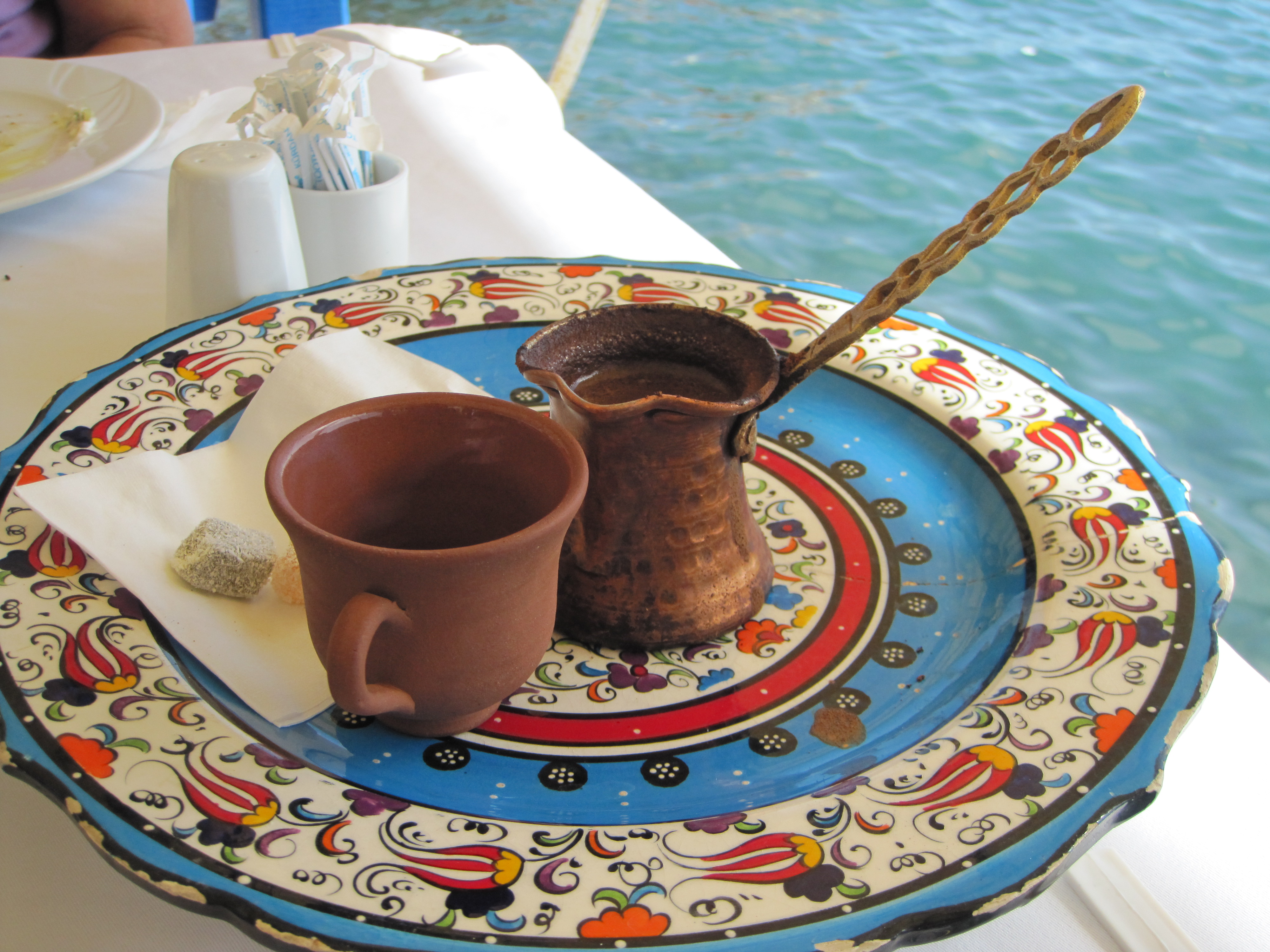
8.  It was my first day in ISTANBUL. I had shopped at the Grand Bazaar with my guide for the day Renan.  We stopped for lunch.  We met  carpet salesmen from Los Angeles.  Suddenly, it didn’t seem so far away.  This was my first experience with Turkish food. Hot yogurt soup and something with my favorite vegetable –eggplant.  – delicious. I had my first Turkish coffee. (a lot like Greek coffee) I loved the thickness and the feeling of the grounds in my mouth ( coffee that you can chew).  It isn’t bitter either so I am able to drink it without milk. She read the coffee grinds to me.  We used to do this in Greece. It was my first coffee fortune in a very long time.  It wasn’t bad. My next one wasn’t great. So I stopped doing it and just drank the coffee.

IMG_4382

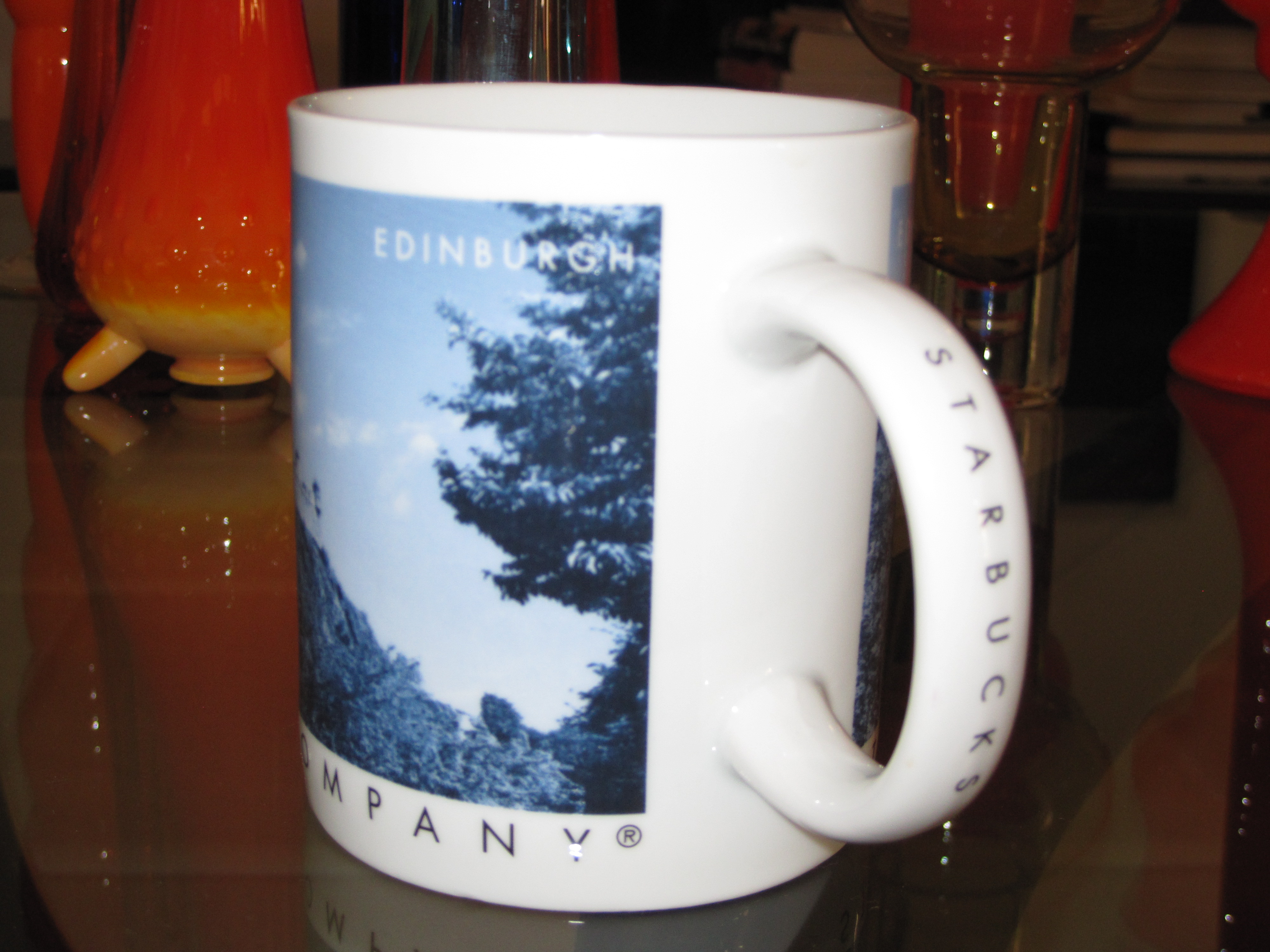
9. I am in EDINBURGH, Scotland for the Fringe Festival. My daughter is performing there with her high school theatre group. In the summer, walking down the Royal Mile is crazy. Everyone is in costume and giving out flyers and performing and begging to get you to go their shows. The Starbucks is right at the beginning of the Royal Mile, next to the Fringe Ticket Office. I meet a friend for coffee after picking up some tickets. We are surrounded by Vikings and Elizabethans all having cappuccinos and lattes. In fact, only the barristers are   dressed in modern-day clothing.  I felt  a little underdressed.

IMG_5252

10.   A few weeks ago, I was walking down Portobello Road in LONDON with my college friend Suzie.  Suzie was the first person I traveled around Europe with . We were about eighteen. We lost touch after college but reconnected  a few years ago through the magic of facebook.  We were both going to be in London at the same time. We aren’t looking for vintage clothes like we used to  (and still do) but vintage housewares.  It is freezing out. We go into a coffee house and see a long queue. It is called the Coffee Planner. The girl in front of me says it is the best coffee on Portobello Road and worth waiting for. Suzie buys an unbelievably good sandwich from a vendor outside and we sit and drink our coffees eating this sandwich.   Jayne and Suzie together again in Europe. ( St. Paul’s Cathedral from the Millennium Bridge)

IMG_0456

Do you have any good coffee moments?

Fly safe,

JAZ

Food Rules I Have Learned While Traveling

Food  Rules I Have Learned While Traveling.

“Travelers never think that they are the foreigners.’  ~Mason Cooley

You can eat sushi with your hands.

Sashimi is always eaten as a first course before sushi. You can’t eat sashimi with your hands.

Don’t eat anything with your hands in Chile.

You can eat with your hands in Burma (Myanmar). People eat food with their hands in Bangladesh, India, Nepal, Sri Lanka and Pakistan. People eat with their hands in other countries in Africa and Asia also.

Always keep your hands above the table in Mexico.

Eat only with your right hand in Egypt. (This is true for many Middle Eastern countries) Salting your food is a huge insult.

In Germany, eat your meat with a fork. Use a knife only if it is necessary. If you eat meat with a fork, it lets the cook know the meat is tender.

Pad Thai is always eaten with a fork and a spoon. Thai people eat most of their food with a spoon in their dominant hand and a fork in the other. Chopsticks are only served for soup.

Mezze (small plates) come before a meal.

Pasta is not a main course.

In Uganda, eat fried grasshoppers with your hands like chips. In Mexico eat them on a taco with guacamole and cheese. In Thailand eat them on a stick. In Burma, peel off the head and wings and gulp.

In Burma, they say that anything that walks on the ground can be eaten.

Margherita Pizza is really the only thing Italians consider pizza and should  be eaten with a knife a fork.  The pies are usually served unsliced. It is not a hard and fast role like never cut your spaghetti with a knife and fork.

In Mexico, never eat tacos with a knife and fork.

In France, don’t eat the bread before the meal.

Never turn down vodka in Russia or tea in Turkey.

In France, eat frogs legs like you would eat fried chicken –with your hands in a casual setting, with a knife and fork in a formal restaurant.

In Kenya drinking cows blood mixed with milk is a special treat.

Chinese people do not eat fortune cookies for dessert but oranges for good luck.  It is illegal to eat an orange in a bathtub in California.

In China you are expected to leave a small amount of food uneaten on your plate. If you finish everything, you are sending the insulting message that not enough food was served to you.

It is rude to burp at a table in Japan. It is not rude to burp at a table in China.

In Singapore gum chewing is illegal.

In Mexico Men make toasts, women do not.

In Russia, Do not drink until a toast has been made.

In Armenia, if you empty a bottle into someone’s glass, it obliges them to buy the next bottle.

In restaurants in Portugal don’t ask for salt and pepper if it is not already on the table. Asking for any kind of seasoning or condiment is to cast aspersions on the cook. Cooks are highly respected people in Portugal.

Eating from individual plates strikes most people in Ethiopia as hilarious, bizarre, and wasteful. Food is always shared from a single plate without the use of cutlery.

In Japan it is acceptable to loudly slurp noodles and similar foods. In fact, it is considered flattering to do so, because it indicates that you are enjoying the food.

Do not eat fugu from  an unlicensed chef. The Japanese pufferfish, or fugu, is a delicacy in Japan. It’s also potentially one of the most poisonous foods in the world, with no known antidote.  Japanese chefs train for years to remove the deadly portion of the fish before serving it, though generally the goal is not to fully remove it, but to leave just enough of a trace to generate a tingling sensation in the mouth, so the customer knows how close he came to the edge.  This was one of my best meals in Japan and I have lived to write this.

At this moment,  someone is making a food etiquette mistake.

Fly safe,

JAZ

Things I Have Carried

“Though we travel the world over to find the beautiful we must carry it with us or we find it not “             Ralph Waldo Emerson

Things  I   Have Carried

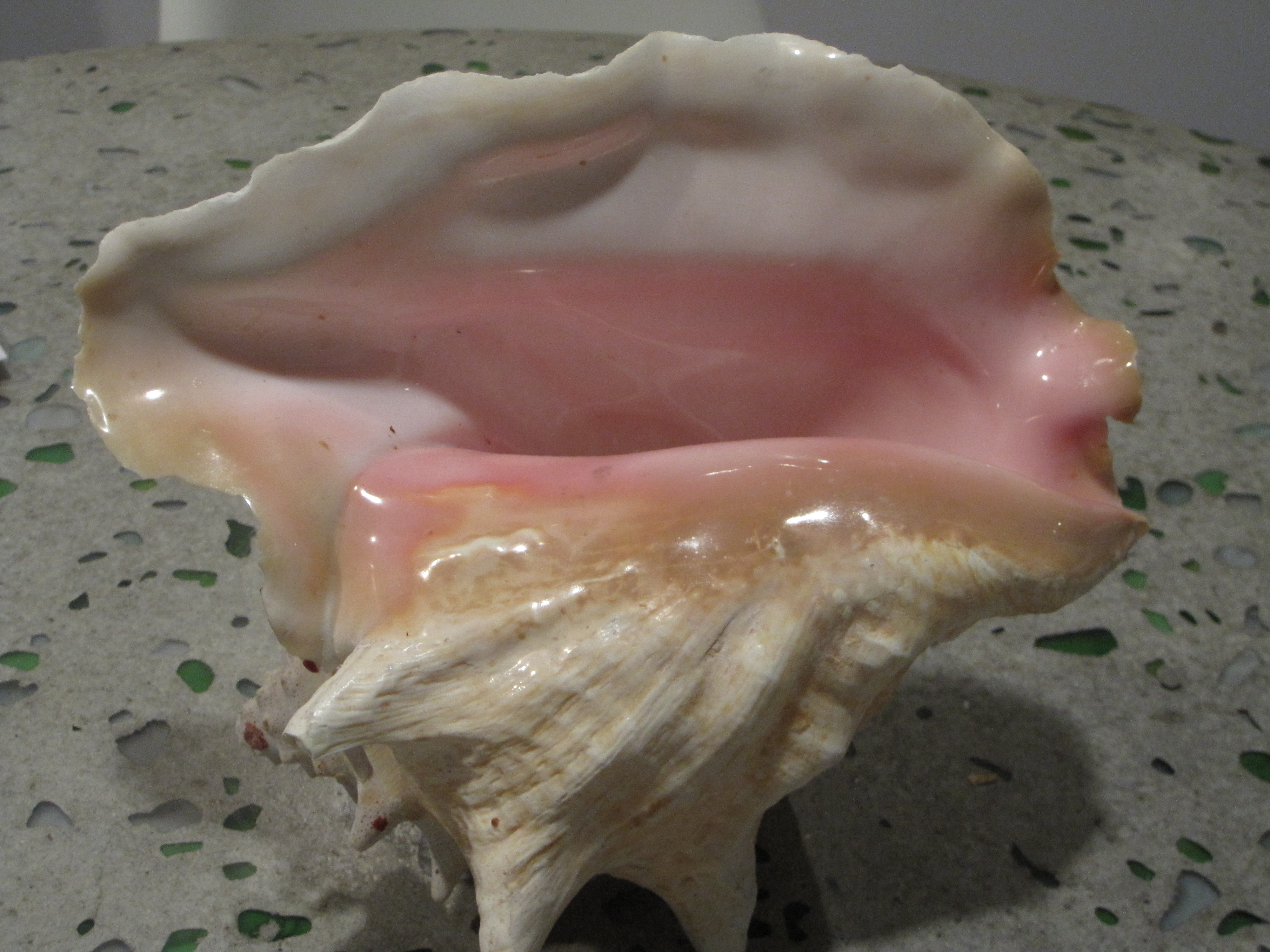
1. I have this GIANT CONCH SHELL on my kitchen table. It is from a pink sand beach in Eleuthera,Bahamas.  It is one of those giant shells you see in stores and think it isn’t real. There it was on the beach one morning when I was walking. I carried it back to my room and then proceeded to carry it back on the plane with a three-year old and a six-year-old. I see that shell every morning and it reminds me of a pink sand beach and a happy  very young family.

2. My friends told me about the perfect gift to bring  from Munich – DAS MURMELTIER DER ALPEN  ( singing  animal in the chipmunk family) They told me to buy them at the airport –more carry on bags. I  put them in the overhead compartment and went to sleep. Weisswurst breakfast is very heavy in the morning (white sausages and a pretzel) Suddenly everyone on the plane is in a panic. There is a  clicking noise and no one can figure out what it is.  Our first thought is that it must be a bomb. As they are about to call security, the yodeling and drinking songs in German  begin. The chipmunks had started singing in the overhead compartment.  Travelers are way too stressed out these days.

3 The Maneki-neko (beckoning cat) is a sign of good luck in Japan. They are made of ceramic  ( most common) and usually come in pairs.  You can find them everywhere in Japan. The beckoning right hand means money and the left hand means happiness. BECKONING CATS are found often in Japanese businesses and homes. Since I felt that everyone in my family needed Japanese luck, I bought several pairs of the cats. Between the Starbucks mugs from every city in Japan and the several pairs of cats, they overflowed into my carry on luggage.  I’m  pretty sure airport security in Osaka would have laughed at me while looking at  the x-ray machine, if it wasn’t Japan and they weren’t so polite.

4. The following year I had to carry  the protective and breakable lions from Okinawa.  They are called SHISAS and are half lion half dog from Okinawan mythology. They come in pairs. The shisa on the left traditionally has a closed mouth, and the one on the right has an open mouth. The open mouth is to ward off evil spirits and the closed mouth is to keep the good spirits in. They are usually guarding the entrances to homes and businesses.  They are sold everywhere in Okinawa. I feel that anything to ward off evil spirits makes an excellent gift.

5 Betel nut is a mild stimulant that is chewed throughout Asia.  It involves, betel nut, fresh pepper leaves (or other spices), powdered lime and damp tobacco leaves. It is wrapped in a betel vine leaf forming a wad or quid. The last ingredient is saliva . ,Your gums , teeth and tongue turn bright red when chewing it.  Eventually, you spit it out.  It is one of the most used addictive substances in the world. It creates a buzz and curbs hunger. The streets and stairwells of Burma are stained with red betel nut. It is customary to use special compartmentalized boxes to hold the ingredients for the betel nut quids. When guests visit, they are presented with a fully stocked box. Some of them are quite beautiful. I brought BETEL NUT BOXES back from Burma.(but no betel nut)

6  There is a Shang Hai Tang store in the Hong Kong airport and it was having a sale.  Shang Hai Tang is DESIGNER CHINESE CLOTHES. Their flagshop store is in Hong Kong but was always one of my shopping stops in NY.   Changing planes in Hong Kong, I managed to add to my already bulging hand luggage , two sweaters, a shawl and some Chinese shirts in beautiful fabrics.  You can’t go to Hong Kong without shopping – even if it is just in the airport.

7.  My goal when skiing in  Cervina, Italy was to find a pair of those FLUFFY WHITE AFTER SKI BOOTS It was many years ago and I had never seen them  when I was  skiing in Vermont.  I finally found the perfect pair in a shop next to my favorite cappuccino bar. The best thing was to wear them on the plane since they took up so much space.  It was April and we had been spring skiing. Changing planes in Brussels,  we were walking slowly and my friends and I got bumped from the plane.  I remember thinking it was odd that the teacher left us there.  The four of us were sixteen and seventeen.   I felt really embarrassed walking around the city in those after ski boots, ( the weather was quite warm) but having an unexpected   free day and night in Brussels was very cool.

8.  There is a craft  market  in the Plaza del Armas in Old Havana not far from El Floridita.   (Hemingway’s hangout where he used to drink his daiquiris not mojitos) They sold  WOOD CARVINGS OF DANCERS   The woman who was helping me spoke English with no accent. She told me her father was the linguistics professor at the university and she spoke twenty languages . She was selling wood carvings for a dollar.   They were quite nice but very delicate . .   I had to put them in my carry on bag and hold it very carefully. Still,many of them  arrived with missing limbs. It  looked a bit like a war when I unpacked them. Arms and Legs all over. –luckily there is no shortage of crazy glue here.  They were great gifts for all our dancer friends.

9. Hvar,Croatia is where some of the highest quality of lavender is grown in Europe. I bought a lot of small glass bottles of LAVENDER OIL I figured if something broke, it would be better  in my carry on bag. . Lavender would have a calming effect on the nervous  post 9/11 fliers.

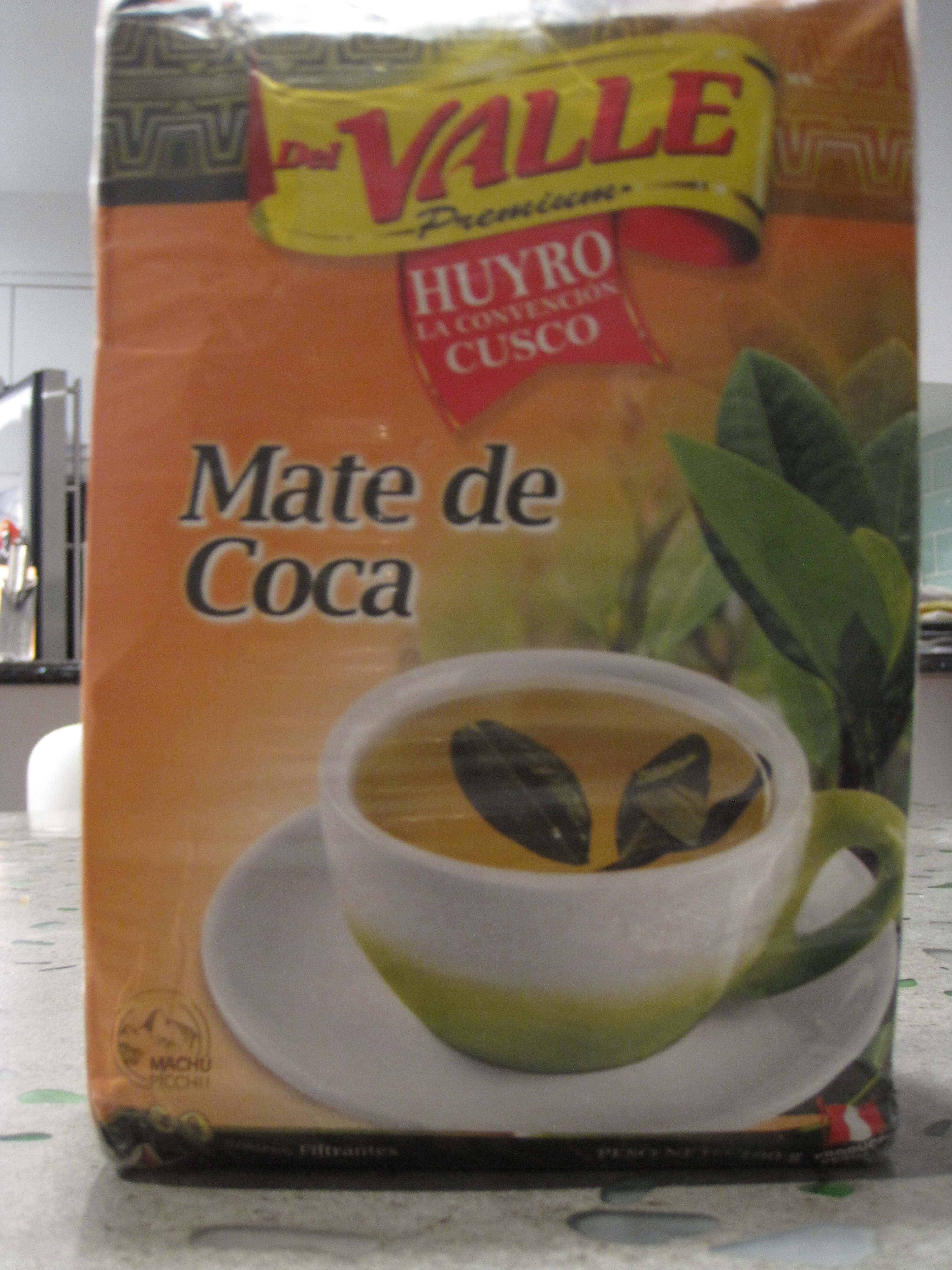
10 Coca leaves have been part of the Andean Culture for 5000 years. COCA TEA   is made from the coca plant.  It is not cocaine  like grapes are not wine.  Neither drinking  or chewing turns it into cocaine. It is a mild stimulant without the speedy effect of caffeine.  However when airport security sees a word like coca, they are paranoid.  I thought the best thing to do was put some  in my luggage and carry a few in my hand luggage as well.  If I got stopped, this would show that I was innocent. (I watch a lot of Locked Up Abroad episodes)   The guide in Peru was trying to find out once if it was ok to bring back coca tea to the states. She asked airport security in Miami and was questioned for four hours.   I didn’t want to bring it up.I walked through customs in Miami right  passed the sniffing dogs with no problem.

Some things are good to carry with us and others should be put down or left where they were. We choose the things we carry.

Fly Safe,

JAZ