White Walls Say Nothing – Urban Art In Buenos Aires

White Walls  Say Nothing – Urban Art In Buenos Aires

“First day of Advanced Art, my teacher said “I bet none of you know an artist who is currently alive” I raised my hand and said “Banksy” he shook his head and said he wasn’t a real artist, that is  when I knew he wasn’t a real art teacher.” Ariel Dennis

IMG_0457

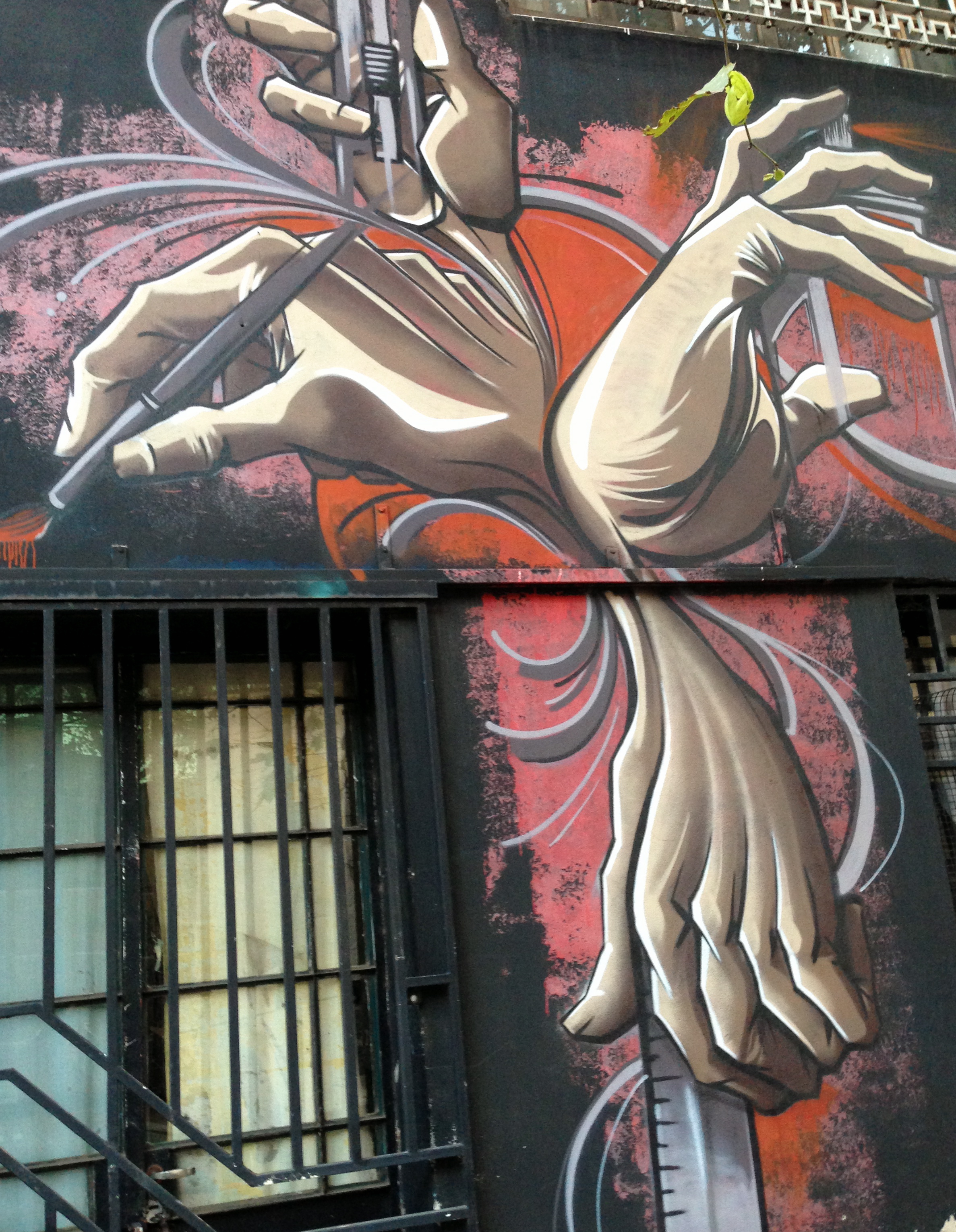
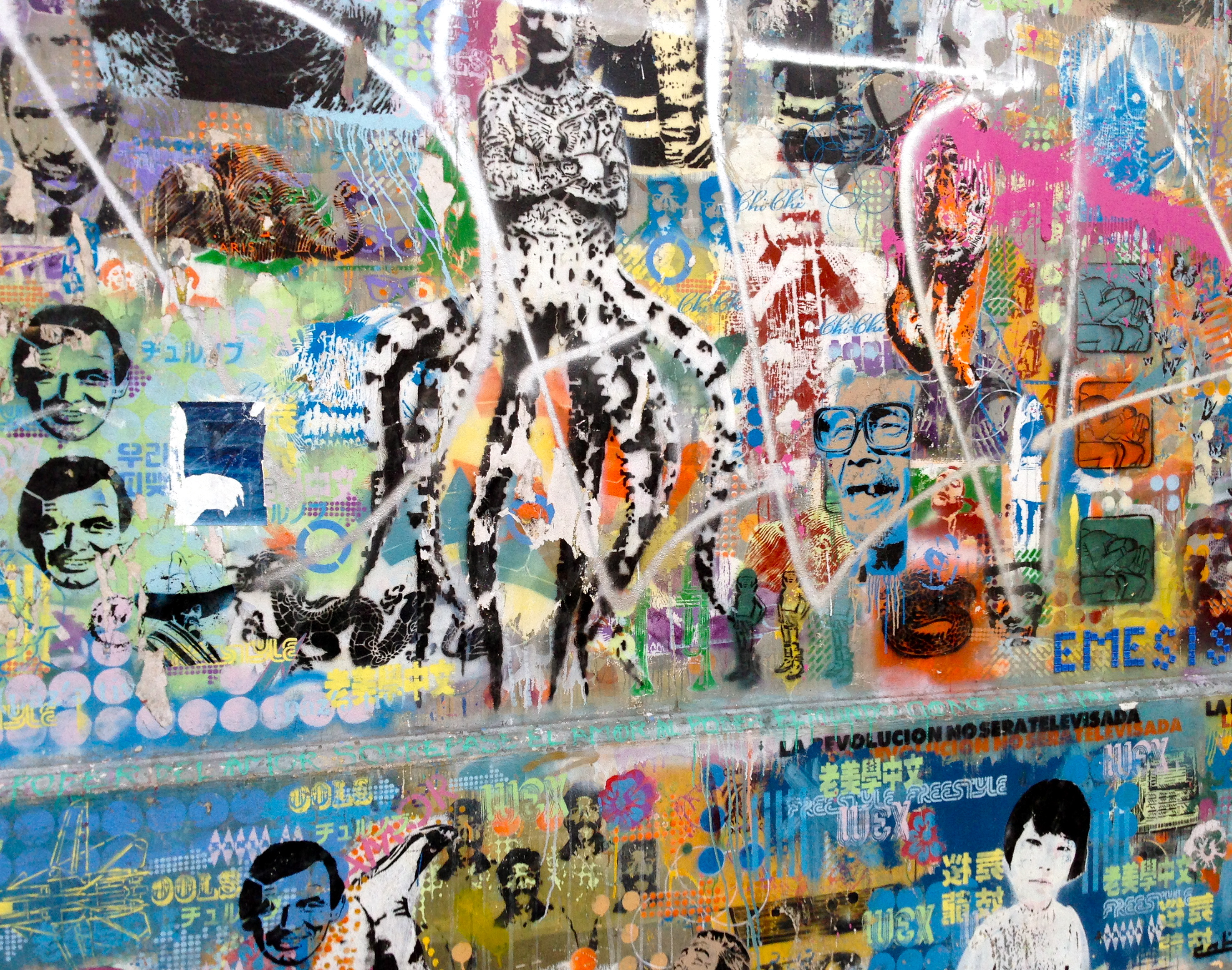
Streets are the world’s biggest gallery and in Buenos Aires,  graffimundo are the curators.  graffitimundo is a nonprofit organization that promotes street art in Buenos Aires. They have group tours every Wednesday, Friday and Saturday at  3 :00 PM and private tours available. It is a great way to see the street art of Buenos Aires. Contact them at http://graffitimundo.com/.

IMG_0464

IMG_0465

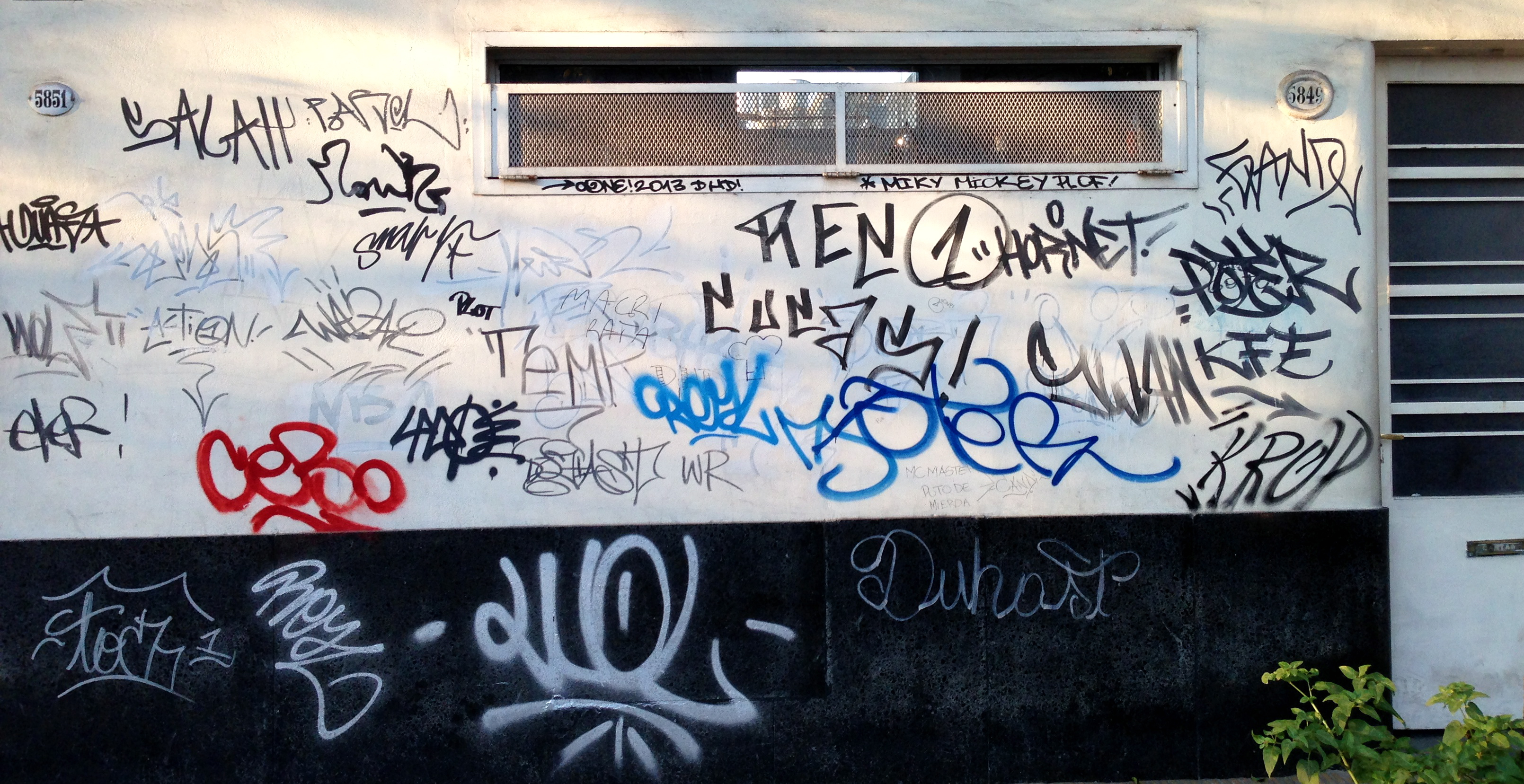
It is not exactly illegal to paint on the outside walls in Buenos Aires.  As long as the artists have the consent of the building owners,  it is fine.  There are many unoccupied spaces  and dividing walls between buildings. This gives  plenty of  locations for artists to bring a wall to life. IMG_0155 IMG_0157

IMG_0475

IMG_0170

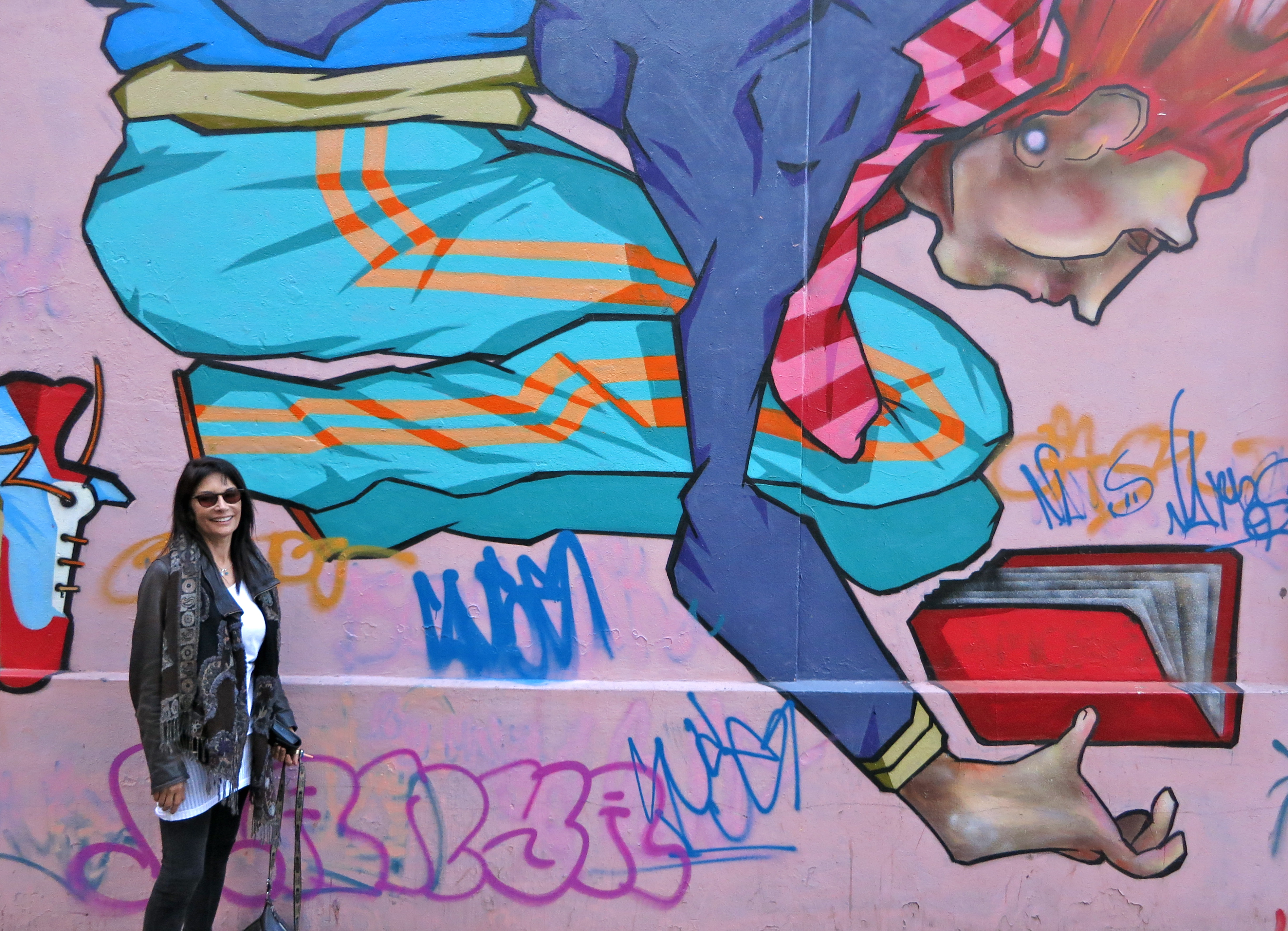
It is possible to come across artists painting during the day on the walls.  This is unheard of in most other cities.  Urban artists come from all over the world to paint here. They don’t have to run in the night and have time to create some beautiful thought-provoking pieces.

IMG_0462

I love graffiti art.  My dog is named after a graffiti artist.  It is the art of the community.  People have always written on walls-from cave paintings to love hate propaganda to murals of epic detail and size.  You have to be really committed to paint on a wall knowing it won’t be there forever. The paint will fade, cracks will form or someone can paint over it.   It’s a product of the moment. It is art for art’s sake and not for sale. IMG_0145
IMG_0468

I don’t even mind the writing graffiti. It is some form of communication. When I used to see the freshly painted writing on the trains in NY (I thought it looked great), I would think – another person who has a found a  way to express his anger without a gun. Of course, I’m not the woman in Buenos Aires who washes it off her walls every day or the people who clean up hate crimes of “art”.  There was one street  where a father kept writing I love you to his kids. I wonder what he did that he had to write it all over the walls. There are always stories.

IMG_0152 IMG_0151

Johnny Robson was my tour guide and founder of graffitmundo. They started it because they thought the  urban art scene in Buenos Aires was amazing. There was no information about it. graffitimundo was formed to help  share what they had learned with anyone  who was interested. It was their way to support people  who were incredibly talented and under appreciated.

IMG_0190

Johnny is passionate and knowledgeable about the art, artists and their style of painting on the streets of BA.  Every artist and every picture tells a story and Johnny is only too happy to tell them all.  Halfway into the tour , I find myself recognizing artists and styles. The pieces are dynamic. Some express political and social messages and some  may just express emotion.  They are filled with energy, color and life.

IMG_0484

IMG_0175

You get to see streets all over Buenos Aires as well.  On the tour we visited walls in Palermo, Villa Crespo, Chacarita and Colegiales.

IMG_0179

IMG_0486

IMG_0183

I loved the collaborative pieces. In the early graffiti years, Crews (art gangs) have always worked together to paint on the subways and streets. This gave way to Collaboratives  – sometimes political -that could do more than an individual artist. According to Johnny, the artists are happy to share the walls with other talented artists. Another reason  urban artists like to paint in BA.

IMG_0480

IMG_0476

IMG_0478

IMG_0488

We stop off at Hollywood in Cambodia (great name for a gallery) an urban art gallery located on the first floor above Post Bar in Palermo with a rooftop terrace. Americans would probably call it the second floor.  It is run by a few art collectives.  I want to buy everything, but settle on a couple of pieces that I can carry. IMG_0189 IMG_0191

There is not an empty space of wall in the bar below either. IMG_0201 IMG_0199 IMG_0194

The title of this piece is also the title of a documentary that will be out soon. “White Walls Say Nothing” is a feature documentary, produced by White Wall Industries in association with graffitimundo. It is the story of Buenos Aires Urban Art Scene as told by the artists.  I can’t  wait to see it.

I highly recommend this tour in Buenos Aires  if you are interested in modern art or street culture.  For hipsters and scenesters it is the coolest thing to do (unless you are  actually painting on the walls)
IMG_0460

I’m  still amazed by the amount of street art and quality of some of the pieces I saw that day.  I  turned a corner and I saw a painting that I wanted to look at for a long time . I watched people walk by and not even look up.  It’s crazy that they didn’t  see  what they were missing.    Because art , like luck is where you find it.

IMG_0171

Viaje con cuidado,

IMG_0472

JAZ

Things I Have Learned In Buenos Aires

Things I Have Learned In Buenos Aires

“The two elements the traveler first captures in the big city are extra human architecture and furious rhythm. Geometry and anguish.” Federico Garcia Lorca

Recoleta Cemetery is the final resting place of the good, the bad, the beautiful and the rich people of Argentina’s past. It is a remarkable necropolis of tombs and mausoleums.  It is proportioned like a miniature village with its stately Greco-Roman crypts lining the narrow walkways. They believed “the bigger the mausoleum, the closer to God. “ It is less expensive to live your whole life in Buenos Aires than it is to be buried in Recoleta.

IMG_0074_2

There are approximately eighty cats who live at the Recoleta cemetery.  They say that they are the guardians/ tour guides of  the 4800 tombs and have been taken care of for twenty years.  Everyone including me  takes photos of them.

IMG_0086_2

IMG_0121_2

When you enter the cemetery through the neoclassical gates (designed by  the Italian architect Juan Antonio Buschiazzo.)  There are two messages in Latin. The message on this inside is from the living to the dead and says rest in peace. On the outside, it is from the dead to the living and says Wait for God.

IMG_0124_2

IMG_0118_2

You have found Eva Peron’s flower strewn monument when you see people. She is buried among the rich people who did not like her.

IMG_0098_2

IMG_0101_2

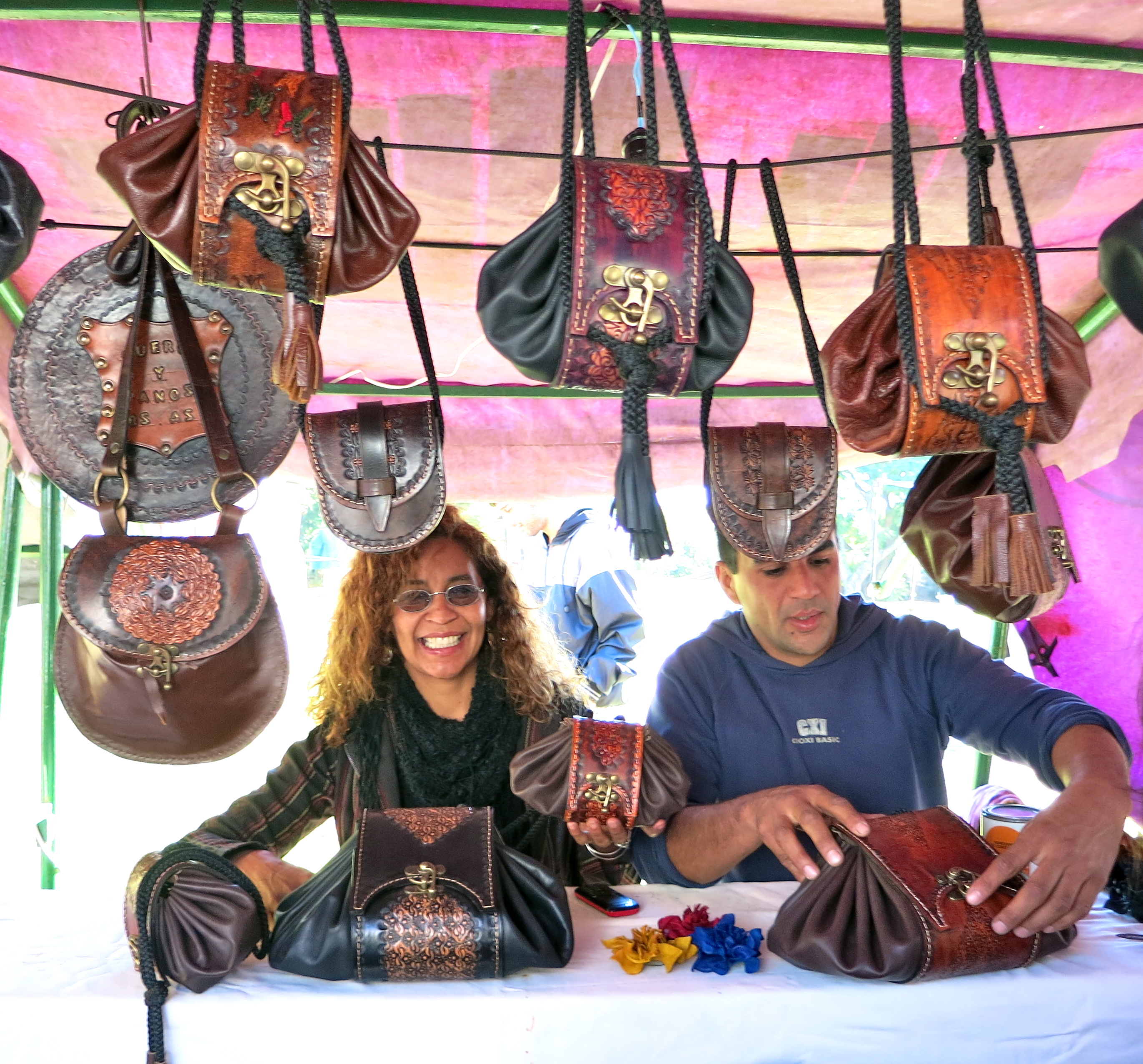
Outside the  cemetery on Saturdays is the Feria Artesanal Plaza Independente Alvear, Recoleta. It is a sprawling arts and crafts market.  They sell leather goods, indigenous products, art, souvenirs and snacks. I bought some really good gifts there. (artist Pablo Maino)

IMG_0451

IMG_0450

Buenos Aires like Paris is a city of street markets on Saturdays and Sundays.

IMG_0304

Drivers in Buenos Aires love to break the rules. Six AM is a dangerous time to be on the road as many people are heading home from milongas and dance clubs.

It turns out that Argentina has great ice cream. (or helado in Spanish). The blend of Italian immigrants bringing their tradition of making gelato, with high quality and creamy milk, combine to make some of the best ice cream in the world. Un Altra Volta is always a good place to go and they have a few locations. The Dulce De Leche is really tasty.

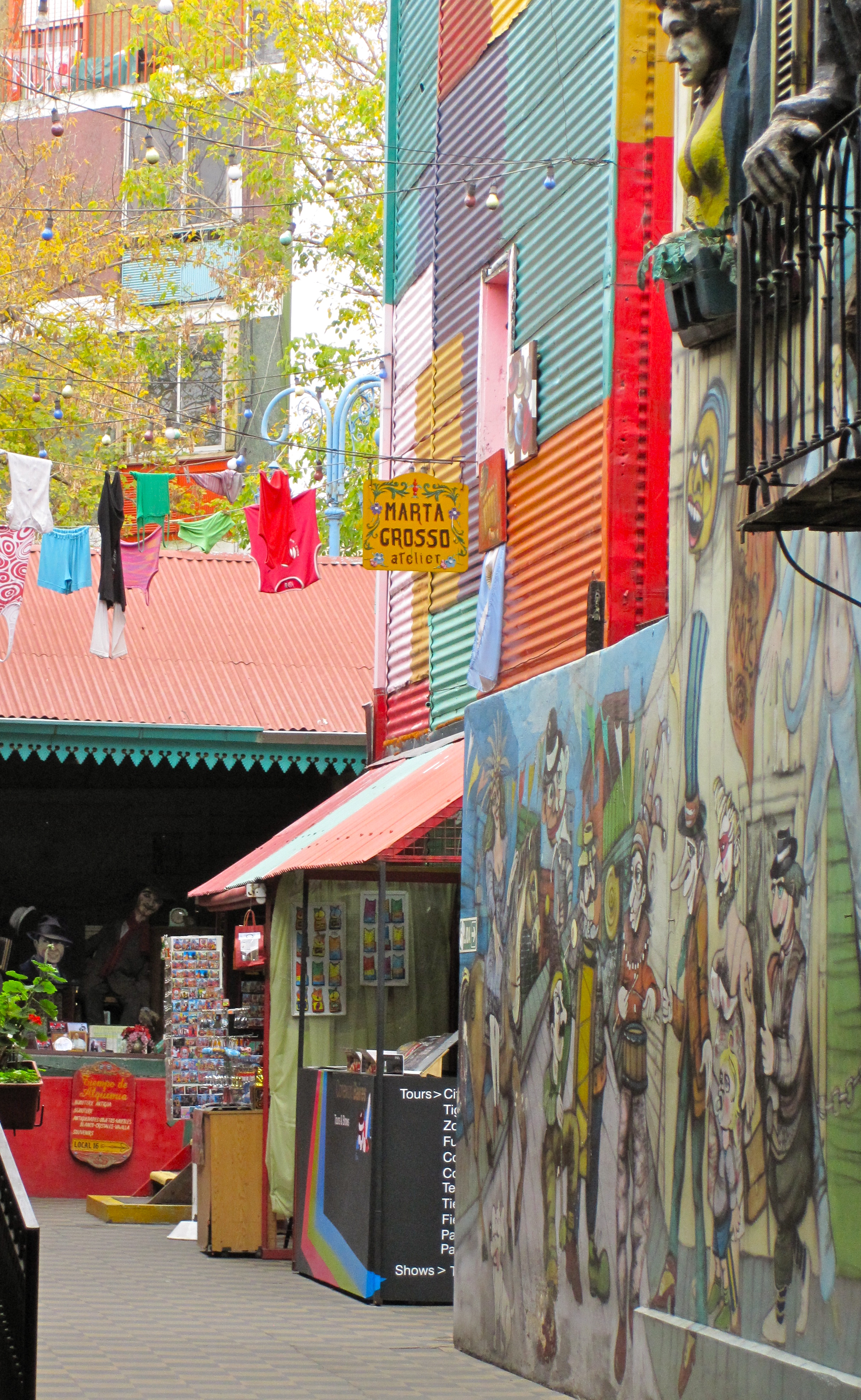
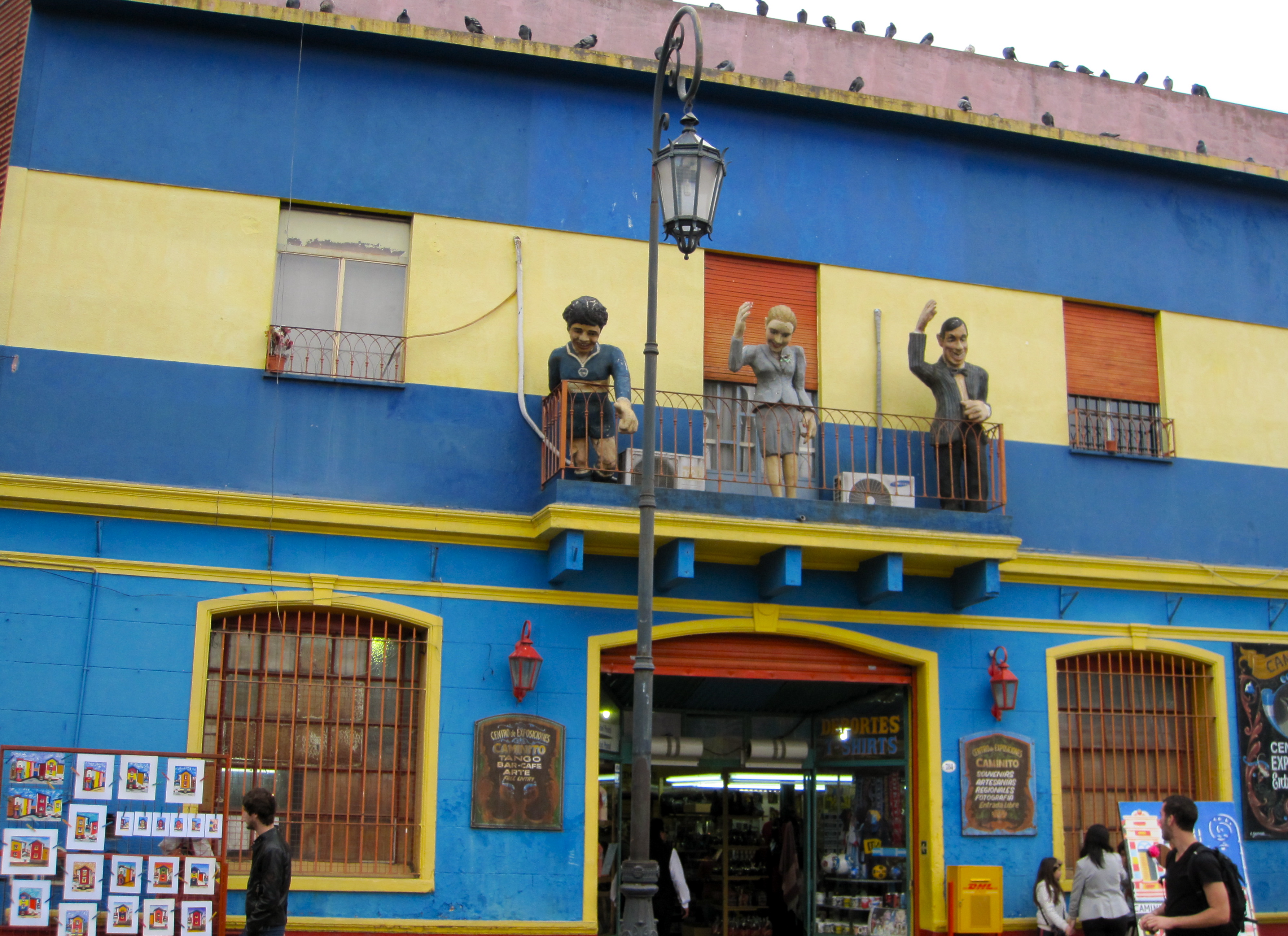
La Boca means the mouth in Spanish. The La Boca barrio  is located at the mouth of the Riachuelo. It was originally a shipyard and housed the people who worked there. The houses were built with cast-off ship building materials, meaning that they were largely constructed of  planks, sheet metal and corrugated iron. They were painted in different colors because they used whatever colors were brought in on the ships.  There never seemed to be enough paint in one color.

IMG_0028_2

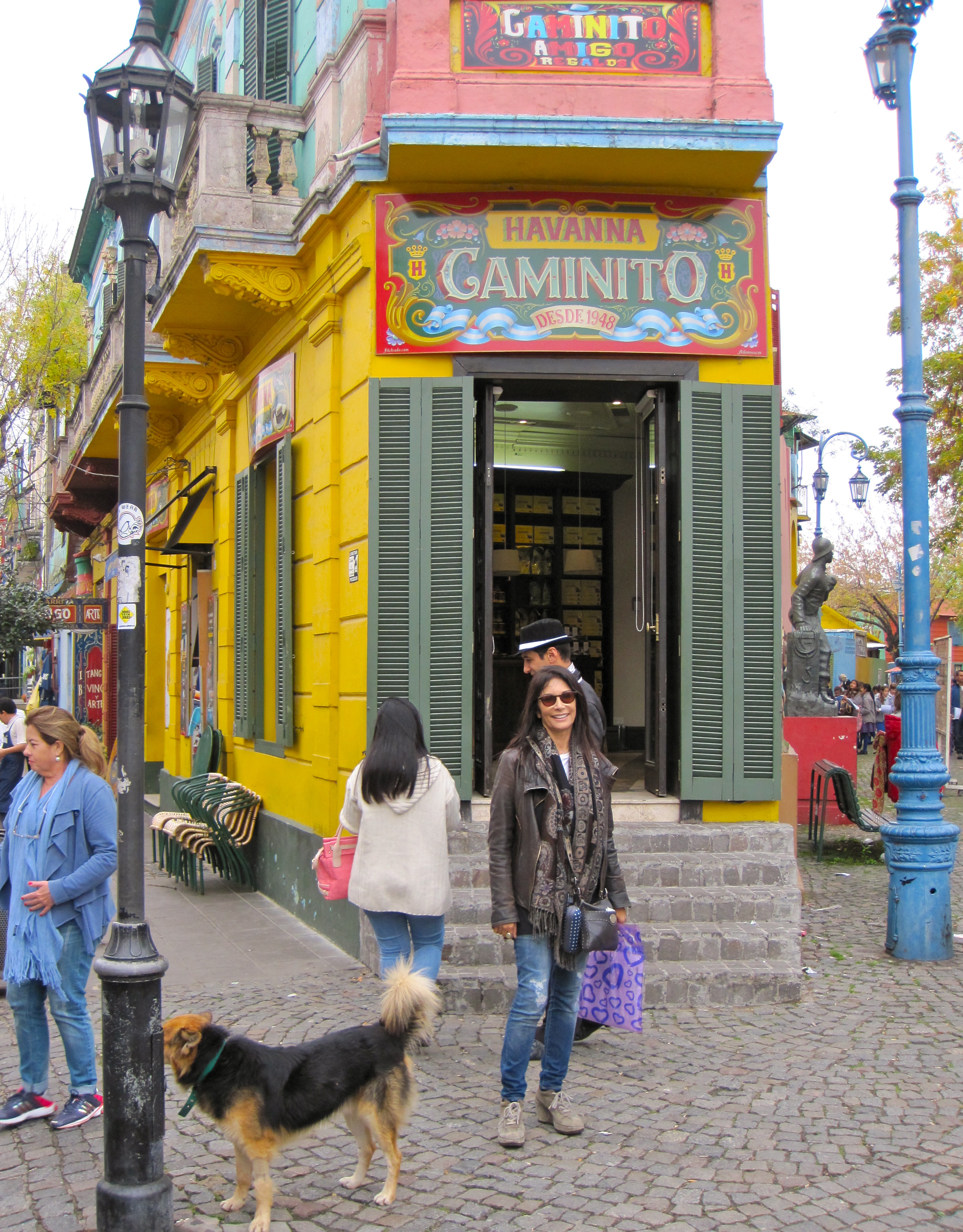
Caminito is the colorful artist/tourist street by the river.  In 1960, La Boca artist Benito Quinquela Martín painted the walls of what was then an abandoned street and erected a makeshift stage for performances. It attracted the artists, followed by the tourists, tourist hustlers and bland tourist restaurants.

IMG_0022_2

IMG_0046_2

IMG_0035_2

It is fun to see the open air tango display and I bought some nice photographs from an artist on the street. If you are going at night, take taxis to and from your destination. It is still a rough working class barrio. (artist Doralisa Romero)

IMG_0045_2

IMG_0017_2

Throughout history and male dominated governments, women were supposed to suffer injustice in silence. During the reign of the military junta it is believed that 30,000 to 45,000 people “disappeared”.  These victims were sons and daughters. In 1976 a small group of mothers walked around the Plaza Mayo holding photos of their missing children. The protests were not legal. A woman’s place was in the home. The women said a mother’s place is to protect and find her missing children and so they protested on a technicality. Some of the early protestors went missing as well. The women began to wear white headscarves.  The movement grew throughout Latin America. Sting and U2 recorded songs about  them. In 2006 President Kirchner declared unconstitutional the laws used to imprison the Disappeared. Following this move, the Madres ceased their annual protest marches. (U2 on UTube)

Today the Madres de  Plaza de Mayo are the largest civil rights organization in Argentina. In addition to their initial work to find the disappeared, the Madres have tried to continue the work of their lost children.  They have set up a  newspaper, a radio station and a university.And they continue to fight for social justice. The march every Thursday afternoon at 3:30.

Mothers of Plaza de Mayo-1

IMG_0482

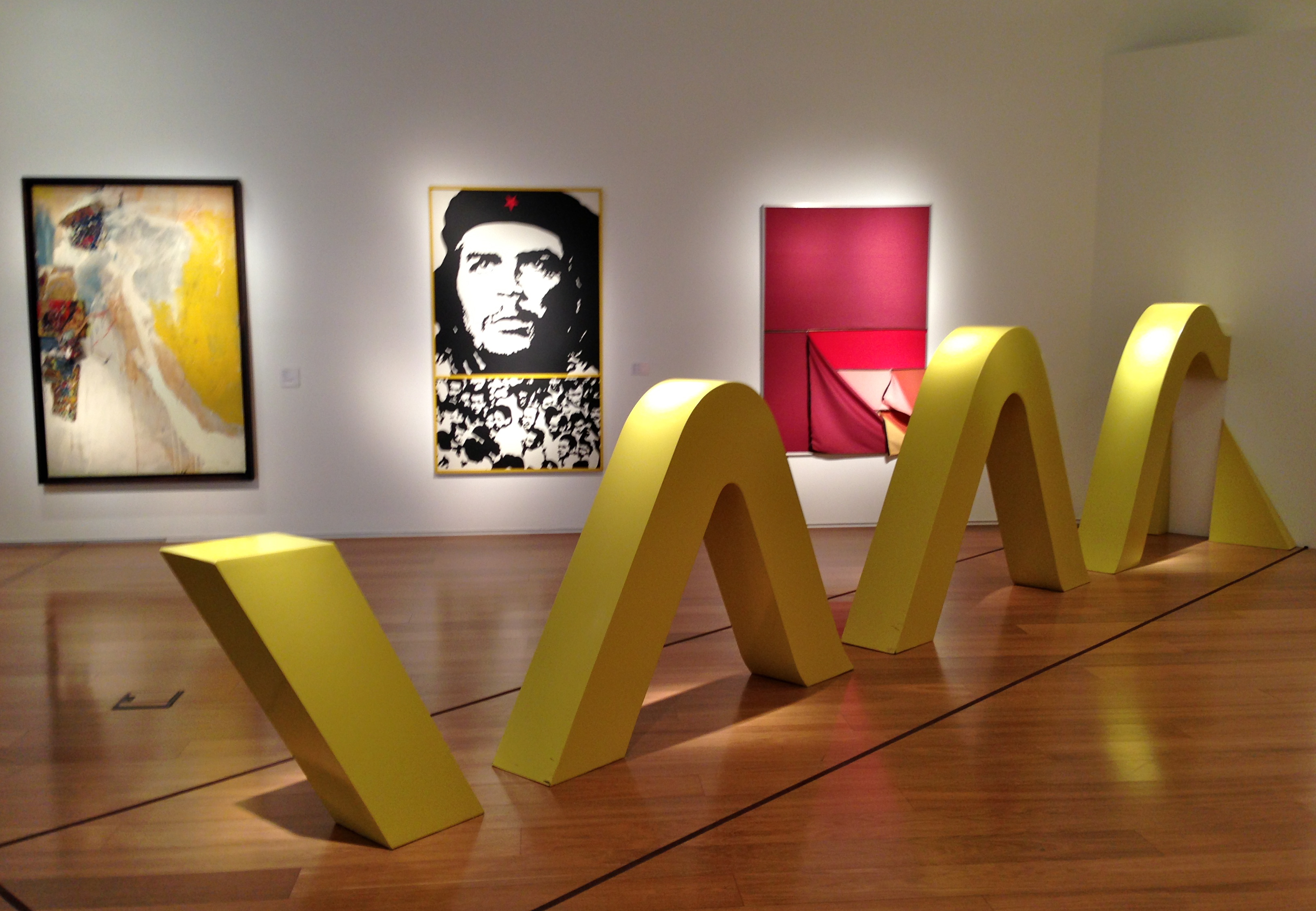
MALBA (Museo de Latinoamericano Arte de Buenos Aires) has an interesting permanent collection and should not be missed by anyone interested in art.

IMG_0136

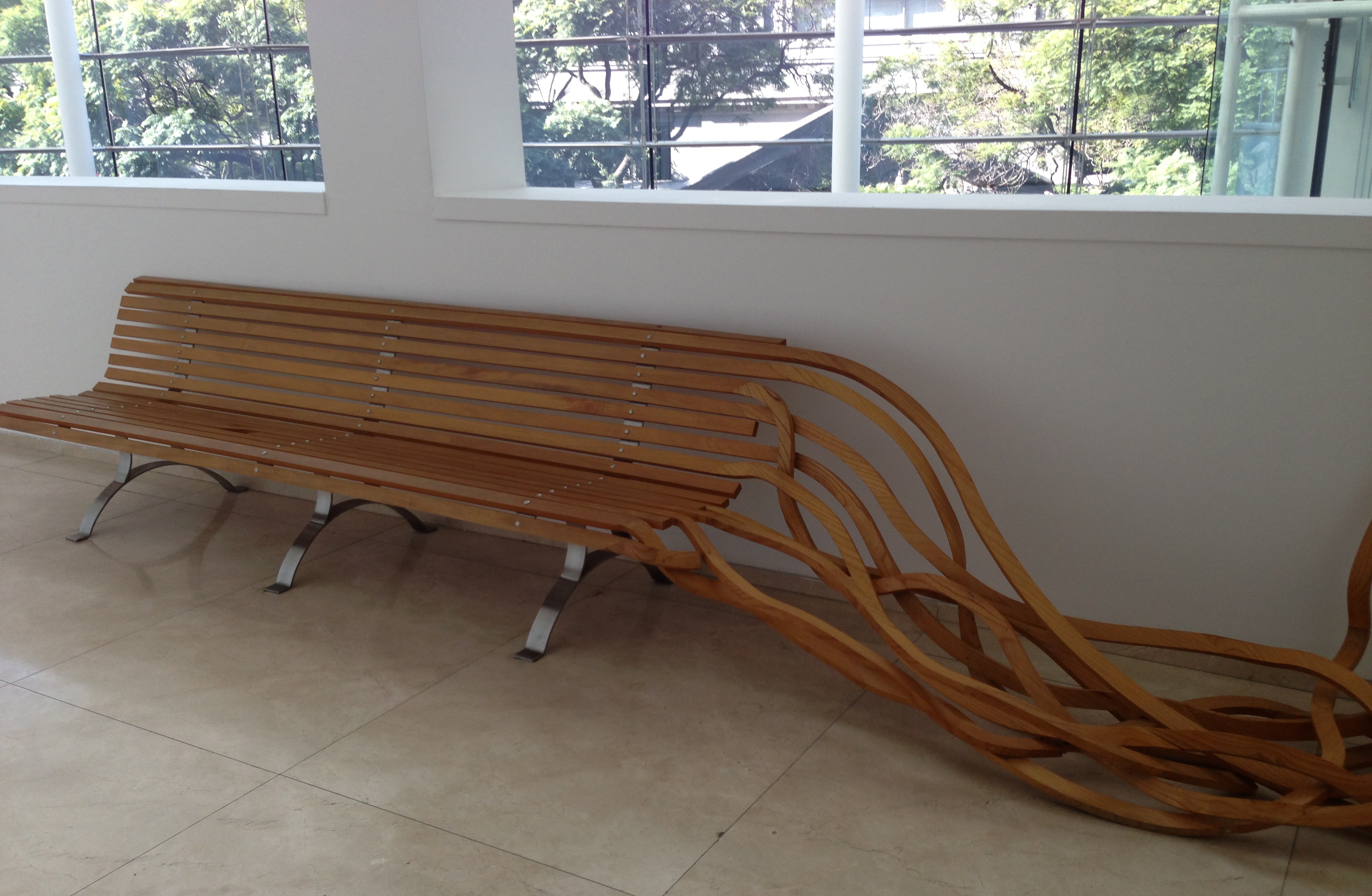
The building was designed to interact with art. A bench is not just a bench. (bench, bench continues)

IMG_0131

IMG_0133

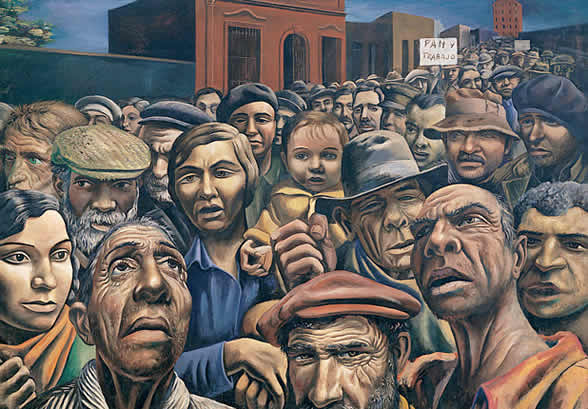
The gallery space is sectional yet fluid The permanent collection  consists of painting, sculpture, photography, print, drawing, and installations.  Visitors see major works by Xu Solar, Diego Rivera, Antonio Berni, Frida Kahlo and Jorge de la Vega, and a host of other modern masters from Argentina, Brazil, Chile, Colombia, Costa Rica, Cuba, Ecuador, Mexico, Uruguay, and Venezuela. (Antonio Berni -love this piece)

WA-malba-manifestacion

The Teatro Colon celebrated its hundredth birthday in 2008.  Its first performance in 1908 was Aida. The theatre is said to have one the best acoustics in the world. It is listed as one of the top five opera houses in the world.  It is the only stage that Pavarotti  was nervous to perform on. A massive  100 million dollar renovation was completed in 2010 and tours of the beautiful building are conducted daily in English and Spanish. Better yet, see a performance.  You can get tickets online before you go.

IMG_0355

IMG_0348

Arte BA one of the largest and most important art fairs in Latin America was held in Buenos Aires May 24-27. Eighty two galleries from Argentina, Brazil, Chile, Colombia, United States, Peru and Uruguay participated. It was really fun and interesting and they seemed to have a lot of sales. (art by Marta Minujin)

IMG_0408

IMG_0426

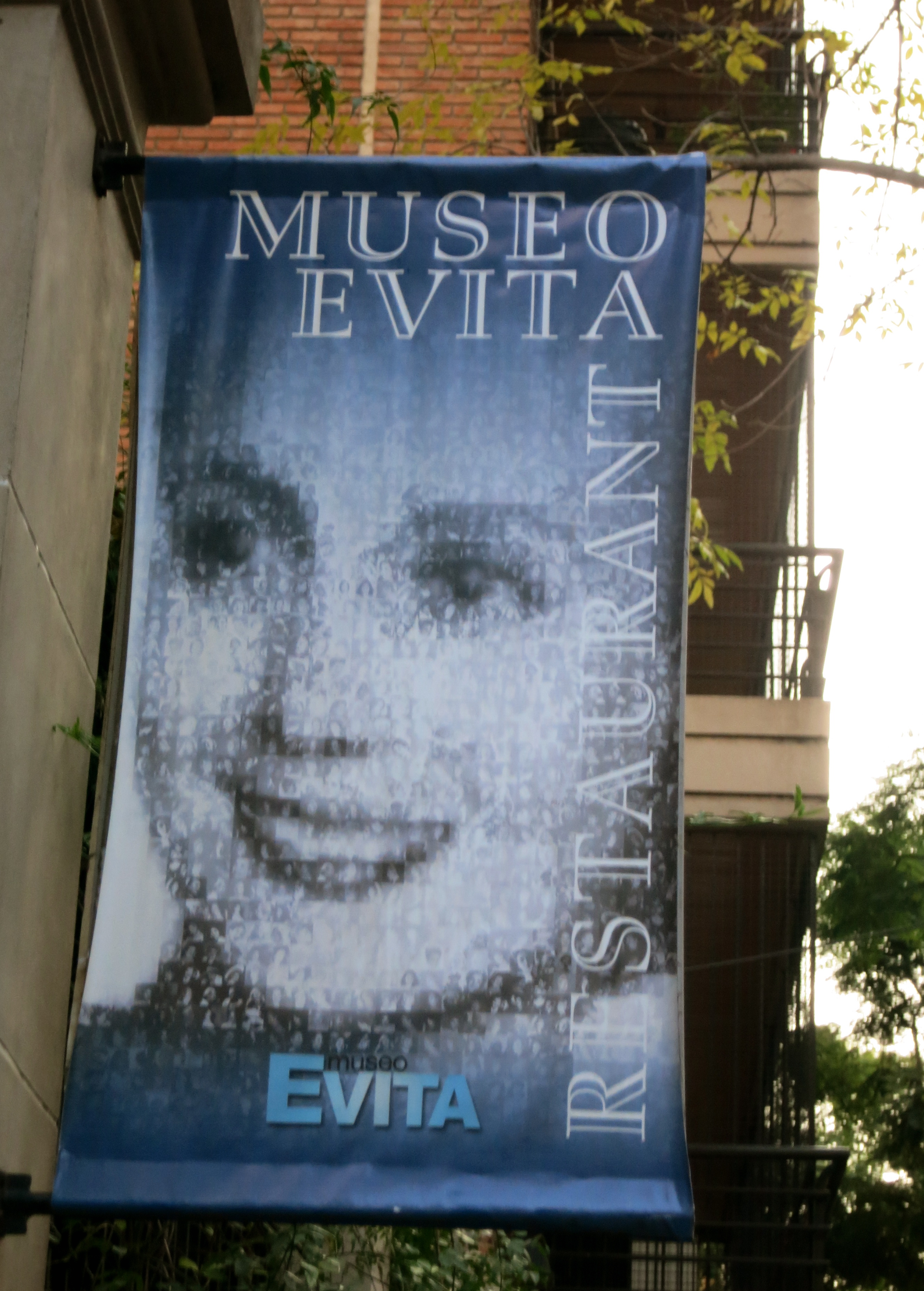
Eva Peron is a controversial figure in Argentine history. Museo Evita opened on July 26, 2002, the 50th anniversary of her death, in a mansion where her charity, the Eva Perón Foundation, once housed single mothers with children. The placement of the house here had been meant as a direct affront to the wealthy neighbors who hated Evita.

IMG_0405

The museum treats her history fairly looking at the good and the bad. Her things have been remarkably preserved by the military government that took power after Juan Peron. Whether you love her, hate her or  don’t care either way, she is an important part of Argentine history and  you should see the museum.

IMG_0403

Drink a cup of freshly roasted coffee  ( I like cortado  -small coffee with a splash of milk) with a crispy medialuna (Argentinian croissant) at Café Tortoni.  A good place to try one is the city’s most traditional café. It was founded in 1858.  Café Tortoni has doubled as both a Bohemian and literary joint over the years. It is touristy but I am a tourist . I like to mix the places I’ve heard about with the places only locals know.

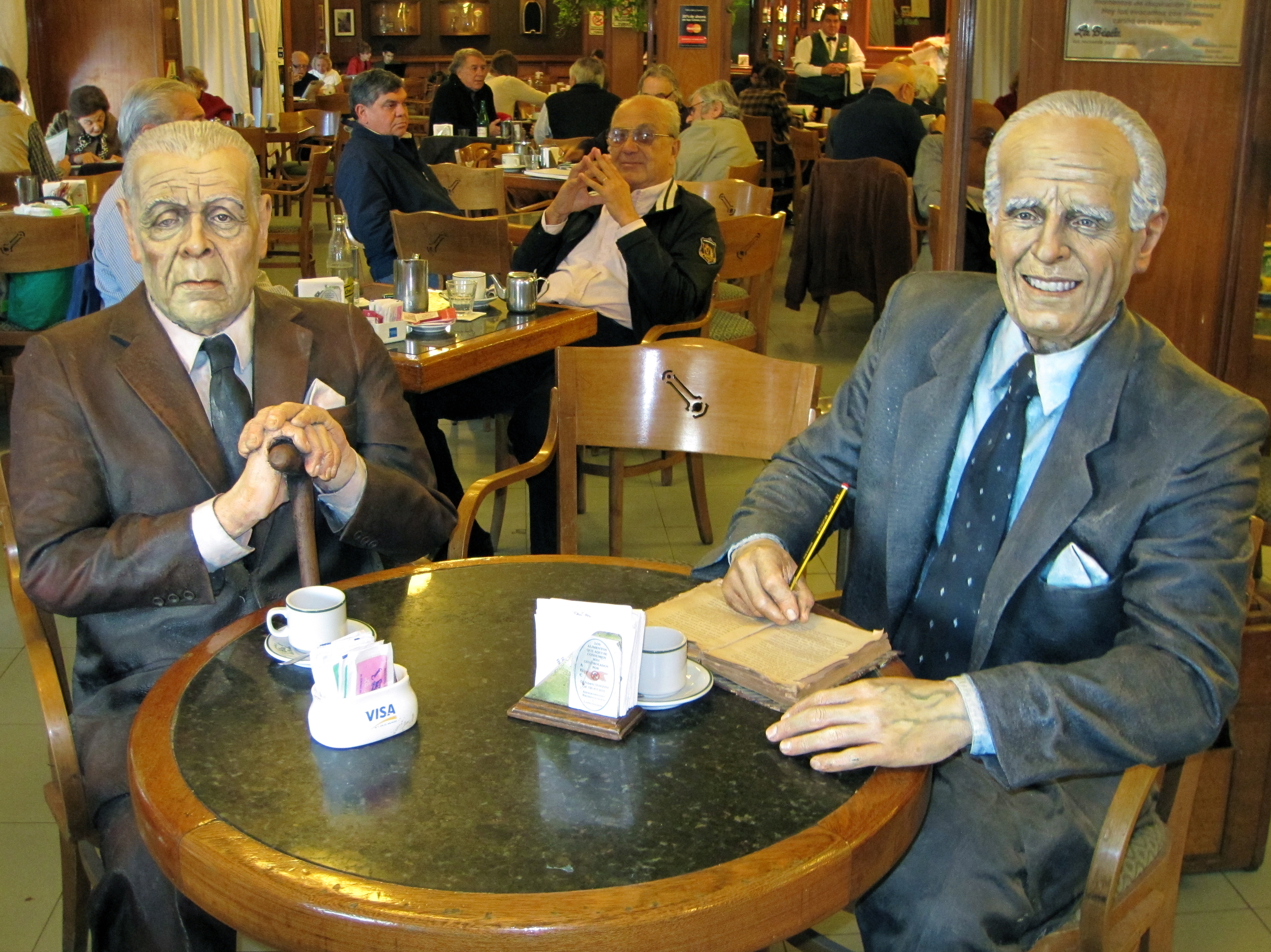
I preferred La Biela , opened in 1950 near the Recoleta Cemetery.  Biela means the connecting hot rod of an engine. It was frequented by early car owners and race car drivers. Their  black and white photos decorate the walls. It went on to become popular with artists writers and politicians. It has life-size statues of Argentine writers Borges and Casares sitting at a table in the front of the café.

IMG_0137_2

Great steak can be had at many places. I had it at La Cabrera http://www.parrillalacabrera.com.ar/ in Palermo Soho.  It was the size of my head but buttery and delicious.

Palermo is the largest barrio ( neighborhood) in Buenos Aires. It has beautiful parks, polo fields and many subdivisions. The most well-known for tourists are Palermo Viejo – home to Jorge Luis Borges and Che Guevara; Palermo Hollywood named because in the nineties a number of radio and tv producers moved there. Today it is known for restaurants, clubs and nightlife. Palermo Soho, as with its London and NY namesakes, is a  trendy area for fashion, design, restaurants, bars and street culture. Its “alternative” reputation makes it popular with Argentine Yuppies and tourists.

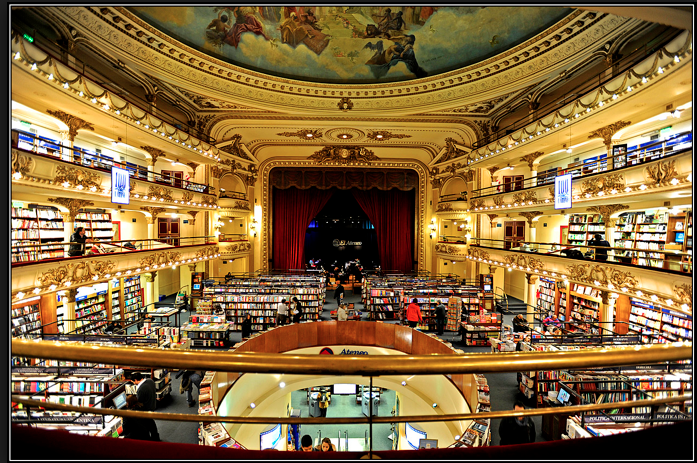
The Teatro Grand Splendid  was built in 1919 as a theatre for top tier tango concerts. What a wonderful name for a theatre. Tango legends such as Carlos Gardel, Francisco Canaro, Roberto Firpo, and Ignacio Corsini performed here. Building proprietor Max Glucksman was a leading figure in the world of tango in his own right, as owner of the influential Nacional-Odeon record label. In 1929, the theater underwent its first transformation to become a cinema, with the distinction of being the first in Buenos Aires to show sound film. Glucksman’s love of tango carried over to the new cinema, with live tango orchestration accompanying the silent films projections.

Screen shot 2013-06-19 at 12.48.42 AM

Its latest transformation is the El Ateneo bookstore.  The painted ceiling, detailed balconies, and stage are all intact. The private boxes are now small reading rooms. The stage is a café. The shelves fit perfectly around the theater’s original shape. The book collection is pretty standard and mostly in Spanish, it is an amazing place to buy a book or have a coffee on the famous stage.

IMG_0572

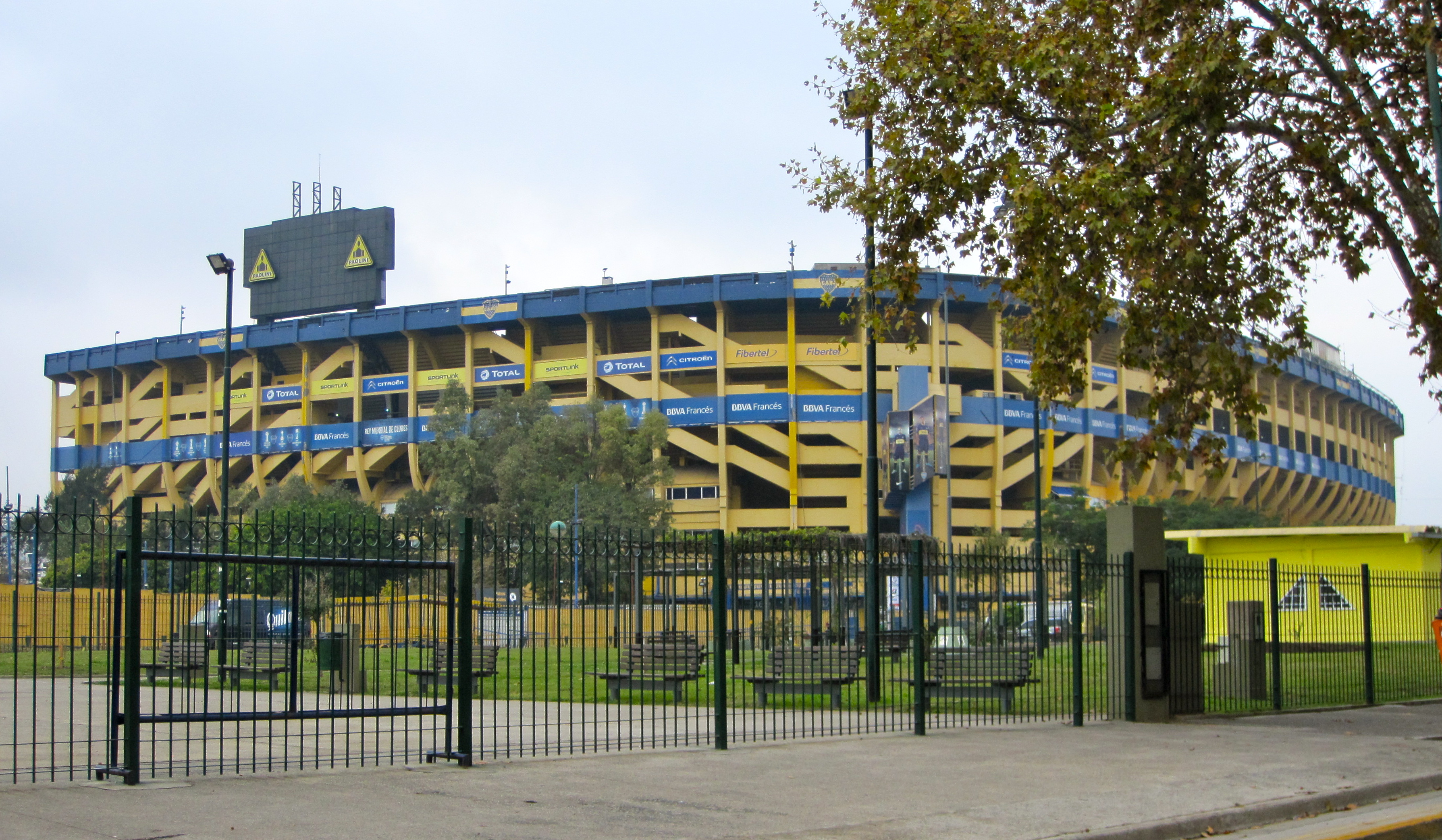
Going to a soccer game with one of the local clubs is a must do in Buenos Aires. I got to go to a Boca Jr, game at La Bombonera in La Boca.  The fans are as exciting as the game. They spit, throw garbage, scream at each other, sing and often dump water or urine on the people sitting below them if they don’t like what is happening. The Bocas tied the Newell Old Boys and fifty people got arrested. It was a great first night in Buenos Aires.

IMG_0061_2

IMG_0058_2

I would  not have had such an amazing time without the help of tour guides Marcelo Mansilla (info@ciceroneba.com.ar ) and Fabian Ali ( fali@culturacercana.com.ar) .  Muchas gracias for all your great suggestions, insight, kindness and knowledge of your very beautiful city. (Marcelo)

IMG_0439

Buen Viaje,

JAZ

,

Things I Have Learned In Argentina

Things I Have Learned In Argentina

“I am not sure that I exist, actually. I am all the writers that I have read, all the people that I have met, all the women that I have loved; all the cities I have visited.”

―Jorges Luis Borges (Argentine writer)

An asado in Argentina is every carnivore’s dream. Gather  your friends, drink wine and coca cola and stuff yourself with meat.

IMG_1037

Futbol (soccer) is a passion of the Argentine people. Every pueblo has at least one soccer field.  When you fly into Buenos Aires you will see many.

Carlos Gardel is to tango what  Elvis Presley is to rock and roll.

Art Graffiti is not exactly illegal in Argentina. You can paint on street walls in broad daylight. Graffiti artists from all over the world come here to paint.

IMG_0180

Cristina Kirchner  (Presidente of Argentina) takes a helicopter to work everyday from her house in the suburbs of Buenos Aires. You can see the Argentine tax dollars at work.

Argentina is considered to be the most literate country in South America. They were the first to publish Gabriel Garcia Marquez’s One Hundred Years Of Solitude when others turned him down. (It is one of my favorite books so I thought I would mention it)

In Peru, I learned about what the Spanish did to the Incas. In Argentina I learned about what the Incas did to the tribes living there. Conquerors are never all that innocent. (Pucara of Tilcara- pre Inca fortification)

IMG_0253_2

Driving on unpaved roads for hours in Jujuy-not so much fun; seeing the salt flats in Salinas Grandes -priceless.

IMG_20130528_143957

A mechanical saint will come out of a door in the town  hall of Humahuaca  at 12:00 pm. He will wave his arms, music will play and you will be blessed. Sometimes religion is that easy.

IMG_0208_2

Birds eat the parasites off animals. When you see a bird on a horse, he is working.

There are at least twenty-four legal holidays in Argentina. There is Flag Day.. There is the day to celebrate the person who made the flag. There is Friend’s Day. There is the day to celebrate the moon landing. I get the feeling Argentines’ don’t like to work so much.

Ruta 40 goes throughout Argentina like Route 66 goes through the United States.

IMG_1024

Chile and Argentina have their problems but things are better in the last few years. It is usually about borders and waters.

Most of the tobacco grown here. Is for export to the US and China.

Argentina charges an entry fee of one hundred and sixty dollars to all visitors from the  U.S.  It must be paid online before the date of entry or they may not let you in when you get there.  According  to Argentines,  this is because of all the Argentines who have paid visa fees and been denied visas. i don’t know if this is true but it sounded good.

Argentina is the largest producer and consumer of Yerba Mate. (mate cups – number one Argentine souvenir)

IMG_0506

Eating kidneys (rimones),intestines (chinchulines), ribs, testicles, black sausage, any glands and sweetbreads is delicious to someone other than me. (intestines, etc)

IMG_0563

IMG_0555

It is mandatory to vote in Argentina.

Many Argentines did not like Eva Peron.

IMG_0404

Argentines have an amazing ability to mobilize a protest. They will stand up for what they think is right or wrong and let it be heard. Late November to early January is protest high season where many of the unions will demand raises due to the out of hand inflation that takes place here every year. Drop by Plaza de Mayo or Plaza Congreso. I was there on May 25th  Argentine Independence Day. They were protesting.

Paraguay is the largest producer of Marijuana.  Canada is the largest exporter to the United States.

Argentine Polo players are among the best in the world. Serious polo tournaments are held here. From September to December the best polo players play in Argentina.

An altitude of 4170 meters means 13,682 feet above sea level and a headache.

IMG_0464

An estancia is a ranch or farm with a big hacienda. They are usually many hectares. We visited many estancias for lunch. They all served asado.

Anything can be made from salt. (like this table)

IMG_0650

Llamas and alpacas are domestic animals. Vicunas and guanacos are wild and usually cannot mate in activity. ( wild vicunas)

IMG_0647

There are exceptions. (Coquenos, el refugio de las vicunas )

IMG_0747

Vicunas are the Princes and Princesses of the Andes.

IMG_0740

The Argentine government has a list of names for new babies.  If the name you choose is not on the list, you cannot legally use it. Today,  people can petition the government to add more names.

Gay marriage has been legal here for about year. Recently they have had their first gay divorce.

The new Pope is from Argentina.

Argentina has close affection for cinema. They have the highest rates of movie viewing in the world. They like watching both locally made movies and Hollywood flicks.

For all those who love animated films – The world’s first animated films were created and released in Argentina, by a person named Quirino Cristiani in 1917.

Argentines pronounce the LL as a soft G. They say Ja-ma for llama and pa–ree-ja  for Parilla. In Salta they sometimes pronounce their R as a soft G and say peh-jo for perro.  It sounds a littler Portuguese sometimes.

Argentines can smoke and own Marijuana but they cannot buy it or sell it.

Argentines can chew and posess Coca Leaves but it is illegal to buy and sell them. (Look for the Bolivian women in the square in Humahuaca, the leaves help with altitude sickness).

IMG_1599

Condors mate in the air and mate for life. if the female dies, the male commits suicide. If the male dies, the female takes another mate for the procreation of the species. There is a lesson here.  I am not sure  what it is.

If a person in Argentina is carrying an iPad or IPhone, he probably bought it on the black market or he is not an Argentine.

Argentines have a coffee and a sweet around 6:00pm. Dulce De Leche is always a good choice. As I have gained a few kilos on this trip , I wish I had chosen it less.

Restaurants do not open  for dinner until nine o clock. Most people eat dinner after ten. I did not understand that until  I had been here for a week and eaten that huge lunch every day around two o clock. I did not get hungry  till ten.   You can be like the Argentines and eat meat again or be like the Americans and have soup, bread and cheese.   I also completely now understand the need for the siesta till five. Having wine, meat and potatoes at  lunch makes you sleepy in the afternoon.

IMG_1049

Most public schools go from eight to twelve or one to five. They have  less hours of school than we do. Their literacy rate is 97.5 per cent. Some people feel it is ok and others feel that it is too little and save for private school. Their school uniform is a white lab coat.

IMG_0531

A dog’s best friend is his llama (pronounced jama).

IMG_0568

Police in Argentina are known to be corrupt.

In Argentina you can dry your own red chilies in the sun.

IMG_0697

They say that Argentina got the Iguazu Falls and Brazil got the view. I don’t know about that. They are pretty spectacular in Argentina. (complete with a real rainbow)

IMG_1513

It takes ten minutes by rowboat to get to Paraguay from Misiones, Argentina. (view of Paraguay across the Parana River from our house)

IMG_1578

Argentina is one of the largest producers of wines since the 16th century and has around 1800 wineries. Malbec is their most planted grape. The irrigation system was started centuries ago by Indians. It is the fifth largest wine-producing country.

IMG_1048

Studies have shown that red wines are much better than white wines in preventing heart disease. Scientists believe that the polyphenols in red wine seeds and skins are the reason for this.  High altitude wines are particularly rich in polyphenols. This is because UV radiation increases at higher elevations and results in a greater concentration of polyphenols in these wines. We visited many high altitude vineyards in Salta province.(Colome)

IMG_0787

Torrontes is a white Argentine wine grape which produces a  wine with moderate acidity and a smooth texture. I like it.

IMG_0820

Cars have the right of way on the road. (from front of van – goats running to the side of the road – big deal for the city kid.)

IMG_0630

Cows move slower.

IMG_0726

Everything can be made out of cactus.

IMG_1191

If you are planning to change pesos back into dollars at the Argentine airport as I was, don’t. Christina doesn’t allow you to give back pesos at the airport. What you change in Argentina, stays in Argentina.

Buen Dia and Fly Safe

Jayne

Onsen and Ryokan In Japan

Onsen and Ryokan In Japan

“Do not dwell in the past, do not dream of the future, concentrate the mind on the present moment.” Buddha

Ryokan are Japanese style inns found throughout the country, especially in hot springs resorts. Ryokan are a traditional Japanese experience, incorporating elements such as tatami floors, futon beds, Japanese style baths and local kaiseki ryori (eight course typical Japanese meals with local and seasonal specialties).

IMG_0745

There are many different kinds of ryokan, varying greatly in terms of size, cost and style. Some ryokan are small, family run establishments with just a few rooms, while others are large, hotel-like facilities with hundreds of rooms. Ryokan also range from no-frills, budget varieties to costly establishments catering to the very wealthy.

IMG_2188

Ryokan are special and relaxing experiences with an emphasis on traditional style.

I am usually the only American at the ones I have been to. – not only there but in the town. I go with my Japanese friend and she picks the ryokans that Japanese people go to. No one speaks English. It is good because I get to practice my hand motions and have a cultural immersion experience. . It is bad because I live in fear of walking into a men’s bath by mistake since I cant read the signs.

IMG_2160

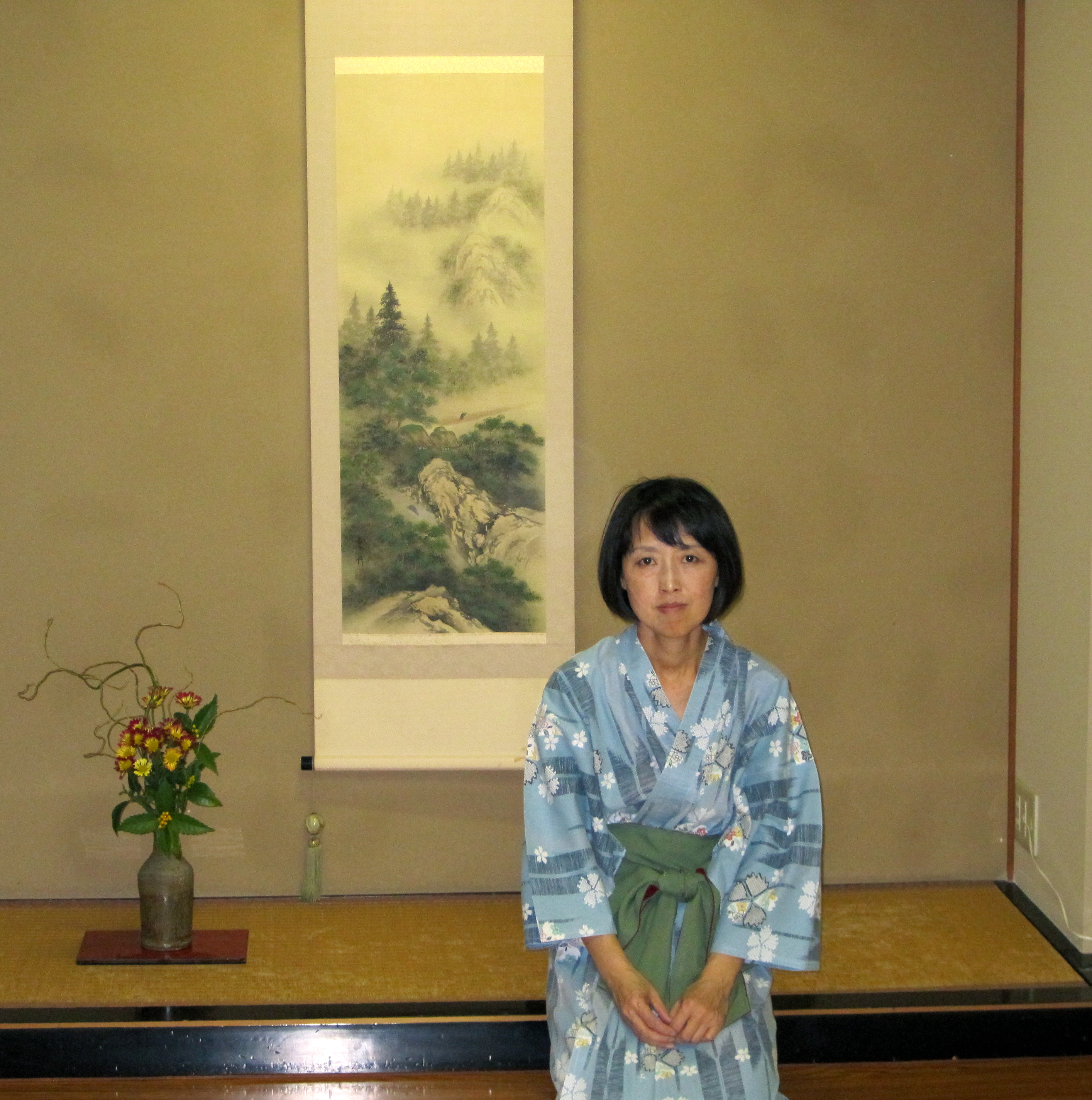
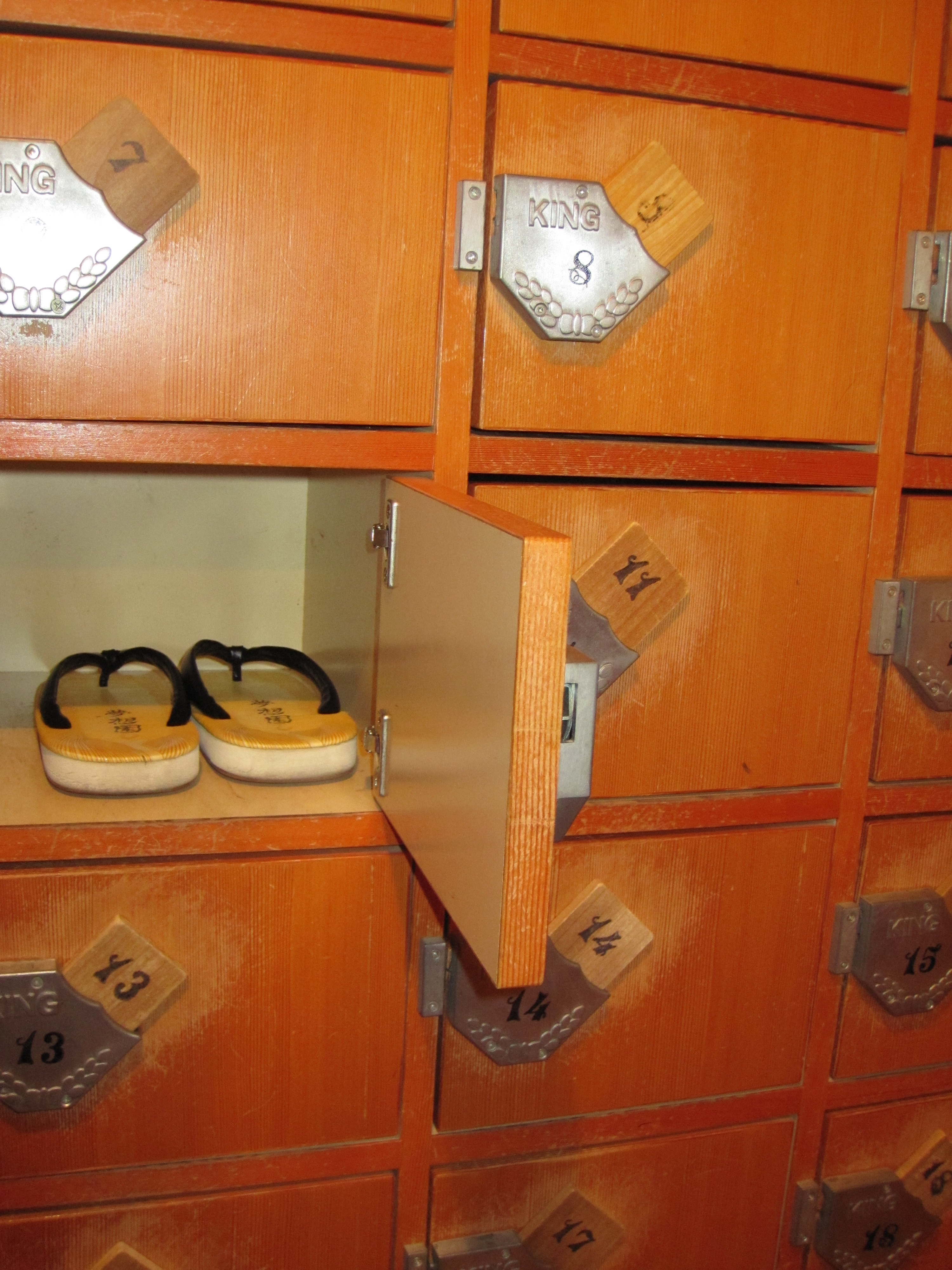
Upon arrival you pick out your kimono robes, sash, socks and slippers which you wear the entire time. No easy feat to keep putting that on and off. There are a lot of rules to wear it correctly.

IMG_0753

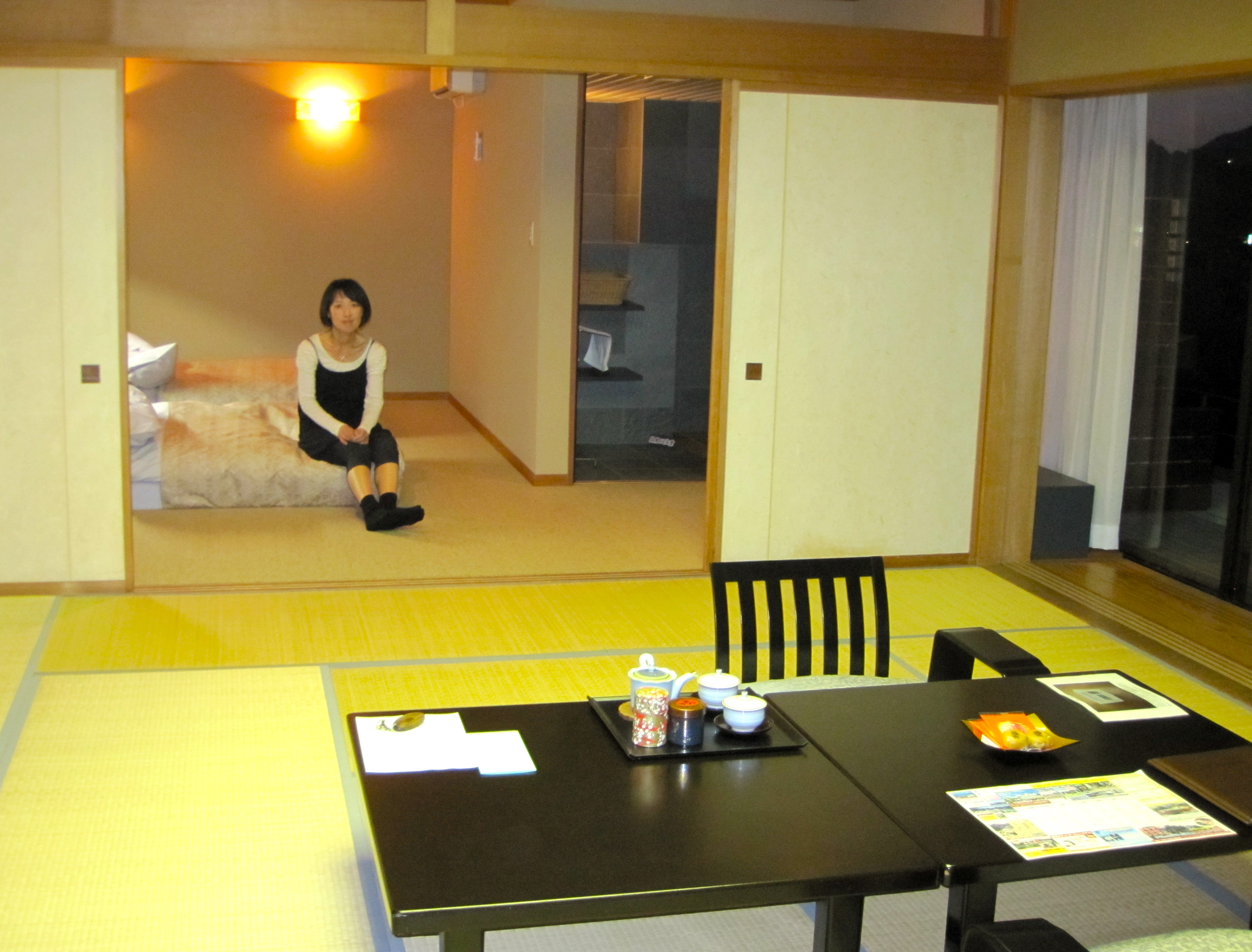
You are shown to your traditional style rooms. Remember to always keep your shoes by the door. Stepping on a tatami mat with shoes is like spitting in public. Hot green tea and a red bean paste sweet are ready in your room when you arrive.

IMG_0743

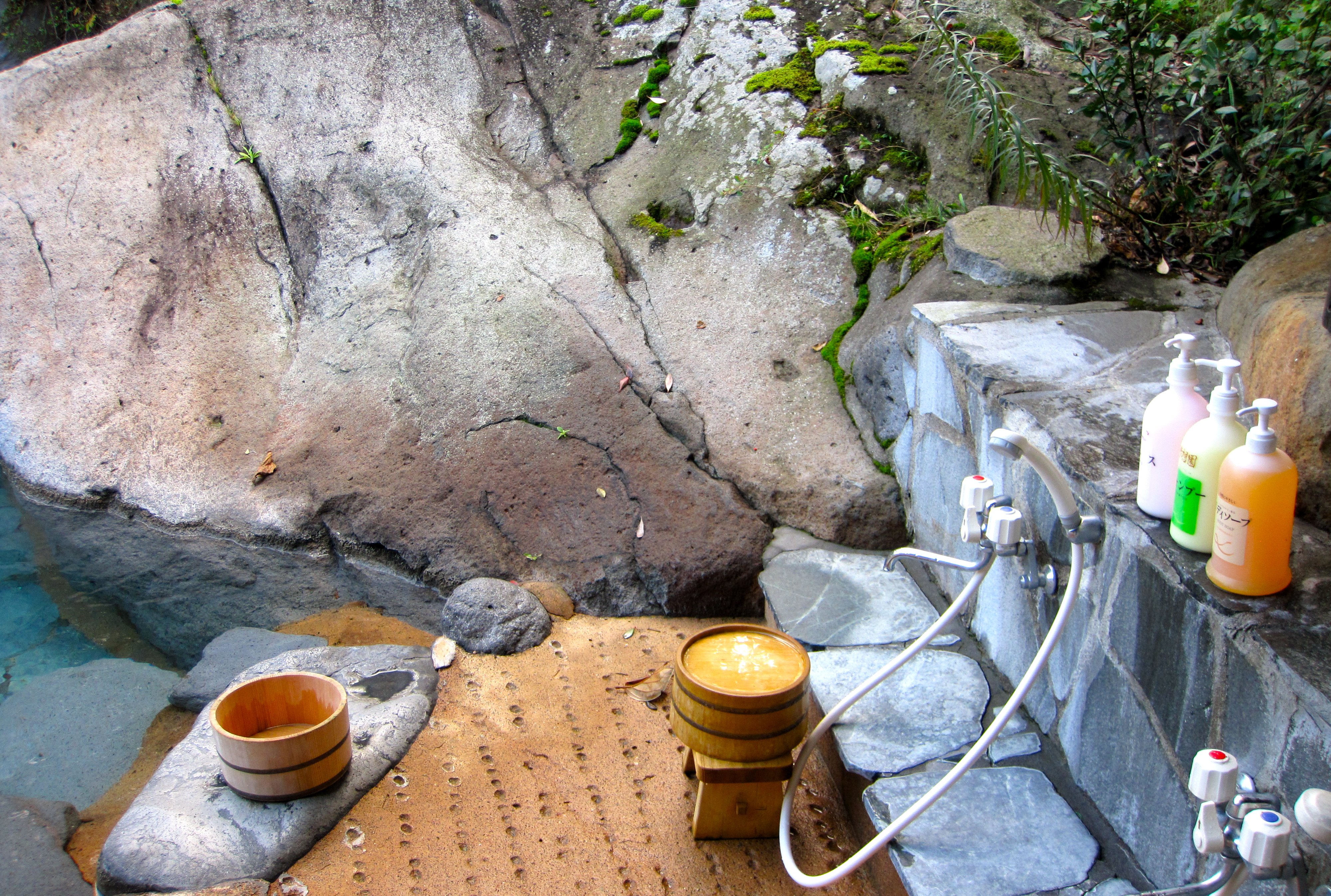
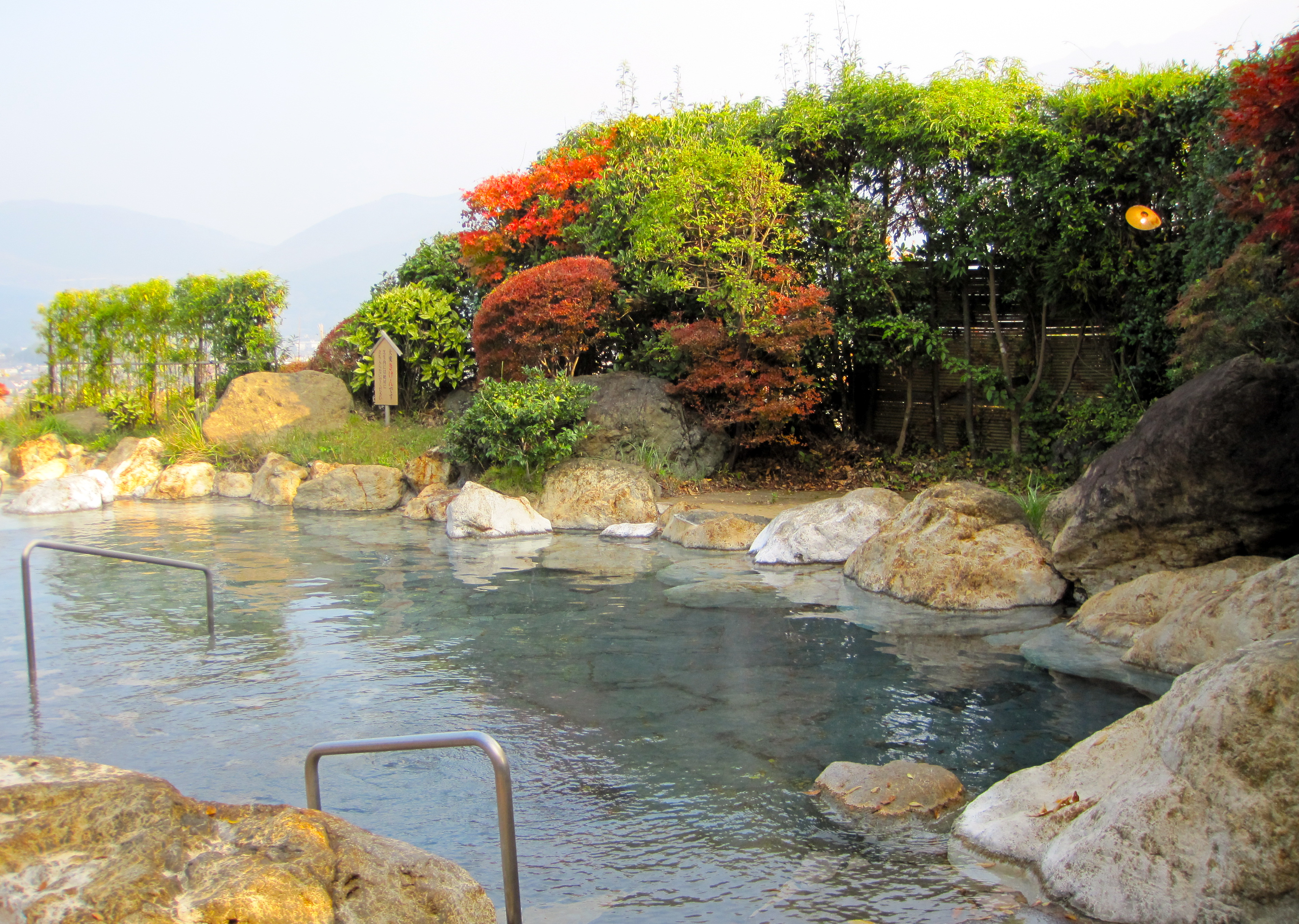
The main activity besides eating is bathing. The geothermal springs located throughout the country( onsens) provide hot mineral-rich water for indoor and outdoor baths. Onsen etiquette is based on Shinto influence. You must get clean before you go in the water. There are always showers or faucets and buckets. You cannot get into the onsen while dirty or soapy. ( Ok I did it once. I can’t lie on the internet. No one does that. It was just too cold to wash with cold water outside. )

IMG_2164

Everyone has a small white hand towel which is usually placed on the head or by the side of the bath. It is called the modesty towel – and could be a bit larger with that name. Try not to let the towel fall in the water as the goal is to keep the water clean. (how many times and at how many different onsen, do you think my towel fell in?) Many onsen do not allow bathers with tattoos — especially if they’re large — as these were traditionally associated with the yakuza, or mafia.

IMG_2147

The chemistry, temperature, pressure and buoyancy of thermal baths have curative properties used to treat skin conditions such as dermatitis, inflammation-related conditions such as arthritis and musculoskeletal conditions such as lower back pain.

IMG_2162

The sulfur and magnesium found in hot springs promotes skin health, while the heat of these baths can reduce inflammation and pain, and boost the immune system.

IMG_2148

Bathers are expected to go quietly into the onsen. Bathing in Japan is about the contemplative experience, not washing.

IMG_2195

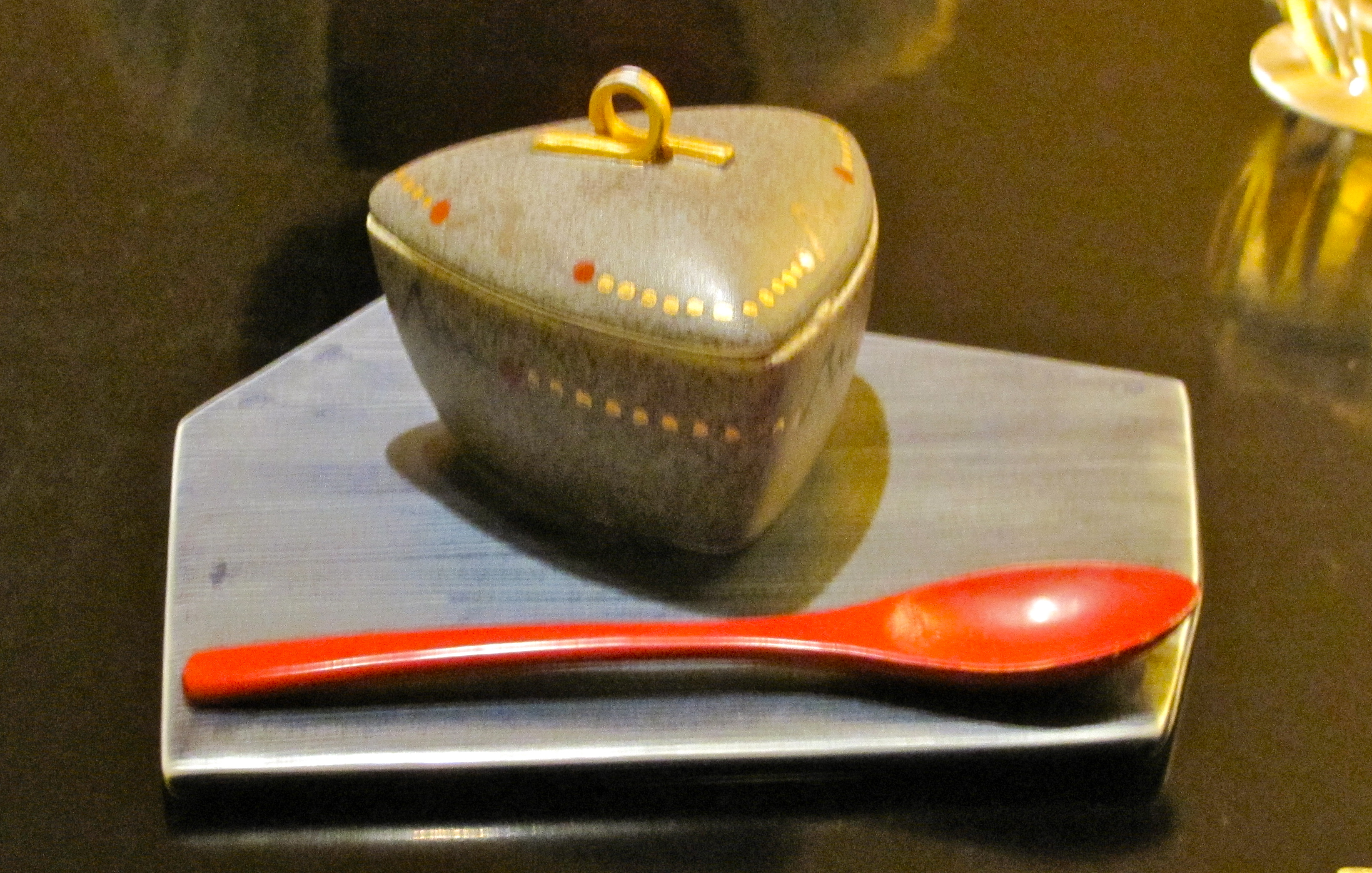
The meals exhibit all that is beautiful about Japanese culture. Kaiseki is a multi course meal rooted in the Buddhist idea of simplicity. It has developed into an exquisite set meal with a succession of small dishes made of seasonal produce where every element is balanced to ensure that the taste, texture, appearance, smell and color of the food captures a sense of the moment within a season.

IMG_0803

In kaiseki there is a defined set of aesthetics and principles that everyone adheres to. These rules help define the preparation, order of dishes and serving, including the type and look of a utensil used for service. These principles have evolved over the centuries to maximize the sensory experience.

IMG_0947

IMG_0950

The restaurant environment in Japan is also very different. The majority of kaiseki restaurants offer private rooms for their guests to entertain and the décor is always very simple, whether it is a shared room or private. Often the only decoration will be one artwork, underneath which will be a beautiful flower arrangement – both chosen to capture the mood of the season and the food. The diner is there to focus on the food and savor the moment, rather than to watch or be watched by others.

IMG_2139

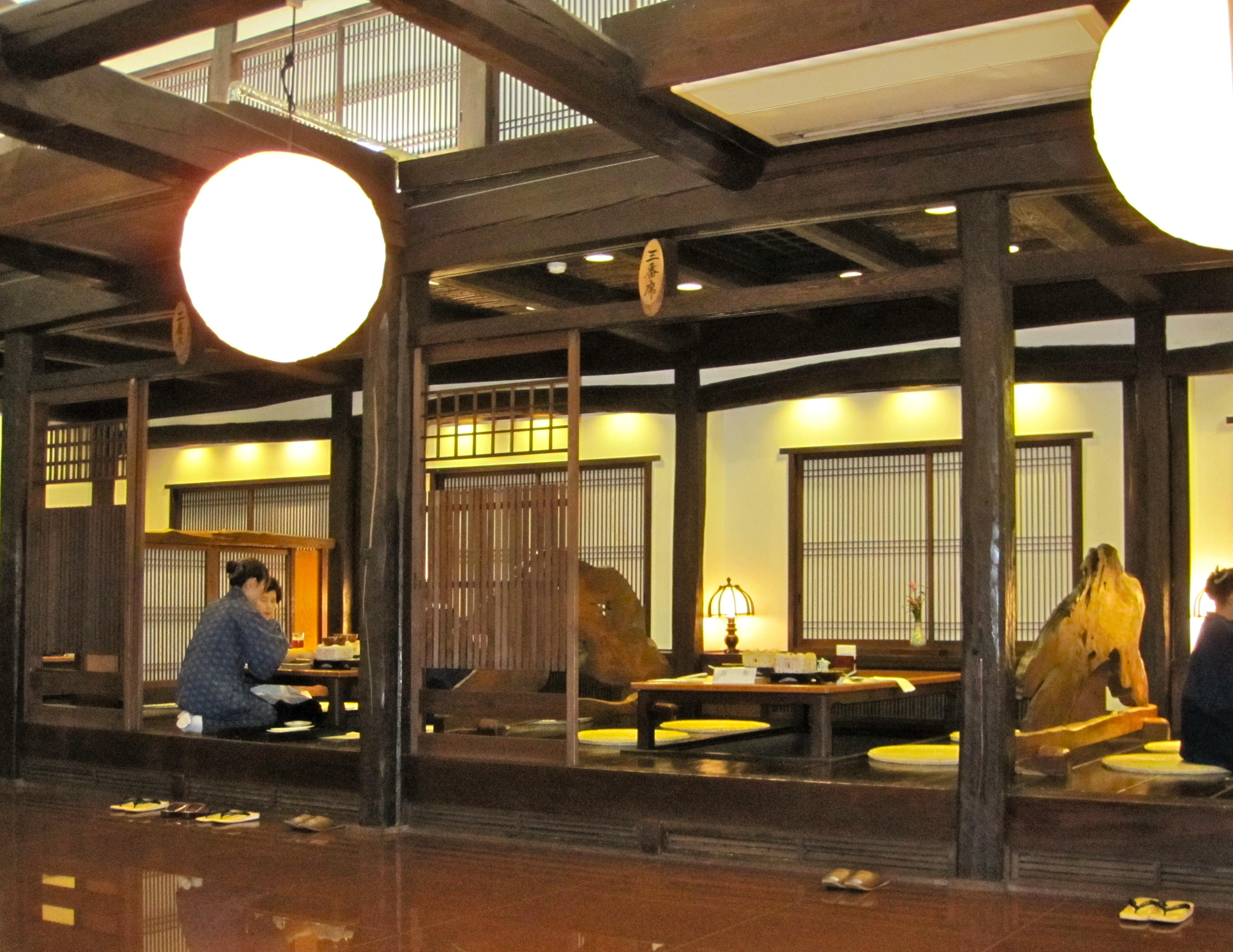
When you return to your room, after dinner the bed is made up of many pillows and futons (quilts) and is quite comfortable. Sometimes the pillows are filled with rice – which is surprisingly not uncomfortable. Don’t sleep face down as you will wake up with rice marks. It isn’t pretty. If you would like a massage, a massage girl will come to your room.

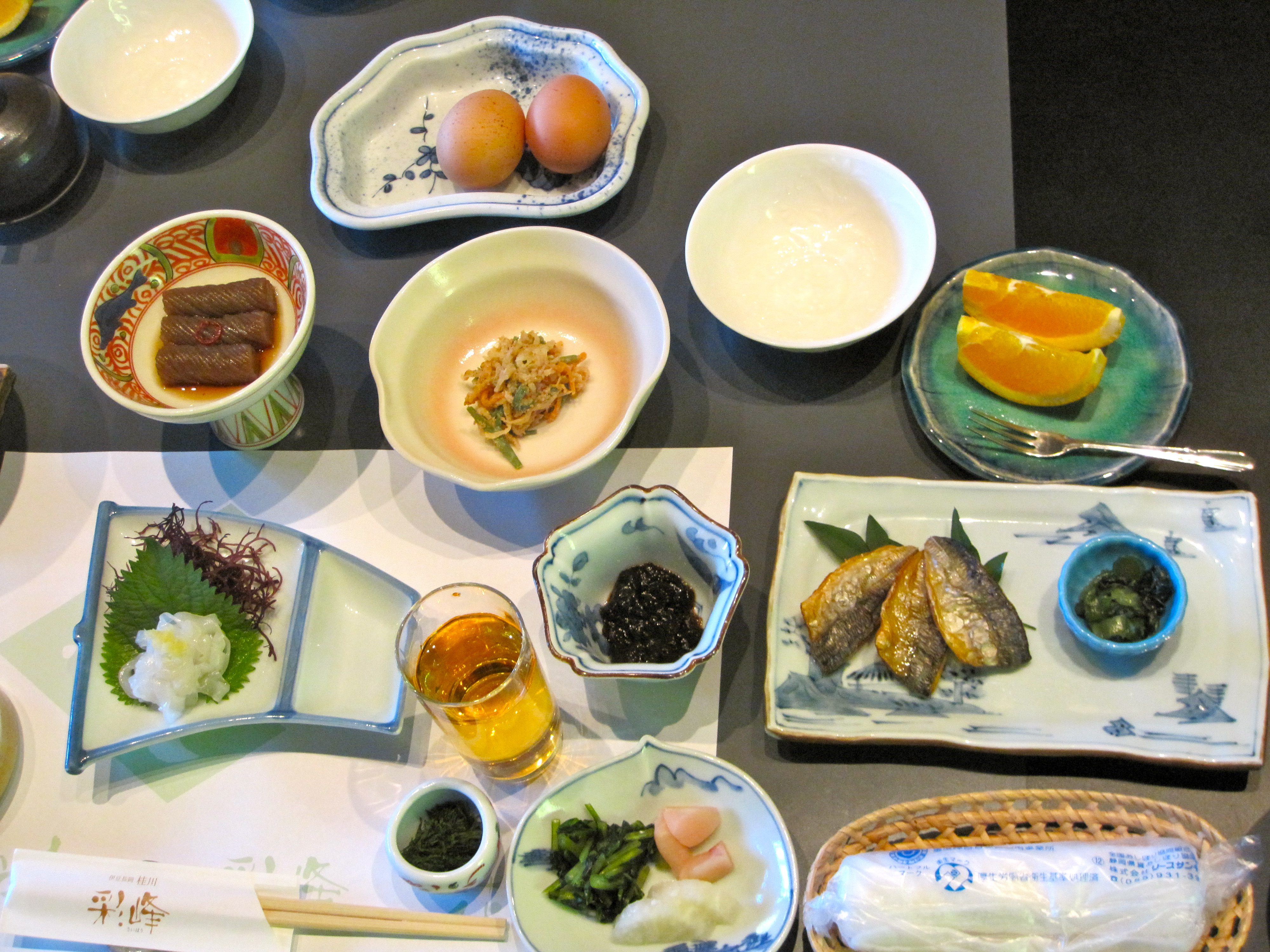
Breakfast can be a problem if you stay at a typical Japanese ryokan. To the untrained eye (mine) breakfast looks like the same food from the night before but prepared differently. It will always include fish soup and steamed rice and raw eggs. If you mix the raw egg with rice and soy sauce, it tastes ok but not my thing. I see salmonella. Some ryokan will give you coffee in tiny tiny cups and some won’t.

IMG_0767

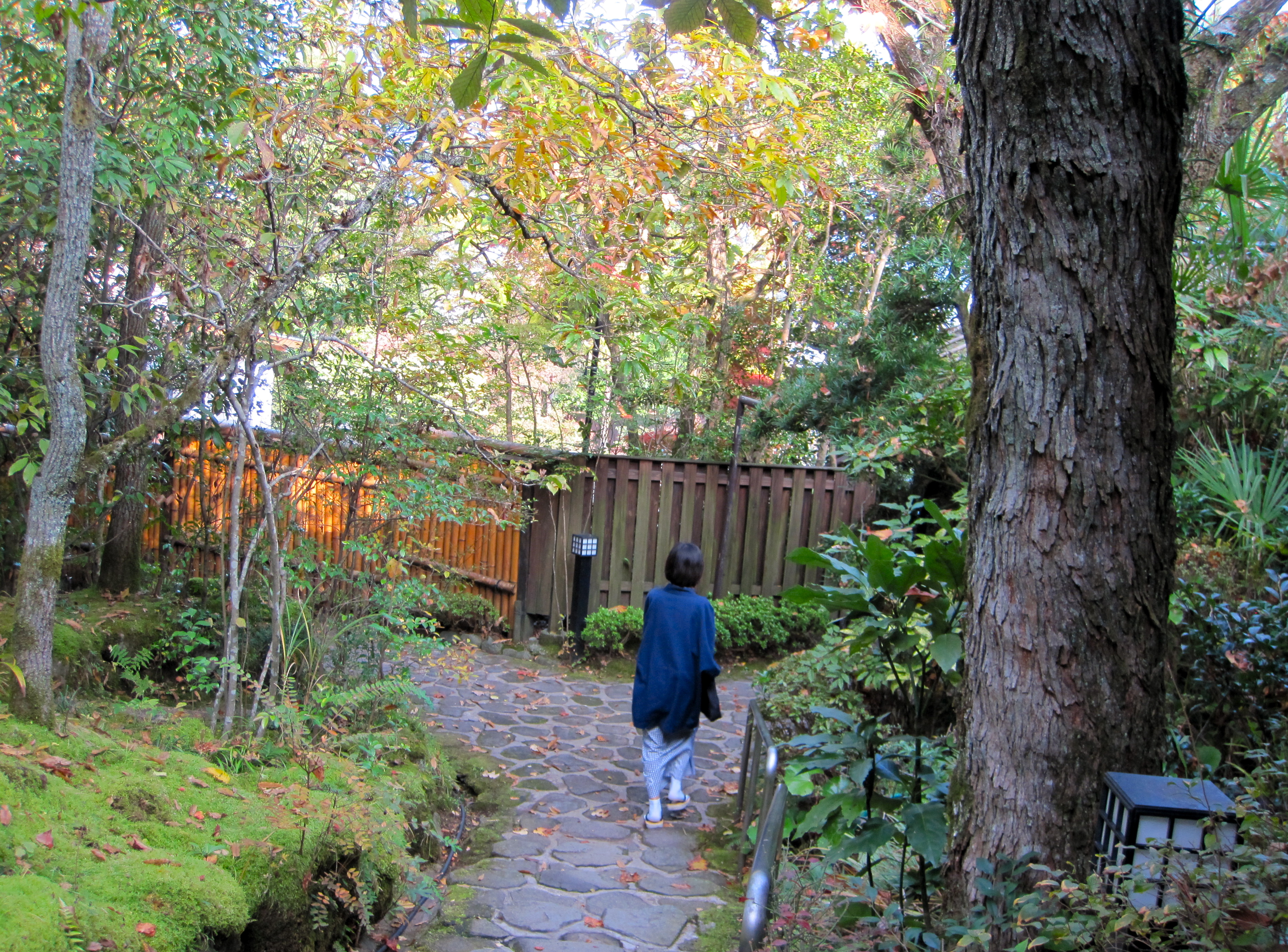
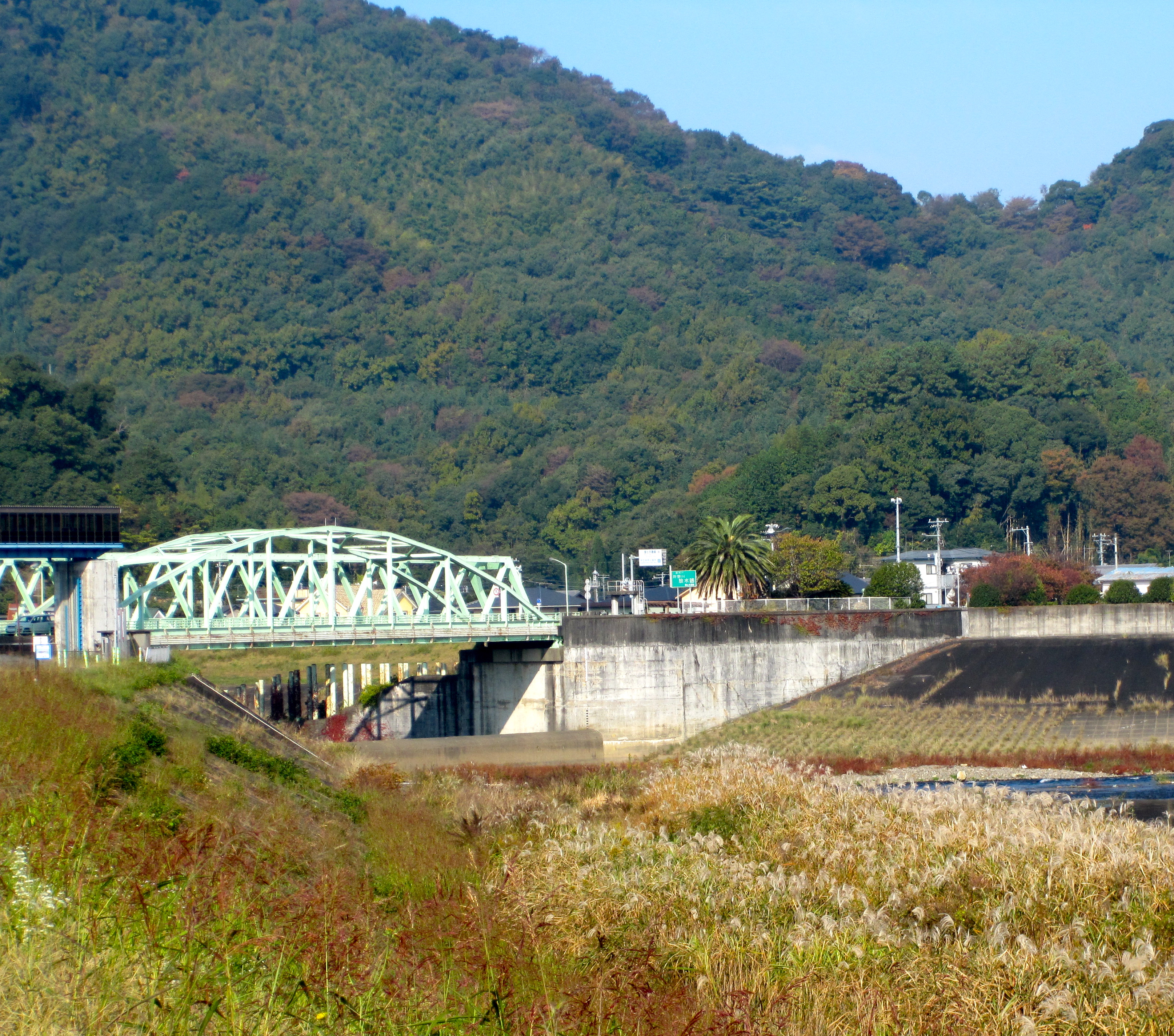
The onsen towns are picturesque rural settings. It is nice to walk around during the day.

IMG_0775

IMG_0782

In Yufuin, in the Kyushu islands, I went to the dentist, ate Jidori chicken which is raised there, bought Yuzu preserves and walked around the town with all the Koreans who apparently just take a ferry across.

IMG_2175

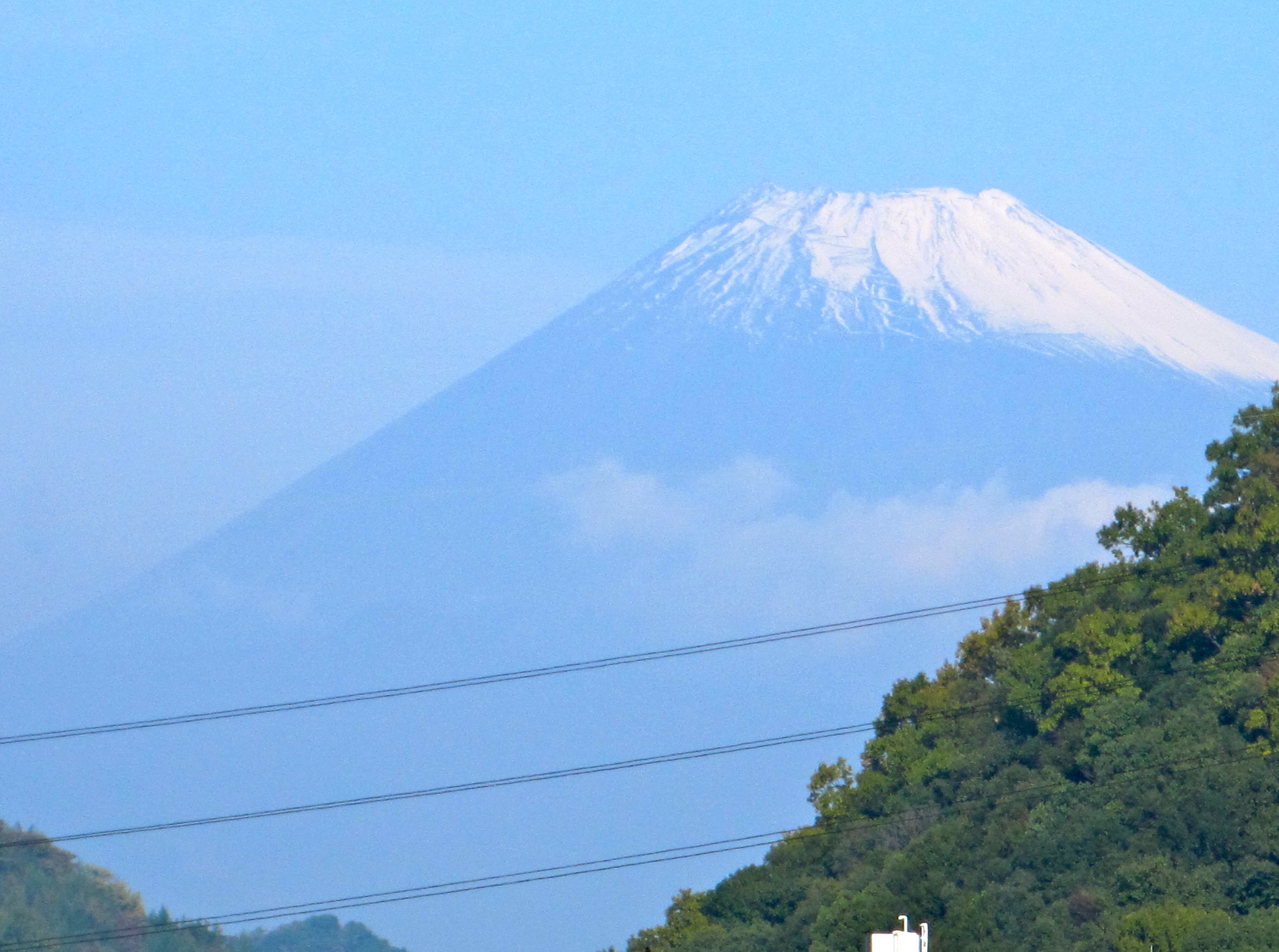
In Izu Nagaoka (we could see Mt Fuji from our room),

IMG_0776

The Izu Penninsula is one of the pilgrimage sites of the seven temples for the seven gods. Like the rest of the world, the Japanese are obsessed with the number seven. The Shichifukujin 七福神 are an eclectic group of seven deities from Japan, India, and China. Only one is native to Japan (Ebisu) and Shinto tradition . Three are from the Hindu-Buddhist pantheon of India and three from Chinese Taoist-Buddhist traditions (In Japan. They travel together on their treasure ship and visit human ports on New Year’s Eve to dispense happiness to believers. Each deity existed independently before Japan’s “artificial” creation of the group. Today, images of the seven appear with great frequency in Japan. By the 19th century, most major cities had developed special pilgrimage circuits.(Ebisu, the fisherman god number one on our pilgrimage)

IMG_0795

.We were given a map and set out to find them. If you find all of them, you get a prize. We were about half way into the forest and had found half the temples until we met someone who said the next one was pretty far and he had driven. We went for sushi.

IMG_0794

When leaving the ryokan , the staff will see each guest off in a smiling, bowing, waving ceremony at the street door. A small gift may be presented, and the inn’s brochures will be distributed. – Ryokan Katsuragawa Saihou (Nagaoka, Izu Peninsula) phone: (dial local) 055-948-3106, Ryokan Musouen, Add: 1251-1 Kawaminami Yufuin-cho Yufuin Oita, Japan 879-510

These are the places I miss most in Japan. The good things always make you remember them.

ki o twu kete

JAZ

Things I Dislike, Things I Like (In Traveling and In Life)

Things I Dislike, Things I Like

There is only one thing worse than a man who doesn’t have strong likes and dislikes, and that’s a man who has strong likes and dislikes without the courage to voice them.

Tony Randall

Things I Like: traveling anywhere I haven’t been, ketchup, black picture frames, hotel soaps, anything by architect Sinan, Heathrow, hot weather, the Turtle Trainer, high heels, Venice, every country’s fried dough with sugar, Japanese fashion, theater, Gabriel Garcia Marquez, ryokans, medical research, waking up in Croatia, scrabble, Buddhist Temples, shopping, sushi, world music, bookstores, coffee, mid century modern, dulce de leche, plaid, Thai greetings, Doctors Without Borders, Edinburgh Fringe Festival, modern art museums, yuzu, Spanish guitar music, teaching, Tigre, yoga with michelle, acupuncture, Purmamarca, cupcakes.

Things I Dislike: Flight delays, beets, anything Louis XVI, contact lenses, tiny elevators, flat shoes, long car rides, George Bush, smoke, Cyrilic, cold weather, psycho killers, people who don’t say what they mean, mosquito bites, narcisisists, bikers, wearing matching earrings, racists, flossing, Eastern European food, fundamentalists, eating insects, yelling, unsafe drinking water, liars, chanting, acid reflux, getting up early, hash tags, lines at Passport control, germs, violence, blisters, small coffee cups, hives, airport in Yangon, Burma, watermelon, gold leaf.

Things I Like: Lithuanian black bread, outdoor markets, guacamole, shiatsu, vintage clothing, sake, the smell of the sea, meditation, Rodriguez, ethnic bracelets, skiing, watching the food channel on the treadmill, ancient ruins, chewing coca leaves, beaches, ceviche, Cappadocia, forgetting my camera, reading, Berlin art galleries, Tilcara, foreign films, Naxos, pizza, pizza in Munich, graffiti art, documentary films, 826, walking everywhere , Italian, black and white photographs, hotel business centers in foreign countries, ballet, Machu Picchu, intelligence, bouzouki places, quotes, vintage bowling balls, ripped jeans ,sales in any language, green juice.

Things I Dislike: not knowing what the rules are, public speaking, suicide, the Kardashians, packing, exercise, caves, driving, camping out, anchovies, long and windy roads, blood tests, small planes, selfish people, archaological museums, pitbulls, backpacks, people who say they are spiritual, eating alone in a restaurant, swimming, Chinese music, stupidity, atomic bombs, moving, neat freaks, traffic, pretenses, bells, ear wax, things you have to declare, bullies, eating guinea pigs, texting, onions, getting dressed up, freeways, whipped cream, perfume, garages, divorce, haggis, air pollution, brown apartments.

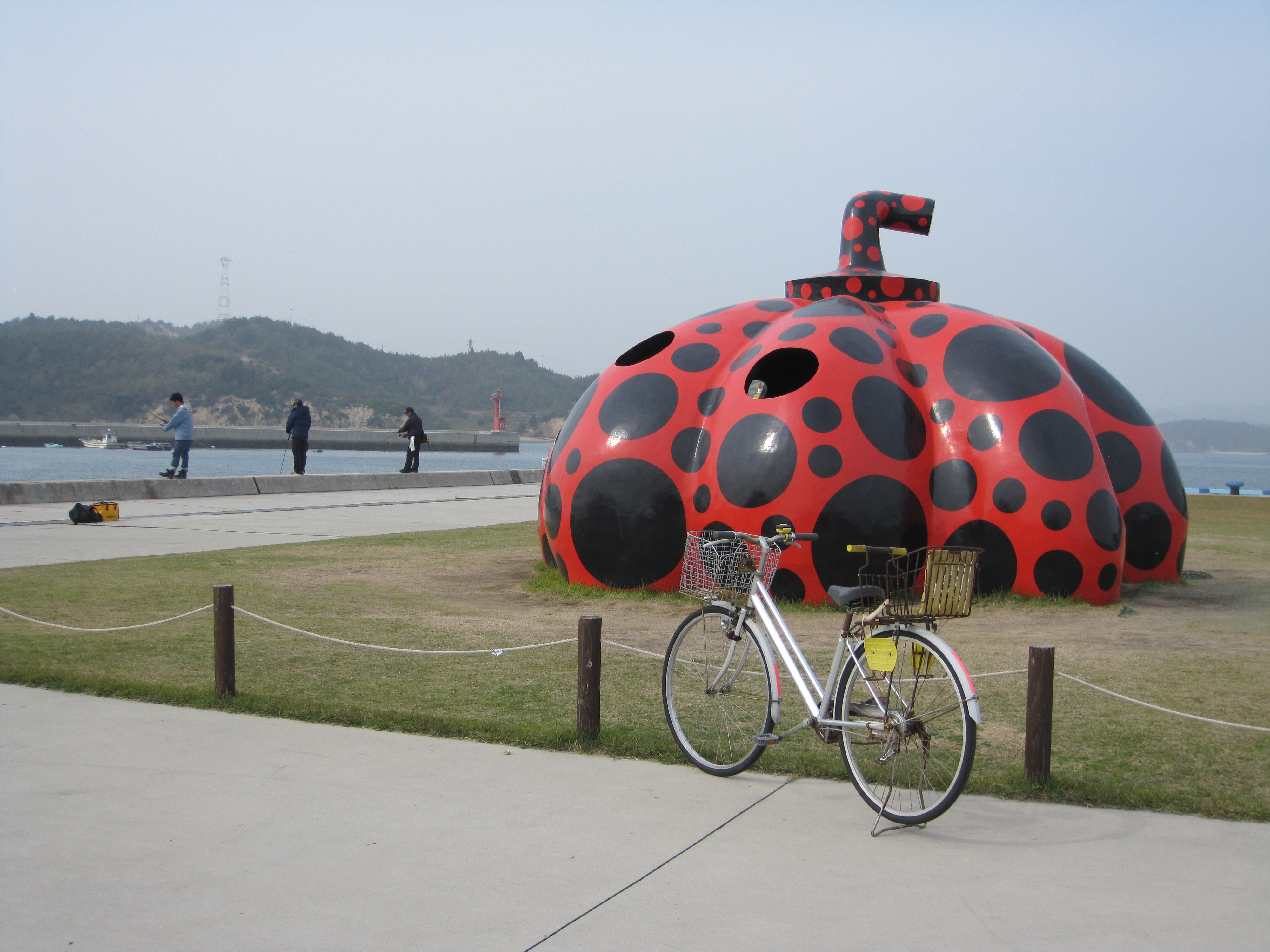
Things I Like: Panama Canal. green m and m chocolate covered pistachio nuts, Saatchi Gallery, fugu, Grouplove, islands, hot dogs, tatoos, every day in Turkey, Thai massage, Spanish lattes, Superbowl, Greek alphabet, napping with my dog, green tea donuts, skiing, ferries, sea glass, high ceilings, walking, leather jackets, take away food, thumb rings, Santorini, graffiti art, quotes, Apple school, Naoshima, Starbucks mugs from foreign countries, 100% cotton, Once Upon A Winter’s Night A Traveler, airports, white walls, seekers, Egyptian magic, warm socks, taxis, beaches, hamburgers, lists.

Fly Safe,

JAZ

The Hundredth Monkey

The Hundredth Monkey

“You dream a dream, and you go with it. You may think you know where you are going, but you will never know where it is going to take you. It takes you to places you never thought.” ~Verlen Kruger

I’ve been writing my blog for a year now. I think I am better at writing then when I started. Unfortunately, I am at the same level with punctuation, grammar and time management. I like writing in the morning or late at night. I still don’t like beets. More people are reading it but i am slowly learning how to put it out there. I’m waiting for the hundredth monkey.

On the island of Koshima, Japan, scientists gave monkeys sweet potatoes covered in sand. They liked the taste but didn’t like eating the sand. An eighteen month old female monkey learned how to wash the sand off the sweet potato in the stream. She taught it to her mother and her friends. Her friends taught it to their mothers. Soon, all the young monkeys were washing the potatoes. The adult monkeys did it if they learned from a young monkey. Only some of the adult monkeys were doing it.

One day, supposedly the hundredth monkey learned to wash the sweet potatoes. By the evening all the monkeys were washing the potatoes. Suddenly monkeys on the other islands in Japan began to wash the sweet potatoes.

It is believed that when a certain number achieves awareness it can be transmitted from mind to mind.

So that’s what im hoping. One day all of the people will start reading my blog because there is a point where the awareness is picked up by everyone. Then, it will continue. Until that day, I ‘ll just keep writing. Because it is fun! Thanks for reading it.!

Fly Safe,

JAZ

Top Ten Reasons For Going To Salta And Jujuy

Top Ten Reasons For Going To Salta And Jujuy  ( Northern Argentina)

1 Porque no?  (Why not?)

2.I can practice my Spanish.

3. I have never been there.

4.Most people have never been there.

5. I can try cow trachea, intestines, stomach stew and various other organs.  ( new food blog – animal parts i have never eaten before)

6.It looks like another one of those most beautiful places on earth.

7.I’m going to beat my car sickness on those windy mountain roads (or im not and feel sorry for my car mates unless I am so carsick that I don’t care.)

8. I want to see the salt fields.

9.  I get to spend time in Buenos Aires and Iguazu Falls.

10. I love the Andes and the altitude.

Adios, Seguia con cuidado,

JAZ
How To Be An Explorer Of The World

How To be An Explorer Of The World

“The list is the origin of culture,” Umberto Eco 

How To be An Explorer Of The World by Keri Smith  is a book with 59 ideas for how to get creatively unstuck. It began with  a simple list by the author scribbled on a piece of paper in the middle of the night.

Always be looking (notice the ground beneath your feet). (Oaxaca, Mexico, Ben Goodman)

DSC_6932-lo

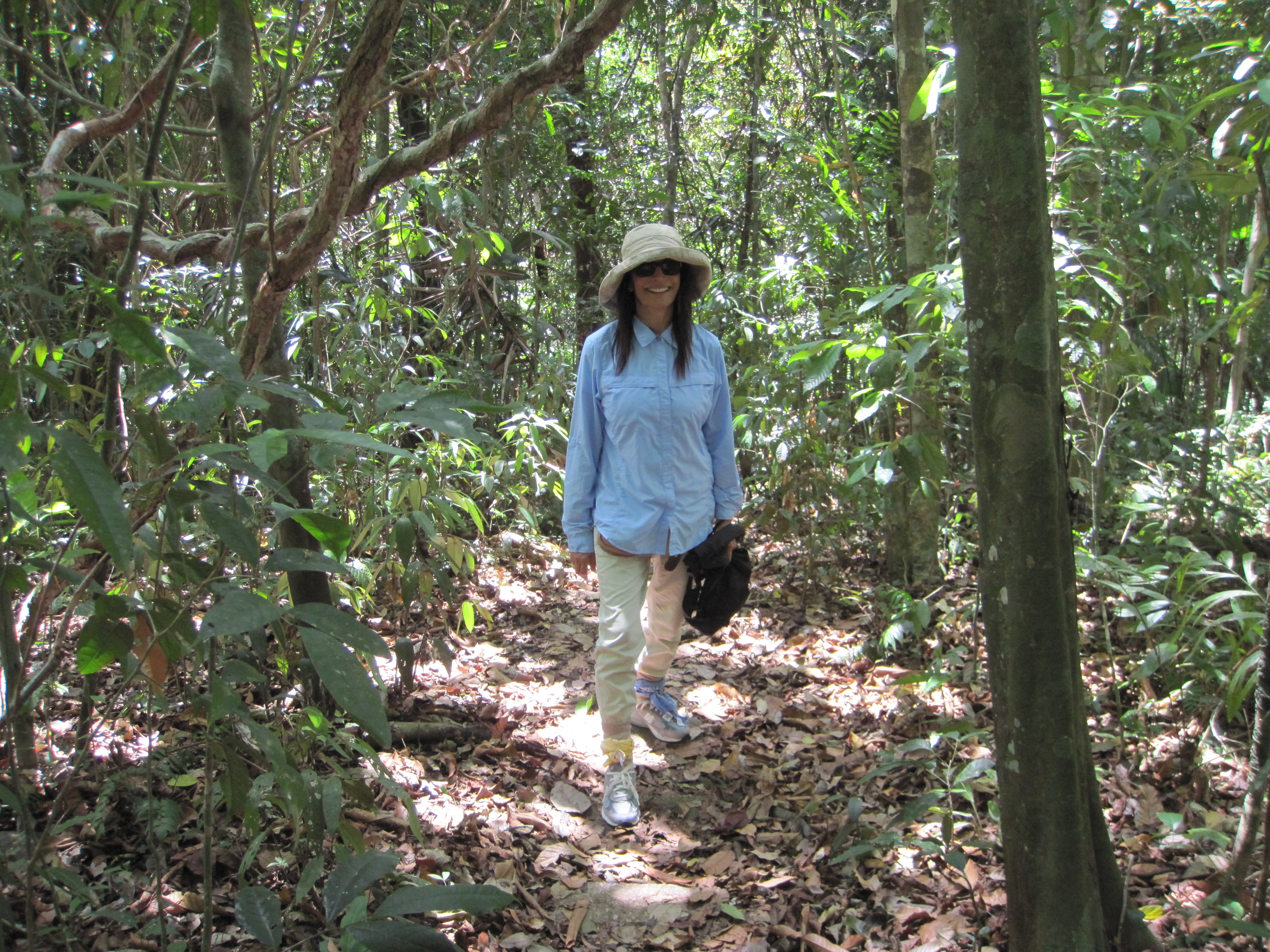
Consider everything alive and animate. ( Barro Colorado Island, rainforest, Panama)

IMG_3606

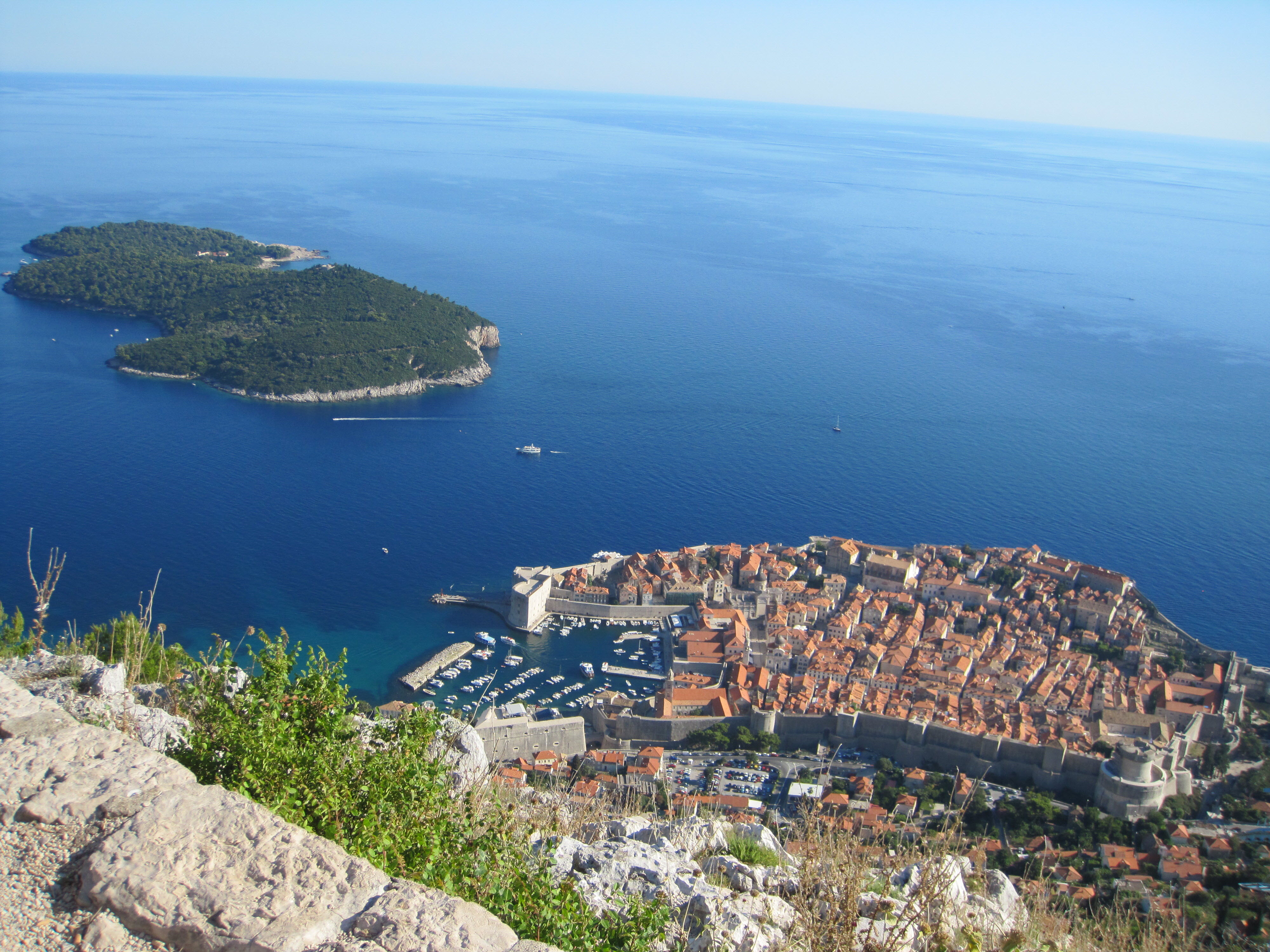
Everything is Interesting. Look closer. (Dubrovnik, Croatia)

IMG_0329

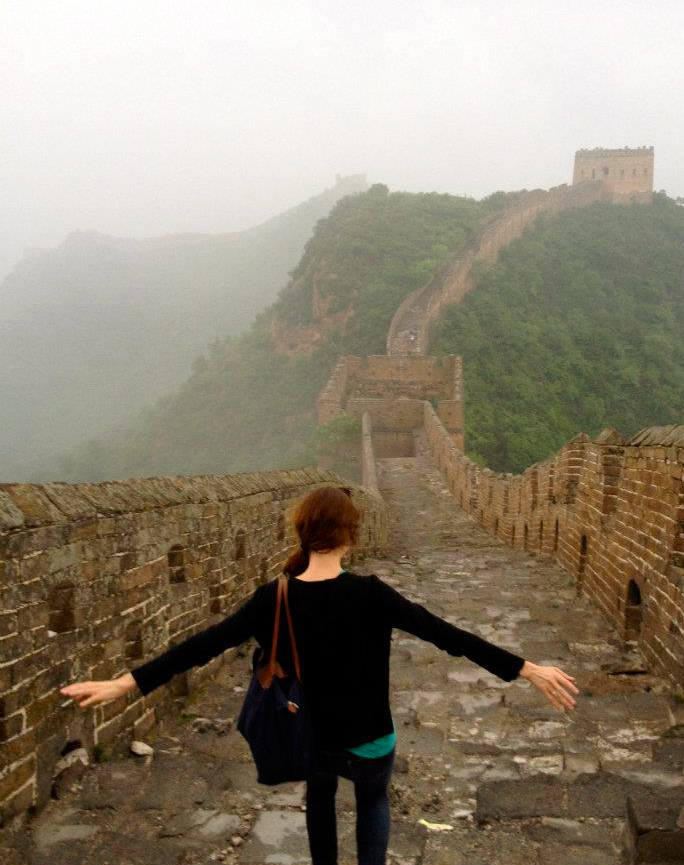
Alter your course often. (Great Wall, China)

547537_10101212049375139_1484645590_n

Observe for Long Durations (and short ones). (Vancouver, Canada)

IMG_1906

Notice the stories going on around you.(Museumplatz, Vienna)

IMG_1594

Notice Patterns. Make connections. (Istanbul, Turkey)

IMG_4971

Document your findings (Field notes)   in a variety of ways. ( Beijing,China )

380291_10101211649825839_1113827234_n

Incorporate indeterminacy. (no photos  because we don’t know how it will turn out)

Observe movement. (Intha fishermen,  Lake Inle Burma)

295524_592634070765871_371522602_n

Create a personal dialog with your environment. Talk to it. (Silver Pavilion, Kyoto)

IMG_0839

Trace things back to their origins. (Machu Picchu, Peru)

893989003311

Use all of the senses in your investigations. ( Bangkok, Thailand)

IMG_3053

Fly Safe,

JAZ
Things I Have Learned In Kyoto, Japan

Things I Have  Learned in  Kyoto, Japan

“The way is not in the sky. The way is in the heart.”

~ Buddha

Kyoto is the headquarters of Nintendo.

Kyoto has almost 2000 Buddhist and Shinto shrines and temples. I haven’t seen them all – yet. ( female monks )

IMG_0935

Sanjusangendo is a 12th century temple (partly rebuilt in the 13th century after a fire) and it has 1000 identical life-sized Buddha statues arranged in 10 rows by 100 columns. In front and around some of these columns there are also 28 unique statues of guardian deities. Directly in the centre of these 1000 statues there sits an impressive giant Buddha statue covered in gold. Don’t go if you happen to  be allergic to smoke.  It also has a thousand candles.

IMG_0825

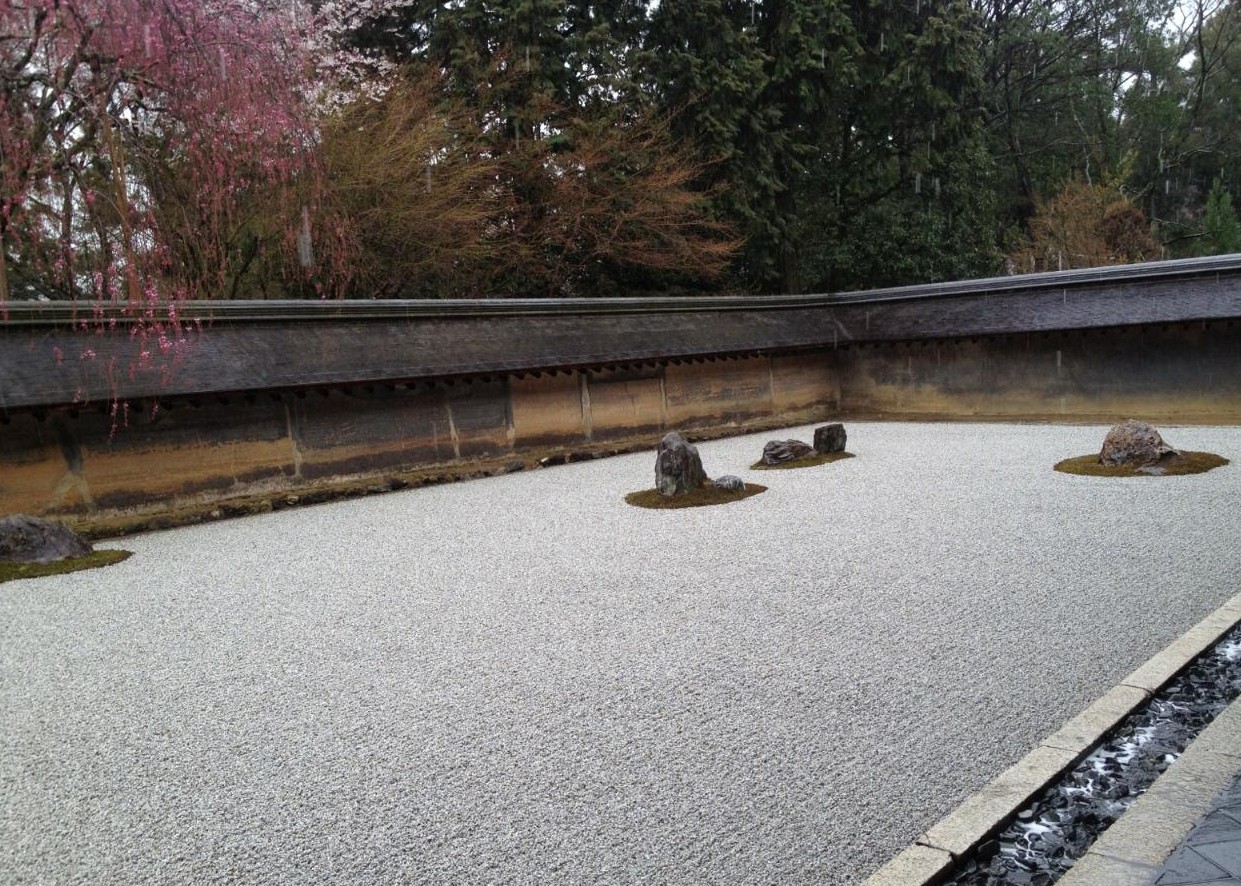
Ryoan-ji Temple’s dry rock garden is a puzzle. Nobody knows who designed it or what the meaning is of the 15 rocks scattered across its expanse of raked white gravel. Some academics say they represent a tiger carrying a cub across a stream; others believe they depict an ocean accented with small islands or the sky dotted with clouds. There’s even a theory that the rocks form a map of Chinese Zen monasteries. The only thing scholars do agree on is that Ryoan-ji is one of the finest examples of Zen landscaping in the country. You could stay there for years quietly contemplating the garden’s riddles and still get no nearer to an answer, and maybe that’s the point.

IMG950457

Downtown Kyoto is quite ugly.

IMG_0874

Uji is known for the production of high quality green tea.  It has many tea houses and is a great place to sample green tea, green tea desserts, green tea mochi, green tea cakes, green tea soba and green tea ice cream. Byodo-in Temple is there and is also on the back of the ten yen coin.

IMG_0896

Many stores and restaurants  in Uji  are closed on Monday which makes it the time to go ( not crowded) and not to go. (looking for a restaurant)

IMG_0890

Kyoto was never bombed during World War Two. You can still find 100-year-old streets and lots of old wooden buildings. Some of the structures have withstood earthquakes and have no nails.

Kyoto is Japan’s craft capital, where skills are still passed down through generations. Tiny specialty shops in Shijo Dori, Kawaramachi Dori and the Kyoto Handicraft Center  have Yuzen-dyed fabrics,wooden combs, fans and everything you need to host a tea ceremony.  Shinmonzen Dori and Furumonzen Dori and are filled with antique shops and galleries selling woodblock prints. The department stores around Shijo Kawaramachi intersection and Kyoto train station are good places for lacquerware and kimonos.

IMG_1002

The 7-5-3- festival occurs  around Nov fifteenth.   Five-year-old boys and seven or three-year-old girls are taken to the local shrine to pray for their safe and healthy future. This festival started because of the belief that children of certain ages were especially prone to bad luck and hence in need of divine protection. Children are usually dressed in traditional clothing for the occasion and after visiting the shrine many people buy chitose-ame (“thousand-year candy”) sold at the shrine.

IMG_0934

The most famous  Buddhist temples in Kyoto  are Ginkaku -ji and Kinkaku -ji (the gold and silver pavilion).  I bet they are a lot more beautiful when it isn’t raining.

IMG_0871

Kinkaku-ji is a Zen Buddhist temple .  it is  the Gold Pavilion. The garden complex is an excellent example of a Muromachi period garden. The Muromachi period is considered to be a classical age of Japanese garden design. The correlation between buildings and its settings were greatly emphasized during this period. It was a way to integrate the structure within the landscape in an artistic way. The garden designs were characterized by a reduction in scale, a more central purpose, and a distinct setting. A minimalistic approach was brought to the garden design, by recreating larger landscapes in a smaller scale around a structure.

IMG_0864

The Golden Pavilion was built to house some of Buddha’s ashes..There you’ll witness the flow of Japanese people of all ages praying, paying homage, writing their wishes on colorful ema boards, and buying special charms called omamori in hopes that their aspirations of finding a spouse or succeeding in an exam will someday be fulfilled. (i see my ema board it is one of the few non japanese ones!!!!)

IMG_0984

IMG_0933

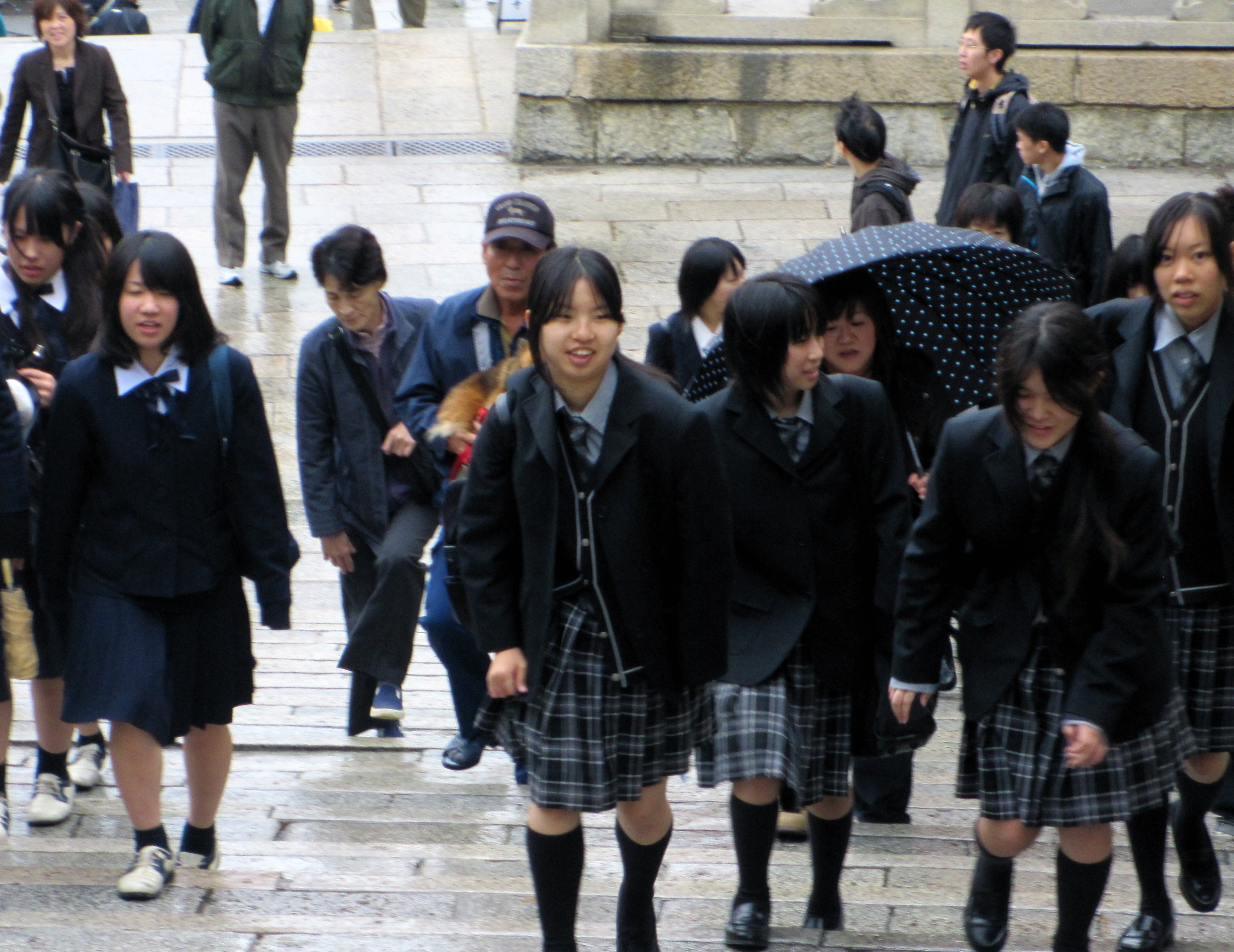
You will see a lot of school children with their classes at all the temples in Kyoto in November. It is the time for luck and they are all praying for good grades.

IMG_0992

IMG_0995

Ginkaku-ji is the Silver Pavilion..  The tea ceremony is said to have originated here. The exterior of the pavilion was originally going to be covered in silver foil, in emulation of the Golden Pavilion (14th century) at Kinkaku – ji. Without ever having enjoyed a coating of silver, the Silver Pavilion is one of the most graceful structures ever built.

IMG_0847

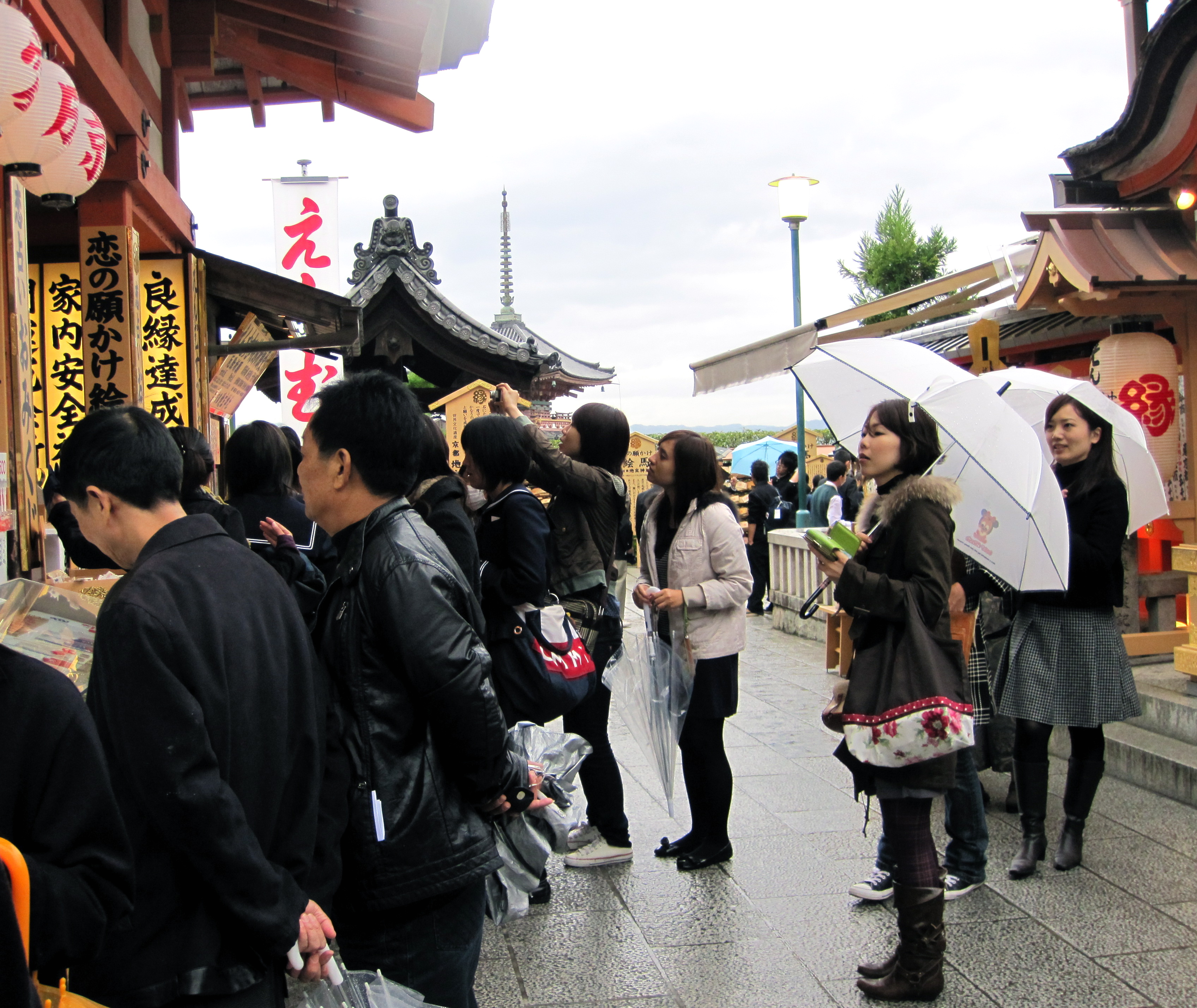
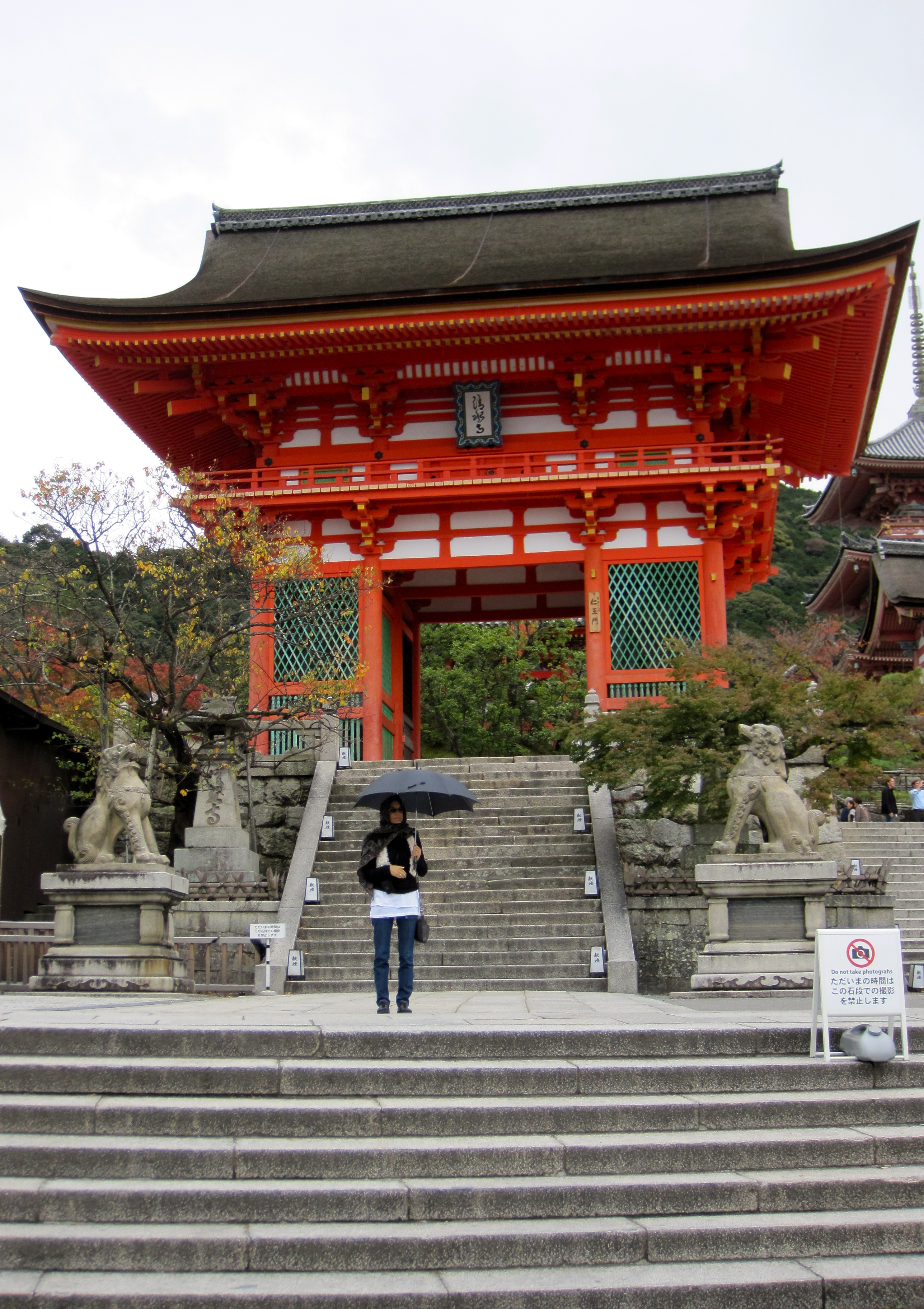
Kiyomizudera Temple  contains several other shrines, notably Jishu-Jinja, dedicated to Okuninushino-Mikoto, a god of love and “good matches”. Jishu-jinja possesses a pair of “love stones” placed 18 meter apart, which lonely visitors attempt to walk between with their eyes closed. Success in reaching the other stone, eyes closed, is taken as a prediction that the pilgrim will find love. One can be assisted in the crossing, but this is taken to mean that an intermediary will be needed. The person’s romantic interest can assist them as well.
It is the highlight of the yearly school trips to the temples for luck in exams.

IMG_0956

IMG_0979

Here is the famous love stone.

IMG_0974

IMG_0983

It’s not the only geisha district left in Japan, but Gion, a collection of streets defined by its old wooden buildings, tea houses and exclusive Japanese restaurants, is by far the most famous. Spend an hour wandering the area and chances are you’ll glimpse a geisha or two shuffling between tea houses in their cumbersome zori sandals and exquisite kimono. Much to their annoyance, you’ll probably see camera-happy Japanese tourists stalking them too.

IMG_1004

You get free tofu refills with an eight course tofu dinner – so delicious. ( Tousuiro 075-561-0035 )

IMG_0879

Few museums are as hands-on as this old elementary school turned shrine to manga, or comic books, and its collection of some 300,000 comics and manga-related exhibits. Visitors can read any piece of manga they want at the  Kyoto International Manga Museum  from the towering wooden bookcases that line every wall and hallway. Some read propped up against the walls or sitting crossed legged on the floor; others hunker down with a coffee at the museum’s wood-decked outdoor café. The eclectic and universally transfixed crowd is a testament to how much a part of mainstream Japanese culture manga has become. http://www.kyotomm.com/english/

French Japanese food served by beautiful girls with strong knees is tres bien. ( Takumi Okamura, Gion  075-541-2205 )

IMG_0948


It’s touristy, and  tacky, but dressing up as a samurai and watching TV actors hamming it up on set does hold a certain charm. Eigamura or Kyoto Toei Studio Park to give it its English name, is a working TV and movie set that doubles as a theme park, where besides dressing up in period costume you can wander around a mock-up Edo-era samurai town and take in exhibitions of the well-known TV series and films shot here.It’s the live studio performances, however, that steal the show. The sword fights are extravagant, the facial expressions and body language overly dramatic, and the dialog at times delivered about as convincingly as an elementary school end-of-year play. It’s Japanese kitsch at its finest. Quentin Tarantino would love it. http://www.toei-eigamura.com/en/

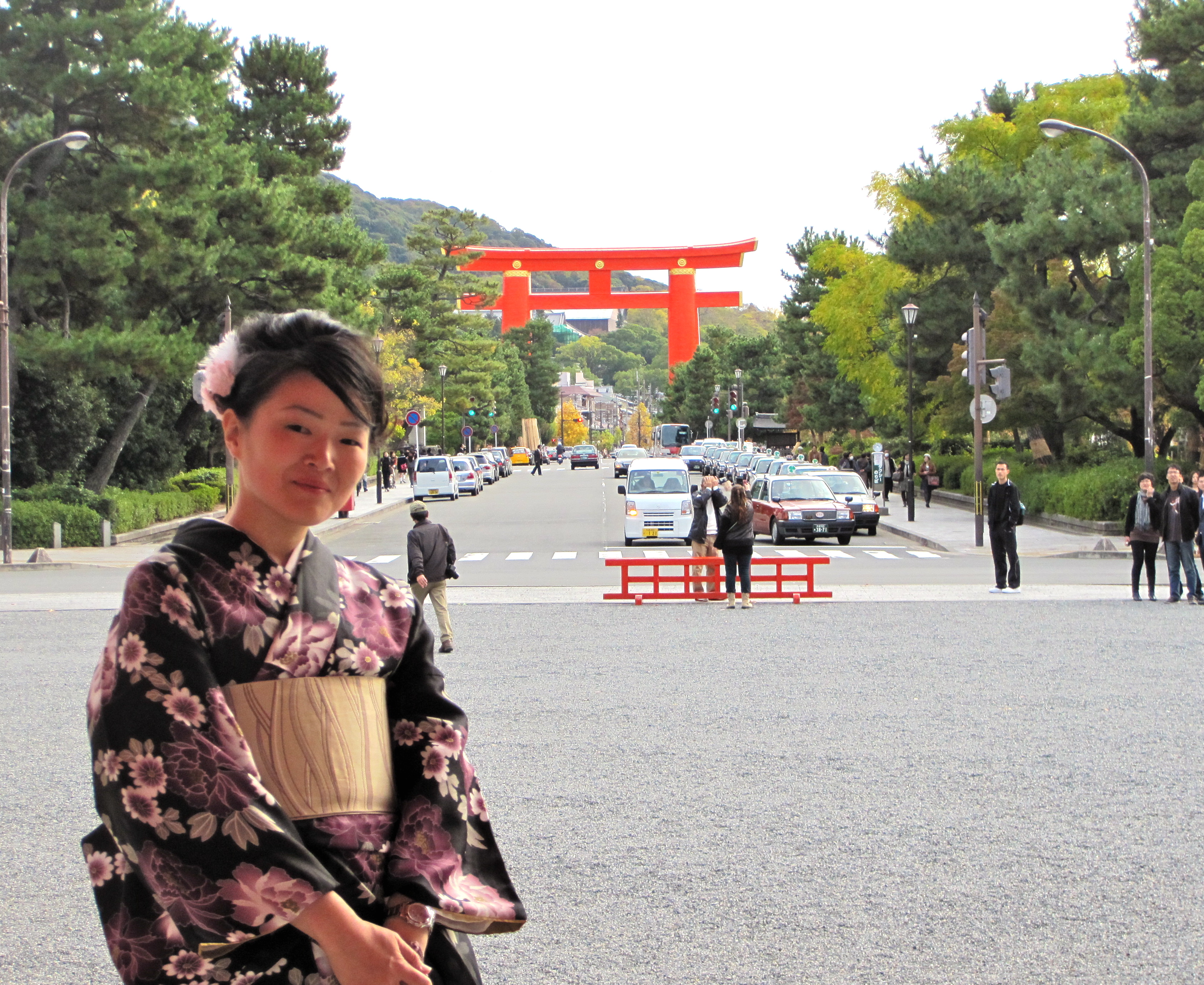
(Heian Jingū) Heian Shrine  was  1895  and is dedicated to the spirits of the first and last emperors who reigned from the city,  A giant torii gate marks the approach to the shrine, The real shrine grounds themselves are very spacious, with a wide open court at the center. The shrine’s main buildings are a partial replica of the original Imperial Palace from the Heian Period built on a somewhat smaller scale than the original.

IMG_0915

IMG_0917

Behind the main buildings there is an attractive, paid garden with a variety of plants, ponds and traditional buildings. The garden’s most striking feature are its many weeping cherry trees which bloom a few days later than most other cherry trees, making the garden one of the best   around the tail end of the season, which is usually around mid April.

IMG950563

Omikuji are paper fortunes that can be bought at both shrines and temples. The fortunes range from great good luck to great bad luck. There are trees to tie the fortunes to avert the bad luck if you are unlucky enough to draw that fortune.

IMG_0925

One of my fortunes is framed in my house. The others might be on a tree. The  thing about luck is that it always changes.

for more info go to

https://havefunflysafe.wordpress.com/2012/08/25/japanese-food/

https://havefunflysafe.wordpress.com/2012/09/14/things-i-have-learned-in-okinawa-and-hiroshima/

https://havefunflysafe.wordpress.com/2012/08/11/things-i-have-learned-in-japan/

https://havefunflysafe.wordpress.com/2012/08/06/things-i-have-learned-in-tokyo/

ki o twu kete

JAZ

Top Ten Coffee Travel Moments

“This coffee falls into your stomach, and straightway there is a general commotion.  Ideas begin to move like the battalions of the Grand Army of the battlefield. Things remembered arrive at full gallop, ensuing to the wind.  The light cavalry of comparisons deliver a magnificent deploying charge, the artillery of logic hurry up with their train and ammunition.  Similes arise, the paper is covered with ink; for the struggle commences and is concluded with torrents of black water, just as a battle with gun powder. “

Honore de Balzac

Top Ten Coffee Travel Moments

I realized by writing this blog that I am addicted to caffeine. There are way too many references to coffee.  It is the only vice I have left.  I thought I would embrace it by writing my top ten coffee travel moments.

!. I am seventeen and in Europe for the first time.  We  are  in CERVINA in the Italian Alps. There is a cappuccino bar that we go to every morning and have fresh cappuccino before a day of skiing. It is pre cell phones and Starbucks.  The only cappuccino  you got in NY  was in the Italian restaurants  after dinner.  There was no decaf cap. Cappuccino every morning was as big a deal as skiing in the Alps for the first time.

2.   The island of SANTORINI in Greece is where i am spending my twenty third summer.   I am staying at my friend’s house on a mountain overlooking the sea.  It is one of those  Santorini white houses with blue tile.  We have to walk halfway down the mountain every morning to have coffee and fresh bread with butter and honey, at a café run by a family that doesn’t speak English. Santorini was  not the five-star  tourist destination it is now but it always had five-star views of the sea, volcano and black sand beaches. .  “kafe me gala  sketos parakalo” The grandmother always dressed in black would smile at my bad Greek pronunciation and bring me my coffee. They used condensed milk all the time with coffee and I love the taste.  I think they wear black  because someone in their family close to them has died – usually they are widows.

545319_436959296360980_1027944743_n

3.  My daughter who is twelve and her tap company have performed at the Cuban Ballet Festival throughout Cuba.  We are driving back to HAVANA from Santa Clara.  Since Petrol is scarce, members of the Columbian Ballet Company are sharing the bus with us. We get back around five and I have a serious lack of  caffeine headache.  I invite the Columbian dancers who I have spoken to in bad Spanish  for a coffee at the hotel.  I order a double espresso and drink it down  like I am doing a shot of tequila.   First they stare at me and then they laugh and do the same.  We start by drinking espresso shots –we move on to Mojitos. No one slept that night. (Cuba,Jim Kane)

734564_622571224426673_1184425465_n

4. We have arrived at the SACRED VALLEY in Urubumba, Peru.  We are spending the night at the beautiful Sol Y Luna  hotel and the altitude is 9000 feet. (2400 m)  It is our first night in the Andes.  I start to have this headache and feel dizzy. As we are going to our rooms someone says to me, “Be careful, the headache is the first sign of altitude sickness”.  I go right to the worst case scenario.  I remember my mindfulness training as I am going into high anxiety mode. I investigate the feeling in my body and think it isn’t that severe. It feels like a lack of caffeine headache.   I remember I didn’t have coffee that afternoon. I relax and go right to sleep. I wake up early and have a wonderful Peruvian breakfast  of yogurt , fruit, kikucha cereal ( grain like quinoa) and coffee. No more headache.

601689003311

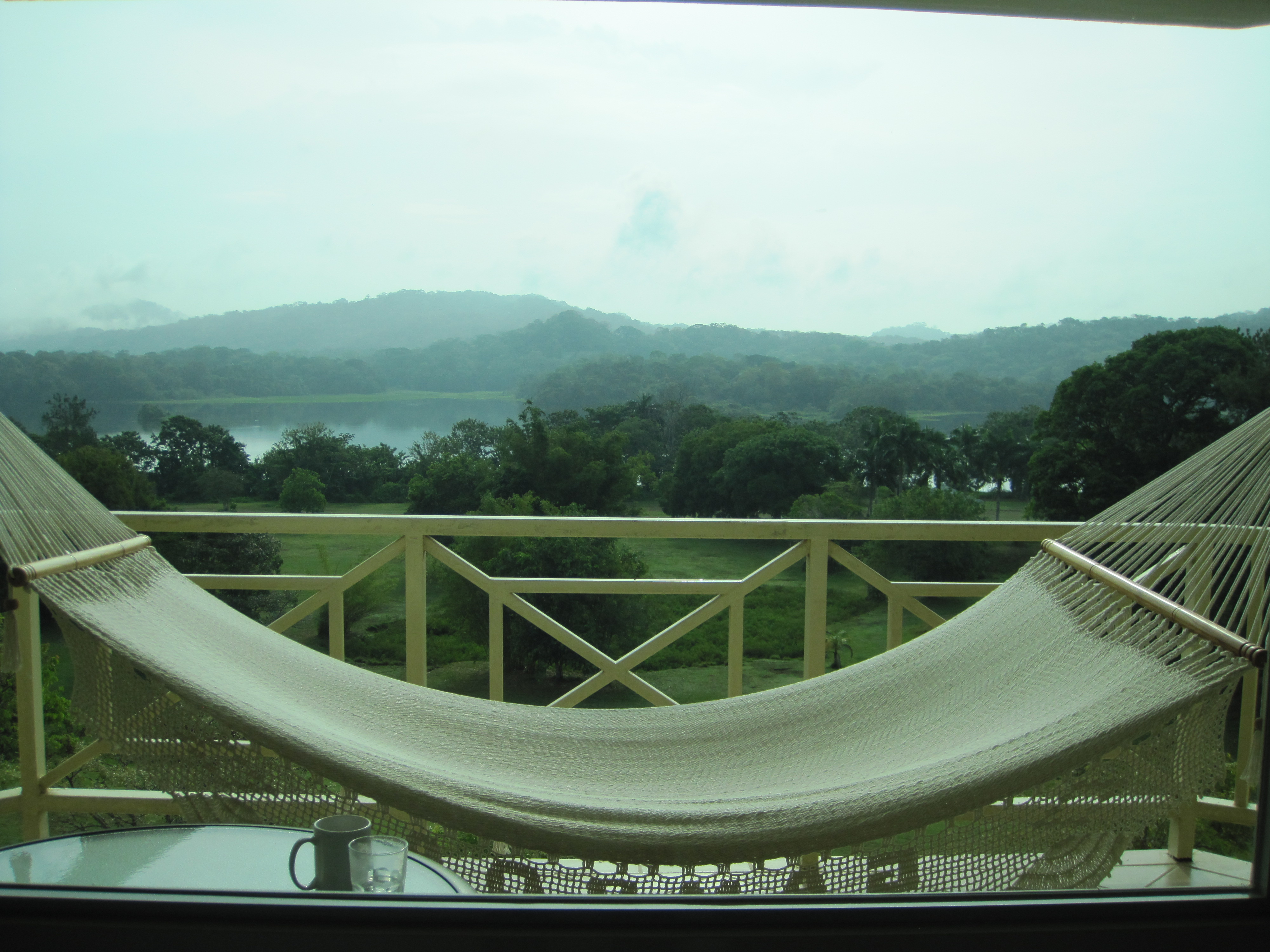
5. I usually hate instant room coffee.  But in PANAMA it was really good. It is called Puro and I brought some home.   I have a confession. I kind of like non dairy creamer   Sometimes your diet needs a few chemicals.  I got up every morning in  Gamboa  to watch the sunrise over the rainforest and had a coffee while lying in a hammock on the terrace.

IMG_3727

6. Anna and I have spent the day on  the island of NAOSHIMA in Japan.  It is the island that Tadao Ando has designed and dedicated to art and nature.  There are museums, outdoor sculptures, galleries and installations in houses throughout the island.  It is a bit like a scavenger  hunt trying to see everything.  But we did it. We are at a small  ferry at the other end of the island that locals use to head back to the mainland . I am looking for coffee. We see something that looks like it might be open. We walk in. There is cool music and magazines and interesting furniture and art . It is  like a Japanese Greenwich village coffee-house  on this little island street.  We can’t believe our luck.  We have coffee and wait in this beautiful restaurant for the ferry and talk about our amazing day.

IMG_2345

7. I had been  in the  incredible  city of VENICE for a few days with my daughter and a friend. My son arrived after traveling around Europe alone.  He had a lot to say and wanted to have  a coffee in Venice and talk about his travels. We sat in a café on the canal and he told me his stories. I was happy sitting there listening to him  and I could hear  that he loved to travel as much as I did.  Family travel moments are few and far between now. It was a beautiful trip.

IMG_0258

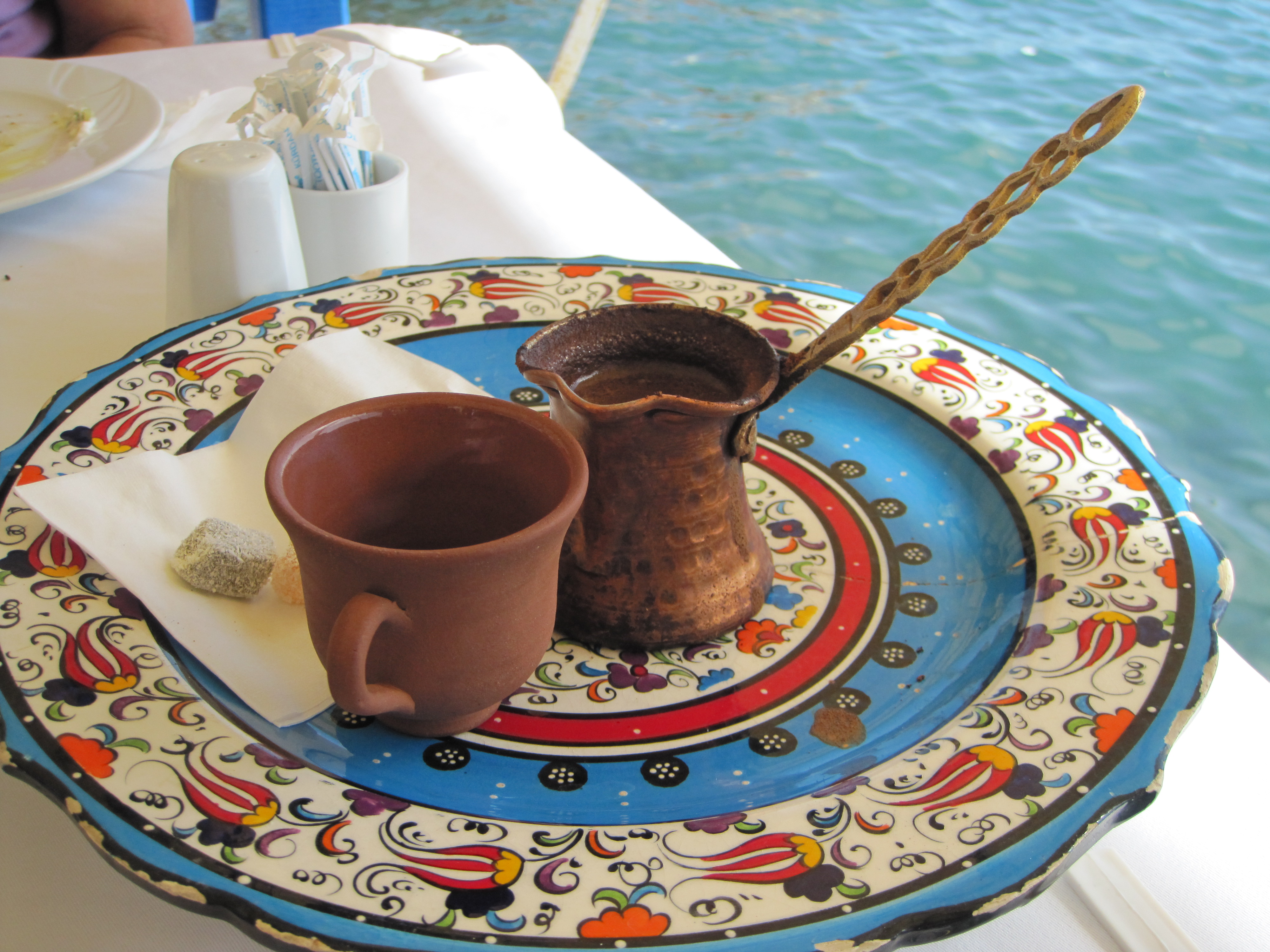
8.  It was my first day in ISTANBUL. I had shopped at the Grand Bazaar with my guide for the day Renan.  We stopped for lunch.  We met  carpet salesmen from Los Angeles.  Suddenly, it didn’t seem so far away.  This was my first experience with Turkish food. Hot yogurt soup and something with my favorite vegetable –eggplant.  – delicious. I had my first Turkish coffee. (a lot like Greek coffee) I loved the thickness and the feeling of the grounds in my mouth ( coffee that you can chew).  It isn’t bitter either so I am able to drink it without milk. She read the coffee grinds to me.  We used to do this in Greece. It was my first coffee fortune in a very long time.  It wasn’t bad. My next one wasn’t great. So I stopped doing it and just drank the coffee.

IMG_4382

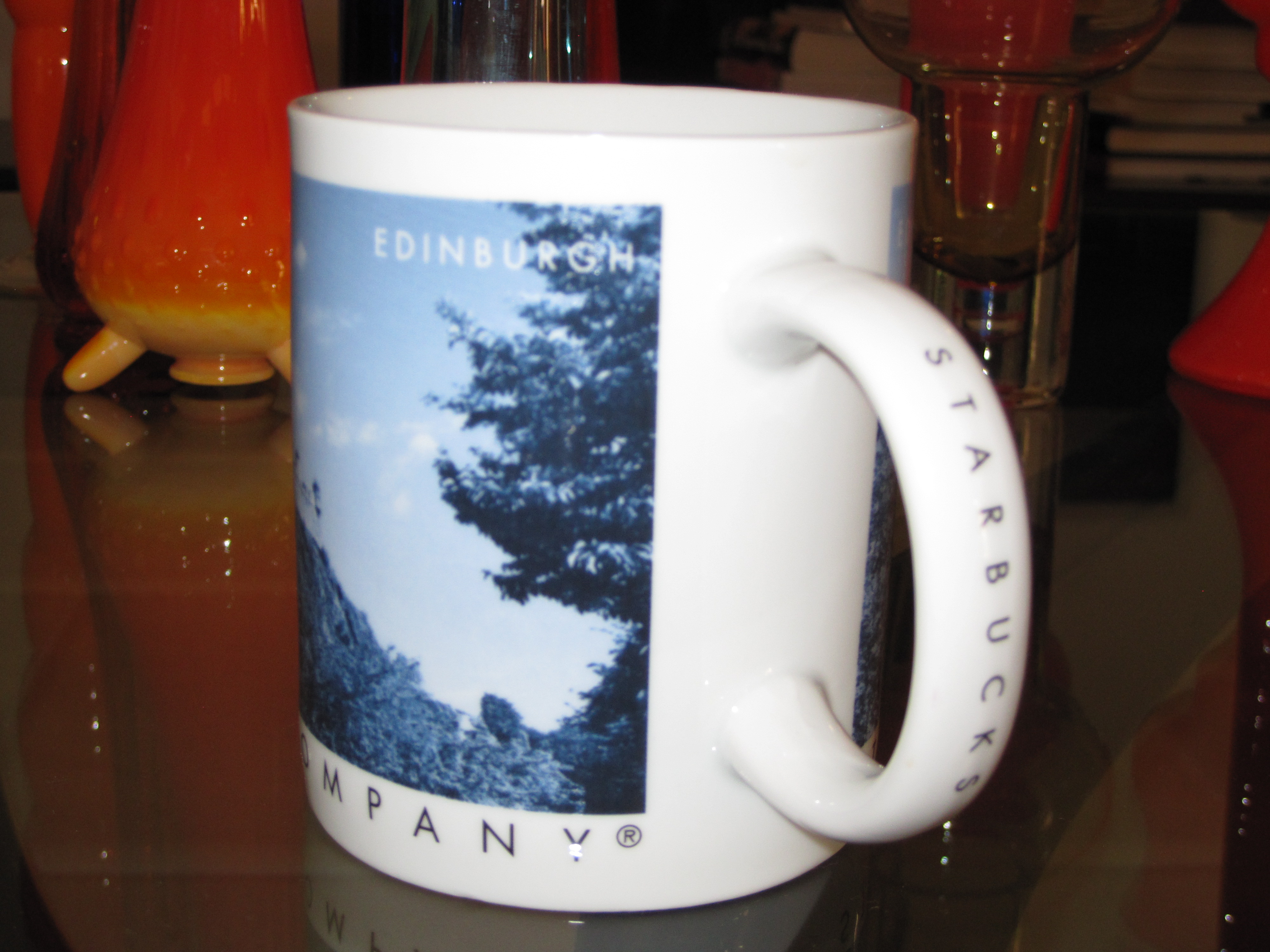
9. I am in EDINBURGH, Scotland for the Fringe Festival. My daughter is performing there with her high school theatre group. In the summer, walking down the Royal Mile is crazy. Everyone is in costume and giving out flyers and performing and begging to get you to go their shows. The Starbucks is right at the beginning of the Royal Mile, next to the Fringe Ticket Office. I meet a friend for coffee after picking up some tickets. We are surrounded by Vikings and Elizabethans all having cappuccinos and lattes. In fact, only the barristers are   dressed in modern-day clothing.  I felt  a little underdressed.

IMG_5252

10.   A few weeks ago, I was walking down Portobello Road in LONDON with my college friend Suzie.  Suzie was the first person I traveled around Europe with . We were about eighteen. We lost touch after college but reconnected  a few years ago through the magic of facebook.  We were both going to be in London at the same time. We aren’t looking for vintage clothes like we used to  (and still do) but vintage housewares.  It is freezing out. We go into a coffee house and see a long queue. It is called the Coffee Planner. The girl in front of me says it is the best coffee on Portobello Road and worth waiting for. Suzie buys an unbelievably good sandwich from a vendor outside and we sit and drink our coffees eating this sandwich.   Jayne and Suzie together again in Europe. ( St. Paul’s Cathedral from the Millennium Bridge)

IMG_0456

Do you have any good coffee moments?

Fly safe,

JAZ