The Hundredth Monkey

The Hundredth Monkey

“You dream a dream, and you go with it. You may think you know where you are going, but you will never know where it is going to take you. It takes you to places you never thought.” ~Verlen Kruger

I’ve been writing my blog for a year now. I think I am better at writing then when I started. Unfortunately, I am at the same level with punctuation, grammar and time management. I like writing in the morning or late at night. I still don’t like beets. More people are reading it but i am slowly learning how to put it out there. I’m waiting for the hundredth monkey.

On the island of Koshima, Japan, scientists gave monkeys sweet potatoes covered in sand. They liked the taste but didn’t like eating the sand. An eighteen month old female monkey learned how to wash the sand off the sweet potato in the stream. She taught it to her mother and her friends. Her friends taught it to their mothers. Soon, all the young monkeys were washing the potatoes. The adult monkeys did it if they learned from a young monkey. Only some of the adult monkeys were doing it.

One day, supposedly the hundredth monkey learned to wash the sweet potatoes. By the evening all the monkeys were washing the potatoes. Suddenly monkeys on the other islands in Japan began to wash the sweet potatoes.

It is believed that when a certain number achieves awareness it can be transmitted from mind to mind.

So that’s what im hoping. One day all of the people will start reading my blog because there is a point where the awareness is picked up by everyone. Then, it will continue. Until that day, I ‘ll just keep writing. Because it is fun! Thanks for reading it.!

Fly Safe,

JAZ

Top Ten Reasons For Going To Salta And Jujuy

Top Ten Reasons For Going To Salta And Jujuy  ( Northern Argentina)

1 Porque no?  (Why not?)

2.I can practice my Spanish.

3. I have never been there.

4.Most people have never been there.

5. I can try cow trachea, intestines, stomach stew and various other organs.  ( new food blog – animal parts i have never eaten before)

6.It looks like another one of those most beautiful places on earth.

7.I’m going to beat my car sickness on those windy mountain roads (or im not and feel sorry for my car mates unless I am so carsick that I don’t care.)

8. I want to see the salt fields.

9.  I get to spend time in Buenos Aires and Iguazu Falls.

10. I love the Andes and the altitude.

Adios, Seguia con cuidado,

JAZ

How To Be An Explorer Of The World

How To be An Explorer Of The World

“The list is the origin of culture,” Umberto Eco 

How To be An Explorer Of The World by Keri Smith  is a book with 59 ideas for how to get creatively unstuck. It began with  a simple list by the author scribbled on a piece of paper in the middle of the night.

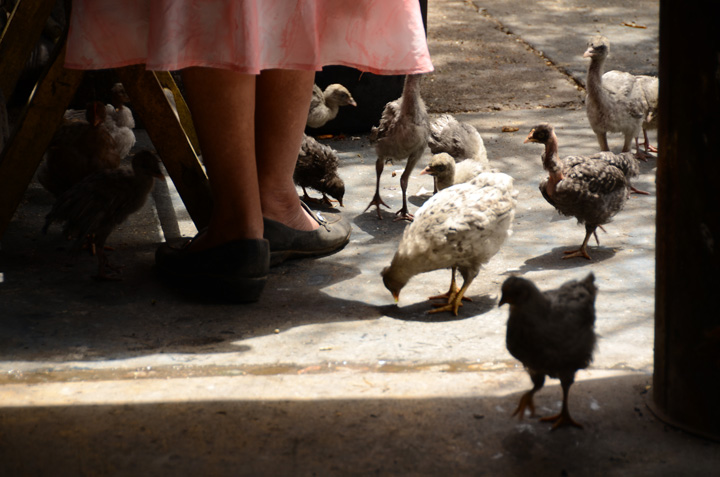
Always be looking (notice the ground beneath your feet). (Oaxaca, Mexico, Ben Goodman)

DSC_6932-lo

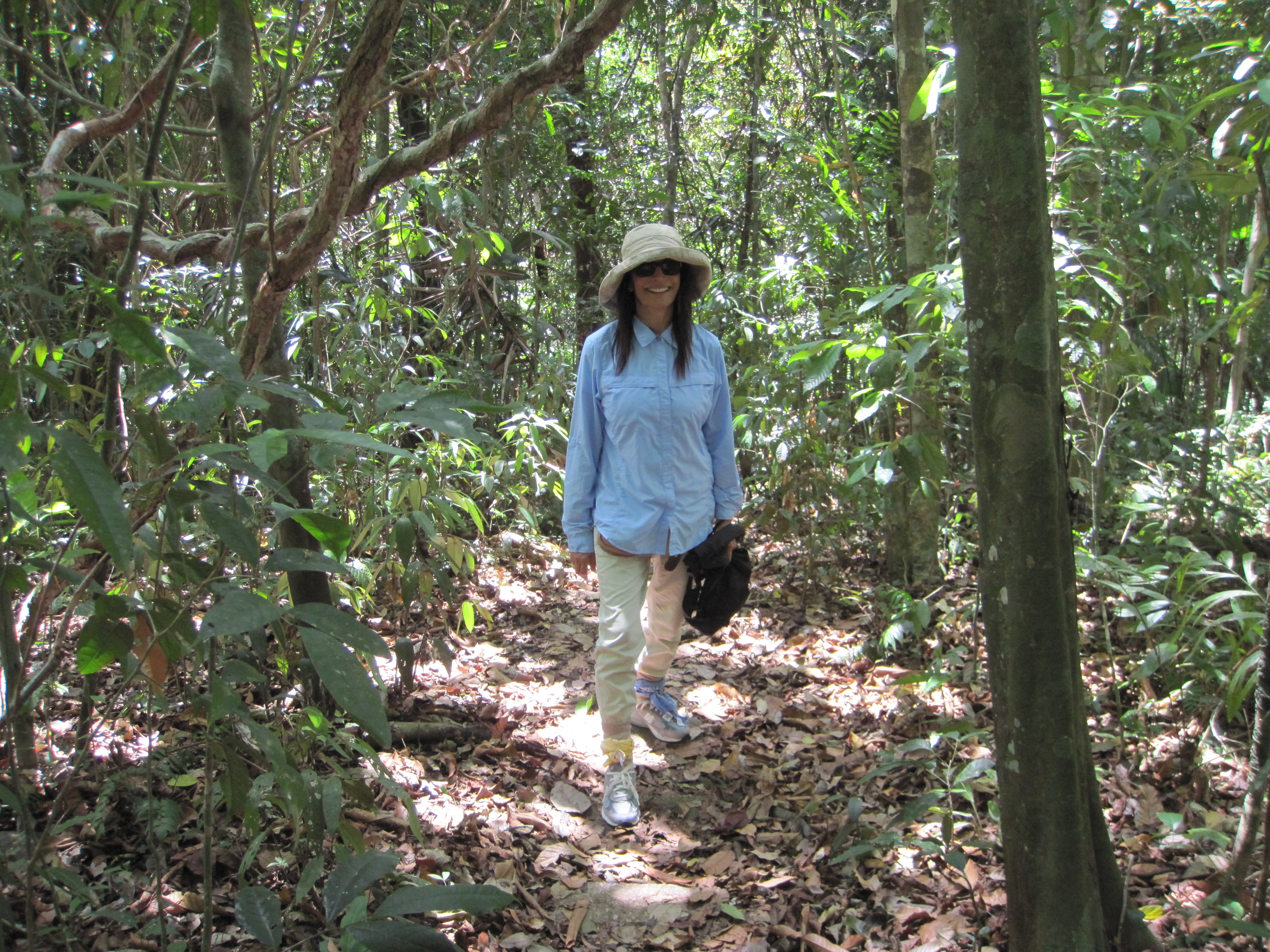
Consider everything alive and animate. ( Barro Colorado Island, rainforest, Panama)

IMG_3606

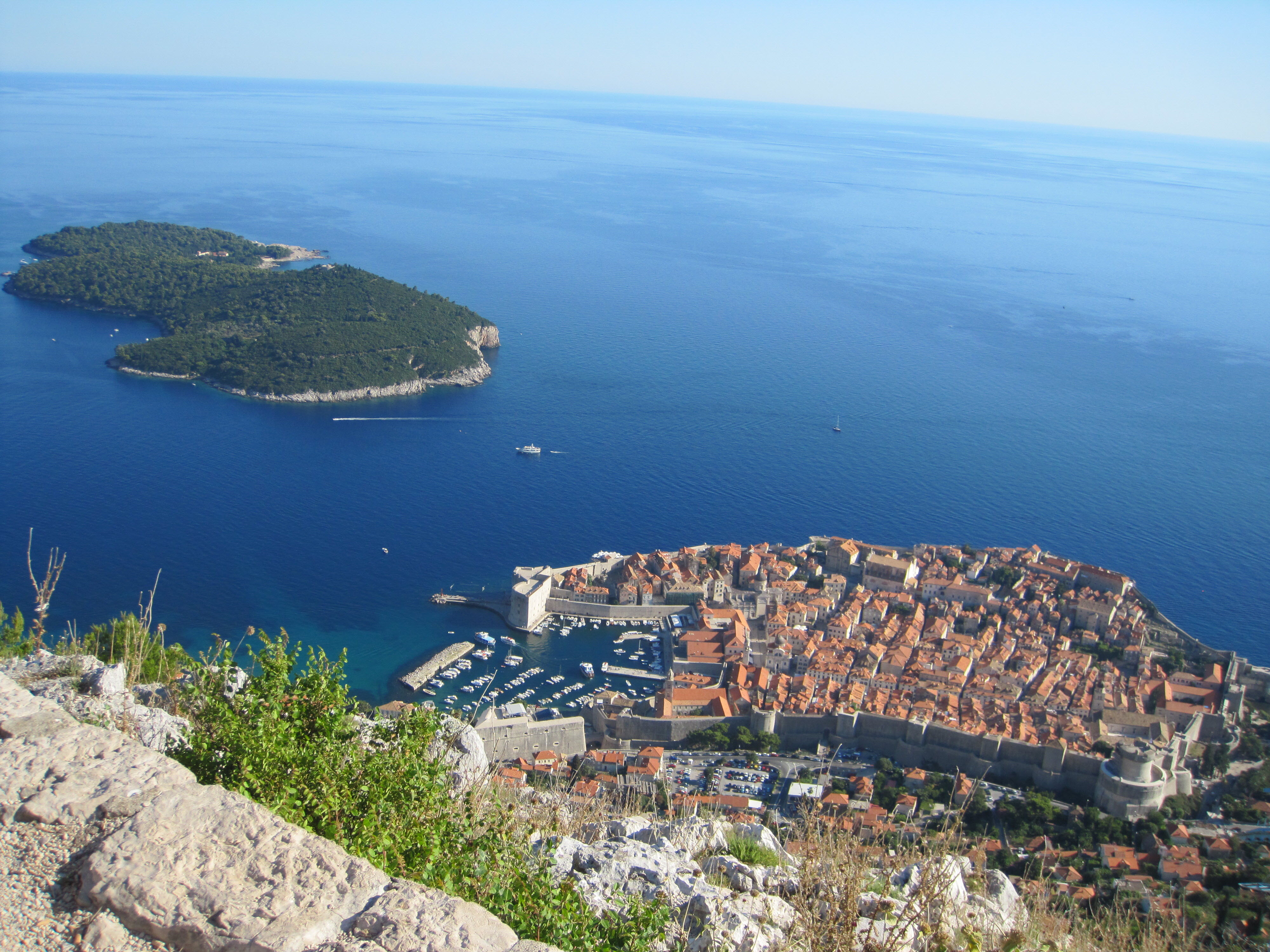
Everything is Interesting. Look closer. (Dubrovnik, Croatia)

IMG_0329

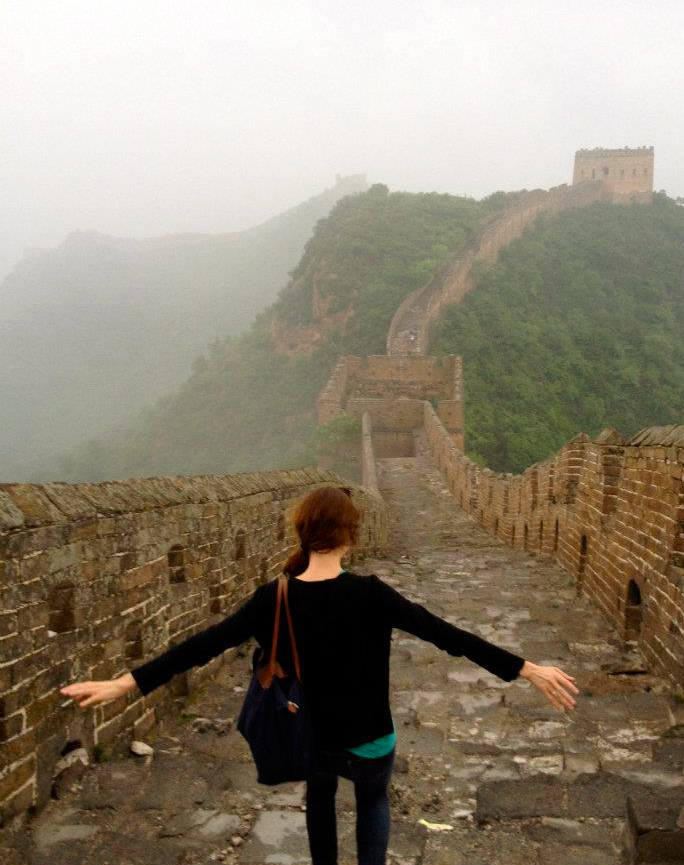
Alter your course often. (Great Wall, China)

547537_10101212049375139_1484645590_n

Observe for Long Durations (and short ones). (Vancouver, Canada)

IMG_1906

Notice the stories going on around you.(Museumplatz, Vienna)

IMG_1594

Notice Patterns. Make connections. (Istanbul, Turkey)

IMG_4971

Document your findings (Field notes)   in a variety of ways. ( Beijing,China )

380291_10101211649825839_1113827234_n

Incorporate indeterminacy. (no photos  because we don’t know how it will turn out)

Observe movement. (Intha fishermen,  Lake Inle Burma)

295524_592634070765871_371522602_n

Create a personal dialog with your environment. Talk to it. (Silver Pavilion, Kyoto)

IMG_0839

Trace things back to their origins. (Machu Picchu, Peru)

893989003311

Use all of the senses in your investigations. ( Bangkok, Thailand)

IMG_3053

Fly Safe,

JAZ

Things I Have Learned In Kyoto, Japan

Things I Have  Learned in  Kyoto, Japan

“The way is not in the sky. The way is in the heart.”

~ Buddha

Kyoto is the headquarters of Nintendo.

Kyoto has almost 2000 Buddhist and Shinto shrines and temples. I haven’t seen them all – yet. ( female monks )

IMG_0935

Sanjusangendo is a 12th century temple (partly rebuilt in the 13th century after a fire) and it has 1000 identical life-sized Buddha statues arranged in 10 rows by 100 columns. In front and around some of these columns there are also 28 unique statues of guardian deities. Directly in the centre of these 1000 statues there sits an impressive giant Buddha statue covered in gold. Don’t go if you happen to  be allergic to smoke.  It also has a thousand candles.

IMG_0825

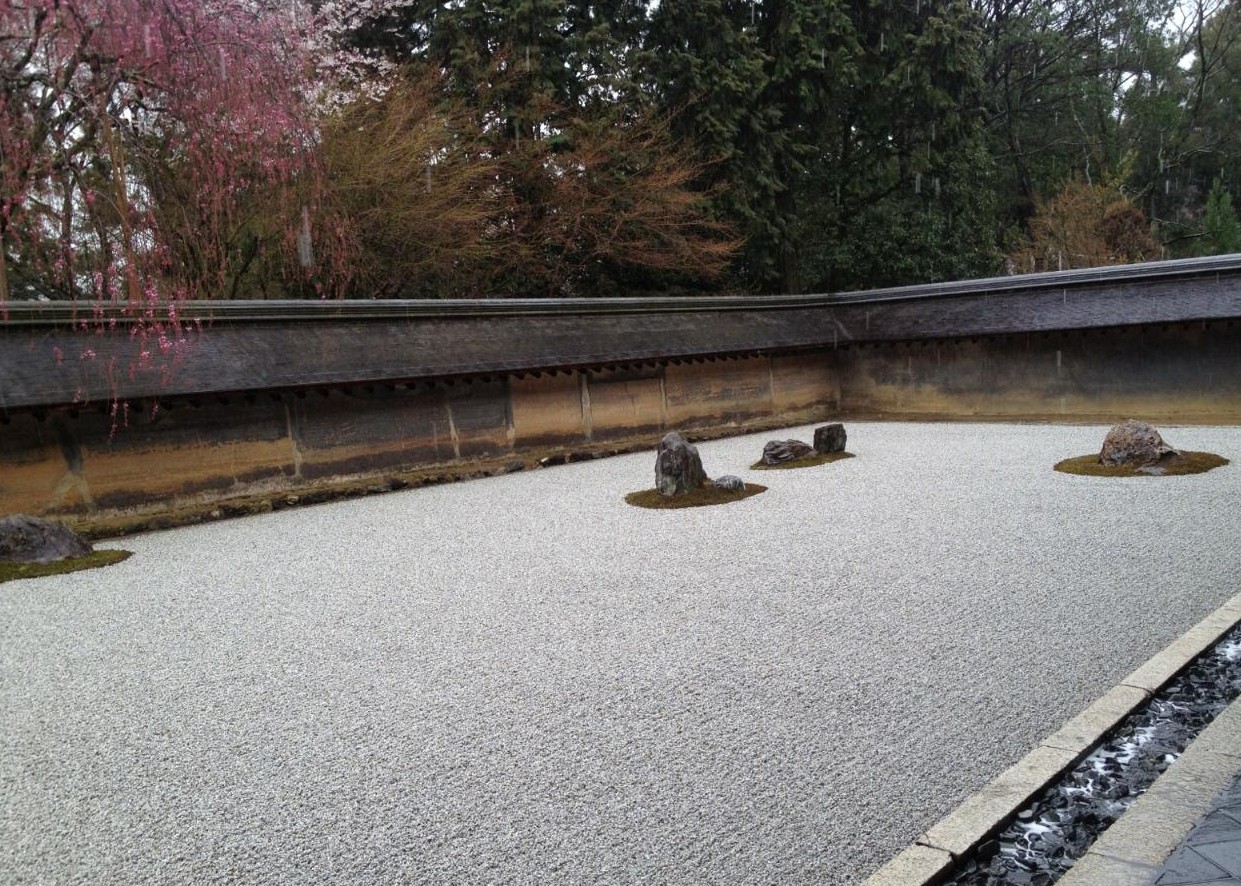
Ryoan-ji Temple’s dry rock garden is a puzzle. Nobody knows who designed it or what the meaning is of the 15 rocks scattered across its expanse of raked white gravel. Some academics say they represent a tiger carrying a cub across a stream; others believe they depict an ocean accented with small islands or the sky dotted with clouds. There’s even a theory that the rocks form a map of Chinese Zen monasteries. The only thing scholars do agree on is that Ryoan-ji is one of the finest examples of Zen landscaping in the country. You could stay there for years quietly contemplating the garden’s riddles and still get no nearer to an answer, and maybe that’s the point.

IMG950457

Downtown Kyoto is quite ugly.

IMG_0874

Uji is known for the production of high quality green tea.  It has many tea houses and is a great place to sample green tea, green tea desserts, green tea mochi, green tea cakes, green tea soba and green tea ice cream. Byodo-in Temple is there and is also on the back of the ten yen coin.

IMG_0896

Many stores and restaurants  in Uji  are closed on Monday which makes it the time to go ( not crowded) and not to go. (looking for a restaurant)

IMG_0890

Kyoto was never bombed during World War Two. You can still find 100-year-old streets and lots of old wooden buildings. Some of the structures have withstood earthquakes and have no nails.

Kyoto is Japan’s craft capital, where skills are still passed down through generations. Tiny specialty shops in Shijo Dori, Kawaramachi Dori and the Kyoto Handicraft Center  have Yuzen-dyed fabrics,wooden combs, fans and everything you need to host a tea ceremony.  Shinmonzen Dori and Furumonzen Dori and are filled with antique shops and galleries selling woodblock prints. The department stores around Shijo Kawaramachi intersection and Kyoto train station are good places for lacquerware and kimonos.

IMG_1002

The 7-5-3- festival occurs  around Nov fifteenth.   Five-year-old boys and seven or three-year-old girls are taken to the local shrine to pray for their safe and healthy future. This festival started because of the belief that children of certain ages were especially prone to bad luck and hence in need of divine protection. Children are usually dressed in traditional clothing for the occasion and after visiting the shrine many people buy chitose-ame (“thousand-year candy”) sold at the shrine.

IMG_0934

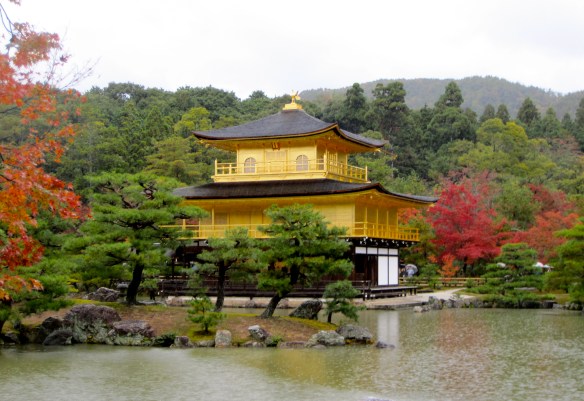
The most famous  Buddhist temples in Kyoto  are Ginkaku -ji and Kinkaku -ji (the gold and silver pavilion).  I bet they are a lot more beautiful when it isn’t raining.

IMG_0871

Kinkaku-ji is a Zen Buddhist temple .  it is  the Gold Pavilion. The garden complex is an excellent example of a Muromachi period garden. The Muromachi period is considered to be a classical age of Japanese garden design. The correlation between buildings and its settings were greatly emphasized during this period. It was a way to integrate the structure within the landscape in an artistic way. The garden designs were characterized by a reduction in scale, a more central purpose, and a distinct setting. A minimalistic approach was brought to the garden design, by recreating larger landscapes in a smaller scale around a structure.
IMG_0864

The Golden Pavilion was built to house some of Buddha’s ashes..There you’ll witness the flow of Japanese people of all ages praying, paying homage, writing their wishes on colorful ema boards, and buying special charms called omamori in hopes that their aspirations of finding a spouse or succeeding in an exam will someday be fulfilled. (i see my ema board it is one of the few non japanese ones!!!!)

IMG_0984

IMG_0933

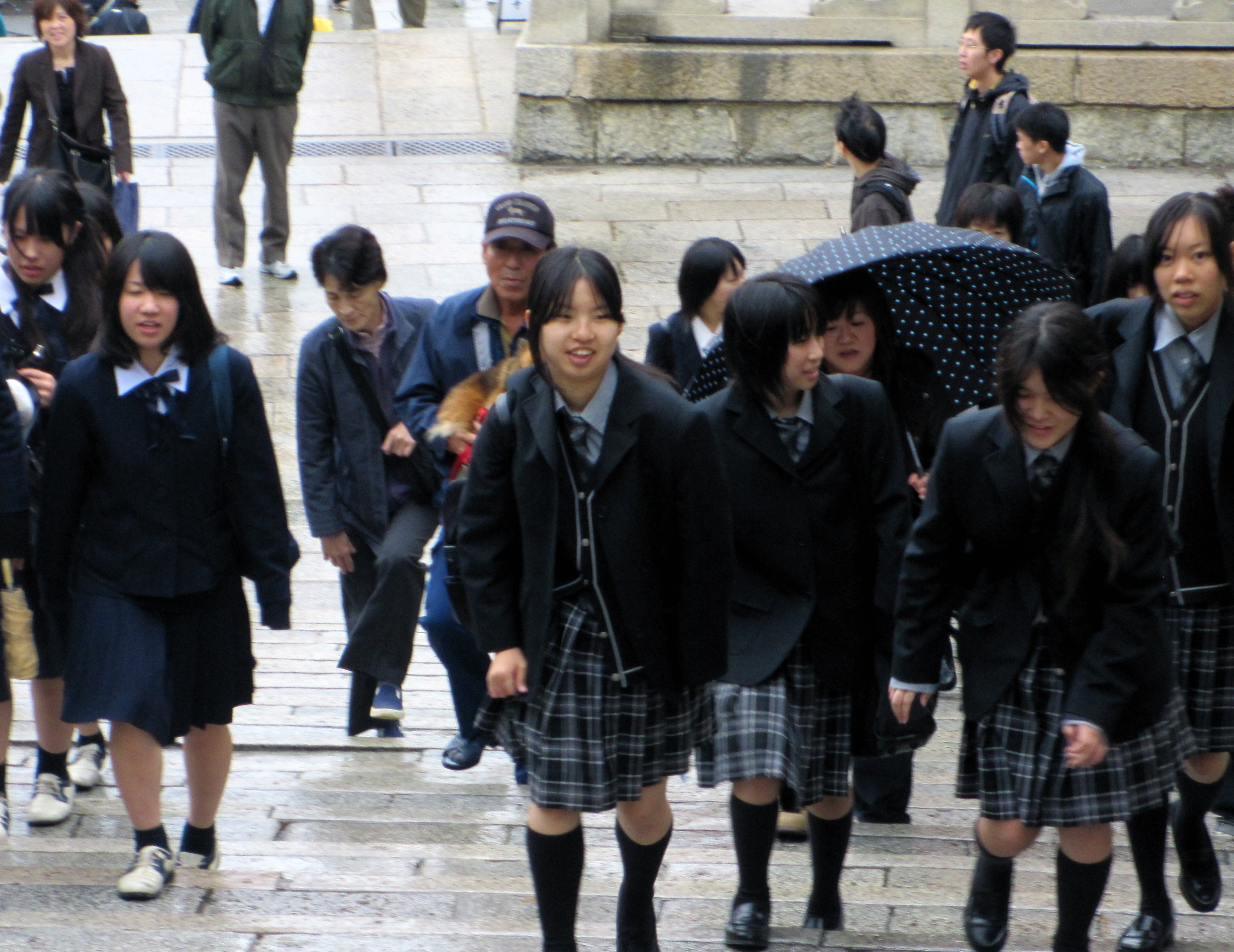
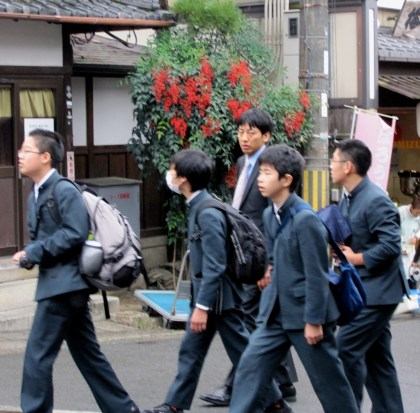
You will see a lot of school children with their classes at all the temples in Kyoto in November. It is the time for luck and they are all praying for good grades.

IMG_0992

IMG_0995

Ginkaku-ji is the Silver Pavilion..  The tea ceremony is said to have originated here. The exterior of the pavilion was originally going to be covered in silver foil, in emulation of the Golden Pavilion (14th century) at Kinkaku – ji. Without ever having enjoyed a coating of silver, the Silver Pavilion is one of the most graceful structures ever built.

IMG_0847

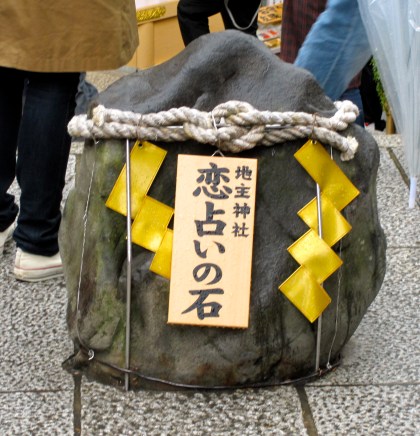
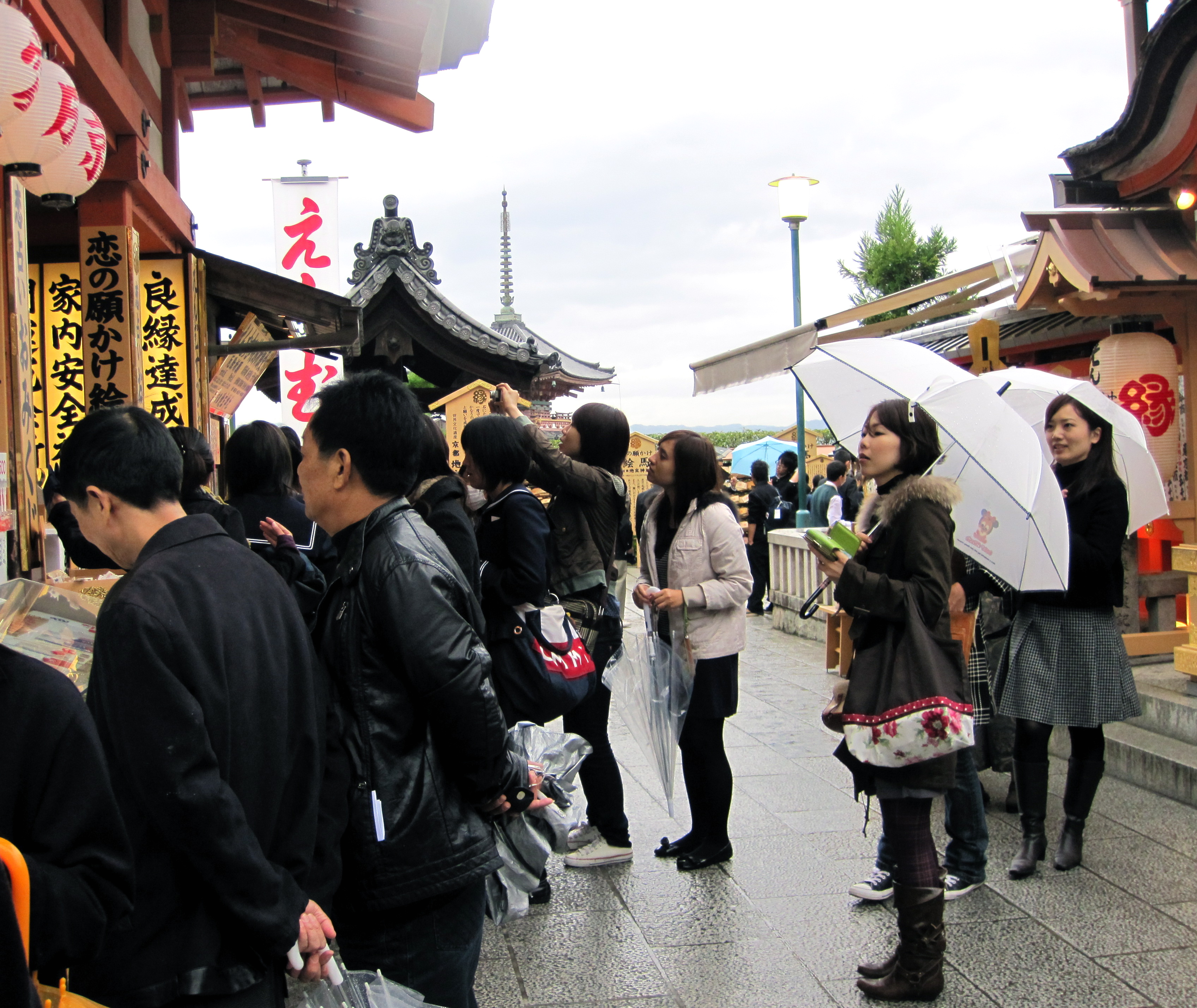
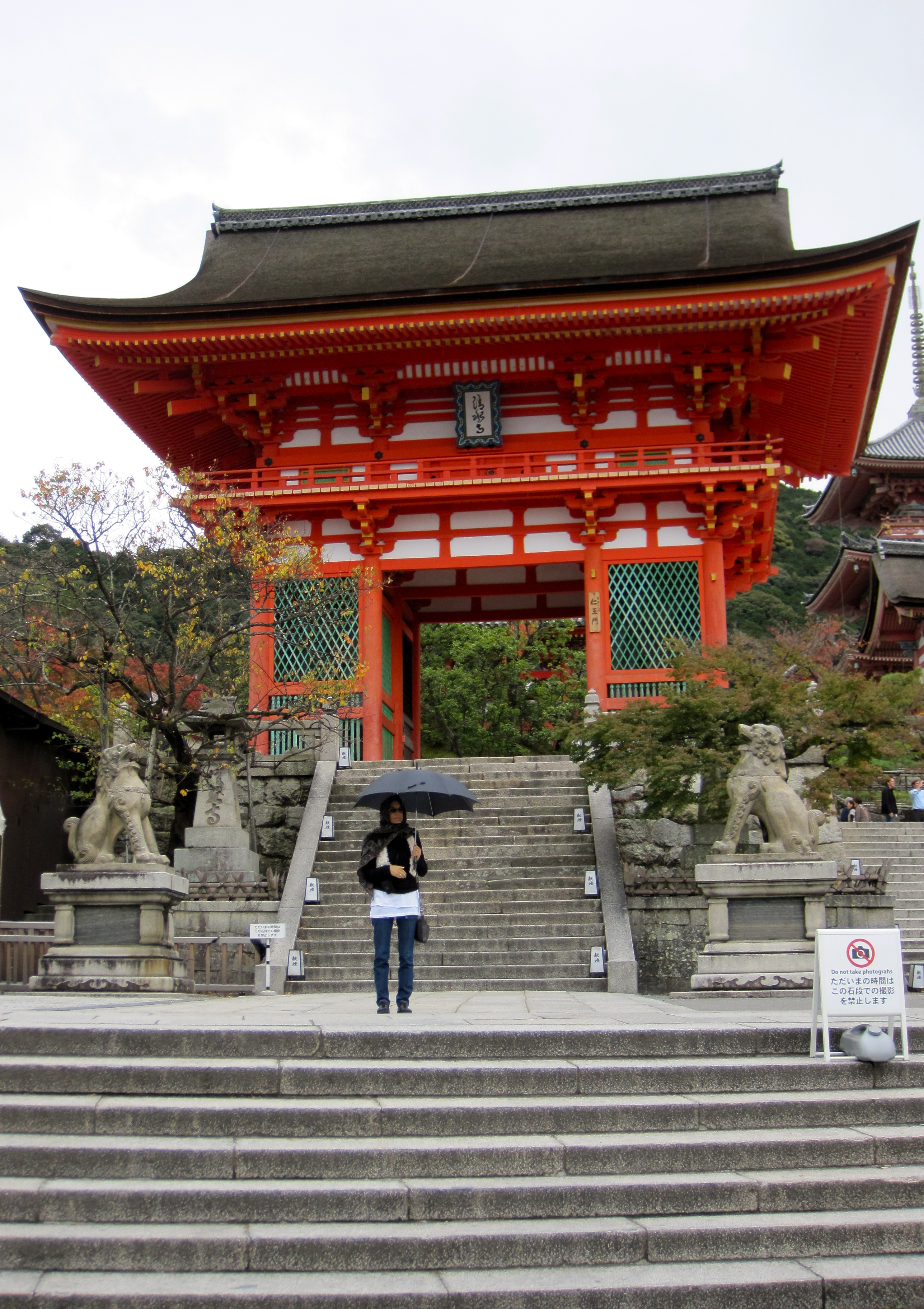
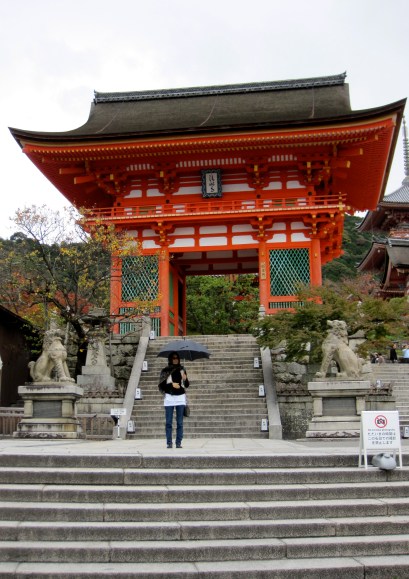
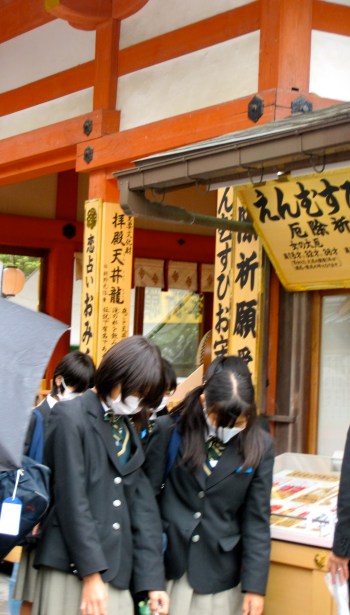
Kiyomizudera Temple  contains several other shrines, notably Jishu-Jinja, dedicated to Okuninushino-Mikoto, a god of love and “good matches”. Jishu-jinja possesses a pair of “love stones” placed 18 meter apart, which lonely visitors attempt to walk between with their eyes closed. Success in reaching the other stone, eyes closed, is taken as a prediction that the pilgrim will find love. One can be assisted in the crossing, but this is taken to mean that an intermediary will be needed. The person’s romantic interest can assist them as well.
It is the highlight of the yearly school trips to the temples for luck in exams.
IMG_0956

IMG_0979

Here is the famous love stone.

IMG_0974

IMG_0983

It’s not the only geisha district left in Japan, but Gion, a collection of streets defined by its old wooden buildings, tea houses and exclusive Japanese restaurants, is by far the most famous. Spend an hour wandering the area and chances are you’ll glimpse a geisha or two shuffling between tea houses in their cumbersome zori sandals and exquisite kimono. Much to their annoyance, you’ll probably see camera-happy Japanese tourists stalking them too.

IMG_1004

You get free tofu refills with an eight course tofu dinner – so delicious. ( Tousuiro 075-561-0035 )

IMG_0879

Few museums are as hands-on as this old elementary school turned shrine to manga, or comic books, and its collection of some 300,000 comics and manga-related exhibits. Visitors can read any piece of manga they want at the  Kyoto International Manga Museum  from the towering wooden bookcases that line every wall and hallway. Some read propped up against the walls or sitting crossed legged on the floor; others hunker down with a coffee at the museum’s wood-decked outdoor café. The eclectic and universally transfixed crowd is a testament to how much a part of mainstream Japanese culture manga has become. http://www.kyotomm.com/english/

French Japanese food served by beautiful girls with strong knees is tres bien. ( Takumi Okamura, Gion  075-541-2205 )

IMG_0948


It’s touristy, and  tacky, but dressing up as a samurai and watching TV actors hamming it up on set does hold a certain charm. Eigamura or Kyoto Toei Studio Park to give it its English name, is a working TV and movie set that doubles as a theme park, where besides dressing up in period costume you can wander around a mock-up Edo-era samurai town and take in exhibitions of the well-known TV series and films shot here.It’s the live studio performances, however, that steal the show. The sword fights are extravagant, the facial expressions and body language overly dramatic, and the dialog at times delivered about as convincingly as an elementary school end-of-year play. It’s Japanese kitsch at its finest. Quentin Tarantino would love it. http://www.toei-eigamura.com/en/

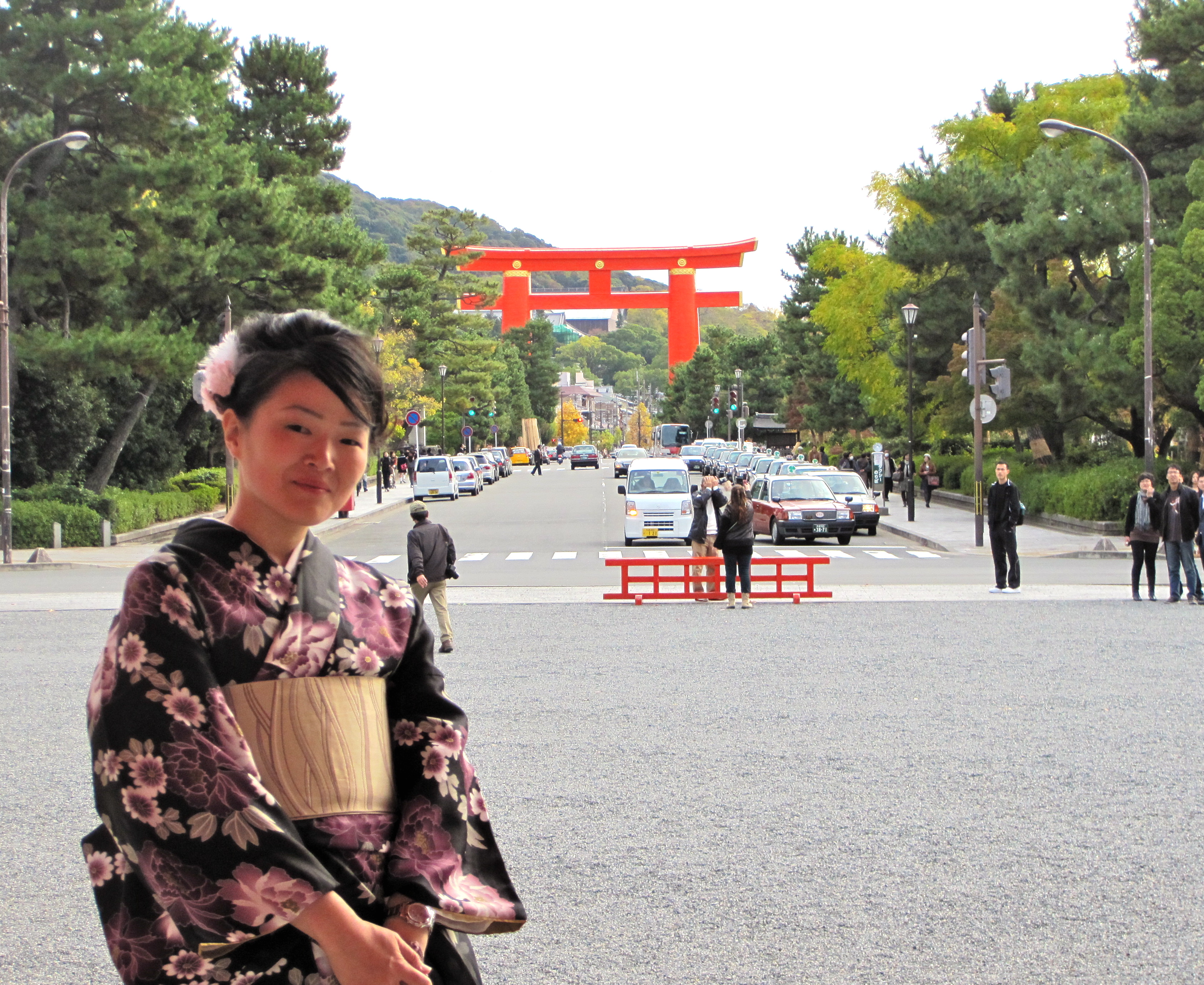
(Heian Jingū) Heian Shrine  was  1895  and is dedicated to the spirits of the first and last emperors who reigned from the city,  A giant torii gate marks the approach to the shrine, The real shrine grounds themselves are very spacious, with a wide open court at the center. The shrine’s main buildings are a partial replica of the original Imperial Palace from the Heian Period built on a somewhat smaller scale than the original.

IMG_0915

IMG_0917

Behind the main buildings there is an attractive, paid garden with a variety of plants, ponds and traditional buildings. The garden’s most striking feature are its many weeping cherry trees which bloom a few days later than most other cherry trees, making the garden one of the best   around the tail end of the season, which is usually around mid April.

IMG950563

Omikuji are paper fortunes that can be bought at both shrines and temples. The fortunes range from great good luck to great bad luck. There are trees to tie the fortunes to avert the bad luck if you are unlucky enough to draw that fortune.

IMG_0925

One of my fortunes is framed in my house. The others might be on a tree. The  thing about luck is that it always changes.

for more info go to

https://havefunflysafe.wordpress.com/2012/08/25/japanese-food/

https://havefunflysafe.wordpress.com/2012/09/14/things-i-have-learned-in-okinawa-and-hiroshima/

https://havefunflysafe.wordpress.com/2012/08/11/things-i-have-learned-in-japan/

https://havefunflysafe.wordpress.com/2012/08/06/things-i-have-learned-in-tokyo/

ki o twu kete

JAZ

Top Ten Coffee Travel Moments

“This coffee falls into your stomach, and straightway there is a general commotion.  Ideas begin to move like the battalions of the Grand Army of the battlefield. Things remembered arrive at full gallop, ensuing to the wind.  The light cavalry of comparisons deliver a magnificent deploying charge, the artillery of logic hurry up with their train and ammunition.  Similes arise, the paper is covered with ink; for the struggle commences and is concluded with torrents of black water, just as a battle with gun powder. “

Honore de Balzac

Top Ten Coffee Travel Moments

I realized by writing this blog that I am addicted to caffeine. There are way too many references to coffee.  It is the only vice I have left.  I thought I would embrace it by writing my top ten coffee travel moments.

!. I am seventeen and in Europe for the first time.  We  are  in CERVINA in the Italian Alps. There is a cappuccino bar that we go to every morning and have fresh cappuccino before a day of skiing. It is pre cell phones and Starbucks.  The only cappuccino  you got in NY  was in the Italian restaurants  after dinner.  There was no decaf cap. Cappuccino every morning was as big a deal as skiing in the Alps for the first time.

2.   The island of SANTORINI in Greece is where i am spending my twenty third summer.   I am staying at my friend’s house on a mountain overlooking the sea.  It is one of those  Santorini white houses with blue tile.  We have to walk halfway down the mountain every morning to have coffee and fresh bread with butter and honey, at a café run by a family that doesn’t speak English. Santorini was  not the five-star  tourist destination it is now but it always had five-star views of the sea, volcano and black sand beaches. .  “kafe me gala  sketos parakalo” The grandmother always dressed in black would smile at my bad Greek pronunciation and bring me my coffee. They used condensed milk all the time with coffee and I love the taste.  I think they wear black  because someone in their family close to them has died – usually they are widows.

545319_436959296360980_1027944743_n

3.  My daughter who is twelve and her tap company have performed at the Cuban Ballet Festival throughout Cuba.  We are driving back to HAVANA from Santa Clara.  Since Petrol is scarce, members of the Columbian Ballet Company are sharing the bus with us. We get back around five and I have a serious lack of  caffeine headache.  I invite the Columbian dancers who I have spoken to in bad Spanish  for a coffee at the hotel.  I order a double espresso and drink it down  like I am doing a shot of tequila.   First they stare at me and then they laugh and do the same.  We start by drinking espresso shots –we move on to Mojitos. No one slept that night. (Cuba,Jim Kane)

734564_622571224426673_1184425465_n

4. We have arrived at the SACRED VALLEY in Urubumba, Peru.  We are spending the night at the beautiful Sol Y Luna  hotel and the altitude is 9000 feet. (2400 m)  It is our first night in the Andes.  I start to have this headache and feel dizzy. As we are going to our rooms someone says to me, “Be careful, the headache is the first sign of altitude sickness”.  I go right to the worst case scenario.  I remember my mindfulness training as I am going into high anxiety mode. I investigate the feeling in my body and think it isn’t that severe. It feels like a lack of caffeine headache.   I remember I didn’t have coffee that afternoon. I relax and go right to sleep. I wake up early and have a wonderful Peruvian breakfast  of yogurt , fruit, kikucha cereal ( grain like quinoa) and coffee. No more headache.

601689003311

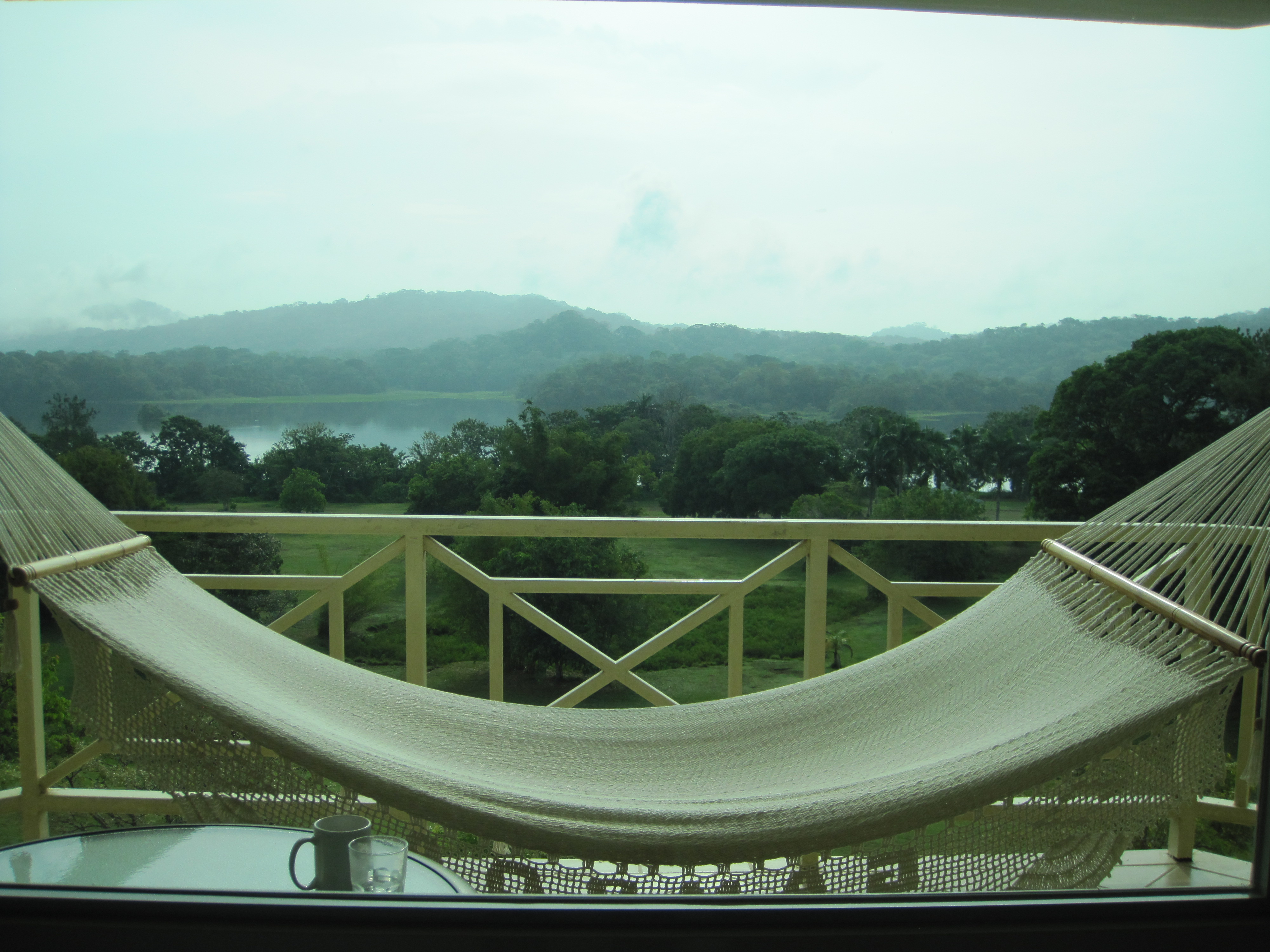
5. I usually hate instant room coffee.  But in PANAMA it was really good. It is called Puro and I brought some home.   I have a confession. I kind of like non dairy creamer   Sometimes your diet needs a few chemicals.  I got up every morning in  Gamboa  to watch the sunrise over the rainforest and had a coffee while lying in a hammock on the terrace.

IMG_3727

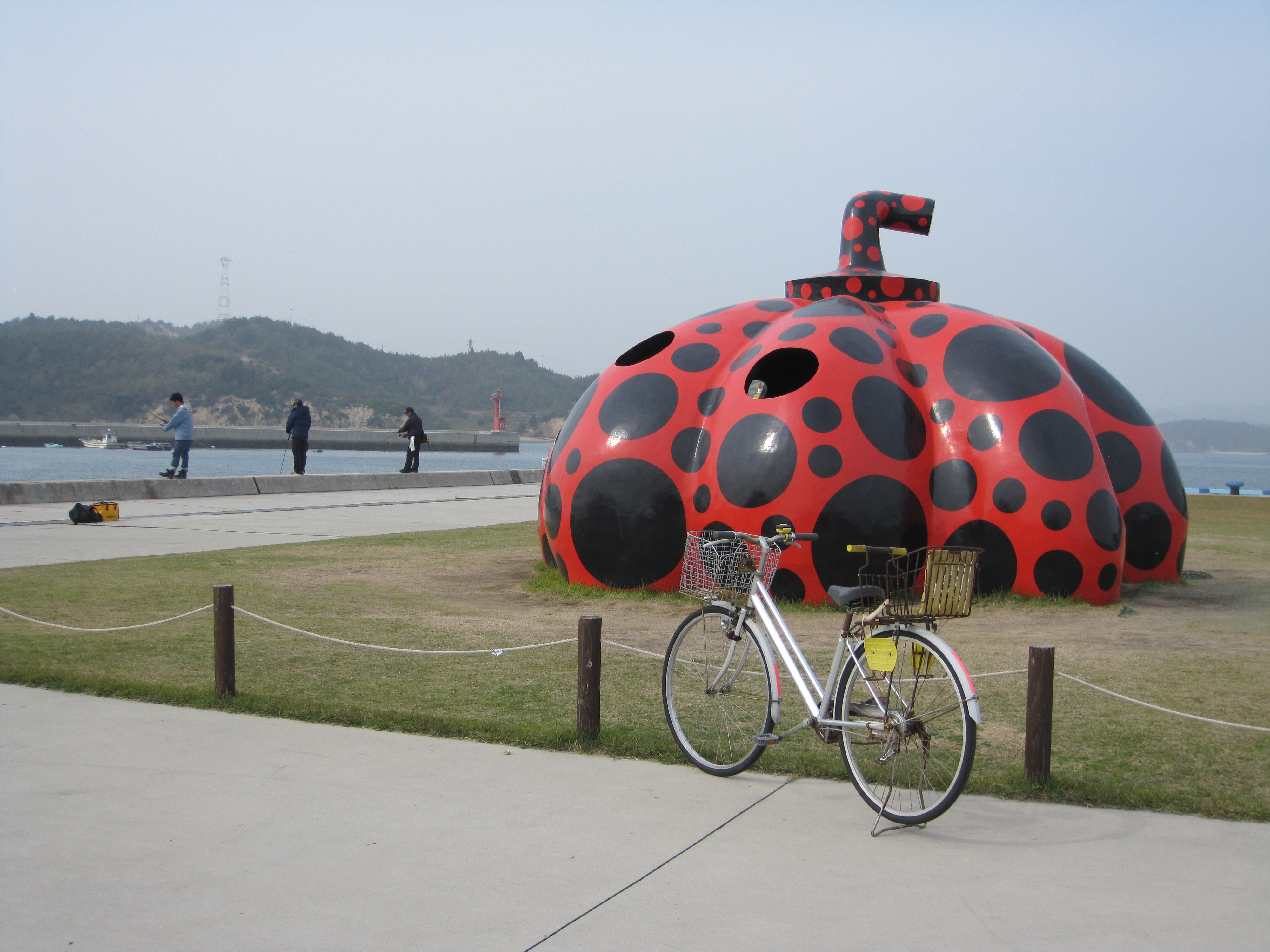
6. Anna and I have spent the day on  the island of NAOSHIMA in Japan.  It is the island that Tadao Ando has designed and dedicated to art and nature.  There are museums, outdoor sculptures, galleries and installations in houses throughout the island.  It is a bit like a scavenger  hunt trying to see everything.  But we did it. We are at a small  ferry at the other end of the island that locals use to head back to the mainland . I am looking for coffee. We see something that looks like it might be open. We walk in. There is cool music and magazines and interesting furniture and art . It is  like a Japanese Greenwich village coffee-house  on this little island street.  We can’t believe our luck.  We have coffee and wait in this beautiful restaurant for the ferry and talk about our amazing day.

IMG_2345

7. I had been  in the  incredible  city of VENICE for a few days with my daughter and a friend. My son arrived after traveling around Europe alone.  He had a lot to say and wanted to have  a coffee in Venice and talk about his travels. We sat in a café on the canal and he told me his stories. I was happy sitting there listening to him  and I could hear  that he loved to travel as much as I did.  Family travel moments are few and far between now. It was a beautiful trip.

IMG_0258

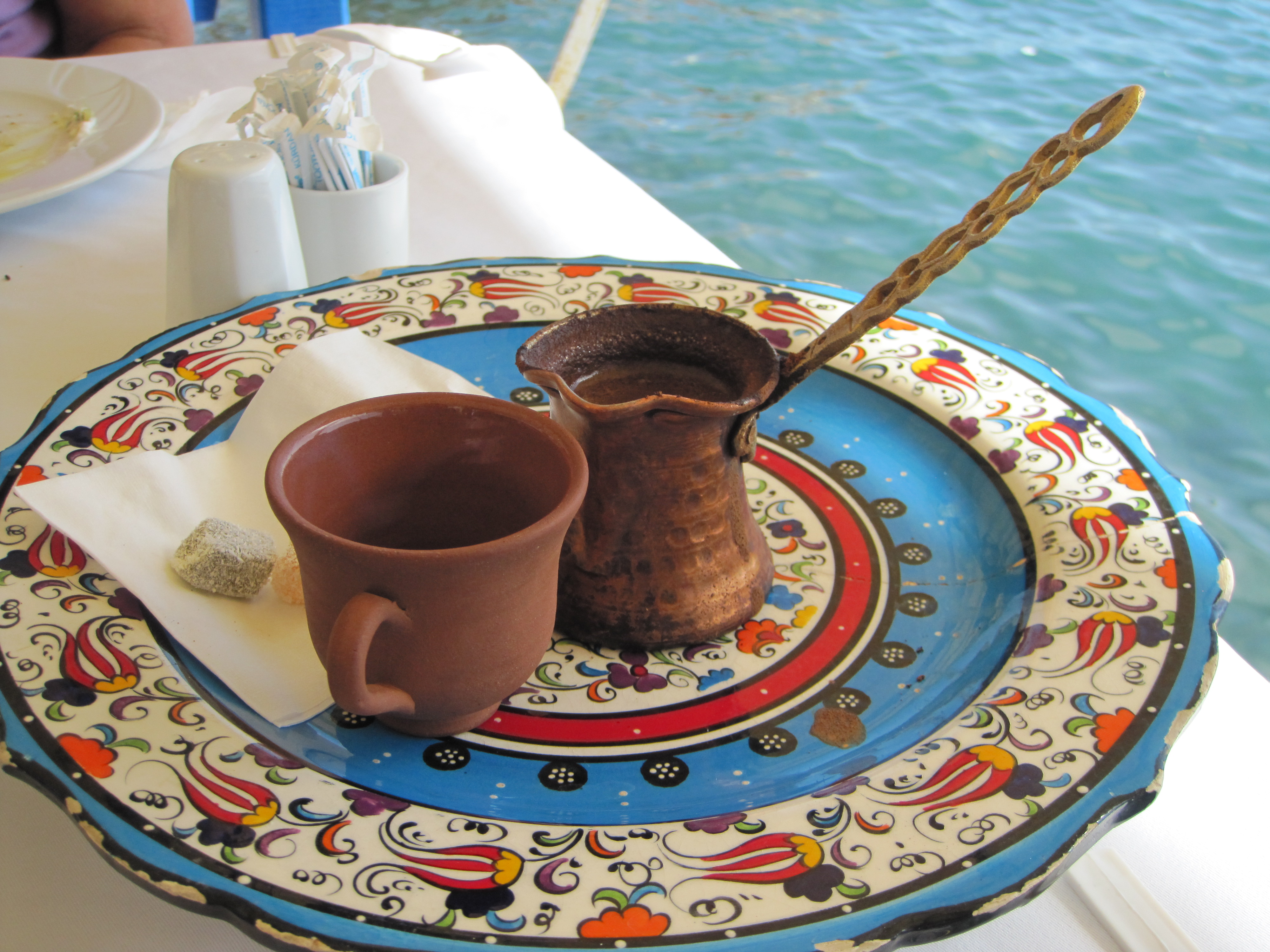
8.  It was my first day in ISTANBUL. I had shopped at the Grand Bazaar with my guide for the day Renan.  We stopped for lunch.  We met  carpet salesmen from Los Angeles.  Suddenly, it didn’t seem so far away.  This was my first experience with Turkish food. Hot yogurt soup and something with my favorite vegetable –eggplant.  – delicious. I had my first Turkish coffee. (a lot like Greek coffee) I loved the thickness and the feeling of the grounds in my mouth ( coffee that you can chew).  It isn’t bitter either so I am able to drink it without milk. She read the coffee grinds to me.  We used to do this in Greece. It was my first coffee fortune in a very long time.  It wasn’t bad. My next one wasn’t great. So I stopped doing it and just drank the coffee.

IMG_4382

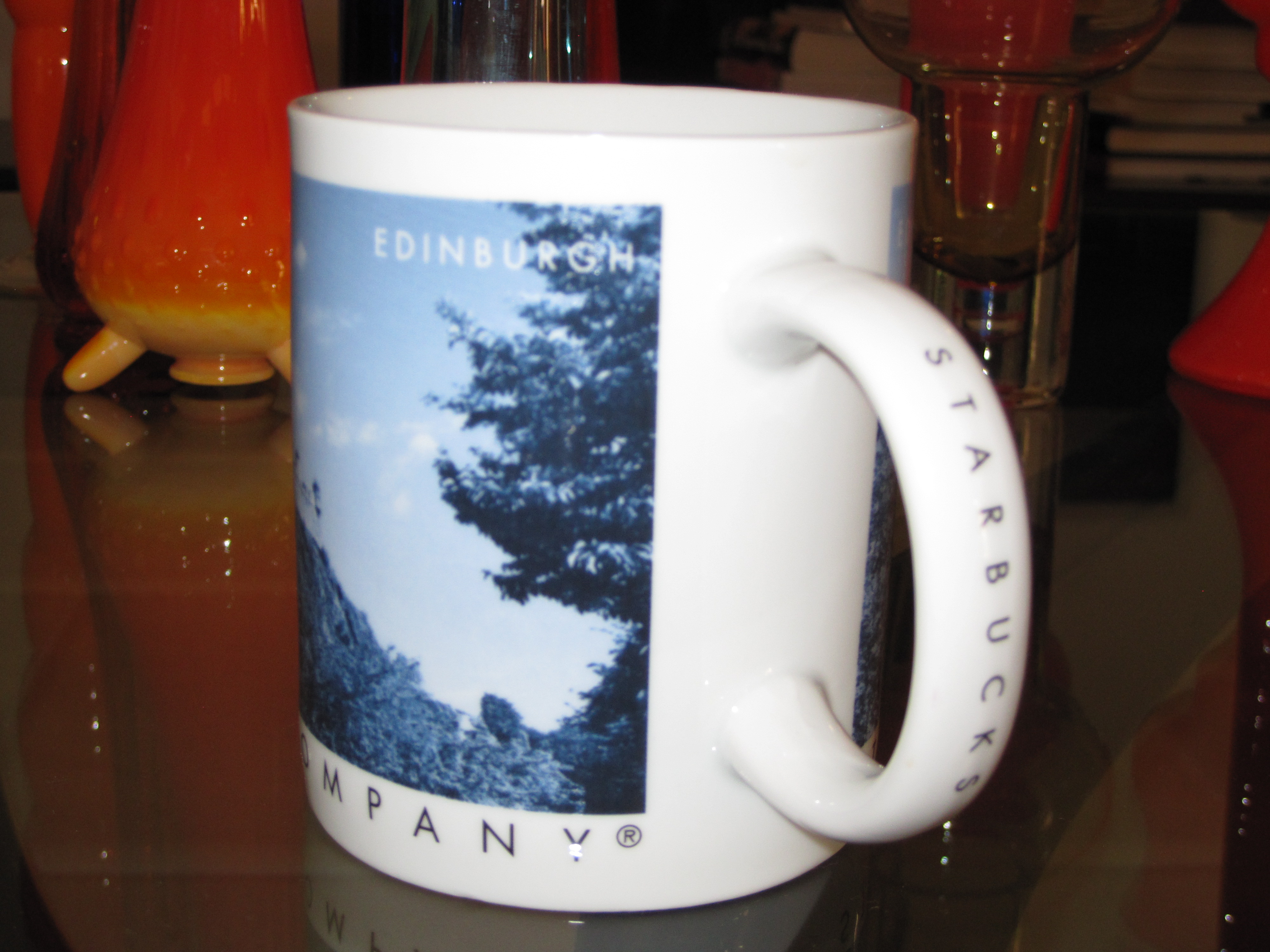
9. I am in EDINBURGH, Scotland for the Fringe Festival. My daughter is performing there with her high school theatre group. In the summer, walking down the Royal Mile is crazy. Everyone is in costume and giving out flyers and performing and begging to get you to go their shows. The Starbucks is right at the beginning of the Royal Mile, next to the Fringe Ticket Office. I meet a friend for coffee after picking up some tickets. We are surrounded by Vikings and Elizabethans all having cappuccinos and lattes. In fact, only the barristers are   dressed in modern-day clothing.  I felt  a little underdressed.

IMG_5252

10.   A few weeks ago, I was walking down Portobello Road in LONDON with my college friend Suzie.  Suzie was the first person I traveled around Europe with . We were about eighteen. We lost touch after college but reconnected  a few years ago through the magic of facebook.  We were both going to be in London at the same time. We aren’t looking for vintage clothes like we used to  (and still do) but vintage housewares.  It is freezing out. We go into a coffee house and see a long queue. It is called the Coffee Planner. The girl in front of me says it is the best coffee on Portobello Road and worth waiting for. Suzie buys an unbelievably good sandwich from a vendor outside and we sit and drink our coffees eating this sandwich.   Jayne and Suzie together again in Europe. ( St. Paul’s Cathedral from the Millennium Bridge)

IMG_0456

Do you have any good coffee moments?

Fly safe,

JAZ

Looking For Francisco Toledo In Oaxaca, Mexico

Looking for Francisco Toledo In Oaxaca, Mexico

” Oaxacan art  tends to depict one theme: the appearance in our history of another time and place. A space within another space. A time within another time.”” Alberto Blanco

“I was in Oaxaca once”, said a friend.  “When I was in Junior High, I went with my friend to visit her father.  He is an artist in Oaxaca.   You should see his work. His name is Francisco Toledo. “

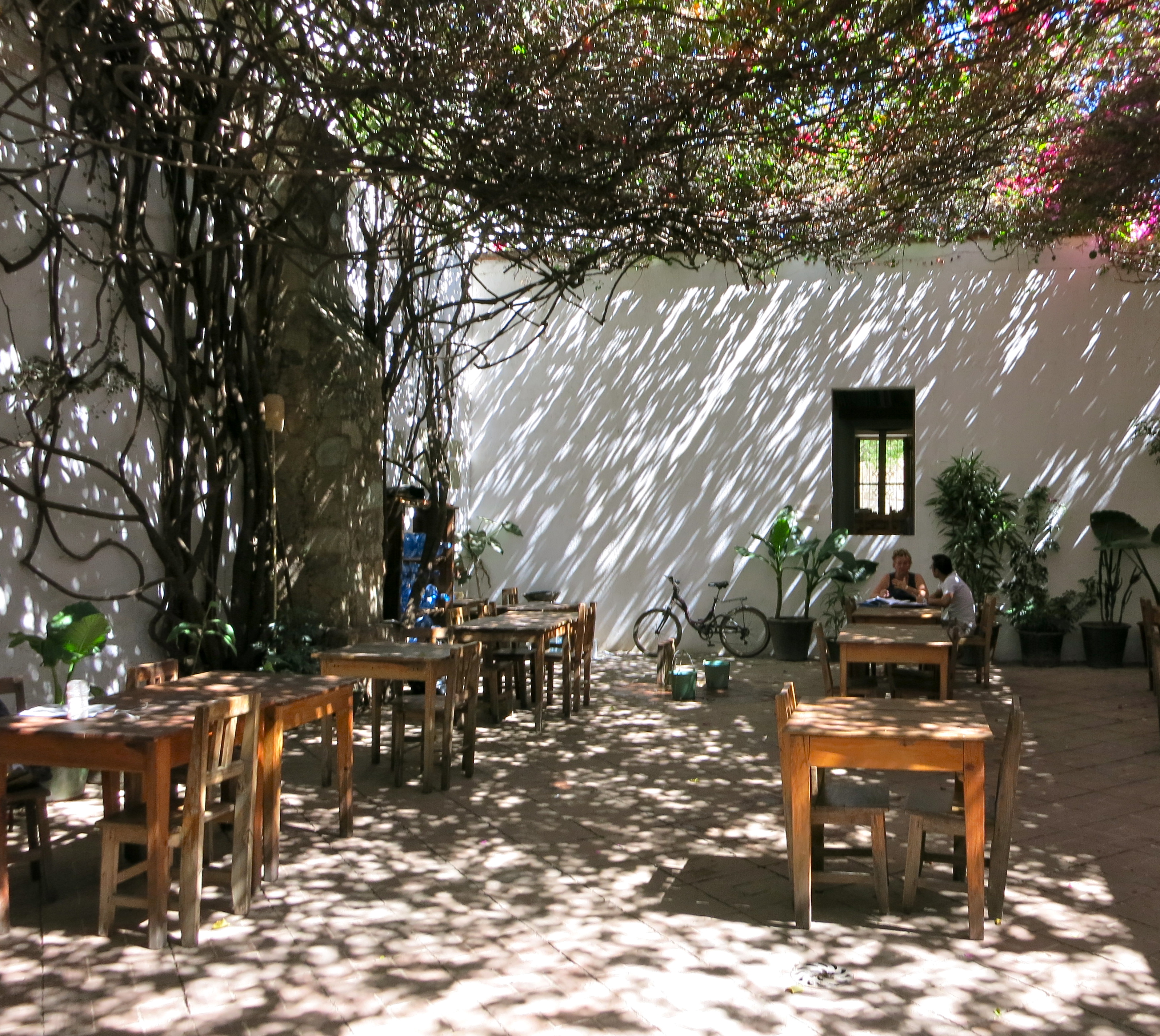
When I arrived in Oaxaca at this beautiful hacienda hotel La Casona De Tita   http://www.lacasonadetita.com.mx )   I asked about him. ‘ He is the most famous artist in Oaxaca and maybe the most famous living artist in Mexico today.” (breakfast area)

IMG_0017

Toledo’s art is imbued with his Mexican heritage of history and mythology. It is Pre -Colombian meets his favorite artists  -Goya,Klee Miro Tapies, Tamayo plus Borges and Kafka. He has exhibited in many galleries in Mexico, Europe, South and North America and Asia. He is represented in public and private collections worldwide. Toledo’s work is based in part on the largely misunderstood shamanistic notion of the nagual, the belief that each human’s fate is intertwined with that of an Aztec spirit in animal form.” (Toledo)

IMG_0260

The next day I met our local guide Pati Reyes. She is a dancer who loves art and artists. “They are all my friends here. I will introduce you to Francisco Toledo if he is in town,” she said in Spanish.

IMG_0324

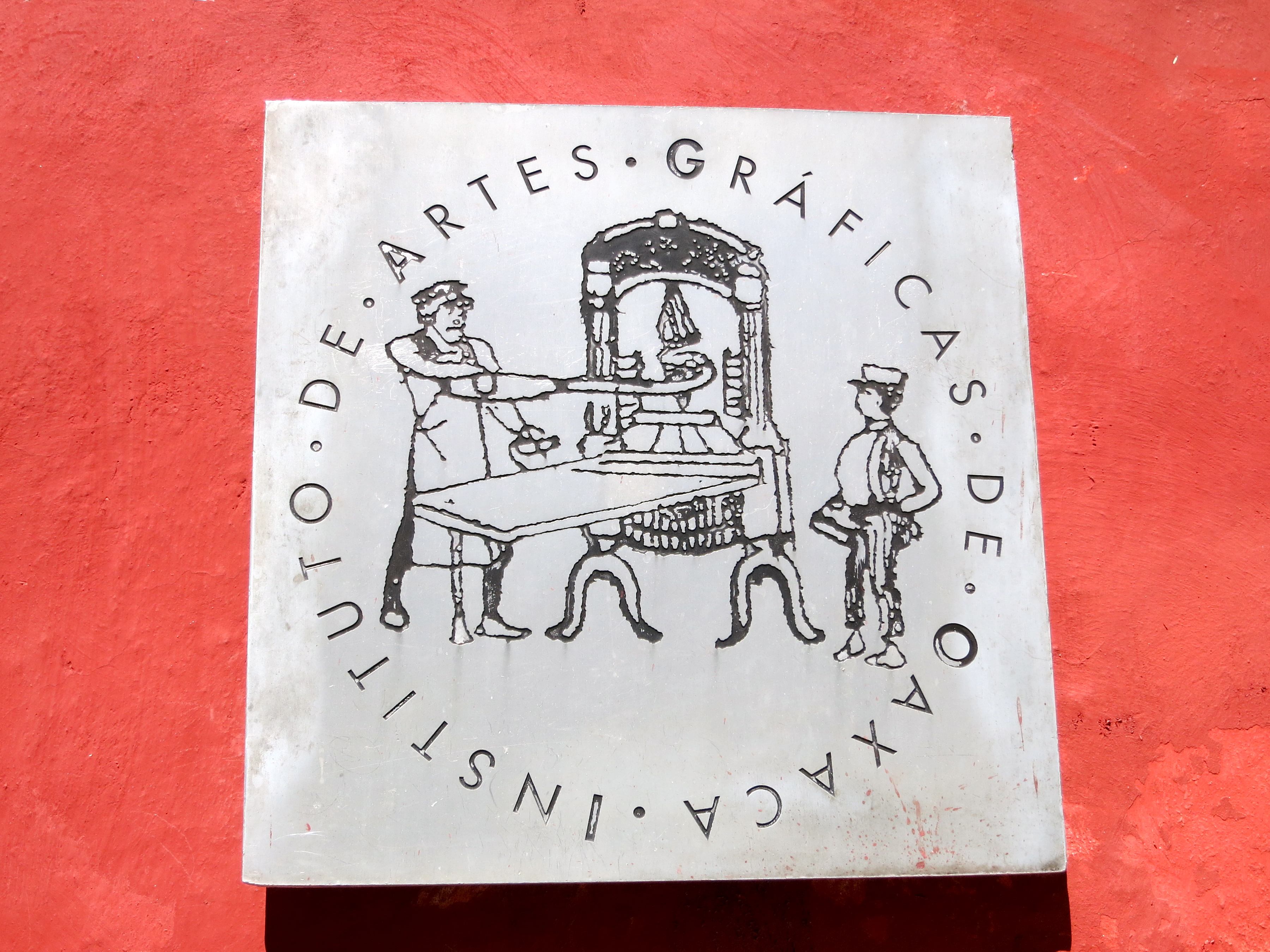
We go to IAGO (Institute of Graphic Arts in Oaxaca). It  has a wonderful art library (66,000 books) and the largest collection of prints (over 7,000 works) in Latin America. The library is free thanks to Toledo who has donated it to the city.   Antique presses are used as tables to display books at IAGO. Art openings there can be crazy; mezcal is poured by the gallon from red plastic gas cans.

IMG_0252

IMG_0248

IMG_0250

IMG_0254

Quetzalli, the gallery that represents Toledo, is in Casa Oaxaca and because of him other artists come. Writers and artists visit from all over Latin America, including Colombian author Gabriel García Márquez.

IMG_0261

IMG_0139

The vigor of Oaxaca’s art scene is visible in the galleries that occupy its downtown corners and the colors that pop off the canvas as local arts . Its art is integral to the character of the city, and an outcome of its amazing  backdrop. One night we saw an exhibit called Takeda vs Herrera at the Museum of Oaxacan Painters..It was filled with people  all talking about the art. The excitement , stimulation and inspiration is felt everywhere.

IMG_0191

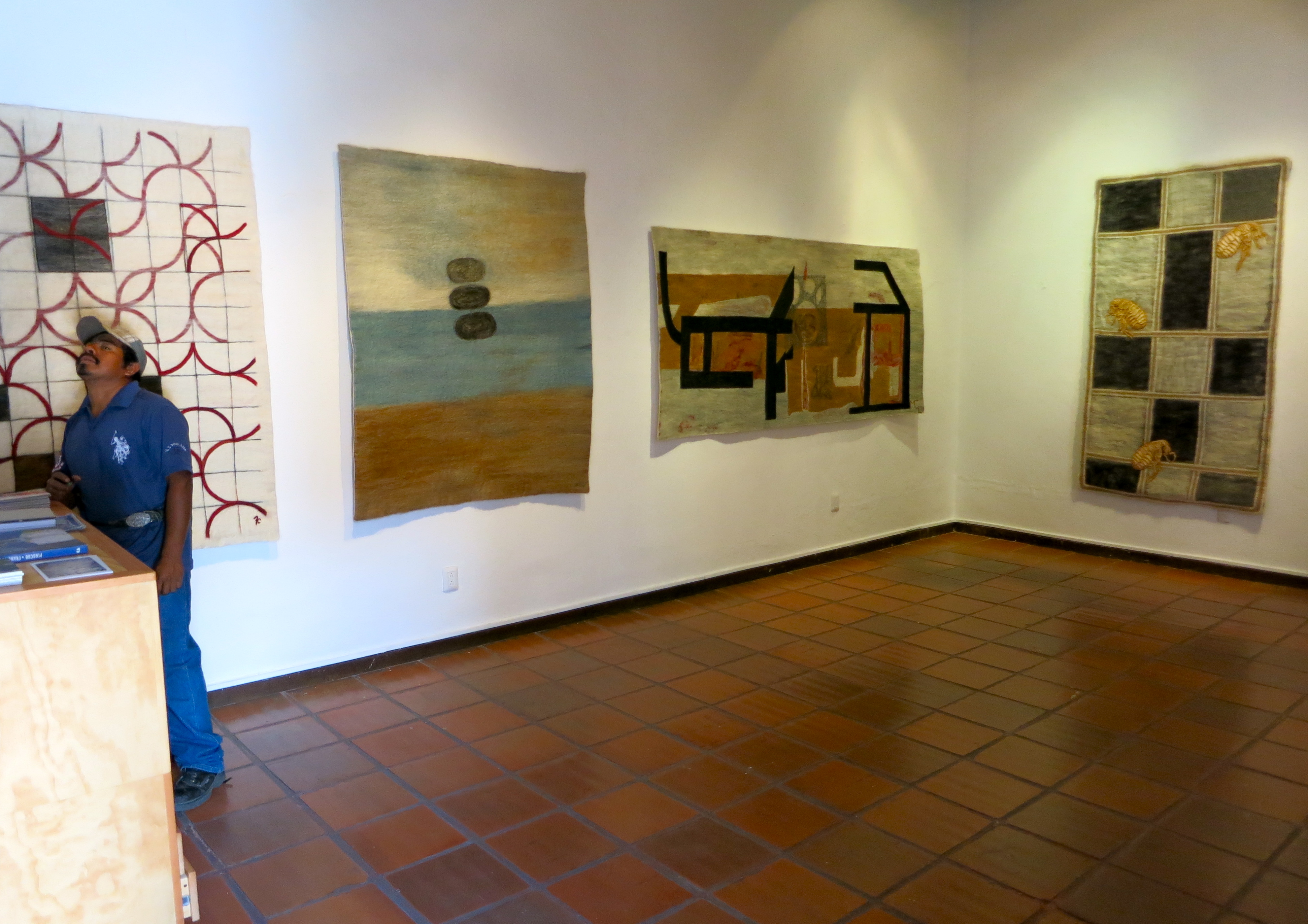
The Museo de Arte Contemporaneo de Oaxaca (MACO) is perhaps the best example of Oaxaca’s artistic tradition and its ongoing contributions to the art world. Its position near the Santa Domingo Plaza and just a few blocks from the zócolo makes MACO a routine stop for both casual tourists and serious art aficionados. Permanent exhibitions are dedicated to Oaxaca natives Francisco Toledo, Rodolfo Morales, Rufino Tamayo, Rodolfo Nieto and Francisco Gutierrez. (exhibit)

IMG_0355

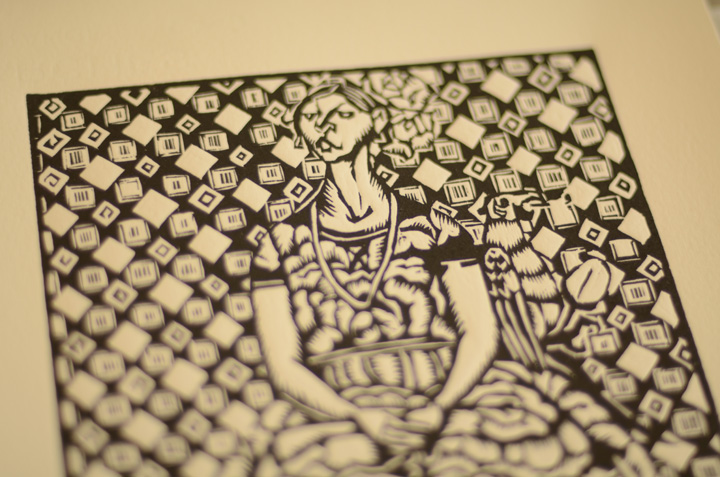
I meet Venancio Velasco. He is the twenty year old artist who is the recipient of the Cultural Xplorers Scholarship  to continue his studies in art. He works mostly in woodblock printmaking.   The scholarship was started by  Cultural Xplorers founder Jim Kane  who is always looking for ways to make a positive impact on the countries he visits.

IMG_0130

When you speak to Venancio, you understand that he has the soul of an artist . Art is about an emotional connection. Either you have one or you don’t.   I connected immediately with his work. This is why I think he has the ability to go very far in the art world. It is exciting to see him at the beginning of his journey .  I look forward to seeing his work evolve and supporting his career.

IMG_0211

IMG_0215

Composition, interpretation and values are key to defining an artist.  Venancio’s art is straightforward and abstract, blending emotion with the animals and people of his culture. Everything tells a story and Venancio is happy to share the stories with you.

IMG_0209

Shinzaburo Takeda is a master printmaker and artist  who brought the first Japanese woodblock tools to Oaxaca. He is a professor and chair of the school of art at Benito Juarez University. He is Venancio’s teacher  and one of the judges of the scholarship. He believes in Venancio as an artist of great promise and enjoys nurturing his individual vision. (Venancio and Maestro Takeda)

IMG_0223

Maestro Takeda feels that Oaxacan artists have a special gift for printmaking.  He jokes that there is so much printmaking going on in Oaxaca that it will sink like Venice under the weight of the printing presses.Though he grew up in Japan, his art is infused with Mexican culture. He is devoted to nurturing the artists of Mexico’s poorest families.  The Takeda Biennial is an all-Mexico print competition with many extraordinary entries  all honoring Shinzaburo Takeda.

IMG_0190

takeda1-lo

I learn about ASARO. It stands for Assembly of  Artist Revolutionaries in Oaxaca. ASARO  is a printmaking artists collective and was founded in 2006, during a time of barricades, tear gas, and mass arrests. The ASARO group took great risks to paste topical protest prints on the walls in those days.

There are dozens of art venues ranging from libraries, galleries, coffee houses, restaurants,  and mescal bars. My room in the hacienda has some extraordinary pieces hanging on the walls. All the artwork at the hotel is for sale.  Exhibitions hang for as little as a week, so there might be several openings a night. Oaxaca’s two daily newspapers send reviewers to cover art openings even at small cooperative galleries. I buy two of Venancio’s prints and the most amazing photograph by local artist Pablo Santaella.

IMG_0362

IMG_0332

Though I don’t meet Francisco Toledo on this trip, his influence is all over the city He is widely known for not only contributing to the art world in Oaxaca and young artists, but he is an unfailing advocate of Oaxaca’s best interests and has the ear of whoever is in power at the time, often affecting big municipal decisions with his passionate pleas to preserve the environment and integrity of Oaxaca and her history. He brought art to the Oaxacan people. (self portrait by Toledo)

IMG_0259

One of the things I have learned from traveling is that good art happens everywhere. There are artists working in every field in every medium  in every country. I can’t wait to return to Oaxaca and see what they are creating  next.

Fly safe,

JAZ