The Remains Of Jewish Warsaw (Poland)

Image

The Remains Of Jewish Warsaw, (Poland)

“It is forbidden to kill; therefore all murderers are punished unless they kill in large numbers and to the sound of trumpets.” Voltaire

Before World War ll, the city of Warsaw had more Jews than the city of New York. After the Holocaust and decades of Communist rule, Poland is mostly Roman Catholic. There is a generation of Poles, that have recently found out about their repressed Jewish heritage. It is a nation with a complicated history. Many are making serious strides to remember the Jewish past.

 In 1940, to create the Warsaw Ghetto – the largest Jewish ghetto in Europe during WWII – the German authorities built 18 kilometers of brick walls around the Jewish quarter.
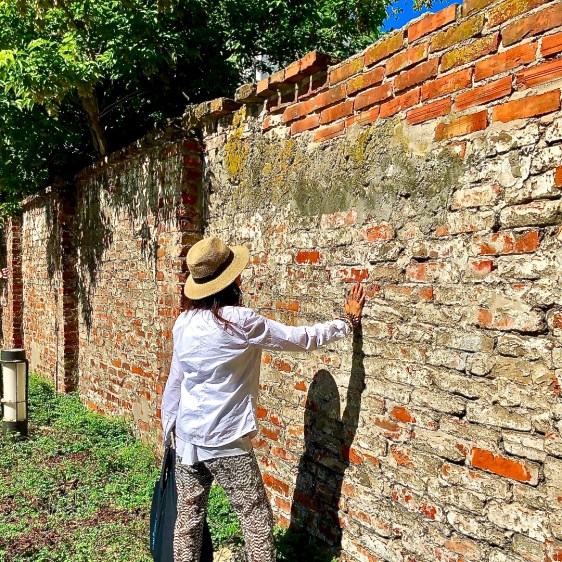
Over 400,000 Jews were imprisoned there. At least 240,000 people were deported to Nazi extermination camps, while thousands of others were killed in the Ghetto.

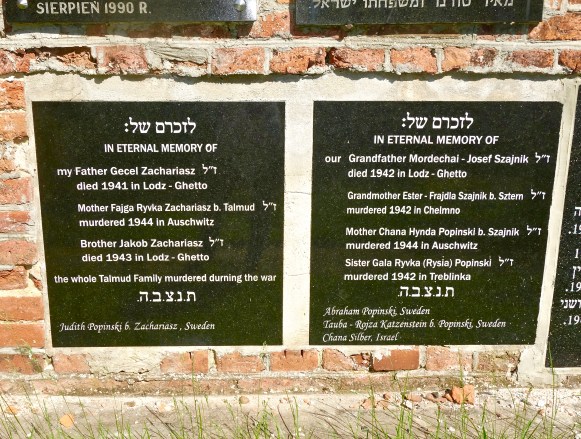
The wall was torn down in 1943, except for one short section which is the only part of the original wall that stands today. (memorial with names)

The inscription reads: “Tu byl mur getta”  “Here was the wall of the ghetto”.

 The Warsaw Ghetto Uprising in 1943 was an act of Jewish resistance against the deportation of the remaining Ghetto population to the Treblinka extermination camp. The revolt was suppressed and the district demolished. On its site now stands the POLIN Museum of the History of Polish Jews that explains the Jewish history and culture in Poland.

The POLIN Museum is one of the most powerful museums to visit in Warsaw.( after four hours here)

The layout of the museum is very unique. First, you enter through the forest. This represents the forests near the Vistula River. Here Poles first made connections with Jewish merchants.

Then you go through the Middle Ages, where history appears in frescoes. You follow the Jews of Poland through the 15th and 16th centuries.

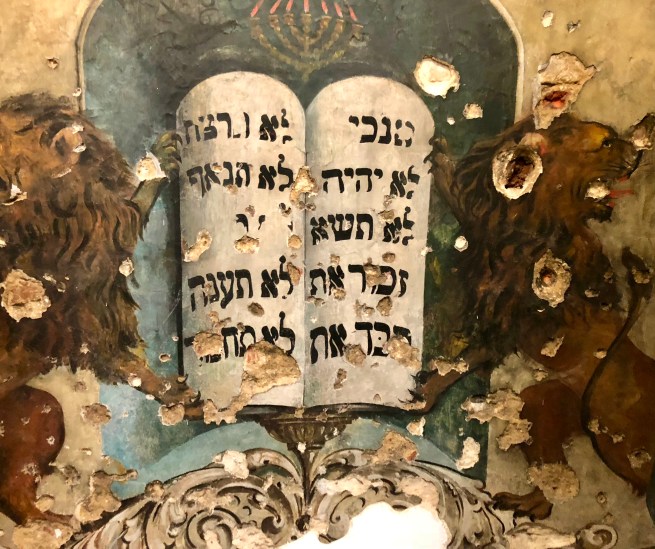
In the Town gallery, you can explore Jewish settlements of the 17th and 18th centuries. The roof and polychrome ceiling replica from a 17th-century synagogue crowns the gallery.

The museum is very interactive.

Various galleries present different aspects of Jewish history and culture.

Stroll through synagogue interiors and streets in old Jewish quarters with cafes and cinemas.
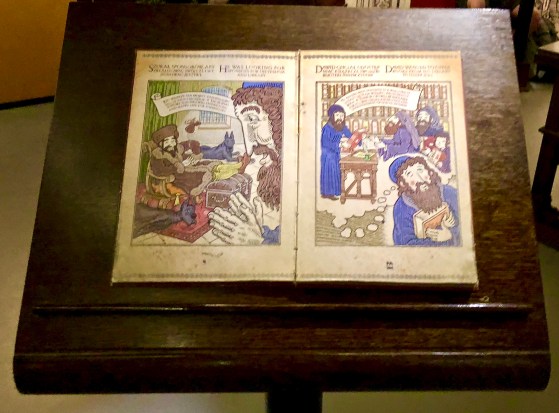
You can see where Jewish people congregated before the war.
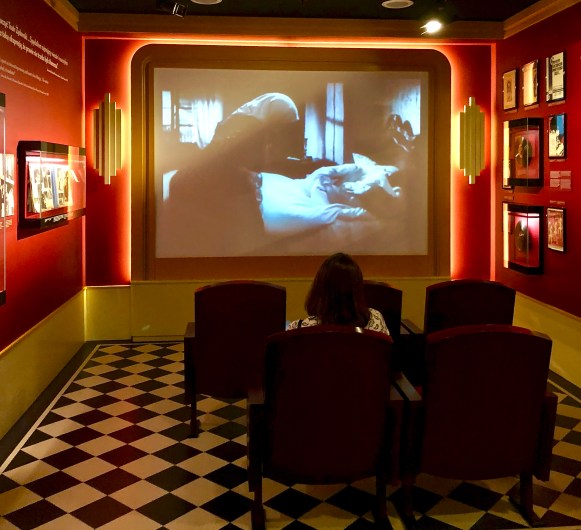
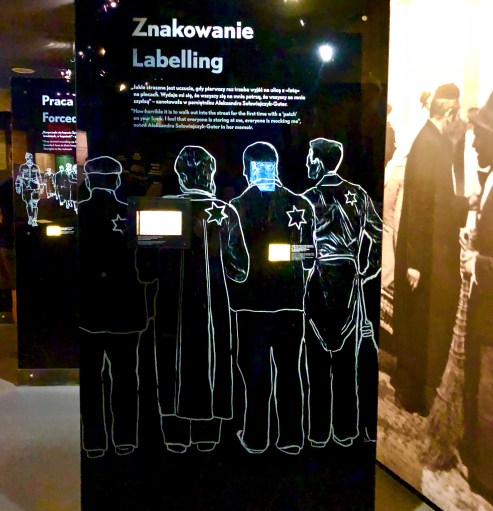
The section covering World War II and the Holocaust is completely overpowering. Be ready to spend several hours at this museum.
Opposite the POLIN Museum, stands the Ghetto Heroes Monument, which commemorates the Warsaw Ghetto Uprising of 1943 and the thousands of people who lost their lives. It was designed by Leon Suzin and sculpted by Nathan Rapoport in 1948. Ironically, the stone used in the monument had been brought to Warsaw by the Nazis to build a victory tower. There is an exact copy of the monument in Yad Vashem, Israel.

The front side of the monument, entitled is “The Fight”. Its bronze relief depicts men, women, and children armed with grenades and bottles of petrol, while the central figure represents Mordechaj Anielewicz, the leader of the Uprising. The back side of the monument, entitled “March to Destruction”, depicts the anguish of women, children, and the elderly, as they march to their deaths.
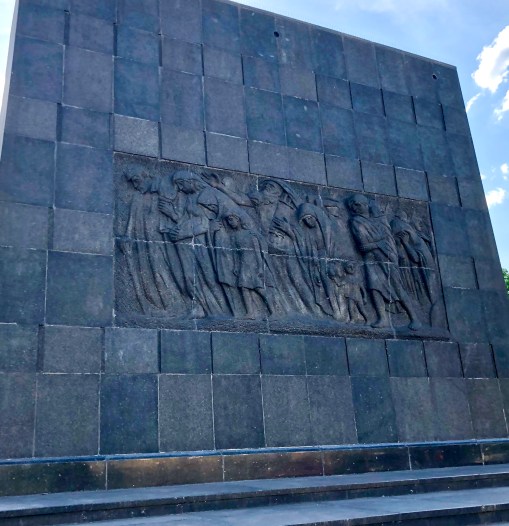
Near this monument stands a memorial tablet to the Ghetto Heroes, as well as the statue of Jan Karski, a Polish resistance fighter. The monument has an inscription in Polish, Yiddish, and Hebrew, which reads: “The Jewish People in honor of its fighters and martyrs”.

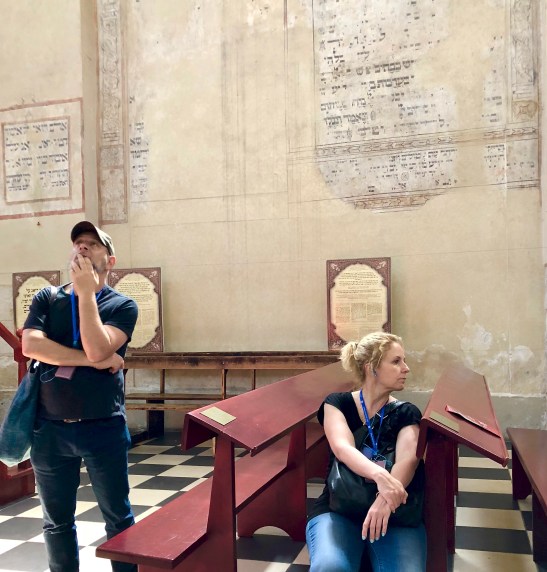
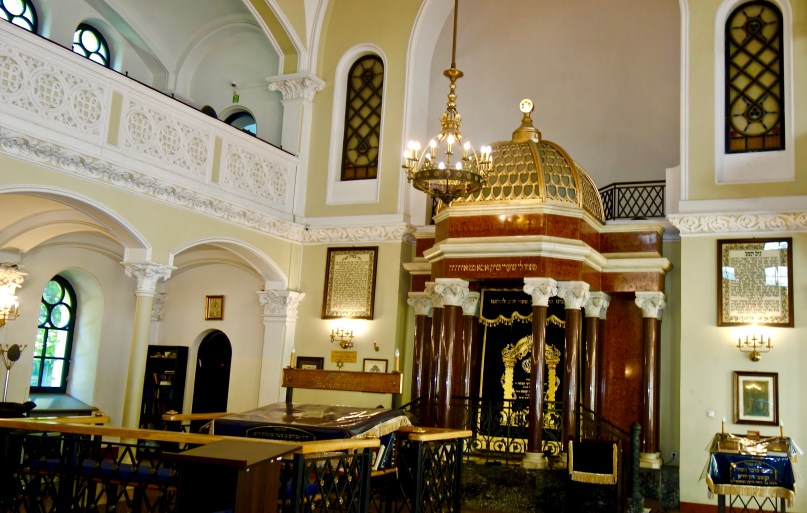
Completed in 1902, the Nozyk Synagogue is the only surviving synagogue in the Polish capital. It was reopened in 1983 and serves the small Jewish community in Poland today.
The ruins of the bunker at 18 Miła Street are the place of rest of the commanders and fighters of the Jewish Combat Organization, as well as some civilians. Among them lies Mordechaj Anielewicz. On May 8, 1943, surrounded by the Nazis after three weeks of struggle, many perished or took their own lives, refusing to perish at the hands of their enemies.

There were several hundred bunkers built in the Ghetto. Found and destroyed by the Nazis, they became graves. They could not save those who sought refuge inside them, yet they remain everlasting symbols of the Warsaw Jews’ will to live.
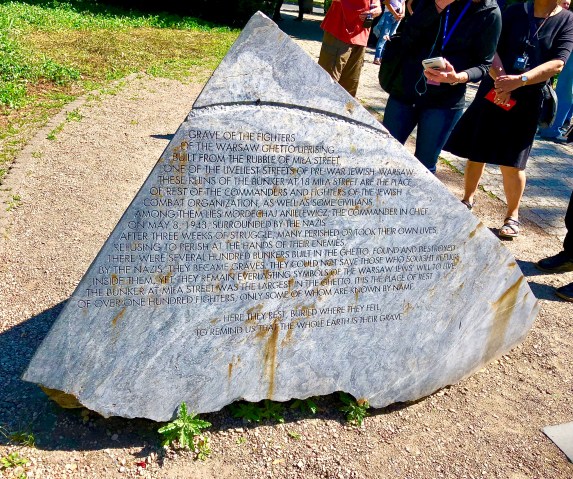
The bunker at Miła Street was the largest in the ghetto. The inscription in Polish, English, and Yiddish reads: “Grave of the fighters of the Warsaw Ghetto Uprising built from the rubble of Miła Street, one of the liveliest streets of pre-war Jewish Warsaw.

I will never really understand how these things happened in the world. It is our human obligation to visit these sites to remember what can happen again in the future.
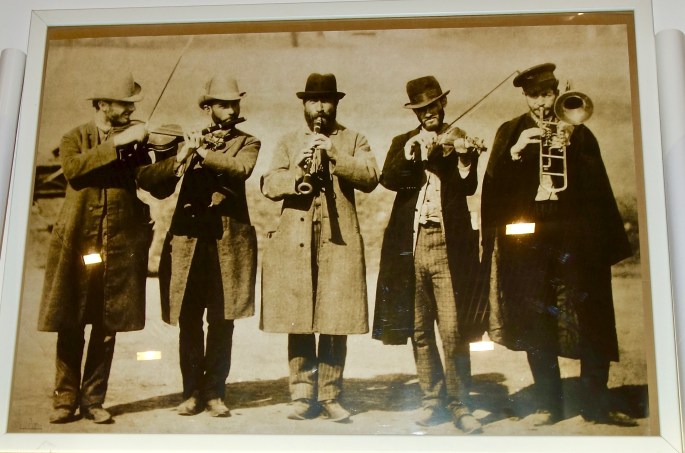
Two members of our group spent the last afternoon in Warsaw in an antique shop in the old city. On a shelf in the corner they saw an old Torah scroll, probably belonging to one of the Jews in the ghetto. They bought it. The cover is from the late eighteen hundreds. It is difficult to put into words, the extraordinary feeling when you realize that you are seeing something holy from a society that you thought was gone forever. 

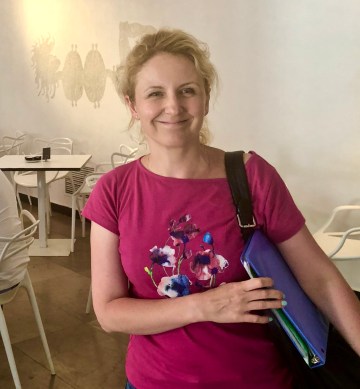
I would like to thank Karolina Paczyńska our Warsaw tour guide who also traveled with us throughout Poland. Her knowledge, kindness, sense of humor, organizational skills and nothing is a problem attitude  helped make this trip special. It seem like it would be hard to be a guide on a trip like this where everyone is having a different kind of emotional experience. Karolina made it easy. I highly recommend her as a tour guide.
Fly safe,

JAZ

Street Art In Krakow, Poland

Image

Street Art In Krakow, Poland

“Creativity takes courage.” Henri Matisse

 The first thing I did in Poland was a private street art tour. I was told to meet the guide at Ghetto Heroes Square.The Ghetto Heroes Square is in the center of the old Krakow Ghetto.This square was called the Umschlagplatz by the Nazis. it was the place where the Jews had to assemble before being transported to the Belzec death camp, Auschwitz- Birkenau or the Plasnow Forced Labor Camp just outside the city. Iron and and bronze empty chairs commemorate this place. It is a holiday and the square is eerily empty.  It is a deeply moving memorial.

 I meet up with Joanna Switala who explains the memorial. She knows a lot about the area and the artists. 

Street art in Poland and other ex Soviet countries derives from the spirit of protest. In the last several years, there is trend to improve the quality of public spaces with commissioned  street art murals. Street art is the uncensored, unofficial, egalitarian voice of the people.

In the districts of Podgorze and Kazimierz, public art is both encouraged and controlled, and street artists are often invited to create elaborate works of art that celebrate the city’s history, culture and revitalization.

 The Jewish Cultural Festival invited one of Israel’s most famous street artists, Pil Peled, to create an image to watch over the district. Entitled ‘Judah’, the mural is said to represent both the vulnerability of the Jews and their strength to overcome.

This black and white mural was created by the Israeli group, Broken Fingaz was for the same festival to honor the memory of the Bosak Family, who lived in this area for four hundred years until World War ll .

The woman in the painting is Irene Sendlar. .In 1941, .Irene Sendlar was recruited to head the Underground Council to Aid Jews, which was credited for protecting children by working with orphanages and welfare agencies to change their identities. They also smuggled an estimated eight to ten children out of the ghetto monthly by hiding them in suitcases, packages, and sometimes even coffins. Approximately 2,500 children were saved .

This mural was created by Marcin Wierzchowski, and is visible on the wall of the Galicia Jewish Museum. It represents pre-war Kraków and modern Jerusalem.

101 Murals for Krakow was put together by Krakow street artists who created the mural by bringing together multi-format paintings and connecting them with urban, historical, and architectural contexts of the different districts of the city in Kazimierz and Podgórze.

 City officials are forever trying to erase the playful and political stencils of  street artist Kuba .

 Mythical murals are painted across many of the city’s abandoned buildings by Mikolaj Rejs.

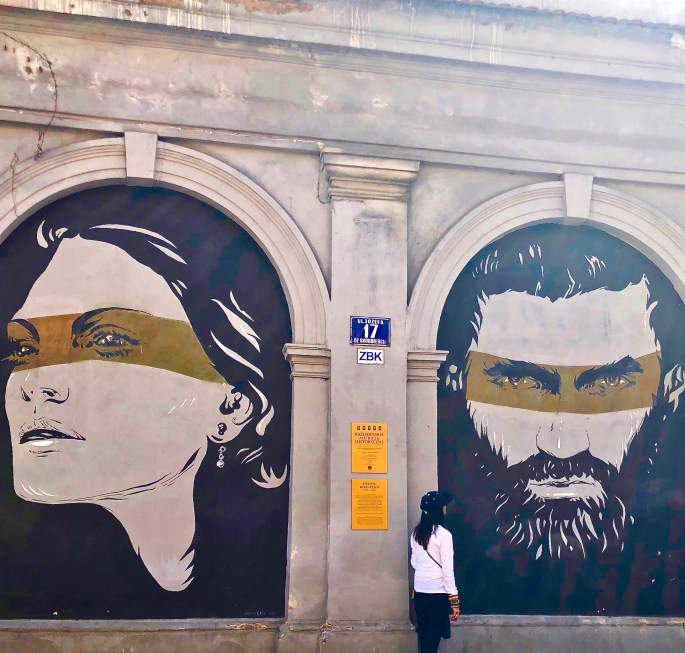
The mural at Joseph Street shows various people that are associated with the district: King Kazimierz the Great and his Jewish lover, Esterka; Prince Joseph II, who became the patron of this area during Austrian times; the architect of the district, Karol Knaus; and Helena Rubinstein, the Jewish queen of cosmetics who lived in Kazimierz before WWII.

 Though i didn’t see it that day, we talked about the internal feuding culture of football graffiti in Poland which might more accurately reflect some of the views here. Patriotic white-and-red colors, swastikas, Celtic crosses, football club emblems, Stars of David hanging from gallows, fans who died in fights with rival supporters and the Fighting Poland symbol are found on walls throughout Poland. 

The city-sponsored  ArtBoom festival invited Bolognese artist Blu to create this giant mural called  Ding Dong Dum.

 Street art as a form of protest remains, even in the publically sanctioned events. When the street artist Pikaso was invited to paint a mural as part of the 2012 ArtBoom festival the authorities refused to allow him to create his original design. Instead, he painted the giant and symbolic mural “For God’s Sake the Censorship is Everywhere.”

The dark history of Poland is always there but maybe the urban culture of street art in a country that didn’t have that freedom before, shows that change is possible.

Thanks Joanna for making my first day, interesting, informative, fun and full of art. I highly recommend her street art tour in Krakow. guideskrakow@gmail.com

Fly safe,

JAZ

Cemeteries In Poland

Image

Cemeteries In Poland

“I wish it need not have happened in my time,” said Frodo. “So do I,” said Gandalf, “and so do all who live to see such times. But that is not for them to decide. All we have to decide is what to do with the time that is given us.” J.R.R.Tolkien The Fellowiship Of The Ring

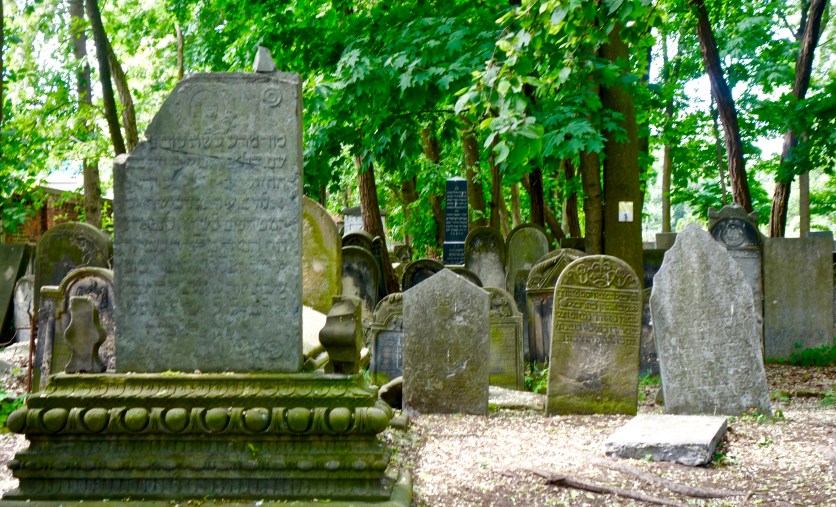
“We were here. We are what is left of what was once a thriving civilization.” This is what the headstones in the Jewish cemeteries in Poland say to me. (Lodz)

Over half a century after the Holocaust, the headstones and their fragments in the Jewish cemeteries personalize the tragedy of the three and a half million Jews killed in Poland. ( Warsaw)

Jews had been in Poland since the Middle Ages. The oldest Jewish grave is in Wroclaw and is dated  1203. In the tangled paths and ruined stones, there is the history of Jewish life in Poland. (Lodz)

In the cemeteries, I feel the ghosts that I did not feel at Auschwitz. Maybe the crime at Auschwitz is too big and too much to comprehend. In the silence of the dead, I wonder if I am doing enough good in this life that I am so lucky to have. (Lodz)

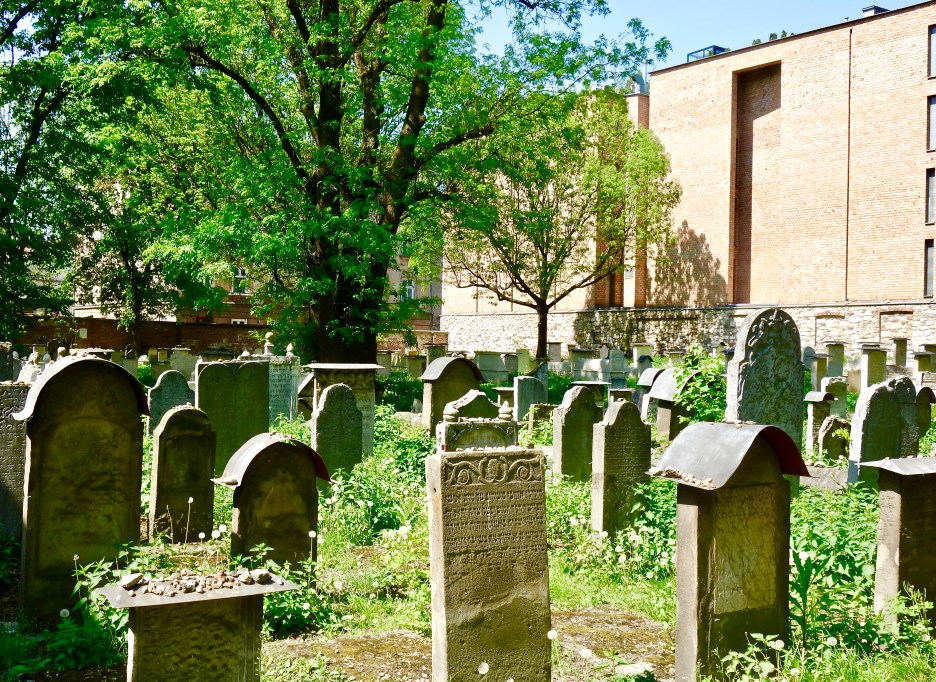
The first cemetery we visit is the Old Cemetery at the Remuh Synagogue in Krakow. It is the oldest cemetery in Poland. It was founded in 1553 and the last burial was in 1800. The cemetery was used as a garbage dump in World War Two and pretty much destroyed.

The gravestone of a famous rabbi – Rabbi Moses Isserles survived and people come to worship there. In 1959, the cemetery was renovated. The fragments of the broken tombstones were cemented together to form a wall.

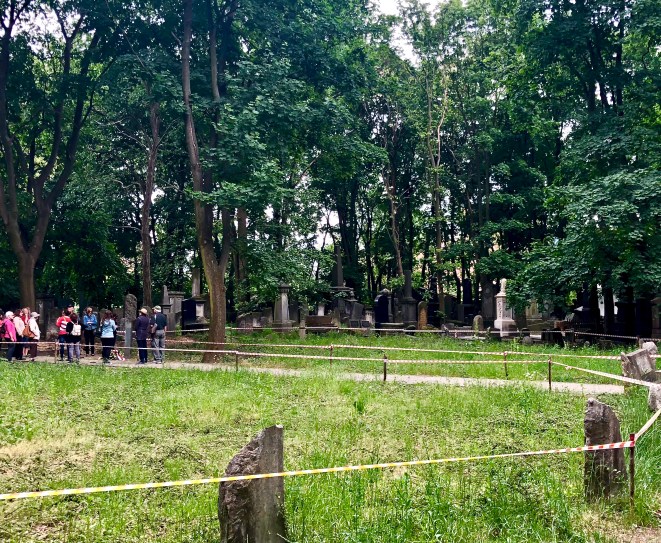
The Jewish Cemetery created in 1892  in Lodz  was once the largest Jewish cemetery in the world.

After the German occupation in 1939, the cemetery became a part of the Lodz ghetto.

Between 1940 and 1944, about 43,000 burials took place in the spare part of the cemetery that became known as the Ghetto Field.

The cemetery was the site of mass executions of Jews, Roma gypsies, and non-Jewish Poles. The graves of the Polish scouts and soldiers are found there.

The ghetto was liquidated in August 1944 and about 830 Jews were left as a clean-up crew. They were forced to dig large holes for their own graves near the cemetery wall. The Nazis did not have enough time to kill them, and the empty holes have been left as a remembrance.

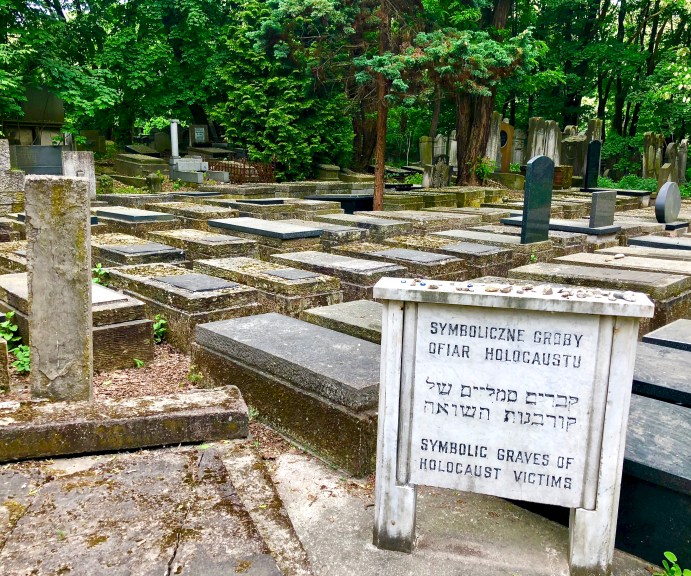
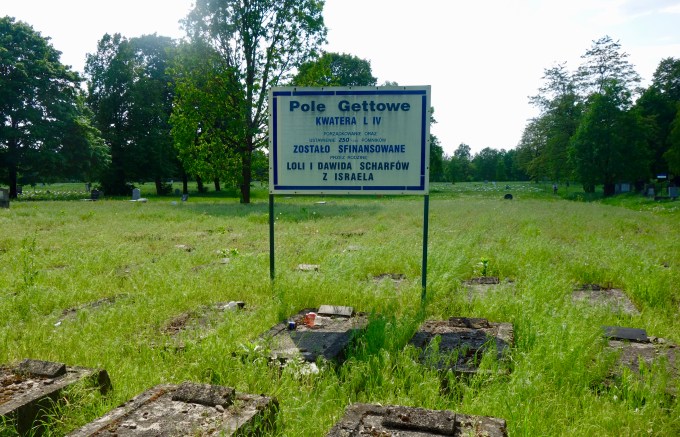
The Okopowa Street Jewish Cemetery in Warsaw was established in 1806.  Among the notable people buried at the Okopowa Street cemetery are the writers Y.L.Peretz and S. Ansky, the actress Ester Rachel Kaminska; Ludwik Zamenhof, the creator of the Esperanto language; Adam Czerniakow, the chairman of the Judenrat in the Warsaw Ghetto and many notable rabbis.

It also has memorials and the mass graves of fighters in the Warsaw Ghetto Uprising.

During the Second World War, the Germans used it as a place for executions and mass burials of victims from the Warsaw Ghetto. 

The cemetery sustained extensive damage when the Germans decided to bomb all the surrounding buildings after the  Jewish Uprising.

The small Jewish community left in Warsaw are trying to diligently preserve and protect the cemetery.

In the Warsaw Cemetery, there is a  memorial for the one million children killed in the Holocaust.

Another memorial is in memory of the Polish-Jewish pediatrician and children’s author Janusz Korczak, who ran an orphanage in the Jewish ghetto of Warsaw from 1940 to 1942. He was deported with his children in 1942 after he refused to abandon them. He was most likely murdered after his arrival in Treblinka.

There were more Jews in Warsaw than in any other European capital before the war, and the cemetery bears silent witness to this rich and vibrant civilization that made Poland the most Jewish of nations in Europe.

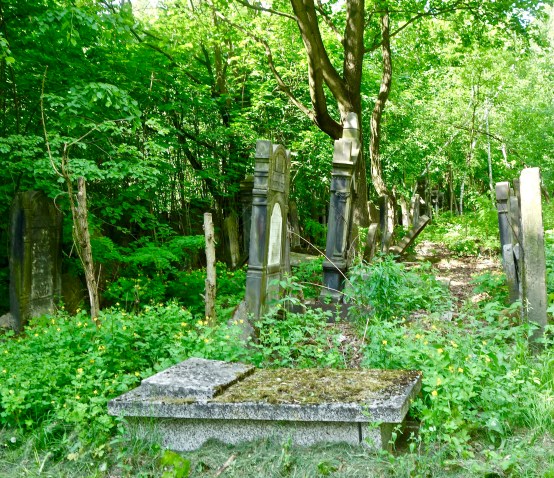
Most of the graves in the cemeteries are abandoned. There is no one left to visit them and tend to them.(Lodz)

In every cemetery, I put stones on as many graves as I can. I don’t have enough time  or enough stones. I try to get to the graves that are further away. The graveyards get messy and overgrown with grass and moss. It’s hard to know where I am stepping so I walk on my toes.(Lodz)

  Putting a stone on a grave has different interpretations. For me it means, I was there. I saw your headstone even though the people who remember you are gone.(Krakow)


On Yom Kippur, I light memorial candles for my parents, a friend and one for the people who have no one to light one for them. This year I will light an extra one for the 3.5 million  Jews who died in Poland during World War Two. (Lodz)

Fly safe,

JAZ

Forty Eight Hours In London With An Art Lover

Image

Forty Eight Hours in London With An Art Lover

“I don’t know what London’s coming to — the higher the buildings the lower the morals.” Noel Coward

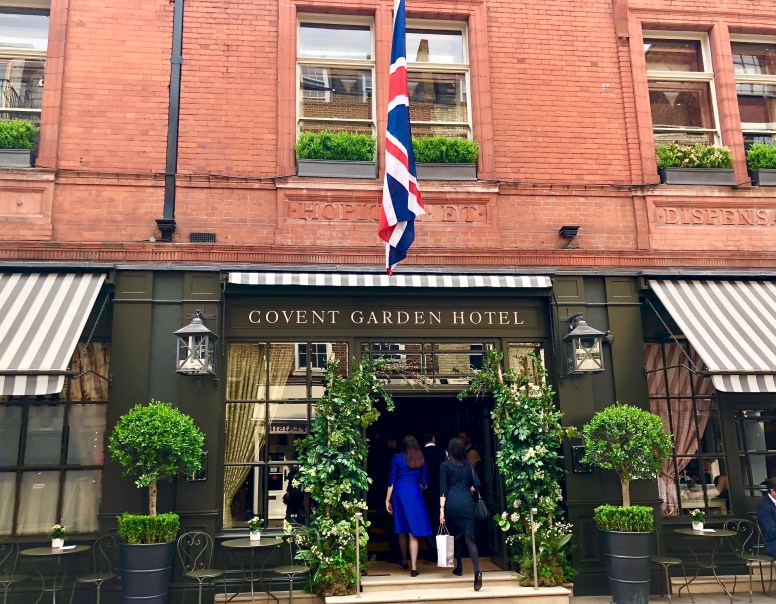
Arrive Thursday afternoon.  Check into Covent Garden Hotel (so cool).

Take a taxi to Saatchi Gallery.  I love London taxi drivers who know so much about the city.  The Gallery always has an interesting collection of contemporary artists.

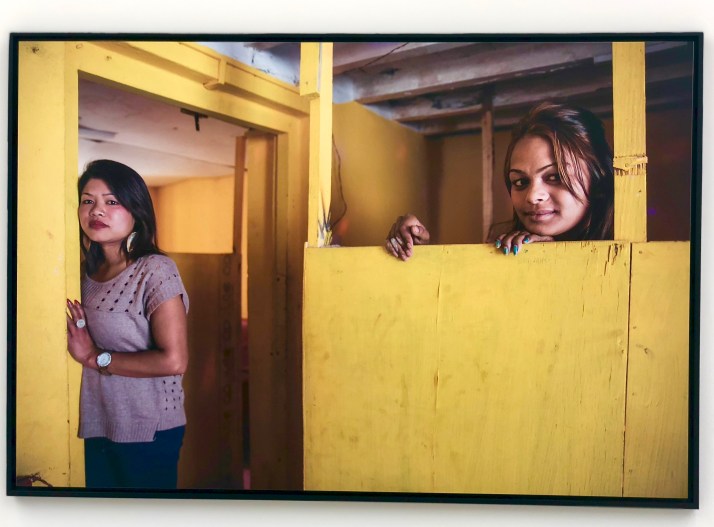
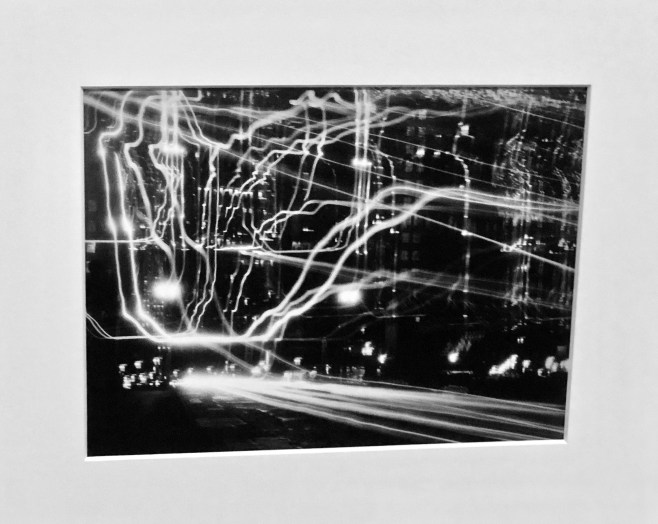
There was a great photography exhibit on human trafficking in Nepal.

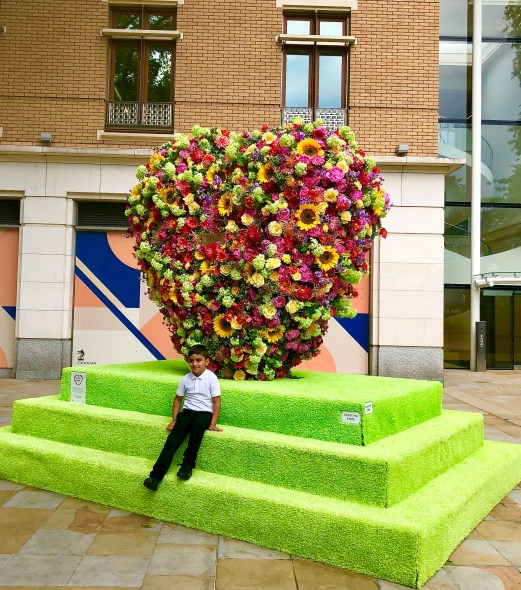
I tried to go to the  nearby Flower Show (biggest thing happening in London this weekend)  but I was losing steam.

I went back to  the hotel for a quick nap. Dinner at Spring and drinks in the library at Covent Garden Hotel.  (forgot to plug in my phone)

Friday.  Yay – it is not raining. Breakfast at the Covent Garden Hotel.

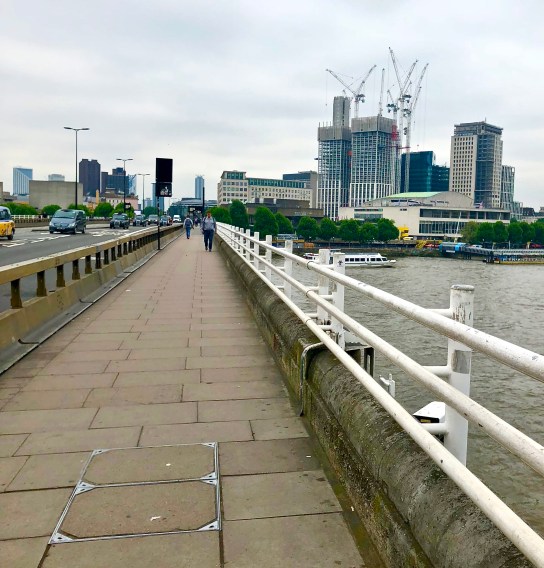
I walked to the Tate Modern Museum.  It is about a half hour walk from Covent Garden over the Waterloo Bridge and down the South Bank of  the Thames. I love walking in London.

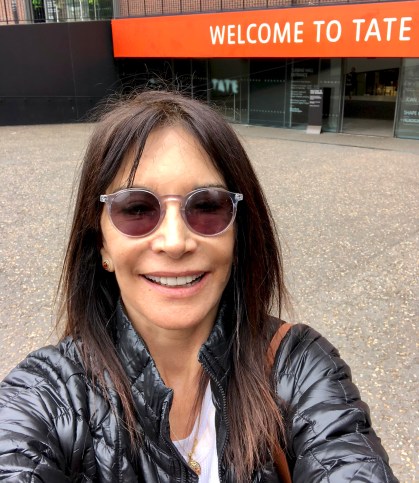
The one hour I had  planned to spend at the Tate Modern stretched into three.

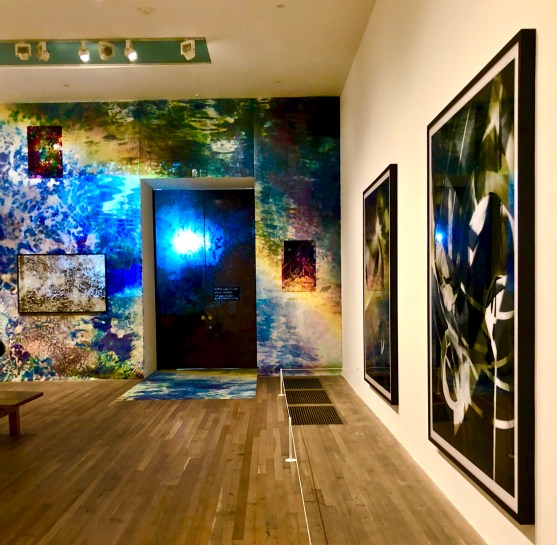
I was blown away by  Shape Of Light exhibit.

I spent a while there.

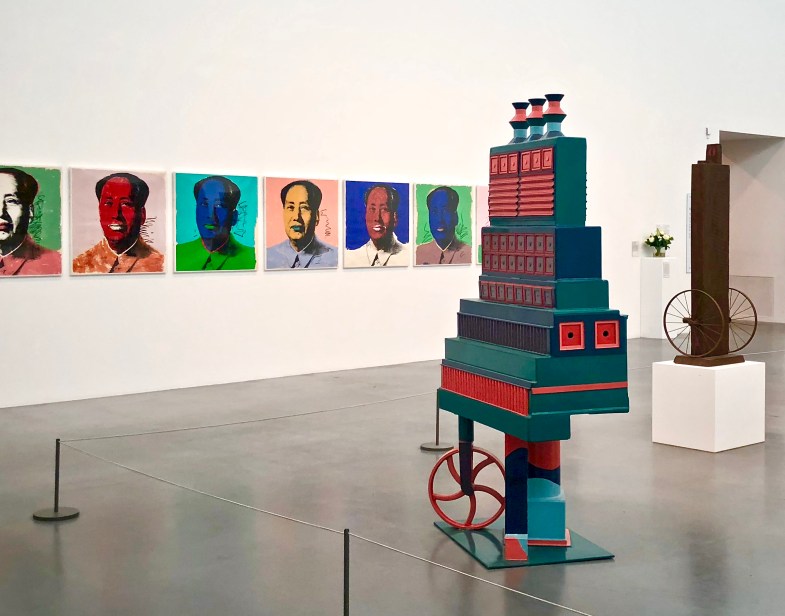
 I walked through some of the collection.

It is truly my favorite modern art museum in the world and I could easily have spent all day here.

I grabbed a sandwich at the museum café and planned the rest of my afternoon.

There is an excellent photography exhibition going on at the Gallery at Oxo Tower which was also on the Southbank.  Windrush :Portrait Of A Generation is captured by photographer Jim Grover.  In 1948 a ship called the Empire Windrush brought 1000 passengers from the West Indies to Essex. They were mostly Jamaican men brought to help rebuild England after the war. Many settled in London. They were known as the Windrush Generation.

They came to symbolize the changing demographics of the UK. But, with the new tough stance on illegal immigration throughout the world, the descendants are now struggling to prove a citizenship status they formally took for granted. They are not illegal immigrants. Before 1973, Commonwealth citizens had the right to live and work in the UK, without additional documentation. This photo exhibition coincides with the seventieth anniversary of the Windrush and is a timely reminder. Will they be deporting the Irish who came to work in London during the famine in the 1850’s? The exhibition is crowded thanks to a good review in Timeout magazine.

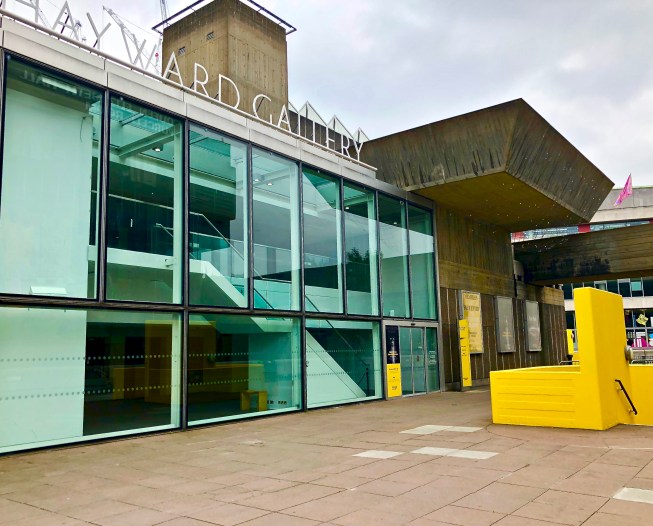
I pass by the Hayward Gallery even though they are between exhibitions because I wanted to see the space.

They don’t let me in so I continue walking.

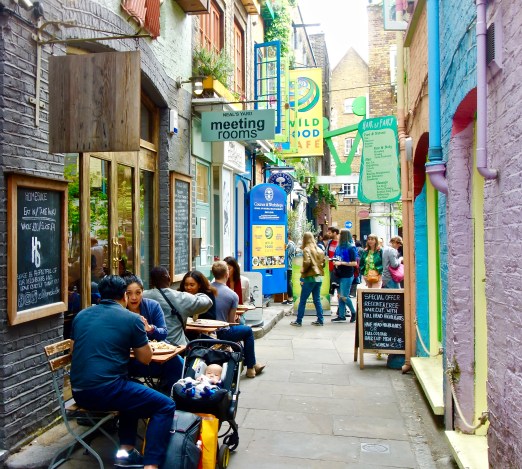
I do some shopping and photographing around Covent Garden.

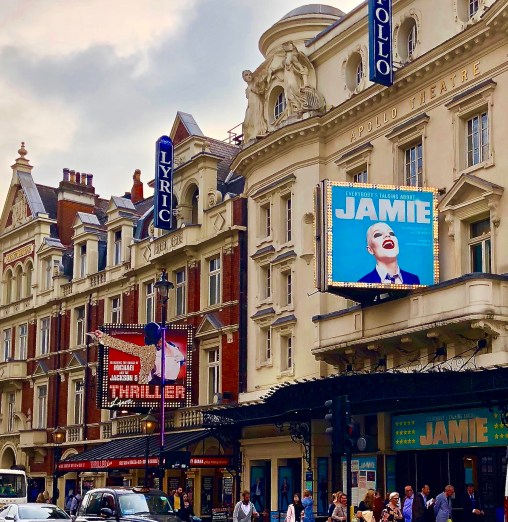
I have theatre tickets to   Everyone’s Talking About Jamie. The British are such an enthusiastic audience and they serve ice cream at intermission. It is very current and fun. I’m sure it will be here soon. There is nothing American theatre lovers like better than to say “I already saw it in London.”

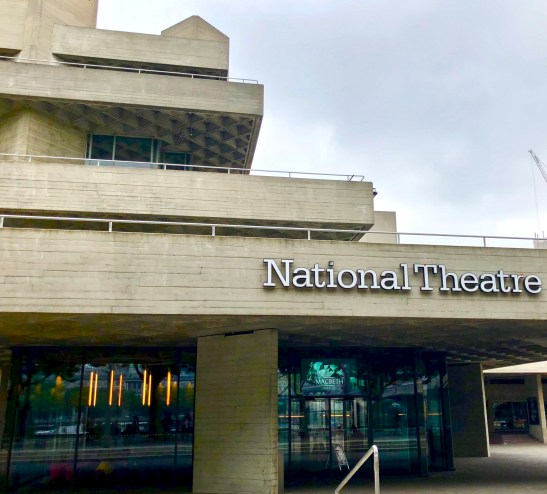
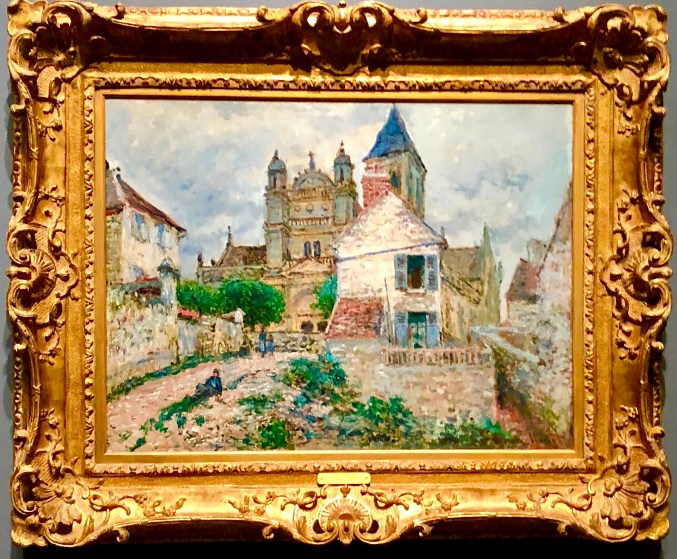
The next morning I head to the National Gallery to see the Monet and Architecture exhibit.

I love both those things. His use of light in his paintings of the same subject is so inspiring and beautiful.

The National Gallery houses one of the greatest painting collections in the world. 

A copy of Van Gogh’s sunflowers hung in my house growing up. I run up to visit the  original painting.

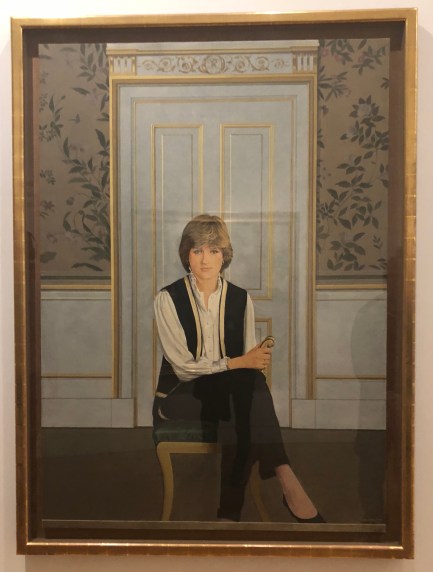
 I have time for a quick stop at the National Portrait Gallery. It opened in 1858 and was the first Portrait Gallery in the world. There are paintings, photographs and videos of famous British people.

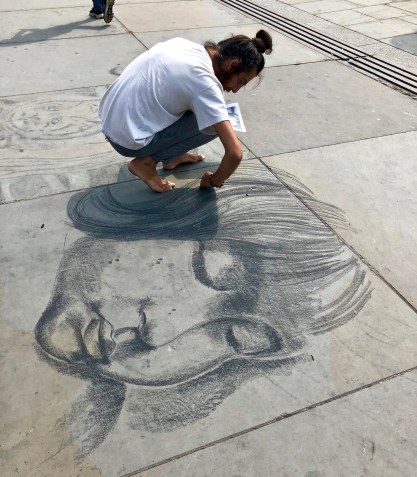
The pedestrian space in Trafalgar Square is filled with buskers, live statues and street artists.

For a street art lover like me, watching the artists create something while listening to beautiful Spanish guitar music on a sunny warm day in London, is a wonderful end to my trip. 

I have to come back soon. I am also a theatre, shopping and food lover and I couldn’t fit it all in two days.

Fly safe,

JAZ

Visiting Auschwitz-Birkenau, Poland

Image

Visiting Auschwitz-Birkenau, Poland

“We can do evil. We can stand by and do nothing. Or, we can do good.”Eva For, Survivor

No matter how much you have read, how many documentaries and movies you have watched and how many Holocaust museums and other tragic sites you have visited, nothing can prepare you for Auschwitz, Birkenau. I will never find the right words to describe it.

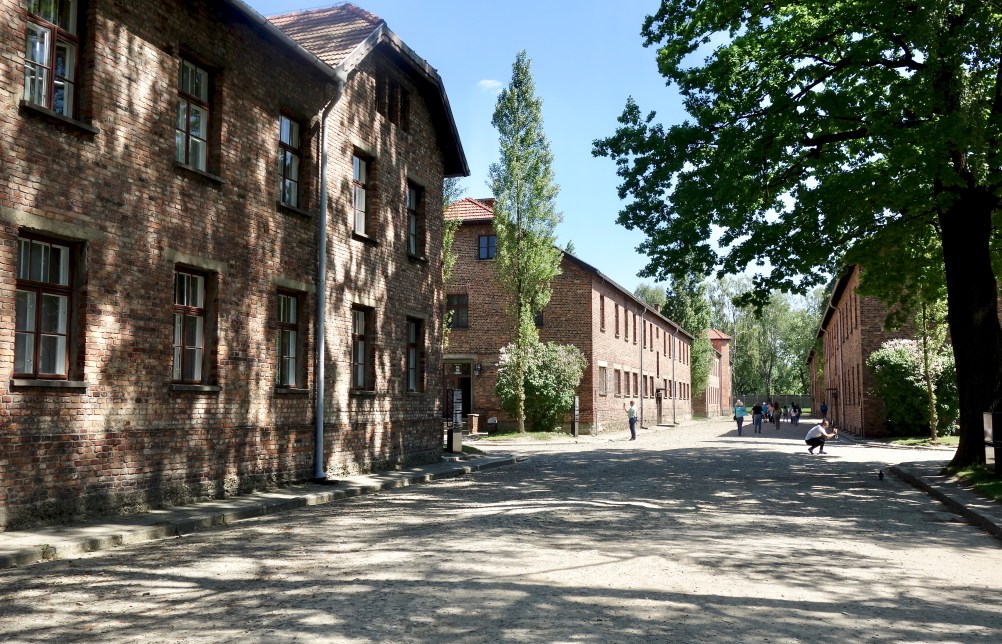
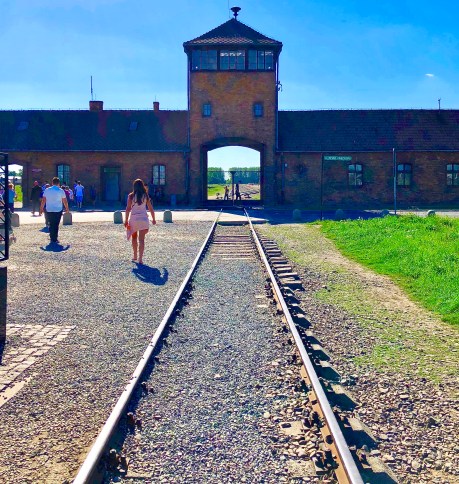
We entered through the main gates of Auschwitz One which was a labor camp. The words Arbeit Macht Frei are clearly seen on the cast iron fence. The direct translation for this is work sets you free. 

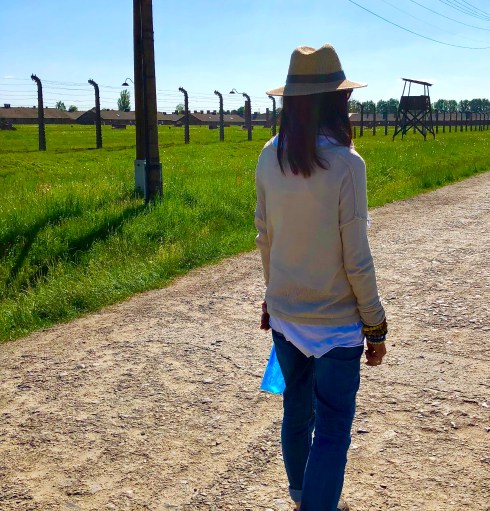
I walked through the gate completely numb. The one thing that I was not expecting was the perfect blue sky, warm sunshine, and bright green grass.

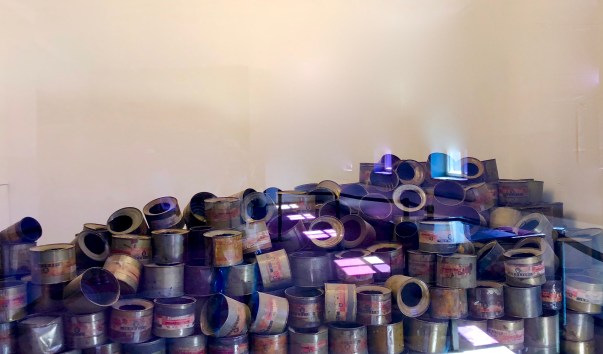
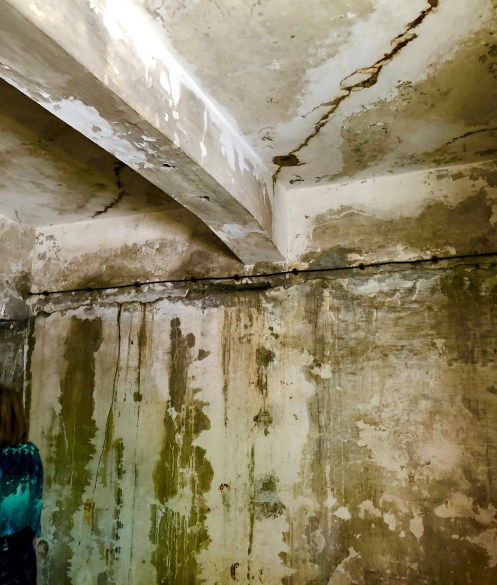
Auschwitz One was occupied by the SS in 1940, where the first prisoners, mostly Polish and Soviet, were deported and killed. It was where the Nazis started the experiments with the Zyklon B gas. (canisters and pellets of Zyklon B – pesticide used to kill prisoners, gas chamber)

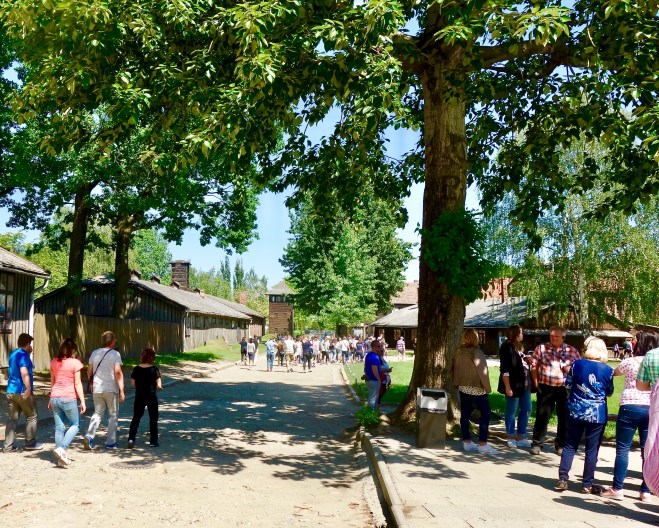
The old red brick buildings and people taking photos make it really hard to believe that at this place human beings were cruelly tortured and murdered.

The “museum” is a path where each building (or block with its number, to be more precise), has been given a particular name to show the visitors the horrors that took place during the Holocaust with pictures, signs and explanation panels.

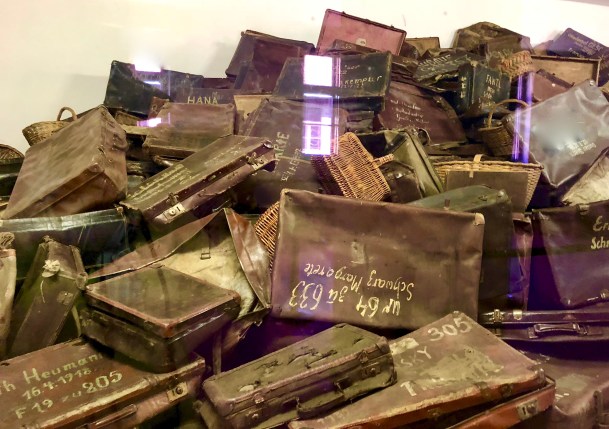
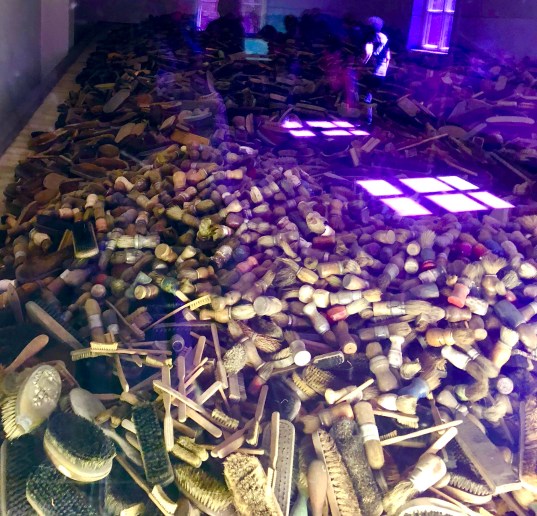
There are buildings dedicated to the extermination plan and gas chambers, to photos and records of the prisoners and to the monstrous medical experiments conducted by Dr. Mengele . There are other buildings where you can see mountains of shoes, personal belongings, suitcases with names, artificial limbs, crutches, wheelchairs and human hair of the victims. My eyes focus on a tiny kid’s shoe, a suitcase with the name Eva Hecht clearly marked on it and a woman’s artificial leg. Every item tells a story of a family torn apart and a life taken away. My numbness gives way to too many emotions.

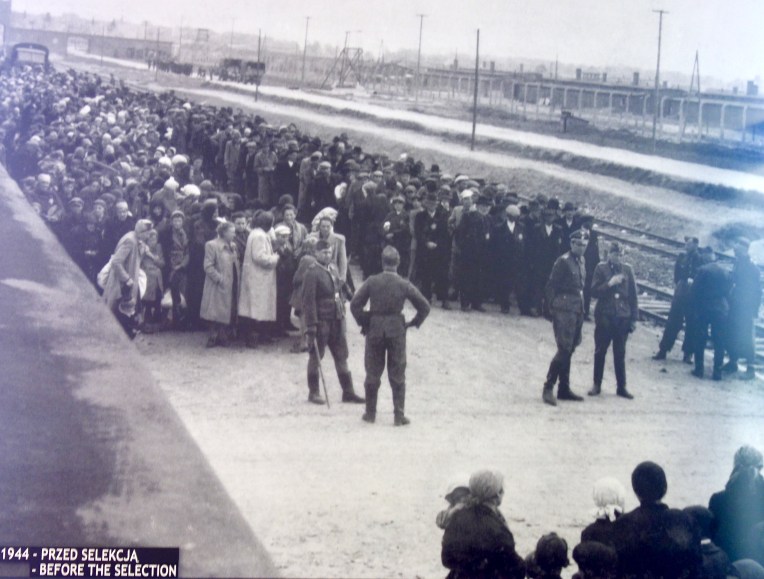
Birkenau is the mass extermination camp a few miles from Auschwitz.

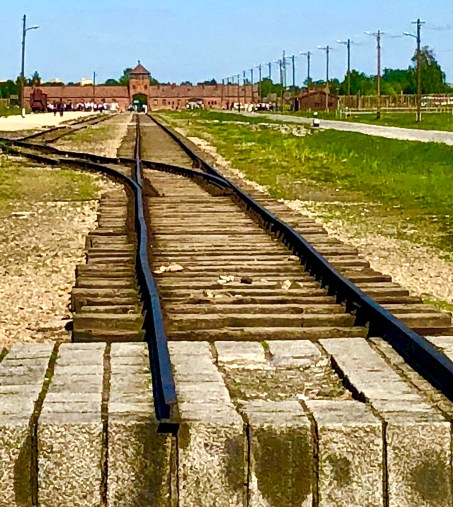
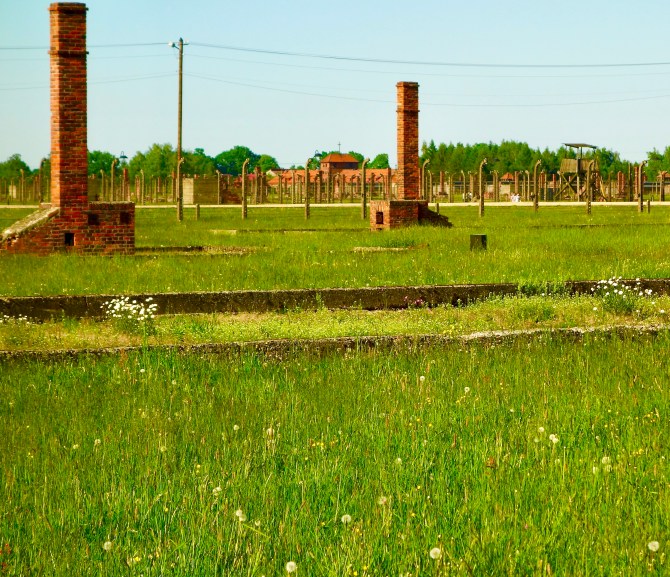
The train tracks lead into the camp and stop at the mostly destroyed crematoria.

The Nazis tried to destroy the evidence of what they had done in 1945. 

The camp is huge.  The many barracks and group latrines were empty and clean.

The chimneys go on forever. 

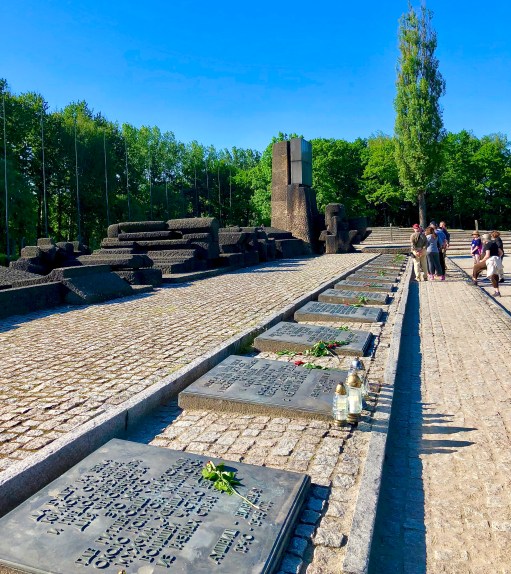
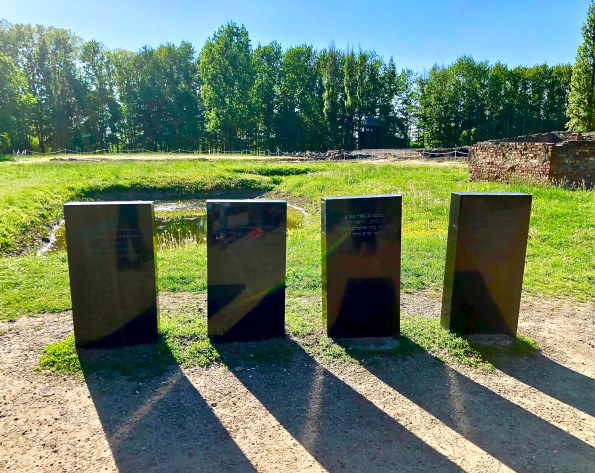
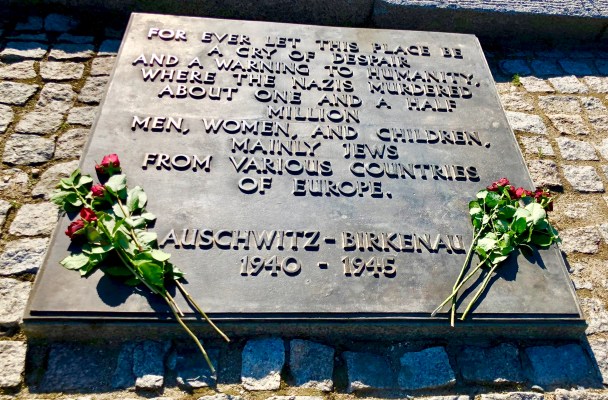
I walk these paths of hell and I feel nothing. I feel no pain and no ghosts of the over one million people killed there. I feel no evil. I just feel empty – like the emptiness of the camp that I was looking at. I hear the guide talking but i’m enveloped by my own numbness. I say the prayer for the dead at the memorial to the Holocaust victims there.

I say it again in my head at the memorial where some of the ashes are buried in a pit.

There wouldn’t have been any grass. There wouldn’t have been any wildflowers.  It would have been freezing, covered in snow in winter and muddy and miserable when it rained. The air would have been filled with smoke and ash at all times.  Even on a day like today, when for a few minutes they could close their eyes and feel the warm sun on their face, it would still have been the worst place on earth.

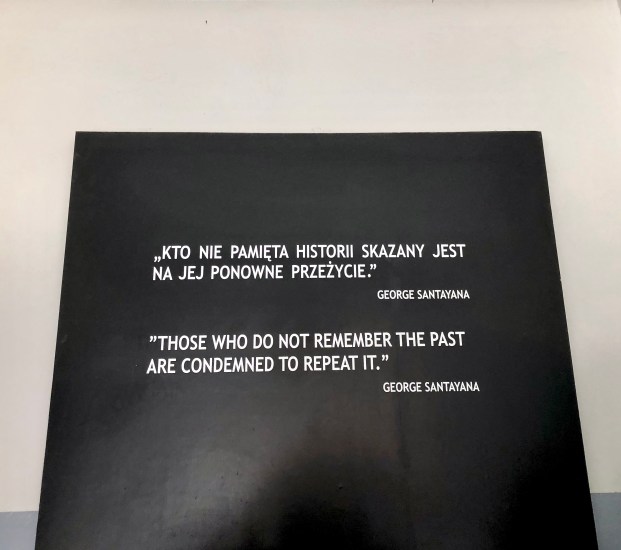
Auschwitz Birkenau asks as many questions as it answers. As a quote on the wall at Auschwitz says: “Those who do not remember the past are condemned to repeat it”. George Santayana

. I had to go and see it for myself and pay my  respects to those who died here.

 I had to go and see this and hold on to these images.

 Our world is filled with hate and my visit to Auschwitz will always remind me that it can never happen again – to anyone. 

Fly safe,

JAZ

Auschwitz (Oswiecim) Poland

Image

Auschwitz (Oawiecim) Poland

“At a mass meeting in Berlin, Adolf Hitler shrieked, “And who is responsible for all our troubles?” Ben Cohen shouted, “The bicycle riders and the Jews!” Hitler looked up, astonished. “Why the bicycle riders?” “Why the Jews?” replied Cohen.” Leo Rosten.

We start our day at the Auschwitz Jewish Center in Oświęcim (Oshpitzim in Yiddish), a small town in southern Poland 31 miles west of Krakow .http://ajcf.pl/en/ The town went from anonymity to being known by its German name Auschwitz.The word Auschwitz has become synonymous with the worst things human beings can do to each other.

As with other parts of Poland, there is an old synagogue (that was returned to the Jewish community)  and a museum about Jewish life in Oscwecim over the last hundred years and no Jews.

The Center is used a lot by tourists and schools to promote dialogue about Polish Jewish life, xenophobia and the Holocaust. The Museum Of Jewish Heritage that I am traveling with was responsible for helping to create this Center. It does not have local community or government support.

Maciej Zabierowski our wonderful  guide for the Jewish quarter in Krakow works there. As with our other guides, Maciej’s quiet honorable manner makes you feel hopeful that there are more like him than the Nationalists in this country. Tomasz Knncewicz  tells us some of the history. We ask about the law passed earlier this year which criminalizes false attributions to Poland’s responsibility in the Holocaust. I have read that Auschwitz  guides have been accused of downplaying the fact that 74,000 Poles were also killed in Auschwitz. He mentions that there are pressures being exerted on Holocaust and Jewish Museum directors and Auschwitz guides due to the wave of hate.

I think about it on the short drive to the Auschwitz Birkenau Camp.  On one hand, the government is right. It is a distinction without a difference and a horrific thing. But, the Jews were killed because of racism. Many other victims were also deemed by the Nazi’s racial ideology  as unfit to live such as gypsies, homosexuals and the handicapped. The Poles and people from other German conquered countries were killed because of power.

The Holocaust happened at a time in the present to people like you and me. How did a civilized society do this? At what point does the Nationalism and hate rhetoric we are hearing in the world today, take a turn like this?

We pull into the very busy Auschwitz car park along with many buses and cars. There is train whistle in the distance.

Fly safe,

JAZ

Speaking Yiddish in Poland

Image

Speaking Yiddish In Poland

“Most adult male Jews could handle at least three languages: they used Hebrew in the synagogues and houses of study, Yiddish in the home, and—to Gentiles—the language of the land in which they lived. My father, a workingman denied the equivalent of a high school education in Poland, handled Yiddish, English, Hebrew, and Polish. Jews were linguists of necessity.” Leo Rosten

I chose to travel to Poland on an organized tour with the Jewish Heritage Museum  accompanied by Rabbi Amichai Lau Lavie. I wanted to be able to process what we were seeing and to be protected as much as possible from antisemitism or a stupid comment. Three million Jews died in Poland. I couldn’t separate that.

  On the first night in Kraków, we had a meeting and the rabbi said,”We are pilgrims. We are on  a pilgrimage – a journey.” I thought, “No, definitely not. I am a traveler. I am on a trip.” I have learned that when I have a very strong reaction against something, to pay attention because it is probably where I am supposed to be. 

Someone starts to sing a song in Yiddish and I feel a pain in my chest. Yiddish is the language that the pogroms in Eastern Europe and the Nazis tried to destroy. To me, it has always been the language of the broken – the immigrants from the pogroms, the old people with heavy accents, the Holocaust survivors and the tenements. My grandparents died when i was young and my parents were born here so it wasn’t as much a part of my life as other people. It was important to them that we spoke proper English.  I lived in an immigrant community so I heard it. I know that song – not just from Schindler’s List but from somewhere deep in an early childhood memory. 

This group knows a lot about Yiddish. I didn’t want any part of that broken world so I know very little. I think some of it was fear – growing up in the shadow of the Holocaust. Yiddish words are part of the vernacular but I have never used them. I was going to be a part of mainstream America and not an immigrant culture.  

The Rabbi is from a rabbinical Polish family. . He is clearly on a pilgrimage to know his family better and share it with us. “That’s nice for him,” I think to myself.

 As I watch and listen to him go through his history at the places we visit, I learn about the Yiddish of a thriving culture with music, theater, and literature.

There were many great scholars, writers, artists and historians who I knew nothing about.  I learn about how the Hasidic Jews came to dress like that. It was not all Fiddler On The Roof. My ancestors come alive in his family stories. They aren’t just sepia photographs anymore. I see the temples they might have gone to and places they might be buried.

Maybe I was walking on streets that they once walked on.

The Yiddish culture is part of my heritage and of my children’s heritage. Our history wasn’t in German or Polish or English. Our grandparents read books and newspapers and spoke in Yiddish.

It is a language and culture that was valuable in its own right and it was worth passing on. All the people who could have taught that to me are gone. Our stories are important and my story began in a language that I only know a few words of.  It sounds like the beginning of a journey to me.

Fly safe,

JAZ

Some Things That I Have Learned in Poland

Image

Some Things That I Have Learned In Poland

“You are in a country that comes and goes, where the people have been mistreated but rarely oppose. Borders have changed by rulers from afar, although sometimes closer than neighborhoods are. Their religion is sacred and the heavens smile down, but the history they keep will lead you to frown…” Sean F Hogan, Painting Angels

Burek is the most popular name for a dog.

When you are on the road in Poland, McDonald’s has a very clean bathroom and makes a decent cup of coffee.

Poles marry at the youngest ages in Europe.

Polish astronomer Nicholas Copernicus was  the first to propose that earth was not the center of the universe.

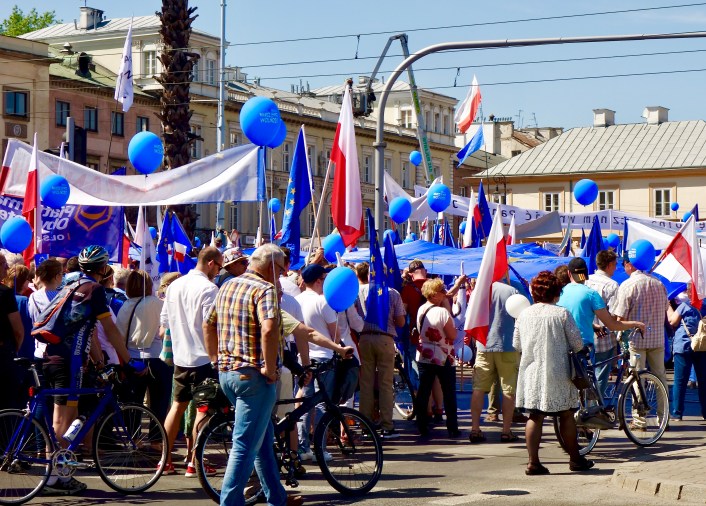
The best time to visit the Warsaw Museum is not during the largest rally since the fall of Communism.

Opposition leaders, including two former presidents, led a rally against what they describe as the government’s anti-democratic policies.

The first floor is 0 so press 1 when you want to go to the second floor.

Polish is considered one of the hardest languages for an English speaker to learn.  City and street names are not easy to pronounce. The collection of consonants together are so difficult for me. I cannot fight the urge to pronounce them as they are written which is always totally wrong.

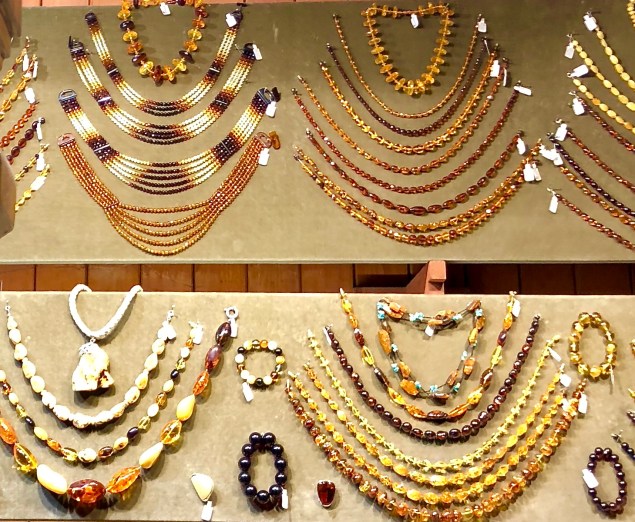
Poland is the world’s biggest amber exporter.

Polish people seem to love statues.

Wroclaw is home to over  three hundred miniature gnomes. I was into finding them. 

 There are statues for everything throughout Poland. 

Frédéric François Chopin (Fryderyk Franciszek Szopen), is Poland’s most famous composer.

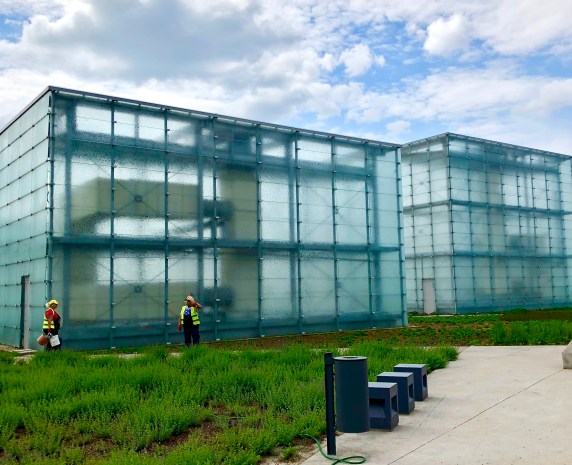
Muzeum Slaskie (Silesian Museum) in Katowice  is built on the site of an old coal mine. Architects successfully connected new architecture which houses art, historical objects and stories with the mining traditions of Silesia and its identity.

The extraordinary architecture by the Riegler Riewe Architekten office from Graz – can compete with the best museums in the world.

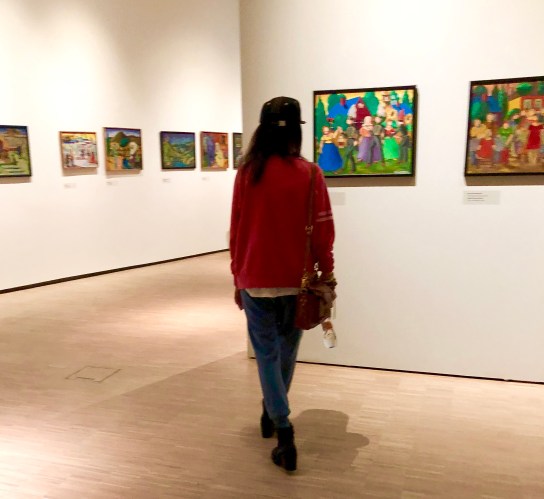
It houses a collection of famous Polish painters. The gallery of Non Professional Art represents Silesian life. Many of the paintings are done by the coal miners in the region.

Poles do not consider Poland as Eastern Europe but Central Europe. It feels a lot like Eastern Europe.

The Metropole Hotel in Wroclaw has hosted Marlena Dietrich, Picasso and both Adolf Hitler and Stephen Spielberg.

Roman Catholicism is so popular in Poland that there is a television channel dedicated to the pope.

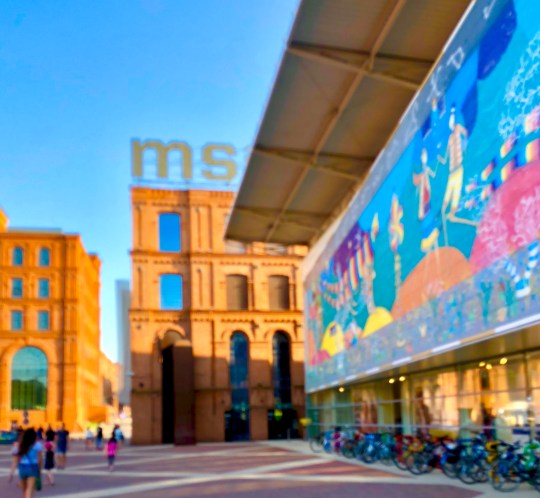
In Lodz (pronounced Woodge) ,Manufactura was an old cotton mill that has recently been converted into an impressive entertainment and cultural complex. The oldest Modern Art Museum in the world Museum Stzuki houses its collection here .It is called MS2.

It was a long day for me and I was so glad that I was able to see it. They have a really nice collection of Polish and International artists with a lot to say.

The Art Hotel located in the Manufactura complex is one of the coolest hotels I have ever stayed at and wished I had spent more time there.

Dumplings filled with blueberries, blood-red soup, potato pancakes, pizza eaten with ketchup and sausage are among the foods to try in Poland.

If you are a dumpling person and even if you are not, there is always pierogi.

I do not really want to admit this but I ate a lot of fast food on this trip. I didn’t have much free time and there was a lot I wanted to do. Restaurants like slow food here. I happen to know now that Burger King in Poland does not have diet coke and McDonald’s has a special burger on a Polish bagel. I also  have Starbucks mugs from six cities in Poland. I will not be writing any food blogs about this trip.

Poles are proud of their vodka. Poles drink, on average, 92 liters of beer a year, which places Poland third in consumption in Europe behind Germany and the Czech Republic.

Fly safe,

JAZ
Ten Countries With The Cleanest Air

Image

Ten Countries With The Cleanest Air

“And this new air was so delicious, and all his old life seemed so far away, that he forgot for a moment about his bruises and his aching muscles.” CS Lewis, the Horse and His Boy

Clean air is something we cannot, sadly, take for granted today — all the more reason to keep working to make the air in cities and around the world the best it can be. Here are the top ten countries with the cleanest air.

1 Australia has the least polluted air in the world. Tasmania, a state in Australia has the cleanest air in the world. An enterprising Australian company is bottling their air and selling it to China which is one of the most polluted countries. How do you bottle air?

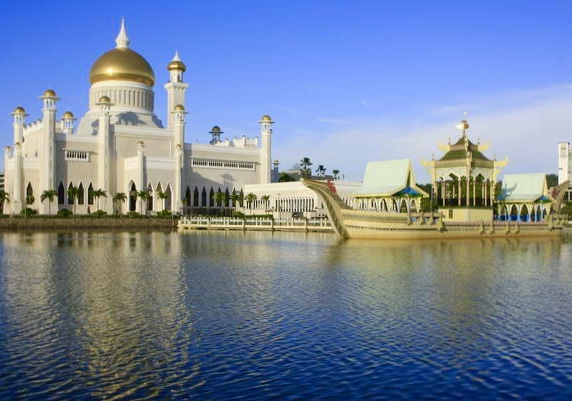
2 Brunei, rated by many international agencies as one of the most livable places in the world, has done a good job of keeping emissions low and maintaining forests, even with rapid industrialization. It has some of the cleanest, safest air on the planet. Now, if only the Sultan does not bring back stoning.

3 New Zealand has relatively good air quality due to low population density, close proximity to the sea and remoteness from other continents and sources of pollution. It is the friendliest country with clean and safe air. Sounds good to me.

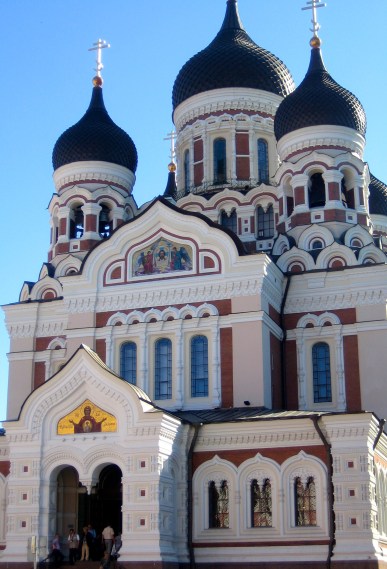
4 The pollution in Estonia’s urban areas is among the lowest in the world. More than half of the country’s land is covered by trees and public transportation helps keep emissions low.

5 Finland always shows up in the top five countries with the cleanest air. Lapland has some of the cleanest air in the world. Lapland is also selling their bottled air. They plant two trees for every bottle sold.

6 Canada makes great efforts for the preservation of its wildlife and clean air. Air quality in Canada continued to improve even though energy use and motor fuel consumption increased by more than 20%. This happened because of increasing societal awareness of the health danger of air pollution, which created a political demand for change that was met by technological improvements.

7 Iceland is also always among the countries with the cleanest air and water. Iceland is powered solely by hydropower and geothermal energy. Iceland’s unique geology allowed for continuous production of renewable energy. Icelanders still use fossil fuels for transport and agriculture. There are currently moves to shift from fossil fuels to hydrogen, which is renewable.

8 Sweden is a role model for air quality. Their long-term climate goal is to have zero emissions by 2045. Sweden takes the global battle against climate change seriously. More than half of Sweden’s national energy supply comes from renewables and a thorough legislation aims at further reducing greenhouse gas emissions.

9 Ireland has managed to keep its air very clean. In addition to adhering to environmental regulations, the Irish are lucky to have strong winds coming in from the sea to blow the small pollution they do have away.

10 Fifty years ago Japan was a very polluted country and became known for pollution related illnesses. Today, Japanese cities are among the world’s least polluted, according to the World Health Organization. The country prides itself on blue skies, Prius taxis and mandatory recycling. What’s more, it managed to clean up without sacrificing growth by investing in pollution-control technologies and giving local governments leeway to tighten standards beyond national requirements.

Fly safe,
JAZ

Lonely Vs Alone

Image

“We are all alone, born alone, die alone, and—in spite of True Romance magazines—we shall all someday look back on our lives and see that, in spite of our company, we were alone the whole way. I do not say lonely—at least, not all the time—but essentially, and finally, alone. This is what makes your self-respect so important, and I don’t see how you can respect yourself if you must look in the hearts and minds of others for your happiness.”  Hunter S Thompson
 
  If you are reading this, chances are that you know what it is like to feel lonely. The stereotype of being single are generally categorized into one group: loneliness. Being lonely is that kind of aching that resonates in your chest. It doesn’t matter what you’re doing or whom you’re with, it’s impossible to shake that feeling. Being lonely comes with so many side effects: memories, insomnia, and confusion. Loneliness encapsulates the best parts of your life and forces you to notice their profound absence. Loneliness makes you wonder why you? Why haven’t you had a simple stroke of luck? It is that prominent, gaping hole in your life that just can’t seem to be filled regardless of what you do. Loneliness comes with settling for less than you deserve. It’s incurable by company, it swells in the presence of friends. Loneliness is the isolation that comes with nursing a feeling unreturned — an expectation unmet.
  Being alone is different.  Being alone is a state of being. Loneliness is a state of mind. When you’re alone you are forced to realize all the things about yourself that you couldn’t when you spent your days about someone else. Being alone is taking the time to really think about what you want from someone the next time around. Being alone is reading a book, taking a long walk on the beach, having a delicious coffee and enjoying every single minute of it. It is buying a single ticket to a foreign film you know absolutely nothing about. it is taking a trip exactly the way you want to do it. Being alone is doing things by yourself, but also doing them for yourself.

Sometimes  being alone crosses paths with being lonely. You see a couple across the street and their happiness radiates, or a young family out for a stroll and you remember the days when that used to be you. For a brief moment that dull feeling aches in your chest, but it doesn’t stay.

Being alone can be the most empowering experience of your life. If you let the loneliness consume you, you’re going to lose the chance to figure yourself out. We can’t allow ourselves to be defined by the people we surround ourselves with, our relationship status, weekend plans or the  silence of our mobile phone. Loneliness isn’t about being in a relationship or being single. We are always trying to find the balance between being alone and being lonely.