Birdman And The Destruction Of The Moai On Easter Island

Image

Birdman And The Destruction Of The Moai On Easter Island

“History teaches us many things. Most importantly, the things that made us who and what we are.” Robert Bonvill

When Jacob Roggeveen arrives on Easter Island he finds few trees, a couple of thousand people and nine hundred statues.

Both he and later Captain Cook surmise that there must have been a much larger population at one time to have built all these giant statues. The statues are lying on the ground in disarray and the natives ignore them.

The statues you see standing up now have been restored.

The story goes that at some point in the island’s history, the art and the increasing population were depleting the natural resources. There were too many trees being cut down. Without trees you have no canoes to get fish.There are no fishing nets to be made  without the mulberry trees. Rats were overrunning the island and eating the seeds and fruit.

Speculation is that the people were starving, fighting and blamed their idols.

They threw them down or lay them down and started killing each other. There is evidence of cannibalism.

The natives that were there when the Europeans came, follow a Birdman Cult, Tangata-Manu. The Rano Kau area has been considered sacred since ancient times. It is here in the fifteenth or sixteenth century that the Orongo ceremonial village is built for the new order.

After the fall of the Moai carving era society, new gods replaced the old ones while a struggle for power came to light. In order to settle this in a non-violent way, the Birdman Cult competition was established to help decide who would lead the Rapa Nui each year. They competed in a yearly Hunger Games-style race to retrieve an egg from an island in shark-infested waters with many deaths. The supreme deity of the Birdman Cult was the fertility god Make-Make.

There are petroglyphs that show the fish, marine life and canoes near Papa Vaku. Many Birdman petroglyphs were found near the Orongo village.

Over the next 150 years the remaining Rapa Nui culture shrunk to 150 people due mostly to European diseases.

The fate of the Rapa Nui on Easter Island is often used to illustrate how humans destroy their communities with environmental destruction and warfare. They had a highly developed civilization for about six hundred years and then they destroyed the environment and it ended in catastrophe.

We don’t know what is true and what isn’t, but the Moai stand as a reminder of the demise of an ancient culture.

As we deplete our natural resources, do we go the way of the Rapa Nui or do we hold ourselves accountable for our global excess?

Fly safe,

JAZ


The Moai Walked – Easter Island

Image

The Moai Walked – Easter Island

“It’s a toss up when you decide to leave the beaten track, many are called but few are chosen”. Somerset Maugham

No one can agree on the history of Easter Island. It was named Easter Island by the Dutch explorer Jacob Roggeveen, who landed there on Easter Day in 1722. They found a population of between 1,500 and 3,000 inhabitants and about 900 giant stone statues. The statues, called Moai, were carved from compressed volcanic ash and stood as high as thirty feet, weighing 90 tons.

The locals did not care to explain their significance or method of creation. Captain James Cook wrote in 1774. “We could hardly conceive how these islanders, wholly unacquainted with any mechanical power, could raise such stupendous figures,”

When did the first people arrive? Where did they come from? Why did they carve such enormous statues? How did they move them and raise them up onto platforms?

The missionary’s stories, the explorer’s diaries, the archaeologist’s shovel, the anthropologist’s bones and the Rapa Nui oral tradition have all revealed something of the story. No one agrees on any of the answers to these questions.

The Rapa Nui have a story. When the first king Hotu Matu’a arrived on the island he brought seven different races with him, which became the seven tribes of Rapa Nui.

All the Moai sites have names. It is believed that the seven statues at Ahu Akivi represent the original ancestors from the kings of other Polynesian islands. Most of the statues face inland guarding the island and protecting the inhabitants but these seven face the sea remembering where they came from.

The quarry is one of my favorite places on the island. It is on a volcano called Rano Raraku.

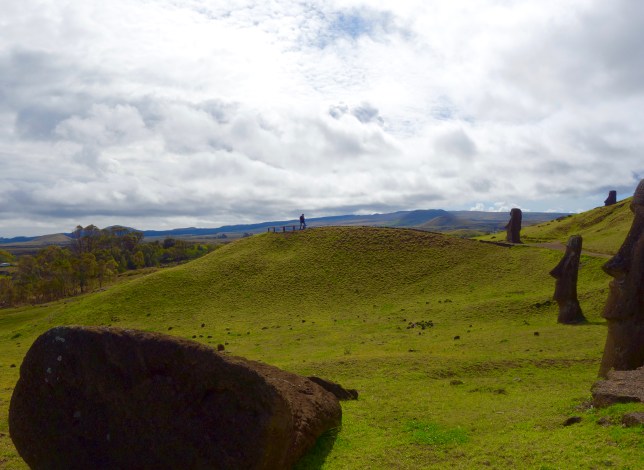
The steep path winds through an astonishing landscape of Moai – giant heads, broken bodies, some tilted and without order, some fallen facedown on the slope.

The astonishing discovery by Thor Heyerdahl of Kon Tiki fame was that these giant heads had giant bodies under the ground.

They say, when a statue was almost complete, the carvers drilled holes to break it off from the bedrock, then slid it down the slope into a big hole so they could stand to finish it. Eye sockets were carved once a statue was on the platform and white coral and obsidian eyes were inserted during ceremonies to awaken the moai’s power. I bought an artist’s model of the eye.

In some cases, the statues were adorned with huge cylindrical hats or topknots of red scoria, another volcanic stone.

The hats were made at another quarry that had the red scoria.

The faces of the statues look very human and more Peruvian than the current Rapa Nui. Thor Heyerdahl believes there were early Peruvians.

There is a lot of speculation on how the islanders moved the Moai from the quarry where they were carried to their many locations.

Archaeologists have proposed methods for moving the statues, using various combinations of log rollers, sledges and ropes.
In the Rapa Nui oral tradition, the Moai were infused with mana, a spiritual force from the ancestors and the Moai walked.

The Rapa Nui stories make just as much sense of the unknown as the scientific theories. There is no proof that it did not happen that way.

Fly safe,

JAZ

Arriving On Easter Island

Image

Arriving On Easter Island (Isla de Pascua)

“The farther you go, however, the harder it is to return. The world has many edges, and it’s easy to fall off.” Anderson Cooper

The idea of a bucket list is weird. The thought that there is a set number of activities that you have to do in the world to die happy is depressing.  Life changes and things happen and your goals and desires change with that. I love lists. I make them all the time. They are more travel goals than bucket lists. The thing about these lists is to never finish them and always add new ideas.

The plane landed at another place on my list that I can check off – Easter Island. It is one of the most remote places in the world and has all those statues. We have flown six hours from Santiago to get here. You can only fly from Santiago or Tahiti on Latam Airlines to get there.

When you land on Easter Island you’ll notice that the runway appears to be really huge, because it’s really huge.  Back when NASA was working out the flight plans for the space shuttle in the 1980s, Easter Island aligned perfectly with one of the designated landing spots and the US government made a deal with the government of Chile to upgrade and extend the runway on Easter Island in exchange for possibly letting the space shuttle land there in case of an emergency.  Although never needed by NASA the runway expansion helped Easter Island greatly, as this meant larger planes could ferry tourists and supplies to the island.

In 2007 the Explora all-inclusive hotel opened on Easter Island. The hotel has expansive windows and outdoor areas to see the beautiful views on the south side of the island. The air smells so good. It feels like pollution has not yet come to this remote part of the world.

We arrive at lunchtime and a woman starts talking to us. I travel alone often and I’m always in awe of people who can do that. We are a little surprised but chat a bit with her about the island.

After lunch, we are taken on our first tour of the Moai with two couples from Missouri. Meeting Americans abroad is tricky in Trump’s America. We are sure they are Trump supporters and to them we must be California liberals. We know they own guns. In our minds this means that they must like racist, narcissistic bullies. Someone asks me what I do? I say that I  write a travel blog. Another one snaps, ”I don’t want to be in your blog.” I want to answer that I’m way too self-centered to write about you. This isn’t starting well.

We make a decision to not talk about politics and not be those judgmental California liberals that we were about to become. Those people turn out to be nice and interesting. I don’t know who they voted for but they aren’t thrilled with what is happening in the country now either. They became the people who experienced Easter Island at the same time in the same way that we did. They will always be part of our amazing memories here. The woman who snapped at me wasn’t feeling well and we were tired from jet lag and the long plane rides. The lesson for me is don’t judge people on your worst traveling day.

It is the tours to the Moai and surrounding areas and especially the staff and tour guides that really make this place so wonderful.

They are young, passionate, fun, very knowledgeable with great communication skills and a lot of information.

We spend most of our time with Bruno and Ika. Bruno is Chilean and had worked at Explora in the Atacama desert.

Ika is Rapa Nui and from the island. It is interesting to get their different take on the Moia stories.

Paulina the hostess is always around making sure that everything is going smoothly with kindness and humor.

Francisco the manager is always visible and asking about your day. I have amazing massages with Moea at the end of hiking days.  The girl who runs the gift shop makes a pharmacy run for me.

The friendliness and kindness of Explora is catching. We are having lunch a few days later. A couple sits down next to us. ” So did you just get here? Where are you from?” I ask.

I will always have a bucket list of places but it is the people you meet who live and work in these places and the encounters with other travelers that shapes your travel experience.

Fly safe,

JAZ


Ten Things That He Wants to Do In Chile

 Ten Things That  He Wants To Do In Chile

“I have found out that there ain’t no surer way to find out whether you like people or hate them than to travel with them.” – Mark Twain

Buy a charango.

Learn to play a charango.

Photograph everything – especially people.

Bring a sports jacket.

Taste every Chilean food.

Find some new fabulous wine.

 Bring an extra bag for shopping. Is he a shopper?

Not go to a nine-course tasting meal at Borago right when we get there.

Read 100 Years Of Solitude or Love In the Time Of Cholera. I can’t remember which. It is Colombian not Chilean but South American and everyone should read both of them anyway.

Sleep on the plane.

Fly safe,

JAZ

Ten Things To Do On Easter Island

Ten Things To Do On Easter Island

“Whether an island such as Easter Island can be considered remote is simply a matter of perspective. Those who live there, the Rapa Nui, call their homeland Te Pito Te Henua, ‘the navel of the world’. Any point on the infinite globe of the Earth can become a centre.” Judith Schalansky

1. Get there. Easter Island is one of the most remote places in the world. There is one airline that flies there which is LATAM. You can only fly there from  Santiago, Chile or Papeete, Tahiti.  It is six hours away from each place.

2. See the Moai. Easter Island is famous for the Moai statues. A plethora of theories surround the origins and construction of these giant, monolithic stone statues, but the truth is that they are the legacy left behind by the Rapa Nui civilization that once inhabited the island.

3.See the Moai at sunrise and sunset.

4.Hang out at the beach.

5.Hike the volcanoes.

6.See the other ruins from the Rapa Nui – the petroglyphs.

7.See a Rapa Nui cultural show. Rapa Nui are similar to the Māori.

8.Bike around the island. You can do the entire island in a day.

9.Take amazing photos.

10.Get an Easter Island Moai stamp at the Post Office (not the airport) on your passport. I’m so doing that. This is a bucket list thing for me!!!!

Fly safe,

JAZ

Ten Things To Do In Chile

Ten Things To Do In Chile

“Latin America is very fond of the word “hope.” We like to be called the “continent of hope.” Candidates for deputy, senator, president, call themselves “candidates of hope.” This hope is really something like a promise of heaven, an IOU whose payment is always being put off. It is put off until the next legislative campaign, until next year, until the next century.”  Pablo Neruda

Eat at Borago. which is one of the top Michelin starred restaurants in the world.

See the street art that defines Valparaiso.

Visit the homes of Pablo Neruda.

See the Museum of Memory and Human Rights commemorating those who suffered under the Pinochet regime.

Visit Chiloe Island and hope it isn’t raining,

Visit the art museums and galleries of Santiago.

Eat Chilean empanadas (different from Argentinian ones). Drink Pisco Sours.(like Peruvian Pisco Sours). Have Chilean hot dogs (different from American ones.)

Have a ski day in the Andes Mountains.

See Castro which is famous for its colored wooden houses built on stilts. I love colored houses.

Spend a day visiting Chilean wineries and Vino Del Mar. 

Fly Safe,

JAZ

Things That I Have Learned In Rio, Brazil

Things I Have Learned In Rio, Brazil

“Travel is the only thing you can buy that makes you richer” Unknown

Rio is named for a river that doesn’t exist. According to tradition, it was first visited in January 1502 by Portuguese explorers, who believed the bay they encountered (now called Guanabara Bay) was the mouth of a river. They named the area Rio de Janeiro, “River of January.”

IMG_1356

Rio was capital of Brazil from 1763 until 1960, when that role was transferred to Brasilia.

Rio’s locals are called carioca (a name also sometimes applied as an adjective to the city itself). It may have come from kari ola, or “white man’s house” in the indigenous Tupi language.

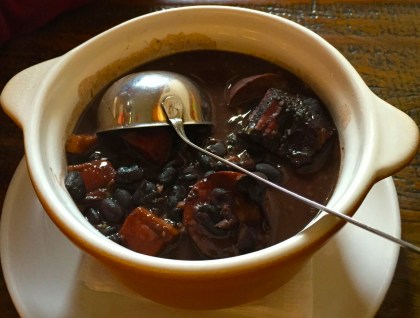
The food scene in Rio is laid-back. ( feijoada)
IMG_5271

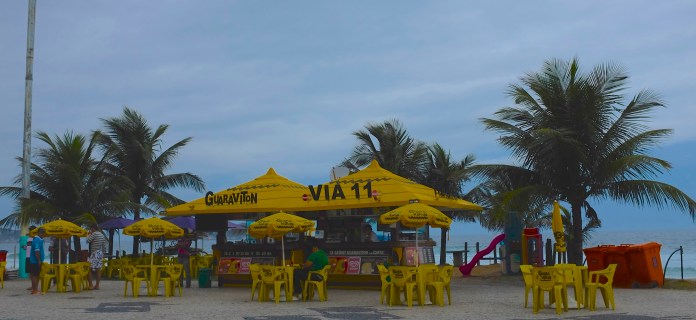
You can happily grab some fried bar snacks and a caipirinha to enjoy on the beach, or head straight from the beach to a rodizio (all-you-can-eat). The tropical influence is also evident in the many choices of fruit juice stands (on every corner in Rio), and the abundance of açaí.
DSCF5708

Cariocas  have a habit of putting mustard and ketchup on their pizza. There are also amazing five-star and cool trendy restaurants with delicious food.

IMG_1394

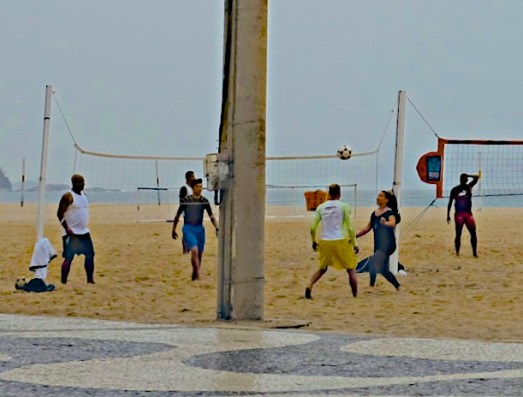
In Brazil, there’s soccer (or futebol) and then everything else. Brazilians are obsessive, diehard fans and just about everyone plays, especially at the beach. Even for the Americans who now grow up playing soccer, your skills are no match for the footwork and volleying on display at the beach in Rio. Even the younger groups of kids are able to pass the airborne ball back and forth, using every part of their bodies from their heads to their shoulders to their knees, like its nothing.
DSCF5714

Rio explodes with energy and color during the five days before Ash Wednesday, when millions take to the streets for the world’s biggest Carnaval. The party starts on the Friday, when the mayor hands over the keys to the city to a man crowned as King Momo, a mythical jester who acts as the head of the festivities. Rio’s Carnival features hundreds of booze-soaked bandas (riotous street parties, often with specific themes) and elaborate balls. The party reaches its height at the Sambódromo, when the best samba schools in the country compete for top prize. On Ash Wednesday Carnival is officially over, and King Momo goes home.Carnaval has been called one of the seven wonders of the world.

Screen Shot 2015-12-17 at 6.13.20 PM

In 2014, Rio de Janeiro legalized street art on many types of city property, turning the already colorful city into an outdoor art gallery. Street artists are allowed to decorate columns, walls and construction siding so long as they’re not historically designated. The city has even created a quasi-government agency, Eixo Rio to regulate the city’s urban artists, and celebrates an official Graffiti Day on March 27—the date Brazilian graffiti pioneer Vallauri Alex died in 1987.

IMG_1577
Carmen Miranda conquered the silver screen as a singer, dancer and actress in both Brazil and America in the mid-20th century. The Carmen Miranda museum  is filled with memorabilia including her trademark platform heels and towering turbans of plastic or sequined fruit.

Screen Shot 2015-12-17 at 9.19.52 PM

Rio de Janeiro became a World Heritage Site in 2012.

Rio is where you will find two of the world’s most famous beaches – Copacabana and Ipanema. Ipanema isn’t as hectic and the waters are cleaner.  When you’re in Ipanema make sure to stop into Garota de Ipanema as it is where the famous song The Girl from Ipanema was written.

IMG_1249

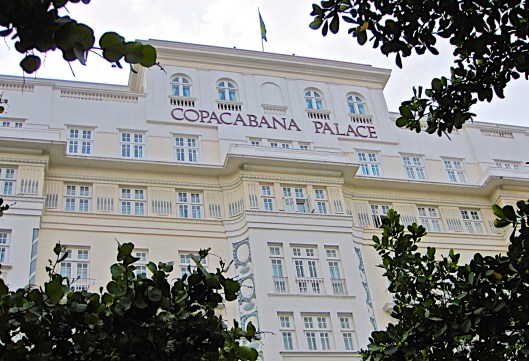
The Art Deco Copacabana Palace built in 1923 faces the beach. It has hosted the rich and famous for ninety years. You definitely feel old Rio when you are there even though it has been completely redone.
IMG_1401

.There are two great places to get away from the craziness in Rio de Janeiro.The Botanic Gardens covering over 130 hectares is extremely peaceful and home to over 6,000 types of plants and trees. The Tijuca forest is the largest urban rainforest in the world. Here you can go on hiking trails, admire waterfalls and much more. (Tijuca forest)

Screen Shot 2015-12-17 at 10.13.03 PM

Museu de Arte de Rio (MAR) is Rio’s newest art museum. It is part new modern building linked with a traditional building  by a canopy supported by pillars. The views of Guanabara Bay and the massive Rio-Niterói Bridge from the top floor are amazing. There is classic and contemporary art as well as an interesting exhibit on the history of Rio.

IMG_1517

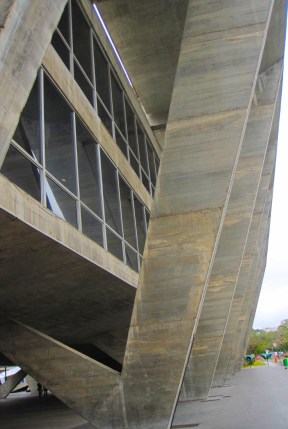
The Museu del Arte Moderna is another incredible building designed by architect Affonso Eduardo Reidy.
IMG_1588

IMG_1597

It houses one of the most comprehensive collections of Brazilian art in existence and interesting temporary exhibitions as well.

IMG_5280

The Biblioteca Nacional is the largest library in Latin America, In addition to the books, visitors can also delight in the library’s stunning neo-classical architecture and intricate Corinthian columns.

Screen Shot 2015-12-17 at 9.16.02 PM

Brazil’s most famous dance – samba – has its origins from the African slaves that worked in the plantations in the State of Rio de Janeiro There are more than 200 samba schools in Rio.

Lapa is known as the best place in Rio to experience nightlife.  This fun and unique neighbourhood comes alive at night, when Samba music can be heard pouring out of nearly every doorway and locals can be seen swinging their hips away while sipping on tasty cocktails. It is filled with row after row of live music venues, tapas bars, and thumping clubs.

I have to thank my guide Gabriel Morand who went above and beyond to make sure I had an amazing time in Rio. I saw everything I wanted to see, ate well and bought everything I needed to buy. I loved Brazil and can’t wait to return.

DSCF5687

Tenha Uma Boa Viagem,

JAZ

The Gardens Of Roberto Burle Marx, Brazil

The Gardens Of Roberto Burle Marx, Brazil

“If you have a garden and a library, you have everything you need.”Marcus Tullius Cicero

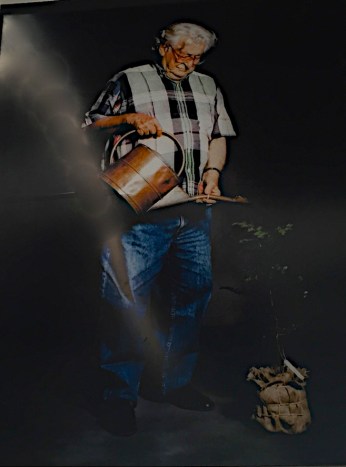
Roberto Burle Marx is considered to be the father of modern landscape architecture. He grew up in Rio at the end of Copacabana Beach near the Pau De Acucar – Sugarloaf. He started arranging flowers at events and eventually began getting asked to design gardens.(self-portrait)

IMG_5193

He bought a property two hours outside of Rio near the small town of Guaratiba, it is called Sitio de Roberto Burle Marx and tours are available in Portuguese.

DSCF5663

Even if you are not a plant person, you know that you have entered a privileged space.

DSCF5674

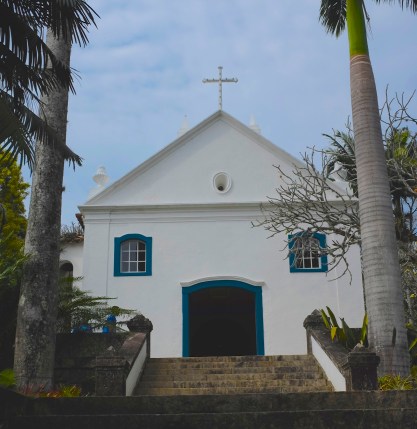
He restored the old house and chapel and began propagating plants collected on numerous expeditions in to the wilds of Brazil.

DSCF5579

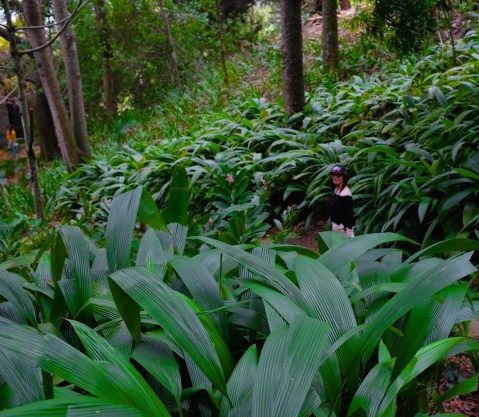
There are large areas of a single type of ground cover surrounding clumps of sculptural agaves, bromeliads, plumerias, dracaenas, clusias, palms and a myriad of other plants.

DSCF5656

The 100 acres have 3500 plant species.  Plants are always used to emulate the way they would grow in their natural environment.

DSCF5626

Over the years he developed an extraordinary landscape climbing the hill and introduced hundreds of previously unused plants to the gardening world.

DSCF5633
His interest in painting had a great influence on his designs.

DSCF5597

His drawings for gardens look like abstract works on paper.

DSCF5659

The gardens themselves usually contain large masses of vividly colored plants in a variety of textures, relying more on foliage than flower.

DSCF5571

They are laid out in bold sweeping forms.  Garden structure tends toward the architectural, often with rectangles that reflect the forms of surrounding buildings.

DSCF5559

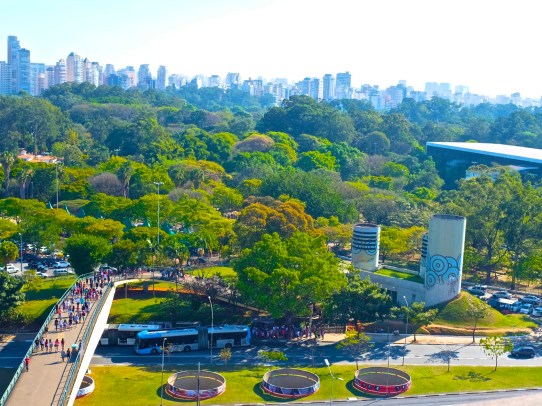
As his fame grew, he was commissioned to design parks and gardens throughout Brazil, South America and abroad. Burle Marx collaborated with architect Oscar Niemeyer on Iberapuera Park in São Paulo. They worked on several projects together throughout the world and were good friends.

DSCF5496
The Copacabana waterfront with its long wave patterned mosaic sidewalk is perhaps the most renowned work by Burle Marx.

DSCF5717

The beach once fronted the buildings along the shore, but was actually moved to make room for the new Avenida Atlantica and large underground parking lots.  The wide sidewalk next to the Avenida is paved with the classic wave pattern that was originally used in Lisbon, Portugal for pavements when rebuilding parts of the city destroyed by a massive tsunami in 1755.  The sidewalk is 2.5 kilometers long and is one of the largest mosaics in the World.  The design perfectly frames the famed arc of sand backed by the Pau d’ Acucar. You will see a lot of Olympic Coverage here this summer.

Screen Shot 2015-12-15 at 11.15.28 PM

Tenha Uma Boa Viagem,

JAZ

The Favela – Project Morrinho

The Favela – Project Morrinho

“The world lies in the hands of those who have the courage to dream and who take the risk of living out their dreams – each according to his or her own talent.”Paul Coelho

IMG_5173

The story began in 1998 when Cirlan Souza de Oliveira a 14 year-old boy moved to the favela Periera da Silva in Rio de Janeiro.

IMG_1315

He and his brother decided to play with bricks they found in the back yard to create buildings inspired by the new places and surrounding buildings he saw. His efforts attracted seven young boys who began the creation of the replica of their community built into a hillside where they played out imaginary adventures with toys.

They kept it hidden to protect it and being in their mid teens they didn’t think it was”cool.” The ‘trafficantes” who controlled the area found out about it and encouraged the project. They thought it would help the kids in their community have opportunities so they did not become traffickers as well. Sometimes they came and played with the boys in the miniature city with their guns slinging behind them. The police after understanding that the traffickers had nothing to do with this project became encouraging as well.(utube by Cirlan Souza de Olivera)

.In 2001 the mini favela was visited by two documentary filmmakers, Fabio Gavião and Markão Oliveira. The filmmakers were so taken with their work that they developed a documentary about the project. Out of the documentary grew a partnership that helped Projeto Morrinho become a registered NGO and opened doors to the wider world of arts and social projects. The project is already famous and has been recreated in top international art festivals in Venice, Berlin, Munich and Prague, among others.  (Morrinho at Mar Museum in Rio fundraising for the favela project)

IMG_1526

The fame of this miniature favela continues to spread, along with the positive message it put out about young people against the odds, taking charge of their own lives and becoming role models for others in areas, normally synonymous with poverty and crime. In this respect Morrinho has become an inspiration to young people across the world.

Tenha Uma Boa Viagem,

JAZ