Things I Have Learned In Naoshima, Japan

Things I Have Learned In Naoshima, Japan

“You cant really say what is beautiful about a place but the image will remain vividly with you .”  Tadao Ando

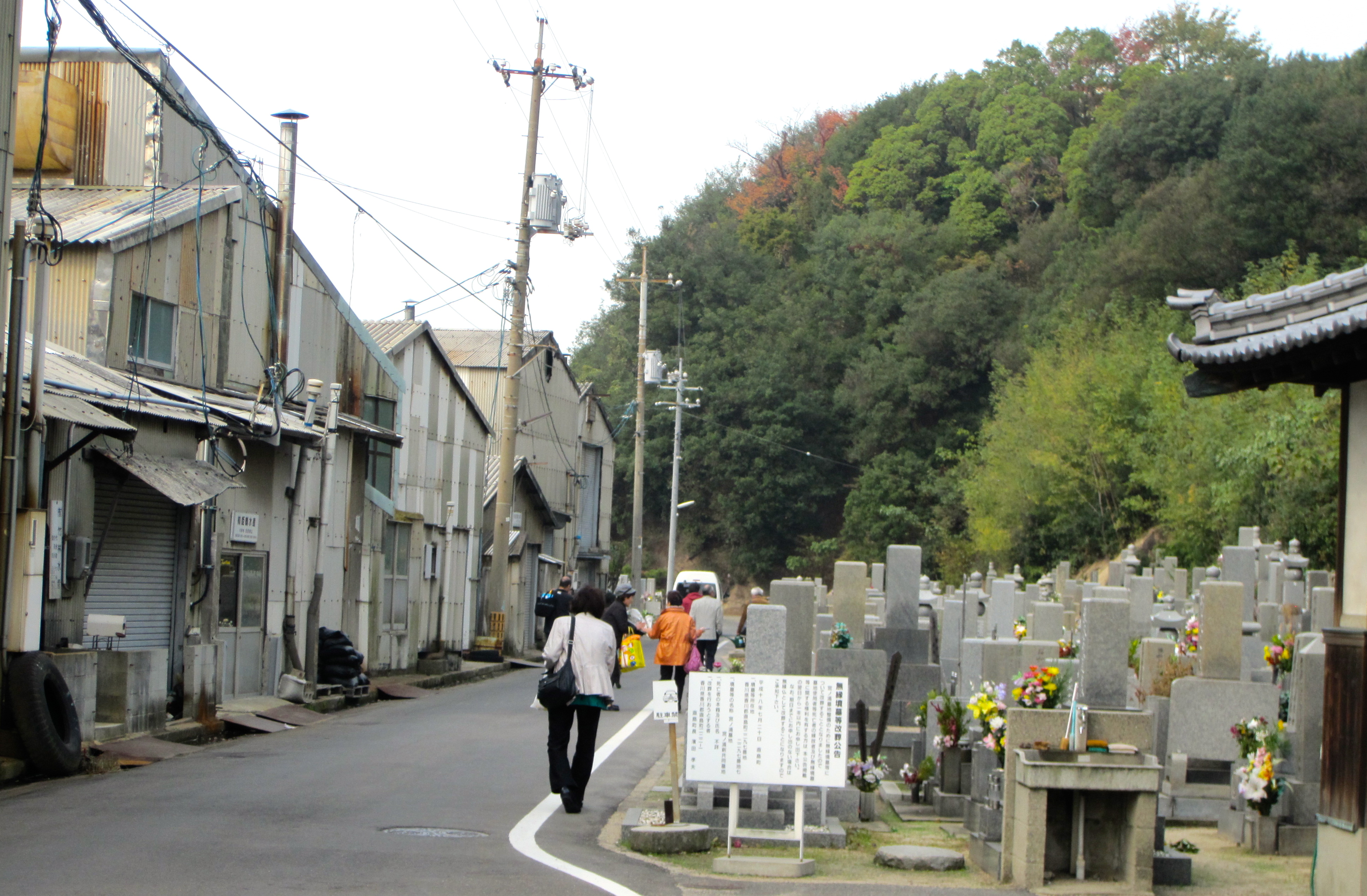
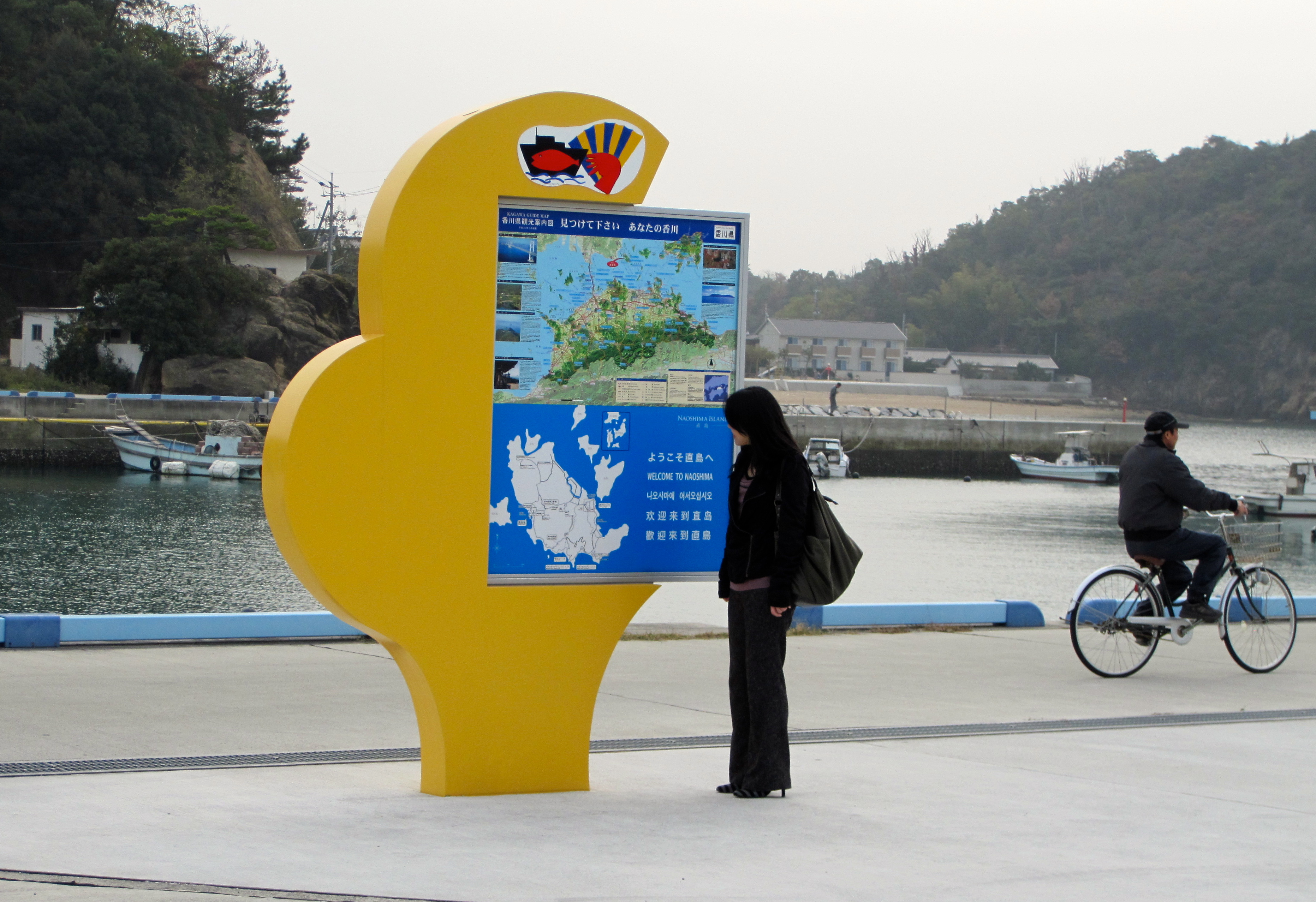
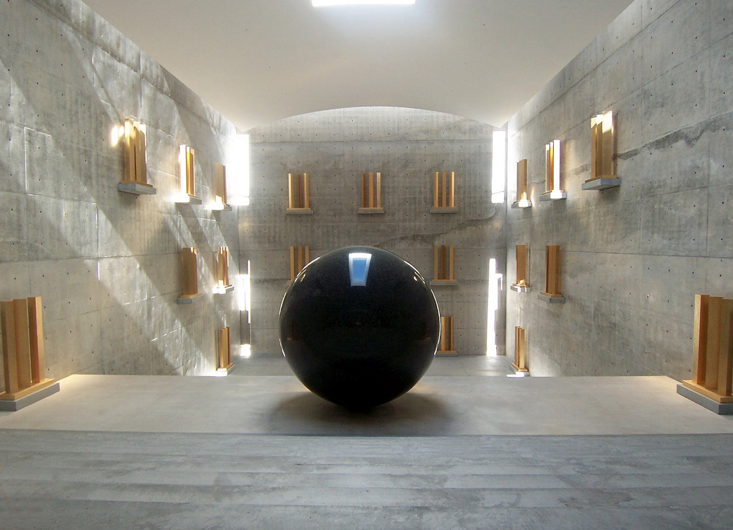
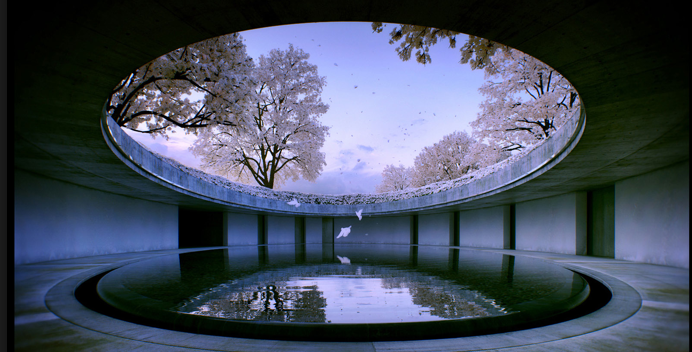
The small fishing island of Naoshima is an unlikely destination for globe-trotting art collectors and my most favorite place in Japan.  Tadao Ando’s vision coupled with investments from a large benefactor join art, architecture, nature and life together in an amazing place.

IMG_2330

An eccentric billionaire from Okayama and the company Bennesse that he runs, have been slowly transforming the island into open-air museums of contemporary art.

IMG_2379

It is located 500 miles south of the Fukushima plant so no worries there. ( I did hear from a physicist who worked on it that it was a self-contained explosion and the radiation did not escape into the universe –but I’m a worrier)

Tadao Ando’s Chuchu Art Museum is entirely underground but doesn’t feel that way with light and skylights at carefully constructed angles. It houses the works of Claude Monet, James Turrell and Walter de Maria.

You are not allowed to take pictures in any of the museums. It is about being in the present moment  and experiencing the art.

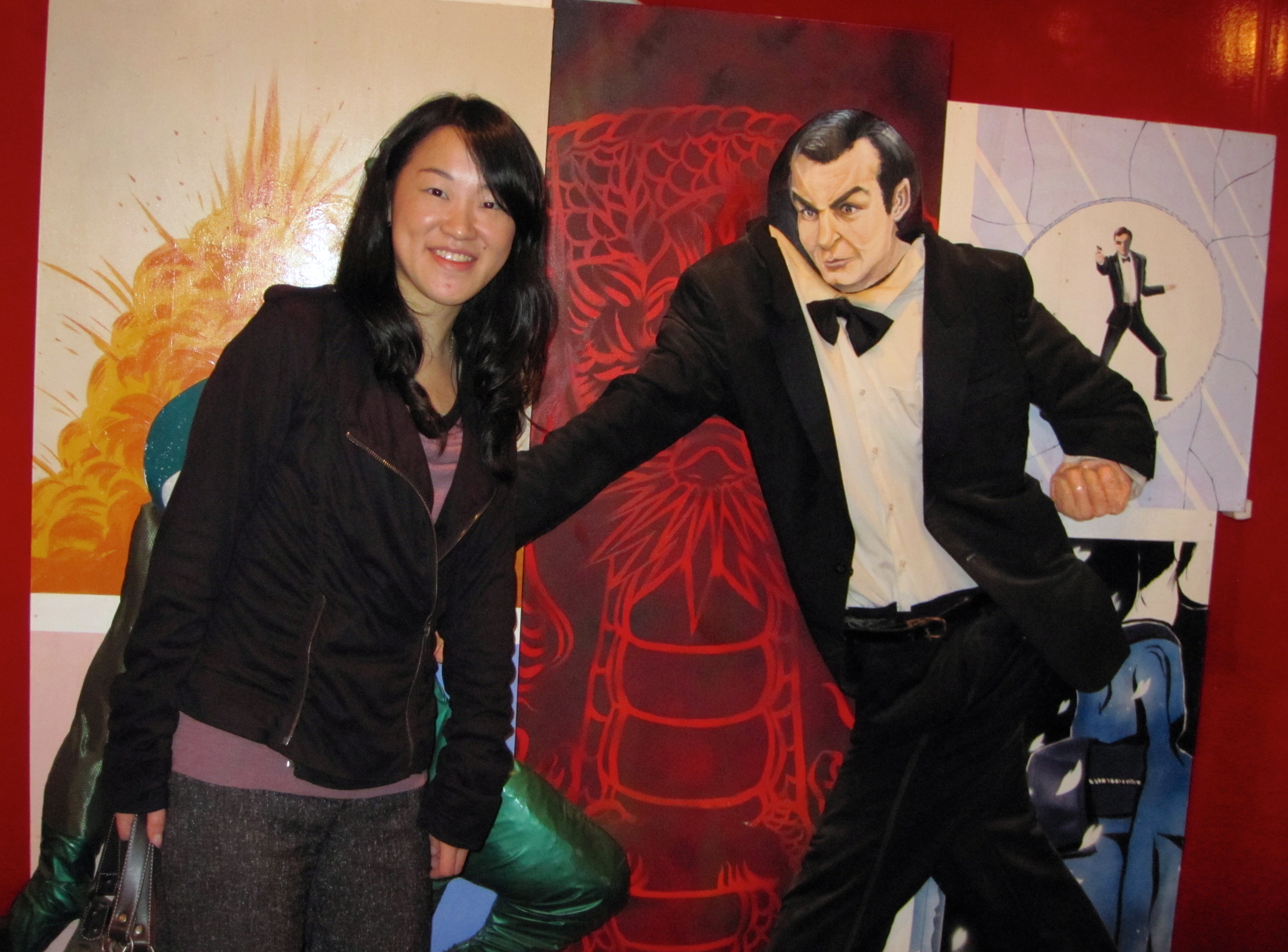
If you are not an art fan (though why would you come here  if you aren’t? – it takes three hours from Osaka – Shinkansan (bullet train) plus two more  trains and a ferry) you will like the James Bond “Man With The Red Tatoo”Museum.

IMG_2331

One of the really interesting things about Naoshima is discovering art in surprise places.

IMG_2335

Wandering around on foot will have you discovering outdoor sculptures and art exhibits sometimes cleverly disguised as children’s playgrounds and colorful gardens.

IMG_2338

The pumpkins have become the  image of the island. There is an Orange and a yellow one on opposite sides of the island. They were made by Yayoi Kusama an artist known for colorful, psychedelic patterns.

IMG_2345

People are always taking pictures with them.

IMG_2370

The vision behind the Benesse Art  Site at Naoshima was ‘to create a physically and mentally rejuvenating haven”.

Benesse House is a unique facility that combines the functions of both museum and hotel.
Four hotel facilities—Museum, Oval, Park and Beach are available. All were designed by Tadao Ando.

Screen shot 2013-07-14 at 11.32.50 PM

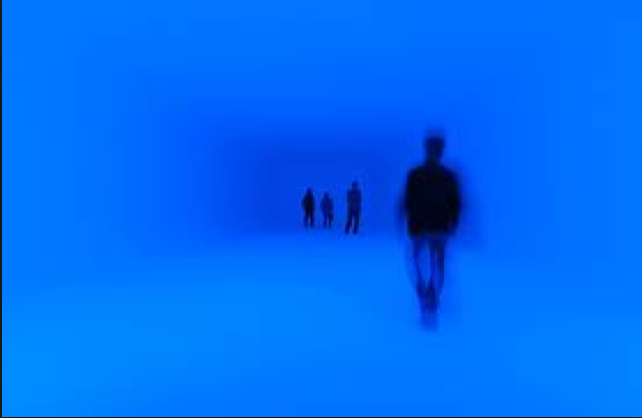
James Turrell presents light in itself as art. The museum has three of his works. 
Open Sky  can be viewed at anytime, but a special sunset viewing is also available.

Screen shot 2013-07-14 at 10.42.53 PM

He makes large rooms and space where light itself becomes the object. You actually step inside his art. It cannot be described, it has to be experienced.

Screen shot 2013-07-25 at 12.16.28 AM

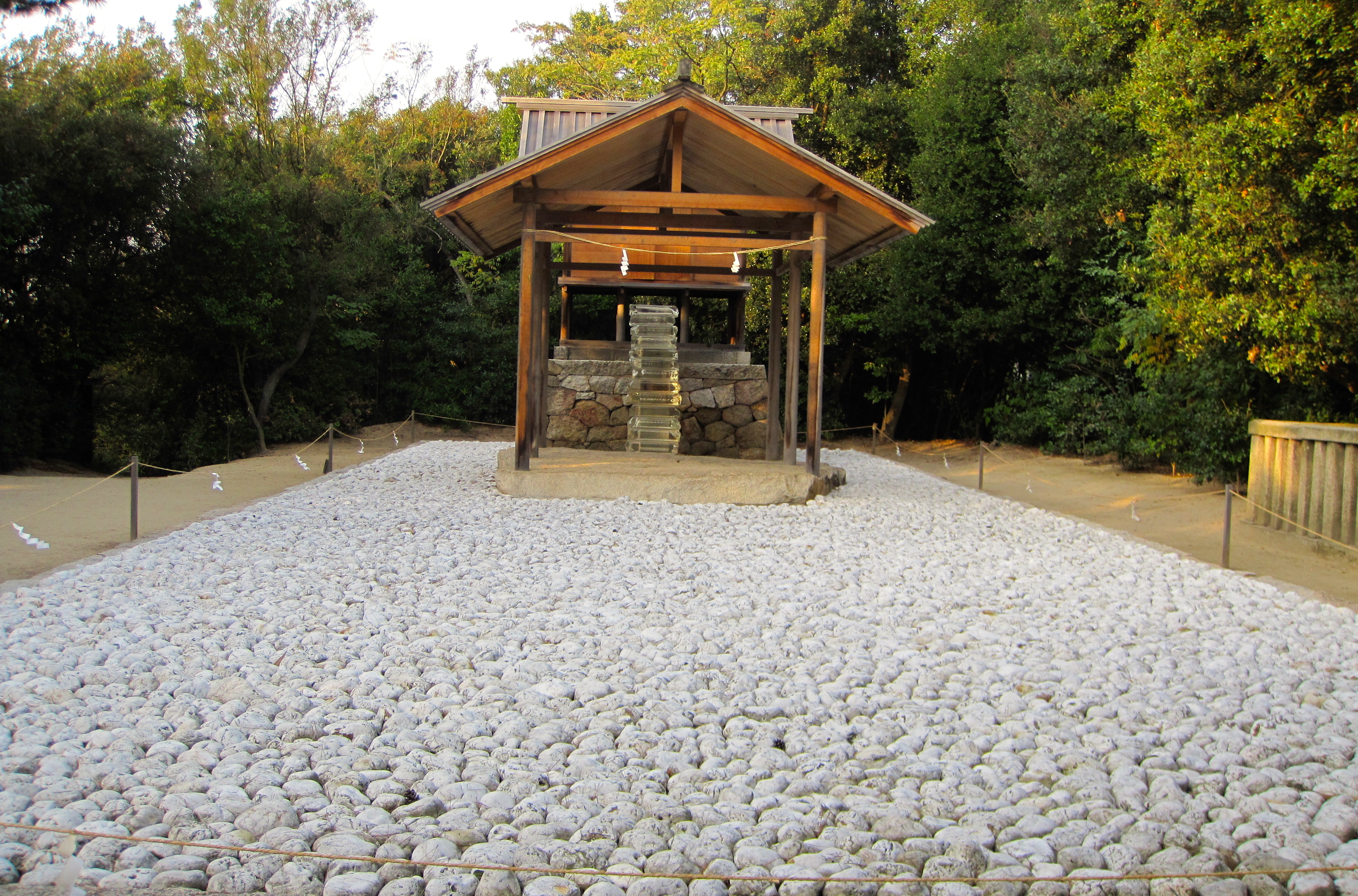
Minamidera is a new structure that pays homage to a temple formerly at this site, which was a spiritual gathering place for the community. It was designed by Tadao Ando  for the size of artwork by James Turrell inside.

The Art House Project is really cool. There are eight houses that have been turned into art installations. This interesting concept successfully fuses the history and culture of the island with contemporary art.

IMG_2384

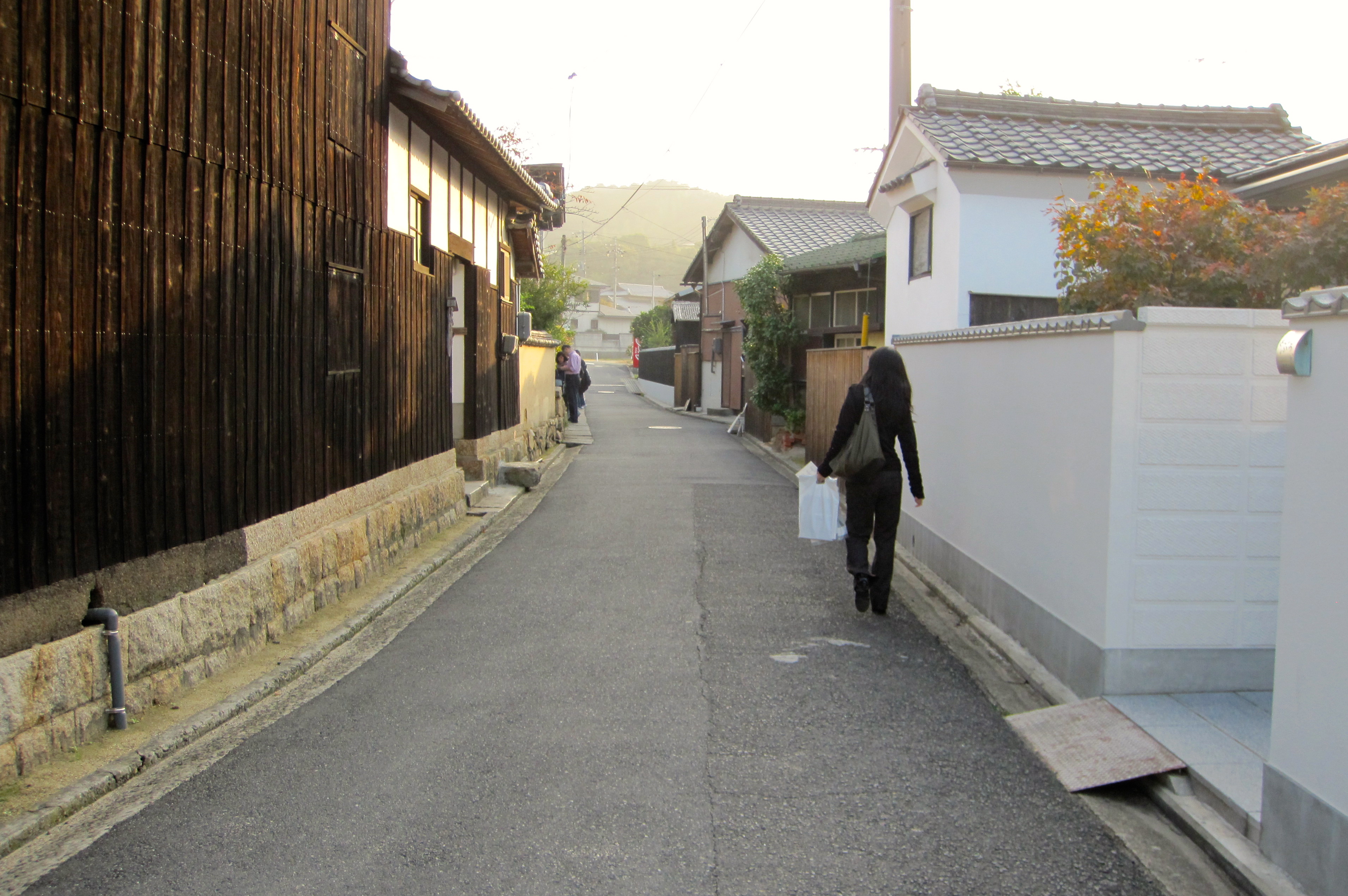
It is a bit like a scavenger hunt trying to find them on the island. If you get lost, follow the cool arty looking people, not the  fishermen.

IMG_2382

Naoshima is an island that fuses ancient traditions with modern creativity. This blend of styles is due to Tado Ando’s and his insistence on using traditional materials in ultra modern ways. Art, Nature and Japanese food – my three favorite things.

Thanks Anna. We had such a great day!

IMG_2317

Yo I sorano tabi o

JAZ

Temples of Nara and Kamakura, Japan

Temples of Nara and Kamakura, Japan

“Just as treasures are 
uncovered from the earth, so virtue appears from good deeds, and wisdom 
appears from a pure and peaceful mind. To walk safely through the maze 
of human life, one needs the light of wisdom and the guidance of 
virtue.“ 

Buddha

Buddhist monks were in Japan as early as the third century and came along the silk road. The official date was 552 when a Korean delegation arrived with monks, nuns, statues and sutras. Acceptance as with any new thing was slow. But the ruling class took up the faith and encouraged others to join. (I guess that is what Christian Science and Kabbalah hoped Hollywood would do for them)

IMG_1128

Buddhism has had an enormous impact on the art and culture of Japan. Japanese Buddhism is the search for fulfillment and ultimate truth, not in any transcendental sphere, but within the structure of secular life, neither denying nor repressing man’s natural feelings, desires or customs. Many traditional arts such as garden design, tea ceremony, flower arranging, and even martial arts developed into the forms they have today because of the religion.

IMG_1149

Nara was the first permanent ancient capital of Japan.There are many Unesco World Heritage sites in Nara.

IMG_1188

Many of the temples are in Nara Park.

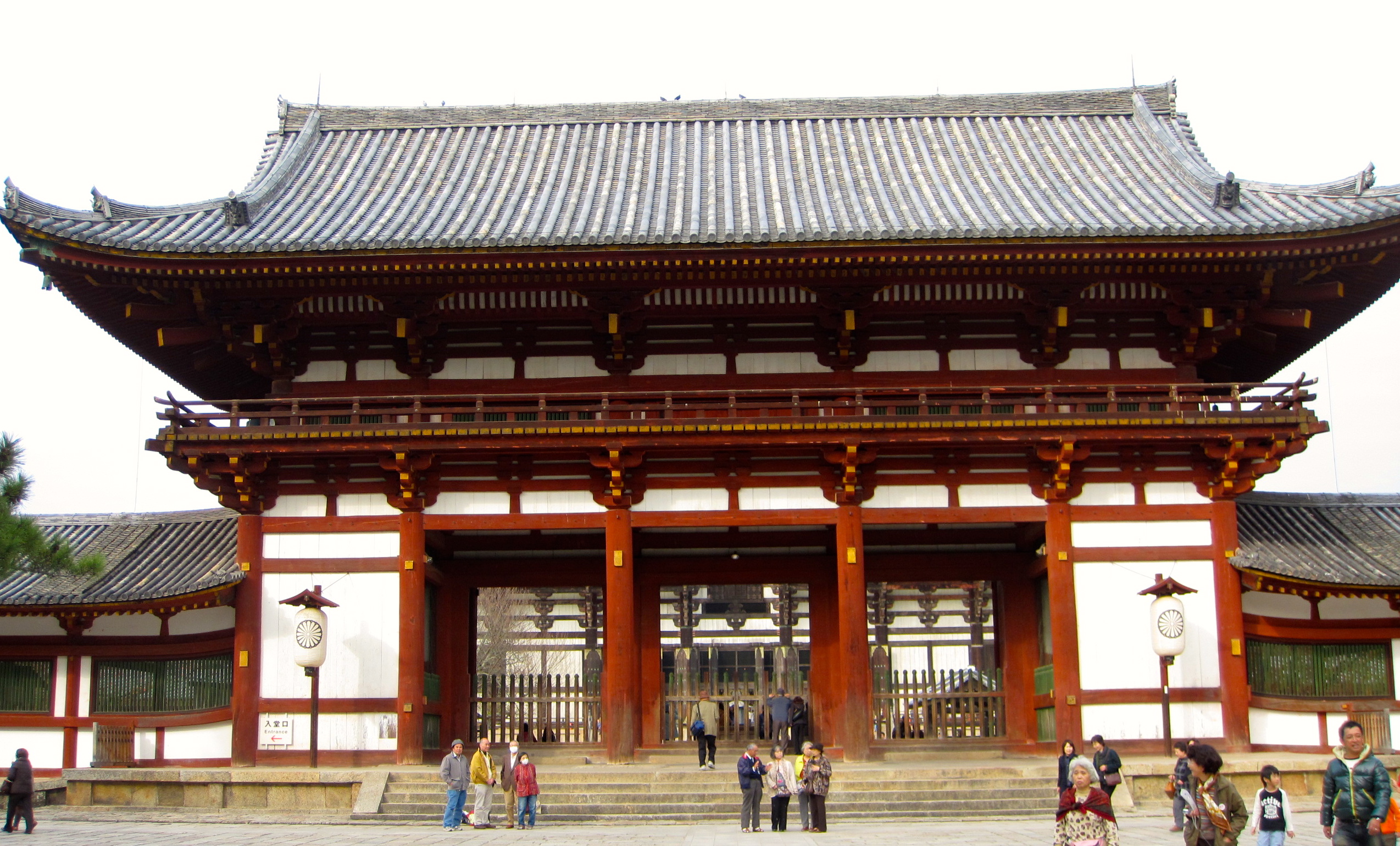
The Toda-ji temple gate is the entrance to Toda-ji which is considered to be a very important temple in the Buddhist world.

IMG_1170

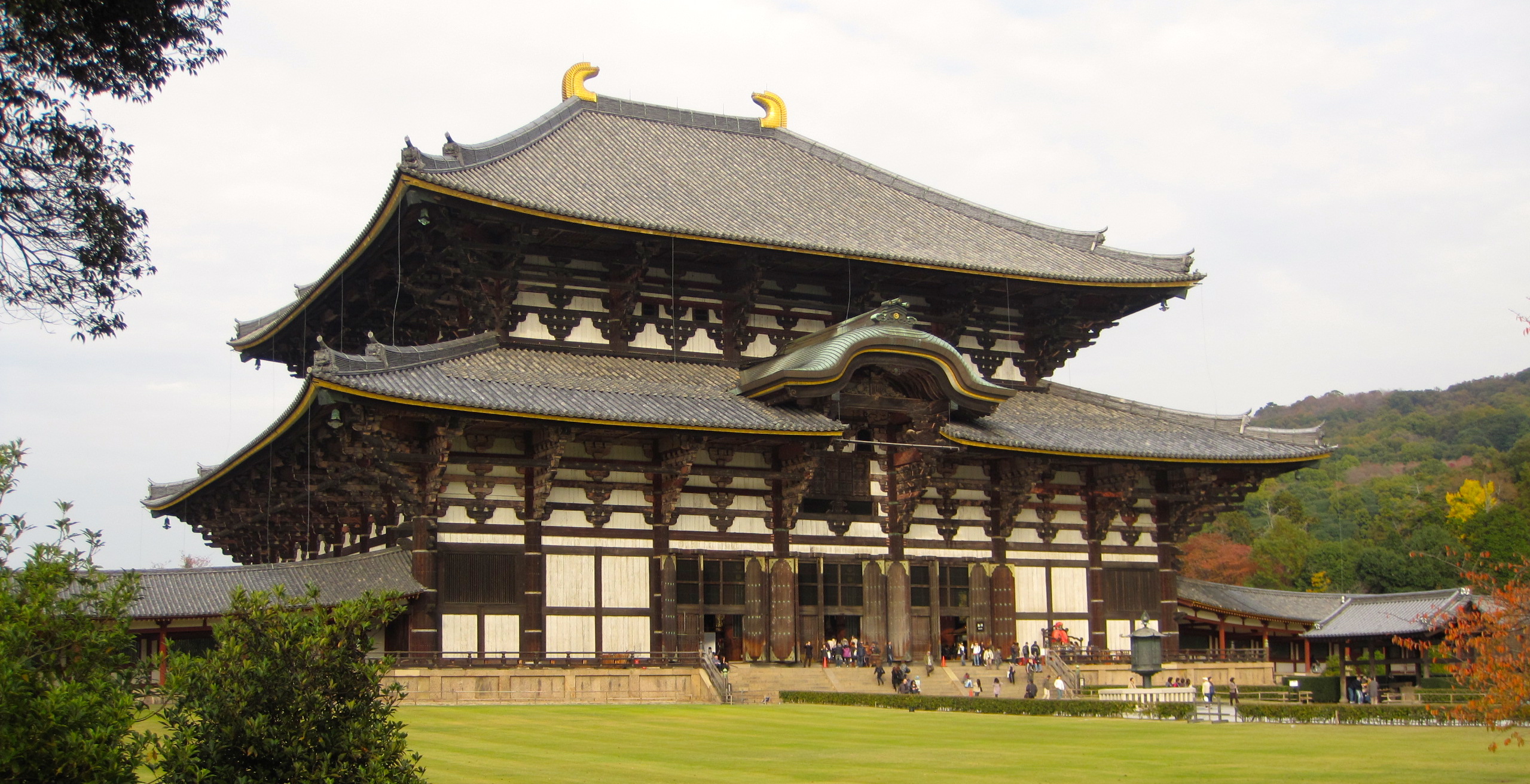
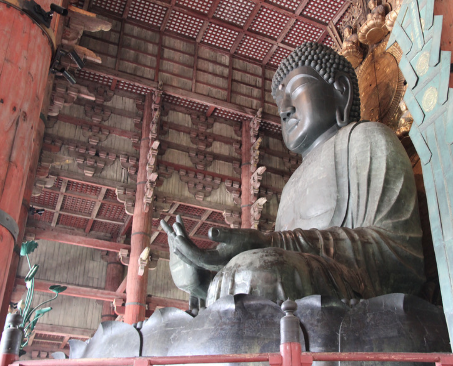
Toda-ji Temple presides over the park and is the world’s largest oldest standing wooden building. It was constructed in 752 and houses a Daibutsu-the largest Buddha in Japan.

IMG_1171

Screen Shot 2014-01-28 at 8.52.36 PM

The hanging bell of Nara though not the oldest or largest or heaviest is still quite impressive.

IMG_1181

Hokkedō, also known as Sangatsudō is located at the eastern edge of the Tōda-ji complex. Hokkedō is the oldest building in the Tōdai complex.

IMG_1191

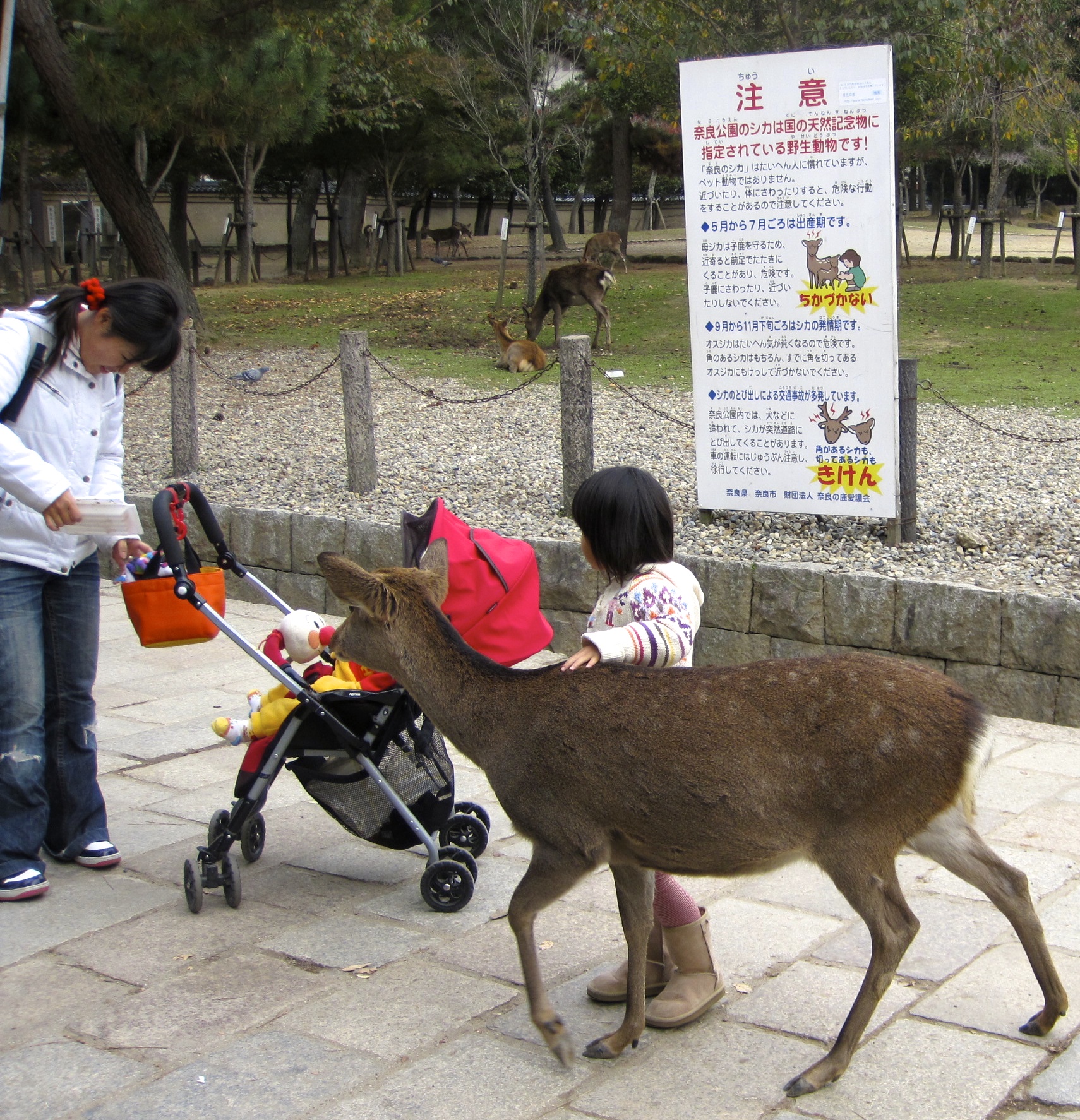
It is said that Buddha came to earth on the back of a deer. The Sika Deer are considered to be messengers from God and run free in Nara Park. They are very hungry messengers from God and if you start to feed them you will be surrounded by many aggressive ones. ( but of course everyone does)

IMG_1160

IMG_1166

IMG_1165

We stop at a teahouse before going to more temples.

IMG_1138

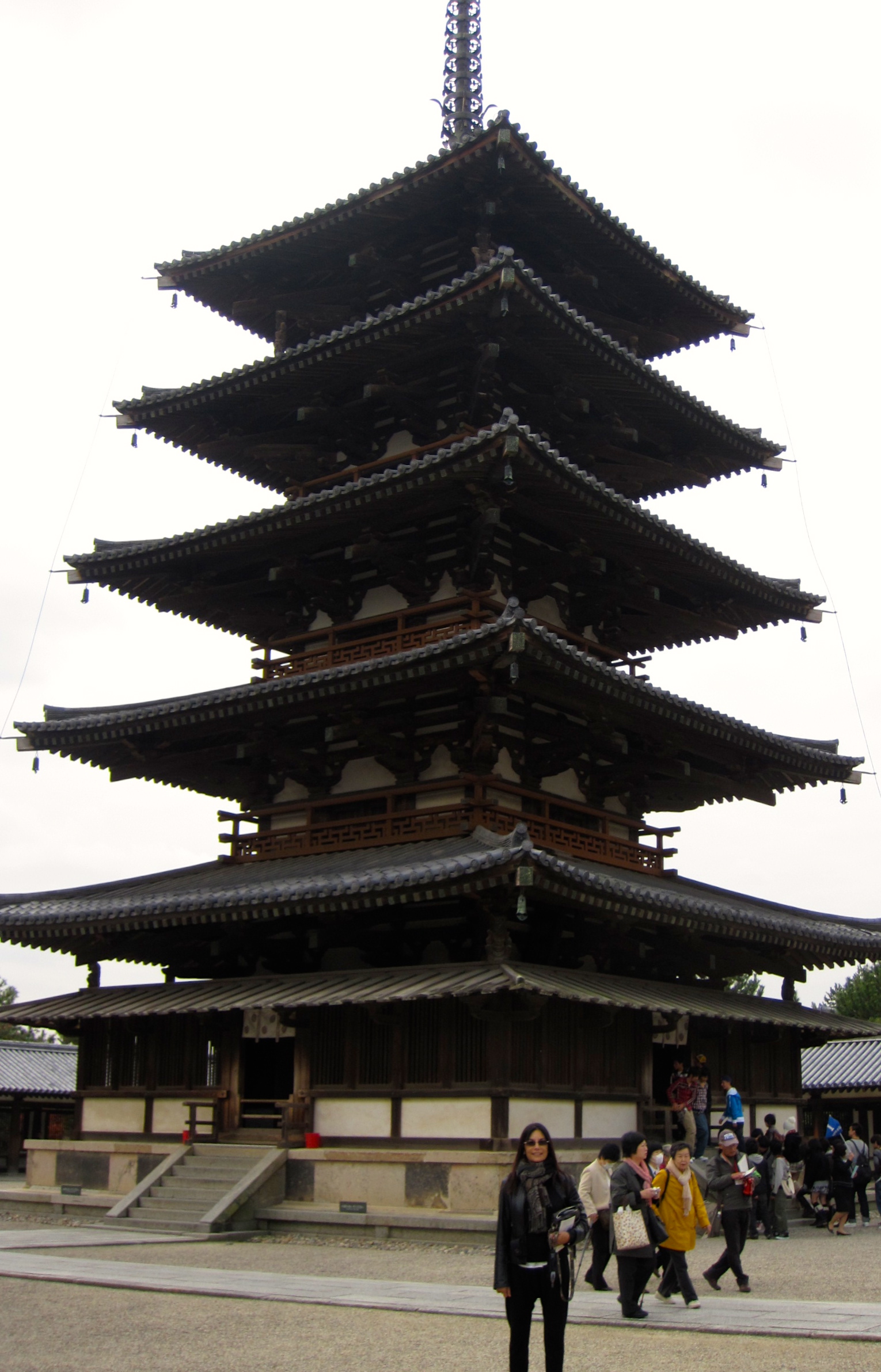
Kofuku–ji Temple built in 669 and dismantled was moved to Nara in 710. It features a five-story pagoda and many Buddhist treasures. Today only a handful of the temple’s 175 buildings remain standing, most of which date from the 15th century. The five-story pagoda is the second highest pagoda in Japan.

IMG_1133

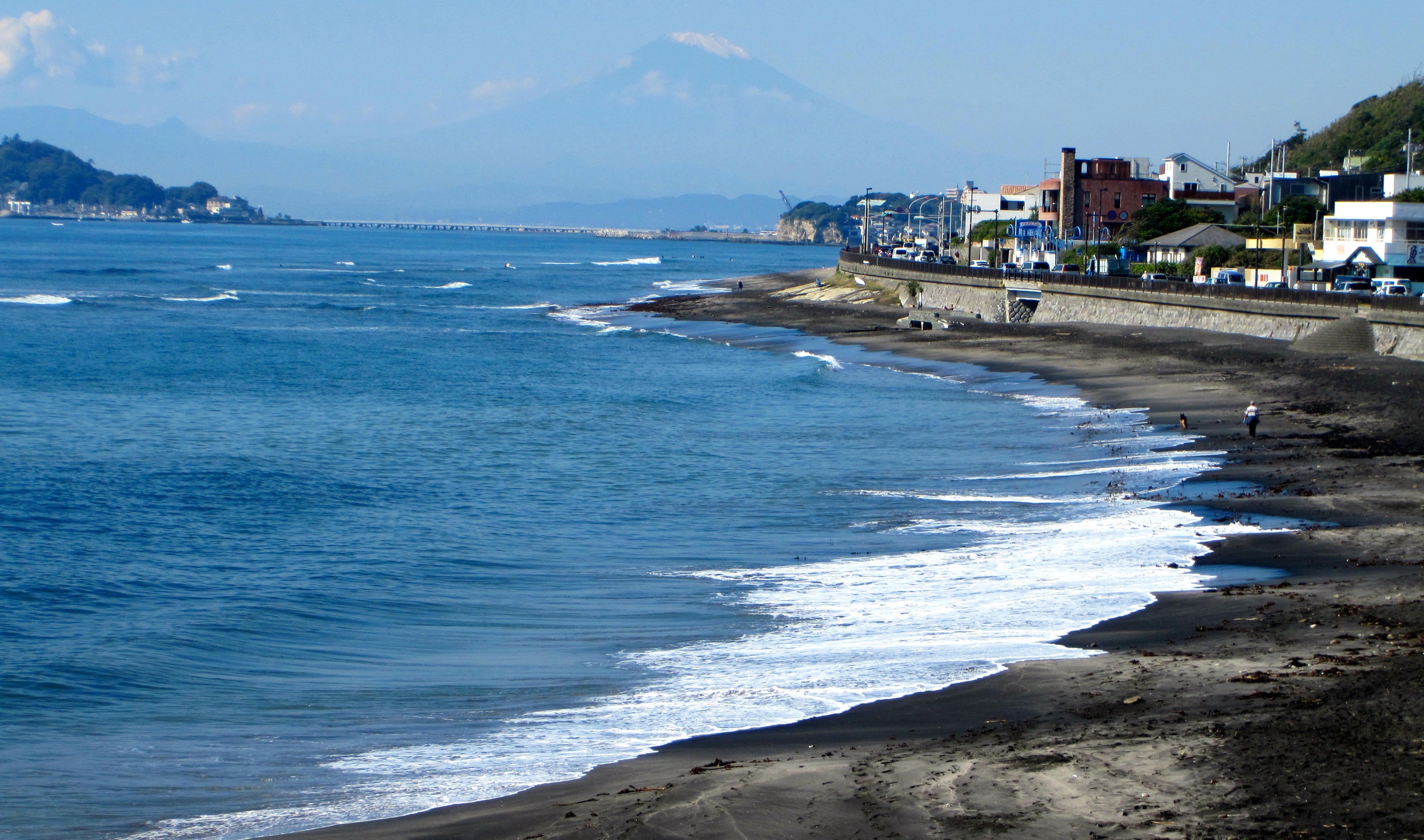
Kamakura is a small city and a very popular tourist destination. Sometimes called the Kyoto of Eastern Japan, Kamakura offers many temples, shrines and other historical monuments. In addition, Kamakura’s sand beaches attract large crowds during the summer months. (Mt Fuji is in the background. It is good luck to see Mt Fuji)

IMG_2056

The Great Buddha of Kamakura (Kamakura Daibutsu) is a bronze statue of Amida Buddha, which stands on the grounds of Kotoku-in Temple. with a height of 13.35 meters. It is the second tallest bronze Buddha statue in Japan, surpassed only by the statue in Nara’s Toda-ji temple. ( indoor Buddha statue above)

IMG_2070

The statue was cast in 1252 and originally located inside a large temple hall. However, the temple buildings were destroyed multiple times by typhoons and a tidal wave in the 14th and 15th centuries. Since 1495, the Buddha has stood in the open air. This is the destination even the Obamas had on their Japan bucket list.

IMG_2068

Jufuku–ji is the oldest Zen temple in Kamakura. Although very small now, in its heyday the temple used to have as many as fourteen buildings. Myoan Eisai was a Buddhist priest who was brought to head the temple after it was built. He was credited with bringing Zen Buddhism and green tea from China to Japan.

IMG_2082

A little Zen Buddhist Luck. (Japanese love luck. Who doesn’t?)

IMG_2085

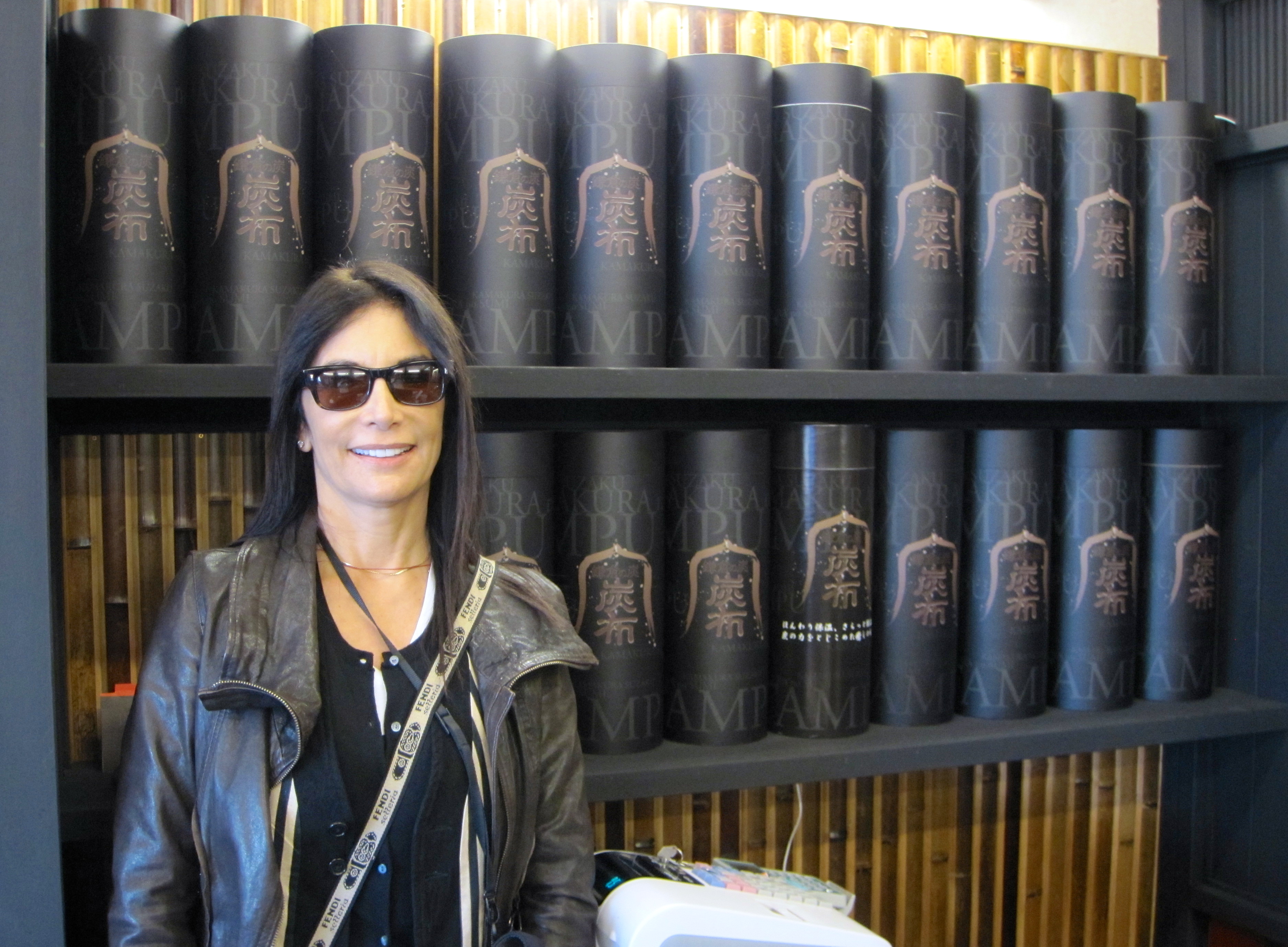
The main shopping street is Komachi-dori. It is a tiny alley with both authentic and touristy crafts and Japanese food. Snack your way around the pickle shop (radishes, carrots, seaweed, anything) and pick up exquisitely wrapped chestnut candies in the confectioner’s shop. (charcoal store)

IMG_2073

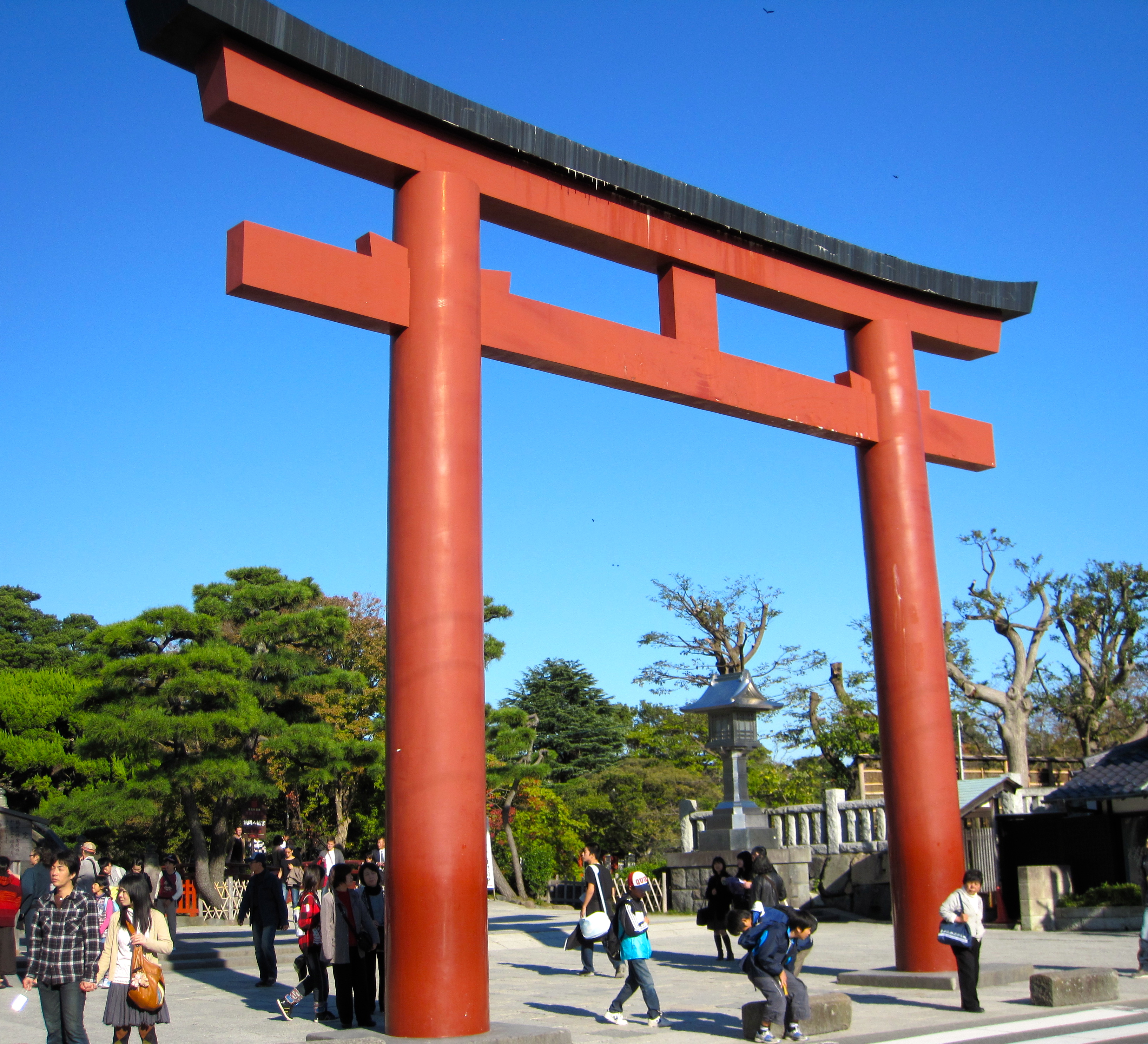
Hachimangu shrine is the most important shrine in Kamakura. The shrine is dedicated to Hachiman, the patron god of the Minamoto family and of the samurai in general. The shrine is reached via a long, wide approach that leads from Kamakura’s waterfront through the entire city center, with multiple torii gates along the way.

IMG_2080

IMG_2088

These are two different days. Nara and Kamakura are different cities. Kamakura is forty minutes outside Tokyo. Nara is an hour away from Osaka. After a long day of temples, you can enjoy the local Japanese custom of sleeping on the train home.

Yo I sorano tabi o,

JAZ

Onsen and Ryokan In Japan

Onsen and Ryokan In Japan

“Do not dwell in the past, do not dream of the future, concentrate the mind on the present moment.” Buddha

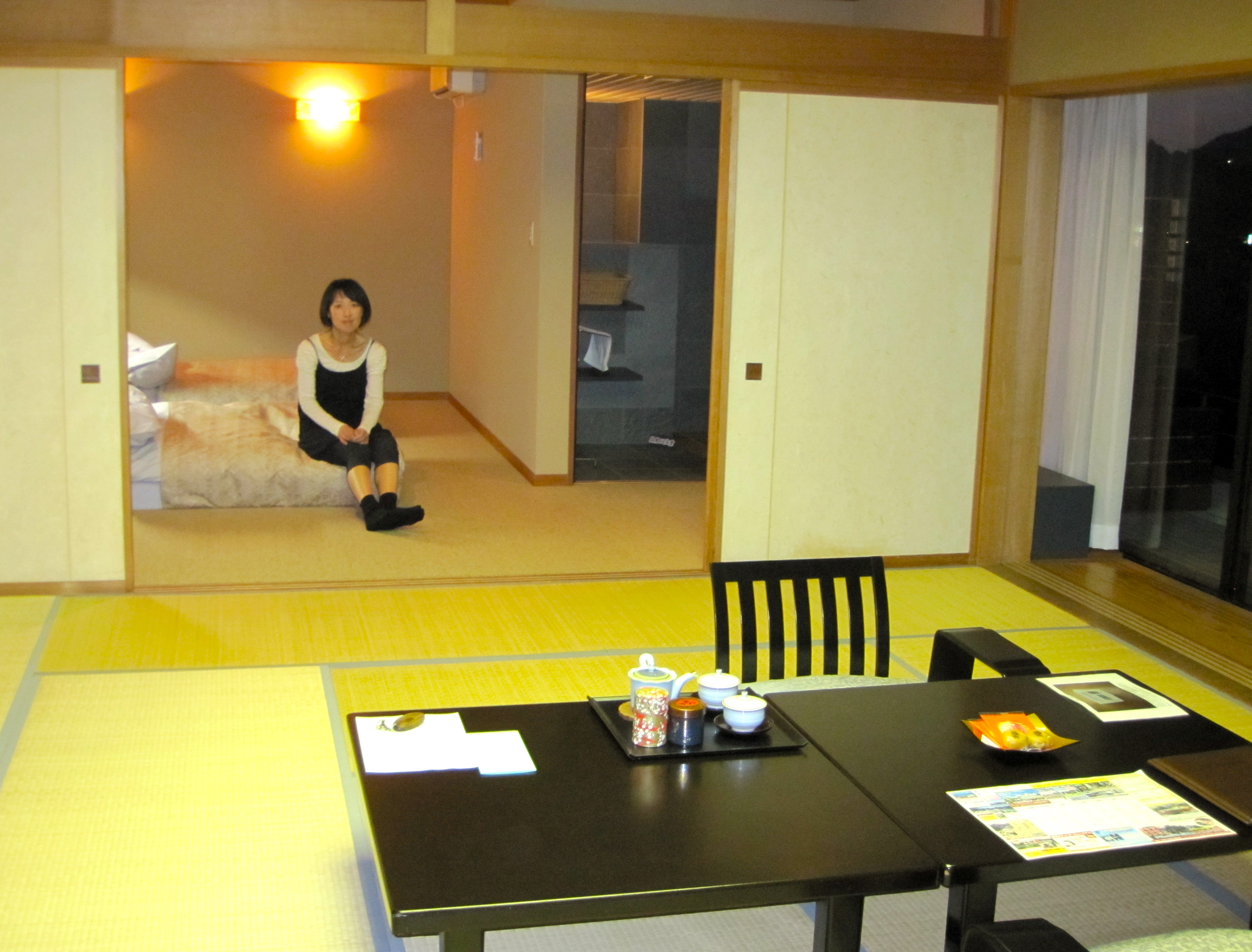
Ryokan are Japanese style inns found throughout the country, especially in hot springs resorts. Ryokan are a traditional Japanese experience, incorporating elements such as tatami floors, futon beds, Japanese style baths and local kaiseki ryori (eight course typical Japanese meals with local and seasonal specialties).

IMG_0745

There are many different kinds of ryokan, varying greatly in terms of size, cost and style. Some ryokan are small, family run establishments with just a few rooms, while others are large, hotel-like facilities with hundreds of rooms. Ryokan also range from no-frills, budget varieties to costly establishments catering to the very wealthy.

IMG_2188

Ryokan are special and relaxing experiences with an emphasis on traditional style.

I am usually the only American at the ones I have been to. – not only there but in the town. I go with my Japanese friend and she picks the ryokans that Japanese people go to. No one speaks English. It is good because I get to practice my hand motions and have a cultural immersion experience. . It is bad because I live in fear of walking into a men’s bath by mistake since I cant read the signs.

IMG_2160

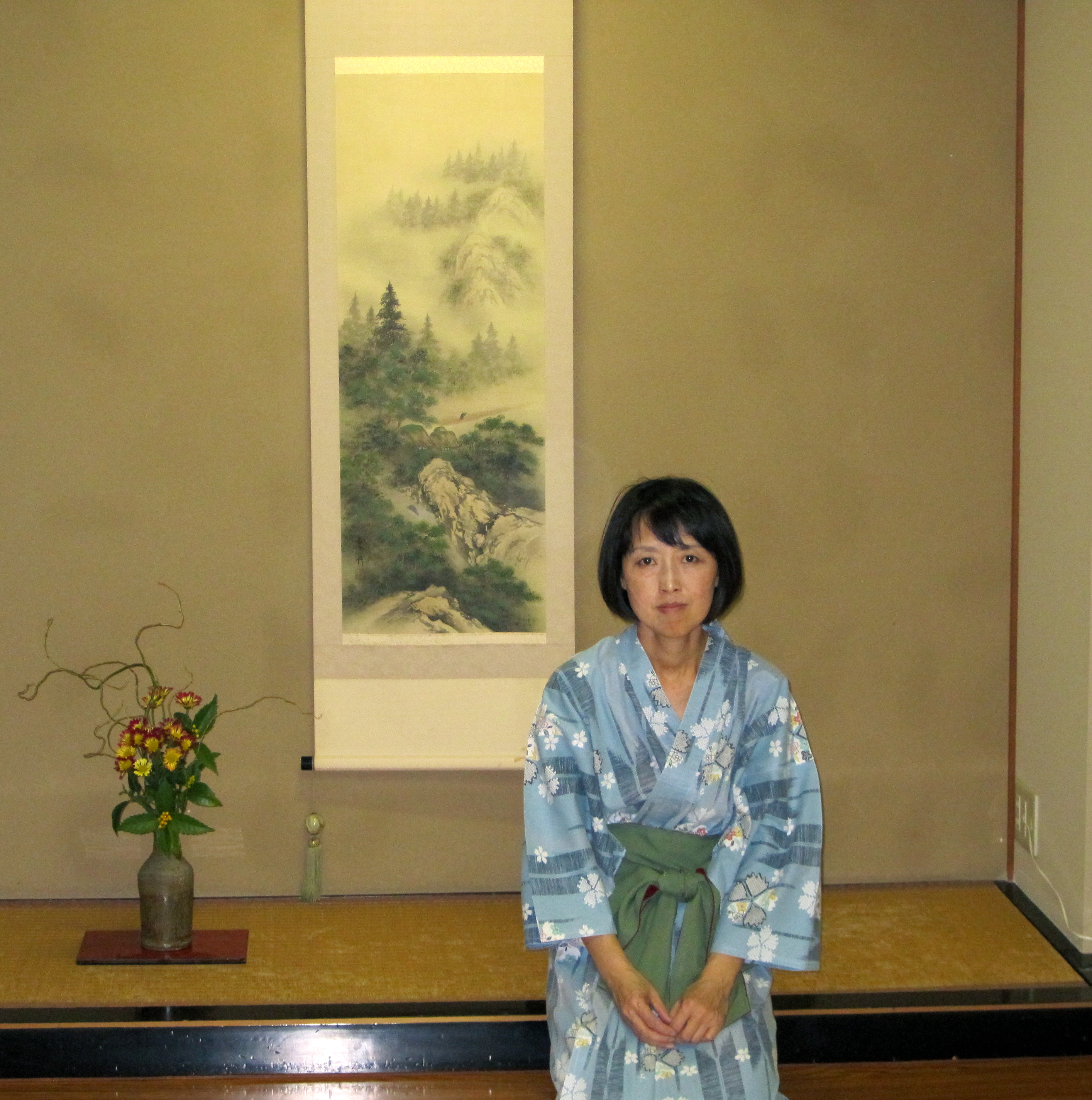
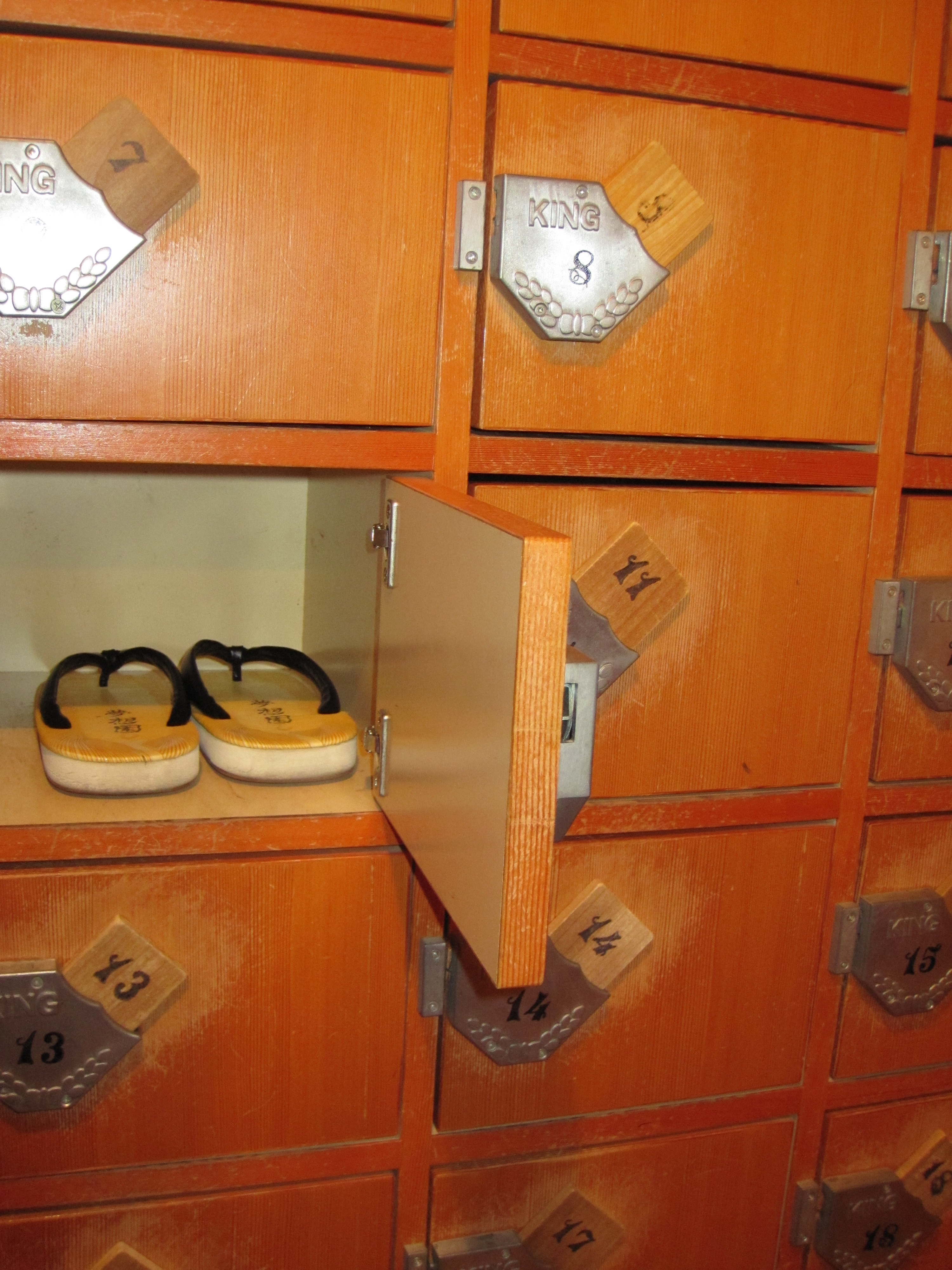
Upon arrival you pick out your kimono robes, sash, socks and slippers which you wear the entire time. No easy feat to keep putting that on and off. There are a lot of rules to wear it correctly.

IMG_0753

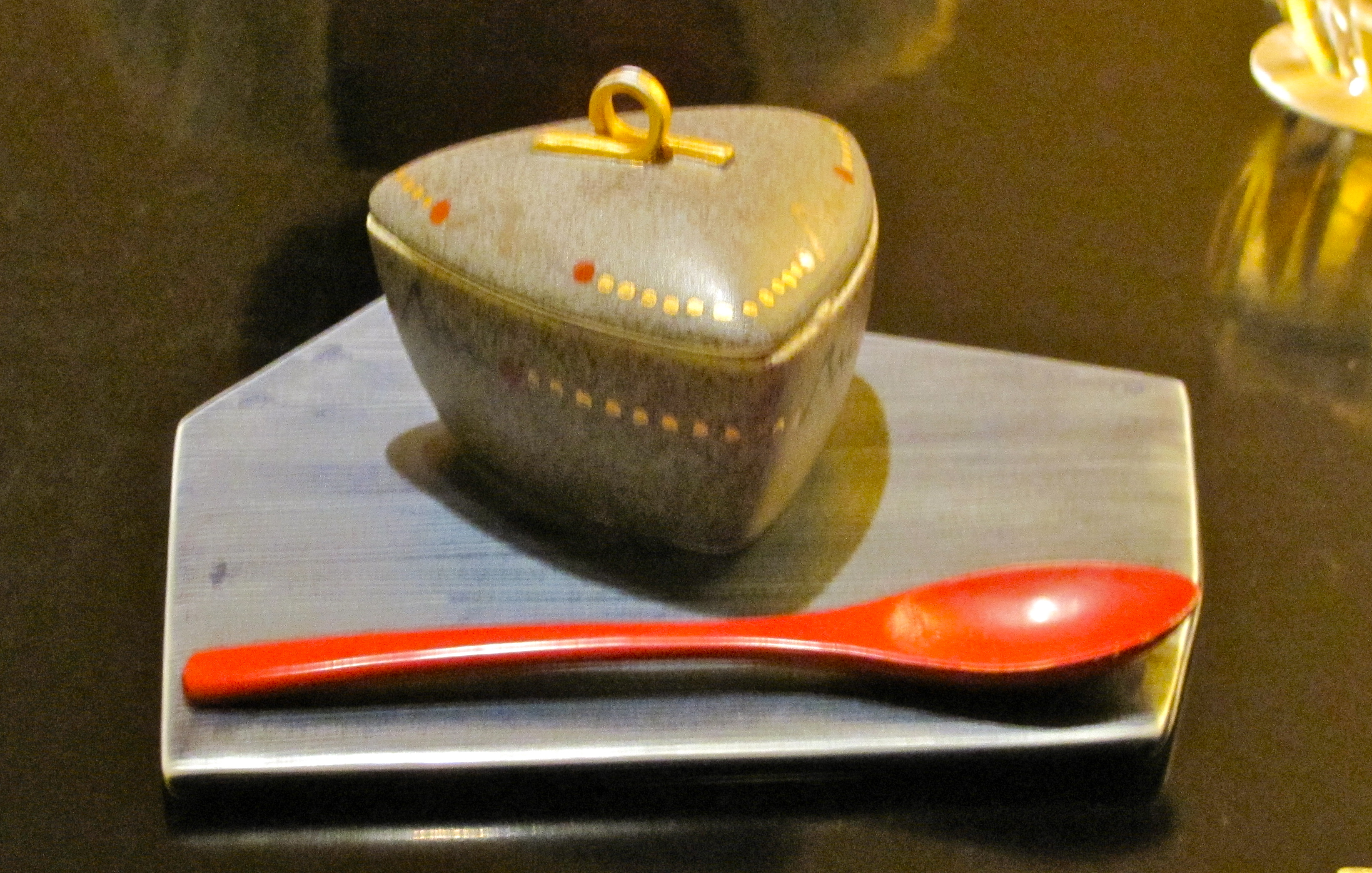
You are shown to your traditional style rooms. Remember to always keep your shoes by the door. Stepping on a tatami mat with shoes is like spitting in public. Hot green tea and a red bean paste sweet are ready in your room when you arrive.

IMG_0743

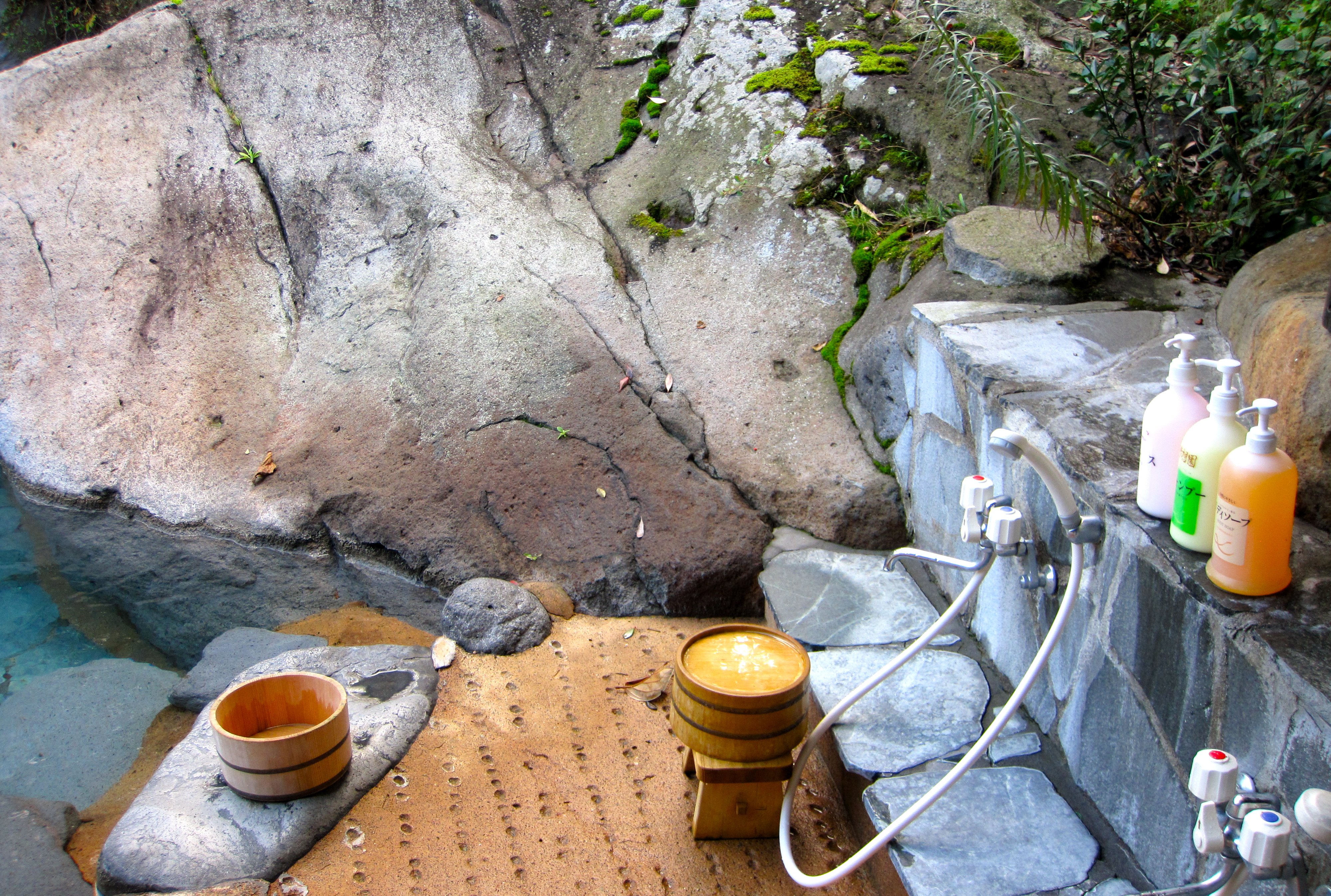
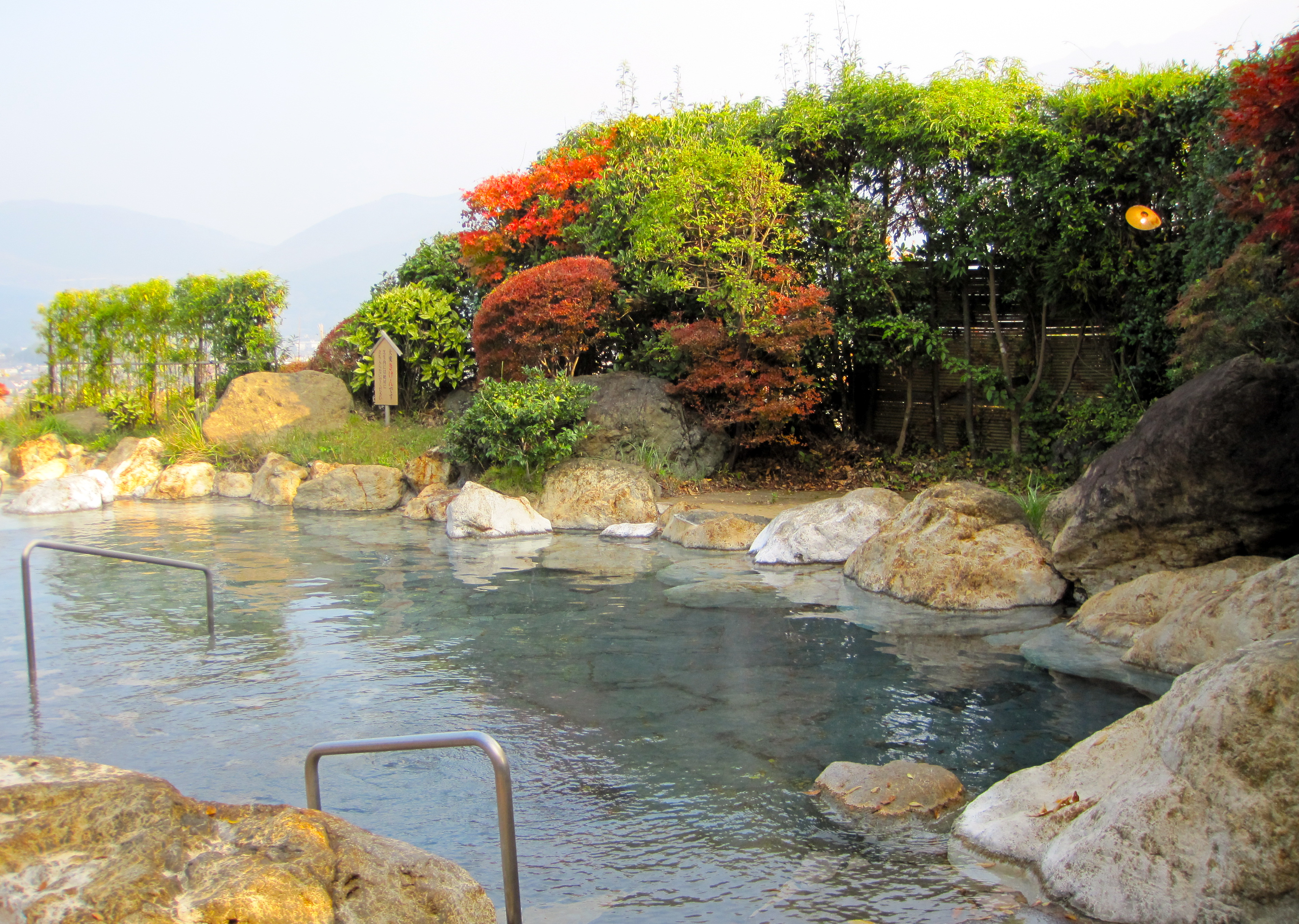
The main activity besides eating is bathing. The geothermal springs located throughout the country( onsens) provide hot mineral-rich water for indoor and outdoor baths. Onsen etiquette is based on Shinto influence. You must get clean before you go in the water. There are always showers or faucets and buckets. You cannot get into the onsen while dirty or soapy. ( Ok I did it once. I can’t lie on the internet. No one does that. It was just too cold to wash with cold water outside. )

IMG_2164

Everyone has a small white hand towel which is usually placed on the head or by the side of the bath. It is called the modesty towel – and could be a bit larger with that name. Try not to let the towel fall in the water as the goal is to keep the water clean. (how many times and at how many different onsen, do you think my towel fell in?) Many onsen do not allow bathers with tattoos — especially if they’re large — as these were traditionally associated with the yakuza, or mafia.

IMG_2147

The chemistry, temperature, pressure and buoyancy of thermal baths have curative properties used to treat skin conditions such as dermatitis, inflammation-related conditions such as arthritis and musculoskeletal conditions such as lower back pain.

IMG_2162

The sulfur and magnesium found in hot springs promotes skin health, while the heat of these baths can reduce inflammation and pain, and boost the immune system.

IMG_2148

Bathers are expected to go quietly into the onsen. Bathing in Japan is about the contemplative experience, not washing.

IMG_2195

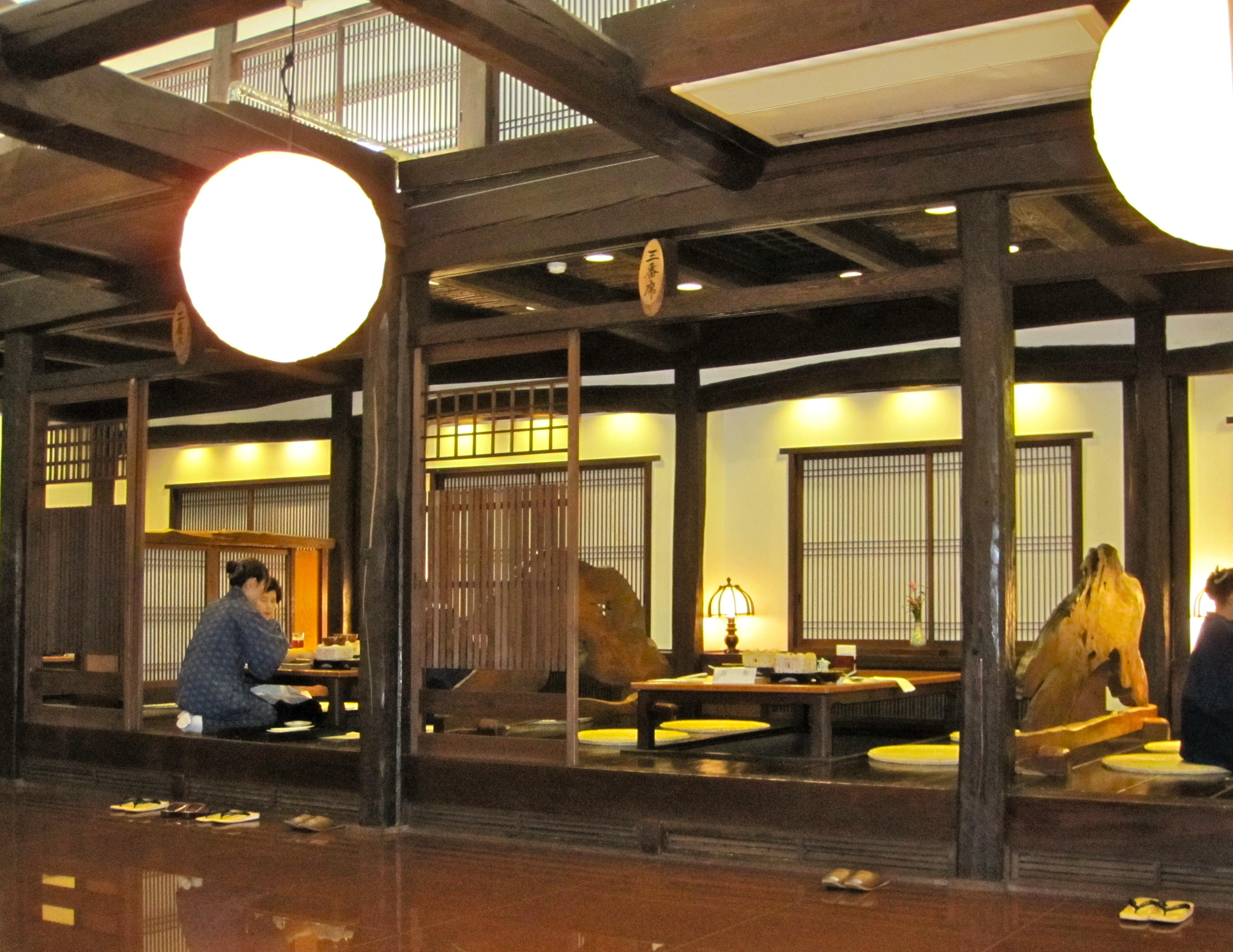
The meals exhibit all that is beautiful about Japanese culture. Kaiseki is a multi course meal rooted in the Buddhist idea of simplicity. It has developed into an exquisite set meal with a succession of small dishes made of seasonal produce where every element is balanced to ensure that the taste, texture, appearance, smell and color of the food captures a sense of the moment within a season.

IMG_0803

In kaiseki there is a defined set of aesthetics and principles that everyone adheres to. These rules help define the preparation, order of dishes and serving, including the type and look of a utensil used for service. These principles have evolved over the centuries to maximize the sensory experience.

IMG_0947

IMG_0950

The restaurant environment in Japan is also very different. The majority of kaiseki restaurants offer private rooms for their guests to entertain and the décor is always very simple, whether it is a shared room or private. Often the only decoration will be one artwork, underneath which will be a beautiful flower arrangement – both chosen to capture the mood of the season and the food. The diner is there to focus on the food and savor the moment, rather than to watch or be watched by others.

IMG_2139

When you return to your room, after dinner the bed is made up of many pillows and futons (quilts) and is quite comfortable. Sometimes the pillows are filled with rice – which is surprisingly not uncomfortable. Don’t sleep face down as you will wake up with rice marks. It isn’t pretty. If you would like a massage, a massage girl will come to your room.

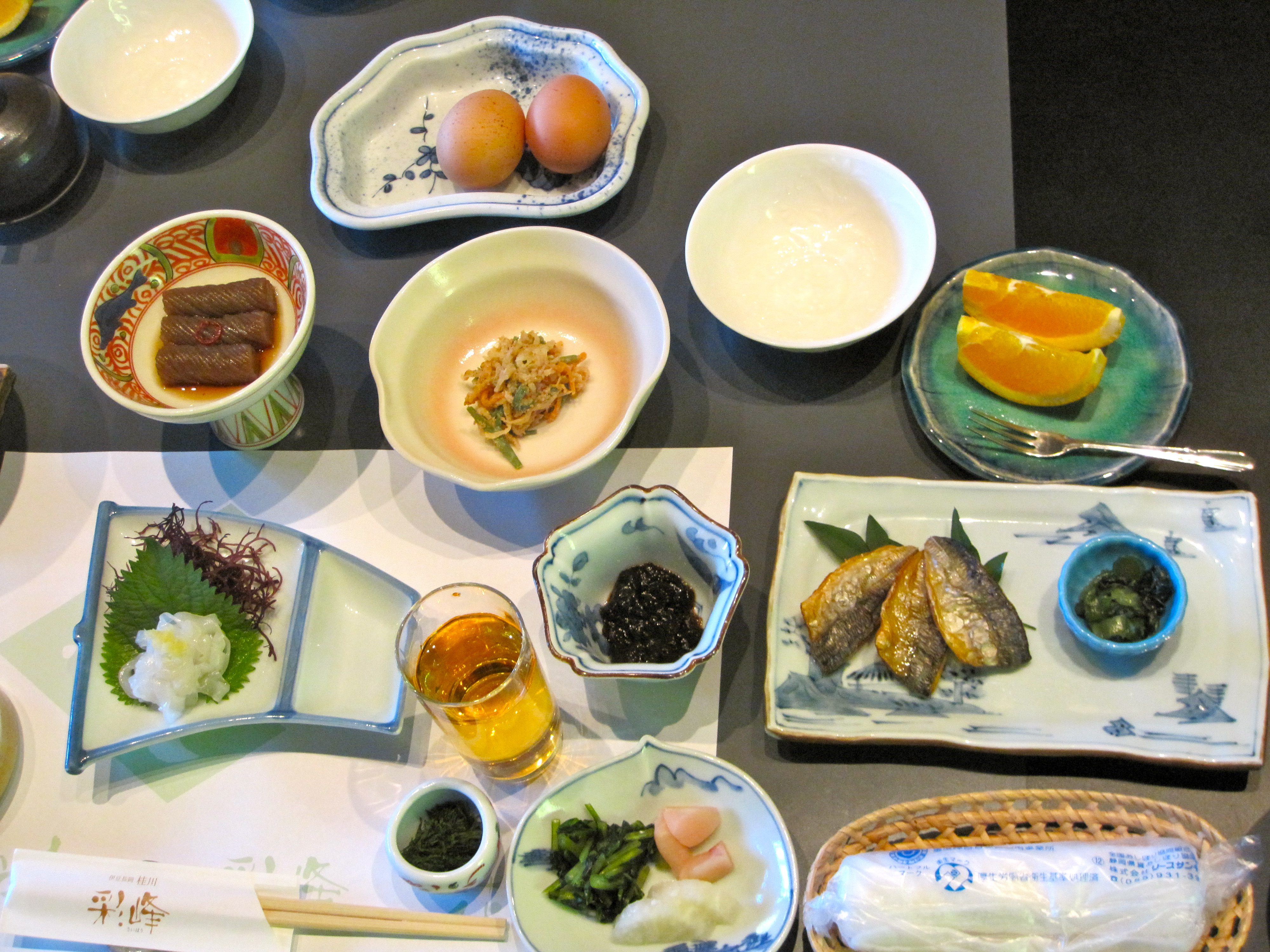
Breakfast can be a problem if you stay at a typical Japanese ryokan. To the untrained eye (mine) breakfast looks like the same food from the night before but prepared differently. It will always include fish soup and steamed rice and raw eggs. If you mix the raw egg with rice and soy sauce, it tastes ok but not my thing. I see salmonella. Some ryokan will give you coffee in tiny tiny cups and some won’t.

IMG_0767

The onsen towns are picturesque rural settings. It is nice to walk around during the day.

IMG_0775

IMG_0782

In Yufuin, in the Kyushu islands, I went to the dentist, ate Jidori chicken which is raised there, bought Yuzu preserves and walked around the town with all the Koreans who apparently just take a ferry across.

IMG_2175

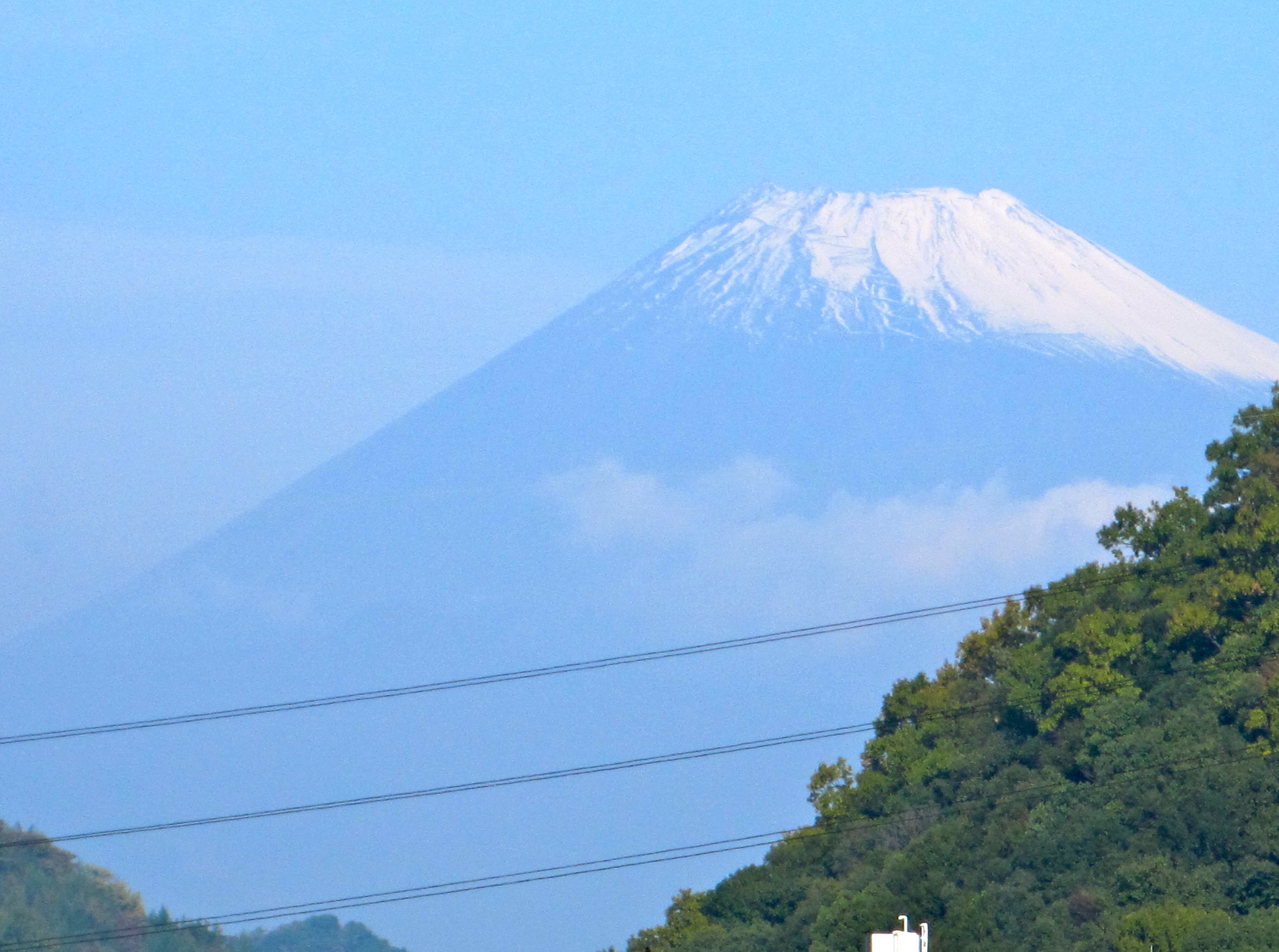
In Izu Nagaoka (we could see Mt Fuji from our room),

IMG_0776

The Izu Penninsula is one of the pilgrimage sites of the seven temples for the seven gods. Like the rest of the world, the Japanese are obsessed with the number seven. The Shichifukujin 七福神 are an eclectic group of seven deities from Japan, India, and China. Only one is native to Japan (Ebisu) and Shinto tradition . Three are from the Hindu-Buddhist pantheon of India and three from Chinese Taoist-Buddhist traditions (In Japan. They travel together on their treasure ship and visit human ports on New Year’s Eve to dispense happiness to believers. Each deity existed independently before Japan’s “artificial” creation of the group. Today, images of the seven appear with great frequency in Japan. By the 19th century, most major cities had developed special pilgrimage circuits.(Ebisu, the fisherman god number one on our pilgrimage)

IMG_0795

.We were given a map and set out to find them. If you find all of them, you get a prize. We were about half way into the forest and had found half the temples until we met someone who said the next one was pretty far and he had driven. We went for sushi.

IMG_0794

When leaving the ryokan , the staff will see each guest off in a smiling, bowing, waving ceremony at the street door. A small gift may be presented, and the inn’s brochures will be distributed. – Ryokan Katsuragawa Saihou (Nagaoka, Izu Peninsula) phone: (dial local) 055-948-3106, Ryokan Musouen, Add: 1251-1 Kawaminami Yufuin-cho Yufuin Oita, Japan 879-510

These are the places I miss most in Japan. The good things always make you remember them.

ki o twu kete

JAZ

Things I Have Learned In Kyoto, Japan

Things I Have  Learned in  Kyoto, Japan

“The way is not in the sky. The way is in the heart.”

~ Buddha

Kyoto is the headquarters of Nintendo.

Kyoto has almost 2000 Buddhist and Shinto shrines and temples. I haven’t seen them all – yet. ( female monks )

IMG_0935

Sanjusangendo is a 12th century temple (partly rebuilt in the 13th century after a fire) and it has 1000 identical life-sized Buddha statues arranged in 10 rows by 100 columns. In front and around some of these columns there are also 28 unique statues of guardian deities. Directly in the centre of these 1000 statues there sits an impressive giant Buddha statue covered in gold. Don’t go if you happen to  be allergic to smoke.  It also has a thousand candles.

IMG_0825

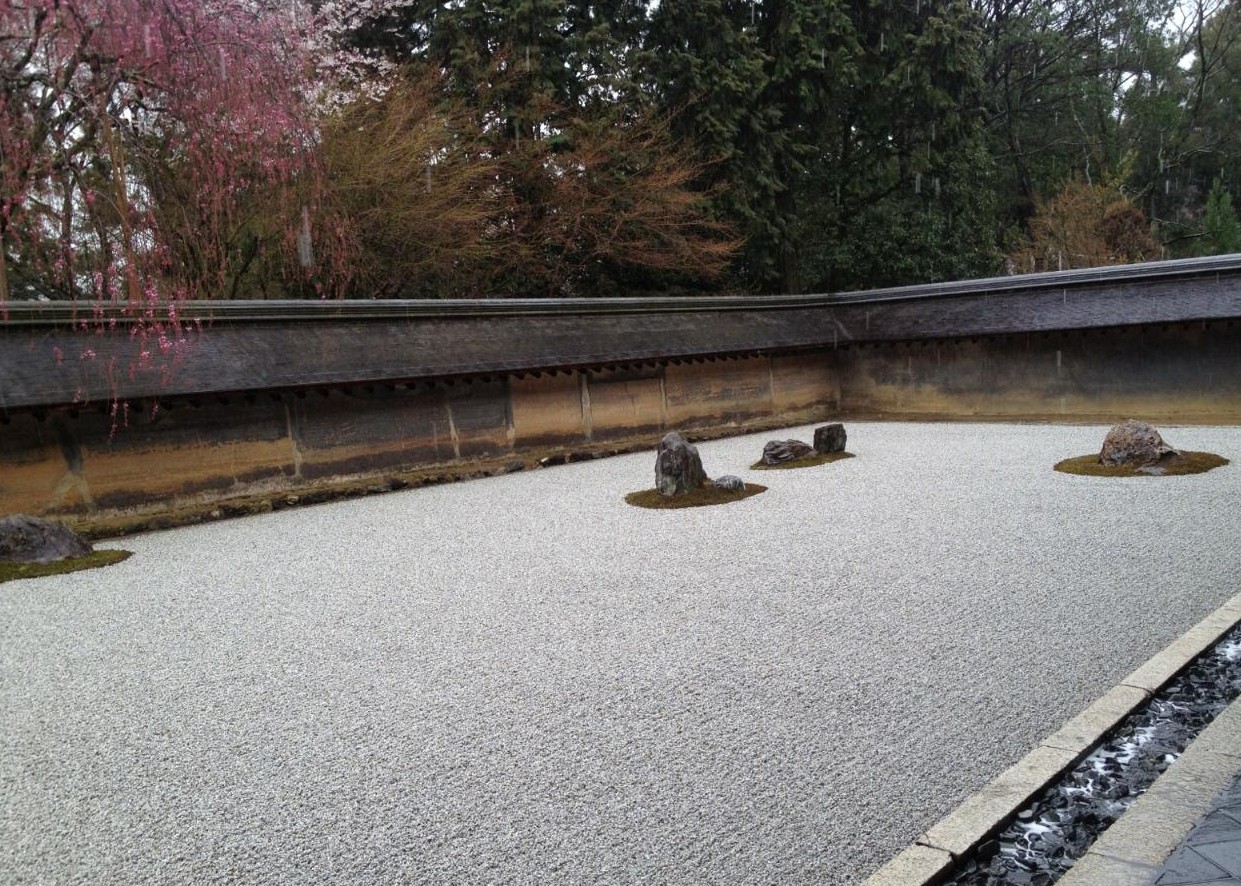
Ryoan-ji Temple’s dry rock garden is a puzzle. Nobody knows who designed it or what the meaning is of the 15 rocks scattered across its expanse of raked white gravel. Some academics say they represent a tiger carrying a cub across a stream; others believe they depict an ocean accented with small islands or the sky dotted with clouds. There’s even a theory that the rocks form a map of Chinese Zen monasteries. The only thing scholars do agree on is that Ryoan-ji is one of the finest examples of Zen landscaping in the country. You could stay there for years quietly contemplating the garden’s riddles and still get no nearer to an answer, and maybe that’s the point.

IMG950457

Downtown Kyoto is quite ugly.

IMG_0874

Uji is known for the production of high quality green tea.  It has many tea houses and is a great place to sample green tea, green tea desserts, green tea mochi, green tea cakes, green tea soba and green tea ice cream. Byodo-in Temple is there and is also on the back of the ten yen coin.

IMG_0896

Many stores and restaurants  in Uji  are closed on Monday which makes it the time to go ( not crowded) and not to go. (looking for a restaurant)

IMG_0890

Kyoto was never bombed during World War Two. You can still find 100-year-old streets and lots of old wooden buildings. Some of the structures have withstood earthquakes and have no nails.

Kyoto is Japan’s craft capital, where skills are still passed down through generations. Tiny specialty shops in Shijo Dori, Kawaramachi Dori and the Kyoto Handicraft Center  have Yuzen-dyed fabrics,wooden combs, fans and everything you need to host a tea ceremony.  Shinmonzen Dori and Furumonzen Dori and are filled with antique shops and galleries selling woodblock prints. The department stores around Shijo Kawaramachi intersection and Kyoto train station are good places for lacquerware and kimonos.

IMG_1002

The 7-5-3- festival occurs  around Nov fifteenth.   Five-year-old boys and seven or three-year-old girls are taken to the local shrine to pray for their safe and healthy future. This festival started because of the belief that children of certain ages were especially prone to bad luck and hence in need of divine protection. Children are usually dressed in traditional clothing for the occasion and after visiting the shrine many people buy chitose-ame (“thousand-year candy”) sold at the shrine.

IMG_0934

The most famous  Buddhist temples in Kyoto  are Ginkaku -ji and Kinkaku -ji (the gold and silver pavilion).  I bet they are a lot more beautiful when it isn’t raining.

IMG_0871

Kinkaku-ji is a Zen Buddhist temple .  it is  the Gold Pavilion. The garden complex is an excellent example of a Muromachi period garden. The Muromachi period is considered to be a classical age of Japanese garden design. The correlation between buildings and its settings were greatly emphasized during this period. It was a way to integrate the structure within the landscape in an artistic way. The garden designs were characterized by a reduction in scale, a more central purpose, and a distinct setting. A minimalistic approach was brought to the garden design, by recreating larger landscapes in a smaller scale around a structure.

IMG_0864

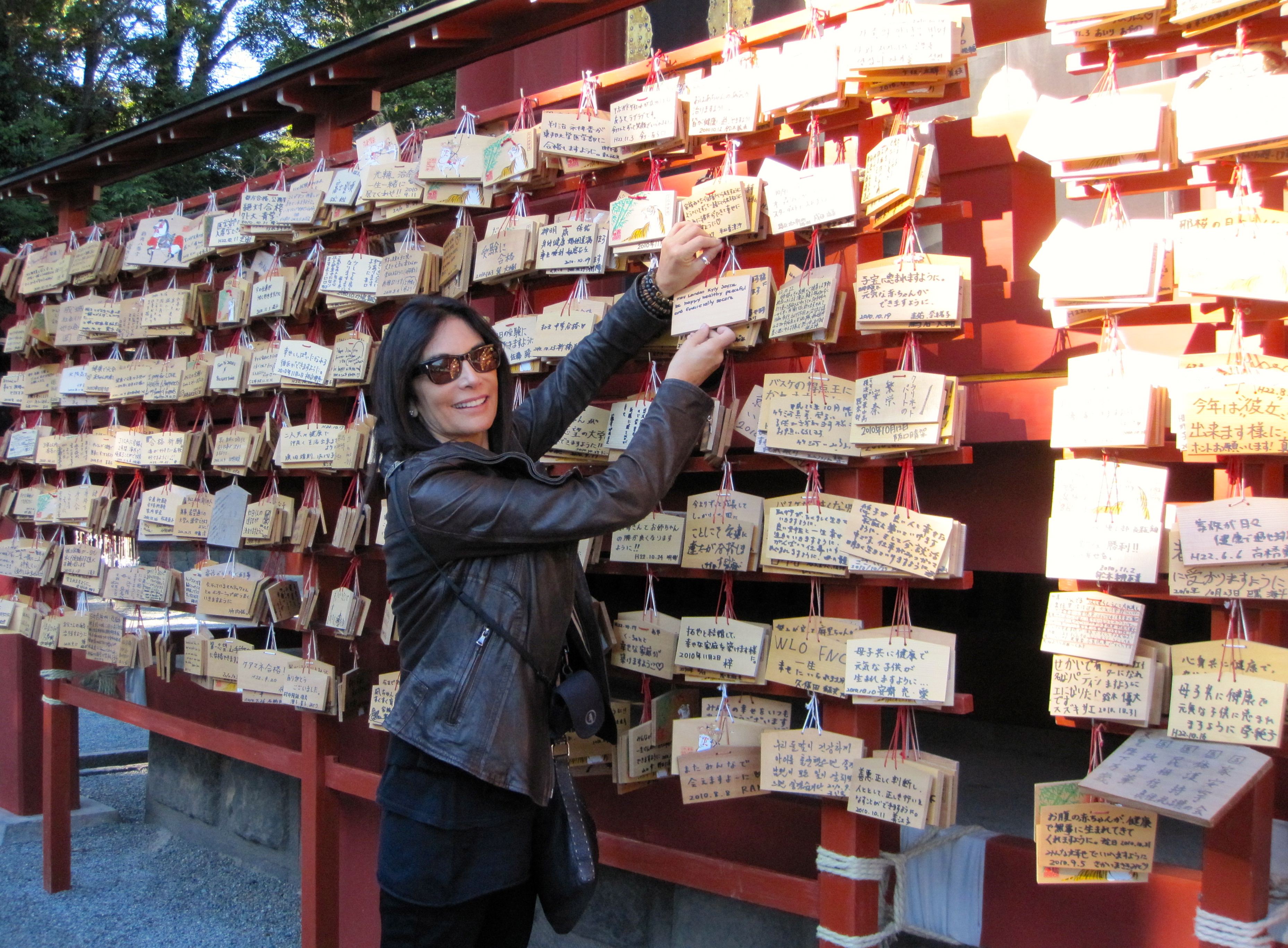
The Golden Pavilion was built to house some of Buddha’s ashes..There you’ll witness the flow of Japanese people of all ages praying, paying homage, writing their wishes on colorful ema boards, and buying special charms called omamori in hopes that their aspirations of finding a spouse or succeeding in an exam will someday be fulfilled. (i see my ema board it is one of the few non japanese ones!!!!)

IMG_0984

IMG_0933

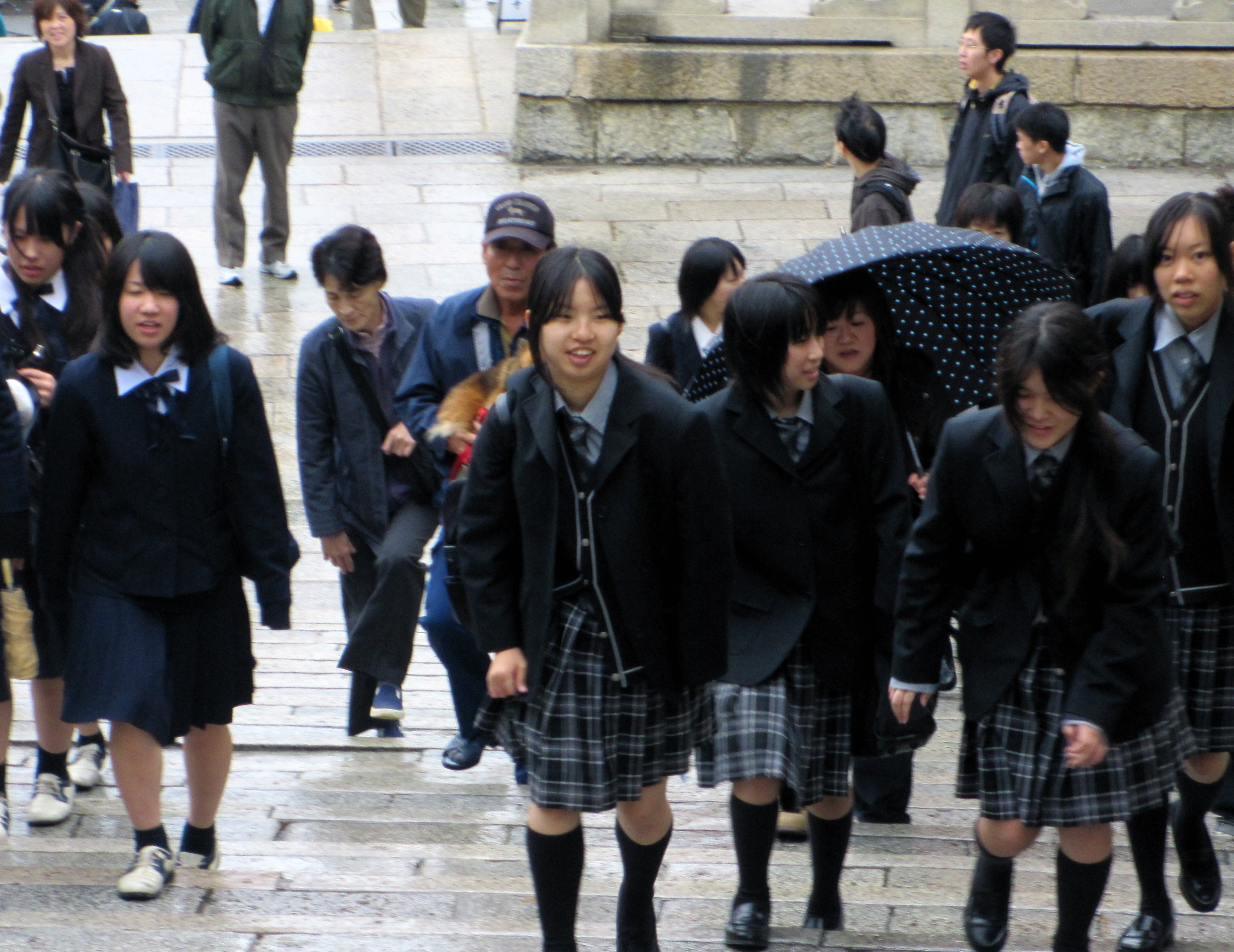
You will see a lot of school children with their classes at all the temples in Kyoto in November. It is the time for luck and they are all praying for good grades.

IMG_0992

IMG_0995

Ginkaku-ji is the Silver Pavilion..  The tea ceremony is said to have originated here. The exterior of the pavilion was originally going to be covered in silver foil, in emulation of the Golden Pavilion (14th century) at Kinkaku – ji. Without ever having enjoyed a coating of silver, the Silver Pavilion is one of the most graceful structures ever built.

IMG_0847

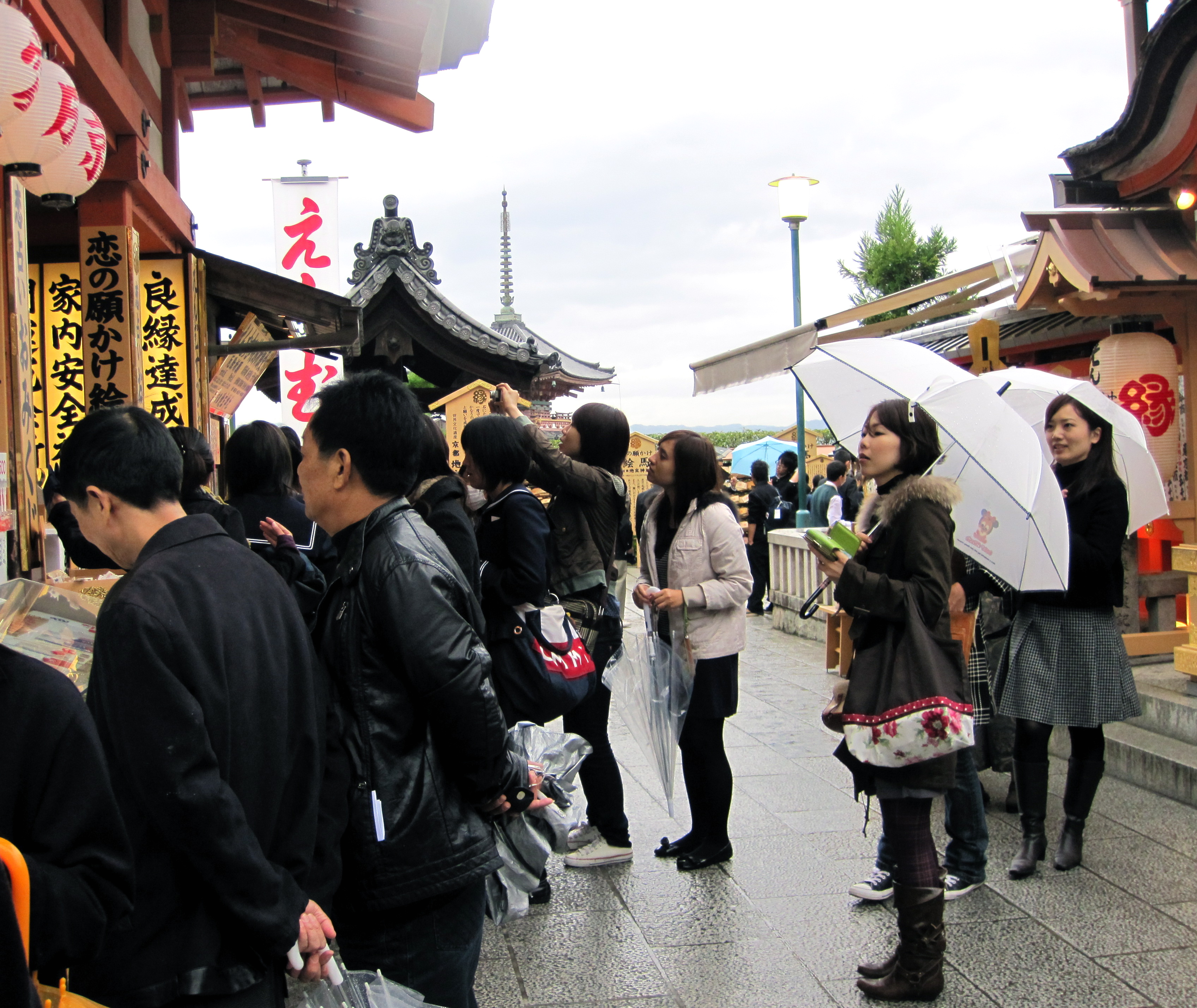
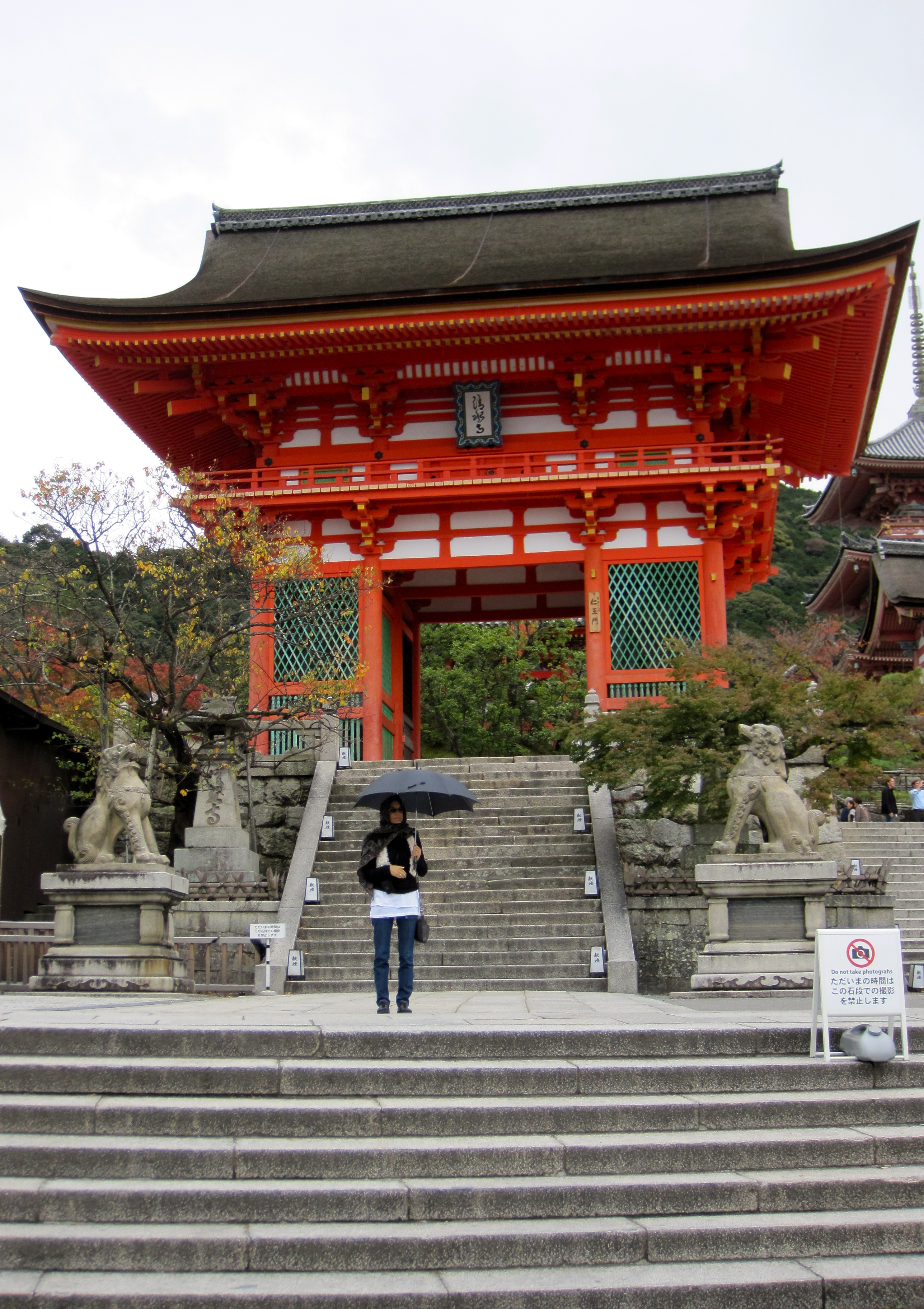
Kiyomizudera Temple  contains several other shrines, notably Jishu-Jinja, dedicated to Okuninushino-Mikoto, a god of love and “good matches”. Jishu-jinja possesses a pair of “love stones” placed 18 meter apart, which lonely visitors attempt to walk between with their eyes closed. Success in reaching the other stone, eyes closed, is taken as a prediction that the pilgrim will find love. One can be assisted in the crossing, but this is taken to mean that an intermediary will be needed. The person’s romantic interest can assist them as well.
It is the highlight of the yearly school trips to the temples for luck in exams.

IMG_0956

IMG_0979

Here is the famous love stone.

IMG_0974

IMG_0983

It’s not the only geisha district left in Japan, but Gion, a collection of streets defined by its old wooden buildings, tea houses and exclusive Japanese restaurants, is by far the most famous. Spend an hour wandering the area and chances are you’ll glimpse a geisha or two shuffling between tea houses in their cumbersome zori sandals and exquisite kimono. Much to their annoyance, you’ll probably see camera-happy Japanese tourists stalking them too.

IMG_1004

You get free tofu refills with an eight course tofu dinner – so delicious. ( Tousuiro 075-561-0035 )

IMG_0879

Few museums are as hands-on as this old elementary school turned shrine to manga, or comic books, and its collection of some 300,000 comics and manga-related exhibits. Visitors can read any piece of manga they want at the  Kyoto International Manga Museum  from the towering wooden bookcases that line every wall and hallway. Some read propped up against the walls or sitting crossed legged on the floor; others hunker down with a coffee at the museum’s wood-decked outdoor café. The eclectic and universally transfixed crowd is a testament to how much a part of mainstream Japanese culture manga has become. http://www.kyotomm.com/english/

French Japanese food served by beautiful girls with strong knees is tres bien. ( Takumi Okamura, Gion  075-541-2205 )

IMG_0948


It’s touristy, and  tacky, but dressing up as a samurai and watching TV actors hamming it up on set does hold a certain charm. Eigamura or Kyoto Toei Studio Park to give it its English name, is a working TV and movie set that doubles as a theme park, where besides dressing up in period costume you can wander around a mock-up Edo-era samurai town and take in exhibitions of the well-known TV series and films shot here.It’s the live studio performances, however, that steal the show. The sword fights are extravagant, the facial expressions and body language overly dramatic, and the dialog at times delivered about as convincingly as an elementary school end-of-year play. It’s Japanese kitsch at its finest. Quentin Tarantino would love it. http://www.toei-eigamura.com/en/

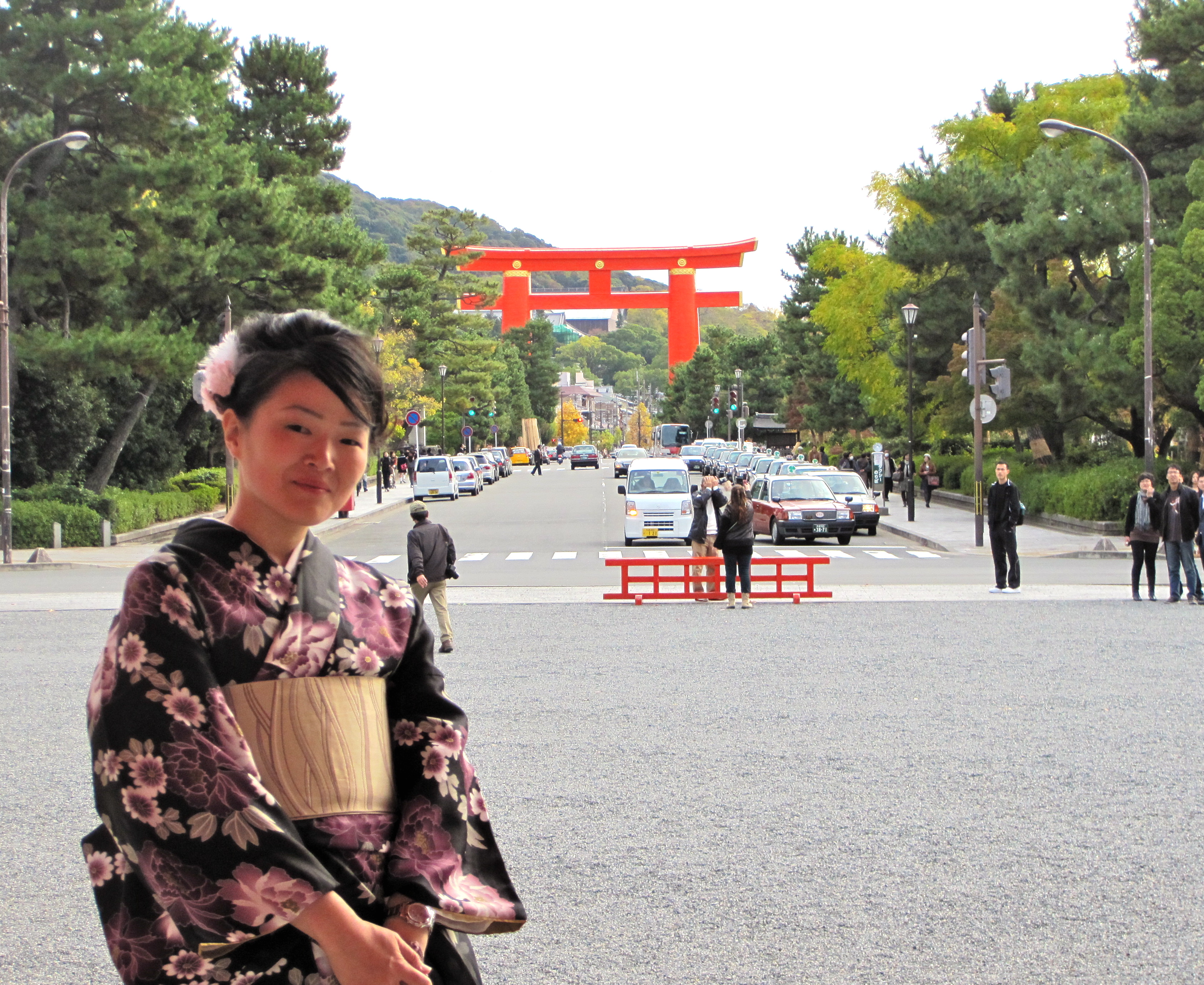
(Heian Jingū) Heian Shrine  was  1895  and is dedicated to the spirits of the first and last emperors who reigned from the city,  A giant torii gate marks the approach to the shrine, The real shrine grounds themselves are very spacious, with a wide open court at the center. The shrine’s main buildings are a partial replica of the original Imperial Palace from the Heian Period built on a somewhat smaller scale than the original.

IMG_0915

IMG_0917

Behind the main buildings there is an attractive, paid garden with a variety of plants, ponds and traditional buildings. The garden’s most striking feature are its many weeping cherry trees which bloom a few days later than most other cherry trees, making the garden one of the best   around the tail end of the season, which is usually around mid April.

IMG950563

Omikuji are paper fortunes that can be bought at both shrines and temples. The fortunes range from great good luck to great bad luck. There are trees to tie the fortunes to avert the bad luck if you are unlucky enough to draw that fortune.

IMG_0925

One of my fortunes is framed in my house. The others might be on a tree. The  thing about luck is that it always changes.

for more info go to

https://havefunflysafe.wordpress.com/2012/08/25/japanese-food/

https://havefunflysafe.wordpress.com/2012/09/14/things-i-have-learned-in-okinawa-and-hiroshima/

https://havefunflysafe.wordpress.com/2012/08/11/things-i-have-learned-in-japan/

https://havefunflysafe.wordpress.com/2012/08/06/things-i-have-learned-in-tokyo/

ki o twu kete

JAZ

Things I Have Learned In Okinawa And Hiroshima

“If I had known they were going to do this, I would have become a shoemaker.”

Albert Einstein

Things I Have Learned in Okinawa and Hiroshima

Driving on the Okinawa Expressway in the rain is like driving anywhere else in the rain.

Japanese Navigation

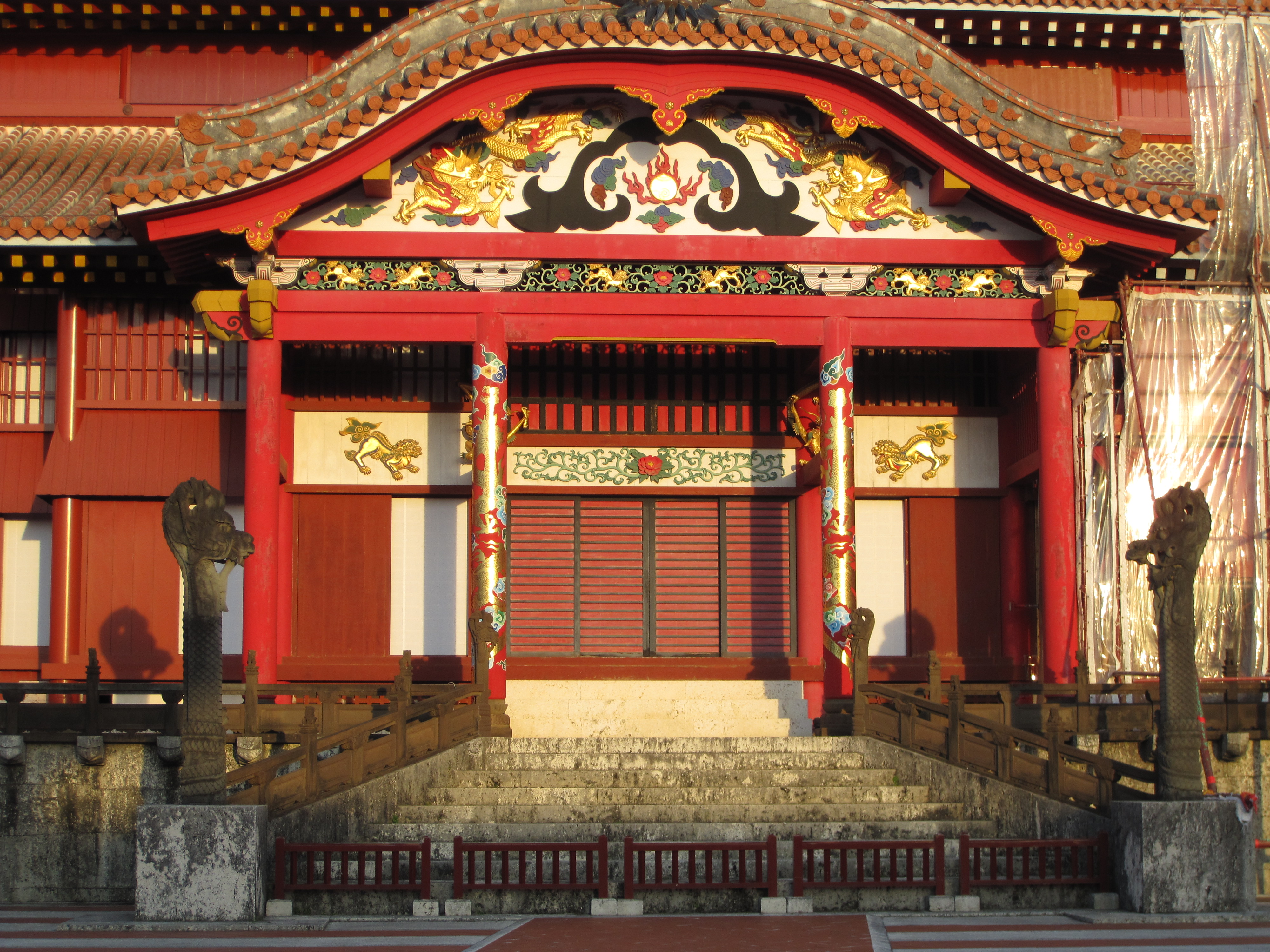
Touring Shuri-jo Palace in Okinawa one must follow the signs that say “usual route.”  What is the unusual route?

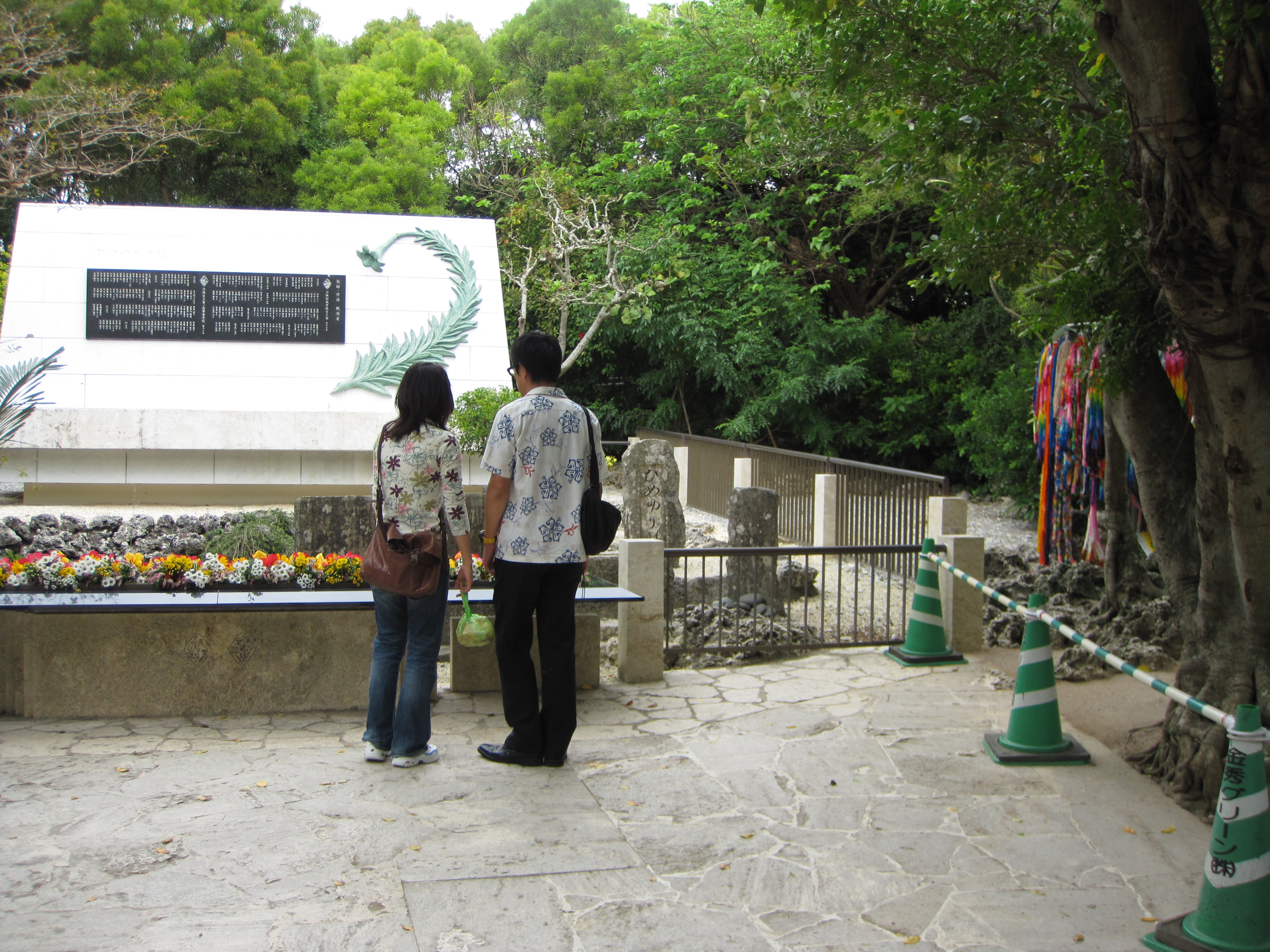
One of the hardest things to see was the Himeyuri Peace Museum in Okinawa.In the face of the American invasion, the Japanese forces stepped up the nurse training in the local high schools. Three hundred and two high school  students (mostly girls) and twenty one teachers were deployed to the front. They were told they would be working in hospitals but ended up in hospital caves with very bad conditions. There was no legal basis in Japan to use young girls for military purposes. On June 18th 1945 the Japanese forced the young girls out of the caves to fend for themselves against the American attack.  On June 23 the Japanese resistance ended. In those five days, 219 of them were killed. The museum is a model of one of the high schools that the girl’s came from. High school students from all over Japan come to pay their respects.

I was the only foreigner in the museum with alot of high school kids from Japan. I was looking at the photos  of the girls and was standing next to an old woman. She started to talk to me but I didnt understand so I found someone to translate. (not so easy to do in this museum).  We were standing in front of a picture of her daughter.  Two strangers became two mothers  looking at the ultimate tragedy.

Busena Terrace in Okinawa is the Grand Wailea/ any resort in Hawaii. Naha looks like Lahaina  . You can always find the American servicemen and their families at the Mcdonalds.

The Japanese and the Koreans were just as bad to the Okinawans as the Americans in WW2.

Okinawa Aquarium contains the largest fish tank in the world according to the Guinness Book of World Records.

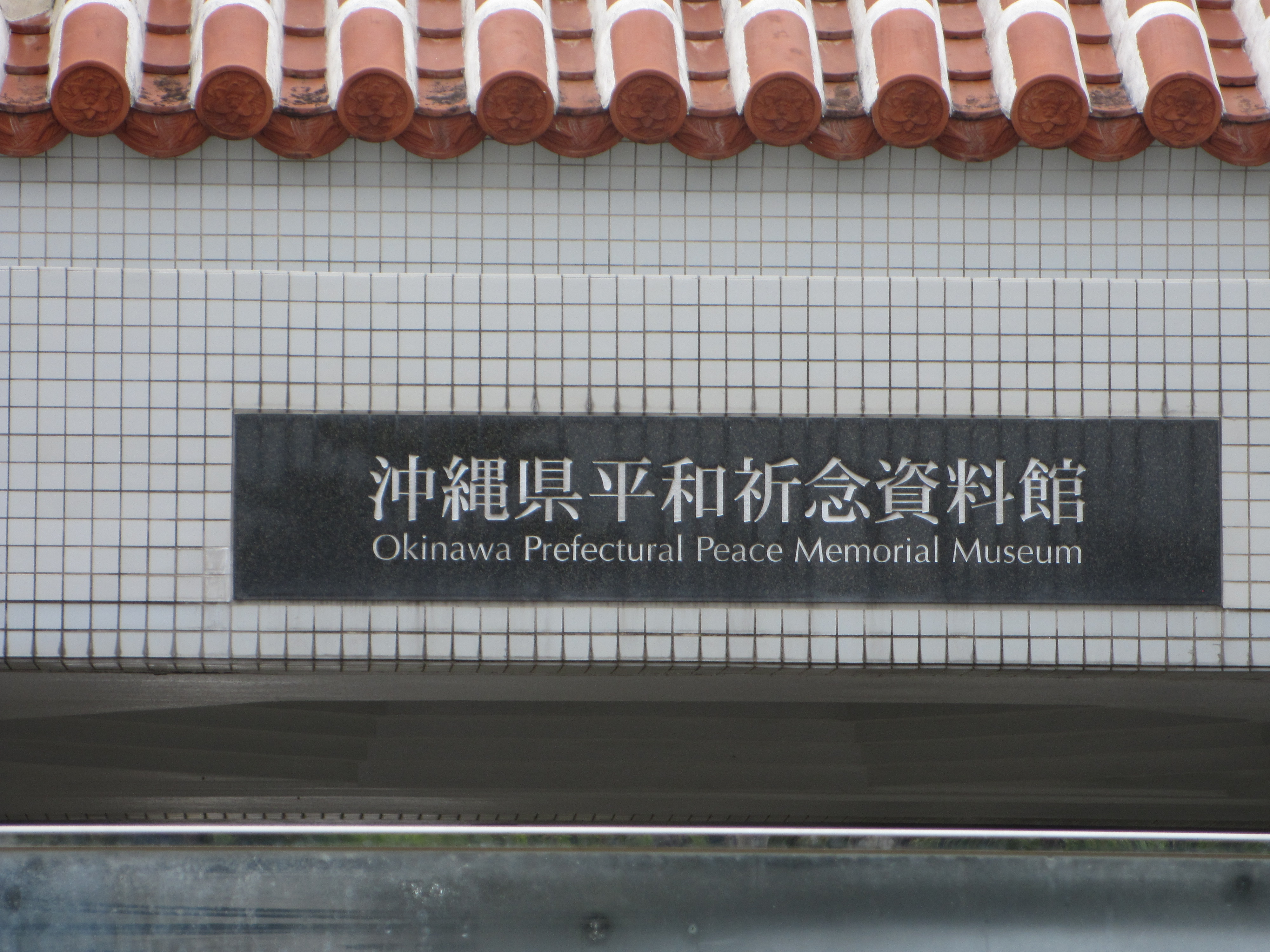
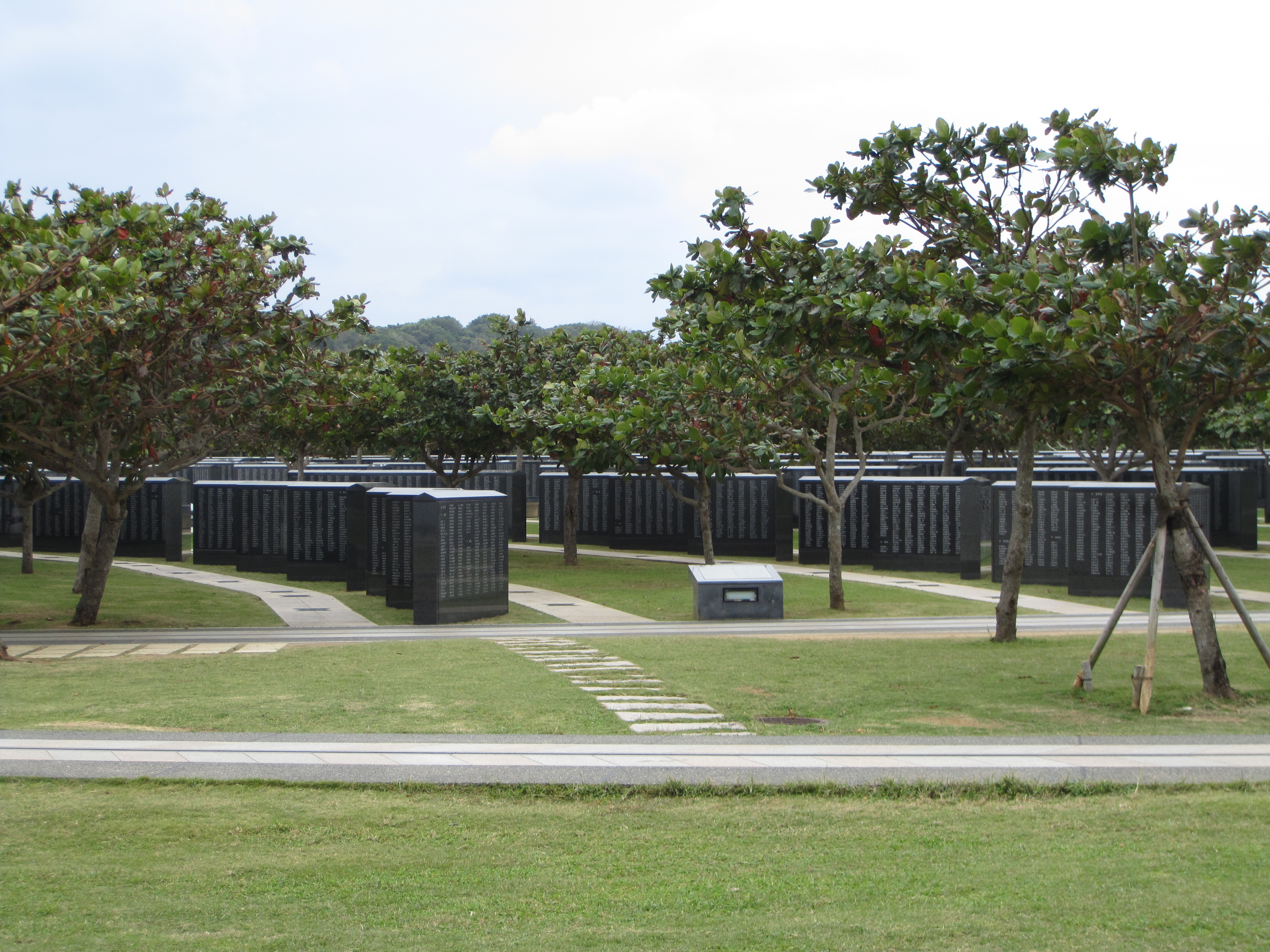
The Okinawa  Peace Museum is a memorial dedicated to the 200,000 people who died in the Battle of Okinawa. It is located in the south part of the island where the heavy fighting took place.  Over 100,000 were civilians and 12,500 were Americans. The civilians died from shellings, suicides, starvation, malaria and retreating Japanese troops. It was the largest campaign in the Pacific.  The lesson of the memorial is  the “Okinawan Heart”  that rejects any act of war, mourns for those who died in the war, passes on the stories of their struggle to future generations  and remind us of our humanity.

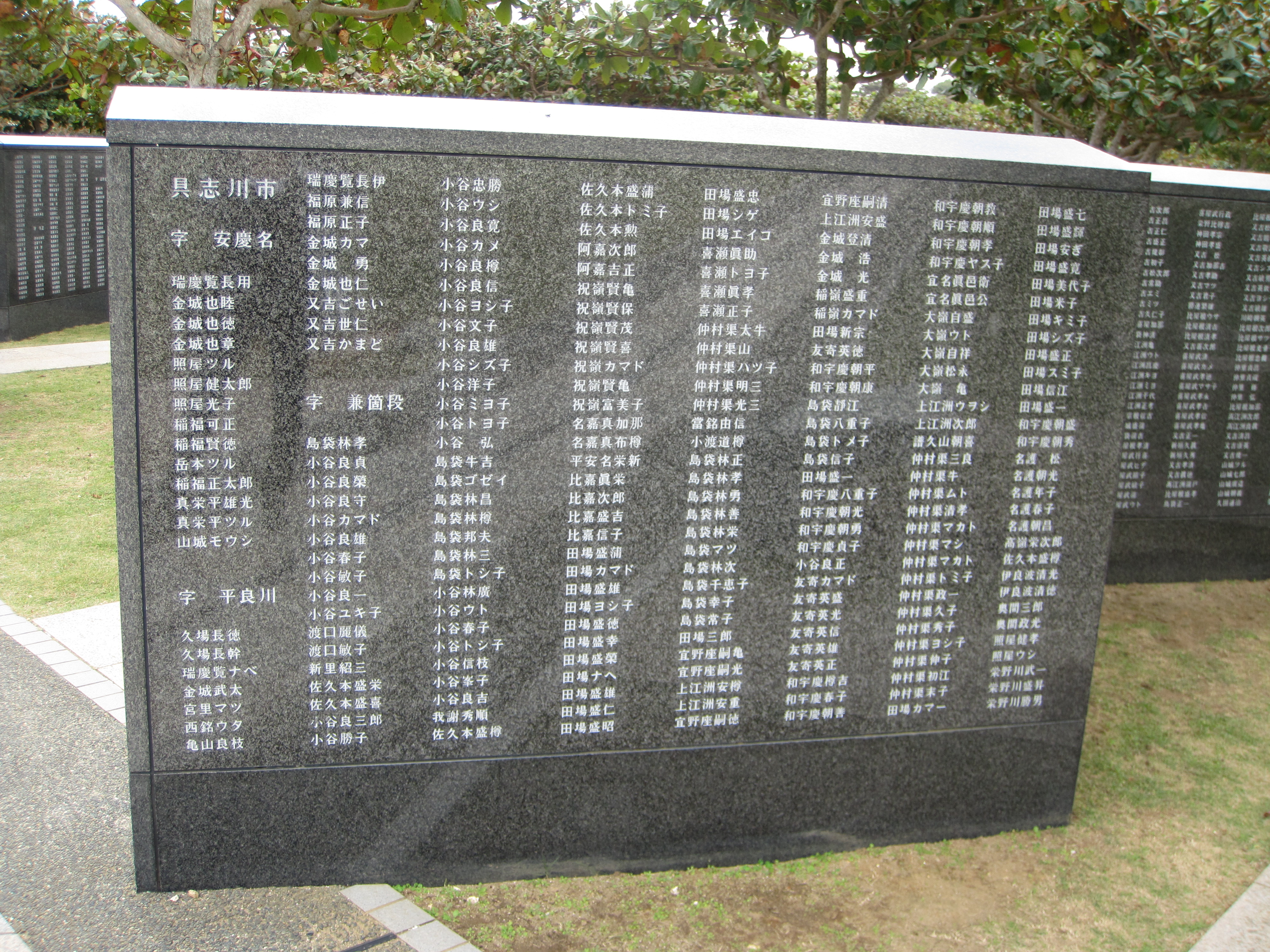
Other monuments in the park include the “Cornerstone of Peace”, a collection of large stone plates with the names of all fallen soldiers and civilians, including Koreans, Taiwanese, Americans and British.

After WWll , Okinawa was under United States administration for twenty seven years. They established numerous military bases on the Ryuku Islands.  In 1972, the islands were returned to  Japan but the US has maintained a large military presence. There are about 50,000 Americans  in Okinawa (including family members). There is protest from the Japanese and the Okinawans about the large American military presence there. They are trying to resolve it with a modified plan.

“As the bomb fell over Hiroshima and exploded, we saw an entire city disappear.  I wrote in my log the words”My God what have we done? ”The death was up to about 150,000 There were 76,000 buildings in the city at the time and only 8%  of them remained intact after the bomb explosion. The bomb affected an area of around 13 square kilometers and turned that into ruins.”

The closest surviving building to the location of the bomb’s detonation  in Hiroshima was designated the Hiroshima Peace Memorial.

After the bombing, Hiroshima began to receive donations of streetcars from all over Japan. (After World War II, Japanese cities – like British ones – wanted to get rid of their streetcar systems due to damage to the infrastructure)  Hiroshima  rebuilt its streetcar system along with the rest of the city.   Hiroshima is now  the only city in Japan with an extensive streetcar system (although other cities have streetcar lines). Some streetcars that survived the war – and the nuclear attack – were put back into service, and four of these are still running today.

Hiroshima has now became a center of the movement for world peace and reduction of nuclear bombs, which is commemorated at the Hiroshima Peace Memorial. The city government continues to advocate for the abolition of nuclear weapons . They write a letter of protest every time a nuclear weapon has been detonated anywhere in the world. In 1949, Hiroshima was proclaimed a City of Peace by the Japanese parliament.

The Thousand Origami Cranes was popularized through the story of Sadako Sasaki, a Japanese girl who was two years old when she was exposed to radiation from the atomic bombing of Hiroshima during World War ll. Sasaki soon developed leukemia and, at age 12, inspired by the Senbazuru legend, began making origami cranes with the goal of making one thousand.  One popular  story is she died before and her classmates finished  them. The Hiroshima Museum says she completed them and kept making more  when she didn’t heal.  One thousand origami cranes is said to bring a thousand years of health , happiness and prosperity. The cranes are left exposed to the elements, slowly dissolving and becoming tattered as the wish is released.

People leave them in her honor  and for all the people who died from the bombing at the Eternal flame in the Hiroshima Peace Memorial.

My father was stationed in Okinawa during World War Two.  He never talked about it.  There were some black and white photographs  of him in a uniform, skiing in Hokkaido, and the  old Japanese life in the cities..  The first words I ever learned to say in a foreign language  was not the Yiddish that my grandparents spoke but I Am An American Soldier in Japanese. Watashi wa Amerika hei desu. I guess I just wanted to see what happened for myself.

Sayonara, Fly Safe

JAZ

Japanese Food

“One of the very nicest things about life is the way we must regularly stop whatever it is we are doing and devote our attention to eating.”

Luciano Pavarotti

Japanese Food

You get free tofu refills  with the tofu dinner. The containers on the tofu bar hold steamed tofu.  After the steamed tofu course, you may add as much tofu to your tofu as you wish.

“Western food. Every damn plate is round”.

The truth about Kobe beef is that all wa gyu (Japanese beef) comes from Hyogo prefecture usually from Tajima. Tajima sells the beef all over the Japan. If they buy it in Kobe, it is Kobe beef.

Food is served so beautifully in Japan it is not uncommon to see even the Japanese taking pictures of the food.

They have Yoshinoya in Japan. It was the first thing I saw leaving the airport.

Okinawans are considered to be the longest living people in a country of long life. They attribute it to the Okinawan diet which includes many different kinds of seaweed , a bit of pork, spam  and taco rice ( from WWll)

Okinawan sayings include the phrase that Okinawan cuisine “begins with pig and ends with pig” and “every part of a pig can be eaten except its hooves and its oink.”[

Things to eat in Okinawa  are–mango pudding, purple potatoes, Chinese food (Okinawan  food is more influenced from Chinese food  than Japanese food), teriyaki squid on a stick, barbecued grasshopper legs, pork,  pigs feet, pig skin , pig ears, ,goya juice, sooki soba( pork spareribs with soba noodles in soup), Okinawan doughnuts ( deep fried balls of dough) and Mozuku seaweed (seaweed for a long life).

Hiroshima is famous for oysters and anago (salt water eel).  Unagi ( fresh water ell) is more common in the US. It is not to be confused with inago, whole locusts boiled in soy sauce and sugar.
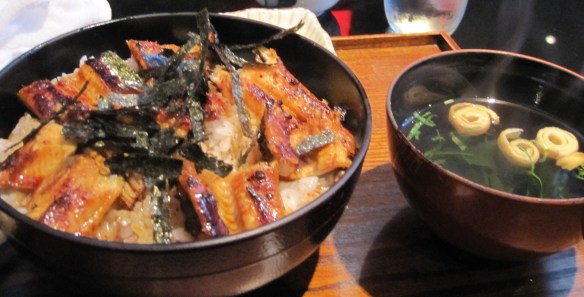
In Japan they say Autumn is the time for art and eating.

Food is always seasonal. It is chestnut season now and they are served in some way at every meal. Red beans and chestnut sweets  taste just like red beans and chestnut. (chestnut sweets)

Japanese women are always on diets .

Blowfish ovaries and pig ears are surprisingly delicious until you find out what you are eating.

Fugu (blowfish) is a delicacy and speciality of the Kyushu islands. Because it is poisonous, you must have a special license to cook it. Every year a few dozen people are hospitalized. The few  fugu deaths each year are fishermen who try to prepare it themselves.   The ovaries and intestines must be removed and cooked without puncturing them. (I didn’t know until after)  We had an eight course fugu dinner (including ovaries and intestines they made a point of telling us that ). I am still here so the chef must have been licensed. It was the most amazing meal, I had on two trips of amazing meals.

Surprisingly, Japanese eat a lot of eggs as in raw, appetizers and egg sushi.

Yakitori  chicken (grilled on a skewer) is usually not the breast. It can be thighs, skin, liver etc – because all the parts of the chicken are used.

People in Osaka spend more money on food than anything else.

Okonomiyaki is kind of a cross between a pizza and a pancake. It is batter mixed with cabbage and fried with different toppings. Okonomi means “to one’s liking”.  Unlike pizza and pancakes, the usually filling is octopus, squid, pork, yams or kimchi. Or you can have whatever you want on it.  It is most common in Hiroshima and Osaka.

The food in Japan is so tasty that you can find a delicious meal in a train station.

It is considered bad manners in Japan to walk down the street eating or drinking. Hence Starbucks is always very crowded.

Japanese now drink more coffee than tea and they all drink “shorts” at starbucks, which have been discontinued in the states.

Jidori chicken is a delicacy of Kyushu. It is a muscular chicken because it is allowed to run free, which makes it rather chewy. ( free range – as we say)

In expensive supermarkets, they bag your groceries, in inexpensive supermarkets you do it yourself. Also the boxes we have at registers for signing and scanning are considered “”so old fashioned” in Japan.

Sake means sake but also liquor.

Anything can be made out of tofu.

Yellowtail is always frozen.

Japanese seaweed is sweeter than other seaweed. ( There are many different kinds of seaweed. –apparently even in nice restaurants in the U.S., we get the cheap stuff).

There are hundreds of different soy sauces and sakes.

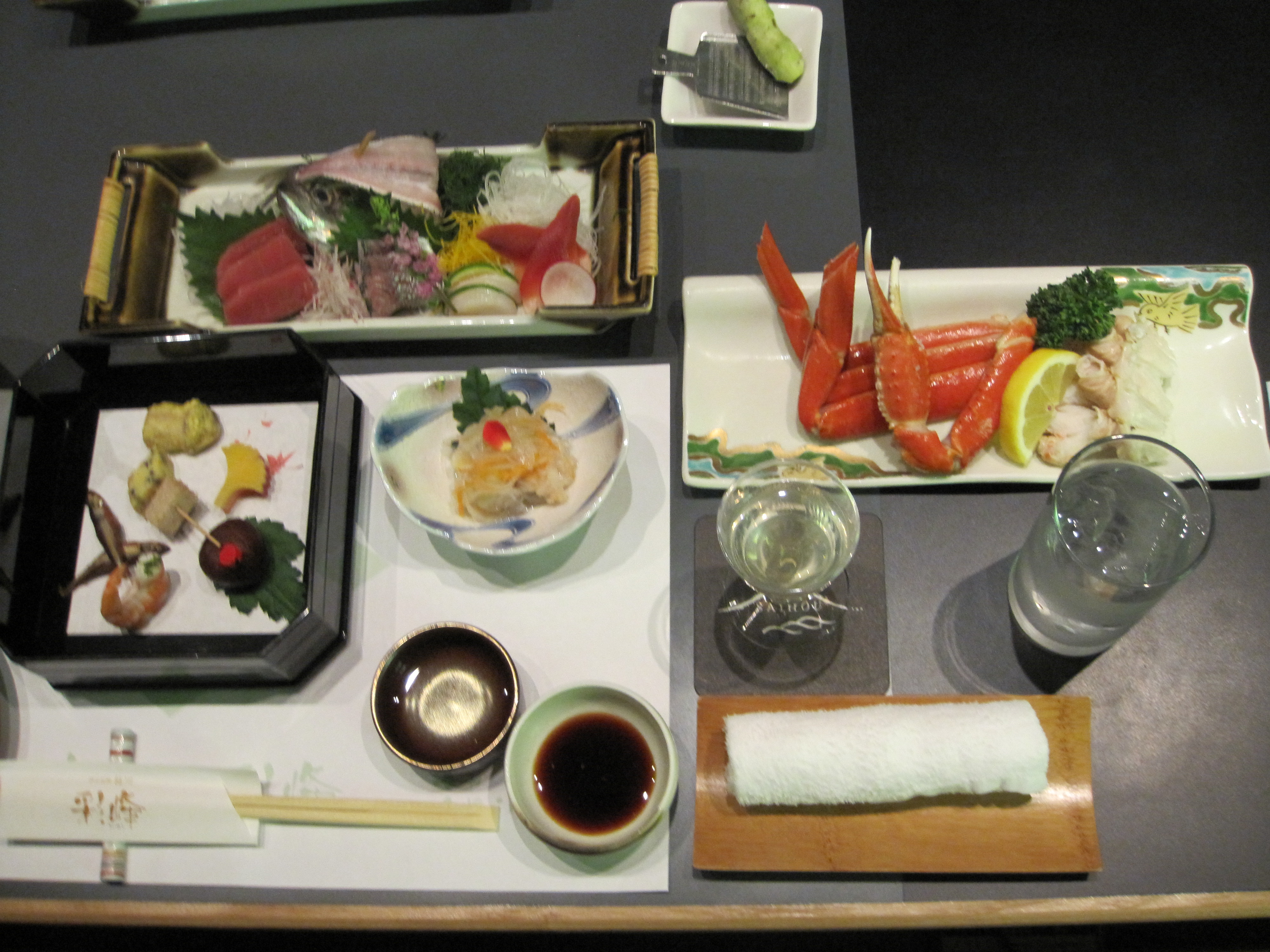
The first night of Kaiseki dnner (eight courses) at the ryokan (Japanese hotel and hot springs) is amazing. The second night is delicious.  The third night is good. The fourth night, you are thinking pizza. (  These are the first  three of the eight courses .  They go from raw to cooked.  The green pickle looking thing is fresh wasabi that you grate onto your food)

The food department in a Japanese department store  is almost always in the basement and can be an attraction by itself due to the wide variety of Japanese delicacies, sweets, desserts and other food on display. The food department at Harrods in London is a boutique compared to some of the Japanese stores.

Pockys come in many flavors . Haagen Daz does seasonal ice creams in Japan. Kit  Kats come in seasonal flavors but the most popular is Green Tea.

Im not a fan of Japanese breakfasts . I like the food but just not for breakfast. To me , it looks alot like the same food we had for dinner but im not a detail person. I wouldn’t notice that the fish in the morning is grilled  or the pickled vegetables are different, or that there are different vegetables and proteins in the miso soup.  On top of that I need coffee in the morning not green tea. (Dont be confused by the eggs-they are raw)

If you are a fan of Japanese breakfasts, Tsukiji fishmarket for fresh sushi in Tokyo  is the way to go – the earlier the better, They open at five am.  I prefer coffee and toast and getting there at 10. Sushi before 10 am is rough for me.

Here is what i found out on my first trip to Japan. I like abalone steak, flounder, red snapper, squid and octopus sushi.  I love tofu dinners (eight courses of differently cooked fresh tofu).  I like tofu buffet dinners. (every kind of tofu imaginable). I don’t like foo, or the diet jelly stuff, or mackerel (dry raw or whole). I don’t like raw eggs in the morning with rice. I hate roe sushi (which is not what you think-unless you are thinking survivor food challenge)  I like green tea soba, green tea mochi and Japanese green tea ice cream ( not what we have here with no taste) I like Japanese desserts –especially black sesame ice cream.

I hate to admit this but i did not use chopsticks until my first trip to Japan.   I dont have great motor coordination and it seemed like a  a lot of work to get the food to your mouth.  I was probably the only American in the towns where the ryokans were.  The chance of getting a fork was going to be slim.    I practiced eating everything with chopsticks at home for two months .   My friends,  the waiters in the Japanese restaurants in LA and especially my Vietnamese manicurist urged me on.   When you set your mind to it, and ask for help when you need it,  you can do anything.

Also see

Things I Have Learned  In Tokyo and Japan

https://havefunflysafe.wordpress.com/2012/08/11/things-i-have-learned-in-japan/

https://havefunflysafe.wordpress.com/2012/08/06/things-i-have-learned-in-tokyo/

Things I Have Learned In Okinawa and Hiroshima

https://havefunflysafe.wordpress.com/2012/09/14/things-i-have-learned-in-okinawa-and-hiroshima/

yo I sorano tabi o,

JAZ

Things I Have Learned In Japan

“I will write peace on your wings and you will fly all over the world”                                       Saduko Sasaki     (young girl who developed leukemia from Hiroshima bombing)

Things I Learned  In  Japan

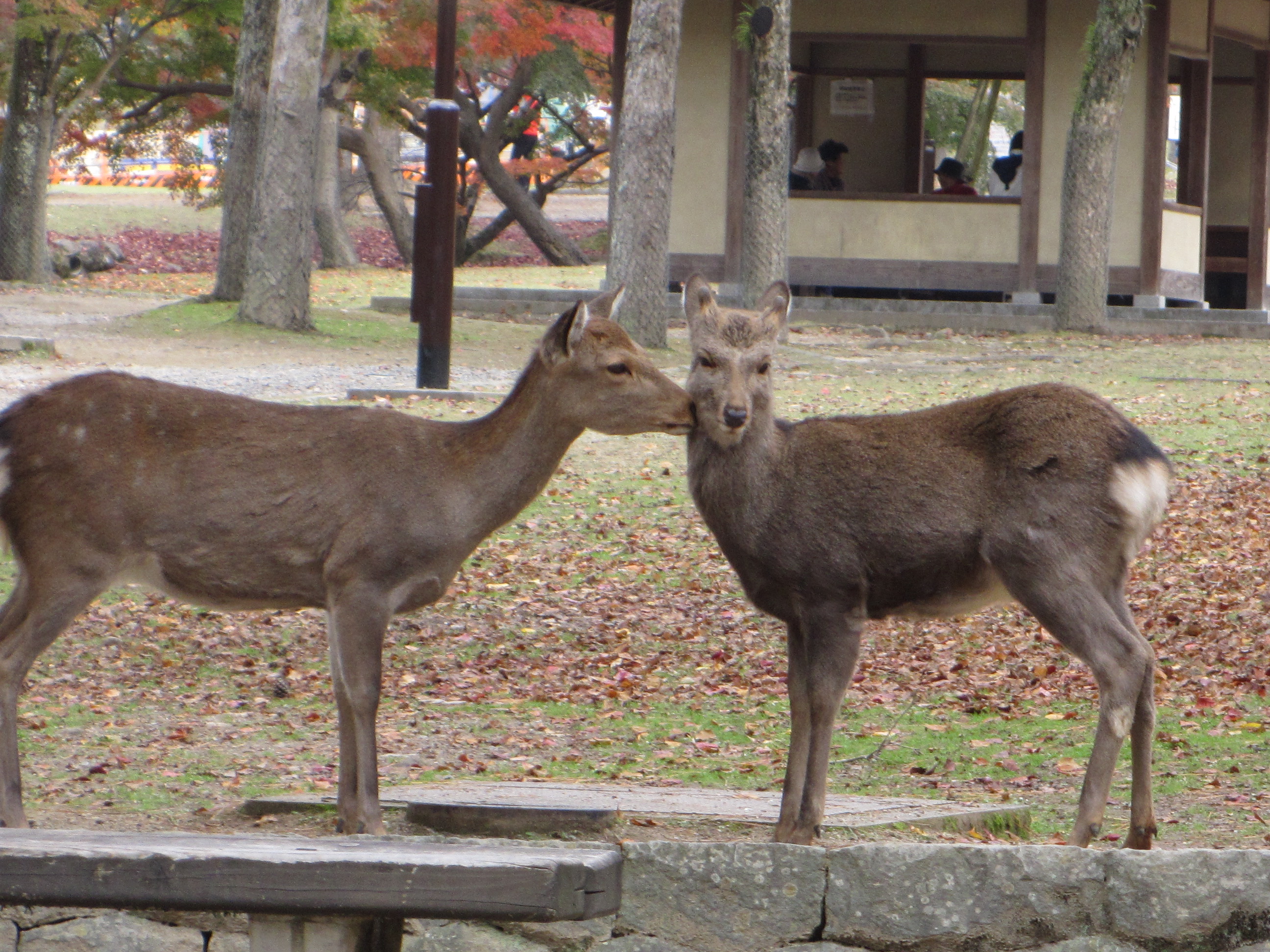
Deer are sacred animals at some of the temple sites. It is believed that one of the deities came to earth on the back of a deer. They run free through the parks and are quite brazen. I would avoid bringing small children with ice cream cones.  (Nara)

Japanese love affair with cats and dogs has created a booming industry in tasteful pet funerals and cremations. The twelve billion dollar industry is expected to increase next year by ten per cent.

The police have lost the battle of banning women carrying two or more children on bicycles, as long as the bicycles are sturdy, and they are not using cell phones or umbrellas.

Kyoto University will be offering the first graduate program in Manga ( comic) studies.

The Japanese are encountering a problem with  hybrid cars and the elderly and hearing impaired. The cars  are too quiet and they don’t hear them approaching. ( and by the way, we have the same cars!!!)

In the west, the recipe for a full life is happiness. In Japan, it is satisfactory performance, duty and obligation.

Japan has never been invaded until World War 2, therefore, ninety- nine per cent of the inhabitants are Japanese. They are also the largest consumers in the world of Louis Vuitton .

Most Japanese are not religious but celebrate traditions. They pray to the ancestors (Shinto) and they pray to Buddha.  They  like to get married in churches, wear wedding dresses and celebrate Christmas.  Who doesn’t like to wear a beautiful kimono to a tea ceremony or wedding?  (Kyoto)

When you pray in a Shinto shrine, you clap to awaken the deities. When you pray in the Buddhist temple, you don’t have to clap because the statue is already there and can hear you. (Miajima, Kamakura)

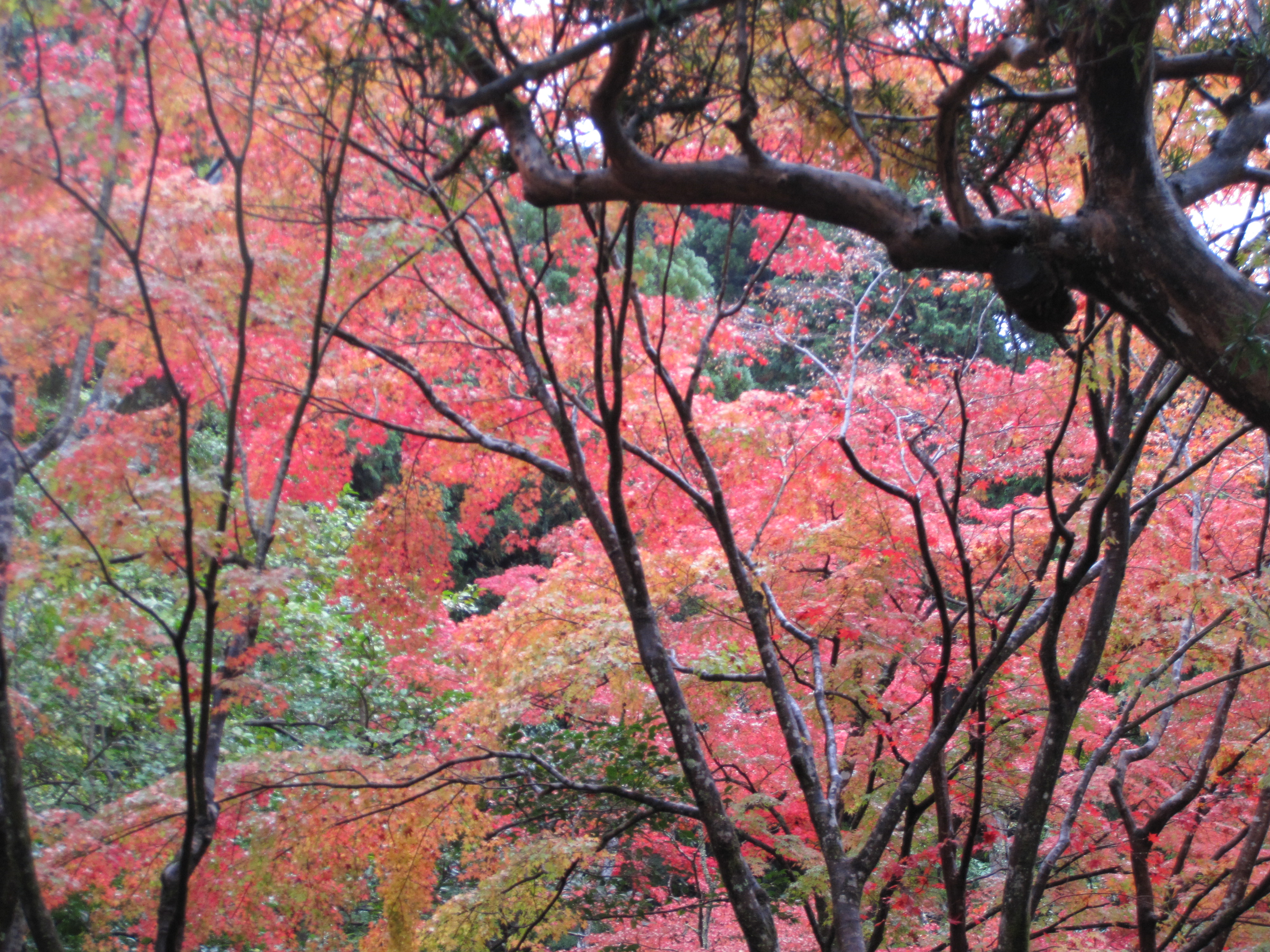
The plum, the bamboo and the pine are happy trees. The cherry blossoms are not happy trees because they are only  in full bloom for one week and show how fragile life is.  (Kyoto)

The correct way to enter a teahouse is to crawl through a hole on the side to show that all who enter are equal. If you eat in a Japanese style private dining room, the waiters must kneel down to your level when they speak or serve you. They cannot be higher than you . ( Many young girls with strong knees are working.)

People who shower quickly once a day and don’t wash their hair every day are unclean by Japanese standards. Everyone seems to be carrying toothbrushes and brushing their teeth in all public bathrooms.

Autumn is the season for luck in Japan and everyone is visiting the shrines. You pay some money, get a box and shake out your fortune. If it is lucky (like mine was) you are done. If not, you tie the bad fortune on to a tree at the shrine to leave the bad luck there.  Hence , a lot of  shrine trees are covered in paper.   (Kyoto)

Everything in Japan is expensive except,  shipping your luggage overnight from place to place, no tipping,  some street fashion ( because it changes so rapidly, it has to be cheap) , and having your crown glued into your mouth for twenty-five dollars.  You have to take your shoes off before entering a dental office but you can leave your lipstick on.

If you are watching old movies in Japan, they are white and black.

Tattoos are not allowed to be shown in public at many resorts and all bath houses.

When it rains in Japan, the airlines wrap your suitcases in plastic.

Stepping on a tatami mat with shoes is like spitting in public.  (Nagaoka, Izu Penninsula)

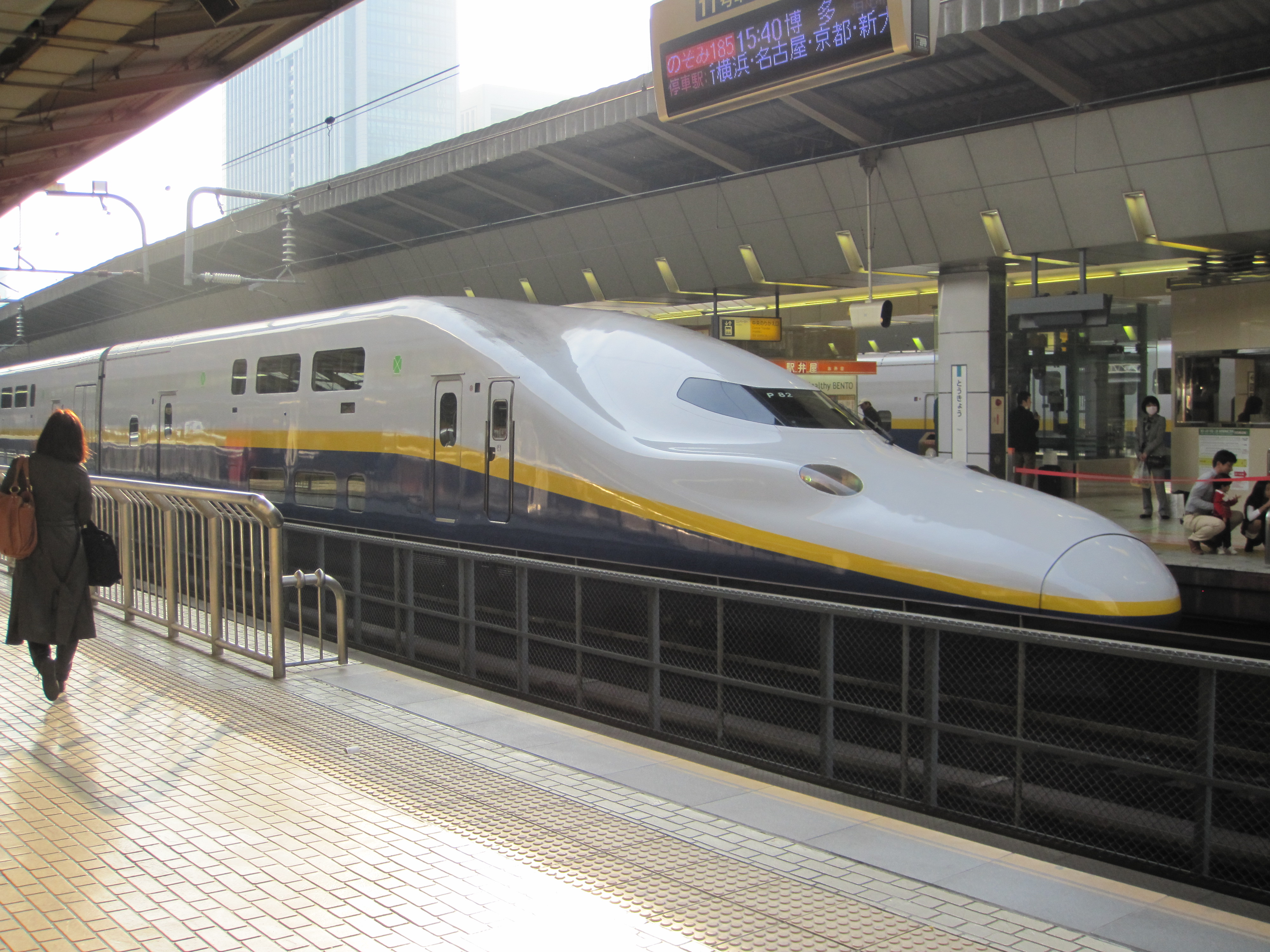
Japanese  trains are known for their schedule and punctuality. It is usual to see foreigners looking at their watches as the train approaches because they cant believe it. The conductors used to be penalized from their salaries if they were late. One day a conductor was rushing to the station and there was a terrible accident and 100 people died on the train. They stopped that practice and instead you hear in both Japanese and English that the train will be one and half minutes late.  (Tokyo)

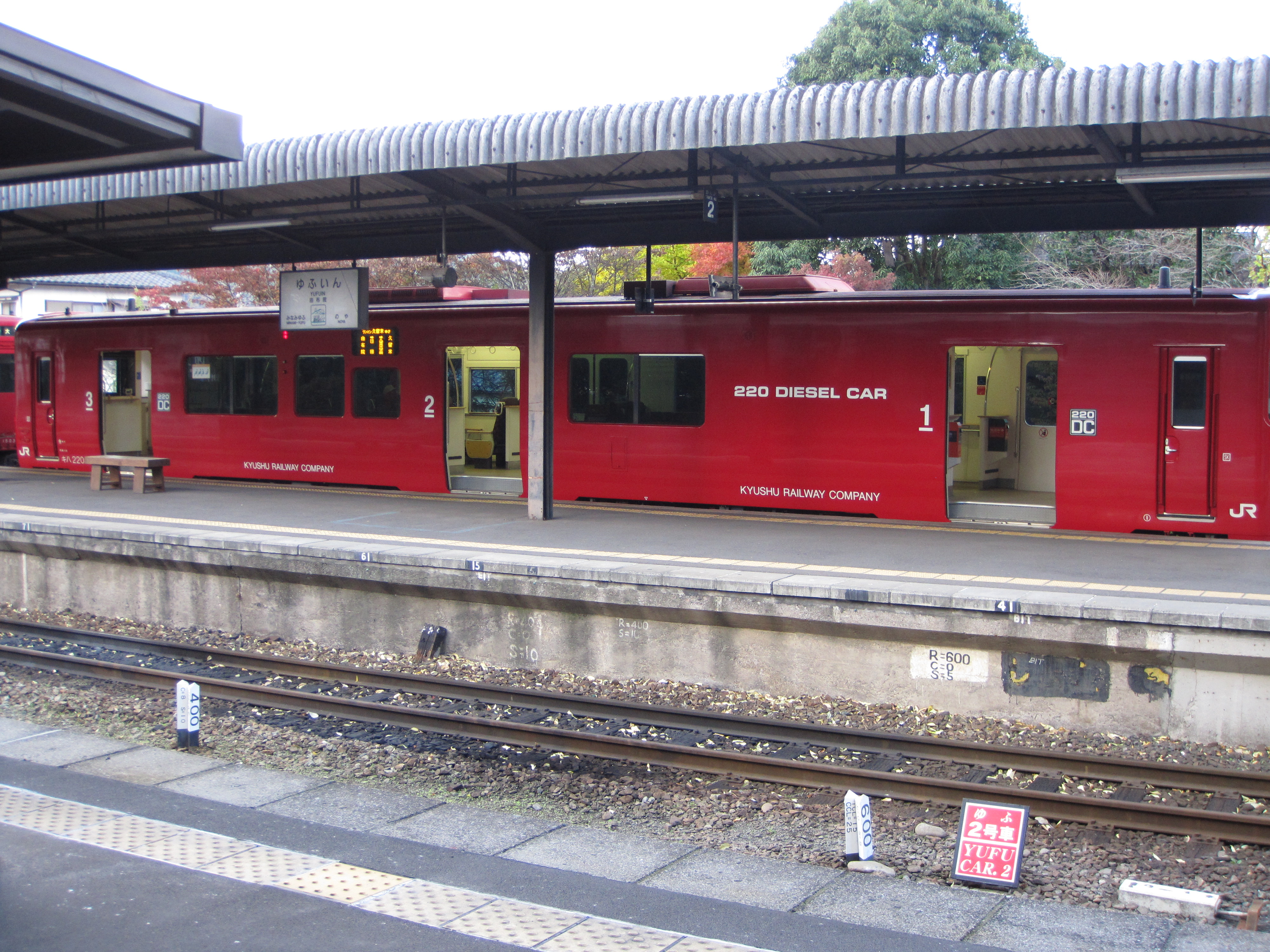
In the country, the trains play Disney music or whistle when the doors are closing. If you approach a train station  in the country and only the foreigners get out, know that they did not consult the schedule . The express doesn’t run after five o clock and the conductor waits for them to get back on the local.  (Yufuin)

Because Japan is surrounded by the sea, there are too many aquariums.  (Okinawa)

There are more than five million vending machines in Japan.  They sell everything from drinks to porn.

Japanese give money for weddings. It must be an even number because an odd number is considered bad luck for the marriage.

Japanese give sweets for presents because they like to give something that will be used up  and not left behind.

see also

Japanese Food https://havefunflysafe.wordpress.com/2012/08/25/japanese-food/

Things I’ve Learned In Tokyo

https://havefunflysafe.wordpress.com/2012/08/06/things-i-have-learned-in-tokyo/

Things I’ve Learned In Okinawa and Hiroshima

https://havefunflysafe.wordpress.com/2012/09/14/things-i-have-learned-in-okinawa-and-hiroshima/

ki o twu kete

JAZ
Things I Have Learned In Tokyo

“We mustn’t allow the characteristic Japanese aesthetic to die out. Aesthetics also include things like a sense of responsibility and a sense of justice. They also incorporate a respect for other people and for nature, an appreciation of the gift of life, and courtesy. They even extend to the ability to look at the world around one, properly.”            Tadao Ando

Things I Have Learned in Tokyo

Tokyo Narita airport is so far away from Tokyo, the word Tokyo should have been left out.

There are a lot of rules to wearing a kimono correctly. Most modern women have not gone to kimono school so they go to the hairdresser to have them tied correctly and have their hair done traditionally. I did notice free kimono lessons in the airport in Tokyo.

If you squeeze a lemon and put a slice of lemon in your sake, it cuts the hangover time in half.

Japanese toilets do everything automatically except actually extract the waste products from your body,. The seats open. They self clean and can play several songs while doing it. There are actually clean bathrooms in train stations.  Be careful pushing buttons if you don’t know what they are.

The Japanese have the same Kanto – Kansai (east – west) competition going that LA and NY has. Tokyo is East and Kyoto, Osaka, and Kobe are west. It is is also carried on very politely so it takes a minute to realize they are insulting each other.

Tokyo loves cartoon characters. Everything has a mascot. The police have a smurflike character. The fire department  has a firefighter with a big helmet and horns. The railway has a penguin (which you see everywhere).  All the large companies have cute little characters as in cute never lets you down.

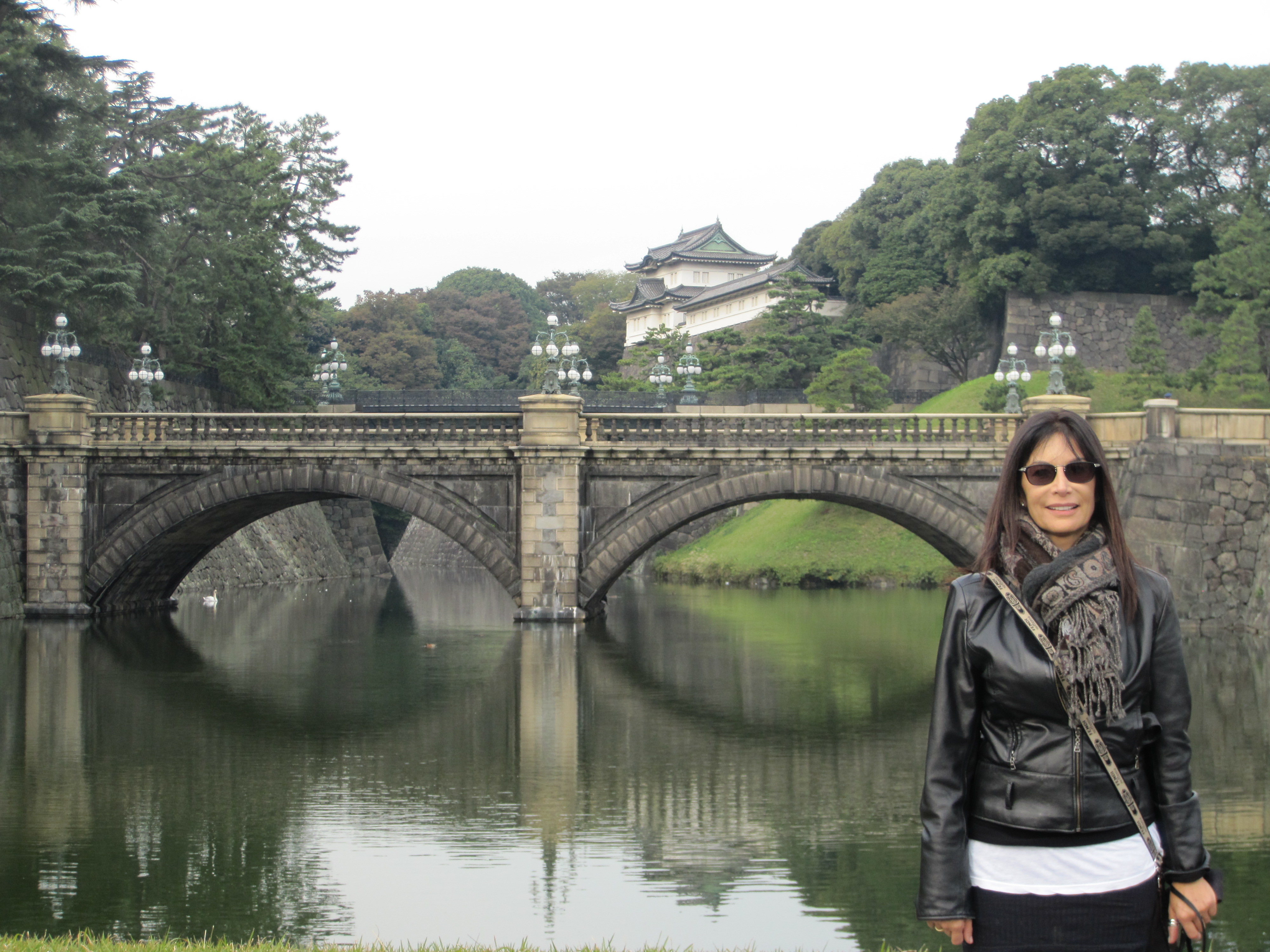
The Imperial Palace buildings and inner gardens are only open on Jan 2 ( for New years greetings) and Dec 23 for the emperor’s birthday. Ive never been in Japan on those days.

In Tokyo, you stand on the left on an escalator. In Osaka you stand on the right. This is always a problem with my sense of direction.

In Akihabara, in Tokyo ( the electronics area) there are many maid cafes. Women dressed as French maids are the waitresses and say things like master can I serve you? They stand on the streets and give out flyers. Modern geisha culture?

Anything can be made out of tofu.

21-21 in Roppongi  is designed by Tadao Ando. It  is Japan’s first design museum. Helsinki has had one for years.

Seeing  Mt  Fuji from Tokyo may not seem like a much of an accomplishment but it is hardly every visible.

Some Japanese wear masks because they are sick, some wear them because they don’t want to get sick and some wear them for allergies. How do you  know which one you are sitting on the train next to?

Tokyo has a no talking on the phone policy on the trains. That doesn’t include texting, emailing or playing games but it does allow tired office workers and students to sleep.

Nothing is so distasteful to the Japanese as feet bottoms  (except when they are giving those painful foot massages). Sox are preferable to bare feet.  There are toilet slippers and other slippers.  Don’t walk out of the bathroom in the toilet slippers.

View is the most important thing to Japanese people when reserving a hotel.


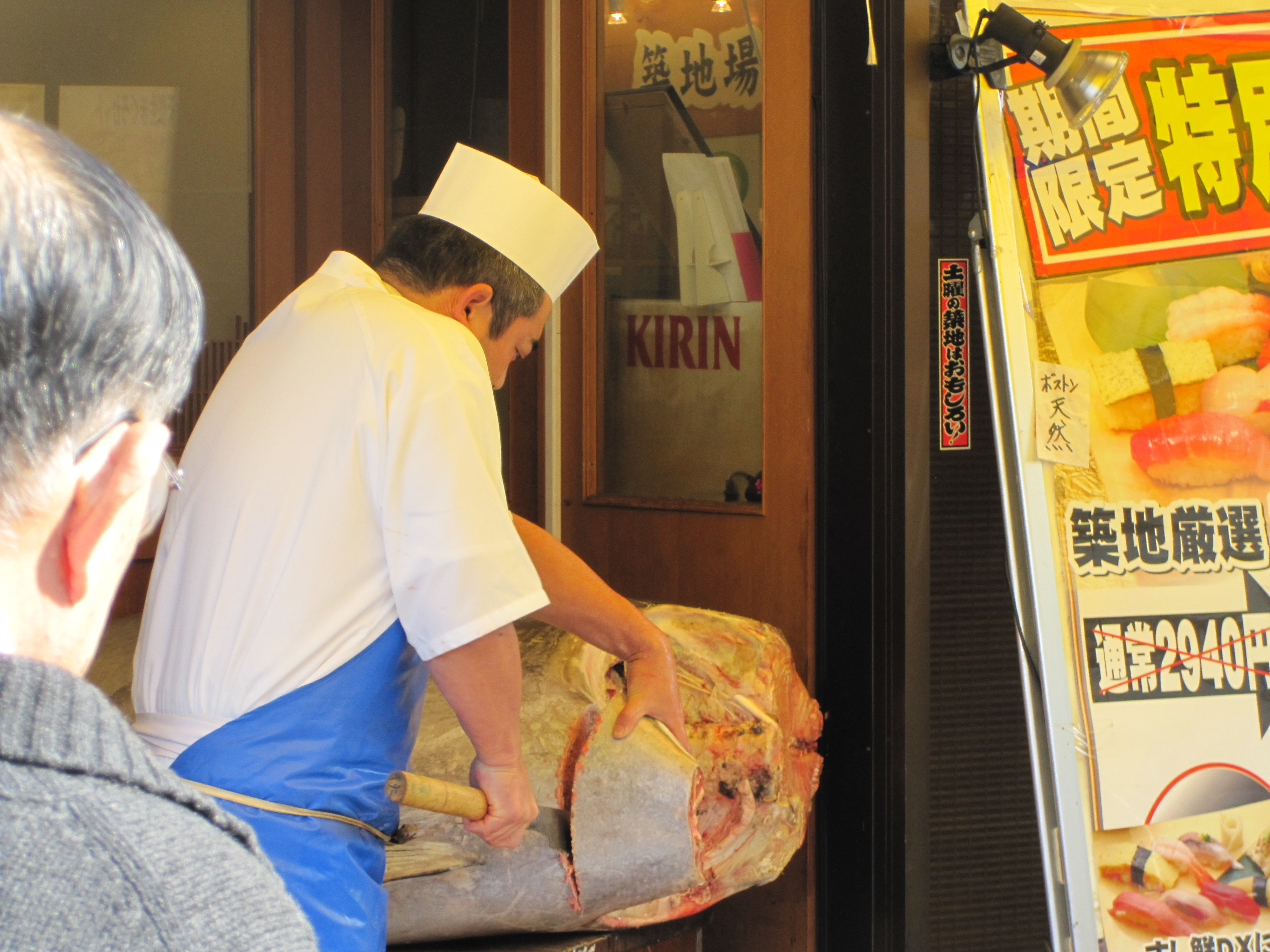
Tsukiji Fish Market in Tokyo is one of the largest fish markets in the world. It handles 2000 tons of seafood daily. It has become such a large tourist attraction and was not built for that so they limit the number of people now to 120 per day.  No heels or sandals (I definitely broke that rule). No small children or pets. No large bags or suitcases. Don’t touch anything. You must apply to see the tuna auction at Osakana Fukyu Center (Fish Information Center) at the Kachidoki Gate, starting from 5:00am on a first-come, first-serve basis. It is good to have fresh sushi for breakfast after the auction. The restaurants are open from 5am to12PM. I recommend eating at Ryu.

Sumo wrestling goes on for six hours. Luckily they only televise one hour and with the close-ups that is enough.

The current Kabuki-Za Theatre is closed until Oct 2013.  ( and when they give a completion date in Japan, it is usually correct, unlike here where they just rely on destiny). Kabuki combines different art forms such as dance theatre, music, costume design and set design.  There is a theatrical form of mime that has become associated with Kabuki Theatre. It is all blended together with the stories that have entertained the Japanese for over four hundred years. Kabuki is repertory theatre.  The same plays are regularly performed. There is no director and very little rehearsal time.  The actors have rehearsed  these roles since they were very young and should know them by the time they are performers. Make sure you get the English earphones so you can follow the story.  The performances are usually about five or six hours long. Sometimes you can purchase tickets for shorter time on the day of the performance. I did two hours and loved every minute of it and didn’t think I would – definitely try it.

The customer is God. As in “May I have the honor to serve you?’ Your happiness makes us smile.  Giving candy after a purchase, wrapping each individual item and carrying your package to the door is business as usual.

Harajuku in Shibuya has become known as the place for the most extreme teenage street fashion. Harajuku girls are girls dressed in many different styles of fashion in Harajuku. There  is punk style, ganguro – bleached hair, fake lashes and fake nails and tan (California girl rebellion against Japanese culture), cosplay – costume based from manga to bands, skaters and goth. Takeshita dori is the main street and is ridiculously crowded on the weekends.

Japanese love coffee.

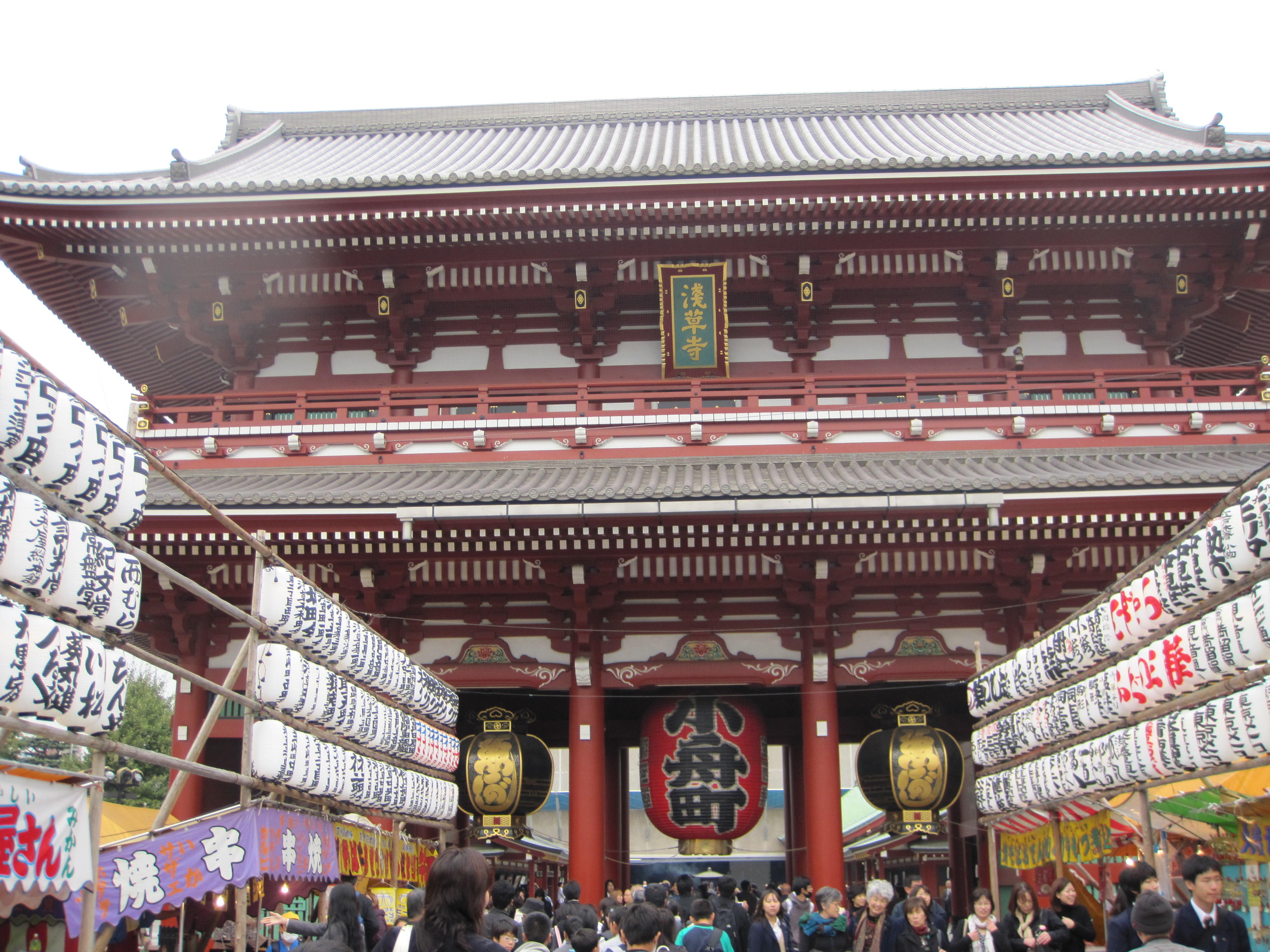
The Sensoji Temple (the oldest temple in Tokyo) is Iocated in Asakusa.  It is nice to get out of modern Tokyo and feel some of the old Japanese culture.

As a fan of taxis, what is better than white gloved drivers with lace seat seat coverings and automatic doors? ( of course none of that matters if you are not with a Japanese person because they don’t speak English and you will not be able to tell them where you want to go)

Tokyo is officially the most expensive city in the world.

The Tokyo skytree is the world’s tallest tower. It is 634 meters and double in size of the Eiffel Tour. It has many shops and restaurants and yet another aquarium in Japan.

Shibuya crossing is one of the busiest pedestrian crossings in the world.(Im from NY and I was a little bit intimidated)

Do not even think about drinking and driving in Japan. The legal limit is less than one drink.  The fine is huge and you could be thrown in jail. Do not even think about getting in a car as a passenger with someone who has had a drink. You also will pay a huge fine.  There are always many taxis in the bar areas.

yo I sorano tabi o

JAZ

My Top Ten Sunrises

“ Living on Earth may be expensive but it includes an annual free trip around the Sun.”

My Top Ten Sunrises

Sunsets are easy.   You are usually awake and can make a  plan.  “Lets  have a drink and watch  the sun set over the Ocean, the River,  the Volcano, the Old City,  the Rainforest  etc.”  They are usually social.  Sunrises in my life  are fewer,   accidental and  sometimes seen alone. My goodbye to a city  is often at sunrise.  I  take a lot of early morning flights .

1. Machu Picchu, Peru   My plan was to meditate at sunrise on Machu Picchu.  By 4:30AM , the road into  Machu Picchu becomes Disneyland on a crowded Sunday. .   It wasn’t easy to find a quiet place .  Machu Picchu is in the clouds. The sunrise is cloudy and rainy most of the time.  Still, the eery light hitting Machu Picchu  in the morning  feels very spiritual.  We will never  know why  Machu Picchu was built and who lived there but we know that every morning they saw this same sunrise.

Image

2.  Mount Masada, Israel   When I was in college,  we climbed   Mount  Masada.  It was very hot and very dark. At the top,  there was  water and a ladle that everyone drank from (I know we didn’t have Aids then, but we did have germs!!) It is still the best water, I have ever tasted.  We sat down to watch the sunrise .  The guide told us the story of the Jews  surrounded  by the Roman army. We reflected on their choice to kill the women and children themselves before the Romans got up there.   It was a somber sunrise.

Screen Shot 2014-11-23 at 10.27.20 AM

3. Venice, Italy    My kids and I were taking a boat to the airport  in the dark as the sun quickly rose over Venice. The colors change with every light and shadow and it is truly the most beautiful city in the world .

Image

4. Havana, Cuba   Leaving Havana in darkness, thirteen years ago,  I was filled with a lot of emotions.  My daughter had performed at the Cuban Ballet Festival. We had no information going in and had no idea what to expect.  It turned out to be one of  the most amazing experiences of our lives.  The dark streets were filled  with humanity going to work.    They were crowding the bus stops to get on the few running buses .    People were selling snacks.   The sun rose over  the busy streets and faded colors of the buildings. It sparkled off the water hitting the  Malecon ( sea wall) and shined on the old cars from the fifties.    I took an imprint in my memory because I knew when I came back and Fidel was gone it would be different.

Screen Shot 2014-11-23 at 10.24.58 AM

5. Barcelona, Spain   was the opposite experience.  It was summer and the city was crowded with tourists. As I drove to the airport at sunrise, the streets were filled with students and young people  who had been out all night, dressed in their club clothes. They were all  on Las Ramblas, trying to keep the evening going.

6. Perissa Beach (black sand), Santorini, Greece   I also had been out all night and now we were sitting on  the beach .  A large Pelican stood next to us, waiting for the restaurant to open for breakfast, as the sun rose over the black sand beach.

7. Gamboa Rainforest, Panama   We came into the hotel at night and everything was very dark .  At sunrise,  I saw and heard the sounds of the  amazing rainforest for the first time.   The sunrise is nature’s alarm clock.  I got up every morning  to lie in my hammock and have a  coffee (best room coffee called Puro –I brought some home) and listen to the sunrise .

Image

8. Cervina, Italy    Sometimes a sunrise involves a decision.  I was seventeen and it was my first trip to Europe. I  had gotten up to ski from Cervina to Zermatt, Switzerland.  We had to bring our passports. (it was so WW2) As the light of day broke,   all we could see was the white of a  huge snowstorm.    I went shopping in Milan instead.  I can be flexible.

9. Bangkok Thailand   The sun rose just  as  we pulled up to Suvarnabhumi Airport.  There was no one  outside  except for two monks wearing saffron robes and sandals. They were leaning up again the modern steel and glass building of the airport. The sunrise reflected them in the glass.

10. Yufuin, Japan    It was our last morning and we wanted to use the onsen (mineral baths) . I was the only American in the ryokan (probably in the town)  I decided not to wear my kimono and just go in my pajamas and a jacket. It was outside and very cold.    To my surprise, the pre dawn bathhouse,  was filled with Japanese women in kimonos  or showering. It was 32F degrees and I just  couldn’t shower outside.  .I jumped in as the sun rose in the sky.  I made so many cultural mistakes that morning (including coffee before breakfast)   Luckily, the Japanese are  very polite.

Image

Brooklyn, NY    When I was growing up,   my favorite place to see the sunrise was to go to Kennedy Airport and watch the planes take off .  After the sunrise, we would have breakfast there.   I wondered when I would be a person, going to some exotic location on an early morning flight.

Fly Safe

JAZ
.