Things I Have Learned In Misiones, Argentina (Iguazu Falls)

Things I Have  Learned In Misiones, Argentina (Iguazu Falls)

“They say that people who live near waterfalls, don’t hear the water.”

Jonathan Safran Foer

Misiones is a province in Northeast Argentina. It is surrounded by Paraguay, Brazil and Corrientes Province.  It was part of Paraguay in the 1800’s.

IMG_1203

The land is mostly covered in a subtropical forest. (Emilio White – photographer)

parakeets IMG_0958

tapir swimming IMG_1908-1

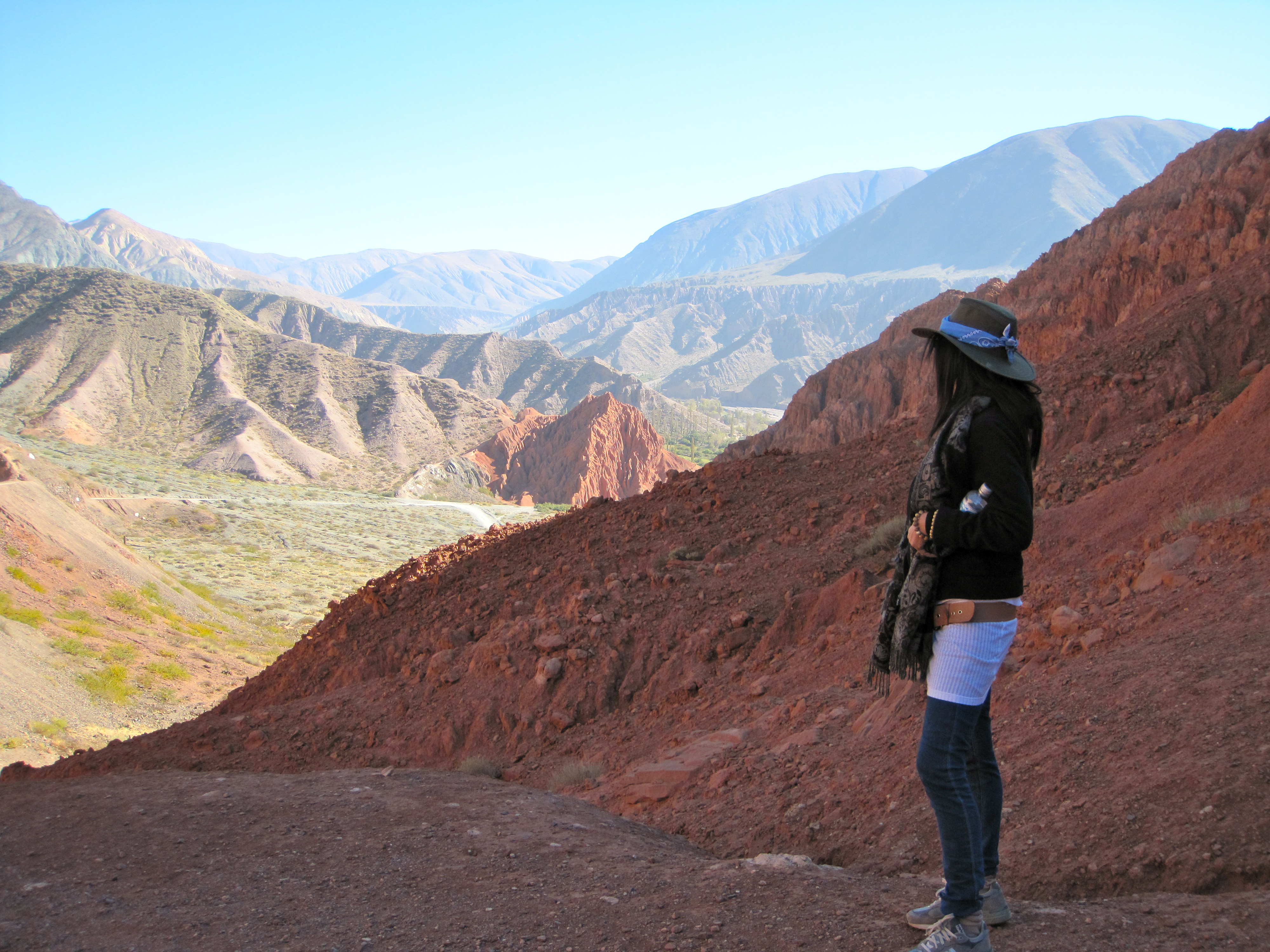
The rocks and soil have a high iron content giving the ground a red color.

IMG_0609

IMG_1589

Paraguay is the largest producer of marijuana in the world. (no it is not, it is yerba maté which is also grown here)

IMG_0627

Yerba Mate is grown in Misiones and Corrientes provinces of Northeast Argentina. It was originally cultivated by the Guarani people. it called mate after the gourd it is drunk from. It is a stimulant but has less caffeine than coffee or tea.

IMG_0506

You can get to Paraguay in ten minutes by  rowboat.

IMG_1578

San Ignacio Mission was one of the many missions founded in 1632 by the Jesuits in what the Spanish called the Province of Paraguay in the Americas during the Spanish Colonial Period.

IMG_1215

This is an odd admission fee price breakdown.

IMG_1209

IMG_1216

The history of these ruins will be familiar to anyone who has seen the movie “The Mission” with Robert De Niro and Jeremy Irons. It is one of the most beautiful musical scores by Ennio Morricone  from a movie and the themes go around in my head as I walk through the ruins. (Play music)

It was designated a world heritage site by Unesco and World Monument site.San Ignacio Miní was included in the inaugural 1996 Monuments Watch by the World Monuments Fund.

IMG_1283

The impressive well-preserved  ruins are “ Guarani Baroque style” .  The mission guides explain how the missions were maintained and run.  Originally the Guarani joined the missions to escape slavery by Paraquay and Brazil.   Eventually the Spaniards got rid of the Jesuits to enslave the Guarani themselves,

IMG_1248

IMG_1243

IMG_1246

The Guarani are a group of indigenous people who live in Paraguay, Brazil and Misiones.(Guarani selling orchids on the side of the road)

IMG_1546

There is 1 per cent left of the Atlantic Rainforest in Missiones. Conservationists are working very hard to save what is left. There are many endangered animals birds and fish and amphibians – including the giant otter, anteater, jaguar and tiger, Brazilian merganser and harpy eagle and crocodiles. (Emilio White- photographer)

toco toucan IMG_3760

capuchin monkey IMG_4728

Iguazu Falls are the waterfalls of the Iguazu River located on the border of the Brazilian state of Parana and the Argentine province of Misiones. The falls divide the river into the upper and lower Iguazu.

IMG_1367

The waterfall system consists of 275 falls along 1.67 miles of the Iguazu River.  (Emilio White photographer)

little fall and bromeliads IMG_8754-1

Alvar Nunez Cabeza de Vaca (head of cow) was the first European to find the falls in 1541. One of the falls on the Argentine side is named after him. The falls were rediscovered by Boselli at the end of the nineteenth century and another Argentine fall is named after him. (Emilio White -photographer)

 iguazu falls at sunrise IMG_5748

No, I am not on this boat. Yes, that is a real rainbow.

IMG_1500

Iguazu Falls has the greatest annual flow of any waterfall in the world. The water falling over Iguazu in peak rainy season has a surface of about 40 hectare (1.3 million ft.).  They are taller and twice as wide as Niagara Falls. IMG_1522

 Do not feed the Coati. The photos will explain.

IMG_1388

IMG_1379

IMG_1446

The Devil’s Throat (Gargantuan Del Diablo), a U-shaped, 82 meter high (269 feet), 150 meter wide and 700 meter long (490 by 2300 ft) cataract, is the most impressive of all marking the border between Argentina and Brazil.

IMG_1399

IMG_1413

Two thirds of the falls are in Argentine territory.

IMG_1424

The water from the lower Iguazu collects in a canyon that drains the Parana River in Argentina, shortly downstream form the Itaipu Dam.

IMG_1318

How is the water?

IMG_1525

Iguazu Falls are the result of a volcanic eruption which left a large crack in the earth.

 IMG_1338

The best time to see the falls are in Spring and Autumn. Summer is intensely hot and humid and in winter the water level is much lower.

IMG_1360

Seeing Iguazu Falls, I stand in awed wonder. They are my first important waterfalls. You know that man can never create anything this perfect. It will always be a favorite place for me. They will be my reminder of beauty and power in nature and life,

Special thanks to my guide, wildlife photographer Emilio White, for sharing Misiones and the rainforest with me. It is always best to see something for the first time with someone who is as passionate about the rainforest as Emilio is. He is currently working on a book about the Atlantic Rainforest and Iguazu Falls, I can’t wait to see it.

IMG_1615

Buen Dia and Fly Safe,

JAZ


Urs Fischer At MOCA – Clay LA

Urs Fischer at MOCA – Clay LA

“Everything is sculpture… Any material, any idea without hindrance born into space, I consider sculpture.” Isamu Noguchi

1500 Volunteers

IMG_0830

IMG_0827

from Elementary Schools

IMG_0819

to Professional Artists

IMG_0794

12,320 bags of clay

IMG_0805

IMG_0788

Four weeks

IMG_0803

IMG_0785

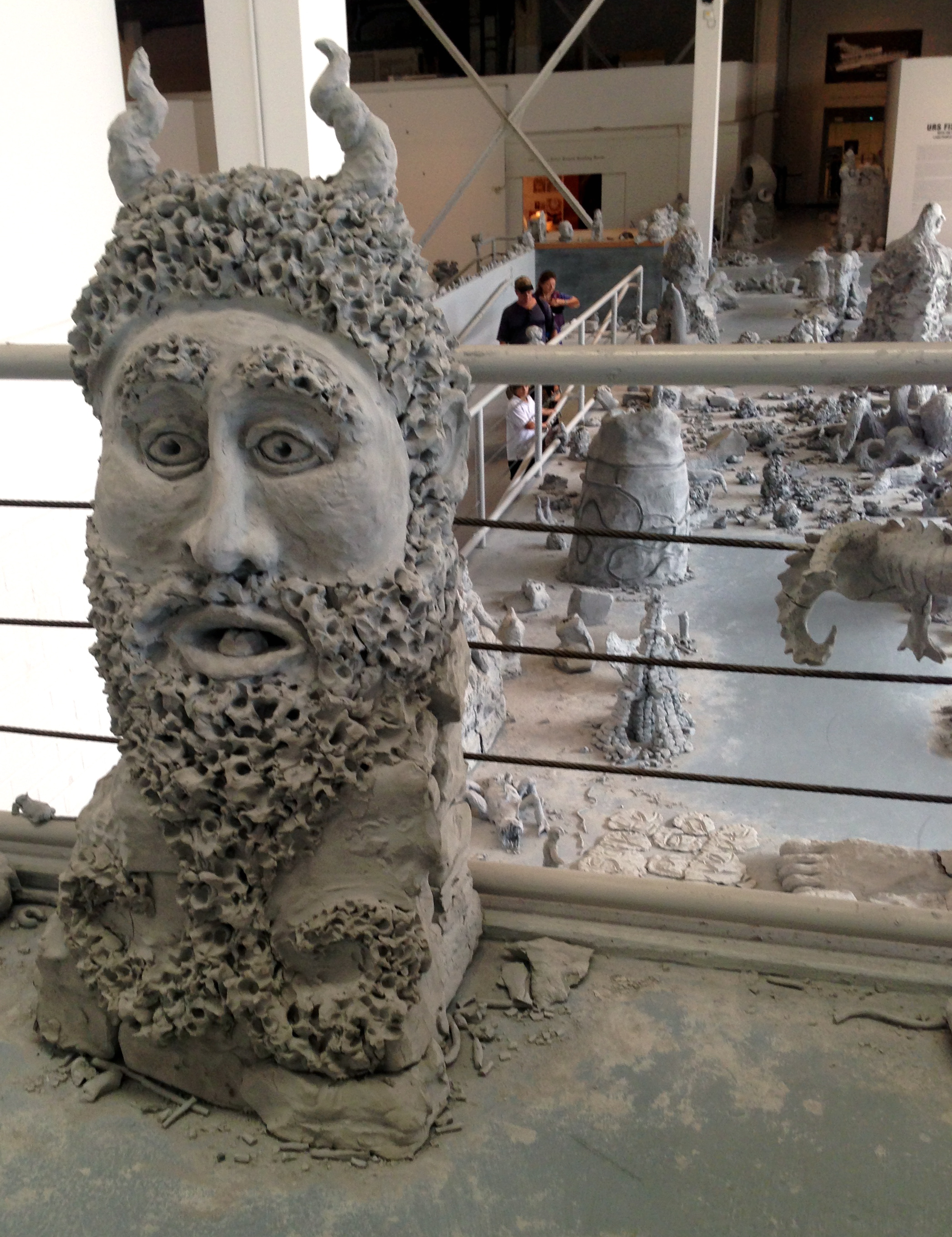
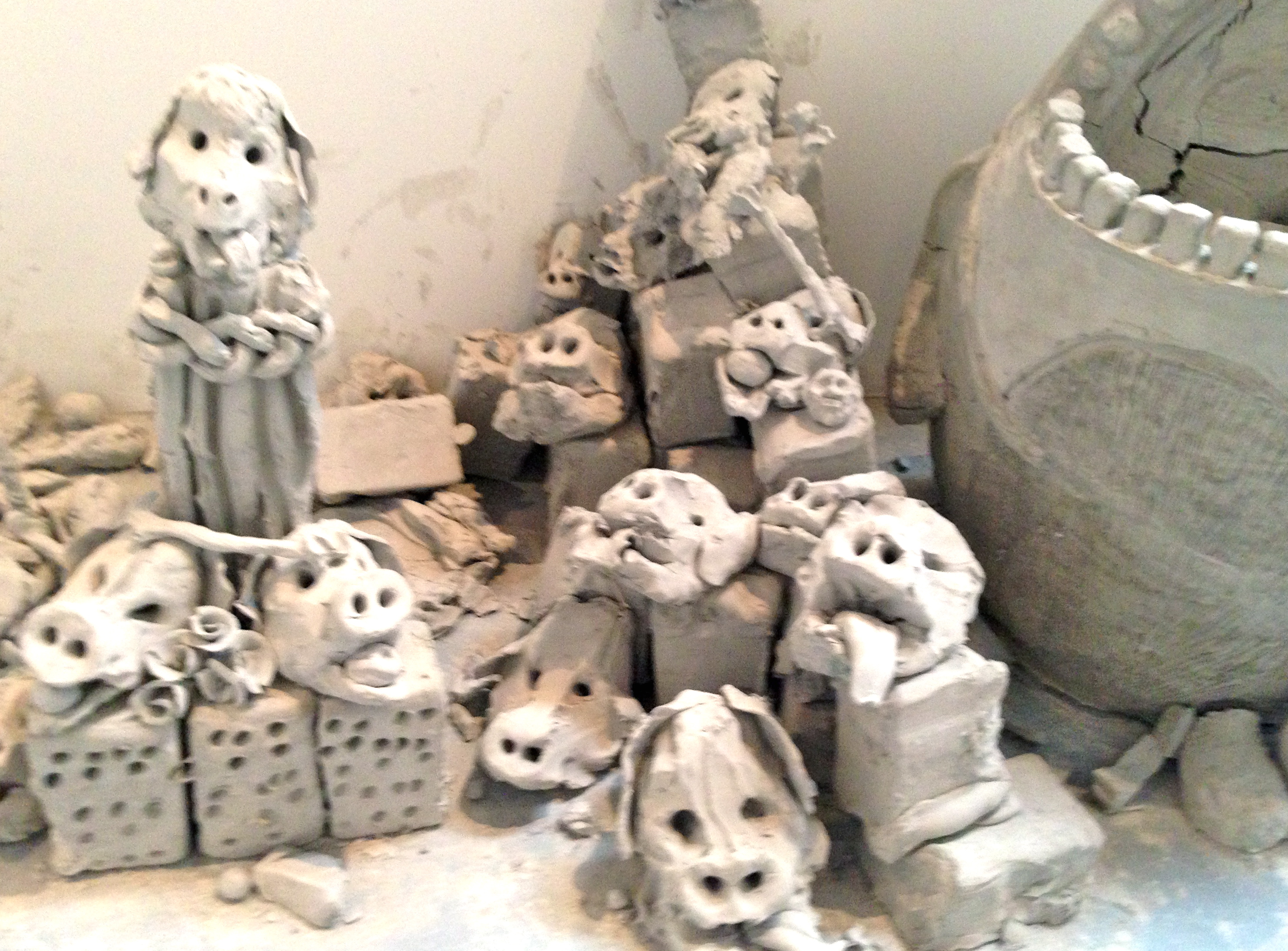
weird, crumbling clay

IMG_0796

diverse, human creativity

IMG_0792

How it happened

Fly Safe,

JAZ

PS We saw it on the last days. It was crumbling and melting at its finest!

Things I Have Learned In Jujuy, Argentina

Things I Have Learned  In Jujuy, Argentina

‘Mountains are giant, restful, absorbent. You can heave your spirit into a mountain and the mountain will keep it, folded, and not throw it back as some creeks will. The creeks are the world with all its stimulus and beauty; I live there. But the mountains are home.”

~Annie Dillard

The Train to the Clouds makes up one of the most important attractions in this area because of its distinct building and engineering.

IMG_0584

It is now closed but you drive along this route of unique beauty where the mountains touch the clouds.

IMG_0593

The Puna is part of the barren high altitude landscape that stretches across the Altiplano in Northern Argentina. It is around 4000 meters high.

IMG_0440

The Altiplano (high plain) is the most extensive high altitude plateau outside of Tibet.

IMG_0464

You don’t see much except wild vicunas and guanacos.

IMG_0647

The viaduct at La Polvorilla is the last stop of the Tren A Las Nubes at 4200 meters above sea level.

IMG_0625

Las Nubes means the clouds. It is a word you quickly learn in Salta and Jujuy (between 10-14,000 ft. above sea level most of the time.) There is the train to the clouds,  restaurant in the clouds, farm in the clouds, gym in the clouds, winery in the clouds,  hotel in the clouds, store in the clouds, etc. In other words, you are very high up in the Andes.

San Antonio de Los Cobres is one of the highest altitude towns on the Puna and is known because it is one of the stops on the Train to the Clouds. That’s about it.

IMG_0602

The cold wind rips through us and it turns out that it is the windiest day in thirteen years. We are at our highest altitude of 14,000 feet. The altitude headache is kicking in and it is freezing.  But I have been in a cozy restaurant drinking fresh coca tea, eating llama and lentils, and talking about the rainy season and mine exploitation.

IMG_0642

IMG_0643

It is not a good day for a drug test when you are at high altitudes in the Andes chewing coca leaves and drinking coca tea. The test is for coca, not the chemicals that turn it into cocaine.

IMG_0654

It takes about three hours on an unpaved dirt road to go from San Antonio  to Salinas Grandes.  When someone tells you that you are taking the road alongside the train to the clouds, it sounds so exciting, but  why do they forget to tell you it is unpaved and very rocky?

IMG_0450

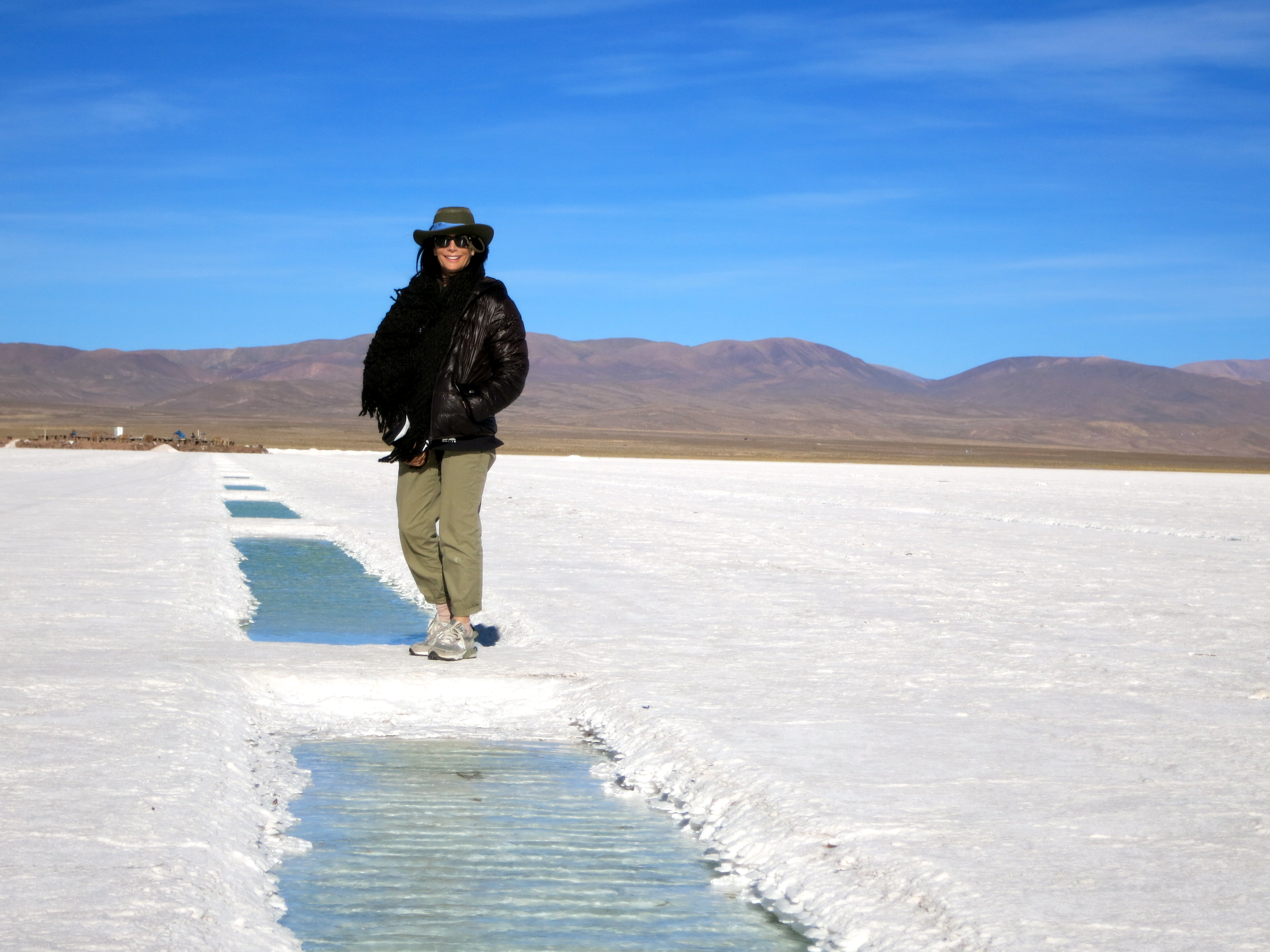
A stunning natural phenomenon, these salt flats took about 22 million years to form the current topography. Salt deposits from a since-disappeared body of water cover the ground here, forming a durable surface that appears snowy from a distance and almost fossil-like up close.

IMG_0666

Salt  can have a big glare, when not in a salt shaker and laid out in salt flats of 8,290 kilometers.

IMG_20130528_144829

The pueblos of Purmamarca, Tilcara and Huamahuaca are on the main highway to the Bolivian border. (Pucara of Tilcara-pre Inca fort)

IMG_0253_2

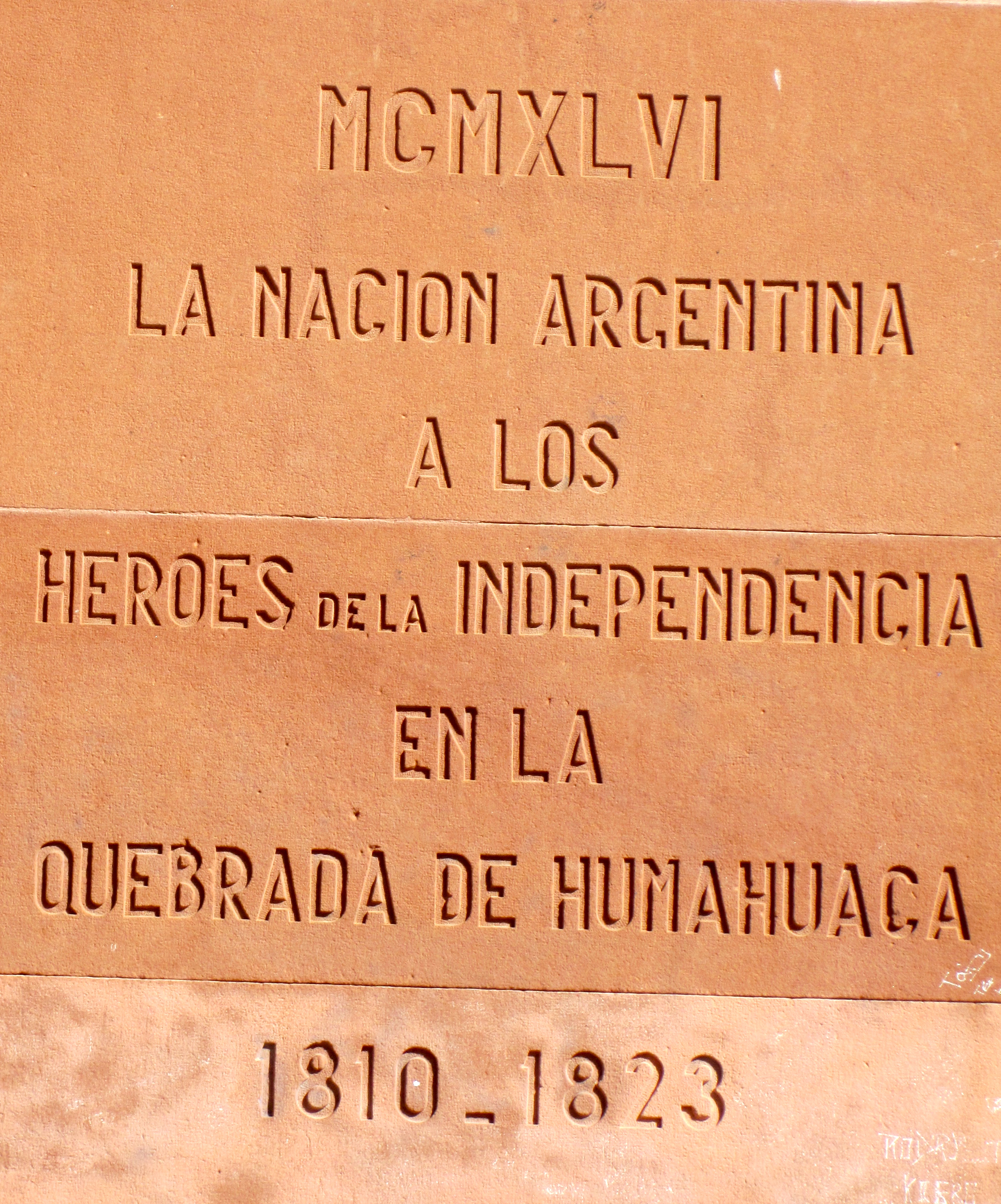
This entire area is the Quebrada de Humahuaca . a UNESCO site for its villages and natural scenery.

IMG_0195_2

IMG_0190_2

The towns are more interesting in Jujuy than Salta.

IMG_0292_2

We see no tourists here from the United States but you can always find South Americans, a few Germans and Australians, and of course the British. They go everywhere.

The Tropic of Capricorn is the southernmost latitude where the Sun can be directly overhead.

IMG_0215_2

One of the markers of the Tropic of Capricorn is in Jujuy province in Northern Argentina.

IMG_0218_2

This beautiful church in Uquia is one of the many colonial churches in Jujuy. It has a fine collection of paintings from the Cusco School of Art . (the Incas were taught to paint for the Spanish and put their own symbols in the paintings)

IMG_0161_2

There are nine angel paintings. When the Indians were told to paint angels,  they did not know what they looked like. The Spanish told them that they look like us, but with wings. They painted soldiers with swords, spears and wings. The most beautiful wings that the Indians knew were the ones from the flamingos of the highland lakes and so the wings in the paintings on the soldiers are pink. The angels have very red cheeks from the wind in the northern Andes against the Spanish fair skin.  (no photographs please)

The seven colored mountain of Purmamarca pink, green, grey, purple, orange, brown, white) is pretty impressive as far as colored stone goes .

IMG_0357_2

It shows many geographical ages.

IMG_0342_2

IMG_0340_2

The mountain is a backdrop for the village.  Everyday, there is a big handicraft fair in the main square of the village which adds even more colors.

IMG_0303_2

IMG_0401

IMG_0392

Purmamarca was my favorite place on this trip. Hiking in the colors of the mountain made me feel like I was in some amazing painting.

IMG_0367

IMG_0350_2

I have so many beatuiful photos it was hard to pick just a few.

IMG_0324_2

IMG_0325_2

Tilcara is a lively Andean village . There is an arts and crafts market and many restaurants around the main square. There are many gatherings in restaurants at night with live traditional music (sometimes from the guests) and local food.

IMG_0231_2

IIMG_0272_2

IIMG_0281_2

IMG_0276_2

Indigenous cultures are very much alive in these mountain pueblos.

IMG_0160_2

IMG_0293_2

Humahuaca is a pueblo in the Humahuaca Valley, 10,000 feet above sea level.   Many Bolivian immigrants sell traditional Andean crafts and coca leaves. The architecture, adobe houses, street lamps and cobblestone streets are all from another time.  The ancestral customs continue here.

IMG_0172_2

IMG_0214_2

The historic Cabildo building (town hall) is the home of the main tourist attraction. There is a stellar performance by San Francisco Solano, a mechanical  statue with waving arms that blesses the audience of tourists and locals every day at noon. It comes complete with music blaring from the nearby Church of the Candelaria..

IMG_0208_2

Gauchito Gil is another folk saint. He was the Argentine Robin Hood who got tired of fighting in the Civil War  and protected the poor instead. He was found in the forest by a general and pleaded for his life. He said to his murderer, “Your son is very ill, if you pray to me, he will live.” This turned out to be true. Again the story spread. Today, small red shrines can be found on the roadsides of most northern Argentine motor-routes, and great pilgrimages are organized to his sanctuary in Corrientes.  Drivers believe that if they fail to acknowledge or leave offerings to the saint during their journeys, they may crash or breakdown. You can find red flags along the  route.  When I was checking the facts (yes, I do that) I found out that Gauchito Gil also has a facebook page.

IMG_1171

IMG_1177

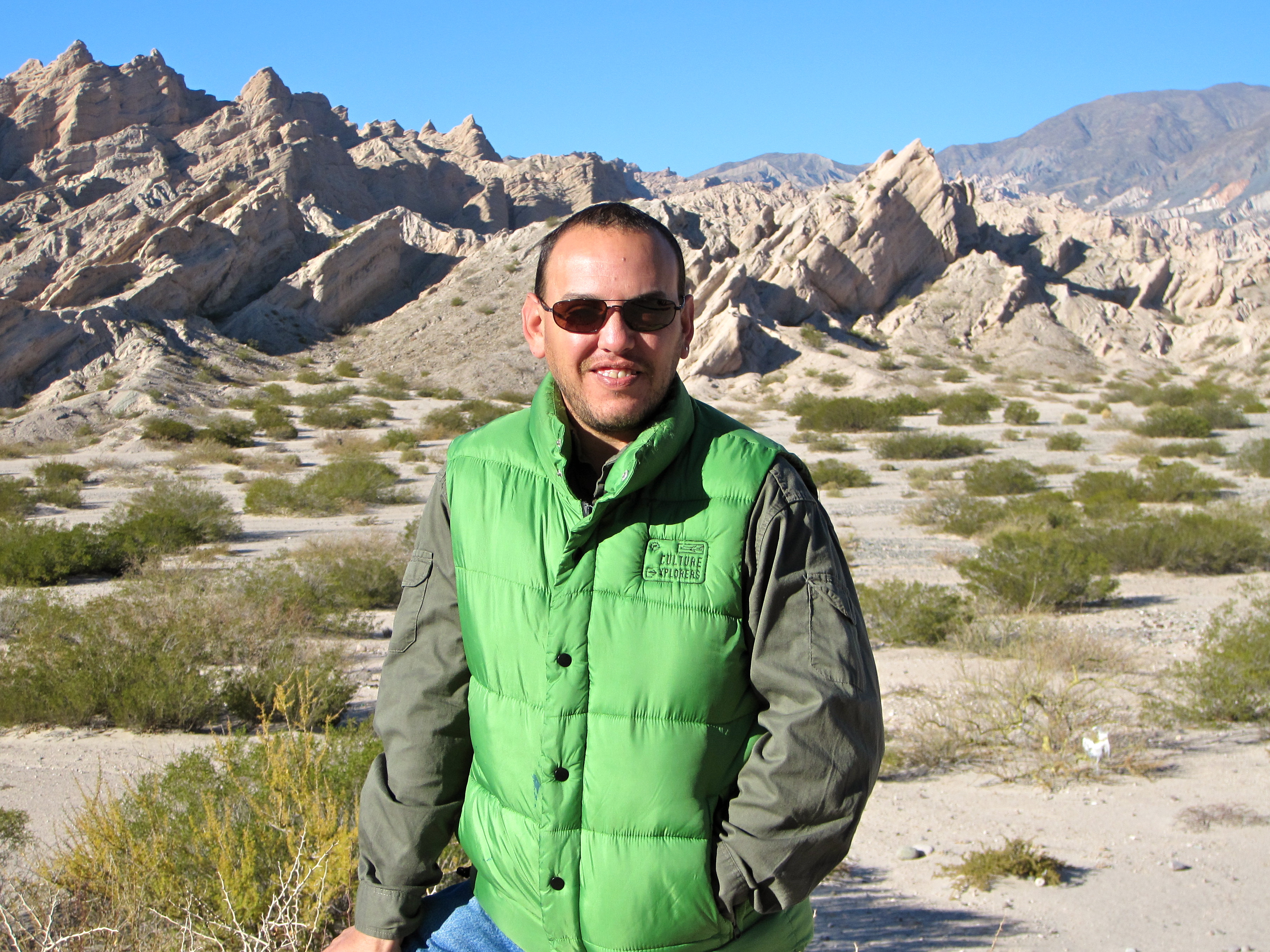
Traveling with Daniel Salazar from Cultural Xplorers is never boring.  His sense of humor, adventure, kindness, shopping skills, intelligence and knowledge of many things made this trip so much fun. I also have to thank him for being my personal photographer most of the time, and I hope we will remain friends.

IMG_0874

It is always good for a New York city kid to spend some time in small villages in Argentina. When you are young, it looks like just the kind of places to escape from, when you get older, you are not so sure.

Buen Dia And Fly Safe,

JAZ

The Perfect Travel Wardrobe

The Perfect Travel Wardrobe

“There is no such thing as bad weather, only inappropriate clothing.” – Sir Ralph Fiennes

Packing takes me a very long time because I need to bring the perfect travel clothes.  The perfect travel clothes work in any type of weather and for all social situations.  I am always  prepared.

Why am I so caught up in this?  Because I truly believe that to have the perfect travel experience, I need to have brought the perfect wardrobe.  In  Vilnius, Lithuania  I almost missed seeing all the brides coming for photographs on the lake  because i was looking up at the sky deciding if I would need to put my raincoat on or not. (one of many, many brides -all weddings are on Sunday -otherwise they start counting the months)

IMG_1316

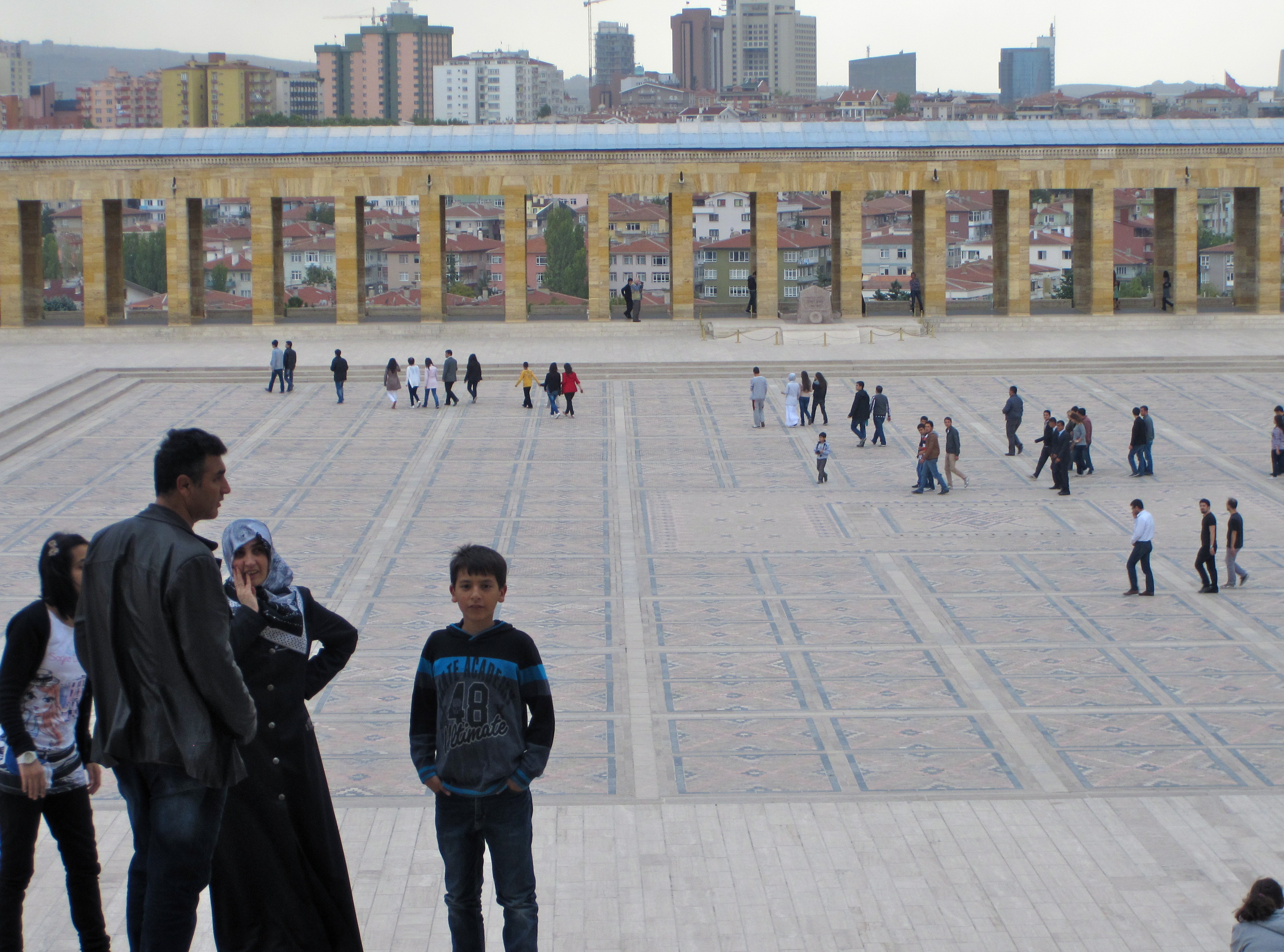
In Ankara, Turkey the worst thing happened.  There was a downpour.  My raincoat  and umbrella were in the van.  I was wearing canvas heeled shoes at the  Ataturk memorial and museum .  The museum had the one souvenir store that didn’t sell umbrellas.  They would not let me walk back through the  U-shaped museum to the van.  No one spoke  English for me to try to explain why I couldn’t get wet. I had to walk  in heels in a downpour across  the wet, slippery, marble courtyard.(very slowly). Yes I was cold and wet for the rest of the day but nothing bad happened.

IMG_4692

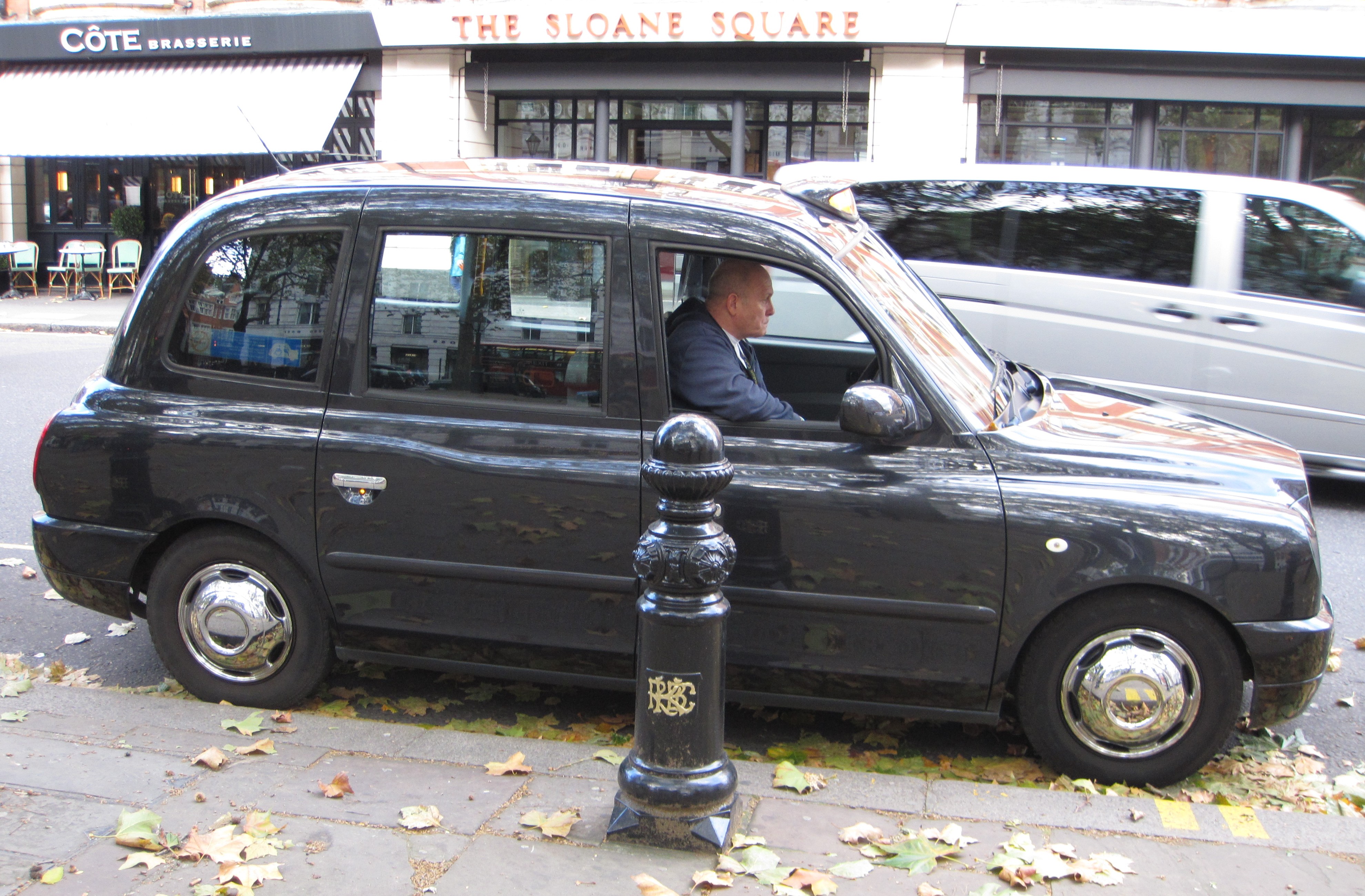
On this past trip to London, they had an unusual cold spell. It was freezing . I hung out more at the hotel, made friends and took more cabs.  I had the wrong clothes and still had a great time and lived to tell the story.

IMG_5193

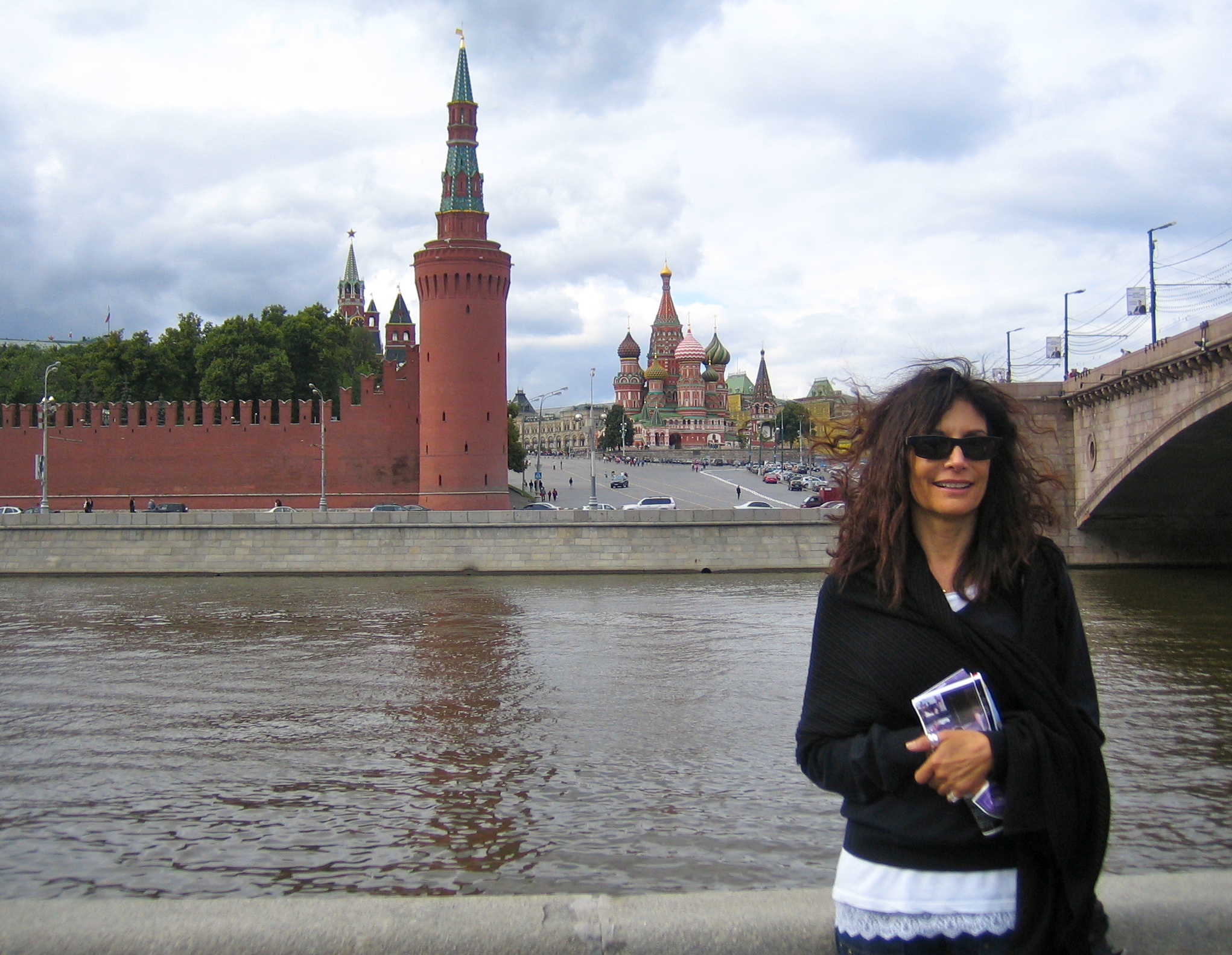
It rained and was cold, almost the whole time I was in Russia.  I did have a raincoat and an umbrella and one sweater  ( which I wore every day).  I was thinking summer travel when I packed.   There is a joke in Russia.  “How was your summer?”  “I missed it. I had to work that day.” I didn’t hear that joke until I was there.

IMG_1545

The best thing is layers. Sometimes I get caught up in that. In the Andes, it can be hot  cold, sunny and rainy in the same afternoon.  I’m taking the jacket off.  I’m putting the jacket on.  Do I need the rain jacket or the sweater? Do I need the mosquito repellent  clothes today or tomorrow? Is this the day I need to wear flat shoes or the hiking boots?

833989003311

I’m always very interested in who I am when I travel because I never dress that way at home. I wear leggings with everything. They don’t take up much space.   I bring a few little dresses or long skirts. Black and white work well.

I hate being dressed wrong.  That is often the case, when I am traveling.  I’m getting used to it.

It takes much longer to pack when I am traveling to different weather in the same trip.  I bring a leather jacket,  thin rain jacket, sweater, hat,  gloves,a thermal shirt. Long and short leggings , tank tops, a skirt and long and short cotton T-shirts. That should get me through everything.

My clothes are sprayed with mosquito repellent when I am in malaria/dengue countries. Only a few things have been treated,  so lately all my pictures are in the same outfits  from different trips to countries that have mosquitos.

I’m a spiller. I live in mortal fear of having a huge coffee stain on my one white shirt so I always bring at least two. It has never happened – yet.  Maybe I am  just more careful with my food when I travel.

I plan. I make lists.  I  edit.  I re-edit.  I edit again.  The rule of thumb is that you always need fewer clothes than you think you do.

Lately I notice i am wearing the same clothes in all my pictures. I have  developed a travel wardrobe. It seems to be working.  The thing about making packing mistakes is that you start to  learn that is ok. It is ok to be  wet, cold, hot  or dressed wrong  and you will still have an amazing trip. Now if only I could learn to bring less shoes.

Fly safe,

JAZ

Wineries Of Salta, Argentina

Wineries of Salta, Argentina

“In wine, there is truth.” Pliny the Elder

A decision that you will have to make everyday in Salta  is  –  Malbec or Torrontes? There is no wrong decision.

Salta does have some of the best Torrontes in Argentina. Though it is widely planted in Argentina, it seems to do best in Salta Province.

IMG_0820

Many of Salta’s vineyards are planted at dizzyingly high altitudes in the mountains and foothills. The mountains serve as both climate protection and irrigation. Grapes grown here reach perfect ripeness and acidity without becoming too extracted or alcoholic.

IMG_0787

A bodega is a winery.

IMG_0668

The Bodegas of Salta are at lower latitudes and higher altitudes than anywhere else on Earth. Interestingly, these two factors balance each other out; the cold temperatures associated with high altitude are tempered by the high temperatures found at equatorial latitudes. The combination creates an unexpectedly excellent climate for quality wine making.

IMG_0780

Some of the vineyards are at altitudes of 10,000 feet. The latitudes are as low as 24 degrees south.  Their proximity to the equator is similar to such places as Egypt and Mozambique.

IMG_1081

Malbec, Merlot, Tannat and Cabernet Sauvignon are the most prominent red wine varieties in Salta, while Chardonnay and Torrontes  are their most respected white wines.

Tannat is a little-known grape, originally from Southwest France.

IMG_0822

If you are a person who gets carsick, you should probably make sure you take proper measures before attempting this ride to the high altitude vineyards. Even then, it will not be good. But later in the day when you feel better, it will have been worth it.

IMG_0589

Fresh air and shopping  can be helpful with car sickness.

IMG_0596

So can a good meal of carbs at Vinos de Payogasta off Ruta 40. (humitas – like a tamale but much creamier inside, lentil soup, homemade ice cream with dulce de leche)

IMG_0651

IMG_0652

IMG_0663

A tour of this small family run winery is interesting. (Salta Wine Route -Vinas de Payogasta). The wine was good. I brought some back from here.  (four planes and a lot of driving on unpaved roads and every bottle arrived intact!!!) The manager was so passionate in how he talked about winemaking. It was wine from the heart.

IMG_0687

IMG_0680

IMG_0676

If you are driving to Colome from Salta City you will have to drive through the Molinos River-always. It is much easier to go in the dry season when we did it. If you are driving in the rainy season, it is best to start out against the current and then go with it. That doesn’t always work.  You can still get stuck and your car may turnover and never be the same.

IMG_0828

IMG_0827

Colome, Salta is one of the world’s highest vineyards.  Donald Hess, an eccentric billionaire  planted vines high up on the mountain , at 10,206 feet.  He had them certified by the Guinness Book Of World Records as the highest vineyards in the world.

IMG_0825

The James Turrell Museum opened in 2009  at the Colome Vineyards.  James Turrell is a contemporary artist who works with light in space. He does incredible installations and has retrospective shows running In NY and LA.

IMG_0818

I know I have seen  more narcissistic  things than some billionaire opening a small modern art museum for an artist he collects in the middle of  a winery, at 10,000 feet above sea level,.that doesn’t get much foot traffic, and shows eight installations.  At the moment, I can’t think of what that could be. The museum is closed Mondays and you should probably call during the rainy season.

IMG_0790

Colome Bodega is the oldest vineyard in Argentina. It is celebrating its 180th birthday.  The Hess family bought it in 2001.

IMG_0801

The road from Molinos to Cafayate  is not so paved.

Cafayate is very quiet during siesta time (12-5)

IMG_1051

IMG_1053

The wines of Cafayate are strong and flavorful with intense color.

It was here that Jesuit missionaries first planted grape seeds from Peru in the 1550’s, having failed with an earlier attempt near Buenos Aires.

IMG_1078

The Jesuits began the first vineyards in Cafayate, to make wine for church.

IMG_1080

In Cafayate you can have wine flavored ice cream at Heladeria Miranda. (malbec or torrontes?)

Finca De Las Nubes in Cafayate  means farm in the clouds. The wines are farmed organically-no chemicals, clean air, pure water and altitude. (and also our best lunch – fresh sheep goat and cow cheeses with avocado and baked apple and of course meat)

IMG_1039

IMG_1034

IMG_1035

IMG_1038

Wine barrels make excellent tables. (Finca De Las Nubes)

IMG_1030

Jose Luis Mournier has made wine here for almost twenty years. He came from Mendoza and wanted to build a winery to leave to his children. The winery is so high up in the mountains that on some days it is literally in the clouds.

IMG_1041

IMG_1048

Argentina is the fifth leading wine-producing country in the world. It is the largest wine-producing country in the southern hemisphere. Salta is tiny compared to other Argentine wine regions and only produces 1% of Argentina’s wine.

IMG_0809

Though Salta had these natural advantages, it has only been in the last ten years  that the bodegas of Salta have really learned how to improve the quality of their wines. At this rate, they could become one of the important wine regions in the world.

Buen Dia and Fly Safe,

JAZ


Top Five Countries Americans HATE

Top Five Countries Americans HATE

“They hate because they fear, and they fear because they feel that the deepest feelings of their lives are being assaulted and outraged. And they do not know why; they are powerless pawns in a blind play of social forces.” Richard Wright, Native Son

CNN did a news report on the top five countries that Americans hate. It must have been a slow news day. Hate is a very strong word to use for countries. I looked at the list and it should have been the top five countries Americans fear. Isn’t hatred really fear? If you start making a list of the countries you hate, it will be easy to add more. A little hatred goes a long way.

5. Palestinian Authority

4.Afghanistan

3 Pakistan

2. North Korea

1. Iran

I looked up the countries Americans love and couldn’t find any. According to the internet, we only like or hate countries. Here are the top three countries Americans like. I guess Americans like countries they connect with or that make them feel safe. We seem to have forgotten WWII now so maybe the War on Terror will some day be a thing of the past .

3. Japan

2. France

1.Canada

This led me to my own list. Countries I will probably not go back to. I certainly don’t hate them. There were many things I liked about them. It helps if they have great art , architecture, Machu Picchu, shopping and beaches. But the reality is, if I don’t like the food, I’m not coming back.

4. Russia

3. Hungary

2.Lithuania

1. Latvia

I do really like the bread in these countries. Lithuania would be my #1 country in which  to eat bread because I love dark dense bread.

My favorites list  is not based on food, but coincidentally  consists of countries that serve my favorite foods –  fish and pizza. Everything else they serve is equally delicious.  I am starting to see a relationship  between dining and favorite countries. Food is definitely a big part of the cultural experience.  I didn’t have a lot of fish or pizza in Turkey but I did have pide ( bread melted cheese and toppings). My favorite countries (and food ) so far:

5. Italy

4. Peru

3. Croatia

2. Japan

1. Turkey

I will be happy to keep adding countries to this list !!!!

Fly safe.

JAZ

A Perfect Day In Buenos Aires

A Perfect Day In Buenos Aires

“Without the streets nor dusks of Buenos Aires a Tango cannot be written.” Jorge Luis Borges

Every morning is a new beginning.   Sometimes, when you are fortunate, it is just another perfect day.

It started in Tigre. Tigre is still an important timber processing port about a half hour outside of Buenos Aires. The “Puerto de Frutos” (fruit port) is now a crafts fair located in the old fruit market by the riverside.

IMG_0521

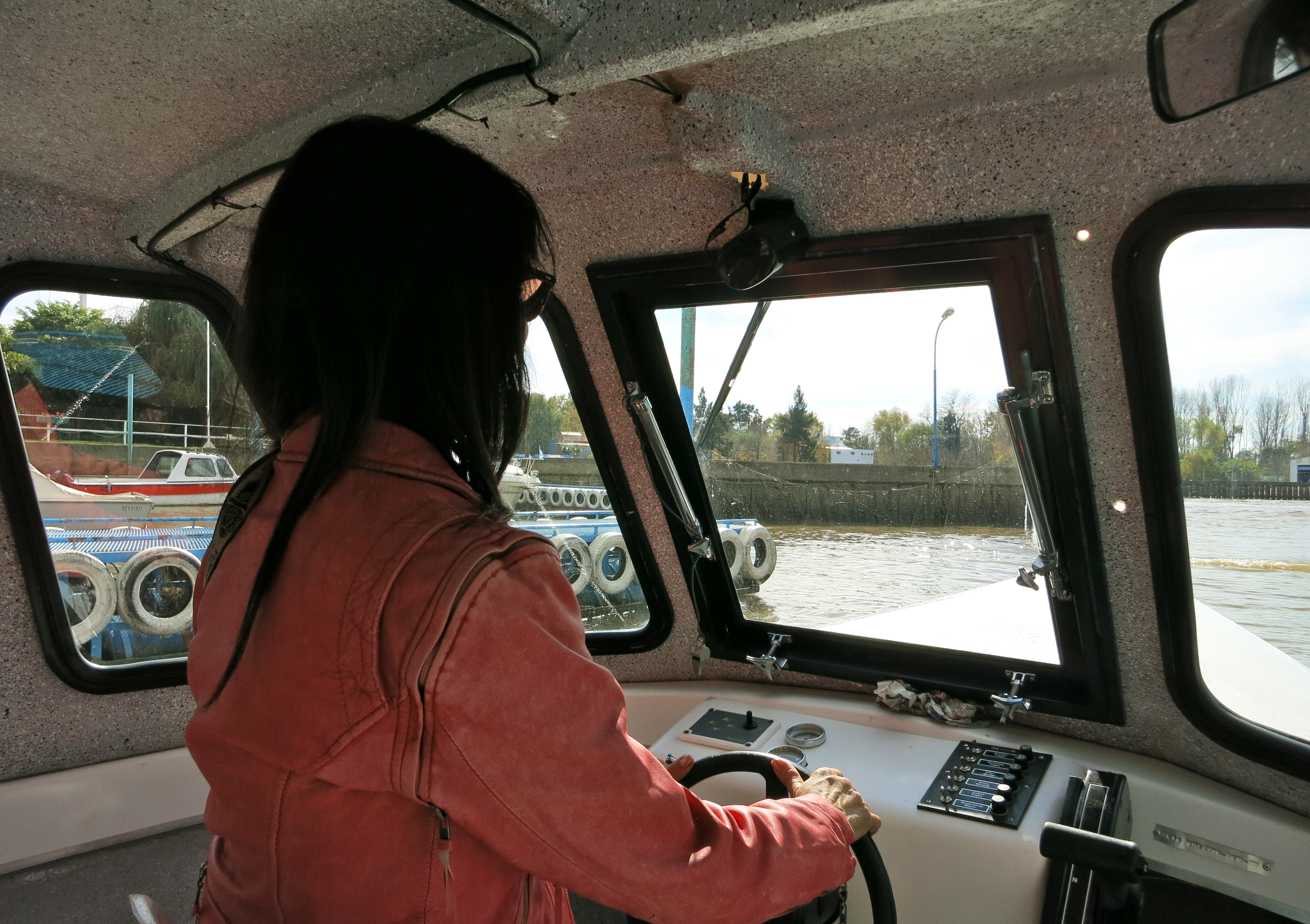
I looked at the brown murky water (it is clean but filled with sediment not pollution) and lush foliage and really wanted to explore.  Andres, my tour guide said his boat was nearby. (unplanned). His boat is named Juan D’Arienzo after a famous tango orchestra director.

IMG_0533

.

We sailed off through the different rivers of the Delta del Parana. It was Sunday and many people were out in their rowboats. We passed the supermarket boat bringing supplies and also the public bus boat.  We saw the church and school and many of the homes on the islands.

IMG_0207

IMG_0529

IMG_0543

I loved being on that river, It was a calm and peaceful day but I knew it could change in a minute  with a rainstorm, wind or dry spell.  Are we like that also? Always moving and then  changing when things happen?

IMG_0211

IMG_0549

Tres Esquinas means three corners and is named after a famous tango.  The restaurant is located in Barracas, a working class barrio in Buenos Aires .  It is definitely a local place to have steak and empanadas. It was filled with families having their large midday meal. We had a couple of empanadas each.  They were muy sabroso. I think it was about two dollars. (I am bad at conversion) delicious and economical.

IMG_0260

IMG_0261

I love outdoor markets but the Sunday antiques market in Plaza Dorrego  in San Telmo is a phenomenon. The antiques are around the plaza but the shopping continues with arts and crafts vendors for many blocks. It is curbside capitalism at its finest.

IMG_0305

There  is so much to see – vintage soda water bottles, old telephones, mate cups and  kitchenware  are on display everywhere.  There is also a produce market. Tango dancers are on every corner. It seems as if everyone in Buenos Aires is here, shopping or hanging out. It was overwhelming even for a professional shopper like myself and so much fun to see.

IMG_0308

IMG_0310

IMG_0291

La Confiteria Ideal did not start as a tango hall but as  a pastry café in 1912. In the seventies it became a venue for concerts and many famous people performed here. But it the nineties it became a tango hall. It has been the location of many tango scenes from movies. Its faded glamour was a perfect background for the faded glamour of the tango dancers I saw that day.

I was there on a Sunday afternoon . They dance from three until nine. This is  very early for a milonga (place where people gather to dance tango) which doesn’t usually start until eleven. The dancers were mostly older and seemed to know each other. They had come here for many years. The men sat on one side and the women on the other.  The men signal silently for a dance across a crowded room with the nod of their head, a wink, or a raised eyebrow.

IMG_0324

The older generation danced with the awkward sensual grace of people whose bodies no longer moved the way they used to but their soul remembers.

IMG_0328

Tango is about emotional connection and trust. There’s a saying in Spanish that captures the importance of the embrace in tango: “El abrazo es mas importante que el paso” (The embrace is more important than the step) ). In the embrace there is trust without intellectual analysis.

tango

There was a lesson in watching these older people completely submit themselves to the dance and the moment. There was no before and no after  -simply dancing.

IMG_0316

The music of the tango is from the orchestras of the thirties fourties and fifties. It is the music of Buenos Aires. It is also some of the music of my childhood. My parents were folk and ballroom dancers. I learned the tango steps when I was five.  I can  play a few songs on the accordian. I never thought I would ever admit to that.  Watching the milonga tango dancers, brought back many memories of my childhood. It’s amazing how much you can remember with a few notes of a song. (Juan D’Arienzo , tango orchestra-I love this video)

Dance has been a big part of my life. Andres Miguel my tour guide is a tango dancer.  Everything we did that day was related to tango  –  a boat on a river, good food and shopping, a milonga and always tango stories. He was the perfect tour guide for me and gave me a gift of the perfect day. Muchas, muchas gracias Andres. tango@culturacercana.com.ar

IMG_0259

Buen Dia and Fly Safe

JAZ

Things I Have Learned In My First Year Of Blogging.

Things I Have Learned In My First  Year Of Blogging

“A journey of a thousand miles must begin with a single step.” Lao Tzu

You must promote your blog shamelessly . I thought that would be a problem for me but it turns out that I can be pushy.

The internet is all about social media and less about content.

Hits and followers are different.

Views and visitors are different.

Widgets are  important.

Plug-ins are important. I don’t know how to use them yet.

Search engines are your friend.  Like real friends, you have to take the time to get to know them and sometimes they are hard to figure out.  Google Plus and Stumble Upon are also friends.  They are more like the kind of the friends that do for you what you do for them.  It turns out that Lonely Planet  is a good friend.  Who knew? I didn’t think I was that kind of traveler. Reddit is my best friend.

The Internet loves food.

The Internet likes lists.

There are all kinds of tools for social media. There are many online self-help tutorials. You probably have to know social media or have that kind of brain to get through the tutorials.  For me, it is math all over again.

On the internet, as in life, you can always pay people to help you. The only ones I have found are very expensive and deal with corporations.  I need one of these people.

You can also pay for hits to your blog. This sounds stupid because you are not building readers but apparently is a good thing because the more hits, the easier you are to find on google.  I havent done it. It reminds me of being friends with  kids whose parents gave me candy (I wasn’t allowed to have  sugar as a kid)

As the birds in my neighborhood say, It’s always better if you tweet. I don’t.

The people closest to you will probably not read your blogs every week. Do not take this personally. Your friends probably don’t read them  so much either.  When you talk about a blog, they stand there with a glazed expression and hope you don’t question them.  My neighbor reads my blog every week.  Guys who  like you  sometimes read your blog. Guys who like you a lot read enough of it to ask a question every week.

The people who do read them are people who are interested in what you write about. I have travel writers, photographers, bloggers , tour guides and tour companies,  travel agents, travelers and people who want to travel more, who do read it.

You know your blog is getting out there when people start writing mean things.  Some internet people are not so nice.  Also, if you are going to write something mean, spell it correctly.

People from 102 countries read my blog. The top countries are US, Turkey, UK, Japan and Canada.

In the past year one person from each of these countries has read my blog –Bahamas, Latvia, Uruguay, Kenya, Costa Rica., Aruba, Saint Kitts and Nevis, Guernsey (where is this?), Kuwait , Uzbekistan, Togo, Ethiopia, Yemen, Iceland, Nepal, Cambodia, Macedonia, Malta, Lithuania, Georgia, Guatemala,  and Palau. It is like the opening ceremonies of the Olympics.  Who are these people?

I spend more time trying to learn social media than actually writing. It is not as much fun.

I need all the help I can get.  Anyone who knows about this stuff, ( im supposed to say tweet me, facebook me, email me )but  at least comment on my blog and hook me up.

Thanks For Reading and Fly Safe

JAZ

Things I Have Learned In Salta, Argentina

Things I Have Learned In Salta, Argentina

“Should you shield the canyons from the windstorms, you would never see the beauty of their carvings.” Elisabeth Kubler-Ross

Salta is a province in Northwest Argentina. Matt Damon and Robert Duvall are married to women from Salta.

One of the most beautiful drives in Argentina is from Cafayate to Salta City   through Quebrado de Cafayate -especially if red is your color.

IMG_1088

The view is  breathtaking. It looks like Arizona but  it is much more accepting of Hispanic people.

IMG_1119

Stops along the way include the dis Garganta del Diablo (Devil’s Throat), IMG_1129

snacks,

IMG_1125

a musician-friendly natural amphitheater, IMG_1134

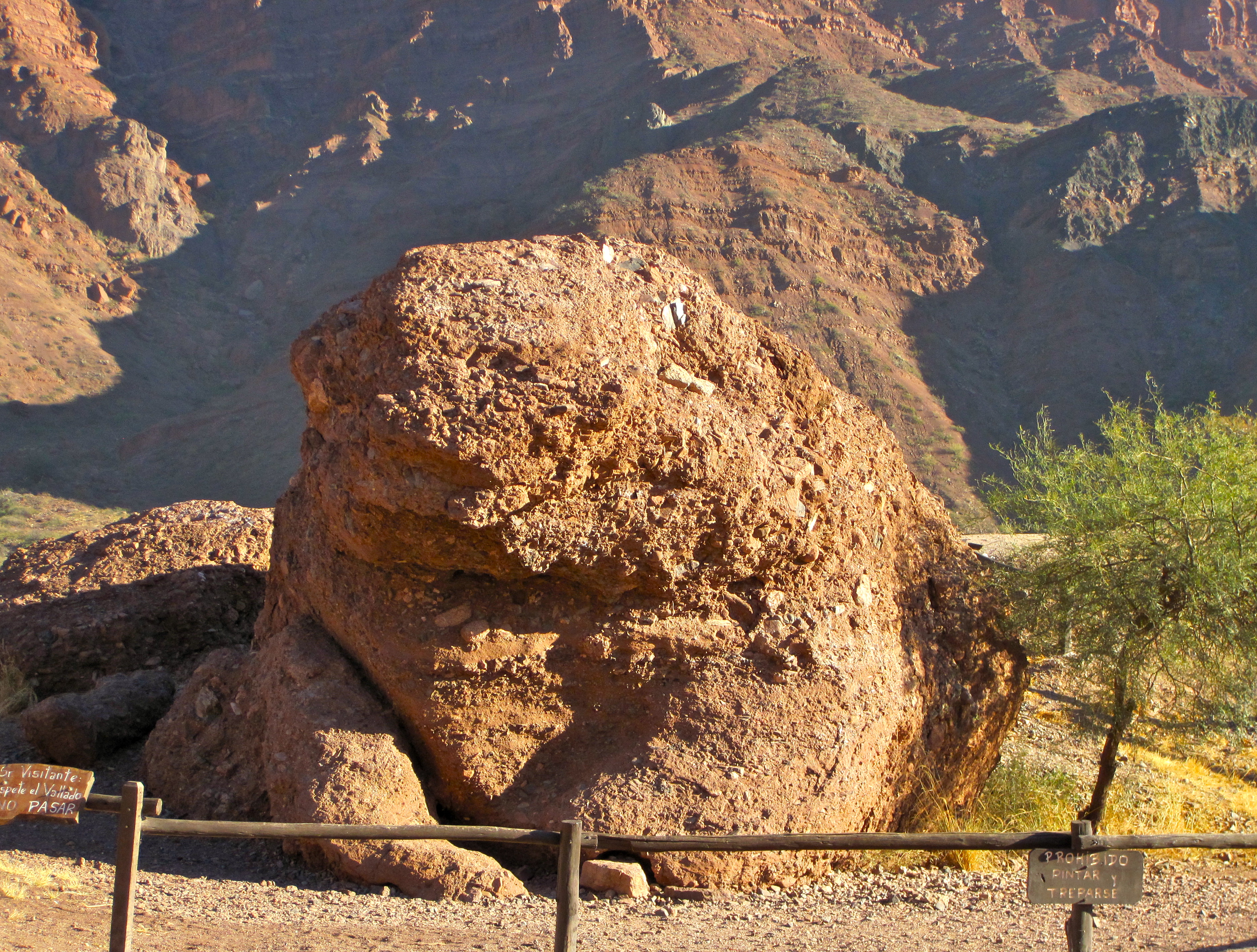
other natural rock formations that look like a frog, a saint and an obelisk.(frog)

IMG_1109

and shopping,

IMG_1127

IMG_1152

Anywhere you’d like to stop and take a photo  is worth it. IMG_1139

The road from Cachi to Molinos is not so paved.

Cachi is quiet.

IMG_0525

San Carlos is quiet.

IMG_1023

Molinos is quieter.

IMG_0879

IMG_0705 The house of the last Spanish governor has become the Hacienda Molinos and is the place to stay in Molinos.  I  didn’t see any other places to stay so literally it is the place to stay.

IMG_0834

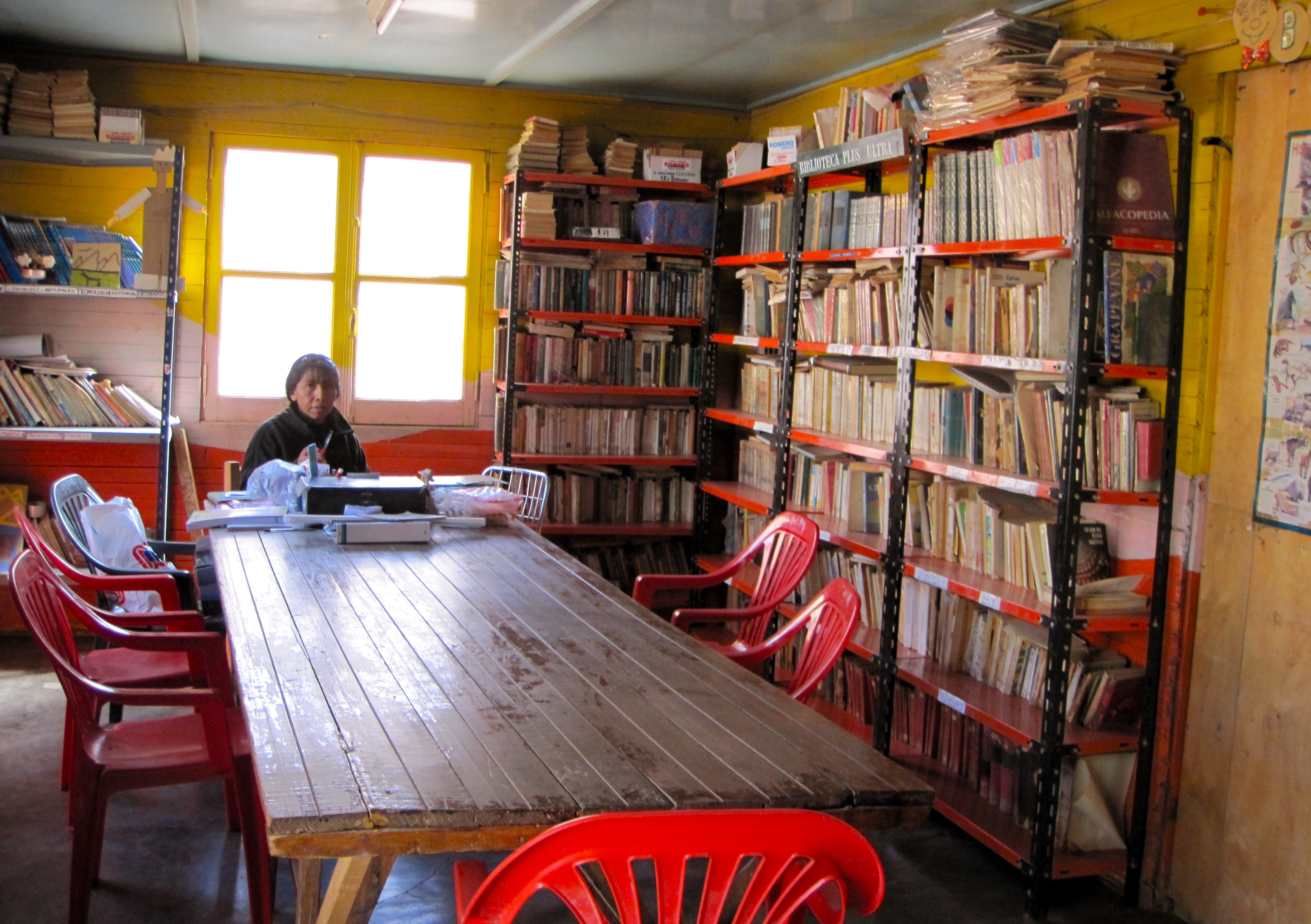
This is the library in Molinos. This is the address of the library. If there is anything you can send them –  Spanish and English books, they can really use it. Send books to Norma Susana Fabian, Pje 9 de Julio S/N, Molinos C.P. (4419),  Provincia Salta C.P. 4400, Argentina.

IMG_0908

The library is the size of this table and the small number of books are old and worn.  People come in and borrow books  and Norma writes  it down in her notebook. IMG_0884

IMG_0886

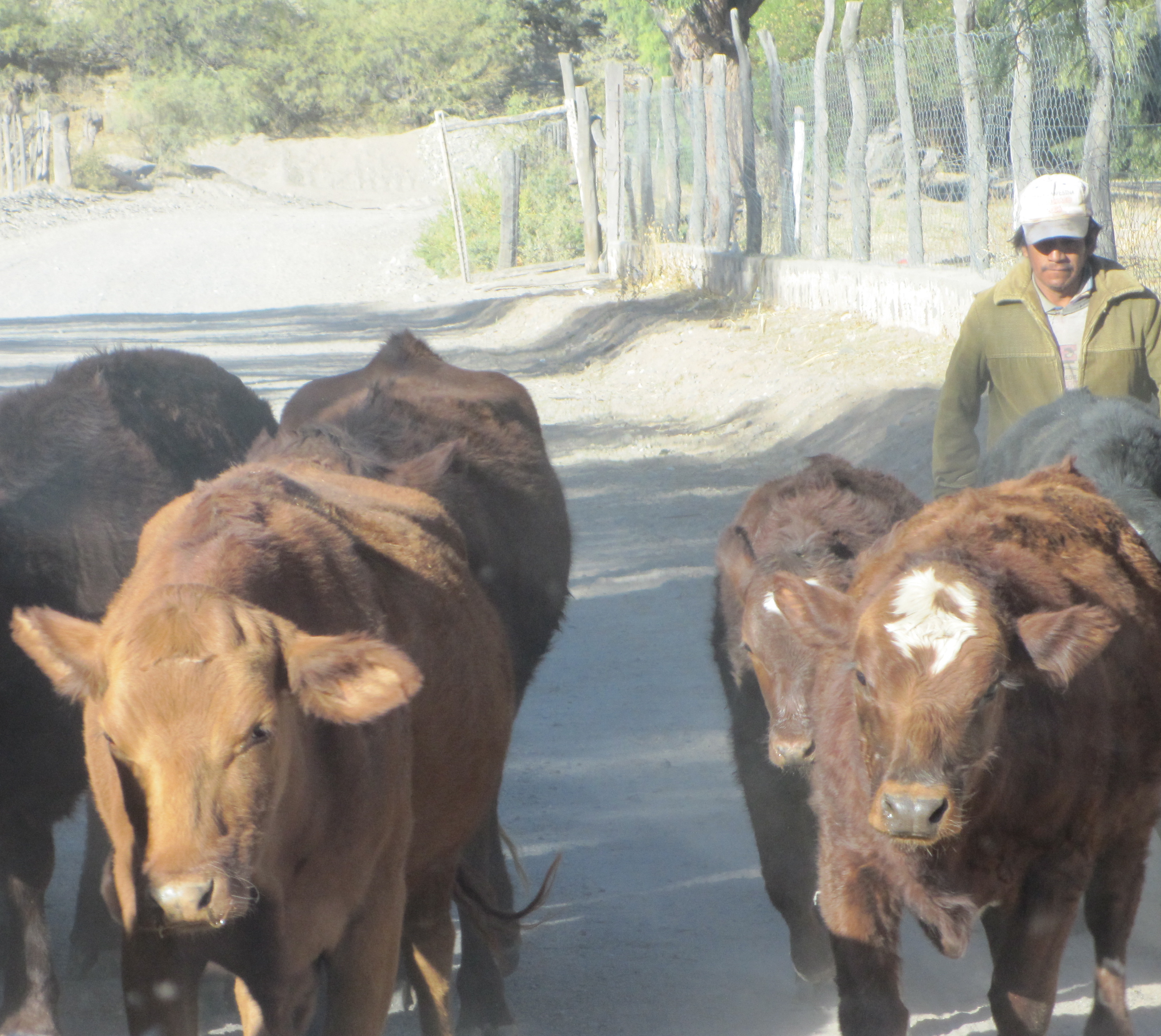
Dont go to Molinos expecting things like tourist attractions,  restaurants, shopping and internet.  Do go expecting quiet, few cars, natural beauty, clean air,  kids playing soccer and riding bikes instead of video games,  a sky covered in stars,  horses and a lot of stray friendly dogs.

IMG_0906

IMG_0922

And more dogs.  Molinos and all of these pueblos in the north, have their share of stray dogs.  They are only too willing to give you a tour of their town.

IMG_0846

IMG_0843

And llamas IMG_1099

and horses

IMG_0916

and goats

IMG_1005

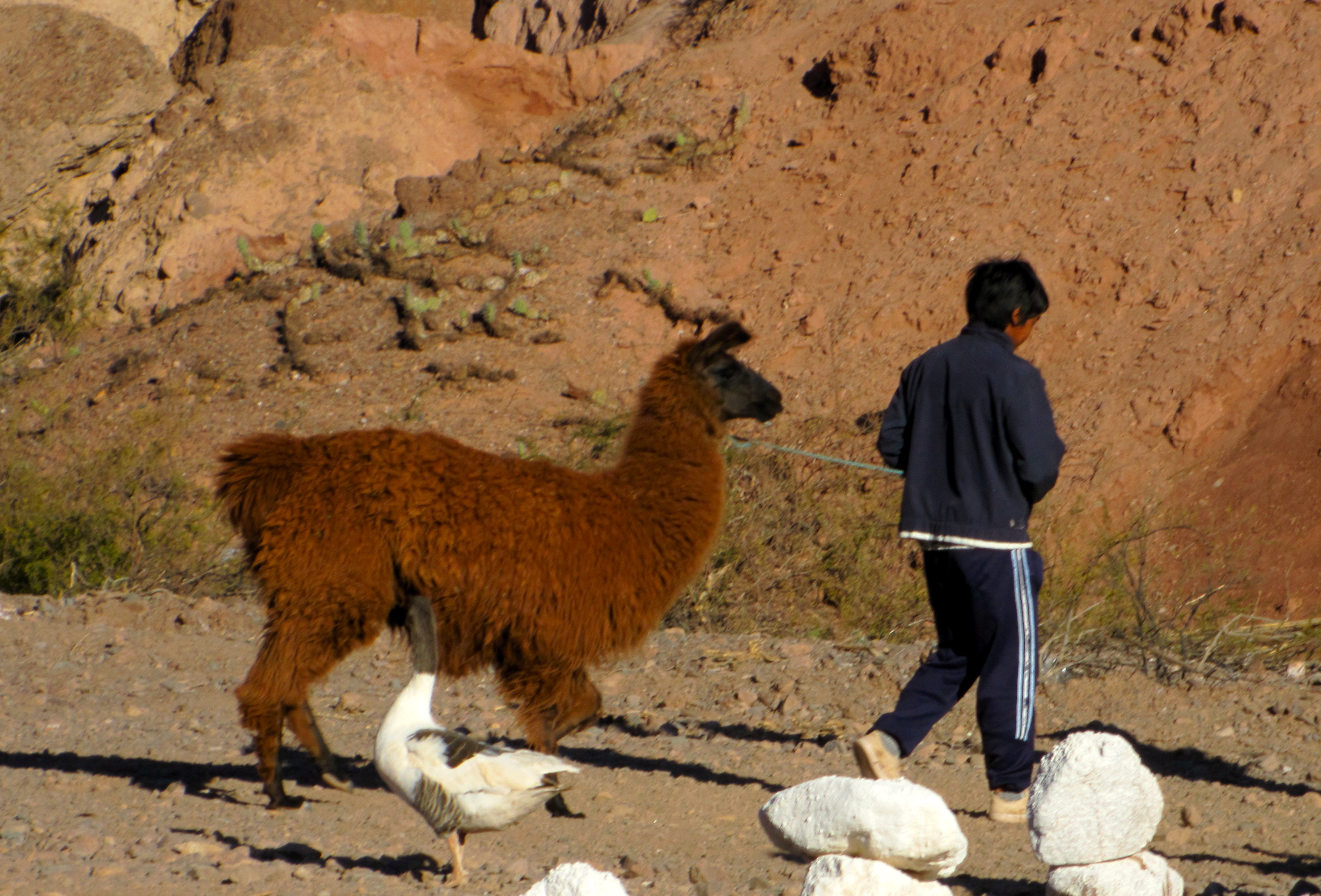
And sheep. ( and a pig who thinks he is a sheep) IMG_0721 And of course meat

. IMG_0727

What is this man thinking? IMG_0864

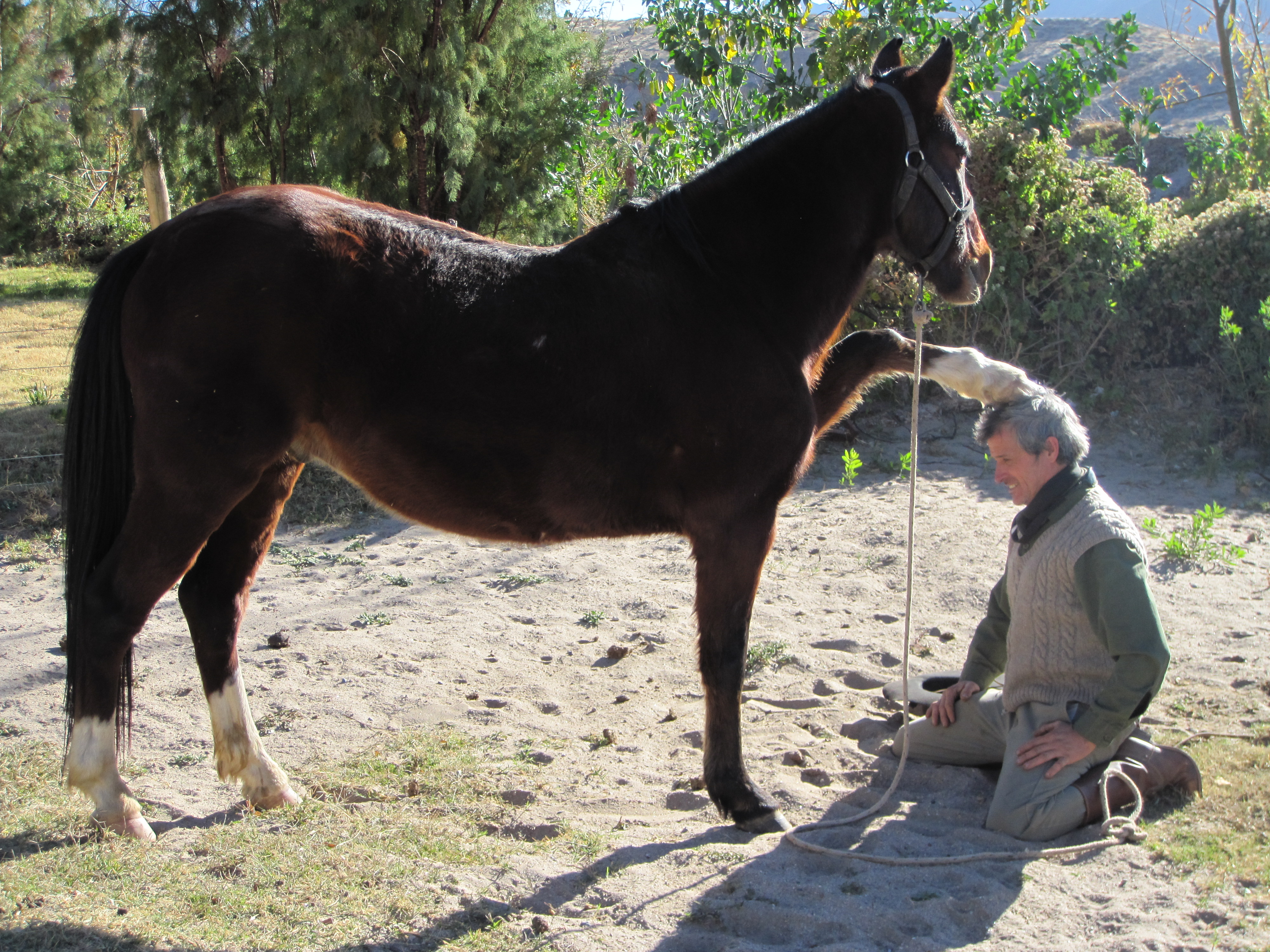
What is this horse thinking? IMG_0867

Coquena is a vicuna refuge outside of Molinos. IMG_0746

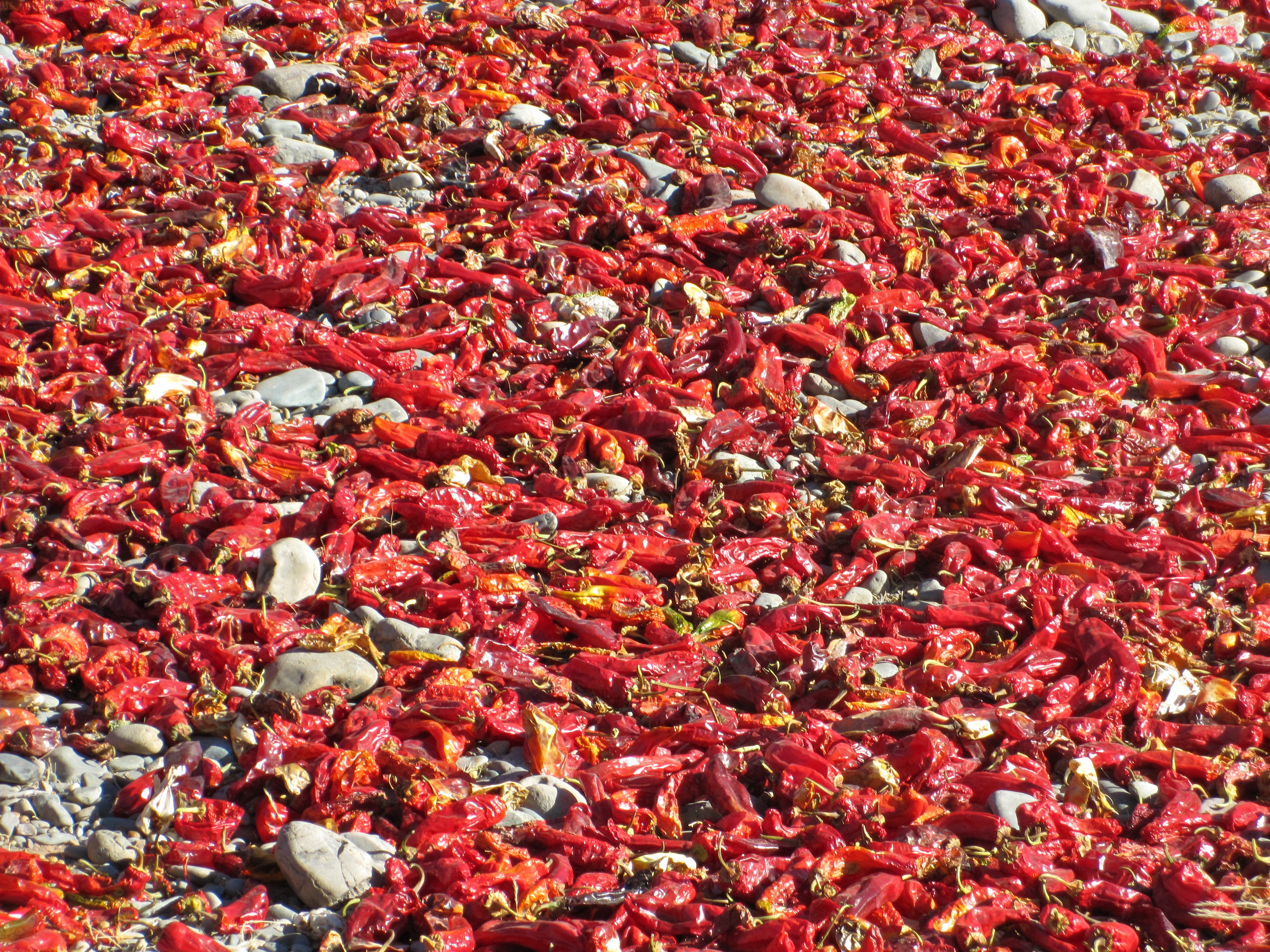
Outside Cachi you will find chilis drying in the sun on the side of Ruta 40. IMG_0696

Difunta Correa  (Deceased Correa) a is one of the best known Argentine alternative saints. She died of thirst in the San Juan desert around 1845. She was trying to find her husband in the army. She was carrying her baby who was found miraculously alive by gauchos.  In 1898 a famous gaucho prayed to Difunta Correa  to find his herd of  500 lost cattle and she did.  The story spread and a sanctuary was built around her grave. Cattle ranchers and truck drivers have created roadside altars. People leave water bottles to calm her eternal thirst. You will also see water bottles just tied to the side of the road for her. (I think it says this is my sanctuary you can pray to me for help but no garbage)

. IMG_1112 IMG_1115

Salta City has  the best collection of preserved colonial architecture in Argentina. It is  named Salta, La Linda because of the beautiful architecture.

IMG_0445

IMG_0469

IMG_0434

It has oddly colored churches -baby blue, burgundy and gold and shell pink. It is best not to wear a hat inside the church, though opinion is divided on that.

IMG_0451

IMG_0440

MAAM Museo de Arqueologia de Alta Montana de Salta.  houses the perfectly preserved remains of three Inca children “given” to the gods 500 years ago. They were buried at the top of  the volcanoe Llullaillaco (6700 meters high). There is one child on display at a time. They look like they are sleeping. The children were believed to have been buried  as part of the Capacocha sacrifice. The sacrifices were performed on children, as they were seen to be the purest of beings. A beautiful male and  female  child would be chosen and then married.  The children were taken to the summit of a mountain, given an intoxicating drink to make them pass out and then they would be strangled, hit over the head or buried alive. The three children found at Llullaillaco were believed to have been buried alive during their sacrifice and are estimated to have only been 15, 7 and 6 years of age. It is disturbing to have this insight into the Inca culture and see what was done to children from the conquered tribes in the name of peace and unity.

Salta is also home to a world-class symphony orchestra, the result of a successful strategy several years ago of recruiting Eastern Europeans, virtuoso trained in the communist era, to play alongside and mentor local musicians.

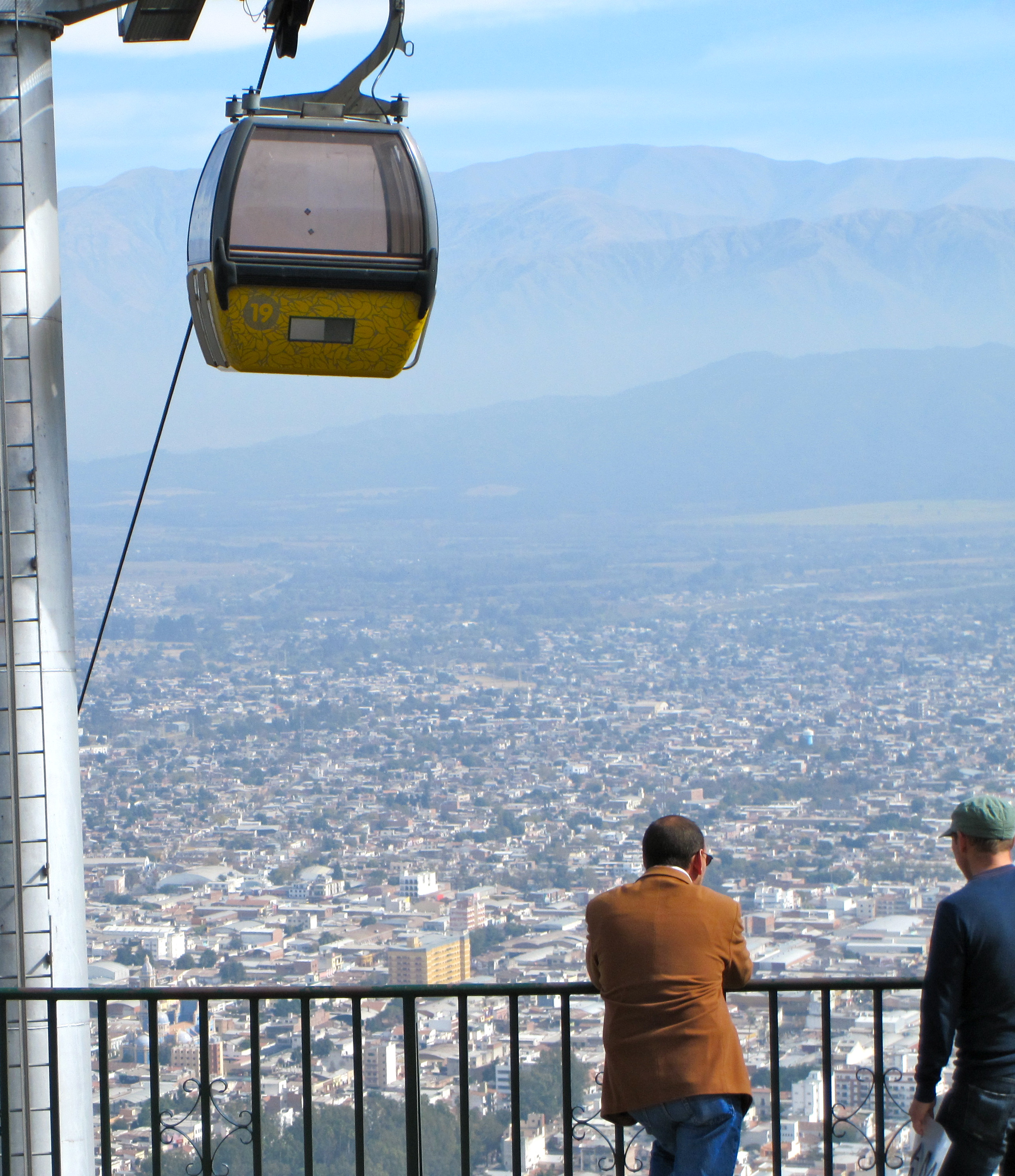
The teleflorico San Bernando is  a way to get a view of the city usually reserved for incoming airplanes.

IMG_0523

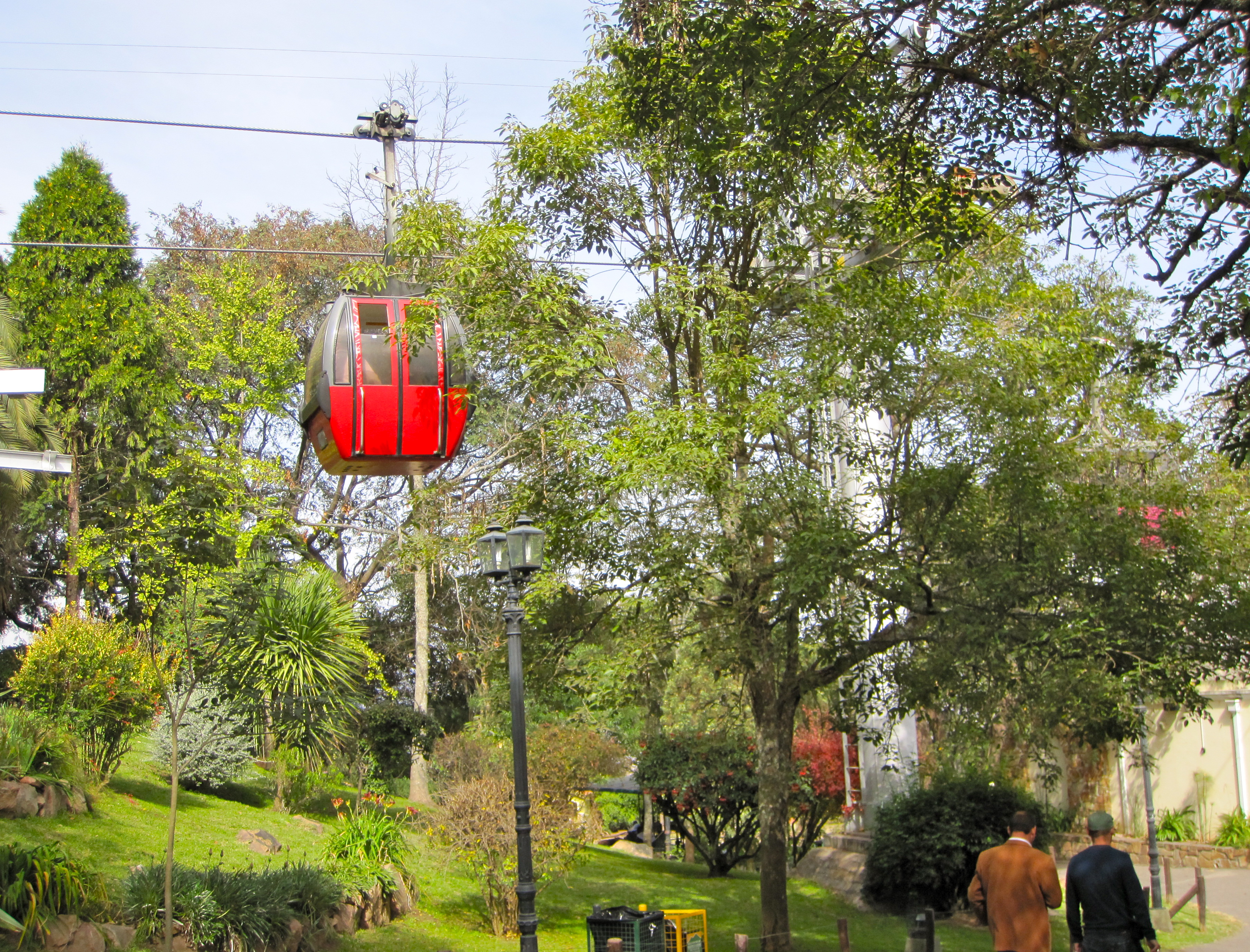
The top of the mountain has a restaurant, various lookout points, a playground, waterfalls, a downhill biking adventure and an outdoor gym for the newest in high altitude workouts.

IMG_0529 IMG_0530 IMG_0521

Faster internet is coming to the Calchaqui valley. (see this road -we are directly facing this truck going in the opposite direction)

IMG_0945

Ponchos have been made in the Andes for hundreds of years. Argentines value artisans and Arnaldo Guzman does beautiful work.

IMG_0725

IMG_0713

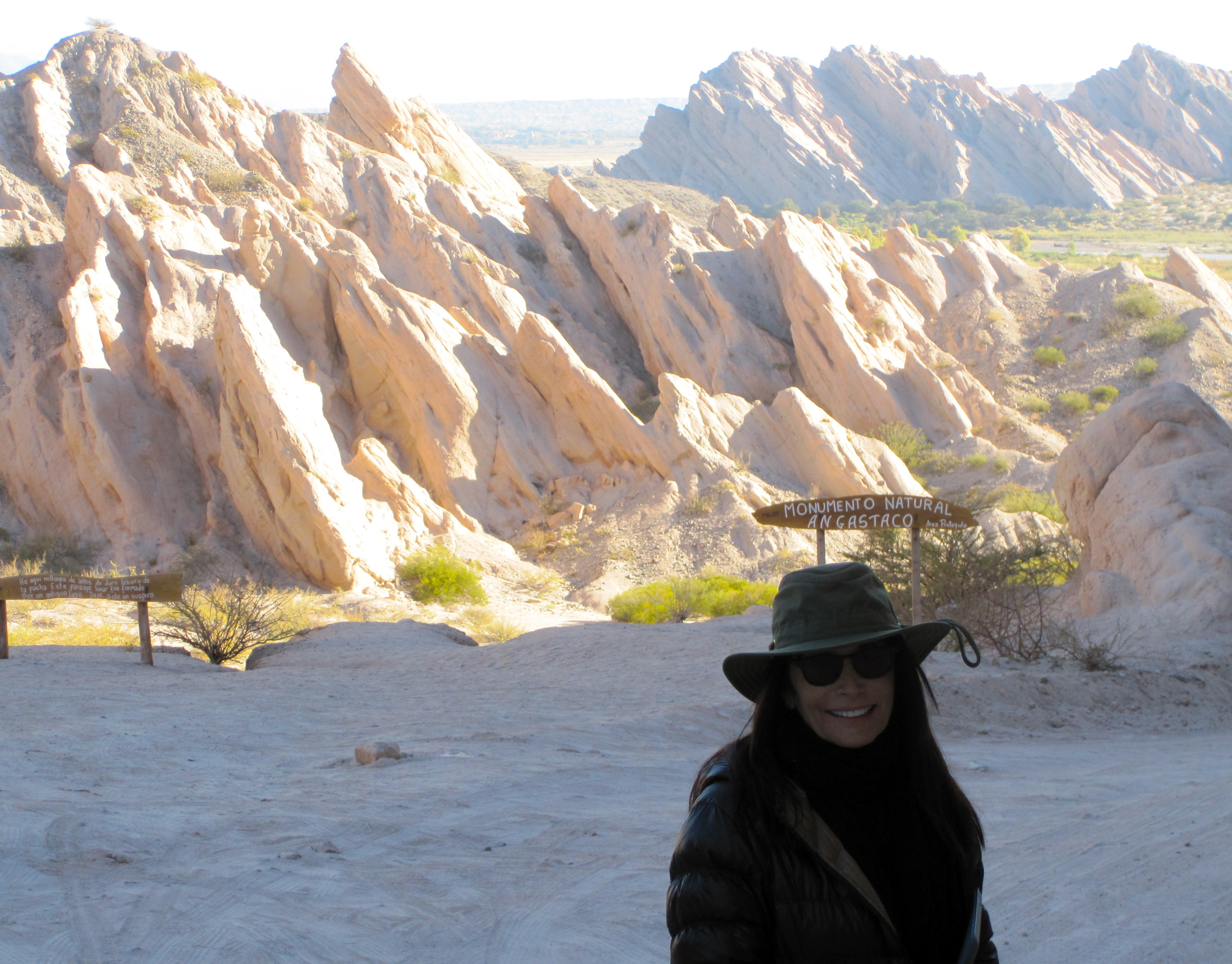
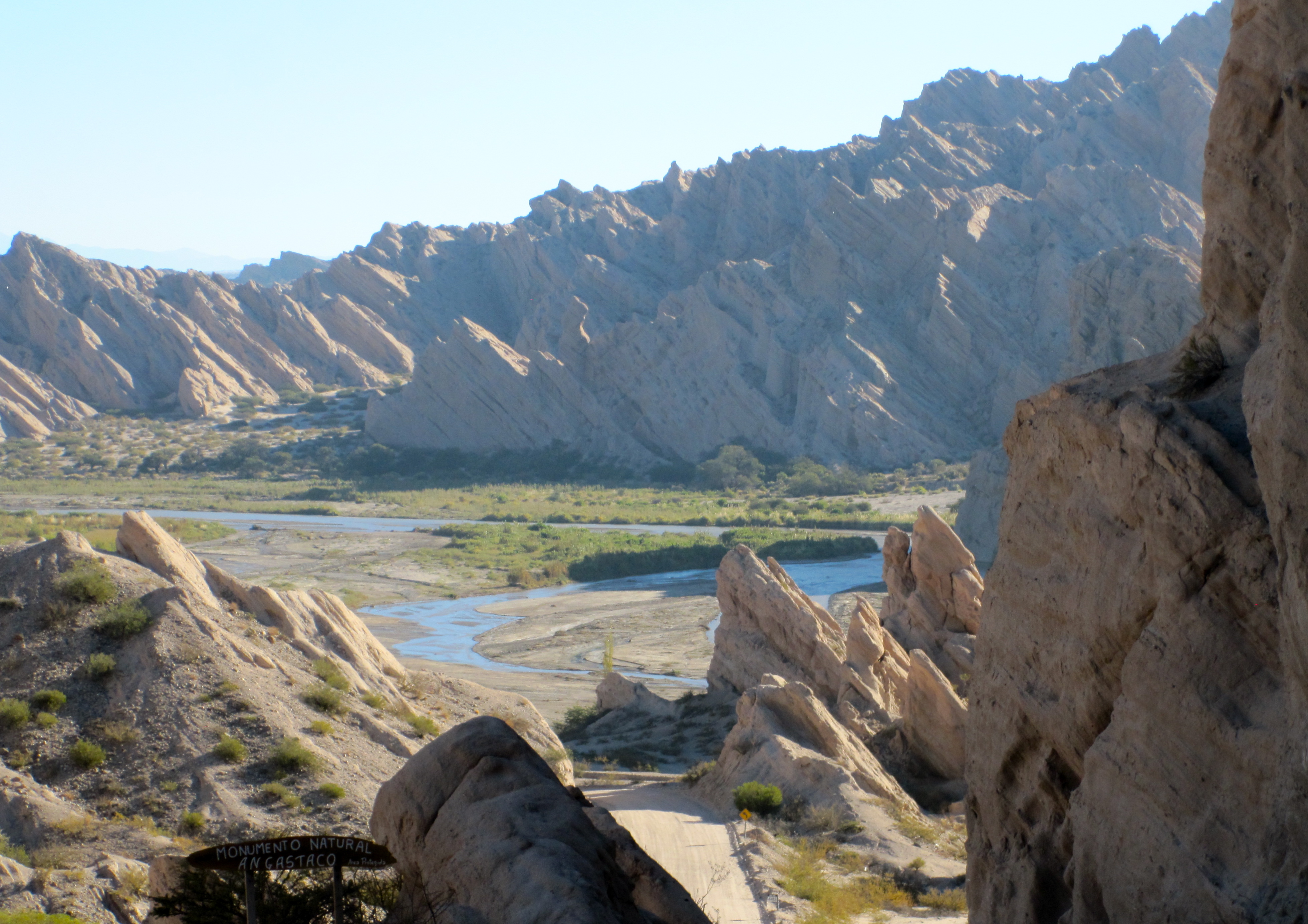
Quebrada de las Flechas (canyon of the arrows) is  located in the Calchaqui valley. It’s inclined pointy rock  formations and narrow gorges make it an interesting tourist site on Argentina’s route 40. IMG_0973 IMG_0970

It is some of the driest topography in the world and home  to a number of UFO sightings. IMG_0986

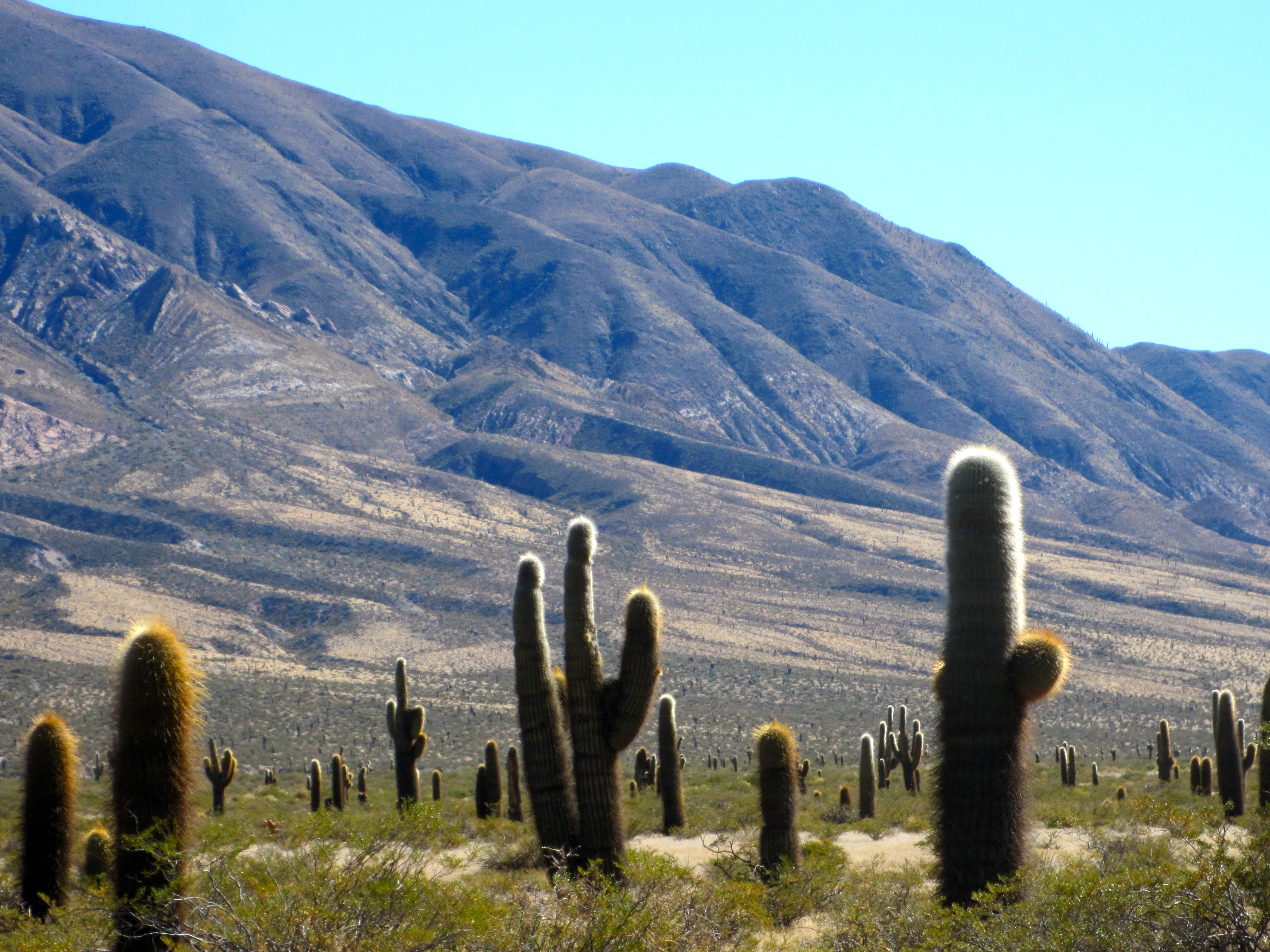
Los Cardones is a spectacular national park located ain the Calchaquíes Valley. It covers 65.000 hectares of hills and gorges, with an altitude ranging 2.700 and 5.000 m. It is filled with cardone cacti.( my new Bolivian/Argentine hat)

IMG_0642

The cacti stand  like giant sculptures with blue sky and the Andes in the background.

IMG_0607

The cardone cactus is the world’s largest cactus. It is most common in Baja California. Im from Southern California yet I had to go to Salta Argentina to see them for the first time. They grow slowly and can live up to 300 years.

IMG_0623

Cardone cacti are a source of wood that is apparently as strong as iron, and used for rafters, doors, ceilings, window frames, furniture, and souvenirs.

IMG_0397

IMG_0282_2

Northern Argentina is a place filled with mountains that continually change colors, ancient indigenous culture and traditions, pueblos that go back in time and landscapes that keep on surprising you with their beauty.

Our  local tour guide  on this Cultural Xplorers trip (www.culturexplorers.com/)  was Homero Kosiner. We traveled for almost two weeks. He was easy-going, always happy, very knowledgeable and proud of his city and Northwest Argentina .No question was too small for Homero to answer. We covered a lot of ground on this trip and it was confusing to keep track of. Homero answered my questions over and over and is still answering. I also have to thank our driver Vicente Coria. Between the unpaved roads,  river beds,  narrow hairpin turns, mountain roads, one lane roads, animals, and hours of driving, Vicente was superb and always smiling.

IMG_0965 IMG_0991

Viaje Con Cuidado,

JAZ

Grand Silence In Santa Barbara Or How To Meditate

Grand Silence in Santa Barbara or How to Meditate

“Three monks decided to practice meditation together. They sat by the side of a lake and closed their eyes in concentration. Then suddenly, the first one stood up and said, “I forgot my mat.” He stepped miraculously on  the water in front of him and walked across the lake to their hut on the other side.

When he returned, the second monk stood up and said, “I forgot to put my laundry out to dry.” He too walked calmly across the water and returned the same way. The third monk watched the first two carefully in what he decided must be the test of his own abilities. “Is your learning so superior to mine? I too can match any feat you two can perform,” he declared loudly and rushed to the water’s edge to walk across it. He promptly fell into the deep water.

Undeterred, the monk climbed out of the water and tried again and again, only to sink into the water. This went on for some time as the other two monks watched.

After a while, the second monk turned to the first and said, “Do you think we should tell him where the stones are?”

I have just returned from a  silent meditation retreat at Casa De Maria in Montecito, California.  Casa De Maria is the perfect setting for a retreat. It originally belonged to the Order of the Sisters of the Immaculate Heart.  Nuns lived and worked here in silence. During the day there was gentile silence and at night there was grand silence.  The grounds are beautiful with  paths, woods, organic gardens, orange groves and the San Ysidro creek . There are fountains , sculptures and memorials to the children of Hiroshima and gang violence. There is a swimming pool,  meditation chapel and a simple beautiful church.

It is said that with meditation comes clarity and insight. There are studies that twenty minutes of meditation a day will change our brains. We can have less anxiety, stress, depression and hopelessness and more focus and peace.

Sounds good to me. I have attempted to do it for the last seven years. Sometimes I am better than other times . Mostly I am in the other times. I take classes in mindfulness and meditation at UCLA Mindful Awareness Research Center  with Diana Winston. It keeps me on track.  At least on the days I don’t meditate, I think about doing it. It’s amazing how many things I can find to do instead of meditating.  When I do it, I feel great.

Meditation did not come easily to me. It took me three six-week sessions to understand how to do it. I used to come late on purpose for the mindfulness training and skip the meditation.  I was definitely meditationly challenged.   I also have the active busy mind that is hard to shut off.  One day, for whatever reason, it clicked. I got it. Meditation wasn’t sitting in blissful silence. It was sitting “with a lunatic in a phone booth trying to get  out.” Even the most advanced meditators living in monasteries in Tibet or caves in India had bad days when they couldn’t quiet their minds. But when you learn  and apply the techniques of meditation, you can find out where the stones are.

if I can sit  and meditate when I am stressed, afterwards I feel better. So, I was ready for a weekend retreat. This was a year ago.

My first experience with a weekend retreat involved flies. The first morning,  I  had done a walking meditation to the creek. In the next sitting meditation session, I had a fly in my ear. I dealt with the fly exactly how I dealt with every problem in my life.

I start with – it’s my fault  because I shouldn’t have walked to the creek.  I brought the flies in. Everyone else is having a peaceful meditation and I am miserable with a fly. Then I go to the worst case scenario. The fly with get stuck in my ear and lodged in my brain. I will never get rid of the buzzing.  This continues with, someone help me solve this problem. I will ask Marv and Diana what to do and they will help me. But Diana just sat with mosquitos in Burma, I don’t want to do that. I will ask Marv.

It turned out that the flies were bothering everyone. I hadn’t brought them back from my walk. I was the person that said something and once I did everyone chimed in. People even thanked me when they were leaving for bringing it up. (  We had a few question periods. ) There was no way a fly could get lodged in my brain. My choice was to mindfully swat them away or sit with them and see what happened. By the end of the weekend, I sat very still, with the fly walking up and down my glasses in front of my eye.

I understood for the first time what it meant to sit with pain and uncomfortable stuff. There is some inner strength you get from sitting with something uncomfortable and knowing you are ok. Life has pain and can be uncomfortable also.  I couldn’t learn that in twenty minutes.

So I was ready to come and do battle  with the flies and tap into my inner strength once  again. This time they announced that there would be flies as one of the meditation obstacles. But the flies did not choose me. Flies keep you in the present moment. Apparently so does counting.  I began to count. Counting is a meditation tool.  You can count your breath  for a bit and stay centered . I was counting everything  -the leaves, the trees, the flowers, the stones, my footsteps, my breath. By  dinnertime , I was sure I had become Jack Nicholson in As Good As it Gets. I must have OCD. Who knew?.

After dinner,  I have nothing to do for a half hour. The meditation is pretty structured – a bell rings, you wake up, a bell rings, you do sitting meditation, a bell rings for  breakfast and mindful eating, a bell rings for walking meditation etc. This goes on  throughout the day. I knew I would hike on the break. But I had a half hour without a planned meditation or hike, and so I went to a bench by a fountain and began to meditate and I stopped counting.

I had somehow given myself permission to do nothing – to stay in the present and be with what is – both the good and the bad. My mind did not have to be doing a job.  The counting never returned for the rest of the weekend.

What we do with our time, is what we are doing. We spend our  lives by how we spend our days. We need to always be present,  stay focused and notice everything going on around us to have the best possible lives and make the right decisions. I wish I had learned this when starting my adult life. I looked at the UCLA undergrads there this time and thought how lucky you are that you are learning this now. But I still have plenty of time, so I will keep trying. Now, if only I hadn’t used my meditation time today to write this.

Fly Safe,

JAZ