My Favorite Band Is Grouplove – Teaching An English Class In Cartagena, Colombia

My Favorite Band Is Grouplove  – Teaching An English Class In Cartagena, Colombia

“Small acts of kindness may or may not change the world, but they definitely change you.”   Nipun Mehta

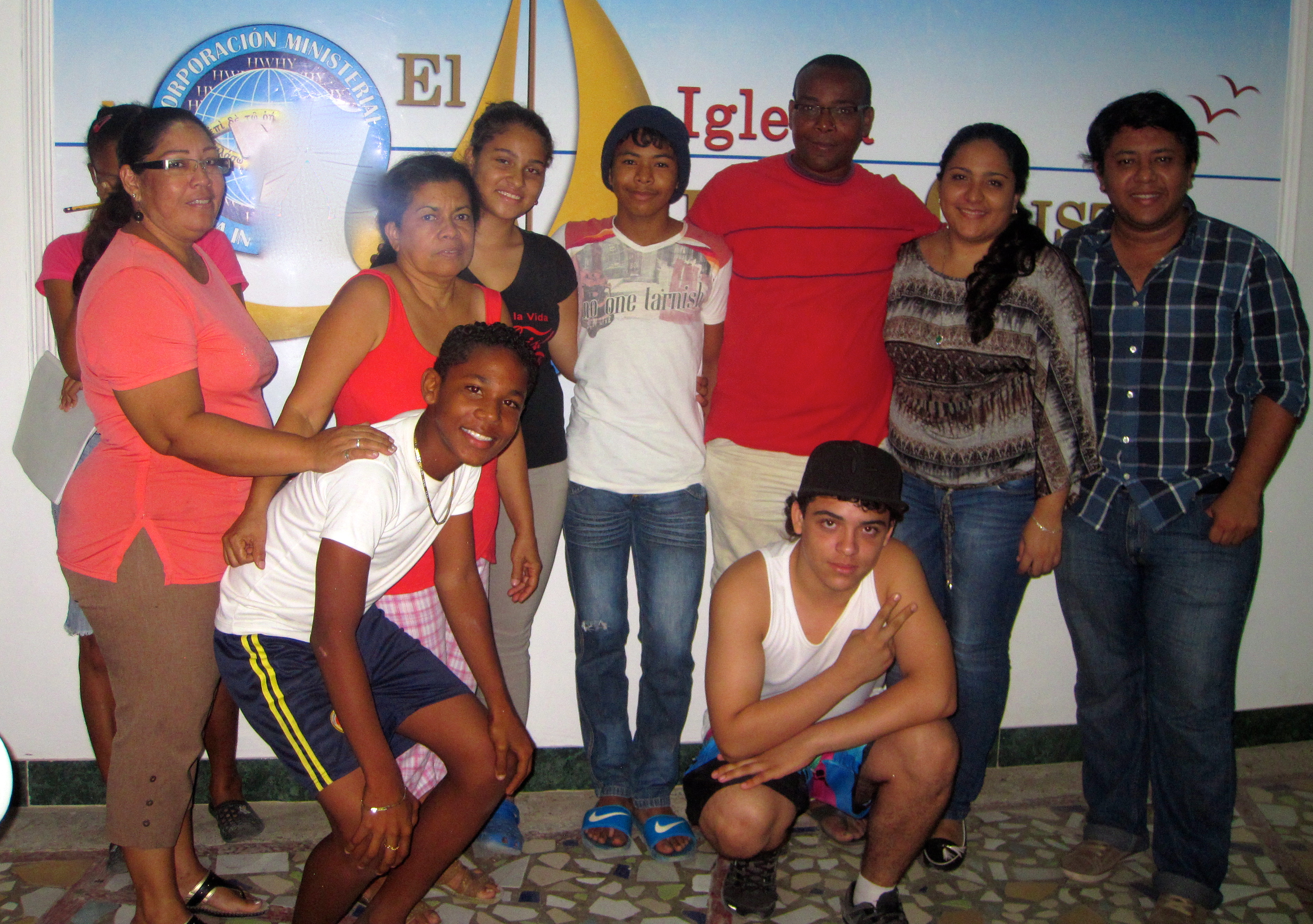
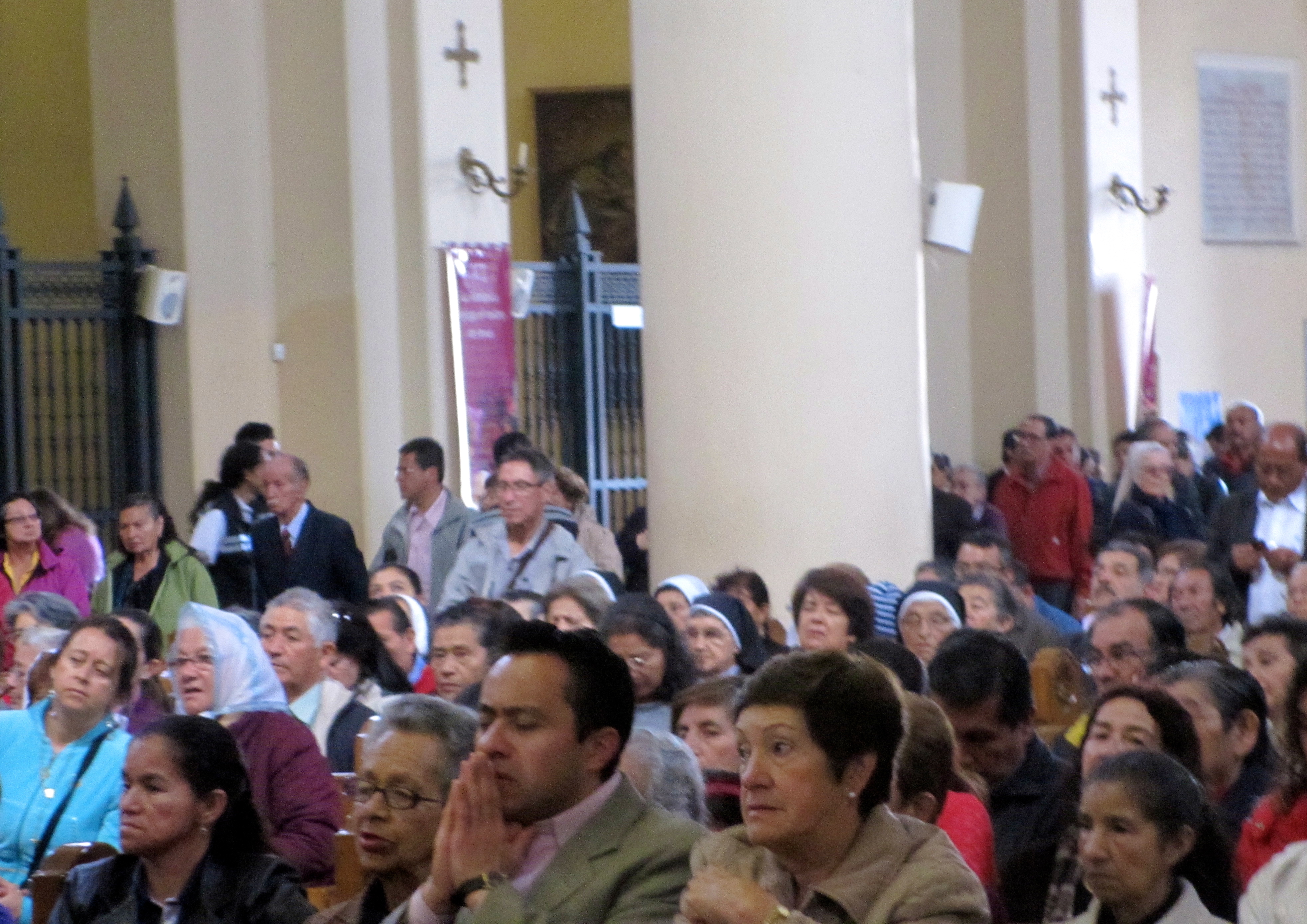
My tour guide  was on his way to teach an English class at his church. He and his  family volunteer their time to teach English. I asked if I could tag along thinking I would sit in the back. It turned out that I was to be the surprise English teacher.

The students ranged from kids to adults and were at all levels of English. The class was usually larger but because it was a holiday there were fewer people. They are amazingly enthusiastic with a real will to learn – even from someone who sounds as illiterate in Spanish as I do.

IMG_4703


While learning  English grammar,  we share experiences and insights.

“My favorite band is Guns and Roses.”

“Her favorite actor is Brad Pitt.“

“His favorite soccer team is Brazil.”

“Their favorite place is this church.”

“Our favorite writer is Marquez.”

You can see with each one of the students that every sentence requires thought. It is not only about how to say it correctly but how to answer the question. It becomes important what we tell each other about ourselves. “But I don’t have a favorite sports team because I don’t like sports.” It is more than just a grammatical exercise.

I believe that those of us who travel  seek knowledge to grow and share with others. What better way then to not only teach but to represent English as something more than a workbook. For people who live in cities where tourism is the main industry learning English will help them get better jobs and have better lives.  I could see in their eyes that I inspired them to work on their English that night and I felt honored to be there. If you happen to be in Cartagena, and have a couple of hours to spare for some conversation in English before dinner, contact Jose Villa Rodriguez ( also a terrific tour guide) josevillarodriguez@yahoo.com. It’s a great way to interact with people from a country.

If only someone would volunteer to help me with my Spanish.

Muchas Gracias Daniel, Diana, Edwin, Erdas, Laura, Leidy, Manuel, Muriel, Nini and Salvador.

IMG_4707


Viaje con cuidado,

JAZ


Things That I Have Learned In Colombia

Things That  I Have Learned In Colombia

“Once a year, go someplace that you haven’t been before.”  Dalai Lama

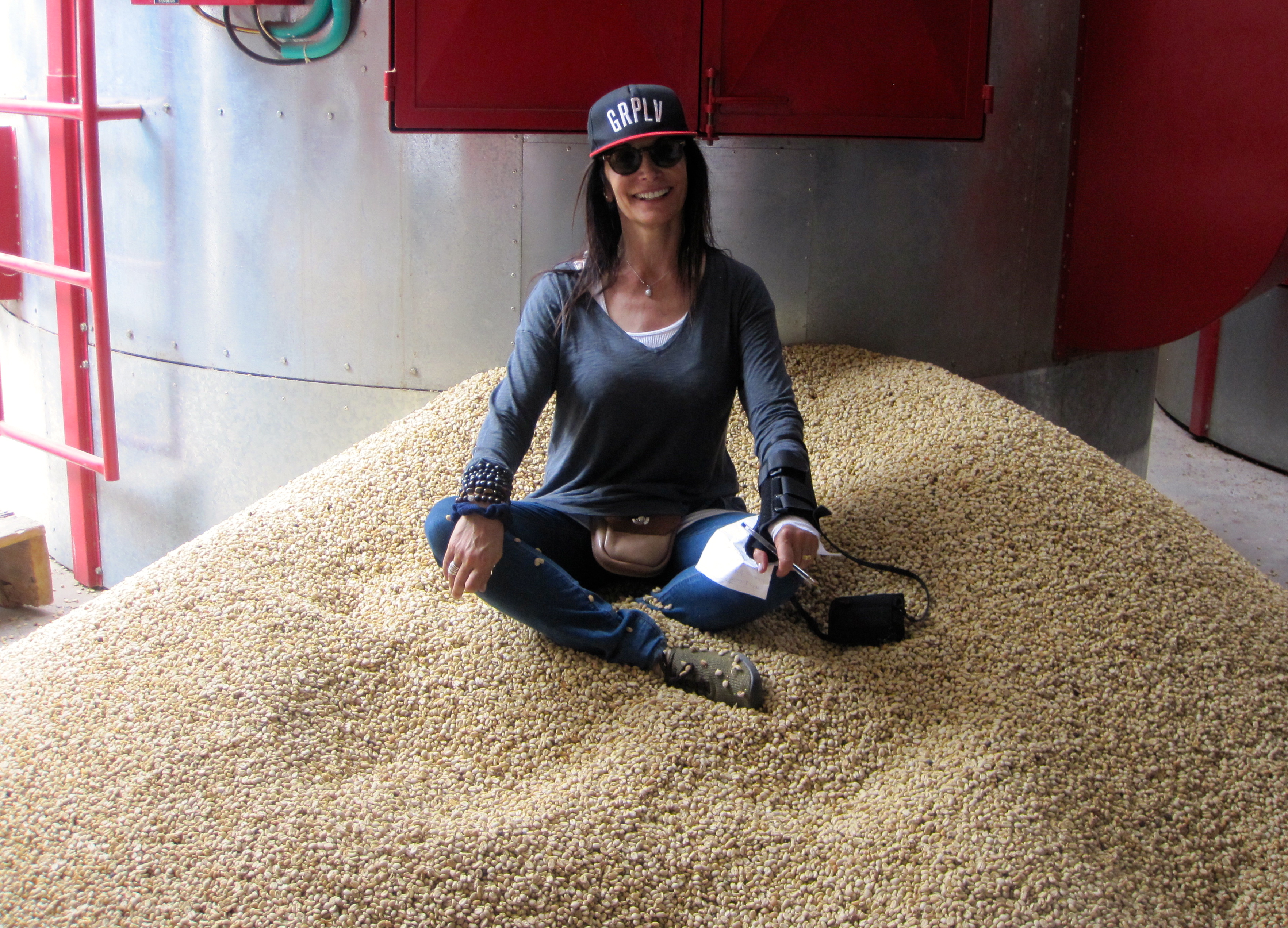
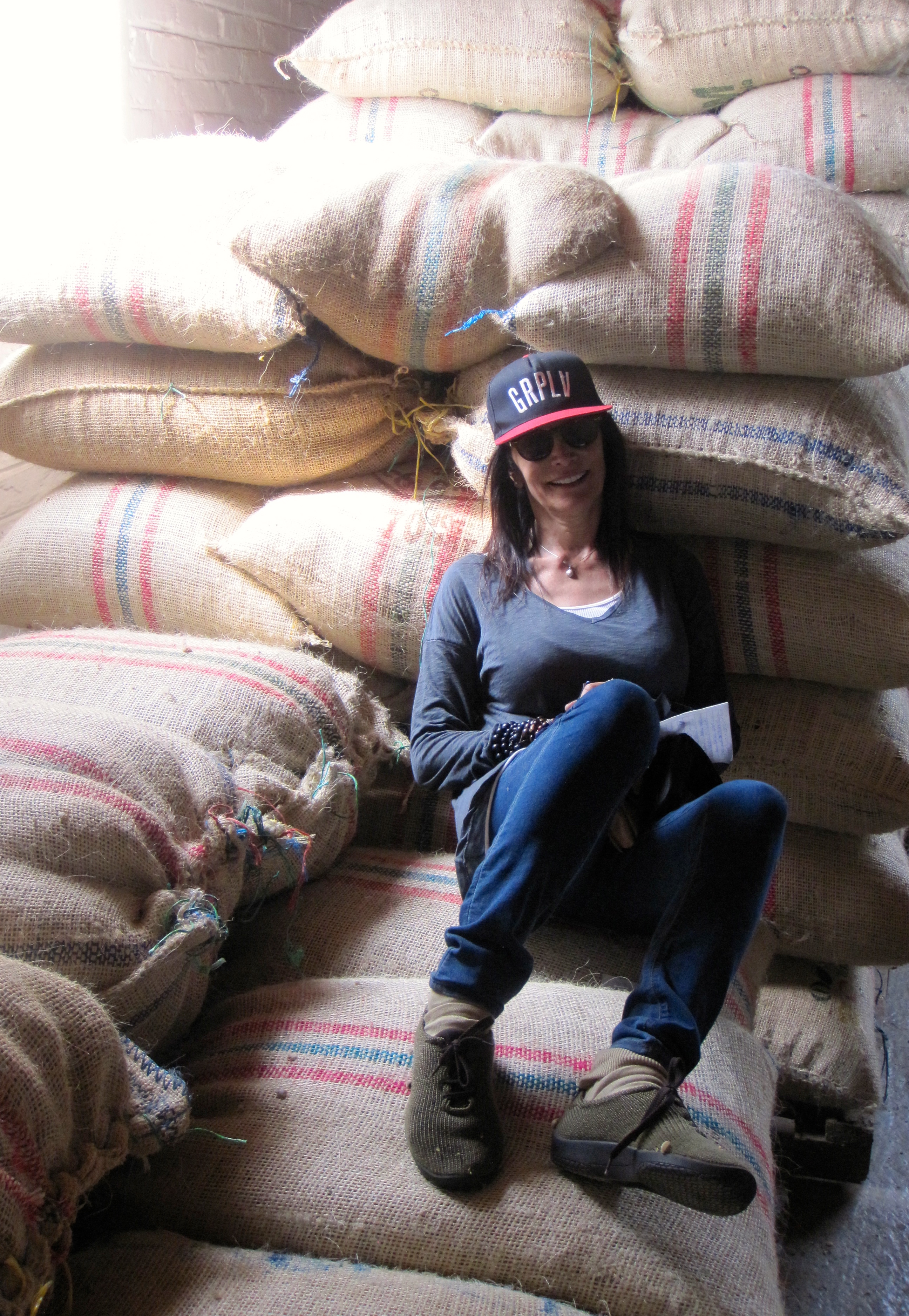
If you don’t come back from Colombia with your suitcase smelling from coffee, something is wrong.

IMG_4213

Coffee plants in Colombia are not native to Colombia. Many of the plants come from Africa. IMG_4242

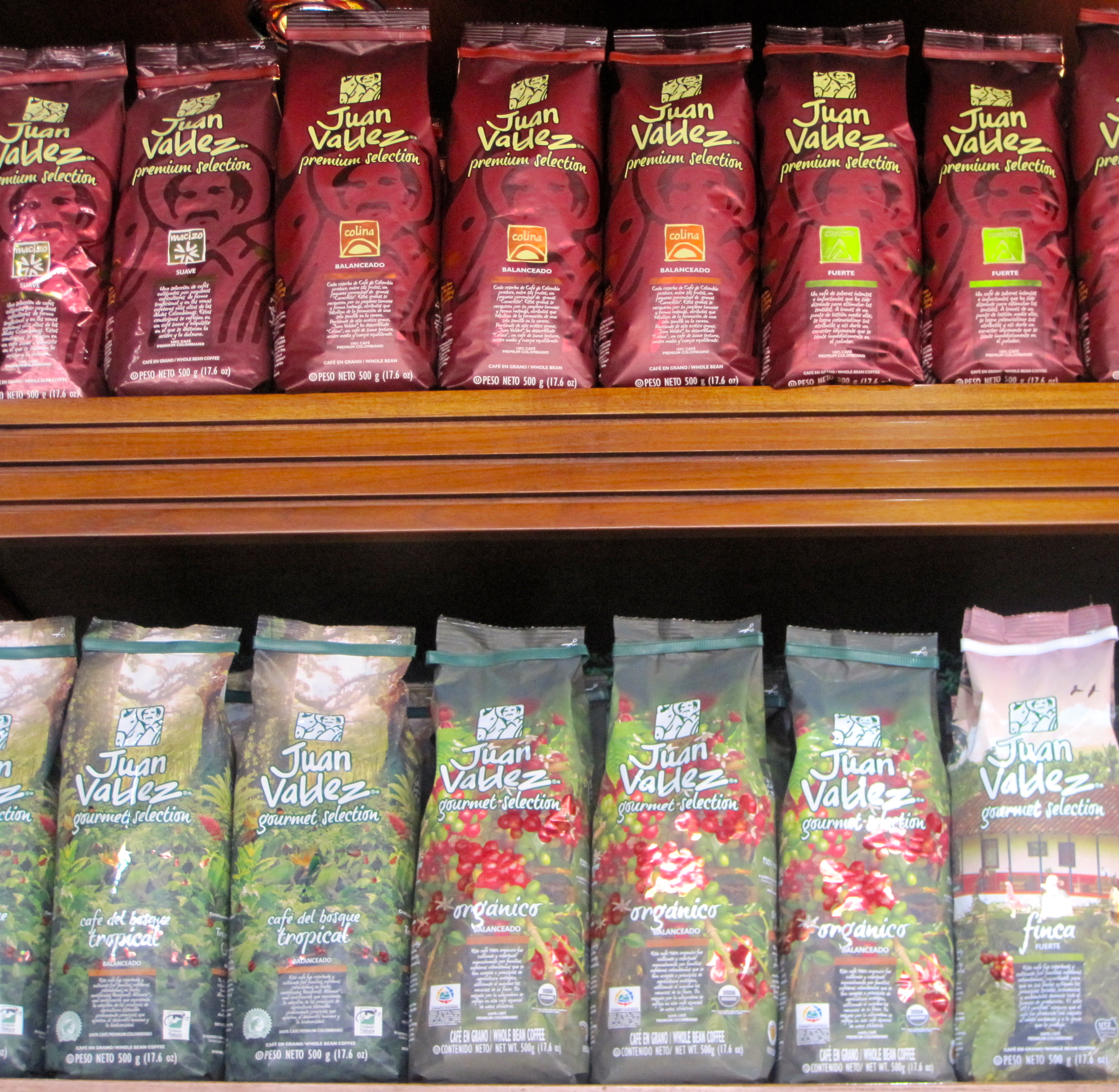
Juan Valdez is the Starbucks of Colombia not the man picking coffee beans for Folgers. (only people my age know what that meant) IMG_3804

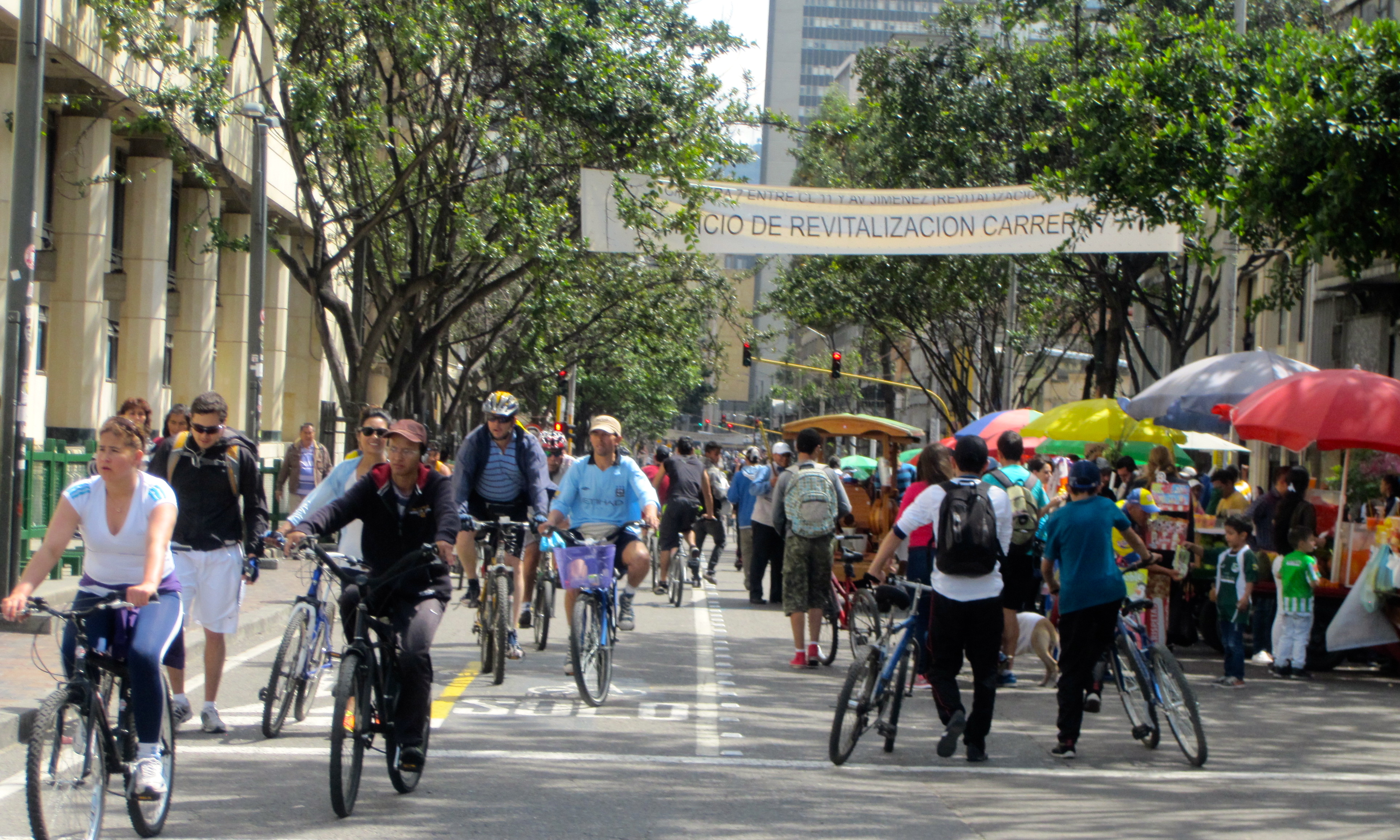
Colombia is not Disneyland but it isn’t downtown Beirut either. IMG_3787

There is always music. (Play and continue reading . It will sound like Colombia  – Gracias Kevin)

Colombia has the second highest number of public holidays in the world. Argentina has the first.

Colombians love Juanes as a humanitarian even if they don’t like his music.

Because of its location Colombia is “the door of the Americas”.

In Colombia you dunk cheese in your hot chocolate (my two favorite things together).

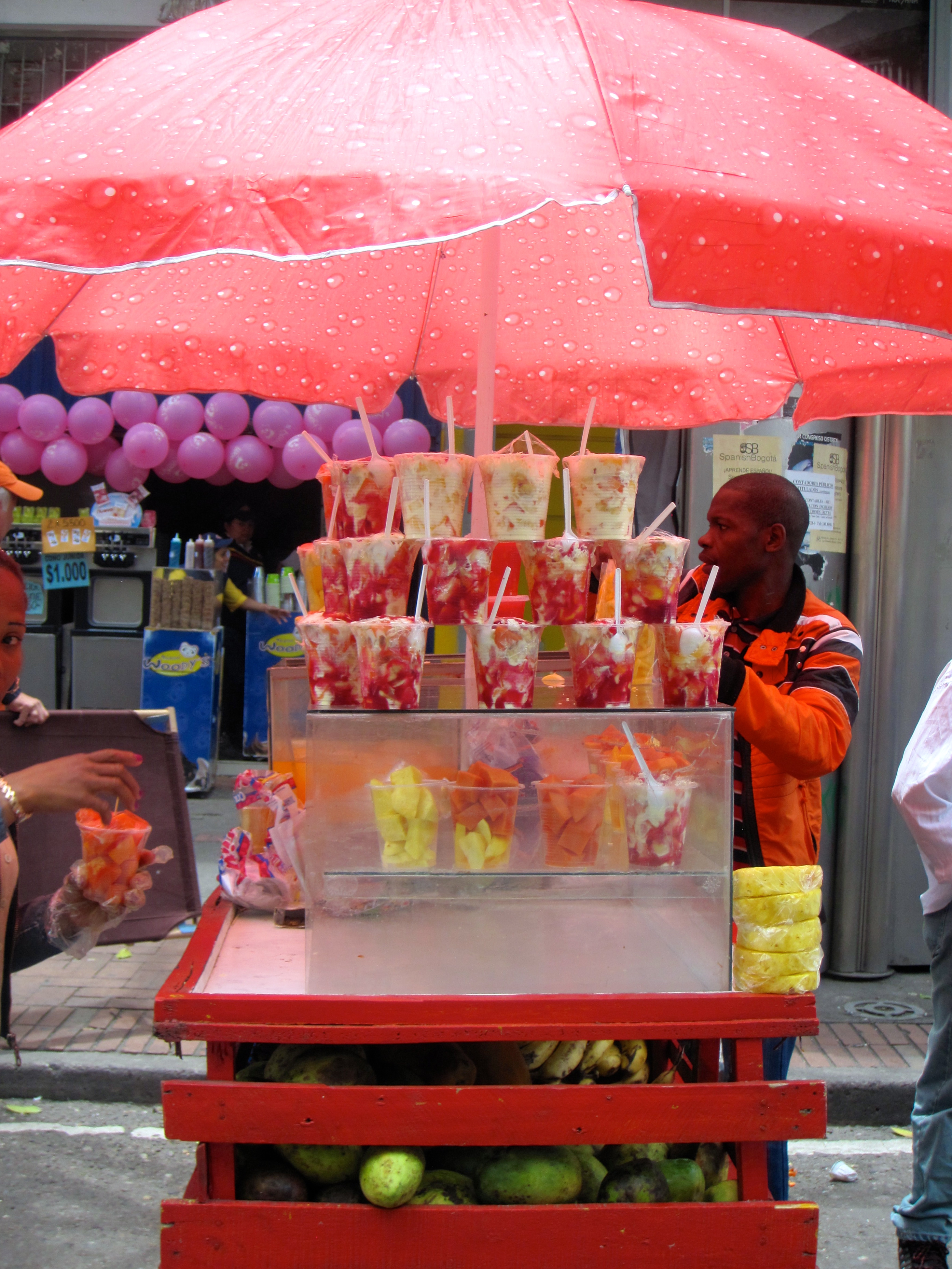
There is always fruit.

. IMG_3822

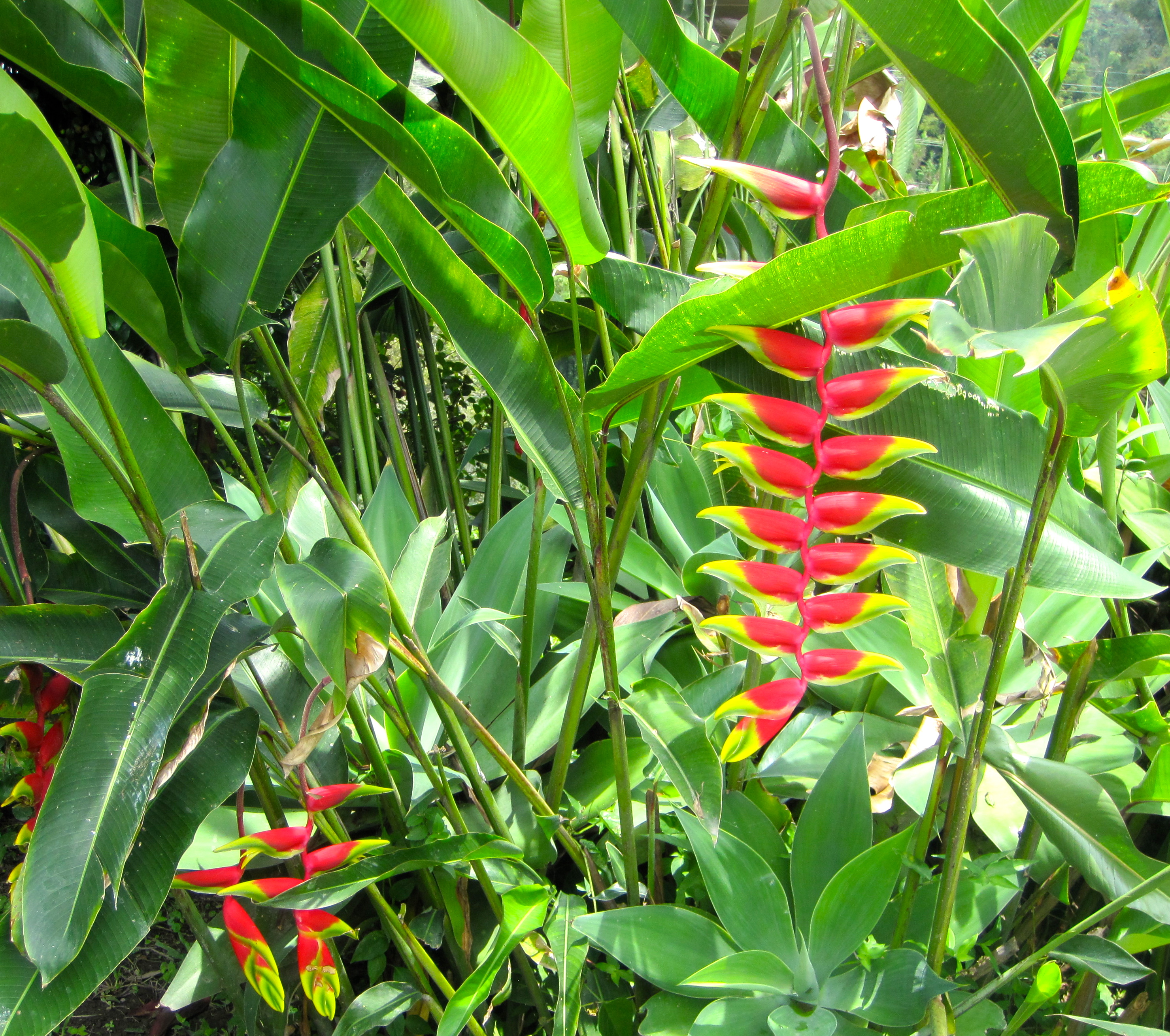
Colombia is the world’s second largest exporter of cut flowers after the Netherlands. About 1 billion worth of flowers are exported every year, mostly to the United States. People from the United States buy 300 million Colombian roses on Valentines Day. IMG_4149

Colombia does not have seasons; because it is near the equator, it has sunlight throughout the year. Colombia is the only country in South America to have two different coastlines on both the Pacific Ocean and the Caribbean Sea. IMG_4812

They still uses coca leaves in the rural villages and for the tourists. But it is not as easy to find as in Peru and Argentina.

Colombia has the biggest theater festival, biggest salsa festival, biggest flower parade, biggest outdoor horse parade and second biggest carnival in the world.

You’re less likely to be kidnapped in Colombia than you are to be eaten by a shark in Australia.

12% of the world’s supply of coffee comes from Colombia which provides 20% of the government’s revenue. Only Brazil and Vietnam export more coffee. IMG_4224

According to someone from Ecuador at the airport, Colombians are the nicest South Americans. I would have to agree.

Colombia produces 60% of the world’s most expensive Emeralds.

In 1975, Colombian women were given the right to vote.

Colombians speak the clearest Spanish with the lightest accents, especially in Bogotá.

There are more fruits in Colombia than days in the year. Guanabana is my new favorite fruit. (Ice Cream, Dulce de Leche and Guanabana)

IMG_4504

Shakira is from Colombia. The women are often voted the most beautiful in the world.

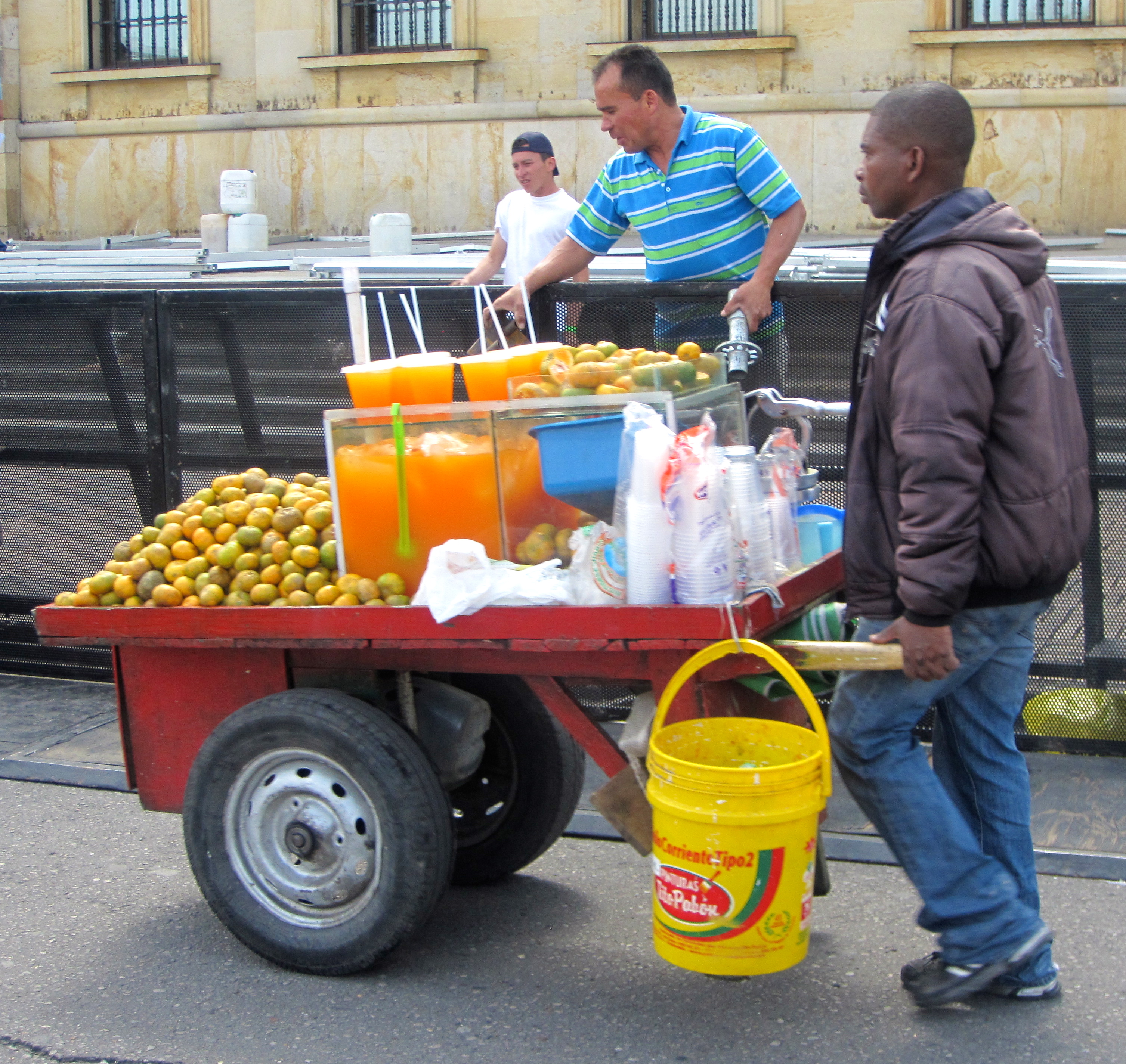
There is always juice.

IMG_3767

The FARC was founded in 1964. Adopting an anti-U.S. and Marxist ideology. The group attracts the overwhelming majority of its members from the rural poor. Its aim is to overthrow the government. However, the government and the group have been making moves towards peace in recent years.

The decline and fall of the Colombian drug gangs has led to an increase in tourism. Medellin is still the capital of the cocaine trade but with Mexico taking over the American market, they are focusing on Europe and Latin America. Colombians are still often arrested in these countries for drug trafficking. Pablo Escobar never sold drugs to Colombians for consumption but today groups are targeting the outskirts of Colombia as well.

Colombian food is rich, diverse and delicious with a heavy focus on deep-frying. IMG_4841

Colombians do a lot of praying and a lot of crossing themselves. IMG_3754

Colombia is the worlds third largest manufacturer of women’s lingerie.

The Colombian drink aguardiente means fire water and is 60 per cent alcohol. A party is not a party in Colombia without aguardiente.

The name Colombia is derived from the name Christopher Columbus.

Avoid sopa de madongo unless you like intestines , tripe and cow udders, Luckily I have already gone through which organs to avoid in Argentina. FYI they also make soup out of eyeballs.

IMG_4612

Colombia has 84 different Indigenous tribes spread out across the country.

It is actually illegal to walk the streets in Colombia without I.D., but a photocopy will suffice in 99% of situations.

Colombia is my most misspelled country. In the past, I always spell it like Columbia the Ivy League University that I did not attend. I won’t be making this mistake again.

Colombia is one of my favorite countries in South America. I am already planning my return trip in my head.

Viaje con cuidado,

JAZ

Things I Have Learned In Jujuy, Argentina

Things I Have Learned  In Jujuy, Argentina

‘Mountains are giant, restful, absorbent. You can heave your spirit into a mountain and the mountain will keep it, folded, and not throw it back as some creeks will. The creeks are the world with all its stimulus and beauty; I live there. But the mountains are home.”

~Annie Dillard

The Train to the Clouds makes up one of the most important attractions in this area because of its distinct building and engineering.

IMG_0584

It is now closed but you drive along this route of unique beauty where the mountains touch the clouds.

IMG_0593

The Puna is part of the barren high altitude landscape that stretches across the Altiplano in Northern Argentina. It is around 4000 meters high.

IMG_0440

The Altiplano (high plain) is the most extensive high altitude plateau outside of Tibet.

IMG_0464

You don’t see much except wild vicunas and guanacos.

IMG_0647

The viaduct at La Polvorilla is the last stop of the Tren A Las Nubes at 4200 meters above sea level.

IMG_0625

Las Nubes means the clouds. It is a word you quickly learn in Salta and Jujuy (between 10-14,000 ft. above sea level most of the time.) There is the train to the clouds,  restaurant in the clouds, farm in the clouds, gym in the clouds, winery in the clouds,  hotel in the clouds, store in the clouds, etc. In other words, you are very high up in the Andes.

San Antonio de Los Cobres is one of the highest altitude towns on the Puna and is known because it is one of the stops on the Train to the Clouds. That’s about it.

IMG_0602

The cold wind rips through us and it turns out that it is the windiest day in thirteen years. We are at our highest altitude of 14,000 feet. The altitude headache is kicking in and it is freezing.  But I have been in a cozy restaurant drinking fresh coca tea, eating llama and lentils, and talking about the rainy season and mine exploitation.

IMG_0642

IMG_0643

It is not a good day for a drug test when you are at high altitudes in the Andes chewing coca leaves and drinking coca tea. The test is for coca, not the chemicals that turn it into cocaine.

IMG_0654

It takes about three hours on an unpaved dirt road to go from San Antonio  to Salinas Grandes.  When someone tells you that you are taking the road alongside the train to the clouds, it sounds so exciting, but  why do they forget to tell you it is unpaved and very rocky?

IMG_0450

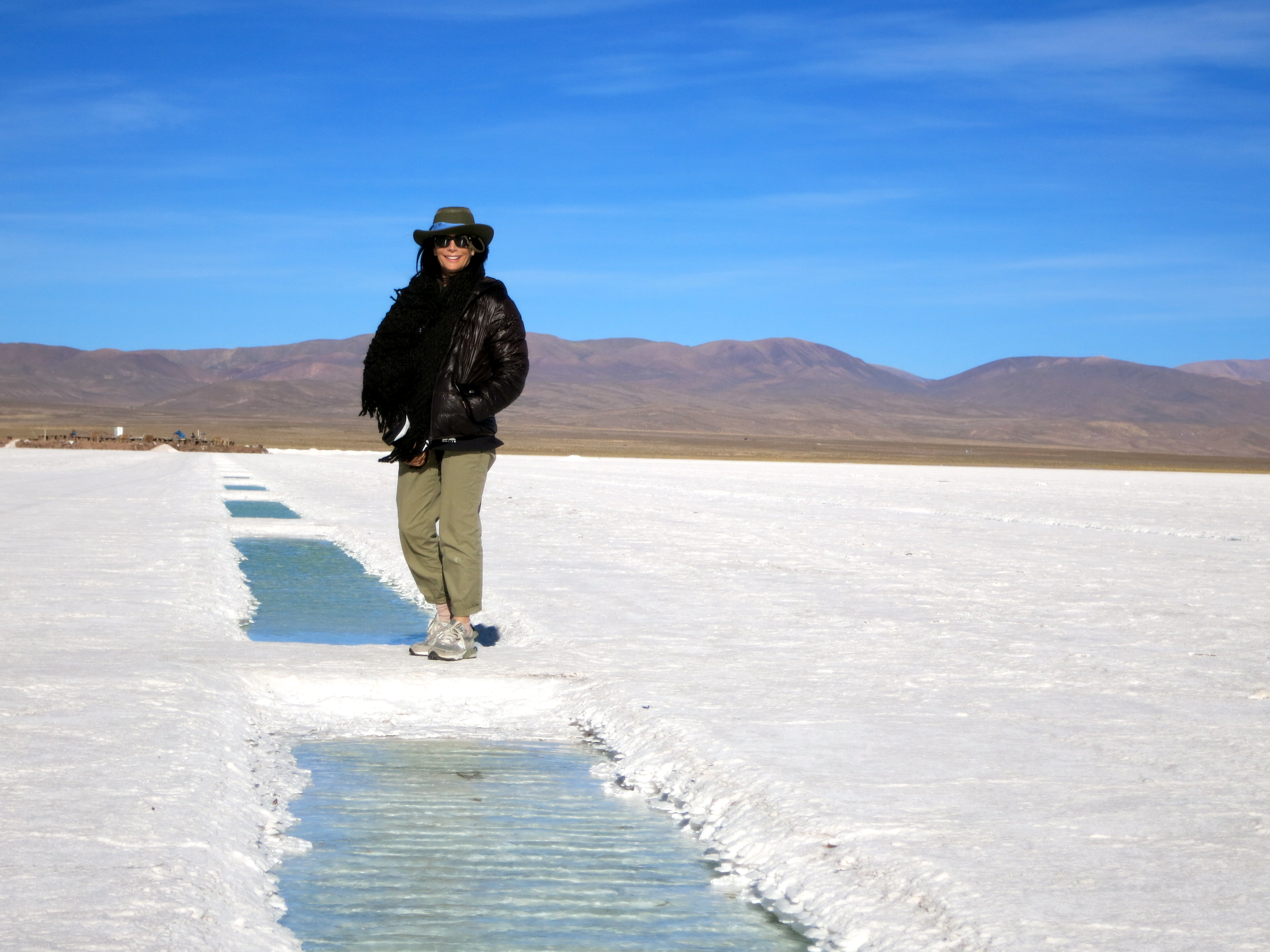
A stunning natural phenomenon, these salt flats took about 22 million years to form the current topography. Salt deposits from a since-disappeared body of water cover the ground here, forming a durable surface that appears snowy from a distance and almost fossil-like up close.

IMG_0666

Salt  can have a big glare, when not in a salt shaker and laid out in salt flats of 8,290 kilometers.

IMG_20130528_144829

The pueblos of Purmamarca, Tilcara and Huamahuaca are on the main highway to the Bolivian border. (Pucara of Tilcara-pre Inca fort)

IMG_0253_2

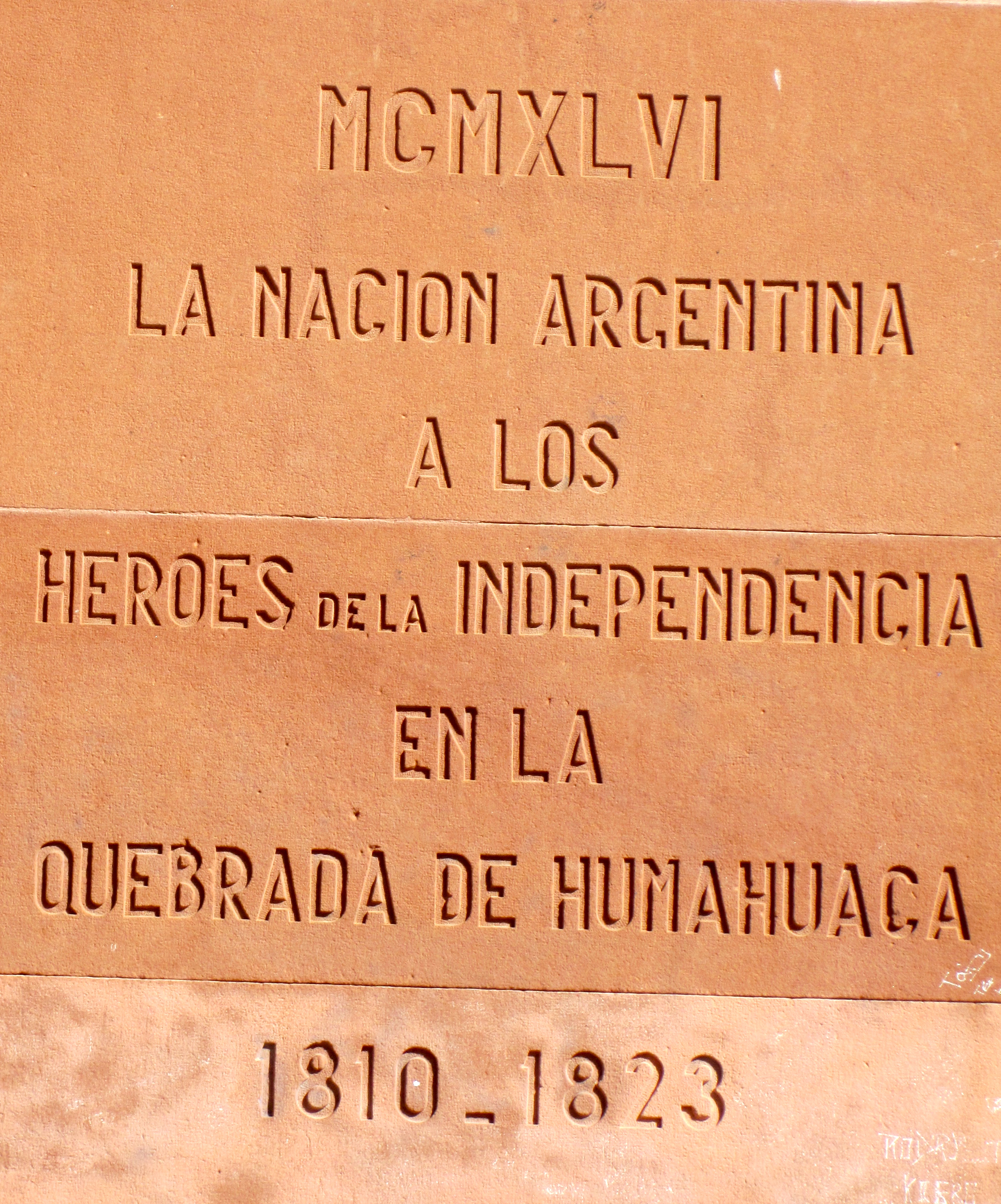
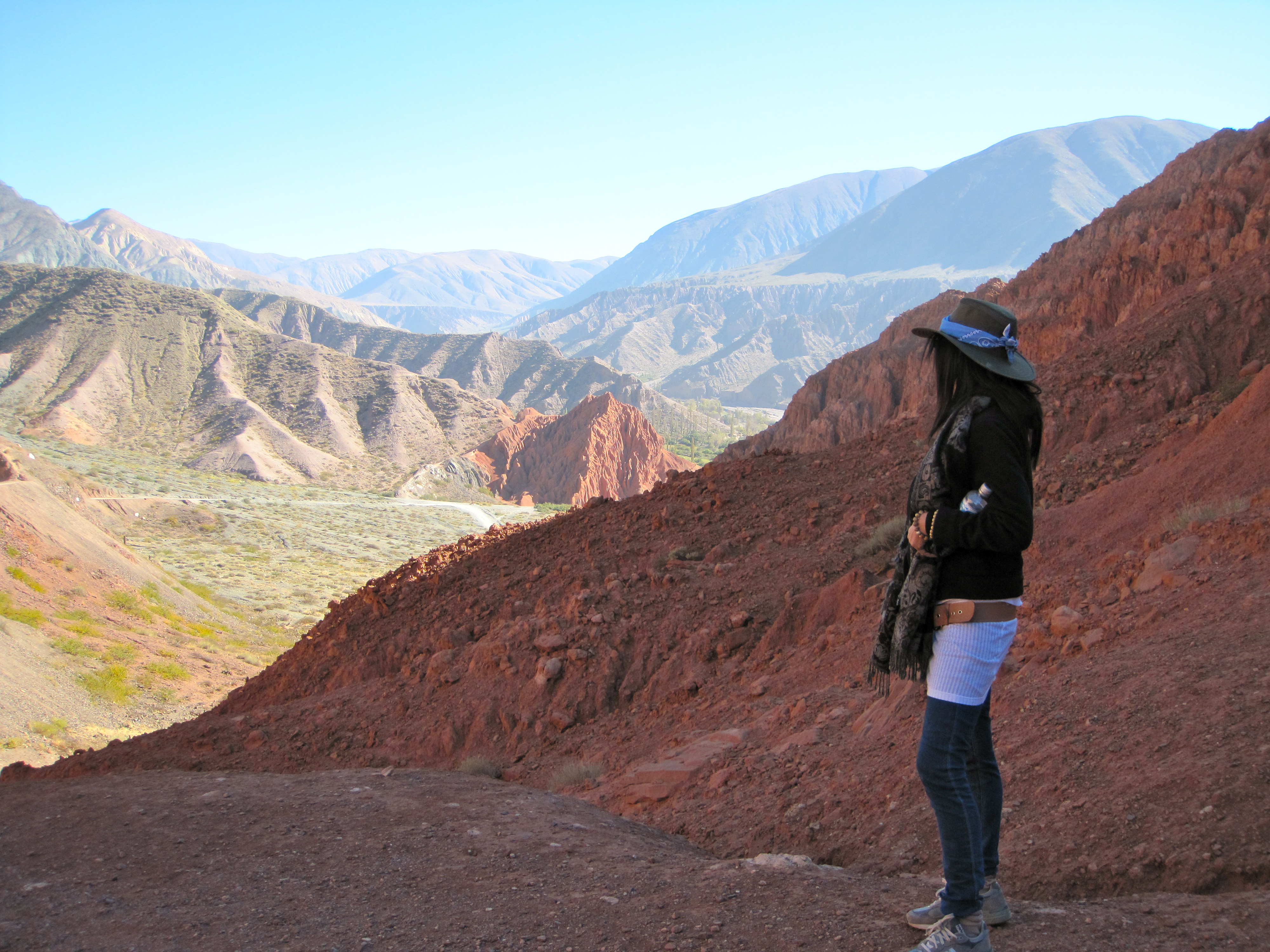
This entire area is the Quebrada de Humahuaca . a UNESCO site for its villages and natural scenery.

IMG_0195_2

IMG_0190_2

The towns are more interesting in Jujuy than Salta.

IMG_0292_2

We see no tourists here from the United States but you can always find South Americans, a few Germans and Australians, and of course the British. They go everywhere.

The Tropic of Capricorn is the southernmost latitude where the Sun can be directly overhead.

IMG_0215_2

One of the markers of the Tropic of Capricorn is in Jujuy province in Northern Argentina.

IMG_0218_2

This beautiful church in Uquia is one of the many colonial churches in Jujuy. It has a fine collection of paintings from the Cusco School of Art . (the Incas were taught to paint for the Spanish and put their own symbols in the paintings)

IMG_0161_2

There are nine angel paintings. When the Indians were told to paint angels,  they did not know what they looked like. The Spanish told them that they look like us, but with wings. They painted soldiers with swords, spears and wings. The most beautiful wings that the Indians knew were the ones from the flamingos of the highland lakes and so the wings in the paintings on the soldiers are pink. The angels have very red cheeks from the wind in the northern Andes against the Spanish fair skin.  (no photographs please)

The seven colored mountain of Purmamarca pink, green, grey, purple, orange, brown, white) is pretty impressive as far as colored stone goes .

IMG_0357_2

It shows many geographical ages.

IMG_0342_2

IMG_0340_2

The mountain is a backdrop for the village.  Everyday, there is a big handicraft fair in the main square of the village which adds even more colors.

IMG_0303_2

IMG_0401

IMG_0392

Purmamarca was my favorite place on this trip. Hiking in the colors of the mountain made me feel like I was in some amazing painting.

IMG_0367

IMG_0350_2

I have so many beatuiful photos it was hard to pick just a few.

IMG_0324_2

IMG_0325_2

Tilcara is a lively Andean village . There is an arts and crafts market and many restaurants around the main square. There are many gatherings in restaurants at night with live traditional music (sometimes from the guests) and local food.

IMG_0231_2

IIMG_0272_2

IIMG_0281_2

IMG_0276_2

Indigenous cultures are very much alive in these mountain pueblos.

IMG_0160_2

IMG_0293_2

Humahuaca is a pueblo in the Humahuaca Valley, 10,000 feet above sea level.   Many Bolivian immigrants sell traditional Andean crafts and coca leaves. The architecture, adobe houses, street lamps and cobblestone streets are all from another time.  The ancestral customs continue here.

IMG_0172_2

IMG_0214_2

The historic Cabildo building (town hall) is the home of the main tourist attraction. There is a stellar performance by San Francisco Solano, a mechanical  statue with waving arms that blesses the audience of tourists and locals every day at noon. It comes complete with music blaring from the nearby Church of the Candelaria..

IMG_0208_2

Gauchito Gil is another folk saint. He was the Argentine Robin Hood who got tired of fighting in the Civil War  and protected the poor instead. He was found in the forest by a general and pleaded for his life. He said to his murderer, “Your son is very ill, if you pray to me, he will live.” This turned out to be true. Again the story spread. Today, small red shrines can be found on the roadsides of most northern Argentine motor-routes, and great pilgrimages are organized to his sanctuary in Corrientes.  Drivers believe that if they fail to acknowledge or leave offerings to the saint during their journeys, they may crash or breakdown. You can find red flags along the  route.  When I was checking the facts (yes, I do that) I found out that Gauchito Gil also has a facebook page.

IMG_1171

IMG_1177

Traveling with Daniel Salazar from Cultural Xplorers is never boring.  His sense of humor, adventure, kindness, shopping skills, intelligence and knowledge of many things made this trip so much fun. I also have to thank him for being my personal photographer most of the time, and I hope we will remain friends.

IMG_0874

It is always good for a New York city kid to spend some time in small villages in Argentina. When you are young, it looks like just the kind of places to escape from, when you get older, you are not so sure.

Buen Dia And Fly Safe,

JAZ

A Perfect Day In Buenos Aires

A Perfect Day In Buenos Aires

“Without the streets nor dusks of Buenos Aires a Tango cannot be written.” Jorge Luis Borges

Every morning is a new beginning.   Sometimes, when you are fortunate, it is just another perfect day.

It started in Tigre. Tigre is still an important timber processing port about a half hour outside of Buenos Aires. The “Puerto de Frutos” (fruit port) is now a crafts fair located in the old fruit market by the riverside.

IMG_0521

I looked at the brown murky water (it is clean but filled with sediment not pollution) and lush foliage and really wanted to explore.  Andres, my tour guide said his boat was nearby. (unplanned). His boat is named Juan D’Arienzo after a famous tango orchestra director.

IMG_0533

.

We sailed off through the different rivers of the Delta del Parana. It was Sunday and many people were out in their rowboats. We passed the supermarket boat bringing supplies and also the public bus boat.  We saw the church and school and many of the homes on the islands.

IMG_0207

IMG_0529

IMG_0543

I loved being on that river, It was a calm and peaceful day but I knew it could change in a minute  with a rainstorm, wind or dry spell.  Are we like that also? Always moving and then  changing when things happen?

IMG_0211

IMG_0549

Tres Esquinas means three corners and is named after a famous tango.  The restaurant is located in Barracas, a working class barrio in Buenos Aires .  It is definitely a local place to have steak and empanadas. It was filled with families having their large midday meal. We had a couple of empanadas each.  They were muy sabroso. I think it was about two dollars. (I am bad at conversion) delicious and economical.

IMG_0260

IMG_0261

I love outdoor markets but the Sunday antiques market in Plaza Dorrego  in San Telmo is a phenomenon. The antiques are around the plaza but the shopping continues with arts and crafts vendors for many blocks. It is curbside capitalism at its finest.

IMG_0305

There  is so much to see – vintage soda water bottles, old telephones, mate cups and  kitchenware  are on display everywhere.  There is also a produce market. Tango dancers are on every corner. It seems as if everyone in Buenos Aires is here, shopping or hanging out. It was overwhelming even for a professional shopper like myself and so much fun to see.

IMG_0308

IMG_0310

IMG_0291

La Confiteria Ideal did not start as a tango hall but as  a pastry café in 1912. In the seventies it became a venue for concerts and many famous people performed here. But it the nineties it became a tango hall. It has been the location of many tango scenes from movies. Its faded glamour was a perfect background for the faded glamour of the tango dancers I saw that day.

I was there on a Sunday afternoon . They dance from three until nine. This is  very early for a milonga (place where people gather to dance tango) which doesn’t usually start until eleven. The dancers were mostly older and seemed to know each other. They had come here for many years. The men sat on one side and the women on the other.  The men signal silently for a dance across a crowded room with the nod of their head, a wink, or a raised eyebrow.

IMG_0324

The older generation danced with the awkward sensual grace of people whose bodies no longer moved the way they used to but their soul remembers.

IMG_0328

Tango is about emotional connection and trust. There’s a saying in Spanish that captures the importance of the embrace in tango: “El abrazo es mas importante que el paso” (The embrace is more important than the step) ). In the embrace there is trust without intellectual analysis.

tango

There was a lesson in watching these older people completely submit themselves to the dance and the moment. There was no before and no after  -simply dancing.

IMG_0316

The music of the tango is from the orchestras of the thirties fourties and fifties. It is the music of Buenos Aires. It is also some of the music of my childhood. My parents were folk and ballroom dancers. I learned the tango steps when I was five.  I can  play a few songs on the accordian. I never thought I would ever admit to that.  Watching the milonga tango dancers, brought back many memories of my childhood. It’s amazing how much you can remember with a few notes of a song. (Juan D’Arienzo , tango orchestra-I love this video)

Dance has been a big part of my life. Andres Miguel my tour guide is a tango dancer.  Everything we did that day was related to tango  –  a boat on a river, good food and shopping, a milonga and always tango stories. He was the perfect tour guide for me and gave me a gift of the perfect day. Muchas, muchas gracias Andres. tango@culturacercana.com.ar

IMG_0259

Buen Dia and Fly Safe

JAZ

White Walls Say Nothing – Urban Art In Buenos Aires

White Walls  Say Nothing – Urban Art In Buenos Aires

“First day of Advanced Art, my teacher said “I bet none of you know an artist who is currently alive” I raised my hand and said “Banksy” he shook his head and said he wasn’t a real artist, that is  when I knew he wasn’t a real art teacher.” Ariel Dennis

IMG_0457

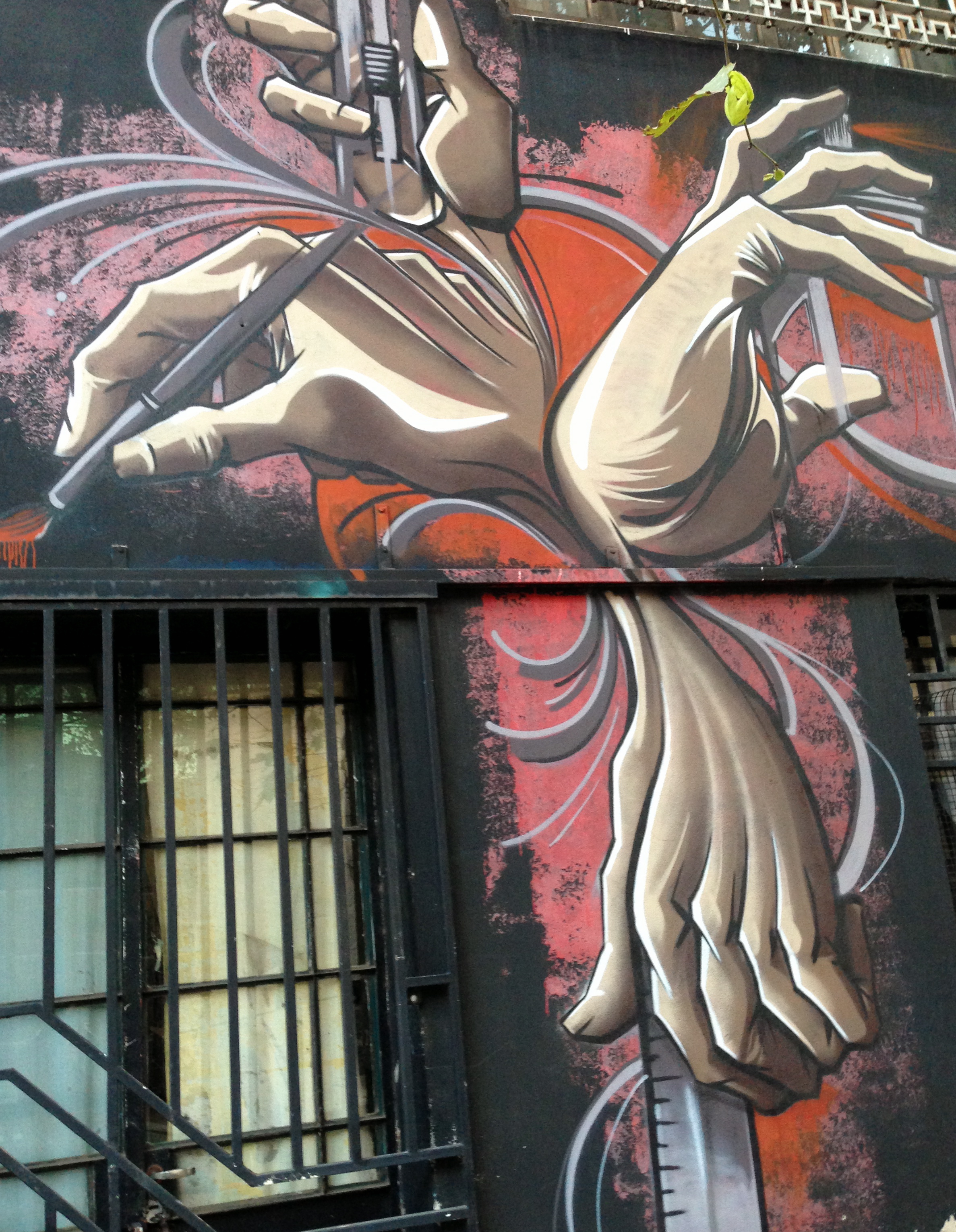
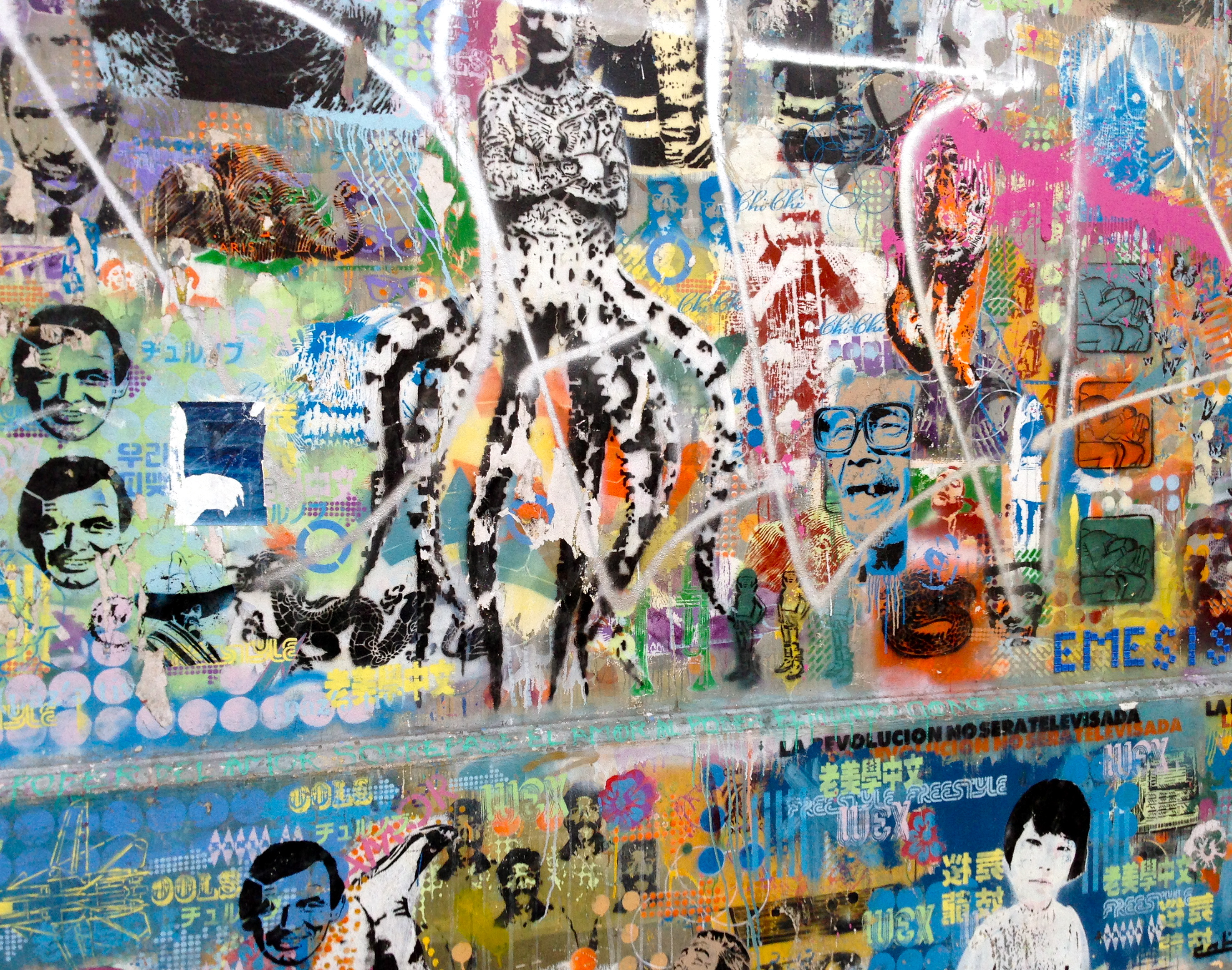
Streets are the world’s biggest gallery and in Buenos Aires,  graffimundo are the curators.  graffitimundo is a nonprofit organization that promotes street art in Buenos Aires. They have group tours every Wednesday, Friday and Saturday at  3 :00 PM and private tours available. It is a great way to see the street art of Buenos Aires. Contact them at http://graffitimundo.com/.

IMG_0464

IMG_0465

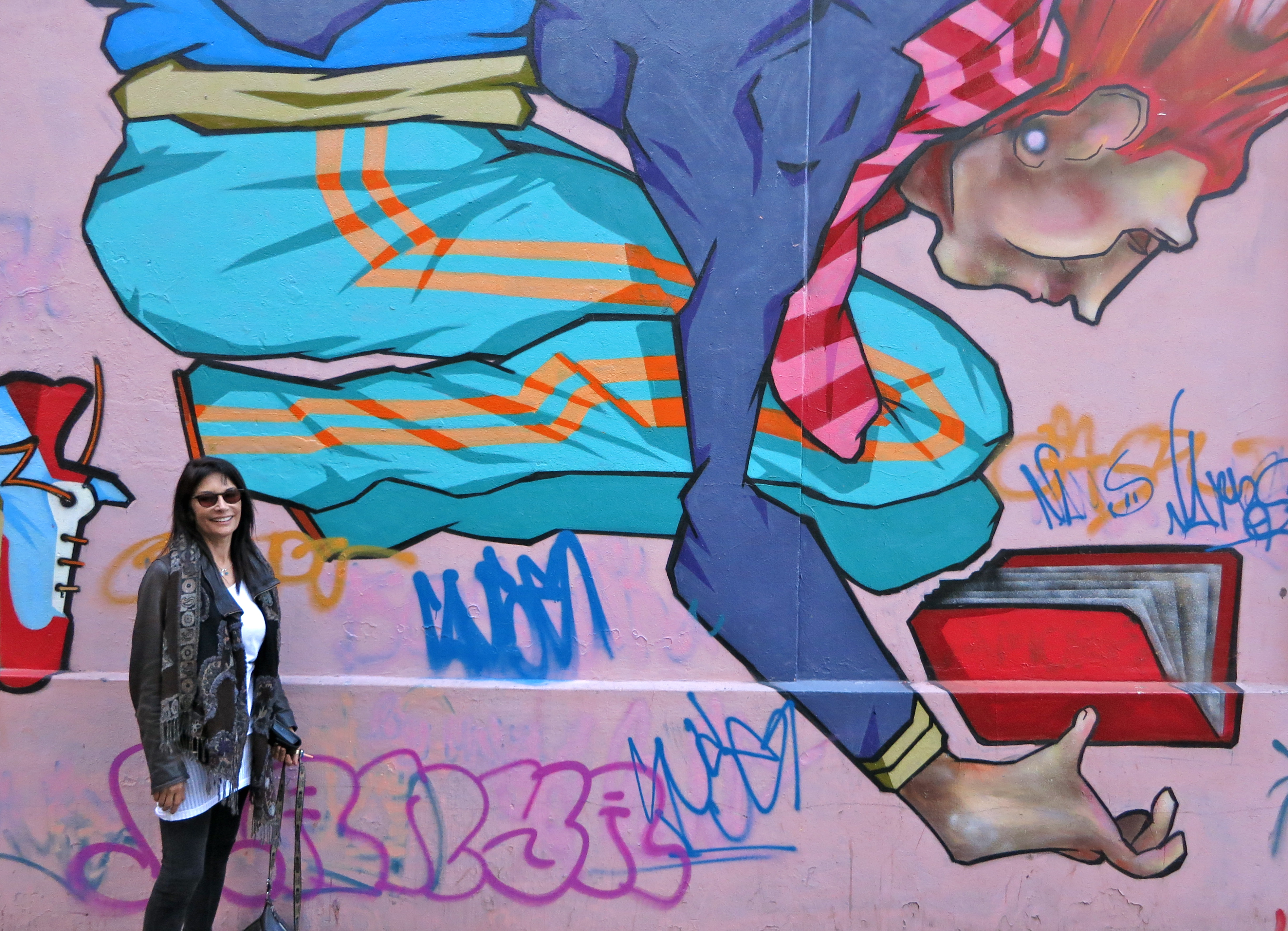
It is not exactly illegal to paint on the outside walls in Buenos Aires.  As long as the artists have the consent of the building owners,  it is fine.  There are many unoccupied spaces  and dividing walls between buildings. This gives  plenty of  locations for artists to bring a wall to life. IMG_0155 IMG_0157

IMG_0475

IMG_0170

It is possible to come across artists painting during the day on the walls.  This is unheard of in most other cities.  Urban artists come from all over the world to paint here. They don’t have to run in the night and have time to create some beautiful thought-provoking pieces.

IMG_0462

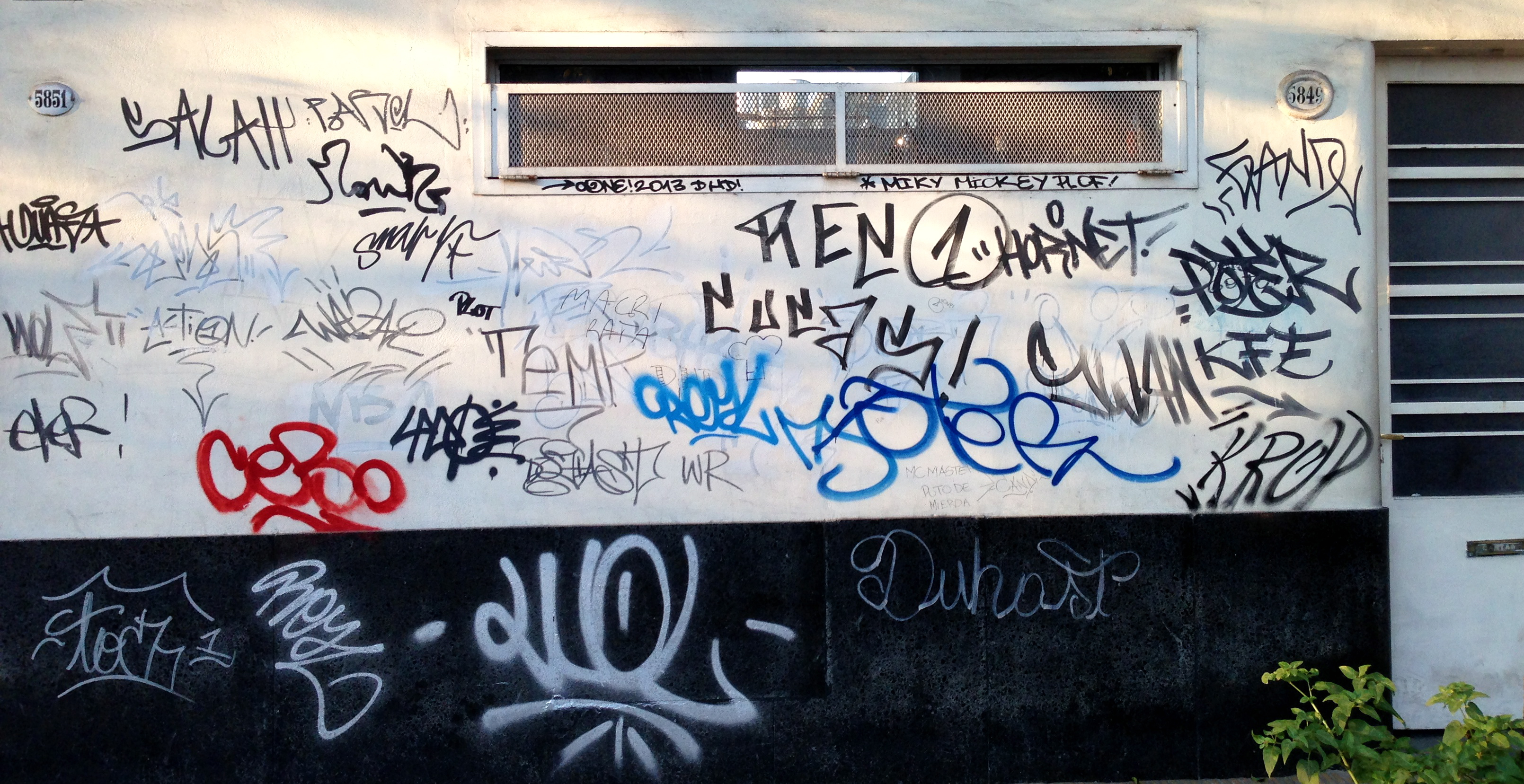
I love graffiti art.  My dog is named after a graffiti artist.  It is the art of the community.  People have always written on walls-from cave paintings to love hate propaganda to murals of epic detail and size.  You have to be really committed to paint on a wall knowing it won’t be there forever. The paint will fade, cracks will form or someone can paint over it.   It’s a product of the moment. It is art for art’s sake and not for sale. IMG_0145

IMG_0468

I don’t even mind the writing graffiti. It is some form of communication. When I used to see the freshly painted writing on the trains in NY (I thought it looked great), I would think – another person who has a found a  way to express his anger without a gun. Of course, I’m not the woman in Buenos Aires who washes it off her walls every day or the people who clean up hate crimes of “art”.  There was one street  where a father kept writing I love you to his kids. I wonder what he did that he had to write it all over the walls. There are always stories.

IMG_0152 IMG_0151

Johnny Robson was my tour guide and founder of graffitmundo. They started it because they thought the  urban art scene in Buenos Aires was amazing. There was no information about it. graffitimundo was formed to help  share what they had learned with anyone  who was interested. It was their way to support people  who were incredibly talented and under appreciated.

IMG_0190

Johnny is passionate and knowledgeable about the art, artists and their style of painting on the streets of BA.  Every artist and every picture tells a story and Johnny is only too happy to tell them all.  Halfway into the tour , I find myself recognizing artists and styles. The pieces are dynamic. Some express political and social messages and some  may just express emotion.  They are filled with energy, color and life.

IMG_0484

IMG_0175

You get to see streets all over Buenos Aires as well.  On the tour we visited walls in Palermo, Villa Crespo, Chacarita and Colegiales.

IMG_0179

IMG_0486

IMG_0183

I loved the collaborative pieces. In the early graffiti years, Crews (art gangs) have always worked together to paint on the subways and streets. This gave way to Collaboratives  – sometimes political -that could do more than an individual artist. According to Johnny, the artists are happy to share the walls with other talented artists. Another reason  urban artists like to paint in BA.

IMG_0480

IMG_0476

IMG_0478

IMG_0488

We stop off at Hollywood in Cambodia (great name for a gallery) an urban art gallery located on the first floor above Post Bar in Palermo with a rooftop terrace. Americans would probably call it the second floor.  It is run by a few art collectives.  I want to buy everything, but settle on a couple of pieces that I can carry. IMG_0189 IMG_0191

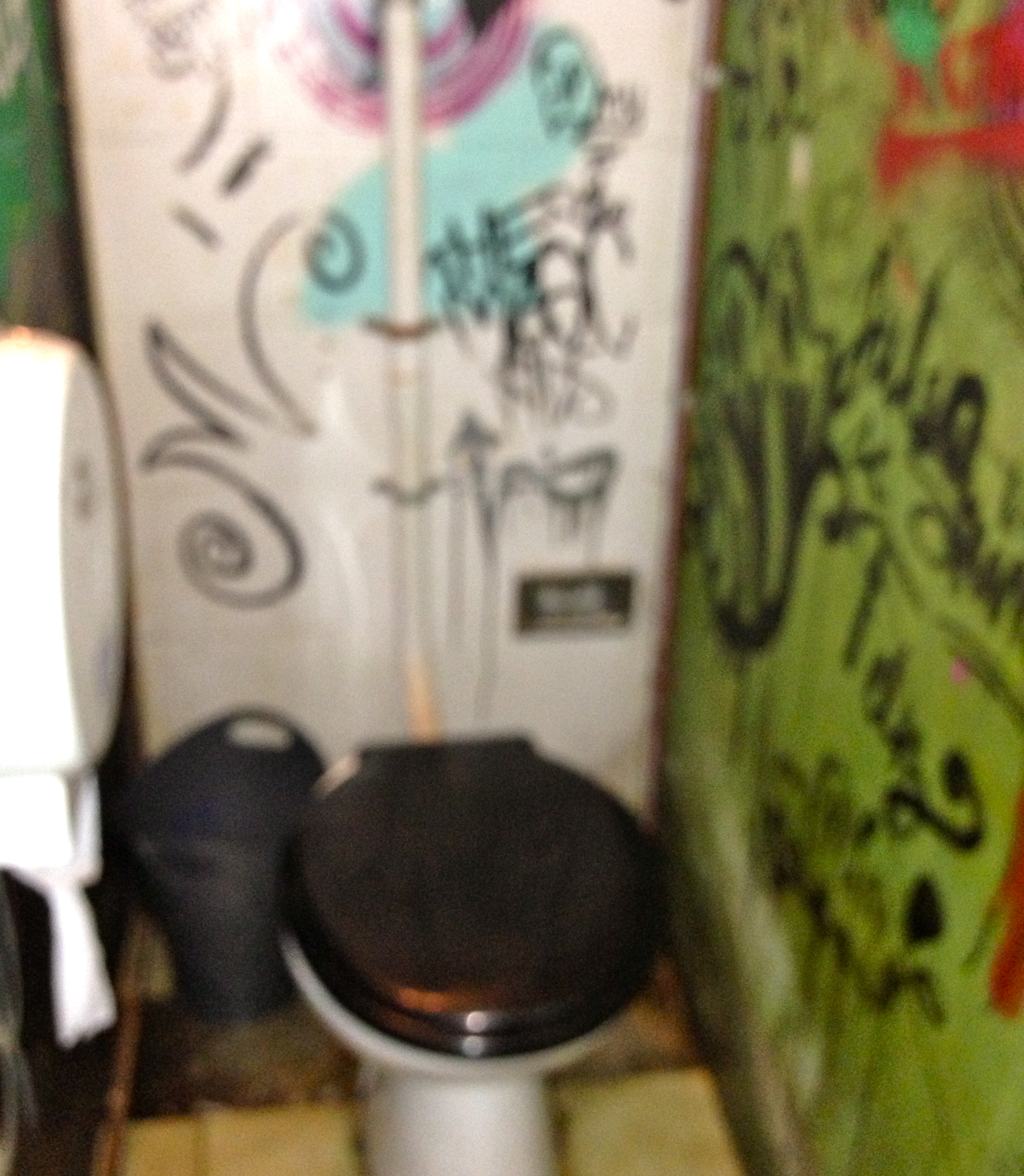
There is not an empty space of wall in the bar below either. IMG_0201 IMG_0199 IMG_0194

The title of this piece is also the title of a documentary that will be out soon. “White Walls Say Nothing” is a feature documentary, produced by White Wall Industries in association with graffitimundo. It is the story of Buenos Aires Urban Art Scene as told by the artists.  I can’t  wait to see it.

I highly recommend this tour in Buenos Aires  if you are interested in modern art or street culture.  For hipsters and scenesters it is the coolest thing to do (unless you are  actually painting on the walls)

IMG_0460

I’m  still amazed by the amount of street art and quality of some of the pieces I saw that day.  I  turned a corner and I saw a painting that I wanted to look at for a long time . I watched people walk by and not even look up.  It’s crazy that they didn’t  see  what they were missing.    Because art , like luck is where you find it.

IMG_0171

Viaje con cuidado,

IMG_0472

JAZ

Things I Have Learned In Buenos Aires

Things I Have Learned In Buenos Aires

“The two elements the traveler first captures in the big city are extra human architecture and furious rhythm. Geometry and anguish.” Federico Garcia Lorca

Recoleta Cemetery is the final resting place of the good, the bad, the beautiful and the rich people of Argentina’s past. It is a remarkable necropolis of tombs and mausoleums.  It is proportioned like a miniature village with its stately Greco-Roman crypts lining the narrow walkways. They believed “the bigger the mausoleum, the closer to God. “ It is less expensive to live your whole life in Buenos Aires than it is to be buried in Recoleta.

IMG_0074_2

There are approximately eighty cats who live at the Recoleta cemetery.  They say that they are the guardians/ tour guides of  the 4800 tombs and have been taken care of for twenty years.  Everyone including me  takes photos of them.

IMG_0086_2

IMG_0121_2

When you enter the cemetery through the neoclassical gates (designed by  the Italian architect Juan Antonio Buschiazzo.)  There are two messages in Latin. The message on this inside is from the living to the dead and says rest in peace. On the outside, it is from the dead to the living and says Wait for God.

IMG_0124_2

IMG_0118_2

You have found Eva Peron’s flower strewn monument when you see people. She is buried among the rich people who did not like her.

IMG_0098_2

IMG_0101_2

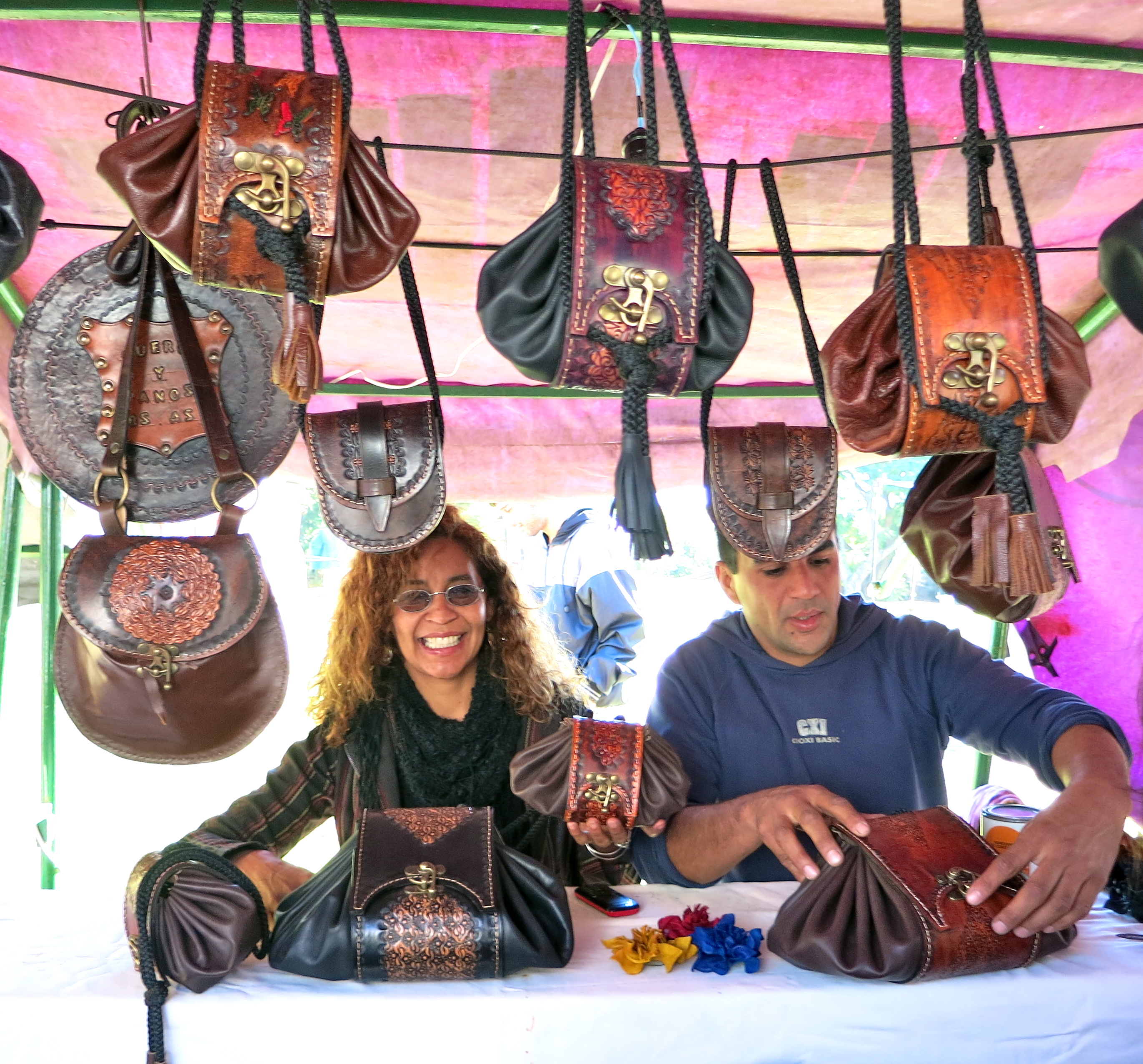
Outside the  cemetery on Saturdays is the Feria Artesanal Plaza Independente Alvear, Recoleta. It is a sprawling arts and crafts market.  They sell leather goods, indigenous products, art, souvenirs and snacks. I bought some really good gifts there. (artist Pablo Maino)

IMG_0451

IMG_0450

Buenos Aires like Paris is a city of street markets on Saturdays and Sundays.

IMG_0304

Drivers in Buenos Aires love to break the rules. Six AM is a dangerous time to be on the road as many people are heading home from milongas and dance clubs.

It turns out that Argentina has great ice cream. (or helado in Spanish). The blend of Italian immigrants bringing their tradition of making gelato, with high quality and creamy milk, combine to make some of the best ice cream in the world. Un Altra Volta is always a good place to go and they have a few locations. The Dulce De Leche is really tasty.

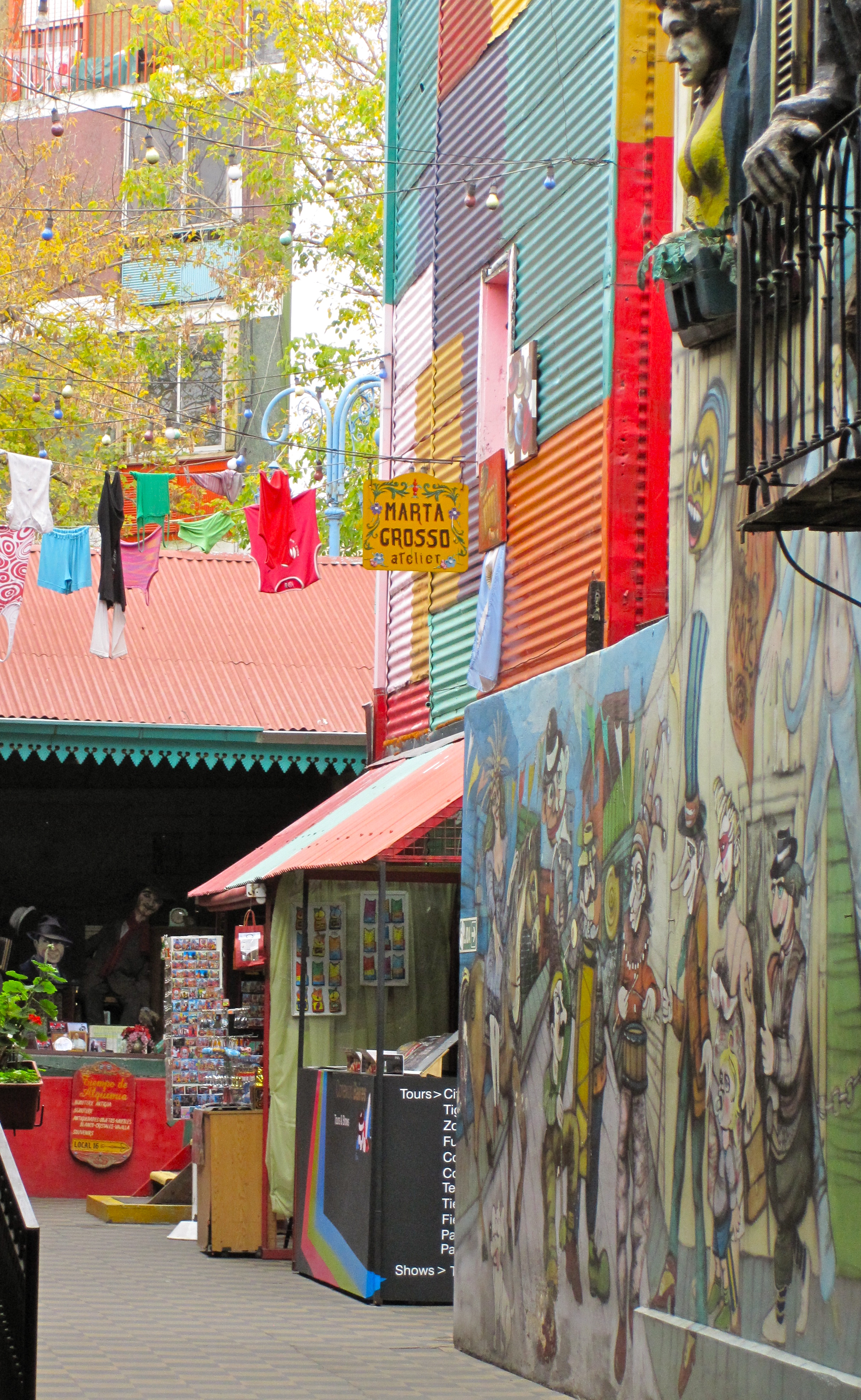
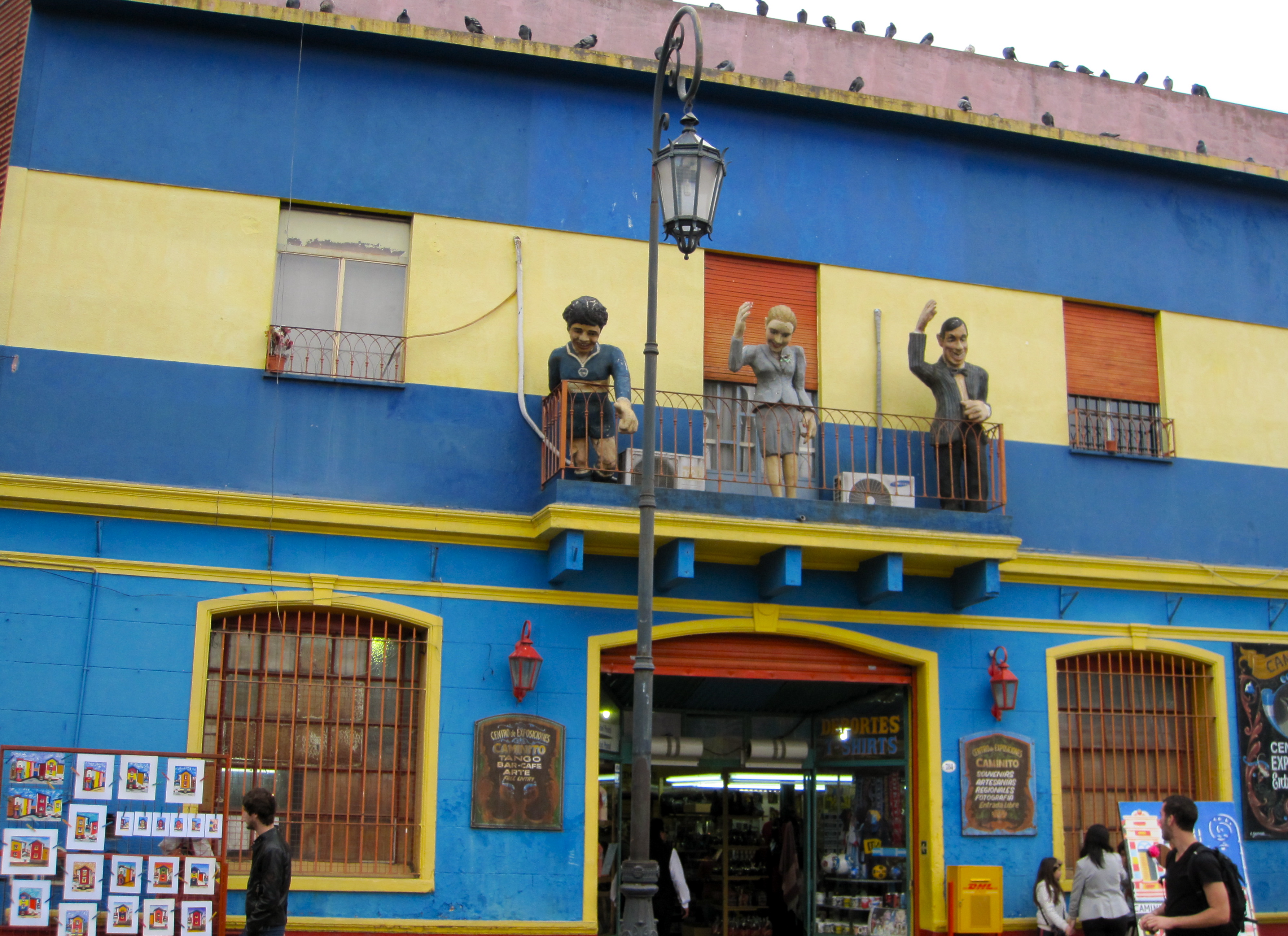
La Boca means the mouth in Spanish. The La Boca barrio  is located at the mouth of the Riachuelo. It was originally a shipyard and housed the people who worked there. The houses were built with cast-off ship building materials, meaning that they were largely constructed of  planks, sheet metal and corrugated iron. They were painted in different colors because they used whatever colors were brought in on the ships.  There never seemed to be enough paint in one color.

IMG_0028_2

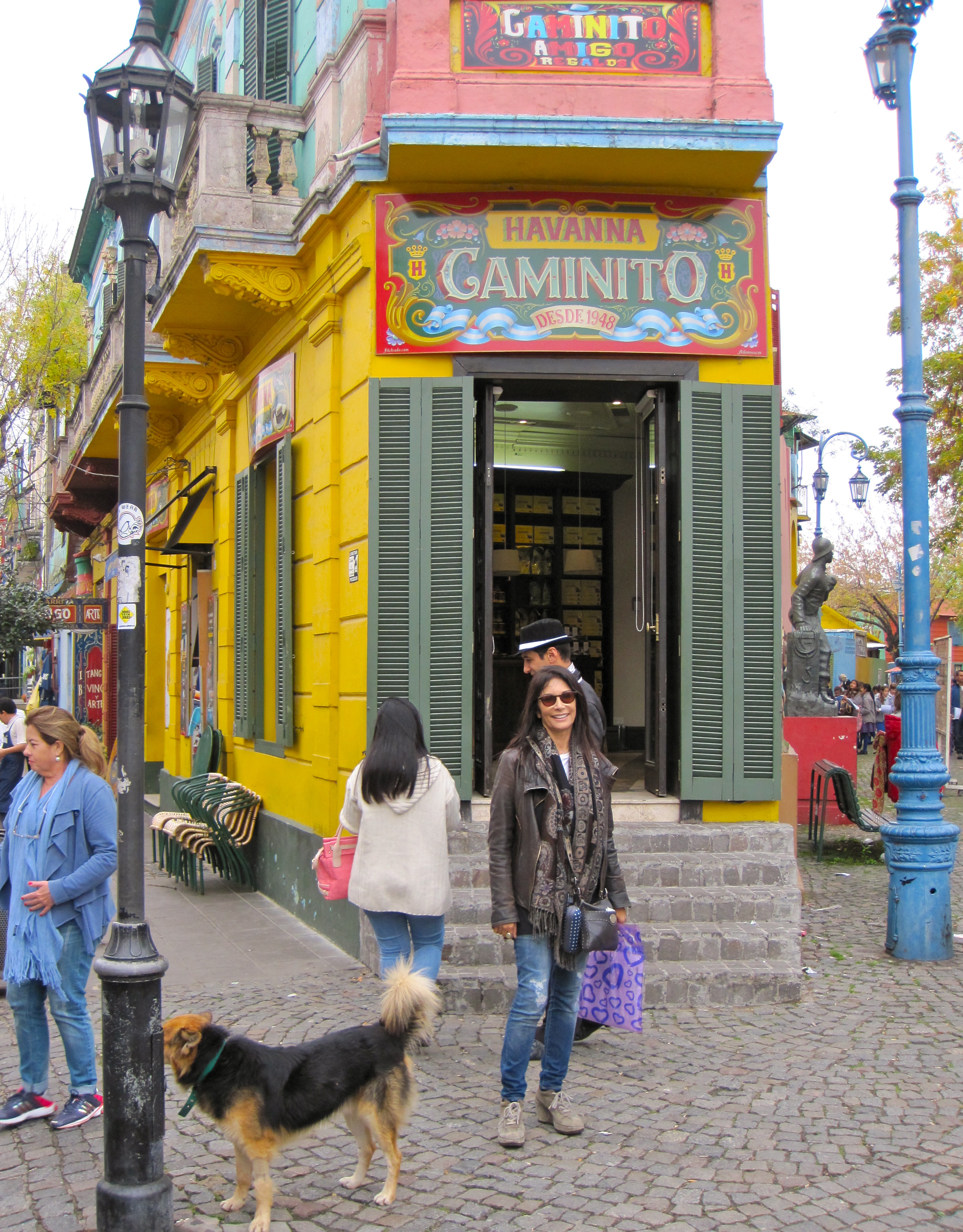
Caminito is the colorful artist/tourist street by the river.  In 1960, La Boca artist Benito Quinquela Martín painted the walls of what was then an abandoned street and erected a makeshift stage for performances. It attracted the artists, followed by the tourists, tourist hustlers and bland tourist restaurants.

IMG_0022_2

IMG_0046_2

IMG_0035_2

It is fun to see the open air tango display and I bought some nice photographs from an artist on the street. If you are going at night, take taxis to and from your destination. It is still a rough working class barrio. (artist Doralisa Romero)

IMG_0045_2

IMG_0017_2

Throughout history and male dominated governments, women were supposed to suffer injustice in silence. During the reign of the military junta it is believed that 30,000 to 45,000 people “disappeared”.  These victims were sons and daughters. In 1976 a small group of mothers walked around the Plaza Mayo holding photos of their missing children. The protests were not legal. A woman’s place was in the home. The women said a mother’s place is to protect and find her missing children and so they protested on a technicality. Some of the early protestors went missing as well. The women began to wear white headscarves.  The movement grew throughout Latin America. Sting and U2 recorded songs about  them. In 2006 President Kirchner declared unconstitutional the laws used to imprison the Disappeared. Following this move, the Madres ceased their annual protest marches. (U2 on UTube)

Today the Madres de  Plaza de Mayo are the largest civil rights organization in Argentina. In addition to their initial work to find the disappeared, the Madres have tried to continue the work of their lost children.  They have set up a  newspaper, a radio station and a university.And they continue to fight for social justice. The march every Thursday afternoon at 3:30.

Mothers of Plaza de Mayo-1

IMG_0482

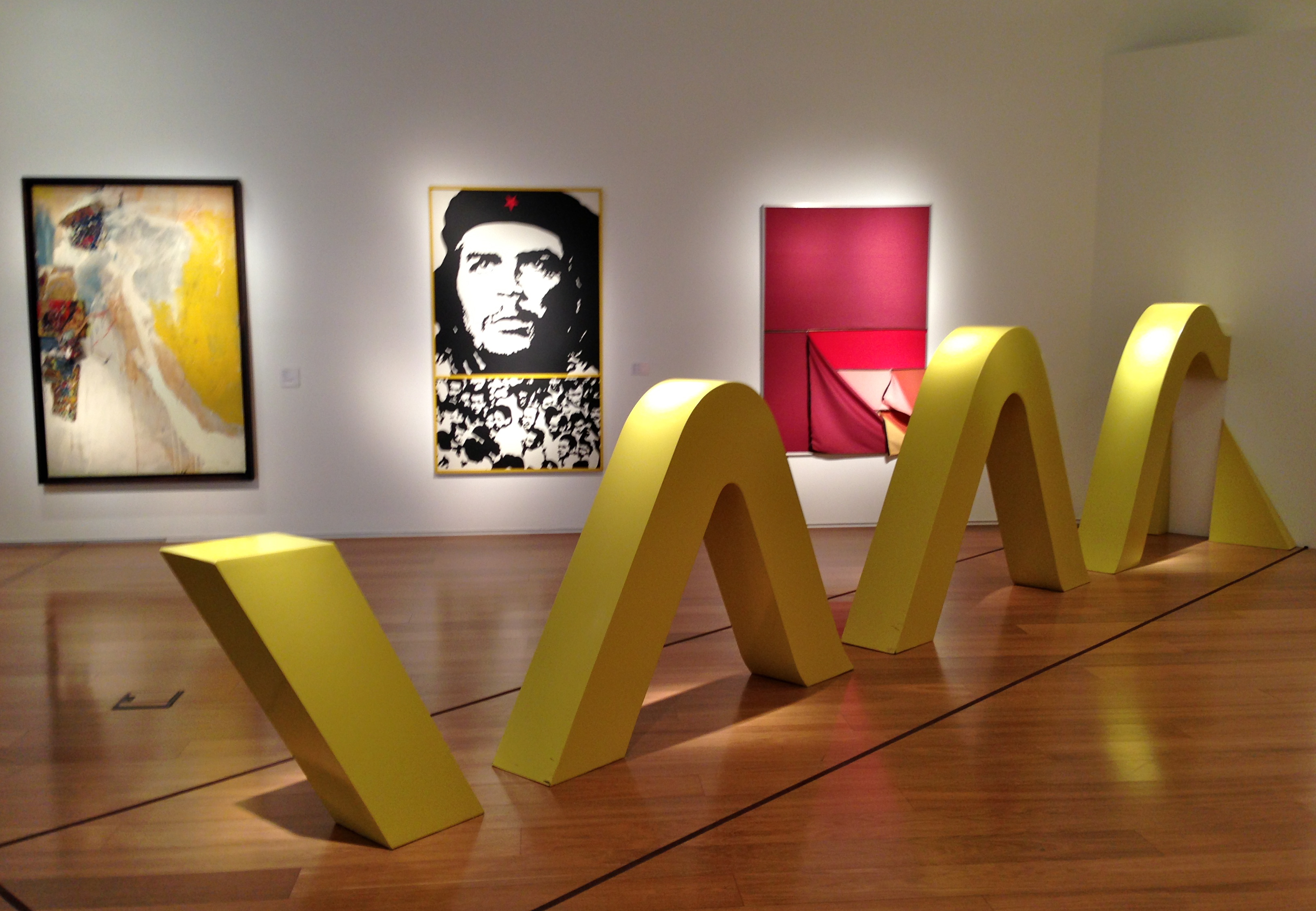
MALBA (Museo de Latinoamericano Arte de Buenos Aires) has an interesting permanent collection and should not be missed by anyone interested in art.

IMG_0136

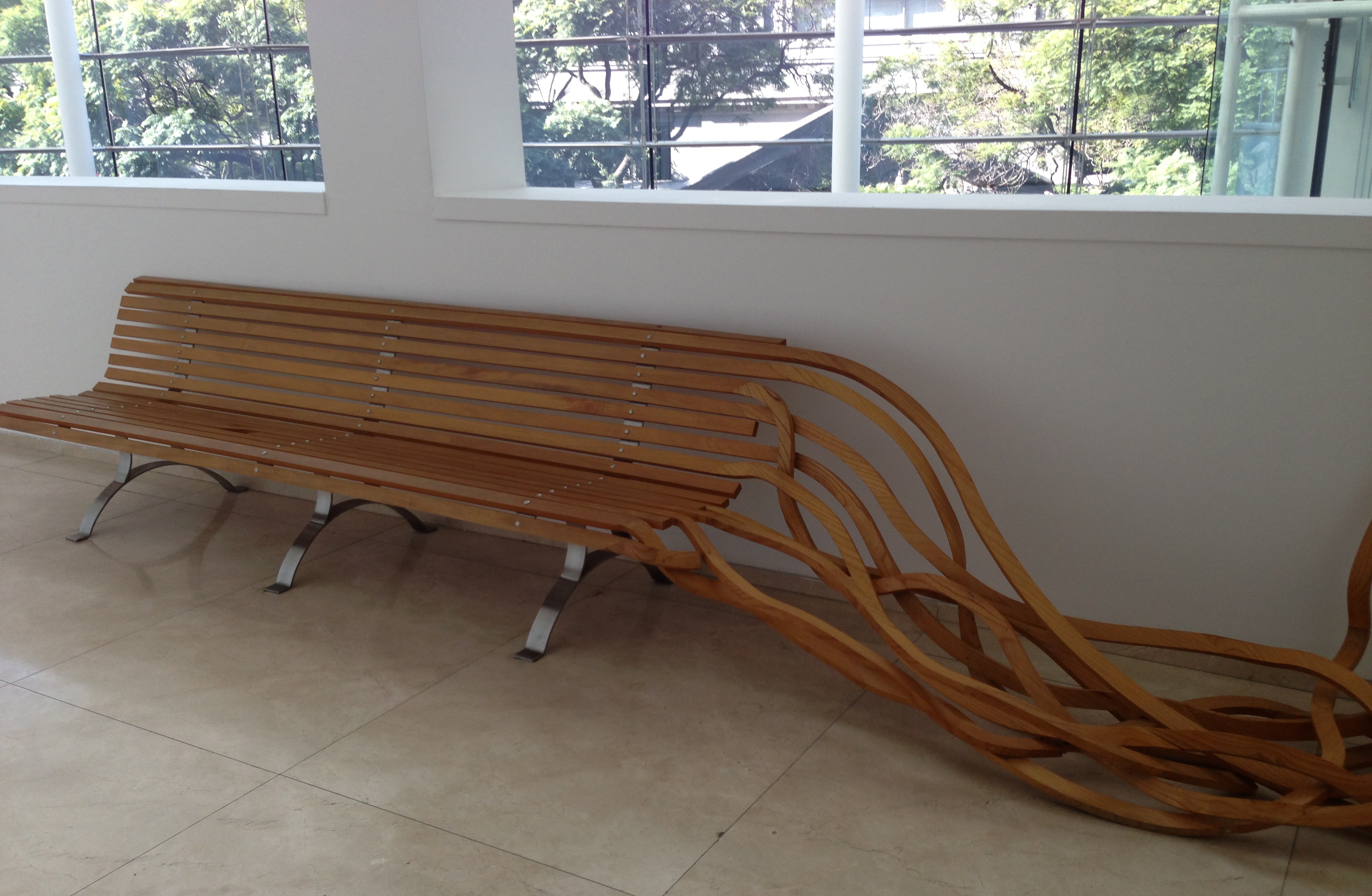
The building was designed to interact with art. A bench is not just a bench. (bench, bench continues)

IMG_0131

IMG_0133

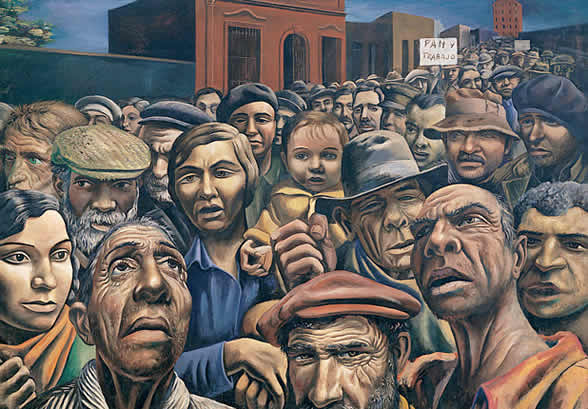
The gallery space is sectional yet fluid The permanent collection  consists of painting, sculpture, photography, print, drawing, and installations.  Visitors see major works by Xu Solar, Diego Rivera, Antonio Berni, Frida Kahlo and Jorge de la Vega, and a host of other modern masters from Argentina, Brazil, Chile, Colombia, Costa Rica, Cuba, Ecuador, Mexico, Uruguay, and Venezuela. (Antonio Berni -love this piece)

WA-malba-manifestacion

The Teatro Colon celebrated its hundredth birthday in 2008.  Its first performance in 1908 was Aida. The theatre is said to have one the best acoustics in the world. It is listed as one of the top five opera houses in the world.  It is the only stage that Pavarotti  was nervous to perform on. A massive  100 million dollar renovation was completed in 2010 and tours of the beautiful building are conducted daily in English and Spanish. Better yet, see a performance.  You can get tickets online before you go.

IMG_0355

IMG_0348

Arte BA one of the largest and most important art fairs in Latin America was held in Buenos Aires May 24-27. Eighty two galleries from Argentina, Brazil, Chile, Colombia, United States, Peru and Uruguay participated. It was really fun and interesting and they seemed to have a lot of sales. (art by Marta Minujin)

IMG_0408

IMG_0426

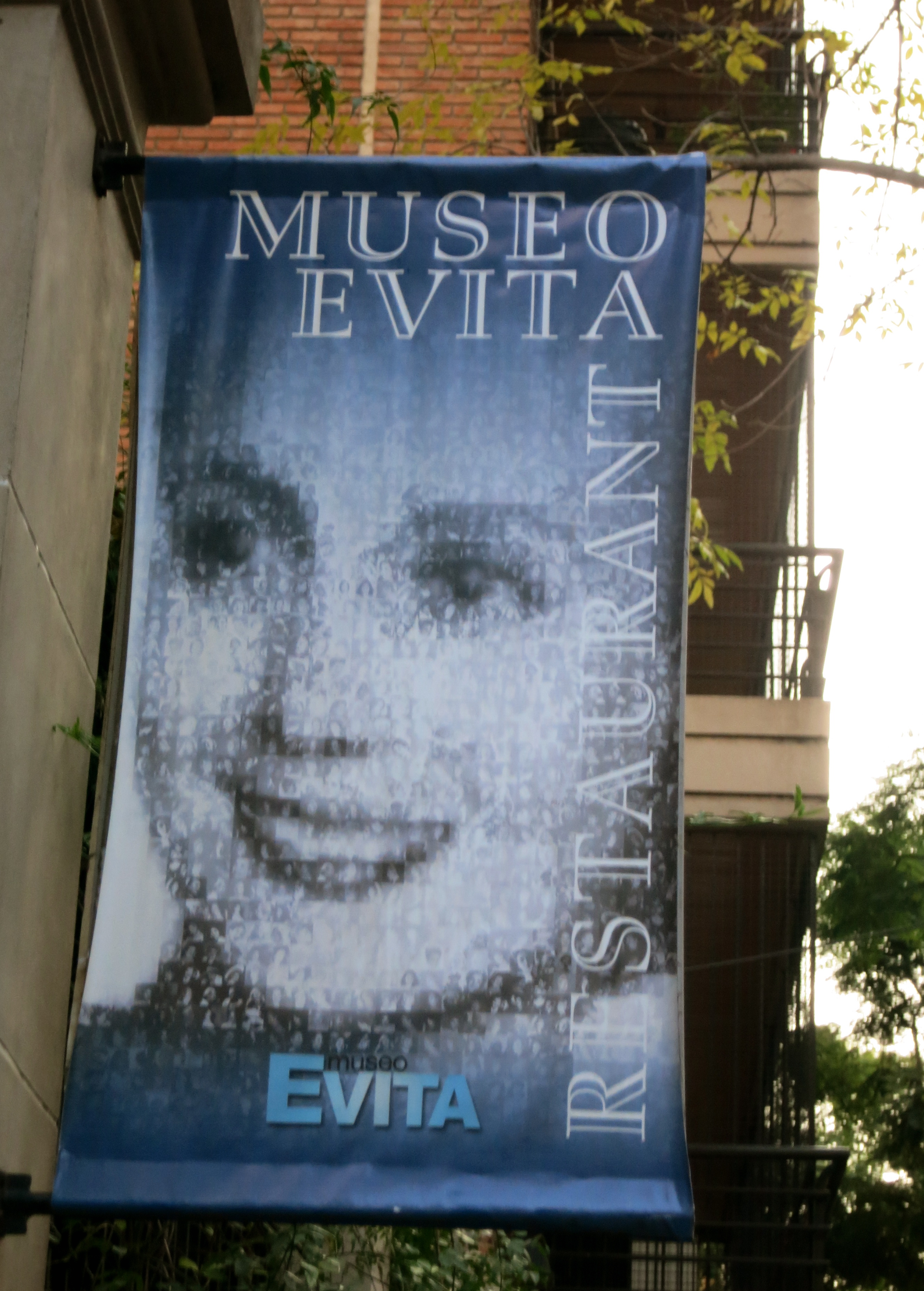
Eva Peron is a controversial figure in Argentine history. Museo Evita opened on July 26, 2002, the 50th anniversary of her death, in a mansion where her charity, the Eva Perón Foundation, once housed single mothers with children. The placement of the house here had been meant as a direct affront to the wealthy neighbors who hated Evita.

IMG_0405

The museum treats her history fairly looking at the good and the bad. Her things have been remarkably preserved by the military government that took power after Juan Peron. Whether you love her, hate her or  don’t care either way, she is an important part of Argentine history and  you should see the museum.

IMG_0403

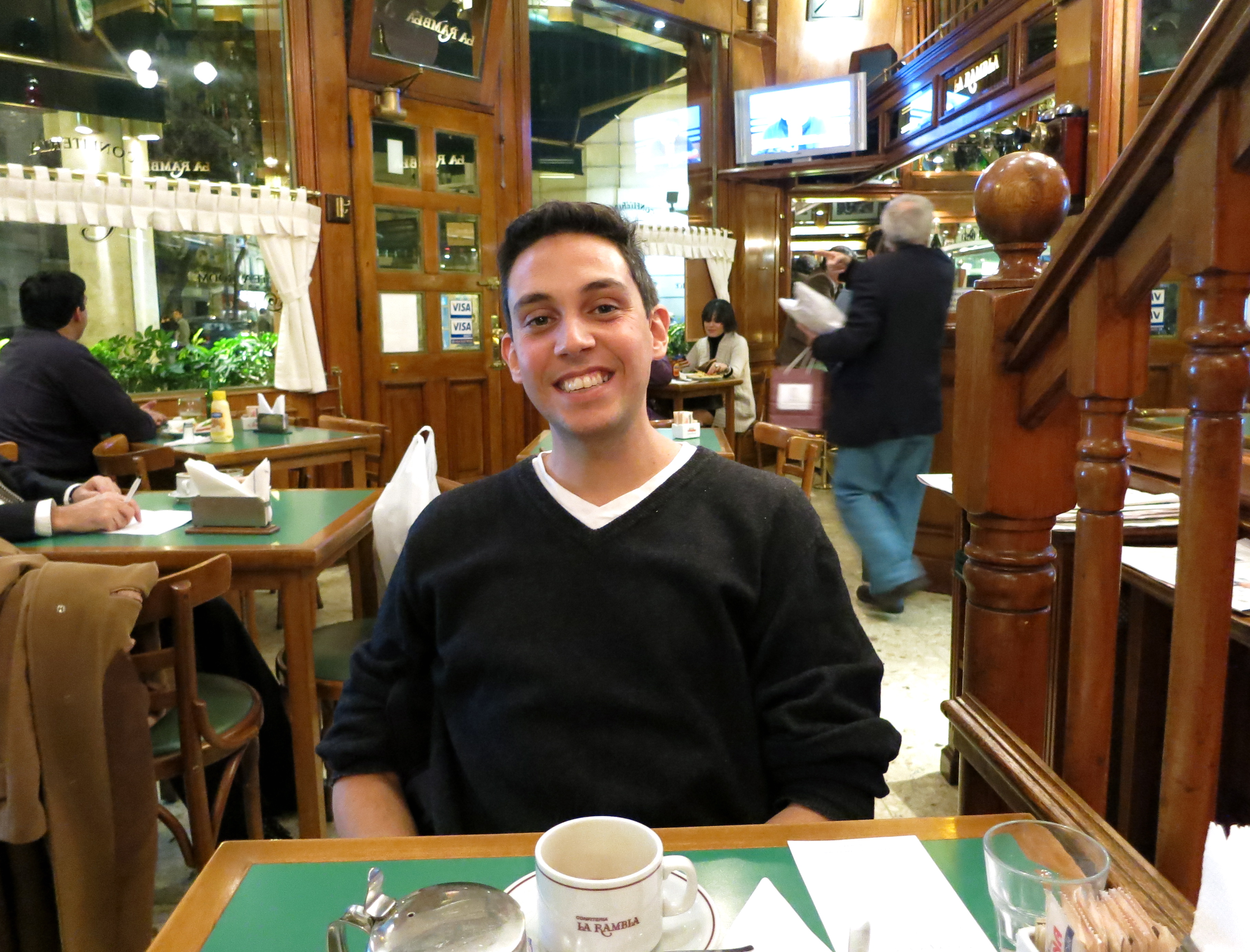
Drink a cup of freshly roasted coffee  ( I like cortado  -small coffee with a splash of milk) with a crispy medialuna (Argentinian croissant) at Café Tortoni.  A good place to try one is the city’s most traditional café. It was founded in 1858.  Café Tortoni has doubled as both a Bohemian and literary joint over the years. It is touristy but I am a tourist . I like to mix the places I’ve heard about with the places only locals know.

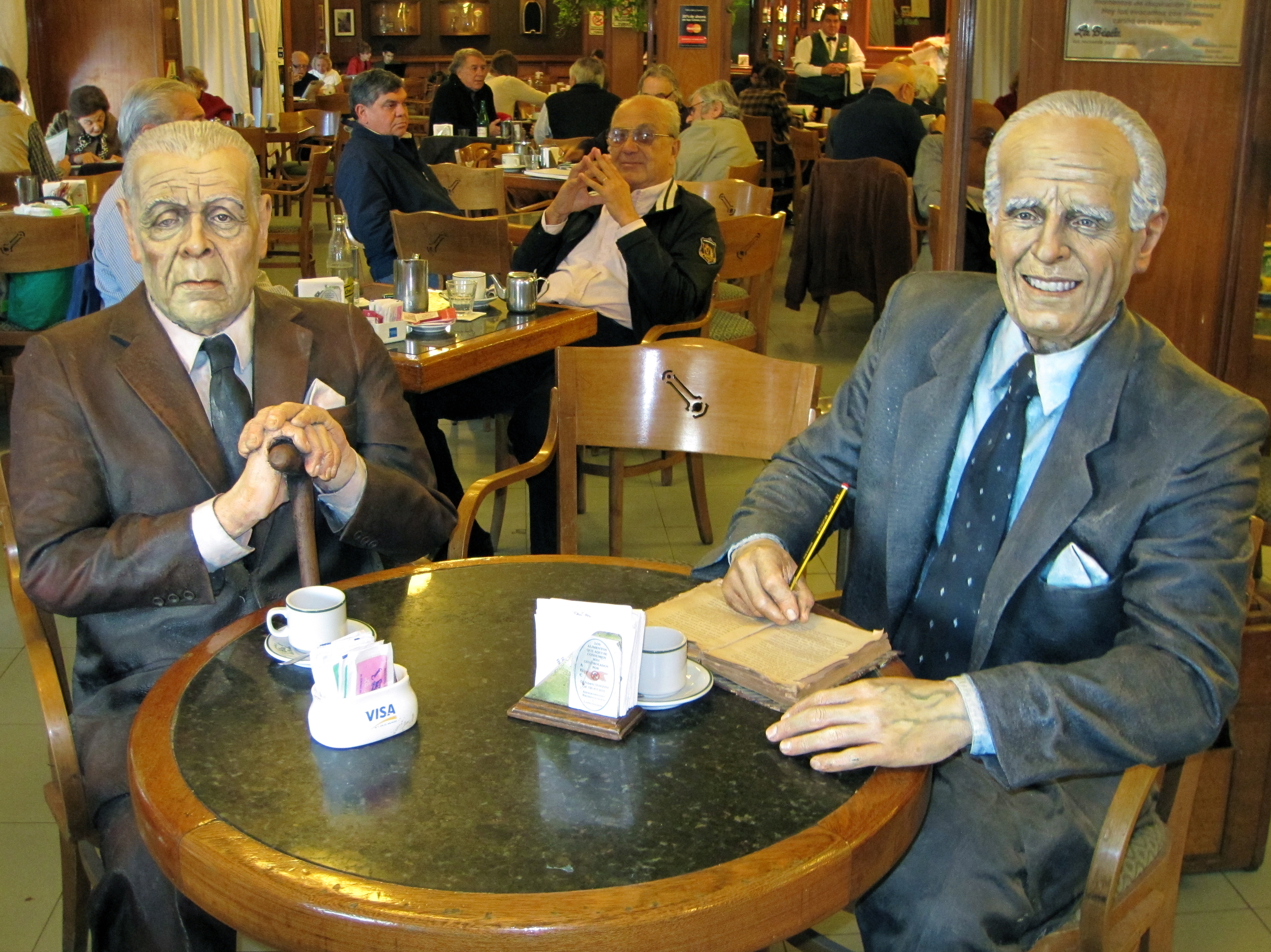
I preferred La Biela , opened in 1950 near the Recoleta Cemetery.  Biela means the connecting hot rod of an engine. It was frequented by early car owners and race car drivers. Their  black and white photos decorate the walls. It went on to become popular with artists writers and politicians. It has life-size statues of Argentine writers Borges and Casares sitting at a table in the front of the café.

IMG_0137_2

Great steak can be had at many places. I had it at La Cabrera http://www.parrillalacabrera.com.ar/ in Palermo Soho.  It was the size of my head but buttery and delicious.

Palermo is the largest barrio ( neighborhood) in Buenos Aires. It has beautiful parks, polo fields and many subdivisions. The most well-known for tourists are Palermo Viejo – home to Jorge Luis Borges and Che Guevara; Palermo Hollywood named because in the nineties a number of radio and tv producers moved there. Today it is known for restaurants, clubs and nightlife. Palermo Soho, as with its London and NY namesakes, is a  trendy area for fashion, design, restaurants, bars and street culture. Its “alternative” reputation makes it popular with Argentine Yuppies and tourists.

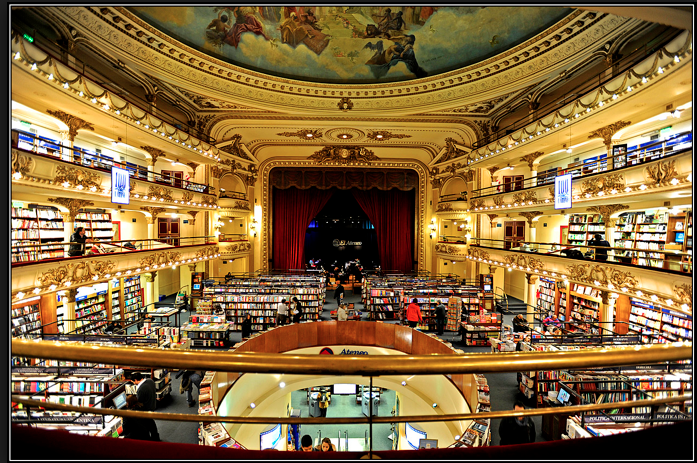
The Teatro Grand Splendid  was built in 1919 as a theatre for top tier tango concerts. What a wonderful name for a theatre. Tango legends such as Carlos Gardel, Francisco Canaro, Roberto Firpo, and Ignacio Corsini performed here. Building proprietor Max Glucksman was a leading figure in the world of tango in his own right, as owner of the influential Nacional-Odeon record label. In 1929, the theater underwent its first transformation to become a cinema, with the distinction of being the first in Buenos Aires to show sound film. Glucksman’s love of tango carried over to the new cinema, with live tango orchestration accompanying the silent films projections.

Screen shot 2013-06-19 at 12.48.42 AM

Its latest transformation is the El Ateneo bookstore.  The painted ceiling, detailed balconies, and stage are all intact. The private boxes are now small reading rooms. The stage is a café. The shelves fit perfectly around the theater’s original shape. The book collection is pretty standard and mostly in Spanish, it is an amazing place to buy a book or have a coffee on the famous stage.

IMG_0572

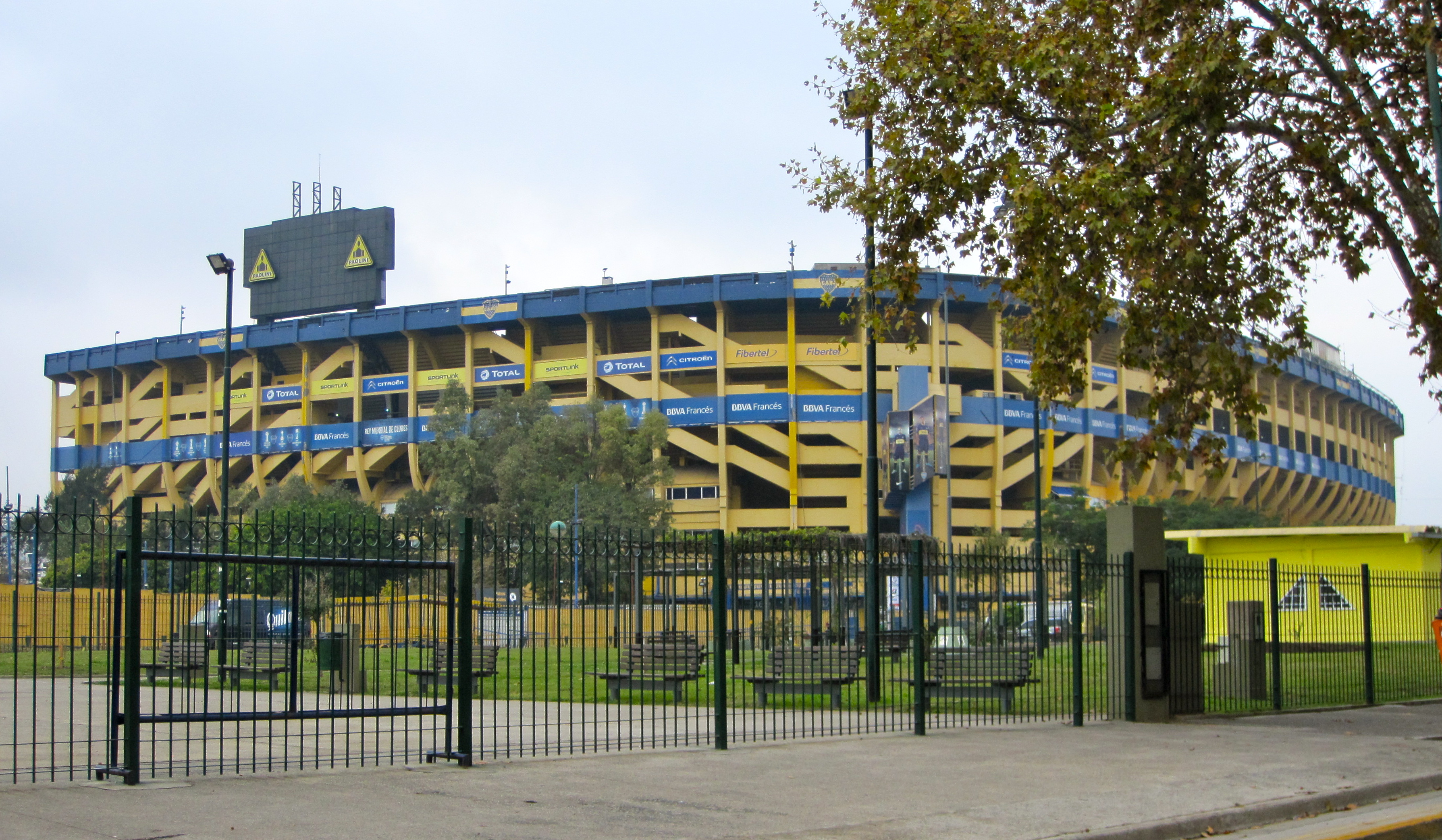
Going to a soccer game with one of the local clubs is a must do in Buenos Aires. I got to go to a Boca Jr, game at La Bombonera in La Boca.  The fans are as exciting as the game. They spit, throw garbage, scream at each other, sing and often dump water or urine on the people sitting below them if they don’t like what is happening. The Bocas tied the Newell Old Boys and fifty people got arrested. It was a great first night in Buenos Aires.

IMG_0061_2

IMG_0058_2

I would  not have had such an amazing time without the help of tour guides Marcelo Mansilla (info@ciceroneba.com.ar ) and Fabian Ali ( fali@culturacercana.com.ar) .  Muchas gracias for all your great suggestions, insight, kindness and knowledge of your very beautiful city. (Marcelo)

IMG_0439

Buen Viaje,

JAZ

,

Things I Have Learned In Argentina

Things I Have Learned In Argentina

“I am not sure that I exist, actually. I am all the writers that I have read, all the people that I have met, all the women that I have loved; all the cities I have visited.”

―Jorges Luis Borges (Argentine writer)

An asado in Argentina is every carnivore’s dream. Gather  your friends, drink wine and coca cola and stuff yourself with meat.

IMG_1037

Futbol (soccer) is a passion of the Argentine people. Every pueblo has at least one soccer field.  When you fly into Buenos Aires you will see many.

Carlos Gardel is to tango what  Elvis Presley is to rock and roll.

Art Graffiti is not exactly illegal in Argentina. You can paint on street walls in broad daylight. Graffiti artists from all over the world come here to paint.

IMG_0180

Cristina Kirchner  (Presidente of Argentina) takes a helicopter to work everyday from her house in the suburbs of Buenos Aires. You can see the Argentine tax dollars at work.

Argentina is considered to be the most literate country in South America. They were the first to publish Gabriel Garcia Marquez’s One Hundred Years Of Solitude when others turned him down. (It is one of my favorite books so I thought I would mention it)

In Peru, I learned about what the Spanish did to the Incas. In Argentina I learned about what the Incas did to the tribes living there. Conquerors are never all that innocent. (Pucara of Tilcara- pre Inca fortification)

IMG_0253_2

Driving on unpaved roads for hours in Jujuy-not so much fun; seeing the salt flats in Salinas Grandes -priceless.

IMG_20130528_143957

A mechanical saint will come out of a door in the town  hall of Humahuaca  at 12:00 pm. He will wave his arms, music will play and you will be blessed. Sometimes religion is that easy.

IMG_0208_2

Birds eat the parasites off animals. When you see a bird on a horse, he is working.

There are at least twenty-four legal holidays in Argentina. There is Flag Day.. There is the day to celebrate the person who made the flag. There is Friend’s Day. There is the day to celebrate the moon landing. I get the feeling Argentines’ don’t like to work so much.

Ruta 40 goes throughout Argentina like Route 66 goes through the United States.

IMG_1024

Chile and Argentina have their problems but things are better in the last few years. It is usually about borders and waters.

Most of the tobacco grown here. Is for export to the US and China.

Argentina charges an entry fee of one hundred and sixty dollars to all visitors from the  U.S.  It must be paid online before the date of entry or they may not let you in when you get there.  According  to Argentines,  this is because of all the Argentines who have paid visa fees and been denied visas. i don’t know if this is true but it sounded good.

Argentina is the largest producer and consumer of Yerba Mate. (mate cups – number one Argentine souvenir)

IMG_0506

Eating kidneys (rimones),intestines (chinchulines), ribs, testicles, black sausage, any glands and sweetbreads is delicious to someone other than me. (intestines, etc)

IMG_0563

IMG_0555

It is mandatory to vote in Argentina.

Many Argentines did not like Eva Peron.

IMG_0404

Argentines have an amazing ability to mobilize a protest. They will stand up for what they think is right or wrong and let it be heard. Late November to early January is protest high season where many of the unions will demand raises due to the out of hand inflation that takes place here every year. Drop by Plaza de Mayo or Plaza Congreso. I was there on May 25th  Argentine Independence Day. They were protesting.

Paraguay is the largest producer of Marijuana.  Canada is the largest exporter to the United States.

Argentine Polo players are among the best in the world. Serious polo tournaments are held here. From September to December the best polo players play in Argentina.

An altitude of 4170 meters means 13,682 feet above sea level and a headache.

IMG_0464

An estancia is a ranch or farm with a big hacienda. They are usually many hectares. We visited many estancias for lunch. They all served asado.

Anything can be made from salt. (like this table)

IMG_0650

Llamas and alpacas are domestic animals. Vicunas and guanacos are wild and usually cannot mate in activity. ( wild vicunas)

IMG_0647

There are exceptions. (Coquenos, el refugio de las vicunas )

IMG_0747

Vicunas are the Princes and Princesses of the Andes.

IMG_0740

The Argentine government has a list of names for new babies.  If the name you choose is not on the list, you cannot legally use it. Today,  people can petition the government to add more names.

Gay marriage has been legal here for about year. Recently they have had their first gay divorce.

The new Pope is from Argentina.

Argentina has close affection for cinema. They have the highest rates of movie viewing in the world. They like watching both locally made movies and Hollywood flicks.

For all those who love animated films – The world’s first animated films were created and released in Argentina, by a person named Quirino Cristiani in 1917.

Argentines pronounce the LL as a soft G. They say Ja-ma for llama and pa–ree-ja  for Parilla. In Salta they sometimes pronounce their R as a soft G and say peh-jo for perro.  It sounds a littler Portuguese sometimes.

Argentines can smoke and own Marijuana but they cannot buy it or sell it.

Argentines can chew and posess Coca Leaves but it is illegal to buy and sell them. (Look for the Bolivian women in the square in Humahuaca, the leaves help with altitude sickness).

IMG_1599

Condors mate in the air and mate for life. if the female dies, the male commits suicide. If the male dies, the female takes another mate for the procreation of the species. There is a lesson here.  I am not sure  what it is.

If a person in Argentina is carrying an iPad or IPhone, he probably bought it on the black market or he is not an Argentine.

Argentines have a coffee and a sweet around 6:00pm. Dulce De Leche is always a good choice. As I have gained a few kilos on this trip , I wish I had chosen it less.

Restaurants do not open  for dinner until nine o clock. Most people eat dinner after ten. I did not understand that until  I had been here for a week and eaten that huge lunch every day around two o clock. I did not get hungry  till ten.   You can be like the Argentines and eat meat again or be like the Americans and have soup, bread and cheese.   I also completely now understand the need for the siesta till five. Having wine, meat and potatoes at  lunch makes you sleepy in the afternoon.

IMG_1049

Most public schools go from eight to twelve or one to five. They have  less hours of school than we do. Their literacy rate is 97.5 per cent. Some people feel it is ok and others feel that it is too little and save for private school. Their school uniform is a white lab coat.

IMG_0531

A dog’s best friend is his llama (pronounced jama).

IMG_0568

Police in Argentina are known to be corrupt.

In Argentina you can dry your own red chilies in the sun.

IMG_0697

They say that Argentina got the Iguazu Falls and Brazil got the view. I don’t know about that. They are pretty spectacular in Argentina. (complete with a real rainbow)

IMG_1513

It takes ten minutes by rowboat to get to Paraguay from Misiones, Argentina. (view of Paraguay across the Parana River from our house)

IMG_1578

Argentina is one of the largest producers of wines since the 16th century and has around 1800 wineries. Malbec is their most planted grape. The irrigation system was started centuries ago by Indians. It is the fifth largest wine-producing country.

IMG_1048

Studies have shown that red wines are much better than white wines in preventing heart disease. Scientists believe that the polyphenols in red wine seeds and skins are the reason for this.  High altitude wines are particularly rich in polyphenols. This is because UV radiation increases at higher elevations and results in a greater concentration of polyphenols in these wines. We visited many high altitude vineyards in Salta province.(Colome)

IMG_0787

Torrontes is a white Argentine wine grape which produces a  wine with moderate acidity and a smooth texture. I like it.

IMG_0820

Cars have the right of way on the road. (from front of van – goats running to the side of the road – big deal for the city kid.)

IMG_0630

Cows move slower.

IMG_0726

Everything can be made out of cactus.

IMG_1191

If you are planning to change pesos back into dollars at the Argentine airport as I was, don’t. Christina doesn’t allow you to give back pesos at the airport. What you change in Argentina, stays in Argentina.

Buen Dia and Fly Safe

Jayne

Things I Have Learned In Peru

“A man of knowledge chooses a path with a heart and follows it. He looks and rejoices and laughs and then he sees and knows. “  Carlos Casteneda  (born in Peru)

Things  I Have Learned In Peru

Don’t drop your camera.

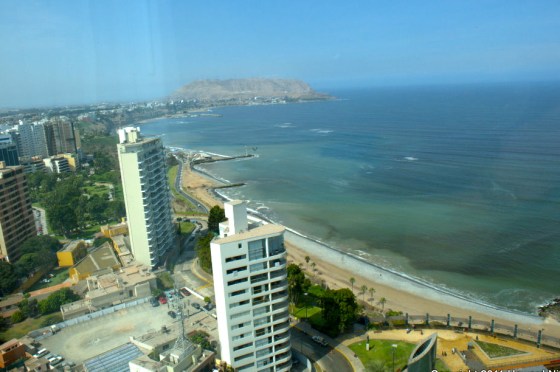
According to a Stanford University study, seventy-five per cent of taxi drivers in Lima are psychotic.(view of Lima)

397759003311

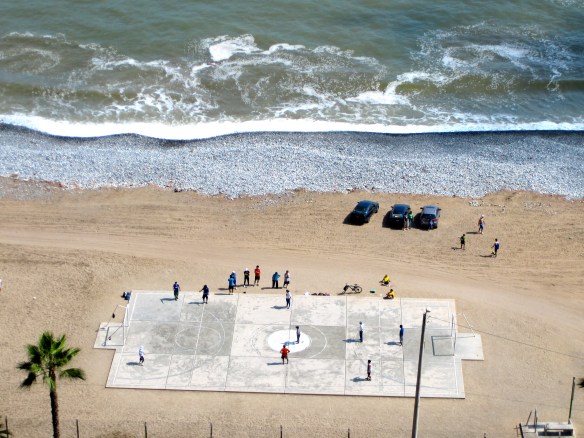
Beaches in Lima are not just for swimming but a good place to play soccer and park your car.

IMG_2495

Millions of guinea pigs are eaten  in Peru every year. No special occasion is complete without them. They are served whole with the head and feet intact. The word in Spanish is Cuya if you do or don’t want to eat it by mistake.

If you are with a Peruvian, you will get a better exchange rate for your money from the man standing on the corner outside the bank.  Don’t try this alone.

Plaza de Armas or Plaza Mayor (“Main Square” in Spanish) is the place where Lima city was born in 1535, founded by Spanish conquistador Francisco Pizarro. It is also the spot from where Jose San Martin announced Peru’s independence from Spain in 1821.

IMG_2483

As in other countries if you want real silver or real alpaca, buy from a store with a door. Otherwise you will not be sure if you bought baby alpaca or maybe alpaca.

Taxis in Peru do not have meters and you must negotiate a rate before you get in. Anyone can put up a taxi sign in their car and often do to supplement their income. There are no regulations. Many people do it on their way to their regular jobs – if they are late for work, watch out.

If you happen to be in Lima on Palm Sunday, you can see the Archbishop.

IMG_2458

IMG_2469

Need stamps? Or anything else?  Palm Sunday at the Post Office.

IMG_2485

There are two seasons in Peru. There is summer when it rains and winter when it is foggy.  The temperature is about the same but sometimes your pictures come out clearer.

We are a bit late with quinoa (the new it food in LA) . It predates the Incas and has been a staple in the Peruvian diet for years. They have many other grains that are high in protein  since quinoa is getting so expensive for them. Check Whole Foods for kikucha.

Soccer is the first second and third sport in Peru. They are very enthusiastic and very bad at it.

Due to the bad state of the economy and the massive inflation in the 1980s , the government got rid of the inti and brought the new Peru currency “nuevo sol” as the country’s new money. The Peruvian nuevo sol is a stable and reliable currency, it is also the least affected by the weak dollar global tendency.

 Peru’s geography yields diverse ingredients: abundant seafood from the coast, tropical fruits from the jungle, and unusual varieties of grains and potatoes from the Andes. Peruvian cuisine is recognized around the world as one of the best in South America. It was surprisingly delicious. The immigrant population throughout the years has strongly influenced the cuisine.  African, Italian, Japanese , Chinese , Spanish, Inca,  Quechua as well as surrounding South American has created the original fusion cuisine.

Peru was the last colony in South America.

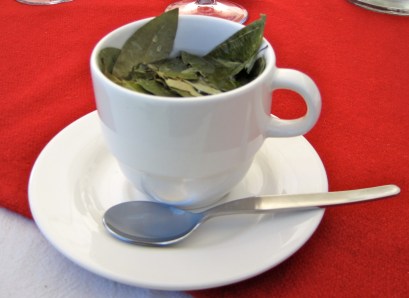
Coca tea is helpful in preventing altitude sickness among other things.

IMG_2577

The Andes is the world’s longest mountain chain. (the Himalayas are the highest  -you know I had to look that up)

176669003311

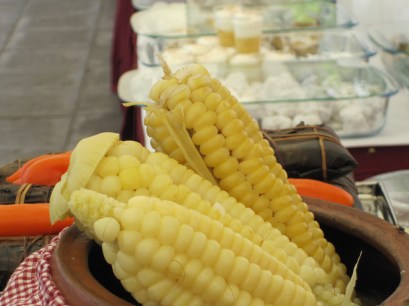
Llamas are pronounced yamas, unlike yams, sweet potatoes, yellow potatoes, white potatoes purple potatoes, large corn, small corn and plaintains which are often found at the same meal.  No meal is complete without potato. There are 3000 varieties grown in the Andes. They will eat a different kind of potato for breakfast lunch and dinner. (potatoes at the food market, Cusco)

482499003311

I only eat cooked vegetables and fruits and bottled water when I travel to third world countries but had no problem eating raw fish (ceviche) at every meal.

It was just another day in the Sacred Valley with quick stop for lunch.

637569003311

518769003311-1

For centuries Peruvians have turned to natural remedies to cure their ailments. Medicinal and hallucinogenic plants have been used since pre-Inca times for healing. A variety of healers (referred to as shamans in North America) exist throughout the country with a wide range of techniques. While healers from Northern Peru use San Pedro cactus in their ceremonies, healers from the Amazon work with ayahuasca, which in Quechua translates to ‘vine of the dead’. Ayahuasca is a hallucinogen that induces visions and helps to diagnose illness. Healing ceremonies take place late at night, when the energies are at their highest, especially during a full moon. Westerners have come to Peru specifically to visit with these healers about a variety of issues including cancer and depression. There are mystical Andes tours that include ayahuasca sessions. It is best to do these things in Peru with a real shaman and not in your living room with friends.

The one on the end is not me.

802779003311

The first day of hiking at 9000 feet is hard. The first day of shopping at 12,000 feet is no problem.

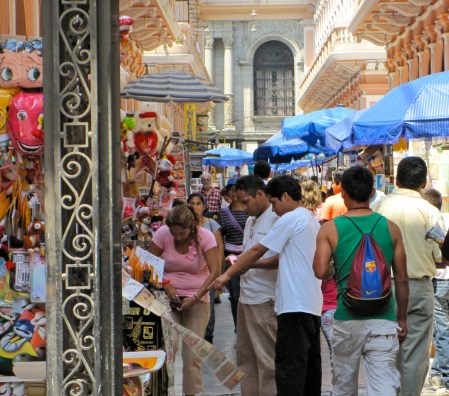
Pisaq Market  sells handicrafts, jewelry, minerals, herbs, spices and local foods and is the biggest market in Cusco. it’s a good way to learn about the local way of life, get a taste of how herbal medicine works, see how paints and dyes are made using natural minerals and sample the various local foods.

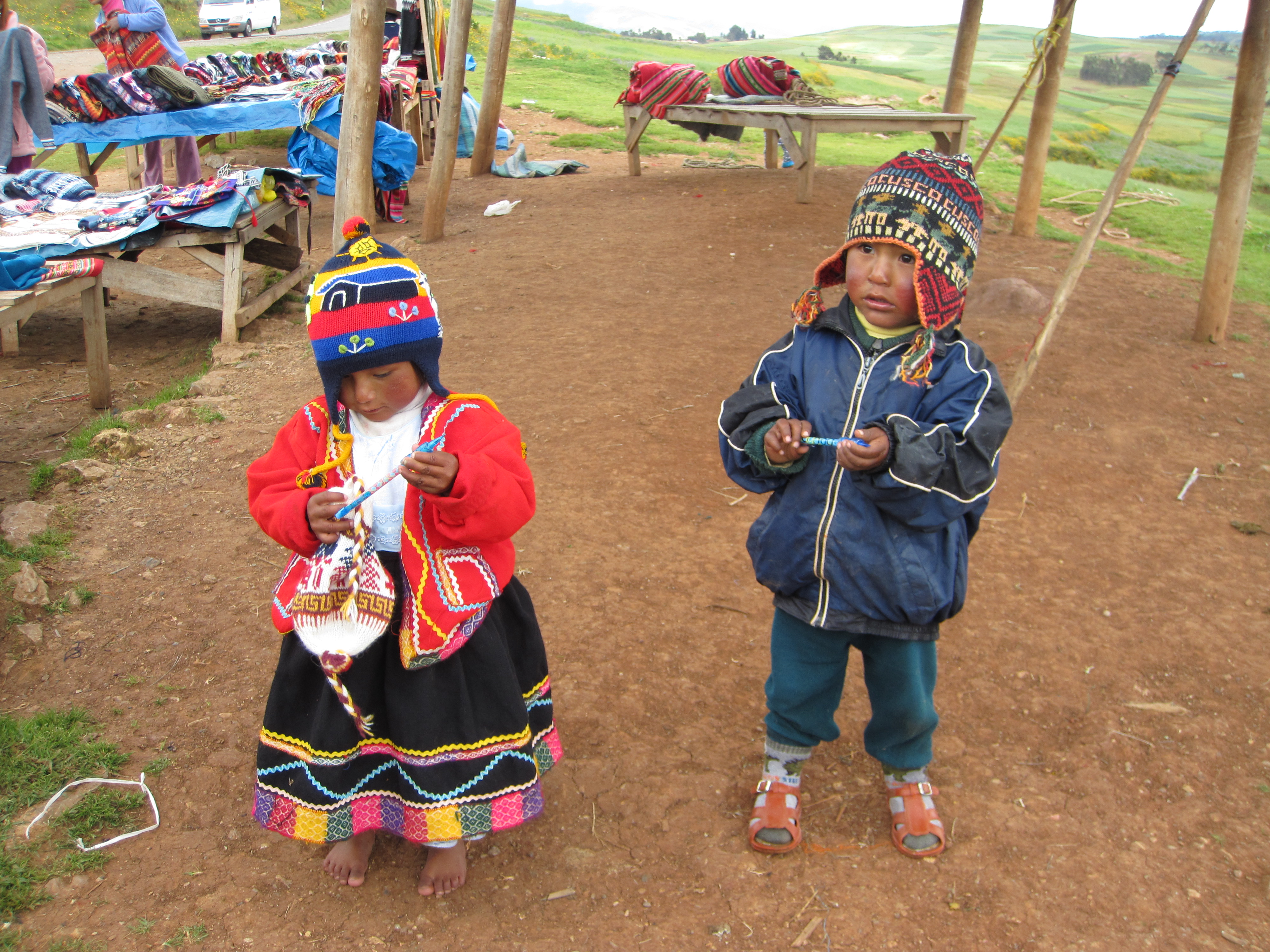
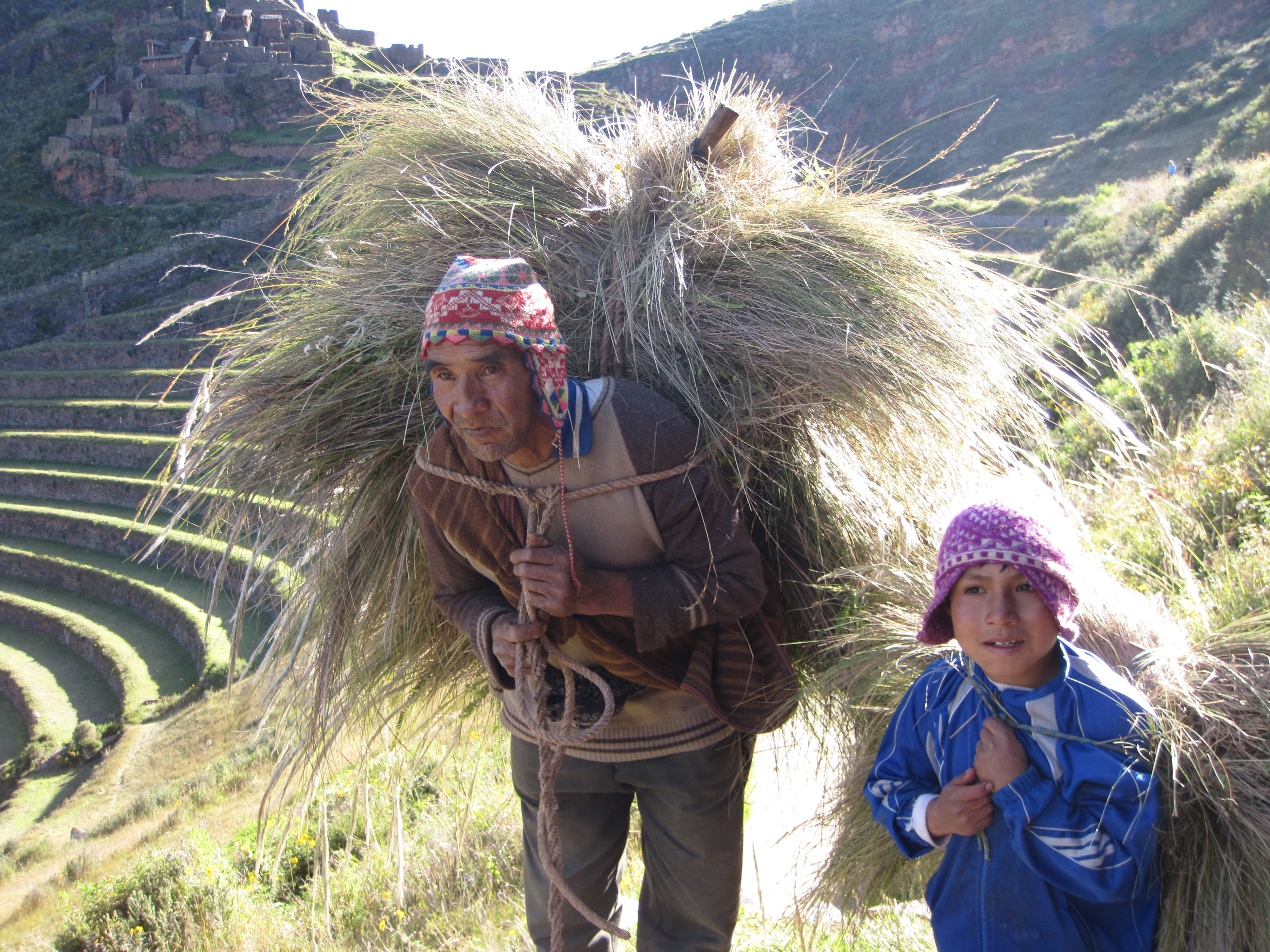
The Quechuas are the descendents of the Incas. You see them all over Cusco and the Sacred Valley in their native dress.  I find the women’s outfits most unflattering. But what is beauty and  who defines it?

IMG_2557

IMG_2581

In Cusco, never say maybe later to someone selling you something in the street, somehow they will always find you later. ( Cusco view)

630299003311

Pisco ( pure grape brandy) is the national drink of Peru. There are Pisco Sours , Piscopolitans and Piscotinis.

Walking a short distance, from where the bus drops you in Ollytambo, to the train to Cuzco ( due to construction and flooding) is still shorter than changing gates at any major airport.

The potato, tomato, lima bean and avocado come from Peru. (Get it – lima-Lima?)

The Peruvian national Anthem ”El Condor Pasa” sounds a lot like Paul Simon’s “Id Rather Be A Hammer Than a Nail. “  At first I thought, these Peruvians must  love Paul Simon. Hopefully, he gave them some money. Guess what song he is playing?

IMG_2600

Peru is the world’s second-largest producer of cocaine. (yes, Columbia has retained its number one status)

Peruvian corn has the biggest kernels in the world.

IMG_2489

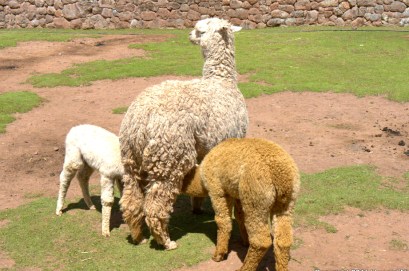
Llamas have the right of way at Machu Picchu, should you be on a narrow road and meet one.  From far away, it is hard to tell the difference between an alpaca, a vicuna and a llama.  It is easier to tell by the feel of the sweaters.

IMG_2536

947669003311

The Peruvian root Magra is what they make Viagra from.

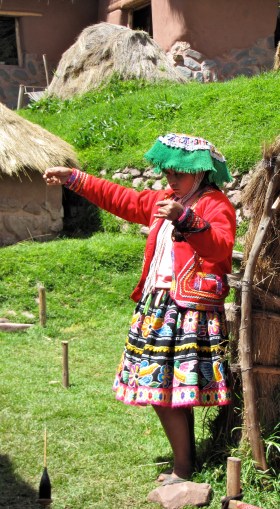
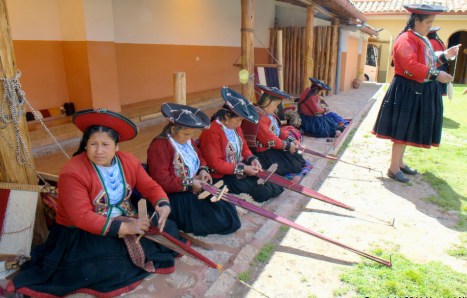
Like their grandmothers, the Quechua women of Chinchero weave textiles. They have formed the Chinchero Textile Center. Dressed in their native clothes, they spin, thread, weave and dye with natural dyes.  They are prepared using wild plants, to color the wool. The red is from cochineal and the green  is chilca or ragwort, with drops of lemon for a more intense color.

922479003311-1

The Cuzco School Of Art is a series of religious paintings.  The Spaniards taught the Inca artists how to paint their icons in the style of Flemish and Gothic masters.   There are no names on the paintings and though the subject  is Christianity, the Indians have managed to put in many hidden symbols from their own culture. They moved from the traditional style and added their own interpretation.  The best pieces are in the Cuzco  Cathedral.

530399003311

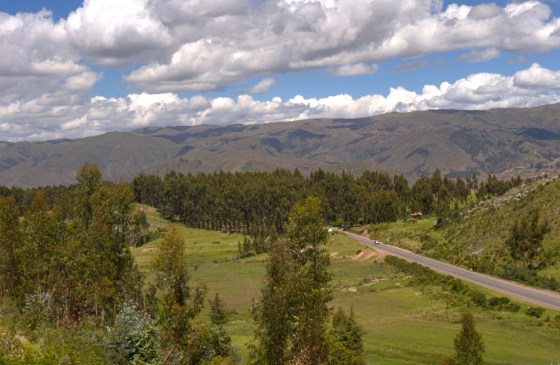
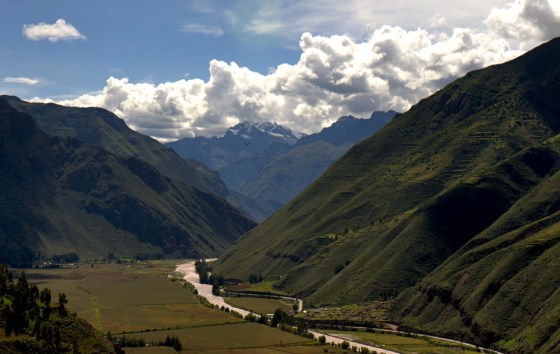
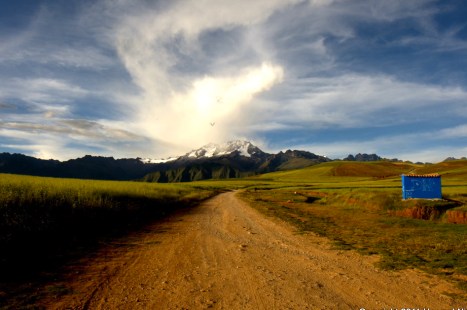
The magic of the Andes is that every time you turn around, the colors are different. (yes its the picture at the top of my page)

677099003311 wp 13-21-30

If you want to learn about the  Incas, it is another blog.

https://havefunflysafe.wordpress.com/2012/09/15/things-i-have-learned-from-the-incas-in-peru/

Things i have Learned from the Incas In Peru

Viajen con cuidado,

JAZ

Things I Have Learned From The Incas In Peru

“Before our white brothers came to civilize us we had no jails. Therefore we had no criminals. You can’t have criminals without a jail. We had no locks or keys, and so we had no thieves. If an Indian  was so poor that he had no horse, tipi or blanket, someone gave him these things. We were too uncivilized to set much value on personal belongings. We wanted to have things only in order to give them away. We had no money, and therefore a man’s worth couldn’t be measured by it. We had no written law, no attorneys or politicians, therefore we couldn’t cheat. We really were in a bad way before the white men came, and I don’t know how we managed to get along without these basic things which, we are told, are absolutely necessary to make a civilized society.”

― John Lame DeerLame Deer, Seeker of Visions

Things I Have Learned from the Incas In Peru

The Inca culture is part myth part Peruvian history. There are no written historical records of  people that lived for three hundred years and ruled  the West Coast of South America for one hundred years.

Their recording system (mathematical) system was colored strings with knots to keep records of everything that could possibly be counted (livestock and business transactions), and some things that couldn’t – like instructions, people’s names etc.   They were  required to remember to understand what the strings or quipu meant .  Most people couldn’t do it.  They had a  class of royal quipu specialists who knew how to make and read them. (the first accountants and business managers)

Archaeologists believe now that the Incas  were possibly inventing written language just as the Europeans were destroying their civilization.

.No other civilization has managed to assemble so many colossal stone blocks so seamlessly cut with stones or bronze.  The edges of the stone were rubbed smooth until they merged together perfectly like a puzzle. There is no mortar holding them together and they are earthquake proof constructions. ( Sacsayhuaman fortress)

How they  transported all that granite up there  to Machu Picchu remains a mystery.  It is believed that they quarried  it on site. 

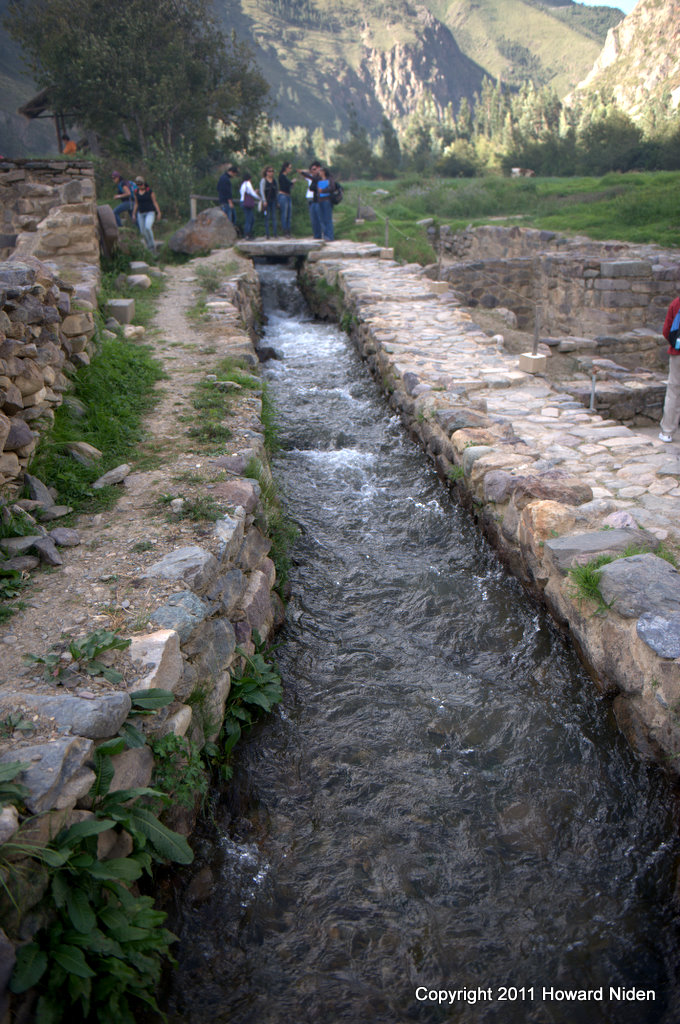
The Incas knew how important water was and treated it with great respect but we did not. (Ollaytantambo)

but we

When the descendants of the Incas are planting to this day, they put flowers in their hair to dress the earth. They live with shortages but they have the mountains and the sky and that gives them peace. They are always chewing coca leaves.

Inca dances are traditional and also a way to pray.

The Inca manhood initiation rite lasted a full month, during which the boys who were training to be warriors were flogged repeatedly, had huge holes cut in their ear lobes, ran dangerous races, and danced till they dropped.

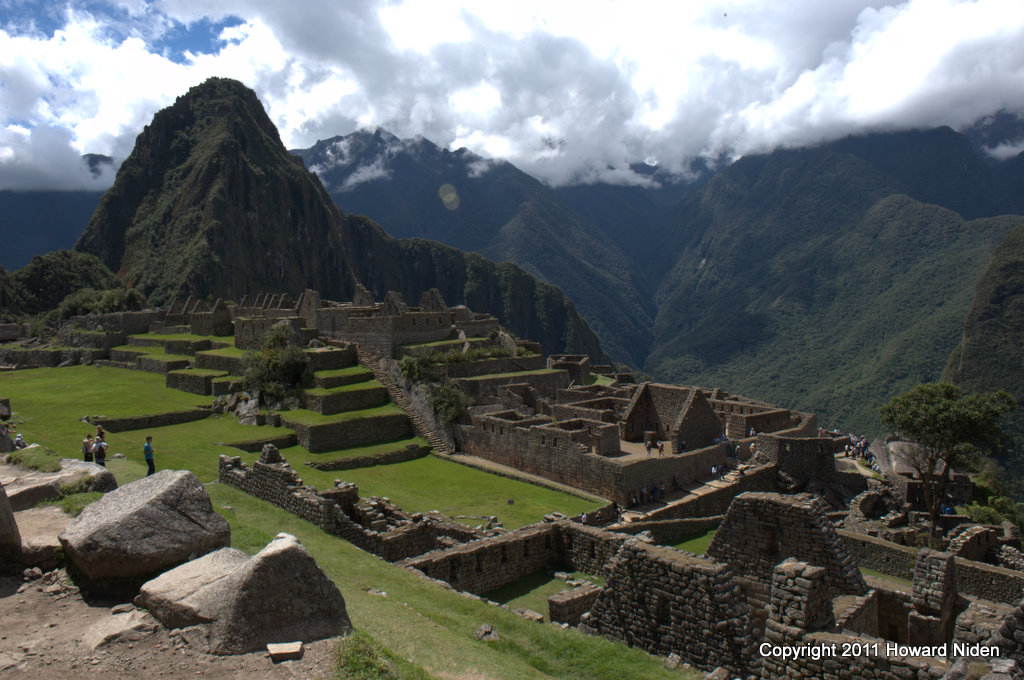
There was a lot of building going on in the Inca civilization ( third largest after Egypt and Mesapotamia)  They built palaces, aqueducts, storehouses, terraces, temples, houses, gateways etc. Looking at Machu Picchu you could see their “tax dollars at work”.

 We know very little about Inca women because the only written records are by the Spaniards. Spain was a patriarchal society and they were not interested in recording information about women.

The Inca emperor married his sister seemingly because this helped to resolve the problems they had with succession when an Inca died.  ( a good way to prevent inheritance problems but not birth defects). Her name was Coya and she was powerful in her own right.

 Pizzaro and his men were not heroic explorers but an extremely desperate group of foreign invaders who brutally murdered the Inca civilization  ( where have we heard this before?)

The Incas were skilled craftsmen and artists. Most of  their gold and silver art was melted down by the Spaniards.

There were no homeless people in the Inca civilization. If criminals were not killed, they had to beg for food everyday and tell their stories so other people would not commit the same crime. (sounds a lot better than twenty years without parole) 

The spirit of Ayni  (rhymes with Hi-ni)   exists in the Quechua  culture today. We don’t talk  about Incas as a surviving culture anymore.  It is “I help you so you must help me later.”

Also today we have Inka Kola, Inka rail and a ton of Inka traffic going to all the historic sites.

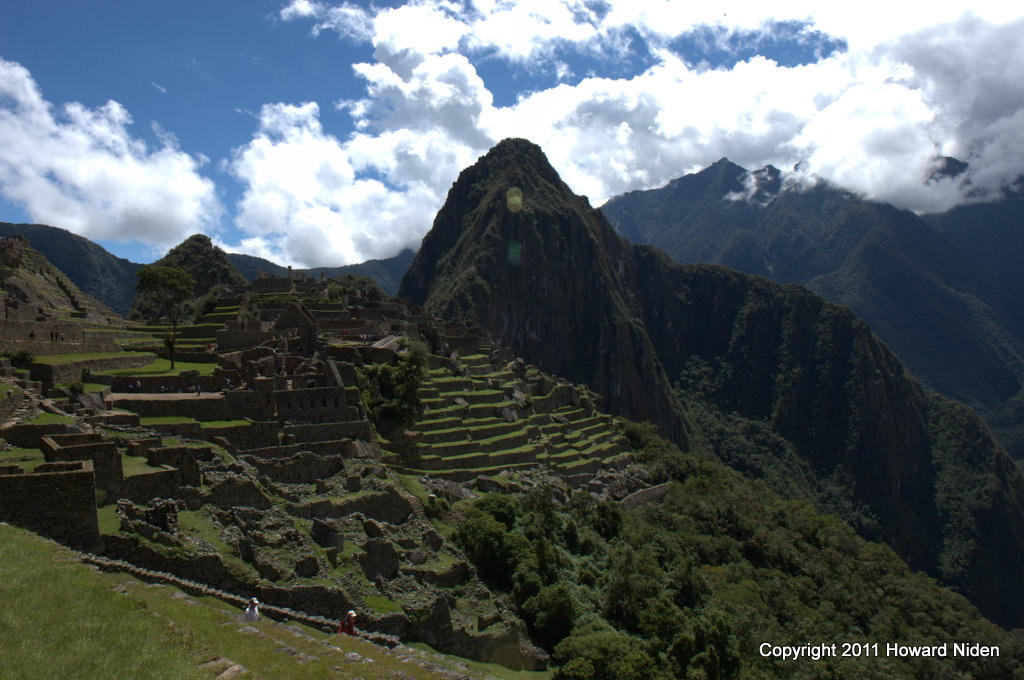
Machu Picchu was the royal estate of Inca  King Pachacuti.

Th Incas were good at organizing labor. When Pachacuti’s grandson Huayna Capac built his royal estate  (in Urubumba) he had 150,000 workers on site. The corn-growing Cochabamba valley of Bolivia was short of local labor, so they had 28,000 workers migrate there from Lake Titicaca and back (a distance of about three hundred miles) twice a year, once to plant and once to harvest.  On foot, of course.

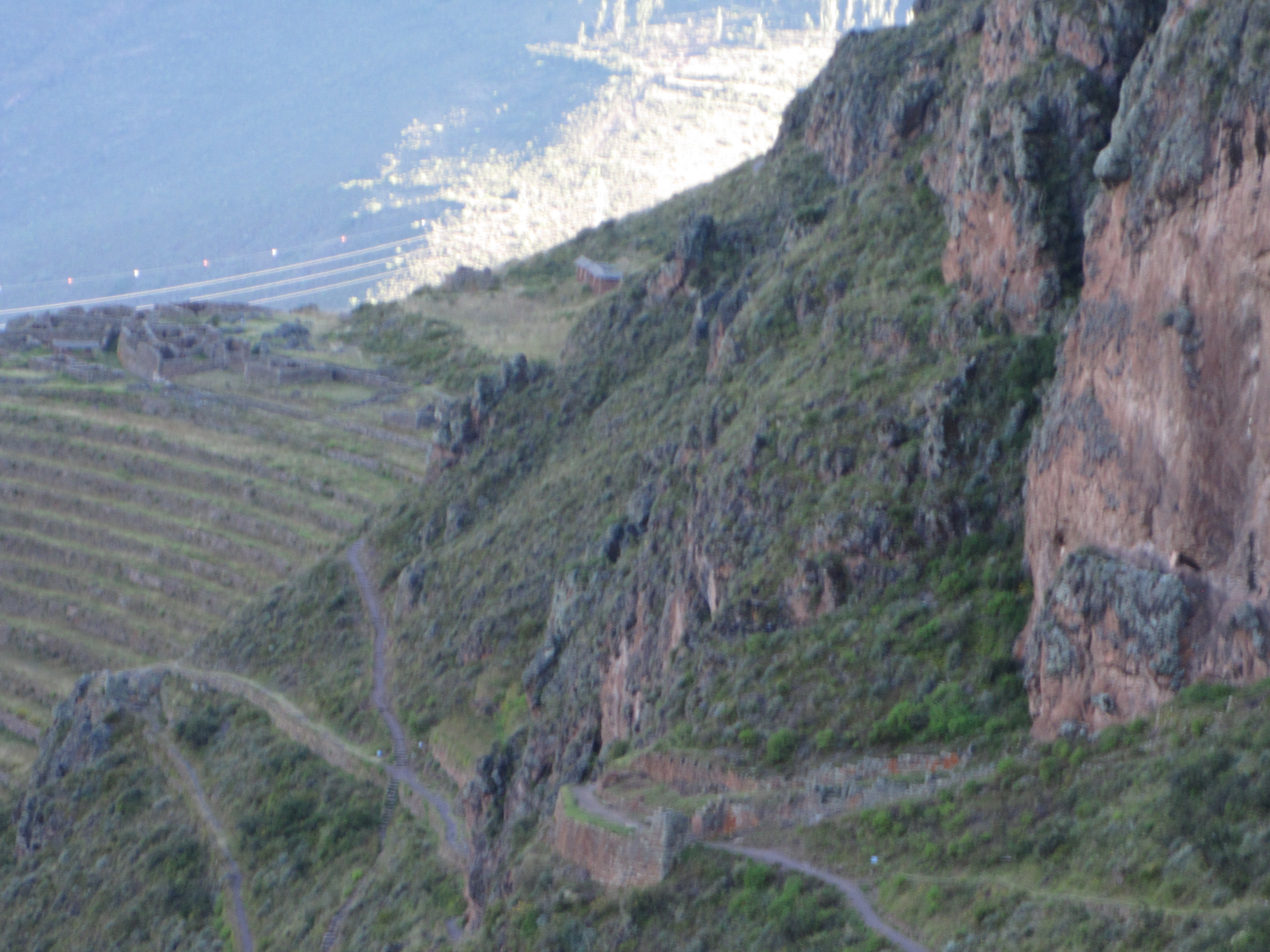
They had nice roads to travel on. The Incas built a network of stone-paved highways all over the empire. Archaeologists have so far logged about 50,000 miles of remaining highways in modern Peru alone, not counting the other nations that once formed part of the Inca empire.

Machu Picchu has brilliant engineering, drainage and foundations. They filled the terraces with layers, starting with topsoil for the crops and then river sand, stone chippings from the quarries, and big rocks. Underneath that are subterranean drainage channels which still carry water down the mountain   No matter how hard it rains, no standing water ever remains for long on the surface.( Estimate: 60% of construction at Machu Picchu is invisible, underground.) i believe we could learn something here because it rains a lot in Macchu Picchu.
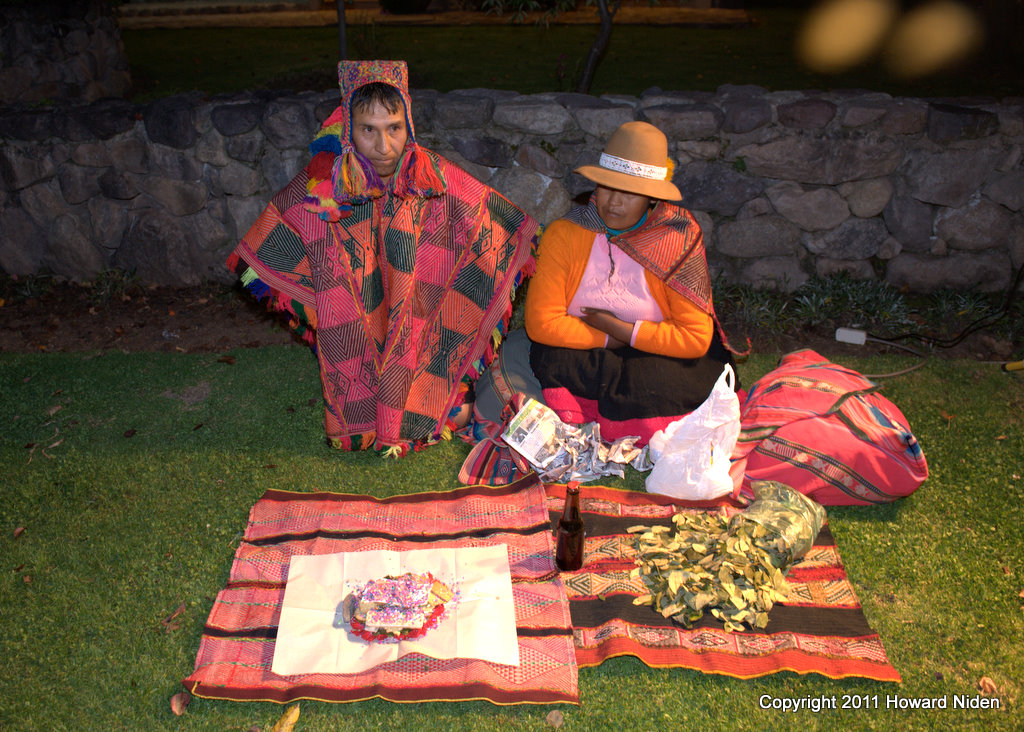
The Incas worshipped the earth goddess Pachamama . Before our trip to Machu Picchu we met with a shaman to make an offering to Pachamama for safe journey.

The purpose of Macchu Picchu will always remain a mystery. It is probably a religious and spiritual site.  It is the work of man echoing the work of nature. The Inca trail leading up to Machu Picchu ( it takes four days  of camping out in the Andes if you want to do it) was built to always face the snow capped mountains because that is what they worshipped. The architectural style is sacred geography.  For me, if God isn’t at Machu Picchu, he isn’t anywhere.


Viajen con cuidado,

JAZ

PS.  I had help on this one . It is advantageous  when you are writing about the Incas to have made a friend in Peru who happens to be one of the leading authorities on the Inca civilization .  Peter Frost is an explorer, author, photographer and National Geographic expert on Peru and the  Incas.  He has made one of the most important discoveries of Inca civilization since Machu Picchu. Check out his website  (www.peterfrost.org).  If you are traveling to  Peru you will find his books very beautiful,  helpful and informative.