Traveling Light

Traveling Light

“People are here because they’ve got baggage. I’m talking curbside-check-in, pay-the-fine-’cause-it’s-over-fifty-pounds kind of baggage. Get it?” Lauren Kate

For those of you who have not traveled with me, I do not travel light.  My suitcase is filled to the brim.  I am ready for every ” you never know” and “what if” scenario.

The familiar heavy load of baggage is comfortable for me.  I carry an extra fold up suitcase for even more stuff. I have learned how to maneuver with a lot of baggage.

For the past three weeks, I have lived out of a suitcase. I wonder why I pack so much stuff. Is it  just things I might need? Is it also memories, feelings and attachments? Do I carry too much of that around as well?

I am always dumping my suitcase out on the bed to find what I am looking for. I constantly find myself digging through things I don’t need or what should have been left behind a long time ago.

The airlines have gotten tired of dealing with other people’s excesses. Do I need to keep paying for my baggage? Shouldn’t I be tired of it also? How much is it worth to me to carry all this baggage around?

Maybe it is time for me to carry just what I really need. Maybe all we need is the basics to leave room for the new things in life.

Fly safe,

JAZ

A Perfect Travel Day In LA

A Travel Day in LA

“One’s destination is never a place, but a new way of seeing things.” Henry Miller

There are days that I miss traveling so I  decided to have a travel day in Los Angeles.  This would be my perfect travel day.

It is always a traveling day in my car.  I listen to a Canadian radio station that only plays French music.   I am usually driving on the streets of Paris. There are cds in my car from my trips – most recently Turkey, Argentina and of course Grouplove (LA band who met in Crete).  I am always going somewhere much more exotic than the market or yoga in my head.

For breakfast I have Greek yogurt (the not nonfat kind) with fresh honey and either a latte or cappuccino with whole milk (not soy or almond). Another option is  a croissant from Tavern and a Spanish Latte from Urth Café. Truthfully I drink this several times a week.  Carnation condensed milk in coffee always reminds me of being in my early twenties in Greece.  This was all they used until they became weight conscious and got Starbucks.

I go to a museum on a weekday morning.  There are mostly tourists and schools there.  It is just like exploring a foreign city.   I love modern art so LACMA and MOCA are good choices for me.

For lunch, there is sushi. I pick a place where the clientele is mostly Japanese and I feel like I am in Japan. Some good places are Mori Sushi, Hama Sushi and Sushi Gen. Or you can have a real travel experience and take an interesting guess .  Walk into a place on the street in Little Tokyo or Sawtelle Blvd. They both have Japanese markets , bakeries, stores and restaurants.

I stop off at Travelers Bookcase  to get books for my next trip.  There is always some fabulous conversation going on about somewhere in the world that I never heard of or want to go to.  Natalie has a ton of book recommendations, interesting friends and customers and loves talking about everywhere!!  Isnt that what books are for anyway? To travel without packing? Here are some of the books they love -me too.. https://travelwellflysafe.com/2012/12/18/byob-bring-your-own-books/

In the afternoon I see a foreign film. Now we have many in LA to choose from. They play at the Llaemmle theatres or the Landmark. I have pop-corn (French for popcorn).  I love going to the movies in the afternoon anyway.  The theatre is empty and it feels like sneaking out of school to go to the movies.  I think it is ok to admit that now.  There are two blogs on foreign films if you want to see some of my favorites. (https://travelwellflysafe.com/2012/12/05/favorite-foreign-documentary-films/ and https://travelwellflysafe.com/2012/09/23/favorite-foreign-films/)

I have some Thai iced coffee at Chan Dara and  head out to Venice, Santa Monica or Malibu for a beach walk at sunset. If I am anywhere in the world and there is a beach, I am walking on it. This is followed by Tapas and Sangria at Bar Pinxto.

Dinner is somewhere like  Angelini Osteria  or Osteria Mozza for fresh pasta and traditional  Italian dishes.  Bar Ama is great for Mexican food – not so traditional but so delicious.  My favorite restaurant is Hinoki and the Bird for Asian ambiance, amazing food and green tea donuts.

I am dating someone from Mexico City so we spend the whole day speaking Spanish.   I pretend I understand just like I do on a real trip or with men in general.

At home I start reading the books I have bought and plan my next trip – one where you take a plane. Tomorrow I will have a diet day.

What are your favorite  places in LA?

Fly Safe,

JAZ

www.grouplovemusic.com/

www.tavernla.com/

www.urthcaffe.com/

www.lacma.org/

www.moca.org/

morisushi.net/‎

hama sushi 347 E 2nd St, Los Angeles, (213) 680-3454

sushigen.org/‎

http://www.travelbooks.com/‎

www.laemmle.com

http://www.landmarktheatres.com

chandararestaurants.com/‎

www.barpintxo.com/

www.angeliniosteria.com/

www.osteriamozza.com

www.bar-ama.com/

hinokiandthebird.com/‎

My Top Misspelled Countries

My Top  Misspelled Countries

“I don’t see any use in having a uniform and arbitrary way of spelling words. We might as well make all clothes alike and cook all dishes alike. Sameness is tiresome; variety is pleasing.” Mark Twain

Colombia – It is not Columbia the Ivy League University that I  didn’t go to. This is my number one mistake and my Colombian friend patiently corrects me every time.

Edinburgh  – (pronounced Ed In Bor O).  It has an H like Pittsburgh (pronounced Pittsburg).

Kyrgyzstan – It has two Y’s and a Z. We can at least spell it right if we don’t know where it is.

Djibouti – The D is silent – like Django.

Transnistria – Is a break away territory with a President and Prime Minister considered a country?

Uruguay -Three U’s. I say Ur A Gway. I want to go there. Hopefully after I write a few blogs about it, I will get it right.

Tajikistan – I got Tahjiksmanistan off the internet  and it turned out to be wrong. The internet made a spelling mistake –weird.

Czechoslovakia – Luckily we don’t need to spell this one any more.

Abkhazia – I don’t think they have been in the Olympic Parade Of Nations yet.

Myanmar – I prefer to spell it B-U-R-M-A  like the U.S, U.K. and Canada do.

Azerbaijan – It is in Eurasia. There are a lot of travel commercials for it on Turkish television.

Have any more?

Fly Safe,

JAZ

Where Are You Going Next?

Where Are You Going  Next?

“People get stuck as they get older. Our minds are sort of electrochemical computers. Your thoughts construct patterns like scaffolding in your mind. You are really etching chemical patterns. In most cases, people get stuck in those patterns, just like grooves in a record, and they never get out of them. It’s a rare person who etches grooves that are other than a specific way of looking at things, a specific way of questioning things. It’s rare that you see an artist in his 40’s able to really contribute something amazing. Of course, there are some people who are innately curious, forever little kids in their awe of life, but they’re rare.”  Steve Jobs

“Where are you going next?

When did I become a person that people ask that question to?

“Im taking my daughter to ballet, tap, modern , rehearsal.”   I’m taking my son to surfing , boxing, tennis.  We are going  to the park, beach., theatre, museum, ballet or movies.”

When they were younger we took vacations to Hawaii, Mexico, Palm Springs and Skiing . But as my daughter became more involved in dance, and my son became more involved with movies,  we mostly went to NY. We could visit our family and my daughter  could dance and we could see plays, museums  and shop. It was easy and my kids really got to know NYC.

And then my world changed.  After a period of debilitating grief, it was accept, change yourself or prepare to die.  I don’t agree with Steve Jobs. I think when you have to change you do. It is usually for the better.  When you have to get out of the old patterns, you do.  When you have to learn to see the world differently, amazing things can happen.  It isnt the life , I thought I was going to have,  or even the one I wanted,  but it is a lot more interesting, curious and awe-inspiring.

Where am I going next became a very real question for the person I have become. I’m going to Australia and Tasmania . See you in a few weeks,

Fly safe

JAZ

Seven Wonders Of The World

Seven Wonders Of The  Ancient World

“There are no seven wonders of the world in the eyes of a child. There are seven million,”

Walt Streightiff

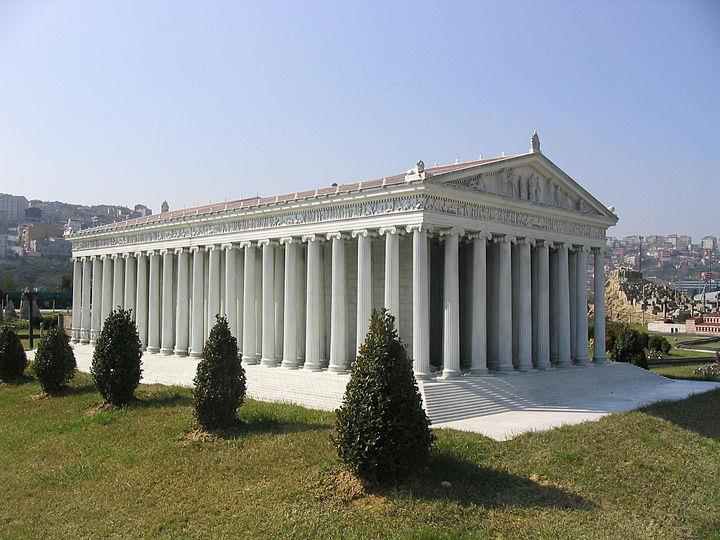
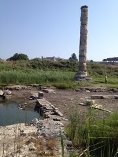
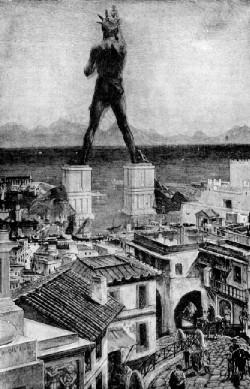
I’ve seen two of  the Seven Wonders of the World – the Temple of Artemis  at Ephesus and the Colossus of Rhodes. I hope to see them all one day.  Most of these wonders of ancient civilizations are not  there anymore. – except the Pyramid of Giza.

The list of the Seven Wonders Of The Ancient World that we use today was put together in 200 BC. by a Greek Historian names Antipatros who wanted to commemorate the achievements of the ancient world. He picked them for many reasons . They were chosen  for grandeur and prestige. They were well-known unique constructions  at that time. They stood unequaled in size, design and craftsmanship.  He chose them for the vision and the purpose that inspired them. This was important to the Greeks. Did it serve as a tomb? Was its purpose to bring beauty into the world? Was it a monument to an ancient religion that no longer exists?

Completed around 550 B.C. to honor the Greek goddess of hunting and nature, the Temple of Artemis was built during the Achaemenid Dynasty of the Persian Empire. Arson destroyed the temple in 356 B.C. The ancient author and philosopher Pliny described the temple as being 377 feet long and 180 feet wide (about 3 times the size of the Parthenon), with 127 Ionic columns measuring 60 feet high, and made solely of marble. Used as both a marketplace and a place of worship, the temple housed many works of art and sculpture. There is one column from the Temple of Artemis on site and the rest are in the British Museum in London.
734867_10200329968717581_1120545738_a

safe_image-4.php

The Colossus of Rhodes was actually an enormous, looming 100-foot tall statue of the Greek god Helios, built on the island of Rhodes, Greece around 280 B.C. The statue was erected to commemorate the island’s patron god Helios.
safe_image-3.php

The Great Pyramid is the largest of the 3 pyramids built in the ancient city of Giza, now part of greater Cairo, Egypt. The pyramid is believed to have been built around 2560 B.C. as a tomb for the Egyptian Pharaoh Khufu, and likely took 20 years to build. (Egyptologists argue over man-power numbers, and estimates have ranged from 14,000 to 360,000 men). When built, the pyramid measured nearly 480 feet high, with the sides each measuring about 755 feet long. In addition, each side is oriented with one of the cardinal points (north, south, east and west). Nearly 2.3 million blocks of stone, each weighing about 2 tons, form the pyramid. The pyramid remained the world’s tallest building for 4 millennia after it was built .

800px-Gizeh_Cheops_BW_1

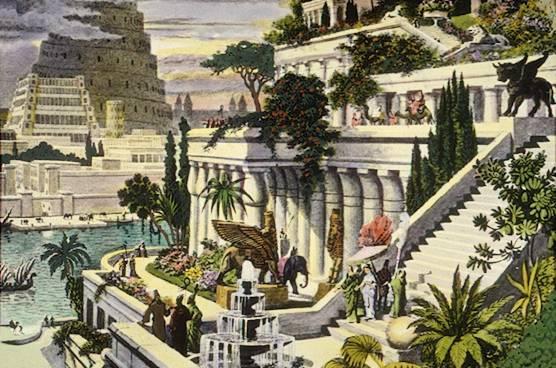
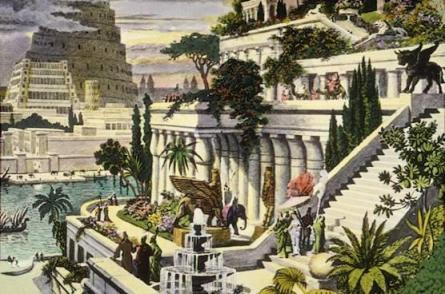
The Hanging Gardens of Babylon are said to have been built by Nebuchadnezzar II, a ruler of Babylon, around 600 B.C. Though historians often debate the real existence of the gardens, because there’s no physical evidence and Babylonian documents never mention them (Greek scholars first described the gardens), accounts state that the gardens consisted of vaulted terraces raised above one another and supported on pillars – an artificial rising mountain of gardens. The amazement over the gardens stems from what would have been an extraordinarily complicated irrigation system, which brought water from the Euphrates to the gardens in an otherwise arid environment. The gardens are thought to have been destroyed by an earthquake around the first century B.C.
safe_image.php

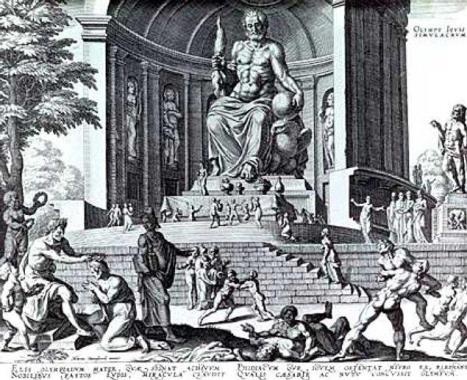
This enormous statue honoring the God Zeus was built at the Temple of Zeus in Olympia, Greece around 450 B.C. Designed by the Greek sculptor Pheidias, the statue of a seated Zeus measured 40 feet tall and was carved from ivory with gold-plated accents.
safe_image-2.php

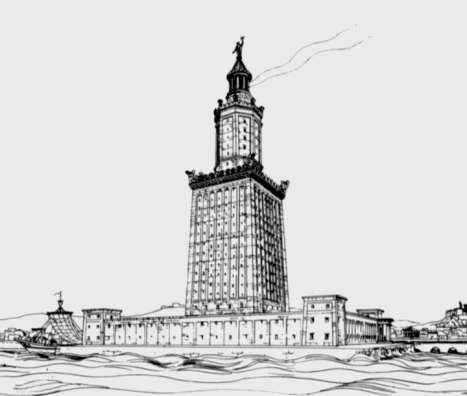
Scholars estimate the Lighthouse of Alexandria, Egypt measured between 383 and 450 feet high and was built in the third century B.C. to act as a landmark for Pharos, a small island off the coast of Alexandria, Egypt. The lighthouse’s tower was built using light-colored stone.  At its highest point, a mirror was placed to reflect sunlight during the day and at night a fire burned to give off light. Some historians believe that the light given off could be seen for some 35 miles. The lighthouse was damaged by 2 earthquakes in 1303 and 1323, and its remains were destroyed in 1480, when a fort was built on the site.
safe_image.php

The tomb built to hold the remains of the Persian King Mausollos and his wife, Artemisia, was designed by the Greek architects Satyrus and Pythius and constructed around 353 B.C. on a hill overlooking the ancient city of Halicarnassus in Western Turkey. The tomb stood 135 feet high, and its exterior was surrounded by an ornamental frieze. Numerous statues, bas-reliefs and columns decorated the exterior of the ornate and enormous tomb, and eventually the term “mausoleum” became used to describe any large and impressive tomb. Multiple earthquakes ultimately led to the destruction of the tomb in the 14th century.

safe_image-1.php

Why do we go to these places?  I have been to a lot of ancient ruins in my life.   When I look at a Greek column or a broken one, I see a civilization that gave us philosophy, science, art, economy, logic and democracy.  It isn’t so much what I see but what I feel standing in the depth of history. I look at the ancient stones and wonder  if they knew that what they were doing was so important? Probably not. They were just living their lives, going to the Agora,  starting a war with someone over something that seems very important at the time, falling  in love, fighting with their friends, going to work and taking care of their families and pets. Maybe it just emphasizes the human connection to the past.  There are always stray animals at ruins. I like to think they have the souls of the people who lived there.

As I write this I am trying to organize my photos from all the ruins I have seen in Turkey.  I know where they come from but I didn’t take good notes about what they actually are.  It didn’t matter to me. I just cared that I was there.  I stood where they stood. Maybe I was standing where Aristotle, Homer, Heraclitus or Helen of Troy stood. Did a girl who’s heart was broken, or a man who had miraculously made it back from a bad war stand on these steps?  I always make these stories up in my head when I am standing there trying to listen to why this column or pile of stones is important.    Since we aren’t leaving much  stone,  what will they find from us?

Fly Safe,

JAZ

Going To Cuba With God -Part 3

Going To Cuba With God –Part 3

Santa Clara

“Travel is more than the seeing of sights; it is a change that goes on, deep and permanent, in the ideas of living.” – Miriam Beard

The weather has changed . Another hurricane is coming. The power goes out  again in our hotel. This time it doesn’t come back on.  I am on the eighteenth floor . Luckily I have flashlights and strong legs. We leave the next morning for Santa Clara in the pouring rain . The water comes over the malecon ( sea wall) as we leave Havana.  Santa Clara is about eighty miles away. It is pouring – hopefully Valerie was praying. We are traveling with the Colombian Ballet Company. They don’t speak English and have good humor about traveling with the kids. (Kennedy Dancers, Columbian Ballet Dancers)

Cuba 8 and 9

Cuba 24

Santa Clara is most famous for being the city where the last battle of the revolution led by Che Guevara took place. It is the place where Batista’s government  was toppled in 1958.

Screen shot 2013-08-04 at 9.03.10 AM

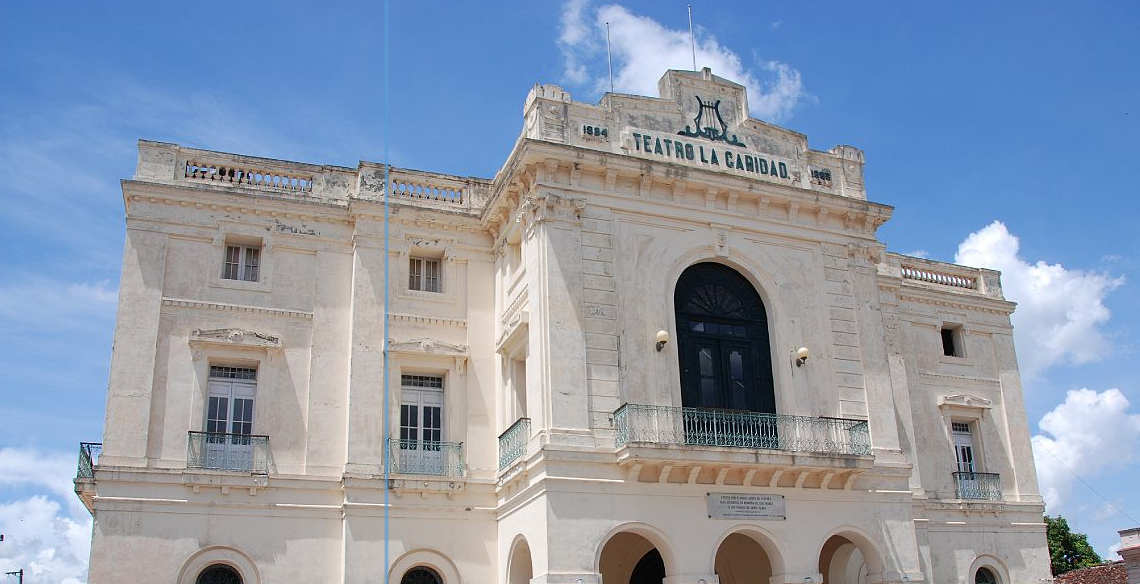
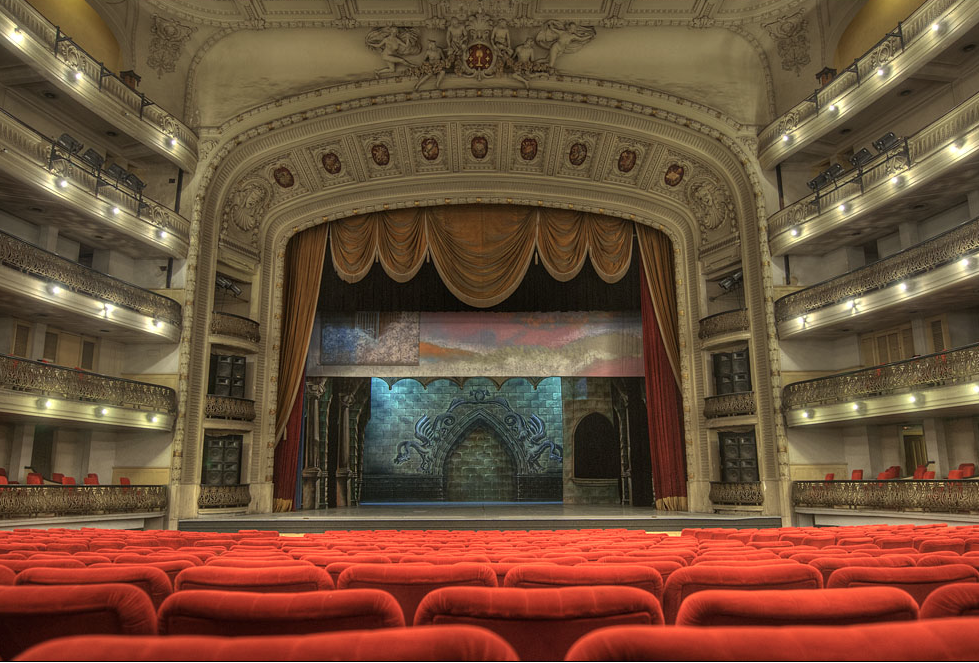
In the center of town is a park (Parque Vidal) and a statue of Marta Abrue. Marta was the sole financial sponsor of La Caridad (Charity) Theatre. It surrounds the square and is where the kids will be performing. The building is a national monument of  Cuba and one of the seven big theatres from the Colonial era that is still standing. It has exquisite architecture and an amazing interior. The concept behind the theatre was that the proceeds were to support the two schools that Marta founded (One for boys and one for girls) for the poor children of the city.

Screen shot 2013-08-04 at 9.01.46 AM

Cuba 19

cuba 37

Parque Vidal is probably one of the most typical places in Cuba. During the afternoons, people (especially singles) visit the park to meet others. Although not widely practiced in recent times, the custom was to walk the park around and around. The women walk the inner part of the park, while the men walk the outer side. Another lost custom was for the locals to set up a platform and offer improvisations with their guitars on late Sunday afternoons.   They dressed in their guayaberas and highly polished shoes and played their music. A  guayabera is a light open-necked cotton shirt, often with large pockets and pleats down the front, that is typically worn outside the pants.

Cuba 13

Screen shot 2013-08-04 at 9.05.16 AM

On the other side of the square, is our hotel the Santa Clara Libre (formerly the Santa Clara Hilton). It still has the bullet holes inflicted by Batista’s forces. The rooms are small and the hallways are dark. There is nowhere to rehearse so the Spanish dancers are in the hall doing flamenco improv. They are tired of being upstaged by the tap kids. We all watch them and some of the kids dance as well. The dark hallway is transformed.

Screen shot 2013-08-04 at 9.07.05 AM

Everywhere we go there are Cuban kids waiting to meet the American tap kids – schools, clubs, camps etc. This time it is a Performing Arts School from Santa Clara.  The children are always incredibly beautiful.   A few of them speak a little English. They watch the rehearsal and hang out after the show. The kids are given sodas. The Cuban kids are very excited about the sodas. One of the boys plays the song from Titantic and dedicates it to my daughter.  They are all having a great time and ideologies don’t seem very important.

Cuba 28

Cuba 35

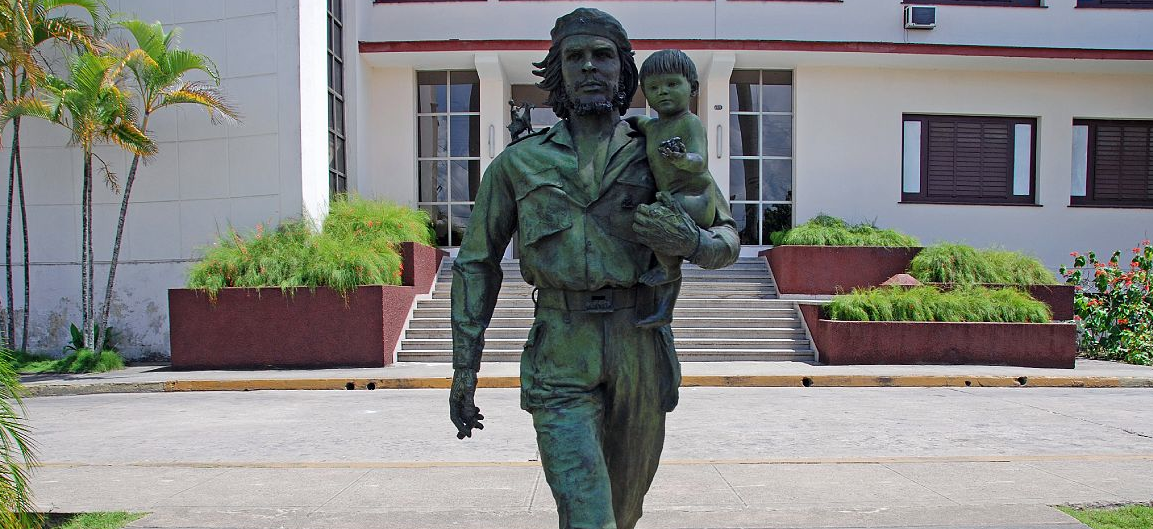
We leave for Havana and stop at a mausoleum which houses the remains of Che Guevara and sixteen of his fellow combatants killed in 1967 during the Bolivia campaign. There is also a reconstruction of Guevara derailing the train during the Battle of Santa Clara.

Cuba 27

Screen shot 2013-08-04 at 12.41.41 AM

After tearful goodbyes to our new friends, Valerie and I go home a few days early because our kids were missing too much school. (Michael and Jamilla)

cuba 39

We had a long layover in Cancun and long flight.  We had visas but we were advised not to say  that we had been in Cuba unless they asked at customs. We were told that at this time if they knew we had been in Cuba, we would be there for a very long time. I asked Valerie what we should do.  She said “I am going to pray.”   We walked through in a few minutes.

“So are you a believer in prayer now?” she asked.   I laughed and did not say anything. (Kennedy Tap company)

Cuba

For the majority of Cubans life “no es facil.” (not easy). It’s a daily struggle to find food, toiletries and medicine. It is a totalitarian government  -“nothing against the state , everything for the state”. Though there are no guns or drug trafficking, prostitution is on the rise and people can be arrested for anything. But still, they are proud, kind, resourceful and highly educated. The colors, sensuality, crumbling architecture, performing and visual arts, beautiful beaches and cultural heritage, make it a great place to visit. The hope is that the life will get better here. It was an amazing trip and an honor to have met these people.

This piece is dedicated to the memory of Paul and Arlene Kennedy.   They taught our kids dance and life lessons. Like the jazz music and tap dancing they loved-  they taught them that in life, you never know what is going to happen next, practice leads to excellence,  and it is always best if you improvise.

189542_1008791717332_3187712_n

Fly Safe Paul and Arlene Kennedy,

JAZ

Theaters of Havana, Cuba

Theaters of Havana, Cuba

“Adventures don’t come calling like unexpected cousins calling from out of town. You have to go looking for them.” — unknown

After a beautiful morning on the beach in Varadero,  we drive to Havana. It is two hours away. We see a lot of cars from the fifties, older Russian models, motorbikes and beat up buses filled with people.  Now we are in a business hotel complete with towels, private rooms and toilet paper. I put the toilet paper in my purse and ask for more. I know we will need it later.  One doesn’t come to Cuba for the food (not when Cuba is paying) or the toilets. (one of my favorite songs – Chan Chan from Buena Vista Social Club -if you don’t watch the video listen to the music while you read)

The concert tonight turns out to be at a small theatre in a very poor neighborhood. There is no place to change and the kids change on the bus. We can see into the sparse apartments around us and smell the garbage.. We are surrounded by hordes of kids and give them almost all the candy , pencils and gum we have brought. They are an amazing audience. What they lack in material possessions, they make up in the love and enthusiasm they have for dance.

At the market in the Plaza Del Armas the next day,  I found out that  the Kennedy Kids were the hottest ticket in the festival and it had been sold out way in advance. They were the first American children in twenty years to be in this important dance festival. They represented hope. We were inexplicably famous. They were on the TV and radio news every day. There was a lot of translating to do  so even  with my bad Spanish, I am interpreting for the press.  It was a reality check to see how few people spoke English.   The Cubans loved seeing the American kids walking around and  people asked for their autographs.

One of the many odd things that happened was how surprised the Cubans were to see  “ninos blancos y negros”   (Direct translation black and white children) playing together at the hotels. Apparently performing was one thing. Their  information about the United States,( like their cars) was from the fifties. They didn’t know that things had changed. They were always asking me if they were allowed to be friends.

The Plaza del Armas  (literally weapons plaza)  is in Old Havana. It is a main square surrounded by crumbling buildings. Horse and carriages (in need of repairs) wait to take you around the old city. El Floridita (made famous by Hemingway) is there.  In the cathedral square is a market selling crafts, books and paintings.  I am there every day.

Cuba 25-1

We spend a few days  in Havana. Fidel gets his money’s worth. If the kids  are  not performing, they are watching other  children perform. In the daytime, they performed at hospitals, orphanages, schools and the Young Pioneer Headquarters.

Cuba 26

The mission of the Pioneers  in every Communist country is to indoctrinate the young in Communist ideology. At first it felt creepy being at those headquarters seeing only what we were supposed to see. After a day with young pioneer children and teachers, they made us honorary pioneers  by tying the scarves around our necks. We were happy to join our new friends. Our group picture is probably among their photos. ( It was the year before Elian Gonzales. We saw the photos of all the Young Pioneers on the news with our neckscarves waving their fists and wondered if we knew them) (the American Pioneers)

Cuba 14

Cuba 17

We go to see Giselle performed by Alessandro Ferry of ABT and the Cuban Ballet Company at the National Theatre of Cuba . It is a huge modern building, decorated with works by Cuban artists. The kids are exhausted and are all asleep when the lights go on at intermission.

It was a beautiful ballet performance – again everyone is talking about it at the Plaza de Armas the next day.  It is amazing  to be in a country that loves ballet.  Many of the wood carvings in the market are dancers.  The others are cars and cigar related things.

Cuba 11-1

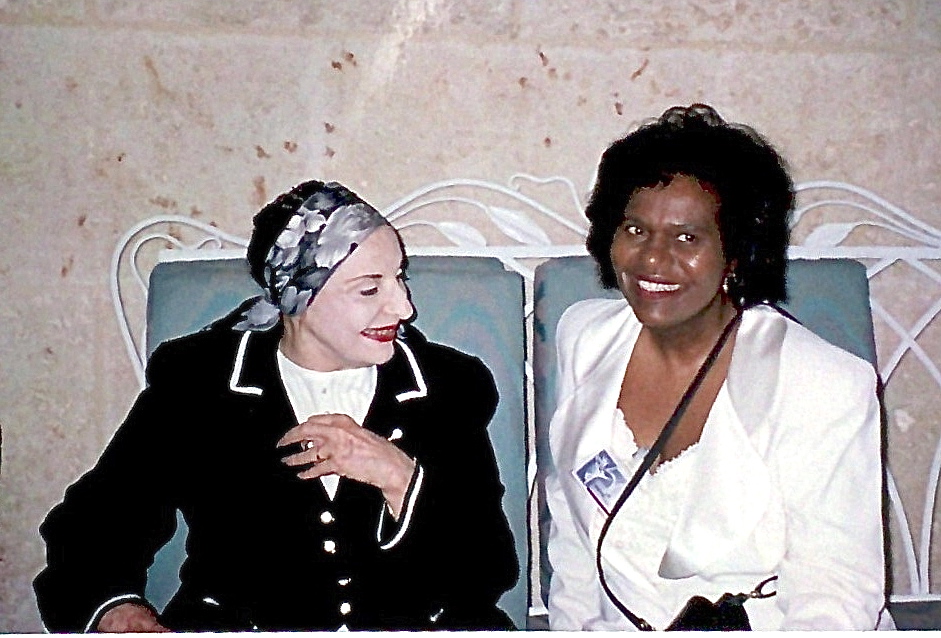
The American Ambassador (yes there is one) finds out that American children are in Cuba and prepares a dinner party. There is a lot of security. They take our purses and cameras in the afternoon.  He rounds up the Americans in Cuba. The Alvin Ailey Company, some documentary filmmakers, any Americans working in Havana ( there are some) , Alicia Alonso and some of the Cuban Ballet Dancers. The ambassador turns out to be from Pasadena, California. We are also  traveling with Fayard Nicholas ( of the  famous tapping Nicholas brothers) He is there telling stories of dancing in Cuba in fifties. It is a wonderful night with good food. (Alicia Alonso -Director of the Cuban Ballet Company and Arlene Kennedy, Fayard Nicholas and Alvin Ailey Dancers, Kennedy Dancers)

Cuba 23

Cuba 22

Cuba 20

The girls take a ballet class  at the Cuban Ballet School (an old Havana mansion) with members of the Cuban ballet. The school, run by Alicia Alonso has turned out some of the best ballet dancers in the world.  They combine Cuban sensuality with classical training.  The many dancers  who defect to the west  is a very painful thing for them.  The company stars who were there when we were, now dance in the US. The school dates back to the Ballet School of the Sociedad Pro-Arte Musical de La Habana, founded in 1931, where Prima Bailerina Allicia Alonso received her earliest ballet classes. In 1962, the National School of Ballet was created as part of the National School of Art . Like all the Cuban educational systems, the  ballet training in this country is free.

Cuba 12

Cuba 8

We saw other ballet performances at  the Gran Teatro de Habana.  Someone performs a dance to the Internationale – the communist anthem. The solidarity clap begins. The audience stands and many people have tears in their eyes. (The Internationale)

This prominent theater is located on the site of the former Teatro Tacón in the Paseo de Martí (Prado), in a neo baroque building known as the Palacio del Centro Gallego. It is beautiful and crumbling.(as is much of Cuba). The García Lorca auditorium provides a magnificent stage for the Cuban National Ballet Company, as well as other dance and musical performances.

Screen shot 2013-08-04 at 12.45.39 AM

Screen shot 2013-08-04 at 12.48.38 AM

The Kennedy Tap Kids and the Alvin Ailey  company perform the next night at  a modern theatre in Havana – the Mella Theatre. It is named after revolutionary hero and dissident Julio Antonio Mella, assassinated in Mexico in 1929 under orders of then Cuban dictator Gerardo Machado. This is a modern building with a conventional stage and seating for 1475 attendees. It hosts a variety of shows, from cabaret to recitals as well as theatre performances.

By then we are pros. We sit in the first row and start the standing ovation and  the solidarity clap. American dance moms know how to get a crowd going. !!!!

Adios and Fly Safe

JAZ

Going To Cuba With God – Part 2

Going to Cuba with God – Part 2

“From each according to his abilities, to each according to his needs.”  Karl Marx

 We woke in Varadero, Cuba.  A children’s ballet school had been waiting for two hours to entertain the American kids.  I wasn’t moving.  I lay in bed and watched the woman next to me carefully lock her suitcase.  We don’t speak. Did she think we were going to steal?   I also had locks and did the same – not sure who I was supposed to be worried about.

Everyone ran out. I decided to shower (in the communal bathroom) and fix my things. There was only a hand towel that felt like a dish towel. I heard ballet music.  I walked out on a terrace and there was the most beautiful white sand beach with clear blue water.  I could see the dancers on point on the concrete. It was an amazing sight.  I couldn’t wait to get outside.

Cuba 1

Cuba 4

We had missed breakfast.  No worries, I had protein bars.  At lunch – cafeteria style,  I asked for coffee. “We only have coffee at breakfast,” they said in Spanish.   Now, I had no idea that I was surrounded by hotels and could have had coffee, fresh lobster and a massage on the beach at any hour of the day.  I was thinking more like prison in the middle of nowhere.  If they had coffee beans in that kitchen,  I was getting some. They finally tell me that after lunch I can have coffee.  Everyone leaves  and the kids go to rehearse.  I wait for them to serve us coffee with Indira and Elaine. A woman comes out and says “Vamos.” We walk to her house on the premises.

We sit in her kitchen and she makes us coffee. The linoleum on the floor reminds me of my childhood.  I understand more Spanish than I can speak, but we manage to talk. I don’t know how Cuba is now but fourteen years ago, the first language was Spanish, the second was Russian and the third was Bulgarian.  No one spoke English.

She is really nice. I ask her why we are here and not at a hotel.  She says that there is an increase in prostitution in the hotels in Cuba (due to the economic conditions), and Fidel did not want the children to see this. They decided a children’s camp was better for them. She and her husband run this summer and holiday camp.  Now there is school.  (after coffee)

Cuba 6

I tell her we need to get bottled water for the kids.  She says the water is good there. I explain politely that it won’t be good everywhere and we want them to get used to only drinking bottled water.  We walk to a store with two very muscular Russian men to carry the water.  They only speak Russian.  Elaine and I are having fun now.

Cuba 34-2

The store is small and sells only to tourists. I buy some Cuban coffee and we come back with water. The kids are rehearsing.  Though we didn’t know it at the time, the Kennedy Tap School was a good preparation for life.  Change is constant.  They were changing and reworking their dance numbers up until the first show. The kids go for a quick swim at sundown.   It is beautiful.  What an amazing beach!

Cuba 3

The woman in the bed next to me turns out to be our interpreter Jamilla and by the end of the day we are good friends.  I meet the rest of the people who have attached themselves to our group.  It was hard at that time to get visas for Cuba so that is how people went.  They are local politicians from LA and journalists and people to help with the tour. They all ran to the hotel next door when they saw the accommodations.  We are all having fun now.

Cuba 21

We leave for the theatre in Matanzas for the first of many performances  in Cuba. Everyone is nervous.

The Sauto Theatre opened in 1863.  The U-shaped 775-seat theatre is almost entirely covered with wood-panelling.  It has three balconies and Carrera marble statues in the lobby. There is no influence of communist architecture in this theatre.  As in other communist countries, they left these old beautiful theatres intact.

Cuba 5

It is a sub-venue for important international events held in the capital, such as the International Ballet Festival and Mayo Teatral. The Sauto presents programs about five days a week.  Considered the most elegant and functional of the 19th-century Cuban theatres, it has become a symbol of the city. The great Mexican artist Diego Rivera once said, “I recognize Matanzas by the Sauto.” The theatre was declared a National Monument in 1978.

Before they go on stage, the kids and the teachers join hands in a prayer circle.  They did that before every performance in LA as well. A prayer circle is when everyone joins hands and wishes their prayers on each other.  Their performance is amazing. “It Don’t Mean A Thing” brings down the house.

The audience is clapping wildly.  Suddenly the clapping changes.  Everyone starts to clap in unison. I can’t even begin to imagine the logistics of how such a clap could be orchestrated by one person. I find myself joining in. If you mention it to a Cuban or any person from a Soviet country,  they will not know what you are talking about. This is how they clap when they like something.  It is the “communist or solidarity clap.” You need to be sitting in an audience or on stage to truly appreciate it.  I have heard it in Russia and Croatia.  But after witnessing it, it promises to continue to astound over and over again.

On our bus back to camp everyone is excited and happy.  I notice other people on our private bus . They were some of the ballet students from the morning and their parents.  Since petrol is hard to come by in Cuba, we are giving them a lift home.  The buses are always overcrowded and sometimes people wait a very long time to get on one. We are always picking up and dropping people off. The bus driver must know everybody in Cuba.  I am always meeting new people and hearing their stories.  It turns out that I am the only one who speaks Spanish in the group.  What an amazing day!!! (public bus, Cuban and American dancers)

Cuba 16-1

Cuba 2

Buen Dia and Fly Safe,

JAZ

Going To Cuba With God (Part 1)

Going To Cuba With God  (Part 1)

“To travel is to discover that everyone is wrong about other countries.” -Aldous Huxley

My daughter’s tap company was invited to perform at a reception for the Cuban Ballet in Los Angeles.  The director of the company, Prima Ballerina Alicia Alonso is blind. When she listened to the kids dance, her face lit up.  She liked what she heard and invited the Kennedy Tap Kids ( fifteen children ages 10-15) to perform at the world renowned Cuban Ballet Festival. They were the first American children to perform at this Festival in twenty years.

This was fourteen years ago.  Getting a visa for  Cuba at that time was very difficult.  We applied and while we we waited, we raised the money for the airfare. The Cuban government would pay for everything in Cuba. As Americans, you were not allowed to spend money in Cuba.  You could not use a credit card . There was no cell phone service, internet or atms. We didn’t get any information about lodging, meals, performance schedule or our itinerary beforehand.  We did know to bring every medical supply we could think of.   The visas  did not arrive until the day before.  It was very stressful.  I had a lot of anxiety about going.

My mother was legally blind and loved ballet , opera and theatre.  I was raised hearing stories of Alicia Alonso, the blind ballerina. I had seen her dance when I was young  and  my daughter had  done a  book report on her the year before.  I probably wouldn’t have been brave enough to go if hadn’t been for her.   I had grown up with her story.

In case I wasn’t nervous enough, Hurricane Mitch ( the deadliest hurricane  since 1780) was in Cancun at the time we were leaving. We had decided to fly into Cancun because they didn’t want the kids to go past the picket signs in Miami. For the last few days, the news would show empty Cancun airport and a city ravaged by the storm.  We were still going. I  was preparing, convinced we would be staying in a storm shelter if we even made it to Cancun. I packed lanterns, flashlights , my earthquake blankets and water.  The night before I was having a panic attack.

I called one of the moms.  What are you doing  about the storm Valerie?  What are you bringing?. Her response was “I’m praying.” “You’re praying?” I try to keep the hysterical edge out of my voice.  “ Yes”, she replied. I could see that she wasn’t going to be any help.

I was so nervous that I didn’t sleep.  I was  still deciding whether or not we should go at the airport in the morning. When we arrived at the airport , the teachers and students were in a  circle praying for the safety of the journey . Really? In the middle of the airport? This was a devout group.  They practically pushed me on the plane.  The plane was empty .  The media had done an excellent  job.   We can each have our own row in coach.

The flight is relatively smooth. We land in the empty Cancun airport.  It is sunny. Valerie looks at me. I don’t say anything.  Fifty skycaps  come running toward us ( the only people around)  with their carts. Sorry, we  are just changing planes.. We take pictures near the broken glass and blown out windows .

We move on to my next fear.  It is the very small plane that is taking us to Havana.  I have a fear of small and very small planes. I sit with Arlene Kennedy on the plane.  Arlene and Paul Kennedy ran the Kennedy Dance School and Tap Company. Many famous tap dancers have come out of this school.  Arlene Kennedy had danced around the world and  had seen it all . She  dealt with all the chaos at the Kennedy  School with a quiet strength.  On the plane, she acted like we were sitting in the Chinese restaurant next door to the school having a chat.  It was exactly what I needed.

I didn’t have to worry. When the turbulence started, the Mormon missionaries sitting behind us started to sing and pray.    We finally landed.

Landing in a  Communist or Military oppressed country always feels different .  There is a lot of security and people with guns around.  (It was pre 9/11). It is quieter.  The air smelled thick with smoke. It was about three o clock in the morning for us. We waited on line for a while . They didn’t stamp our passports, but stamped a separate piece of paper. At that time it was better not to have a Cuba stamp on your passport.  There were no stores in the airport.  We were taken to a bus and driven away in the dark.

We were going to our first destination, Varedero, a beautiful resort city about a two hour drive  from Havana.  We were told that we would be in a five star hotel.  It didn’t look like a hotel – it looked like a camp.  It smelled like a tropical island.  It was very dark and there were dim or no street lights so we couldn’t see where we were.  The kids were brought into the dining room.  All they wanted to do was go to sleep. They were exhausted.  Someone brought out vanilla ice cream for everyone.  They didn’t want it. They were American kids. They could have ice cream any time they wanted. ( for dessert only)  I had to tell each one of them quietly that they had to eat the ice cream .  It was a special treat that they had prepared for us. (when was the last time you forced a kid to eat ice cream?) At the end of our trip in Santa Clara,  we saw a line that stretched out over many blocks. We looked to see what they were lined up for. It was an ice cream cart. They understood.

We were then taken to another building. We had to climb two flights of stairs with our suitcases.  I don’t travel lightly.  In addition to my regular packing, there were  costumes, dance shoes, extra food, medical and storm supplies. Thank you Tony Nicholas for carrying my suitcase up the stairs that night.  Our room has a big hole in the screen ( the size of my head). My daughter is allergic to mosquitos and I read that they were there.  ( I never saw them).  We moved into a big dorm room with all  the kids.  My daughter and I shared a twin bed . Luckily I  brought a pillow as there weren’t any.   The kids were now hopped up on sugar from the ice cream and jet lag. There was a woman I didn’t know in the bed next to us.  My daughter did not look happy. I tried not to cry.  Things were not off to a good start.

Viaje Con Cuidado,

JAZ

Anthony Bourdain, I Love You

Anthony Bourdain, I Love You

“The traveler sees what he sees, the tourist sees what he has come to see.”   Gilbert K. Chesterton 

I am obsessed with Parts Unknown starring Anthony Bourdain. He goes to places that I have been and loved like Peru , Myanmar  and Canada or are on my wish list like Colombia. He goes to places I am afraid to go to like Libya, but wish I was brave enough because it looks fascinating.

I never cared for him until this show. He seemed like a pompous, obnoxious, watch me eat a two-headed tarantula on  a stick for fame and attention kind of guy.  Being a complete germaphobe /food and water police traveler, I  admire his food fearlessness.

I hope it doesn’t end up being a Paula Deen thing where he has hidden the fact that he has contracted a  fatal parasite and only has a few months to live….. but  watch him eat this fried dough with the flies around it  in  Tangiers before he goes.

I love the show itself – the way it tells the stories, history and current  events of these interesting countries, and of course the food.   Sometimes the food is the focus. Sometimes it is the events.

My obsession with the show started in the first episode. I had been to Myanmar. I opted to fly around the country. Bourdain was far more obnoxious, impatient and mean as a Top Chef judge then he was on a nineteen hour train ride in Myanmar. (Though I would like to see the uncut footage).  He  went with the flow and ate something weird when he could.  (Not hard to do in Burma) He wasn’t afraid to talk about the politics and “black zones.” He showed it the way it is.

I know that this is an obsession because after the first show (which I have seen a few times) I liked their facebook page. I might have even written comments a few times – ok, every time. I think I watched some of the videos they post as well. “My friend” may have read all the comments.

I have learned how to make drugs in Tangiers while wearing a  mask.  I’m rereading William Burroughs. I have cried when looking at the photos taped on a wall of the war victims in Libya.  I found out  that the planes I flew on in Myanmar are called “flying coffins.” (I knew they weren’t federally regulated but I’m glad I didn’t hear that until I returned).  I worried about the overweight, nice Canadians who were eating all that meat and fois gras. I planned my trip to Colombia when watching this episode.

I have learned some things about Anthony Bourdain. He was a drug addict. He has a bracelet from the Congo given to him by an African King.  He likes shamans. He doesn’t like people with guns around him.   He does have  a heart.  He acts like he needs a cigarette at all times – not sure if he still smokes.  He tried some weird driving thing in East LA that I have never seen before, and I live here.  He probably doesn’t  like vegetarians unless they live in third world countries. The man can eat anything under any circumstances.( I can’t wait for them to do Afghanistan.)  He is a chef with a  food career traveling around the world doing cool, interesting things and not cooking.

“Who smokes hashish at this table?”  And if so,  fly safe,

JAZ