
The Gardens Of Roberto Burle Marx, Brazil
“If you have a garden and a library, you have everything you need.”Marcus Tullius Cicero
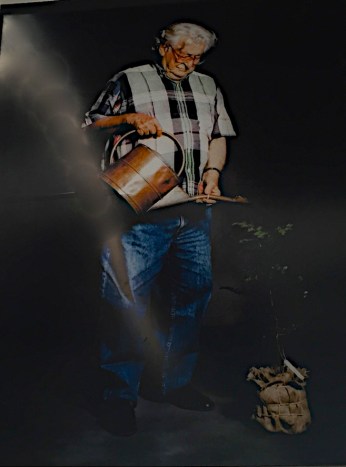
Roberto Burle Marx is considered to be the father of modern landscape architecture. He grew up in Rio at the end of Copacabana Beach near the Pau De Acucar – Sugarloaf. He started arranging flowers at events and eventually began getting asked to design gardens.(self-portrait)
He bought a property two hours outside of Rio near the small town of Guaratiba, it is called Sitio de Roberto Burle Marx and tours are available in Portuguese.
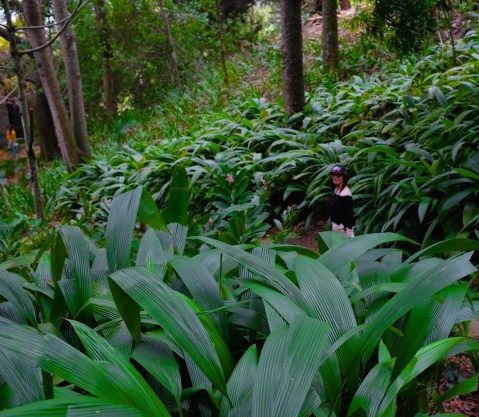
Even if you are not a plant person, you know that you have entered a privileged space.

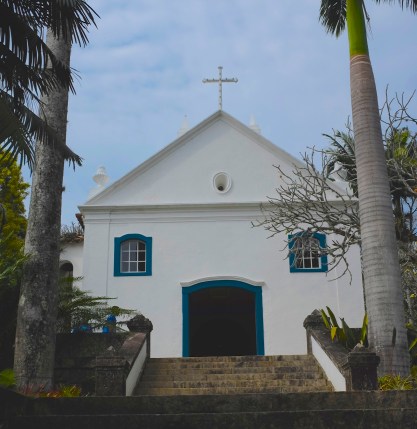
He restored the old house and chapel and began propagating plants collected on numerous expeditions in to the wilds of Brazil.
There are large areas of a single type of ground cover surrounding clumps of sculptural agaves, bromeliads, plumerias, dracaenas, clusias, palms and a myriad of other plants.

The 100 acres have 3500 plant species. Plants are always used to emulate the way they would grow in their natural environment.

Over the years he developed an extraordinary landscape climbing the hill and introduced hundreds of previously unused plants to the gardening world.

His interest in painting had a great influence on his designs.

His drawings for gardens look like abstract works on paper.

The gardens themselves usually contain large masses of vividly colored plants in a variety of textures, relying more on foliage than flower.

They are laid out in bold sweeping forms. Garden structure tends toward the architectural, often with rectangles that reflect the forms of surrounding buildings.

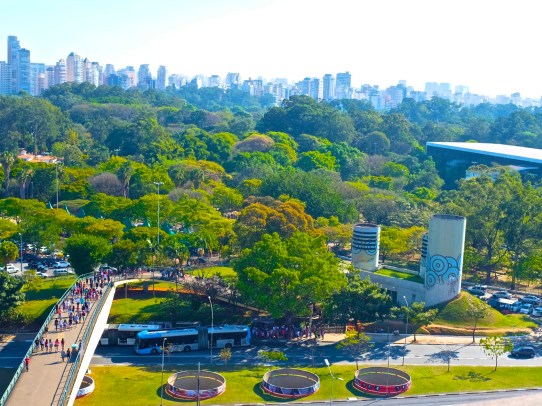
As his fame grew, he was commissioned to design parks and gardens throughout Brazil, South America and abroad. Burle Marx collaborated with architect Oscar Niemeyer on Iberapuera Park in São Paulo. They worked on several projects together throughout the world and were good friends.
The Copacabana waterfront with its long wave patterned mosaic sidewalk is perhaps the most renowned work by Burle Marx.

The beach once fronted the buildings along the shore, but was actually moved to make room for the new Avenida Atlantica and large underground parking lots. The wide sidewalk next to the Avenida is paved with the classic wave pattern that was originally used in Lisbon, Portugal for pavements when rebuilding parts of the city destroyed by a massive tsunami in 1755. The sidewalk is 2.5 kilometers long and is one of the largest mosaics in the World. The design perfectly frames the famed arc of sand backed by the Pau d’ Acucar. You will see a lot of Olympic Coverage here this summer.

Tenha Uma Boa Viagem,
JAZ


 Travel Well, Fly Safe
You must be logged in to post a comment.